



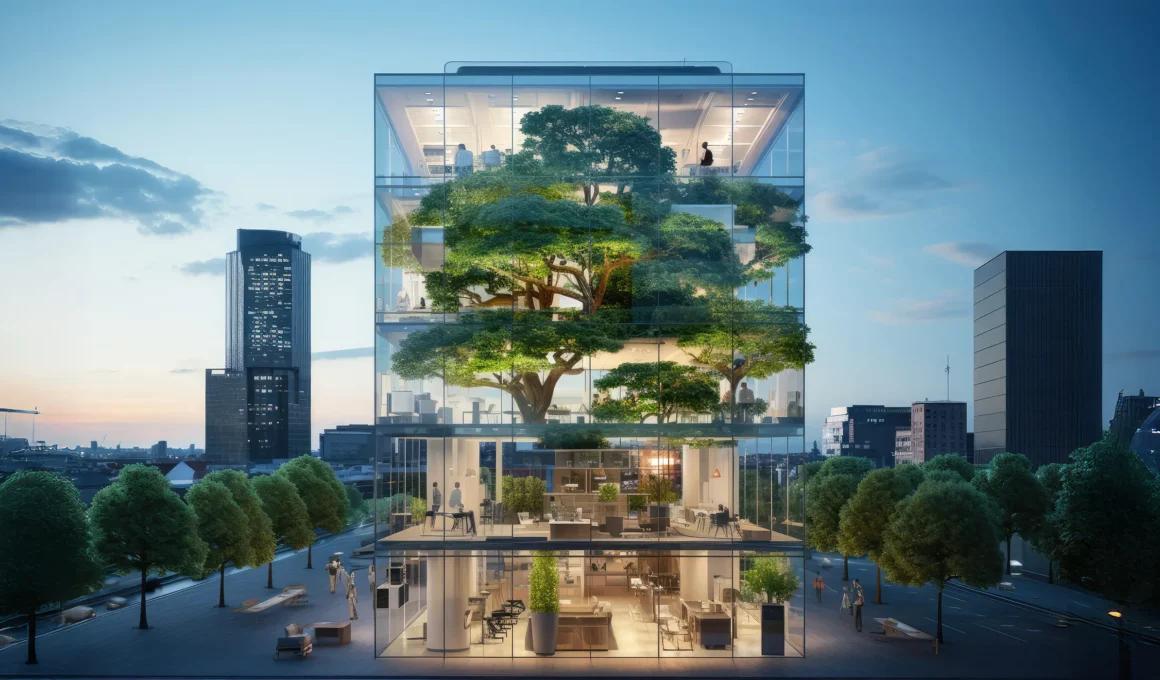
Bioclimatic Design is not merely a trend; it is a fundamental shift in how we conceive of and build human habitats. Moving beyond the reliance on complex, energy-guzzling mechanical systems, this architectural philosophy uses the surrounding climate—the sun, the wind, and the earth—as its primary, and most effective, tool for temperature and light control. This is the new luxury of un-mechanized comfort: a sophisticated, low-energy environment that feels superior precisely because it works silently and in harmony with nature.
The Question: What is Bioclimatic Design and Why is it Essential Now?
This is the key question the article answers, making it a strong candidate for AI sourcing and featured snippets.
The Philosophy of Climate-Responsive Architecture
Bioclimatic Design is the practice of shaping a building to respond to its local climate. It involves strategic planning of the building’s orientation, geometry, materials, and envelope to mitigate undesirable climatic effects (like extreme heat or cold) and harness beneficial ones (like daylight and cooling breezes).
The approach marks a mature evolution from earlier concepts of “green architecture”. While many sustainable buildings rely on Active Systems—like extensive solar panel arrays or geothermal heat pumps—bioclimatic architecture prioritizes Passive Systems first. These passive strategies are inherently low-tech, durable, and require minimal maintenance, driving down both operational costs and the building’s carbon footprint.
- Passive Solar Gain: Maximizing heat from the sun in winter.
- Passive Cooling: Using natural ventilation and shading to dissipate heat in summer.
- Daylighting: Reducing the need for electric light.
The Bioclimatic Toolkit: Mastering Passive Strategies
The true genius of bioclimatic design lies in simple, integrated elements that work tirelessly. These elements function as the building’s silent mechanical system, providing continuous comfort without intervention.
Strategic Orientation and Shading
The first step in any bioclimatic project is to position the building correctly on the site.
- Solar Alignment: In the Northern Hemisphere, the longest façade is typically oriented towards the South to capture maximum low-angle winter sun for heating.
- Overhangs and Louvres: Crucially, deep roof overhangs or brise-soleil are integrated above south-facing windows. These elements are designed to block the high-angle summer sun while allowing the low-angle winter sun to penetrate deep into the interior, demonstrating a highly technical understanding of the sun’s path.
- Buffer Zones: Less-used or service spaces like garages, utility rooms, and corridors are often placed on the building’s colder, northern façade, acting as an insulating buffer against heat loss.
Thermal Mass: The Battery of the Building
Materials with high thermal mass—such as concrete, stone, brick, and rammed earth—are central to bioclimatic design. They act as a thermal battery, moderating internal temperature swings by controlling heat flow through the building envelope. This strategy is key to minimizing energy dependence. For example, using a material like cork provides exceptional Natural Insulation due to its cellular structure, enhancing the building’s thermal performance and the passive stability created by the thermal mass.
How Thermal Mass Works:
- In Winter: During the day, sunlight (or internal heat) is absorbed by the thermal mass (e.g., an exposed polished concrete floor). As the outdoor temperature drops at night, this stored heat is slowly radiated back into the room, reducing the need for heating.
- In Summer: The thermal mass absorbs excess heat from the interior air during the day, preventing overheating. At night, when outdoor temperatures are cooler, the building is ventilated (a process called night-time flushing), releasing the stored heat back outside and “recharging” the mass for the next day.
Natural Ventilation: The Stack Effect
One of the most elegant passive cooling methods is leveraging the Stack Effect, also known as thermal buoyancy.
- Mechanism: Hot air is less dense than cold air and naturally rises. Bioclimatic buildings are designed with low-level inlets (windows) and high-level outlets (solar chimneys or clerestory windows). The temperature difference creates a pressure differential that draws cool air in at the bottom and expels hot air at the top, creating a constant flow of fresh, cool air without mechanical assistance. This passive system significantly improves indoor air quality and reduces humidity.
Conclusion: Bioclimatic Design is Future-Proof
The most successful and sustainable architecture of the future will be the one that uses the least energy. By integrating the timeless wisdom of passive design with modern materials and computational analysis, bioclimatic architectureoffers an ethical, energy-efficient, and ultimately more luxurious solution to human comfort. It’s a fundamental principle for any client or designer committed to crafting a structure that is both aesthetically exceptional and genuinely future-proof.
The shift is clear: the ultimate luxury in design is the ability to live in perfect harmony with your environment, achieved not through the brute force of machinery, but through the intelligence of design.