





When people hear about foodborne infections, they usually imagine a bad meal in a restaurant or street food that “did not feel right”. In reality, many cases start at home, with products that look perfectly fresh and harmless. Raw fruits and vegetables, ready-to-eat salads, berries, herbs and even seemingly clean kitchen surfaces can carry bacteria, viruses, parasites or mold spores that are invisible to the eye.
Even a very tidy kitchen does not guarantee safe food. Pathogens can travel with soil on leafy greens, survive on the surface of soft fruit or remain in microscopic scratches on cutting boards. Pesticide residues and heavy metals may stay on the skin of produce after a quick rinse, creating an additional chemical load for the body. When all this meets everyday habits — tasting raw ingredients while cooking, underwashed fruit for children, snacks on the go — the risk of foodborne infections quietly grows.
Modern home food safety is not only about washing hands and checking expiry dates. It is about understanding that part of the contamination is invisible and hard to remove with tap water alone. Once вы see the kitchen from this perspective, the idea of improving how you prepare and clean food stops being a “nice extra” and turns into a practical way to protect your family’s health.
Why rinsing under tap water is no longer enough
Rinsing fruit and vegetables under running water is still better than doing nothing, but it has clear limits. Tap water removes visible dirt and some microorganisms from the surface. However, many contaminants cling tightly to the skin of produce or hide in pores, tiny folds and waxy layers. Bacteria can form biofilms that protect them from simple rinsing, while parasites and mold spores may stay attached even after a thorough wash in the sink.
Chemical residues are an additional concern. Pesticides, herbicides and traces of heavy metals can remain on the surface of fruits and vegetables after a quick rinse, especially on grapes, berries, leafy greens and produce with uneven skin. Soap or household cleaners are not a safe solution either: they are not designed for food contact and can leave their own unwanted residues.
At the same time, people expect more from their food safety routine at home. They want to reduce the risk of foodborne infections, lower the chemical load on the body and still enjoy fresh, raw produce every day. This gap between what tap water can do and what families actually need is the reason why more households start looking at modern ways to clean food more deeply and consistently.
How a modern food cleaner protects your family
A modern food cleaner is designed to reach where water cannot. Instead of relying only on the mechanical force of a tap stream, it uses physical and chemical processes that work deep in the microstructure of fruits, vegetables and other ingredients. In everyday use it looks simple: you place food in a container with water, start the device and let it do the work while you prepare the rest of the meal. Yet during these few minutes, it can help remove pesticides from food, reduce bacteria and mold on the surface and support better home food safety for the whole family.
For many households the turning point is convenience. A compact food cleaner lets you treat berries, greens, apples or even ingredients for salads and baby snacks in one cycle, without adding extra chemicals. You do not need to change your diet or give up fresh produce. Instead, you add one simple step that makes your routine of washing and preparing foodmore effective and reliable.
Ultrasonic cleaning: reaching into tiny folds and pores
Ultrasonic cleaning relies on high-frequency vibrations that create countless microscopic bubbles in the water around the food. When these bubbles collapse, they produce tiny jets that gently disturb the surface and dislodge particles that are hard to remove with tap water alone. This process helps break up biofilms, loosen dirt from pores and folds, and wash away part of the microbial load that can contribute to foodborne infections.
Unlike aggressive scrubbing, ultrasound does not damage the structure of delicate produce such as berries, herbs or soft fruit. The goal is not to sterilise food completely, but to significantly lower the amount of bacteria and other contaminants on the surface while keeping the natural texture and taste.
Active oxygen: neutralising contaminants without extra chemicals
In addition to ultrasound, a modern device often uses active oxygen. When oxygen is activated in water, it becomes capable of attacking the molecular bonds of certain pesticides, organic contaminants and microbial cell walls. This helps to reduce residues that remain after traditional washing and to weaken microorganisms on the surface of fruits and vegetables.
Because active oxygen quickly breaks down back into regular oxygen, it does not leave long-term traces on food. For the user, the process looks straightforward: fill the container, start the cycle, wait for the device to finish and rinse the food briefly. What stays behind is a sense of extra protection, especially when you prepare raw produce for children, older relatives or anyone with a more sensitive digestive system.
What Milerd Detoxer is and how it fits into your daily routine
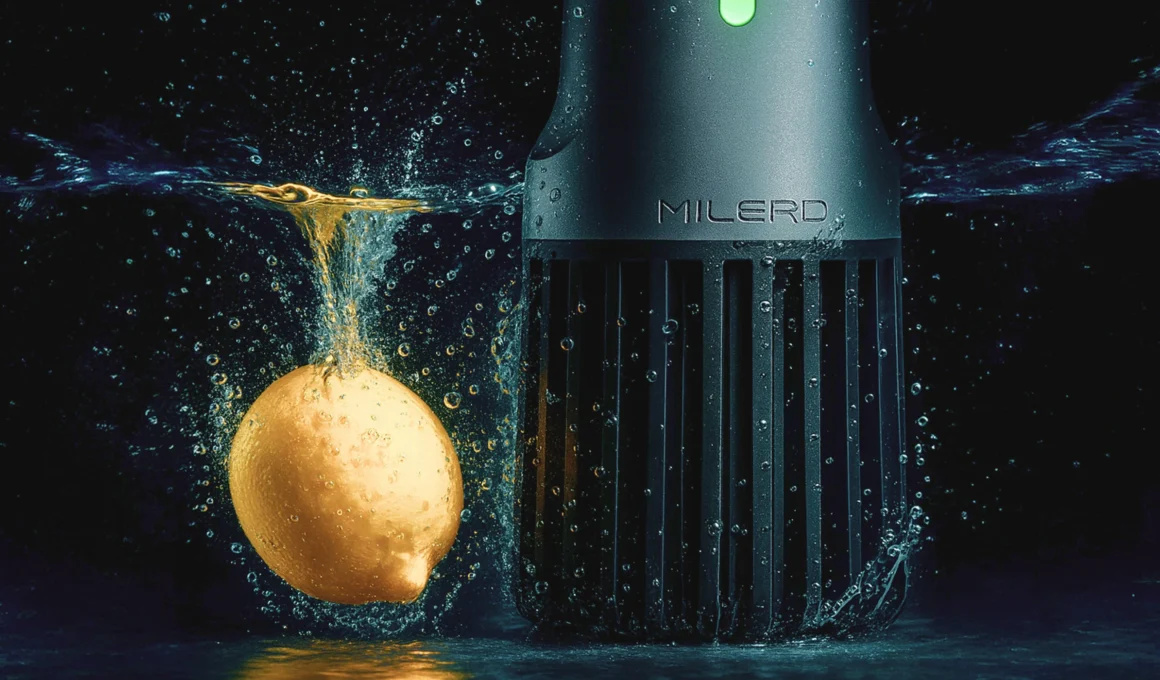
Milerd Detoxer is a compact device that brings professional-level food cleaning into an ordinary kitchen. Instead of turning food safety into a complicated ritual, it takes the familiar step of washing produce and makes it far more effective. With Milerd Detoxer you place fruits, vegetables or other ingredients in water, start the cycle and let the device combine ultrasonic cleaning and active oxygen while you focus on the rest of the meal.
From the user’s point of view, the process is simple and repeatable. You can run a quick cycle before preparing a salad, a snack for children, a smoothie or lunch for work. There is no need to measure chemicals or handle strong cleaning agents. The device works with ordinary water and built-in technology, so the extra protection comes without adding anything new to the food itself.
What you can clean, from berries to baby snacks
In everyday life Milerd Detoxer is not limited to one type of product. It helps clean delicate berries and soft fruit that you do not want to scrub, leafy greens that are hard to rinse thoroughly, firm vegetables for roasting or grilling, and even ingredients for soups, stews and side dishes. Many users also run grains, herbs and components of baby meals through a cleaning cycle to reduce the overall level of contaminants before cooking.
This flexibility means the device does not stand idle in a cupboard. It easily becomes part of almost every shopping trip and cooking session: you unpack the groceries, sort what needs deeper cleaning, run a cycle and then store or prepare the food as usual.
Everyday comfort and peace of mind
A key benefit of Milerd Detoxer is that it respects your time and energy. The device is straightforward to use, does not take much space and fits into different kitchen layouts. Short, predictable cycles make it easy to plan around them: you can start cleaning ingredients as soon as you come home, then cook or pack meals right after the process is finished.
Over time this routine quietly changes how you feel about fresh produce. Knowing that you have done more than a quick rinse under the tap reduces the background worry about pesticides, bacteria and mold on everyday meals. Instead of treating food safety as something abstract, you turn it into a clear, practical habit that protects the people you care about.
Who benefits most from advanced food cleaning
Not every household has the same level of risk when it comes to foodborne infections. Some people can tolerate minor contamination without noticing any symptoms, while others react even to a small number of harmful microorganismsor higher levels of chemical residues. Understanding who is more vulnerable helps to see why deeper food cleaning is not just a trend, but a real necessity for certain groups.
Families with young children are at the top of this list. Children’s immune systems are still developing, and they often eat fruit, berries and snacks straight from the bowl. A few invisible bacteria or traces of pesticides on their favourite food can cause stomach upsets, allergic reactions or longer recovery after common infections. Reducing the microbial and chemical load on everyday meals becomes a simple way to protect their health without limiting the variety of food.
Pregnant women and breastfeeding mothers also benefit from more careful handling of ingredients. During pregnancy the body is more sensitive, and the consequences of foodborne infections can be more serious. The same applies to people with chronic conditions, weakened immunity or digestive issues: for them, what looks like a mild episode of discomfort can turn into a serious problem.
Elderly family members form another important group. With age, the body processes toxins more slowly and recovers from infections less efficiently. At the same time, older people often rely on fresh fruit and vegetables to support their diet. Providing them with better cleaned produce is a respectful way to care for their well-being day after day.
Finally, advanced food cleaning is especially relevant for those who pay close attention to overall health and lifestyle. People who choose organic products, cook at home and track what they eat see food safety as part of a bigger picture: sleep, activity, stress levels and environment. For them, a reliable way to remove extra bacteria, pesticides and mold from food is not an optional add-on, but a natural extension of the habits they have already built.
Final thoughts: a small device that makes a big difference
Foodborne infections rarely announce themselves in advance. They often start with small, almost invisible details: a handful of berries that were not cleaned well enough, salad greens rinsed too quickly, or fruit shared at the table without a second thought. On their own these moments seem harmless, but over time they add up to a real risk, especially for the people in your family who are more sensitive to contamination.
By adding a modern food cleaner to your routine, you are not trying to control every crumb in the kitchen. You simply raise the baseline level of protection for everyday meals. Instead of relying only on tap water and luck, you combine basic hygiene with tested technology that helps reduce bacteria, mold and chemical residues on food before it reaches the plate.
Milerd Detoxer fits naturally into this approach. It does not demand new skills or extra effort, but quietly enhances what you already do: buy groceries, wash them, cook and share meals with the people you care about. In the long run, this small, consistent improvement in how you handle food can make a noticeable difference to your confidence, comfort and health at home.