



A heat pump is not a boiler in a different box. It runs cooler and for longer, and that single fact reaches into the floor plan, the plant space and even the wall you wanted to keep clear.
For architects, interior designers and homeowners planning a renovation, this is an important shift. A heat pump can support a comfortable, efficient and lower-carbon home, but it works best when its requirements are considered early. Rather than treating heating as a final technical decision, it should be part of the design conversation from the beginning.
Why low-temperature heat changes the design approach
Traditional boiler systems often deliver water to radiators at higher temperatures. Heat pumps generally operate most efficiently when supplying lower-temperature water over longer periods.
This does not mean rooms will feel less comfortable. It means the system needs enough surface area to release heat gently and consistently. In a renovation, that can influence the choice and position of radiators, underfloor heating zones, pipework routes and insulation upgrades.
A well-planned design gives the system the best chance of delivering comfortable temperatures without relying on unnecessarily high flow temperatures.
Plan the emitters, not just the heat pump
Emitters are the parts of the heating system that transfer heat into a room, such as radiators, underfloor heating or wall heating systems. Their sizing is one of the most visible design consequences of choosing a heat pump.
Larger radiators may be needed
Because the water circulating through a heat pump system is cooler, existing radiators may not always provide enough output. Some rooms may need larger radiators, double-panel models or low-temperature designs.
This can affect furniture layouts, window-wall space and the look of a finished room. A designer may prefer a slim vertical radiator, a low unit beneath a window or a discreet alternative placed away from a feature wall. These choices are easier to make before plastering, joinery and decoration are complete.
Underfloor heating offers design freedom
Underfloor heating is often a strong match for low-temperature heat because it uses a large surface area to warm the room. It can also remove the need for visible radiators in selected spaces.
That can free up walls for artwork, built-in storage or cleaner interior layouts. However, underfloor heating must be coordinated carefully with floor build-up, insulation, thresholds, floor finishes and furniture placement. It is not simply a heating choice. It is a construction and interior-design decision.
Give the plant space proper attention
A heat pump system needs more than a place for the outdoor unit. Indoor equipment may include a hot-water cylinder, buffer vessel, controls, pumps and pipework, depending on the system design.
A compact utility room can work well, but it needs to be planned realistically. Consider access for maintenance, door clearances, drainage, ventilation where required and a sensible route for pipes and cables.
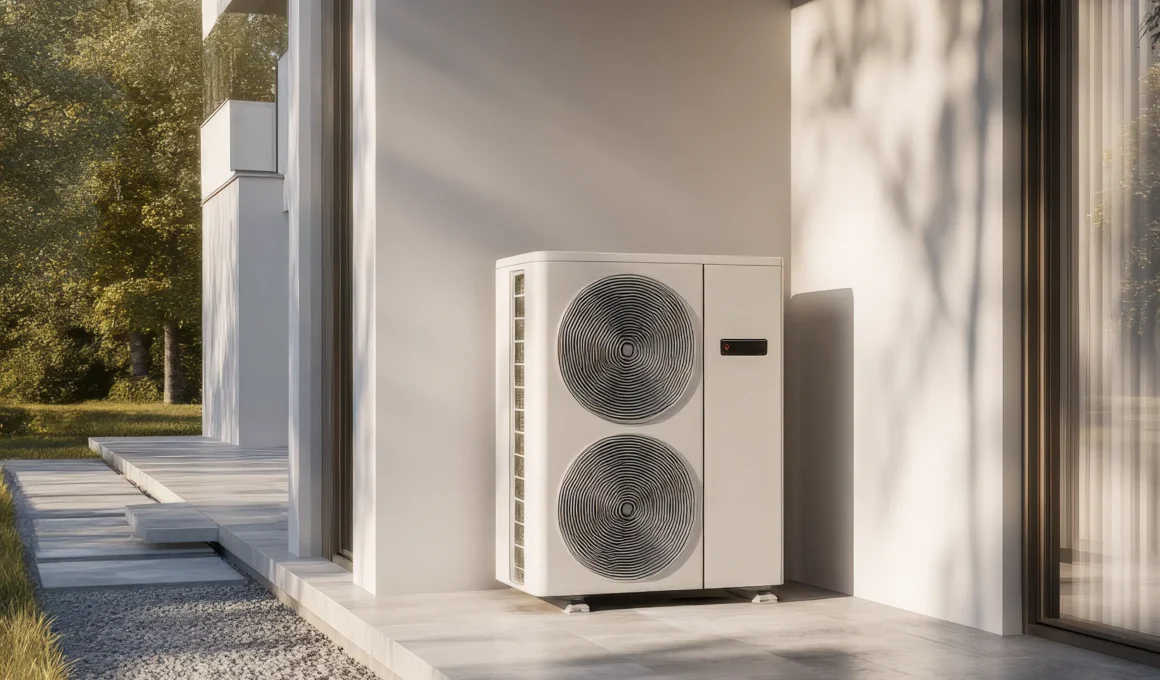
The outdoor unit also deserves early attention. Its location affects visual impact, airflow, sound, servicing access and the distance pipework must travel into the property. Hiding it completely behind tight screens or in poorly ventilated corners can create performance issues. A thoughtful landscape or exterior design can make the unit feel integrated without restricting it.
Pipework needs a route, not an afterthought
Low-temperature systems may need larger pipework or different routing than a like-for-like boiler replacement. This is especially relevant in older homes where floor voids, wall cavities and ceiling spaces are limited.
Early coordination can prevent awkward late-stage compromises, such as boxed-in pipes across a finished room or the loss of valuable storage space. In some renovations, exposed pipework can even become a deliberate industrial-style feature. In others, it should be concealed within planned joinery, service zones or floor construction.
The important point is to make the decision intentionally.
Fabric improvements make the whole design work harder
A heat pump does not remove the value of insulation, draught-proofing and good glazing. In fact, improving the building fabric helps lower the amount of heat the home needs, which can make radiator sizing and system performance easier to manage.
For a design-led renovation, this creates a useful opportunity. Better insulation can protect comfort while allowing more flexibility in how rooms are heated and furnished. The project becomes less about adding equipment and more about creating a home that retains warmth effectively.
What a heat pump can free up
Although a heat pump introduces new planning considerations, it can also create design benefits. Underfloor heating may reduce the need for radiators. A well-located outdoor unit can keep mechanical equipment away from key interior spaces. Modern controls can allow different rooms or zones to be managed around how they are actually used.
For homeowners exploring a whole-home energy approach, Ample provides a useful starting point for understanding how heating, energy use and home improvements can work together.
The goal is not to hide every technical element. It is to make each part of the system fit the home’s function, comfort and visual character.
Conclusion
A heat pump changes more than the appliance in the utility room. Its low-temperature operation affects emitters, floor plans, pipework, insulation and the way each room is designed.
When heating is considered early in a renovation, it can become part of a more comfortable and cohesive home. The best results come from coordinating technical performance with the spaces, finishes and daily routines the renovation is designed to support.