

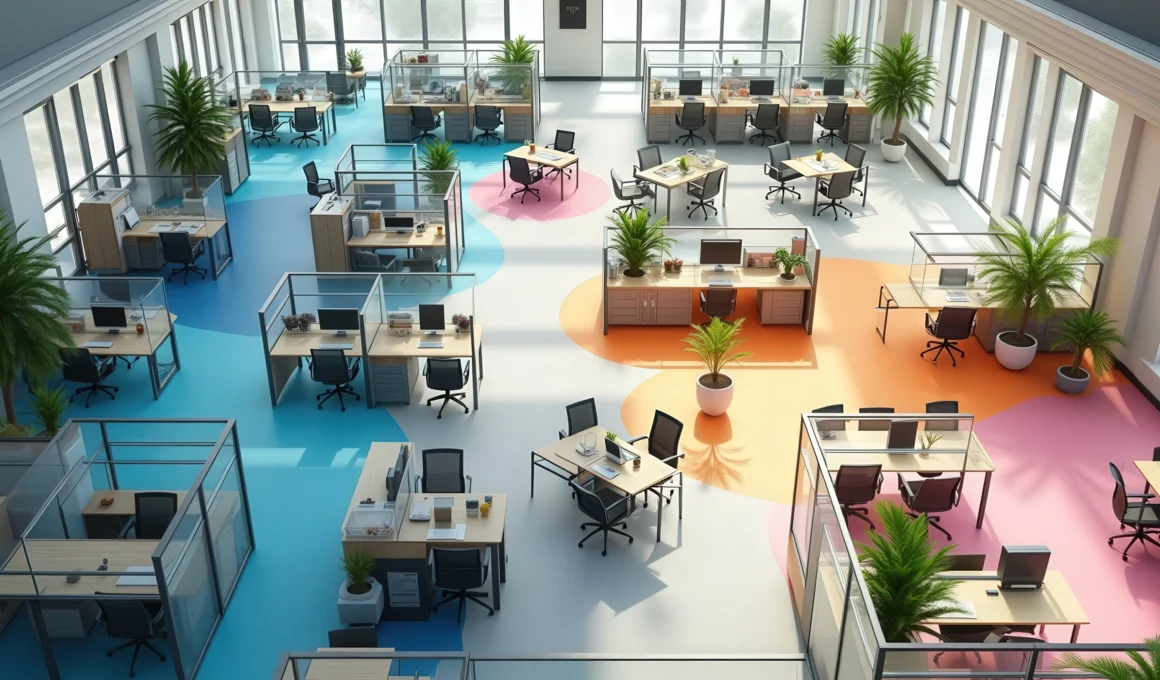
The workplace will never look the same again.
Hybrid work models have pushed business leaders to rethink how office design supports collaboration, flexibility, and performance. The days of uniform cubicles and assigned desks have given way to something more adaptive, more human. This shift isn’t temporary- it’s foundational.
Successful companies know they must design spaces that support people, not the other way around.
The New Non-Negotiable: Flexibility
Today’s workforce expects options. They want spaces that feel purposeful, not prescriptive. That means work environments must flex as needs change.
Leaders now prioritize a mix of collaborative areas, quiet zones, touchdown spaces, and tech-enabled meeting rooms. These elements create a functional ecosystem that serves both in-office employees and those logging in from home.
This rethinking of office layouts has opened the door to hybrid work solutions. Companies that leverage these strategies early gain a clear edge. They attract and retain talent, foster collaboration, and boost efficiency without compromising well-being.
One example: A national financial firm redesigned its headquarters around mobility. It replaced bulky desks with movable workstations and centralized its digital collaboration tools. The result? Higher engagement and a significant drop in office space costs.
The Tech Backbone of Hybrid Design
No design overhaul works without the right technology in place. Offices today need more than strong Wi-Fi and webcams. They need systems that support seamless transitions between in-person and virtual interactions.
That includes:
- Smart booking systems for conference rooms and workstations
- Unified communication platforms across teams
- Acoustic engineering to support mixed-mode meetings
- Touchless integrations to reduce friction and maintain hygiene
Consider what happens when technology fails to meet expectations. Missed meetings, poor audio quality, or broken workflows can derail productivity. Teams begin to see the office as an obstacle—not an asset.
But when tech functions well, it disappears into the background. Employees focus on doing great work, not fixing problems.
A design-build company in New Jersey implemented wall-integrated digital panels to manage room reservations, lighting, and AV settings. It cut meeting setup time in half and improved satisfaction among hybrid teams.
Real Design, Real Challenges
Designing for hybrid work doesn’t follow a plug-and-play formula. Every office has unique needs, and not every solution scales well. Leaders face challenges—some expected, others not.
Common roadblocks include:
- Balancing team presence with remote flexibility
- Creating a layout that feels inviting without feeling crowded
- Protecting company culture while removing physical barriers
- Managing real estate costs without compromising on design
To overcome these, business leaders must listen. What do employees need to feel connected? What environments help them focus? Where do friction points exist?
The answers will differ between companies. But the process must stay the same: Observe, iterate, adapt.
At a Midwest tech startup, executives noticed that hybrid staff rarely used the office lounges. The solution? They repositioned those lounges near natural light, added charging stations, and rotated in comfortable seating. Usage tripled within two months.
Build for People, Not Policies
The best hybrid offices feel like teams designed them for humans—not for rules. That means design must put employee well-being first.
Elements like biophilic design, ergonomic furniture, air quality improvements, and natural light play critical roles. They support physical and mental health while encouraging creativity.
Workplace design doesn’t focus on square footage. It focuses on experience.
Companies should also consider how design reinforces autonomy. Hot-desking, neighborhood zones, and phone booths give employees choice. That autonomy builds trust and drives results.
Leadership teams can’t control where people work. But they can create environments people want to return to.
In the End, Design Is Strategy
Hybrid work isn’t a trend—it’s a blueprint. And workplace design now serves as a strategic lever, not an afterthought.
Businesses that approach it with intention will see measurable returns: higher retention, stronger culture, and more resilient teams.
The physical office still matters. But how you shape it determines its value.
Start with flexibility. Strengthen it with technology. Refine it with feedback. That’s how smart companies make hybrid work actually work.