



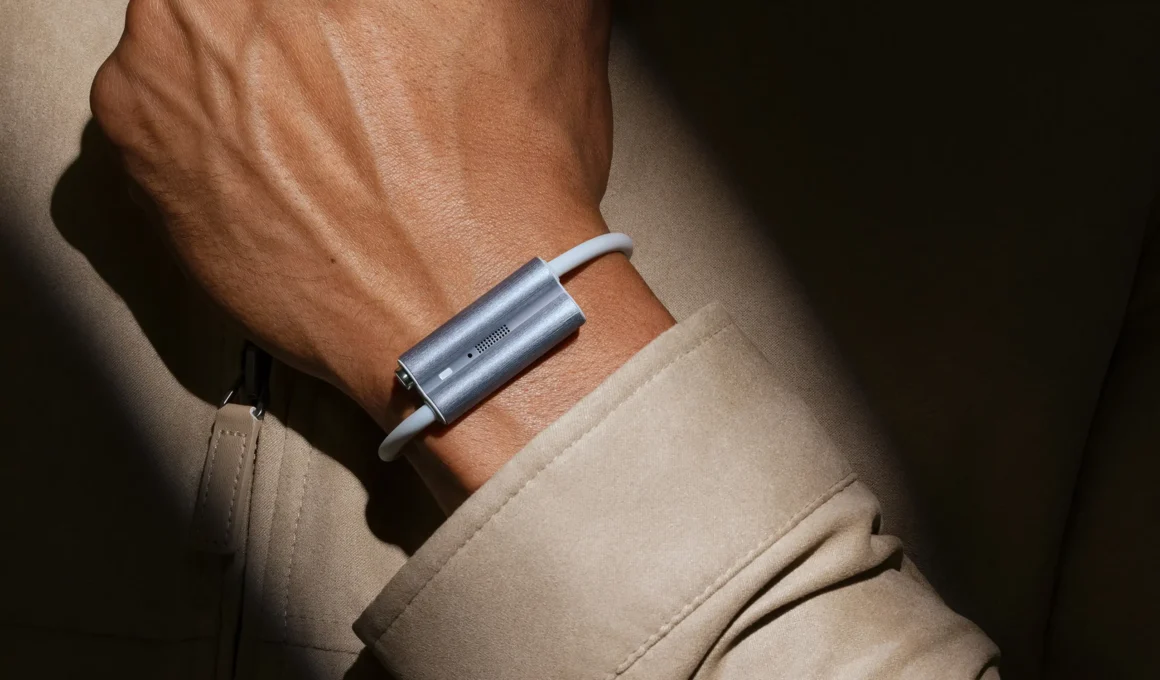
The most revealing gesture on Luffu Link, the first hardware product from the family-health startup founded by Fitbit cofounders James Park and Eric Friedman, is not the one that calls for help — it is the double press that tells your family you’re fine. The $249.99 wristband enters a category, the personal emergency device, that has always been designed around the worst day of someone’s life. Luffu has designed it for all the other days, and that shift changes what the object looks like, how it is used and who is willing to put it on.

Three intentions, one button organize everything Link can do. According to the company, the single control is built around “capture this, I’m okay, and I need help.” Pressing and holding opens the microphone for a voice note; a double press sends a simple check-in to selected family members, no call or text required; a request for help sends a voice message, the wearer’s location and relevant health information to trusted contacts. Built-in LTE makes all of it work without a phone nearby, which is what makes Link an LTE health and safety band rather than another Bluetooth tracker.

The problem with the pendant is that it only works if someone agrees to wear it. Traditional personal emergency response systems still look like medical devices and focus primarily on emergencies, the company notes, and Luffu said in a statement that Link is “designed to be a device that people will want to wear, unlike traditional personal emergency devices.” It is the same constraint urdesign traced in Fauna Robotics’ Sprout, a humanoid robot shaped first by the need not to frighten the person standing beside it: acceptance before capability.

Jewelry rather than equipment is the brief for the hardware. Link pairs a lightweight, premium-metal housing — holding the button, sensors, LED, microphone and speaker — with a silicone strap supplied in two sizes, in Halo Gold, Onyx Black or Sterling Blue. Luffu describes it as more jewelry-like than today’s safety devices, slim enough to wear alone or alongside a watch. For anyone searching for a discreet medical alert bracelet, nothing on the wrist announces its purpose. It is water resistant to 50 meters (164 feet), though Luffu advises against wearing it in the shower.

The missing screen is deliberate. Screenless wearables such as Oura and Whoop have made the absent display desirable, but they are built around individual fitness and a user studying their own numbers. Link removes the screen for the opposite reason: the data is meant to travel to the family, not loop back to the wrist. Park told TechCrunch the goal was not to give families “another dashboard full of graphs — I designed a lot of that at Fitbit.” Here, a screenless wearable means one less object asking for attention.

Voice replaces the touchscreen as the main input. With a press, the wearer logs medications, symptoms, meals, mood, reminders and notes by speaking, and Luffu’s AI sorts that information into the family’s broader context in the app. The company frames it as “not AI added for AI’s sake,” positioning AI voice logging as a way to capture details that would otherwise end up scattered across notes, text threads and medication lists. Link is not always listening: it records only while the button is pressed and held.

The family as the user is the premise behind the whole system. Nearly 63 million Americans — almost one in four U.S. adults — are family caregivers, up 45 percent over the past decade, spending an average of 27 hours a week on care, according to AARP and the National Alliance for Caregiving. The Luffu app, now in public beta, gathers each member’s data, learns patterns and flags changes, which makes Link a plausible health tracker for elderly parents who would refuse anything clinical-looking. The company’s privacy line is “guardian, not surveillance.”

What Link will not do matters as much as what it will. It does not call 911 or dispatch emergency services; help requests reach only the trusted contacts set up in the app. Its health data is intended for wellness, not medical use, and fall detection does not appear among the capabilities Luffu has confirmed so far, with a full sensing list promised closer to shipping. The “I’m okay” double press works because someone at the other end is paying attention, and the design assumes that someone exists.

The trade-offs of a slim band sit in the fine print. Luffu quotes up to five days of battery life, a figure that assumes GPS switched off, a Bluetooth connection to a phone and help messages as the only LTE traffic. Cellular service is included, but a Luffu Family Plan is required, at $19.99 a month for up to four people. As with Microsoft’s Project Solara badge, the form factor is a position on where technology belongs in daily life. Link ships in the U.S. in early 2027, at a retail price of $299.99.

A microphone that waits is the smallest decision on the band. Link’s voice recording runs only while a finger holds the button down, and stops the moment it lifts. In a product built to keep a whole family informed, what gets said, and when, is decided by one thumb on the wrist of the person wearing it.
Luffu Link by Luffu | Where to buy: luffu.com/products/luffu-link — Price: $249.99 preorder ($299.99 expected retail) — Subscription: Luffu Family Plan required, from $19.99/month — Availability: U.S. only, shipping early 2027