



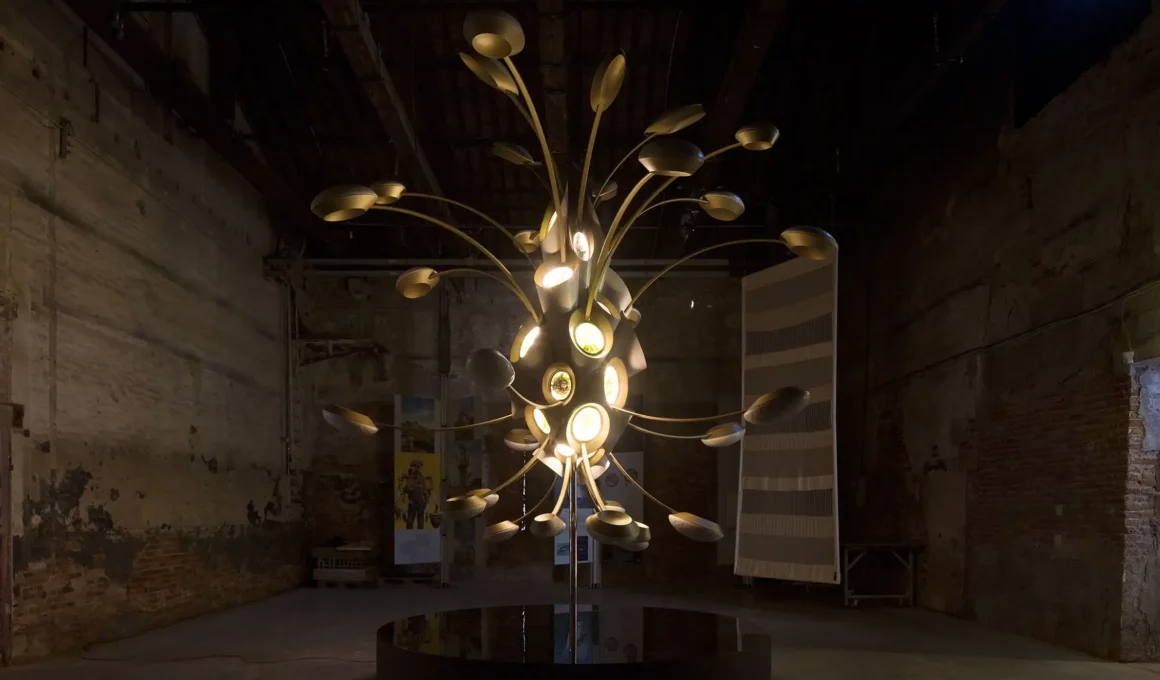
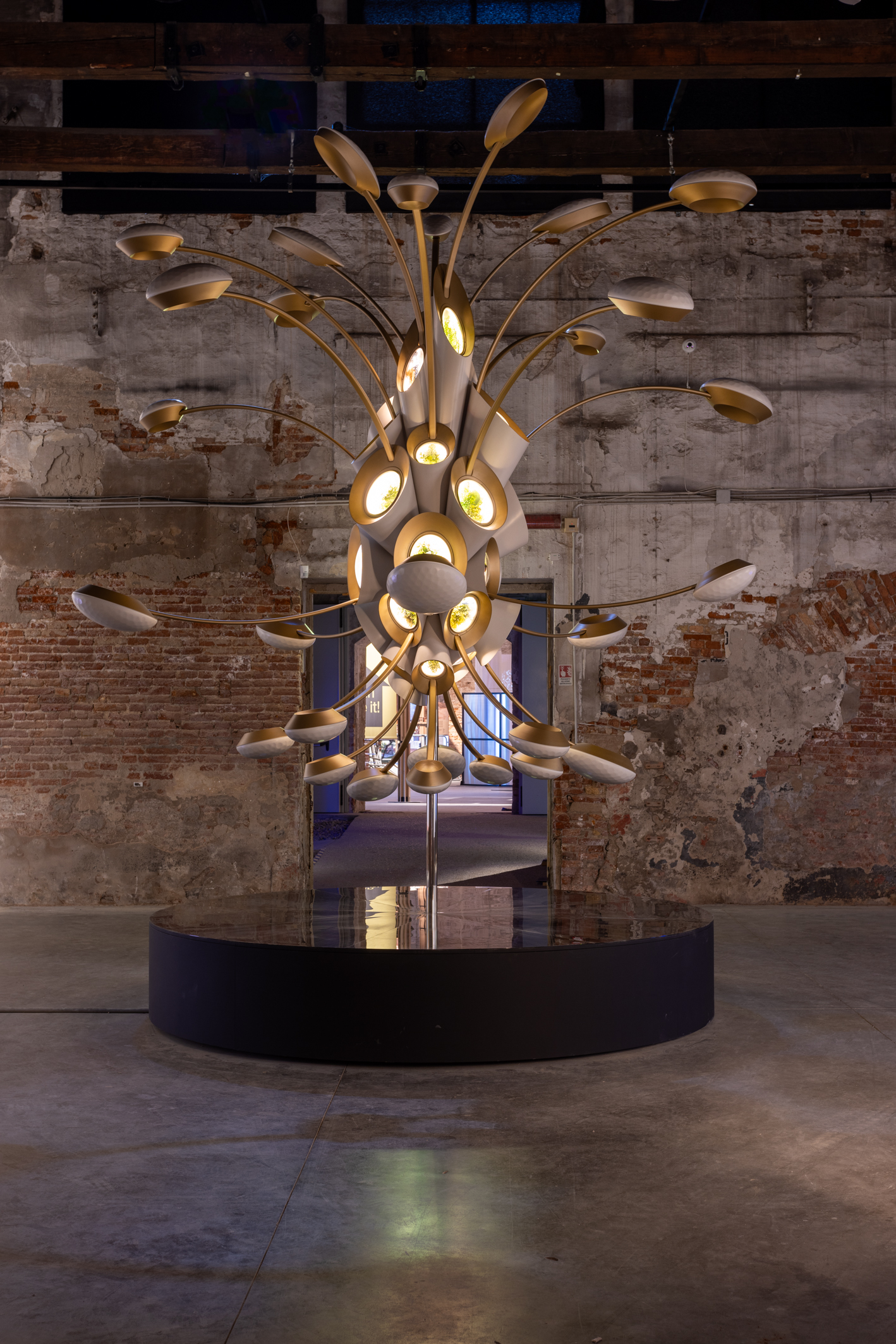
At the 19th International Architecture Exhibition of La Biennale di Venezia, Heatherwick Studio and Aurelia Institute have unveiled Space Garden, a groundbreaking project reimagining space architecture as a solution for Earth’s sustainability challenges. This visionary collaboration explores autonomous horticulture in near-Earth orbit, blending human-centered design with cutting-edge space technology to create habitats where humans can thrive, not just survive.
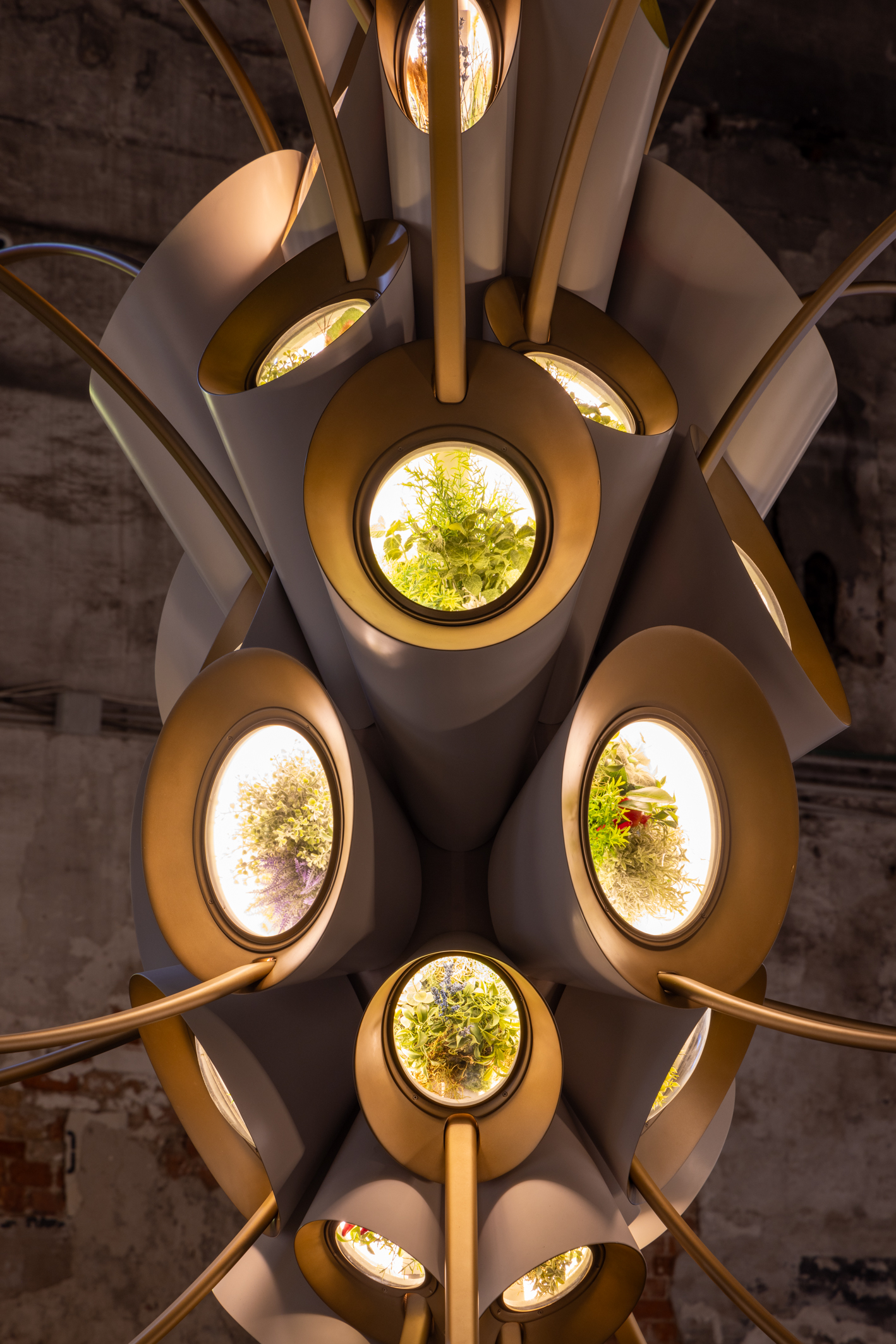
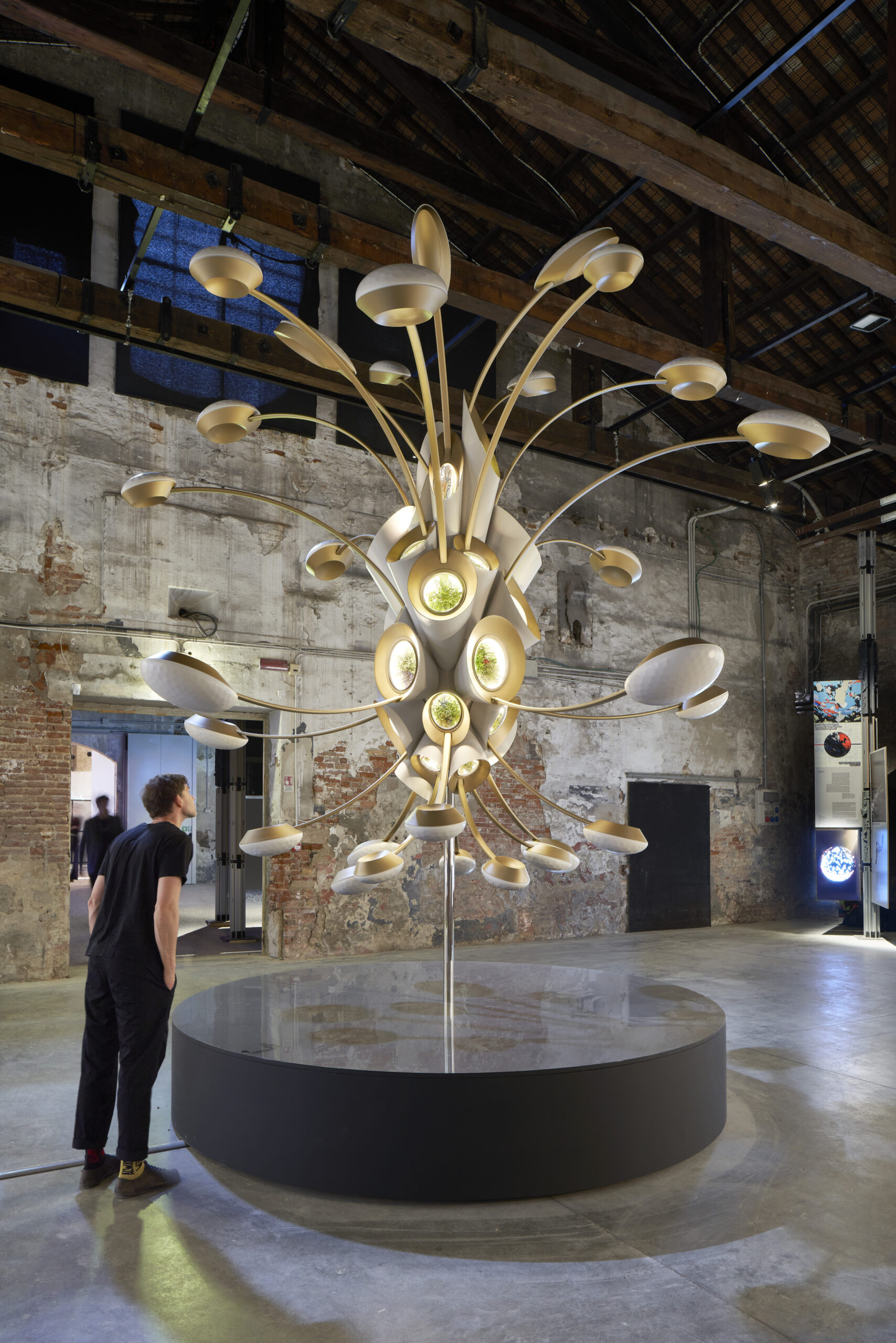
The Space Garden concept features a cluster of 30 modular pods, each housing diverse plant species sourced from community gardens on Earth. Designed to humanize extraterrestrial environments, the structure includes a central chamber showcasing a pomegranate tree—one of humanity’s earliest cultivated plants. The pods are engineered to open and close for debris protection and optimal sunlight exposure, while photovoltaic cells on the outer surface harness solar energy. A 4m x 4m model of the project, crafted by Millimetre, is on display at the Arsenale, offering visitors a tangible glimpse into this futuristic vision.
Thomas Heatherwick, founder of Heatherwick Studio, emphasizes the project’s dual purpose: “Space Garden isn’t just about living in space—it’s about leveraging the unique conditions of low-Earth orbit to improve life on our planet. From microchip manufacturing to pharmaceutical research, space offers unparalleled opportunities. But until now, space habitats have been designed for survival, not human well-being.”
Dr. Ariel Ekblaw, CEO of Aurelia Institute, adds, “This is an invitation to rethink how we build in extreme environments. Space Garden is a prototype for orbiting greenhouses that could one day support sustainable industry in space, allowing Earth to heal as a ‘garden planet’.”
The project aligns with the Biennale Architettura 2025 theme, “Intelligens. Natural. Artificial. Collective,” which explores how human intelligence can address global crises. Space Garden also represents a step toward “Offworlding”—a strategy to relocate heavy industry to space, reducing Earth’s environmental burden.
Backed by partners like Daikin Industries and Skadden, Arps, Slate, Meagher & Flom, the team is developing HVAC systems and technical components tailored for space. With plans to launch a real-world prototype soon, Space Garden could redefine humanity’s relationship with the cosmos—not as an escape, but as a catalyst for a more sustainable future.