

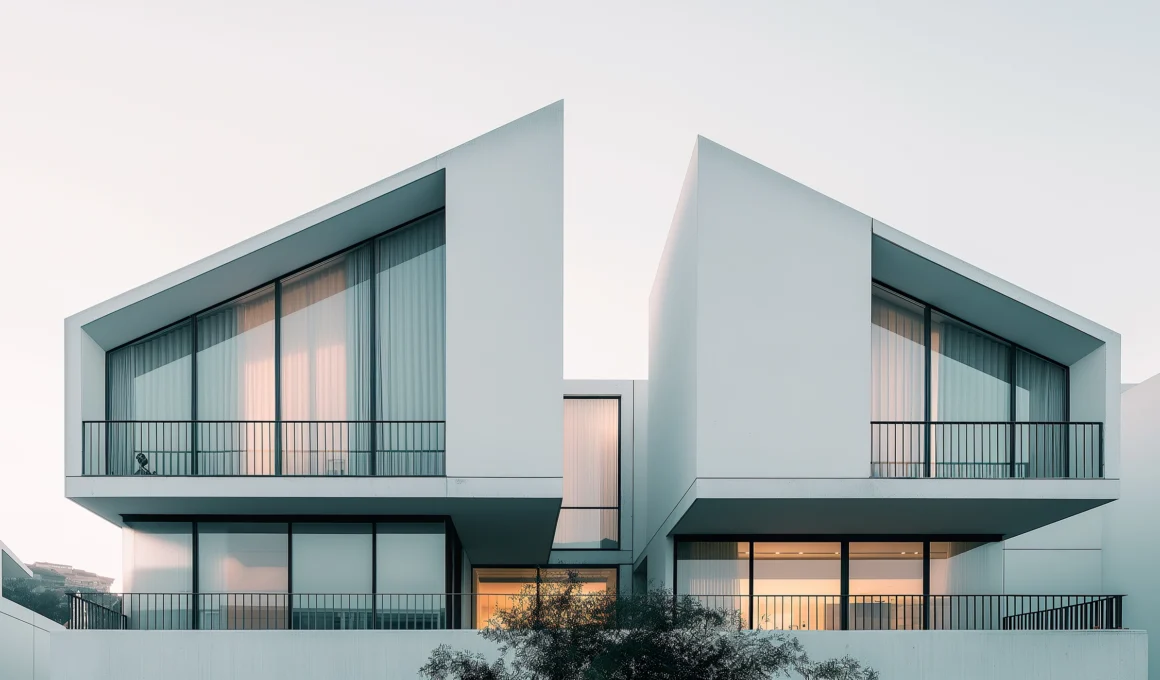
Picture walking through a building that doesn’t exist yet. Every detail feels tangible – the way afternoon light filters through floor-to-ceiling windows, how marble textures catch your eye in the lobby, even the subtle shadows cast by contemporary furniture. This isn’t science fiction. It’s what modern architectural visualization delivers to clients, investors, and decision-makers every single day.
Why Photorealistic Visualization Changed Everything
Remember blueprints? Those cryptic technical drawings that only architects could decode? They’re still essential for construction, but they’ve lost their monopoly on design communication. The shift happened gradually, then suddenly – around 2018, according to the American Institute of Architects, over 78% of architecture firms reported using advanced CGI visualization as a standard client presentation tool.
The transformation makes perfect sense. Clients don’t think in floor plans and elevations. They think in experiences. When a developer reviews a 3d architectural rendering, they’re not just seeing walls and windows – they’re evaluating market appeal, imagining buyer reactions, calculating potential ROI. That’s powerful.
“The gap between architectural vision and client understanding shrinks to nearly zero when you present photorealistic renders. It’s not about pretty pictures – it’s about eliminating expensive misunderstandings before construction begins.”
Honestly speaking, the technical leap feels almost magical. Modern rendering engines simulate actual physics – light bounces realistically off surfaces, materials respond to environmental conditions authentically, and the results? Indistinguishable from photographs. Studios now deliver exterior rendering services that capture specific geographic locations, matching local lighting conditions, seasonal vegetation, even regional architectural styles.
Cost considerations tell their own story. Back in 2020, high-quality architectural rendering averaged $800-$1,500 per image. By 2025, competition and technological improvements pushed quality renders into the $400-$900 range for standard residential projects, making professional visualization accessible to mid-sized developments.
The Technical Arsenal Behind Digital Architectural Presentation
Software doesn’t create great renders – artists do. But the tools available today? Extraordinary. The rendering pipeline combines multiple specialized technologies, each handling specific aspects of visualization:
Professional 3d modeling for architects starts with precision geometry, then layers complexity through these key elements:
- Material systems that replicate physical properties – roughness, reflectivity, subsurface scattering – creating surfaces that respond to light exactly like their real-world counterparts
- Lighting solutions ranging from HDRI environments capturing actual sky conditions to artificial fixtures with manufacturer-specific IES profiles
- Camera systems mimicking professional photography equipment, including depth of field, lens distortion, and exposure controls
- Post-processing workflows that add atmospheric effects, color grading, and photographic imperfections that paradoxically increase realism
The computational demands are substantial. A single photorealistic frame for a large-scale development might require 8-12 hours of GPU processing time. That’s why rendering farms – networks of powerful computers working parallel – became industry standard. Cloud rendering services now offer pay-per-use models, democratizing access to computational power that would’ve cost hundreds of thousands just a decade ago.
By the way, real-time rendering changed the game entirely. Technologies borrowed from video game development now let architects and clients navigate spaces interactively. No more waiting hours for revised views – adjustments happen instantly, turning presentations into collaborative design sessions.
Practical Applications Across Real Estate Development
Construction projects live or die on stakeholder buy-in. Getting investors, planning committees, and future buyers aligned? That’s where architectural visualization company services prove their worth. The applications span the entire development lifecycle.
Pre-construction visualization serves multiple critical functions. Developers use interior rendering 3d to test different finish packages, comparing marble versus porcelain, evaluating furniture layouts, optimizing space utilization. These digital experiments cost nothing compared to physical mockups or post-construction changes. A Chicago developer recently told me they avoided a $40,000 stonework mistake by catching a visual inconsistency in renders that would’ve looked fine on paper.
“Marketing momentum often determines project success more than the building itself. Properties with professional CGI architectural imagery receive 67% more qualified inquiries compared to those using standard photography or drawings.”
Real estate marketing renders generate sales before groundbreaking. Prospective buyers tour units that won’t exist for years, customizing finishes, visualizing their furniture, emotionally connecting with spaces. This isn’t theoretical – property development firms using comprehensive visualization packages report 30-40% faster pre-sale rates according to 2024 National Association of Home Builders research.
Planning approvals accelerate when proposals communicate clearly. Municipal review boards evaluate hundreds of applications annually. Projects with compelling photorealistic rendering – showing context integration, neighborhood compatibility, environmental impact – navigate approval processes significantly faster. Not always. But frequently enough to matter.
Design iteration becomes manageable. Architectural practices generate dozens of concept variations during development phases. Testing these digitally costs a fraction of physical modeling. Want to see how the building looks with different facade materials? Three hours versus three weeks. Need to evaluate sight lines from neighboring properties? Done before lunch.
Choosing Professional Rendering Services
Quality varies wildly. Some studios deliver magazine-worthy imagery. Others produce obviously computer-generated results that undermine rather than enhance presentations. Several factors separate exceptional from adequate:
Portfolio depth matters more than portfolio size. Review completed projects similar to yours – residential if you’re developing homes, commercial if you’re building offices. Pay attention to lighting quality, material authenticity, composition sophistication.
Communication determines project success. The best architectural rendering companies ask questions – lots of them. They want to understand project goals, target audiences, design priorities. They’re partners in presentation, not just vendors executing orders.
Technical capability extends beyond pretty pictures. Can they deliver VR-ready models? Produce animations? Create interactive walkthroughs? Handle last-minute revisions efficiently? These practical considerations affect project timelines and outcomes significantly.
Pricing transparency prevents surprises. Reputable studios provide detailed quotes specifying deliverables, revision allowances, timeline expectations. If pricing seems too good to be true, it probably is – cheap renders often require expensive corrections or complete redos.
Future Trajectories in Construction Project Visualization
Artificial intelligence entered the chat. Machine learning algorithms now handle routine rendering tasks – optimizing lighting setups, suggesting material combinations, even generating design variations automatically. This doesn’t replace human expertise; it amplifies it, letting artists focus on creative decisions rather than technical grunt work.
Virtual reality integration transforms how stakeholders experience unbuilt spaces. Instead of viewing renders on screens, clients don VR headsets and walk through buildings at 1:1 scale. The psychological impact differs fundamentally from traditional presentations. Spatial relationships, scale proportions, design flaws – everything becomes immediately apparent.
Real-time collaboration platforms connect distributed teams. Architects in New York, clients in Dubai, and developers in Singapore review the same 3d architectural rendering simultaneously, making annotations, requesting changes, reaching consensus without travel delays or timezone gymnastics.
Sustainability visualization addresses growing environmental concerns. Modern rendering tools simulate energy performance, illustrating how passive solar design reduces heating costs or how green roofs manage stormwater. These aren’t just aesthetic exercises – they’re data-driven presentations supporting sustainability claims with visual evidence.
The economic trajectory seems clear. As rendering technology improves and costs decrease, professional visualization transitions from luxury to necessity. Projects launched without comprehensive digital architectural presentation increasingly appear unprepared, unprofessional, unmarketable. The standard keeps rising, and staying competitive means meeting it.
By my observation, the most successful architectural practices treat visualization as integral to their design process, not an afterthought for marketing. They involve rendering specialists early, using visualization to test ideas, communicate concepts internally, and ultimately deliver projects that match client expectations because those expectations were shaped accurately from the start. That alignment – between vision, communication, and execution – represents the real value proposition of professional architectural rendering services. Everything else is just pixels.