


Nestled near Lorient, in the charming coastal town of Clohars-Carnoët, France, a pre-existing dwelling occupying a privileged site proximate to the Laïta River estuary and the dramatic coastal topography of the Atlantic has undergone a significant transformation. Commissioned by the owner to accommodate familial expansion and visiting guests, the project, conceived by Socle, transcends the mere addition of two bedrooms.
This endeavor represents a thoughtful intervention that harmonizes historical elements with contemporary architectural language, creating a dialogue between the traditional Breton typology and sustainable construction practices. The resulting design not only meets programmatic needs but also enhances the spatial experience, deepening the connection to the surrounding landscape and weaving a compelling narrative of adaptive reuse.
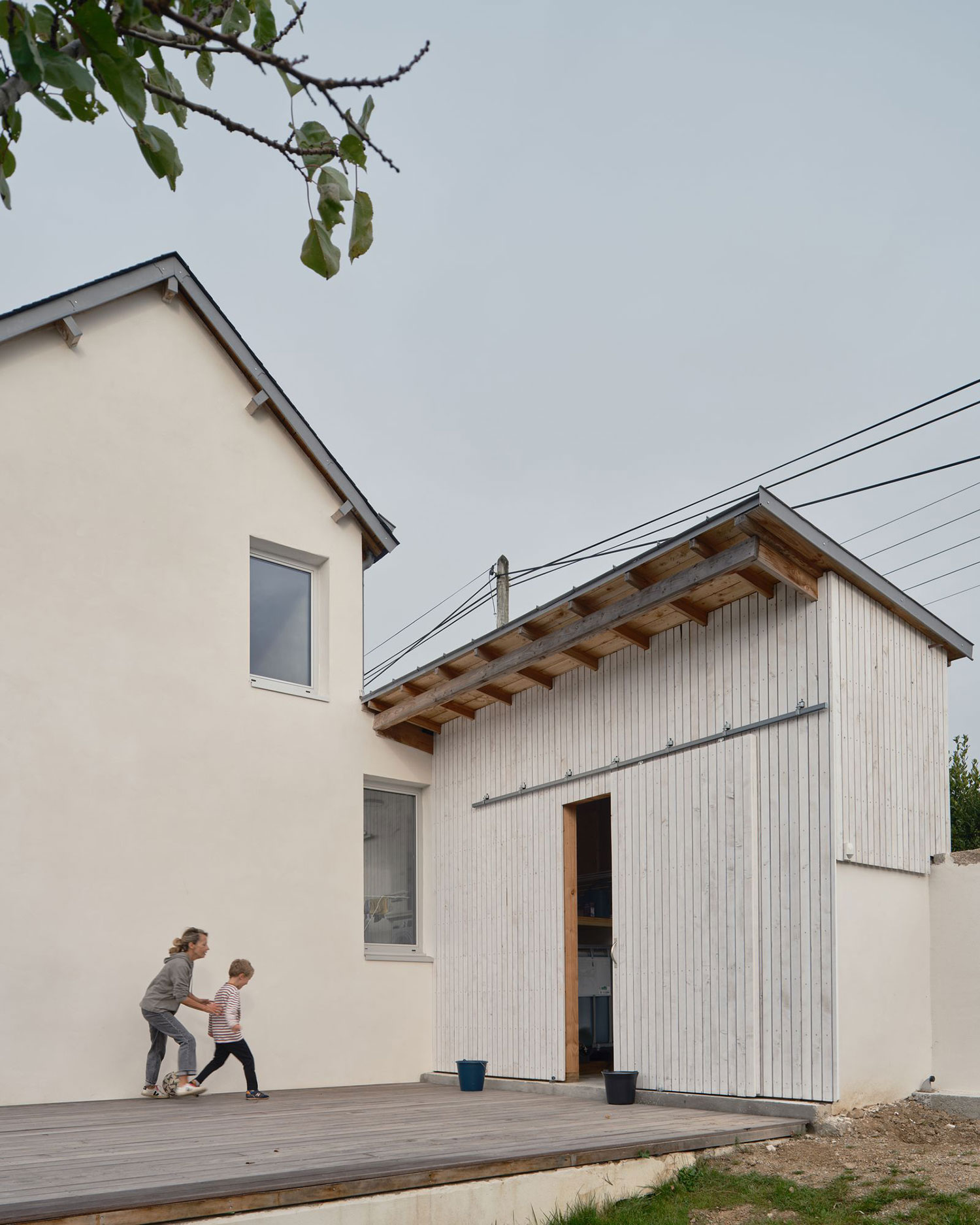
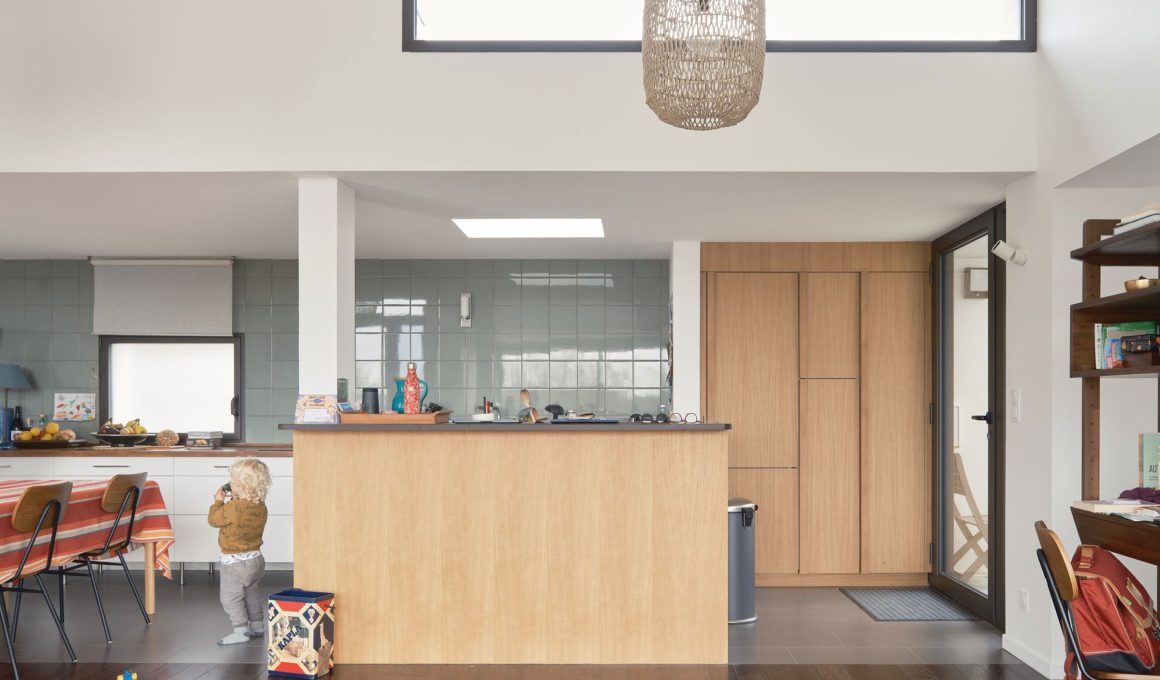
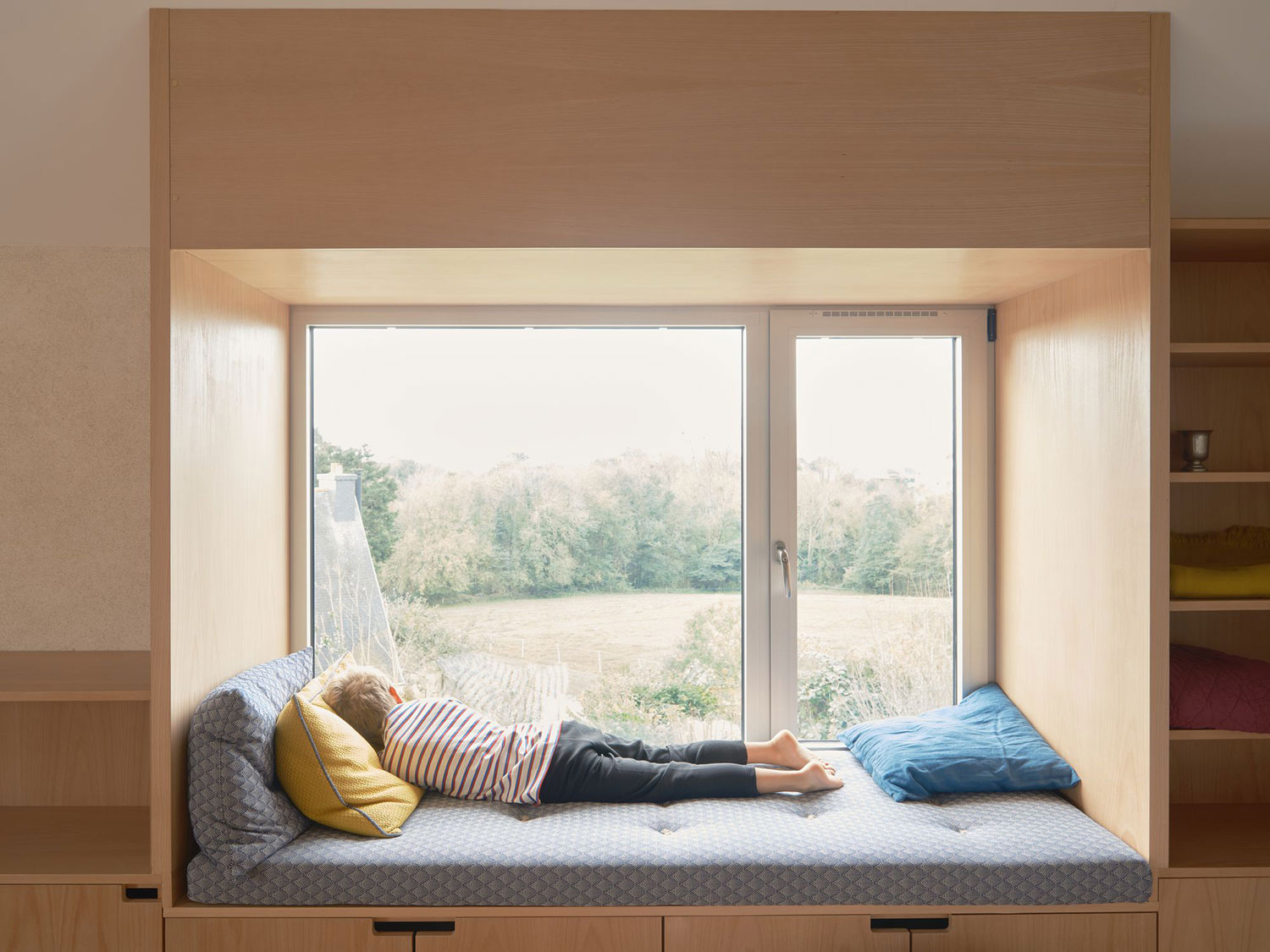
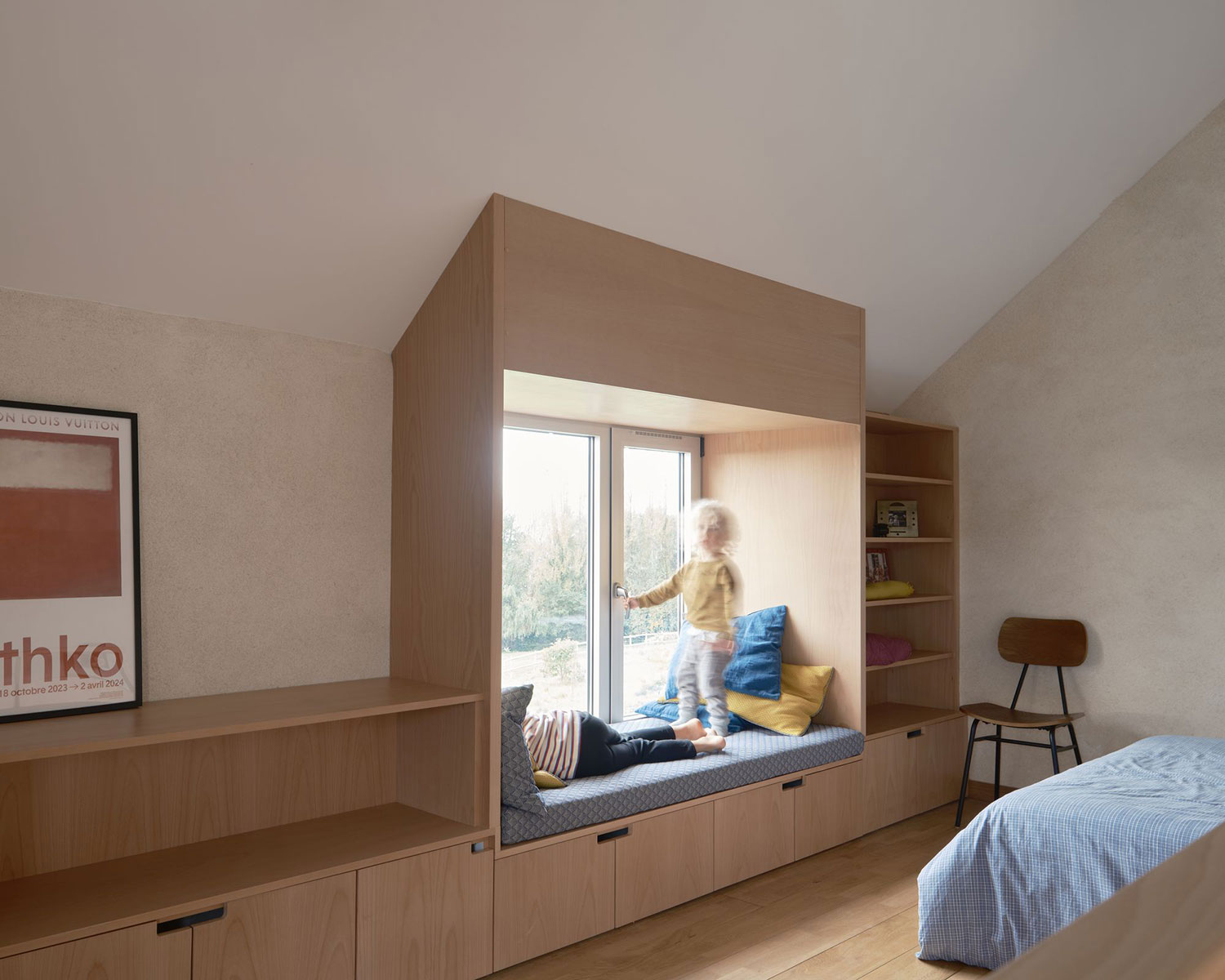
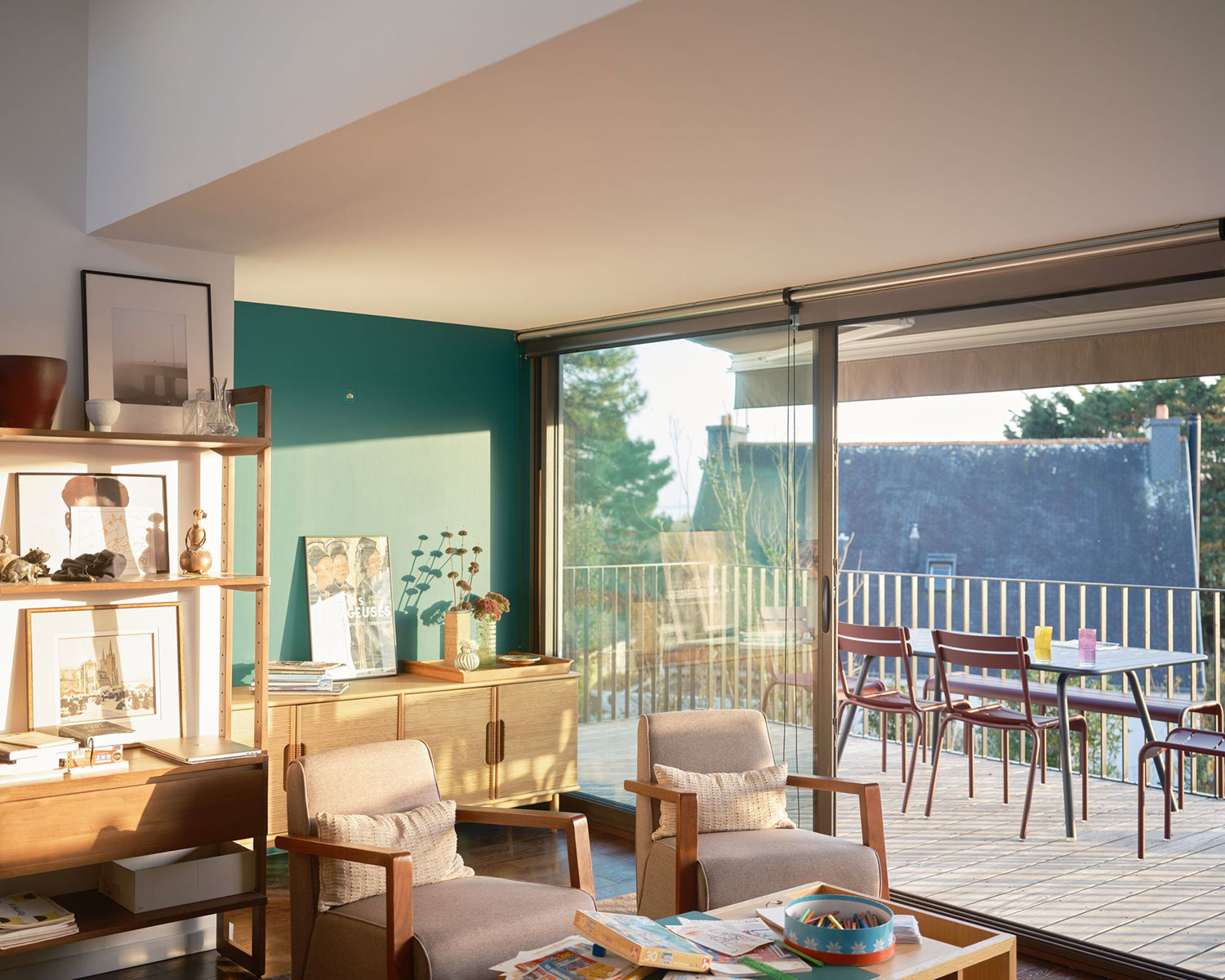
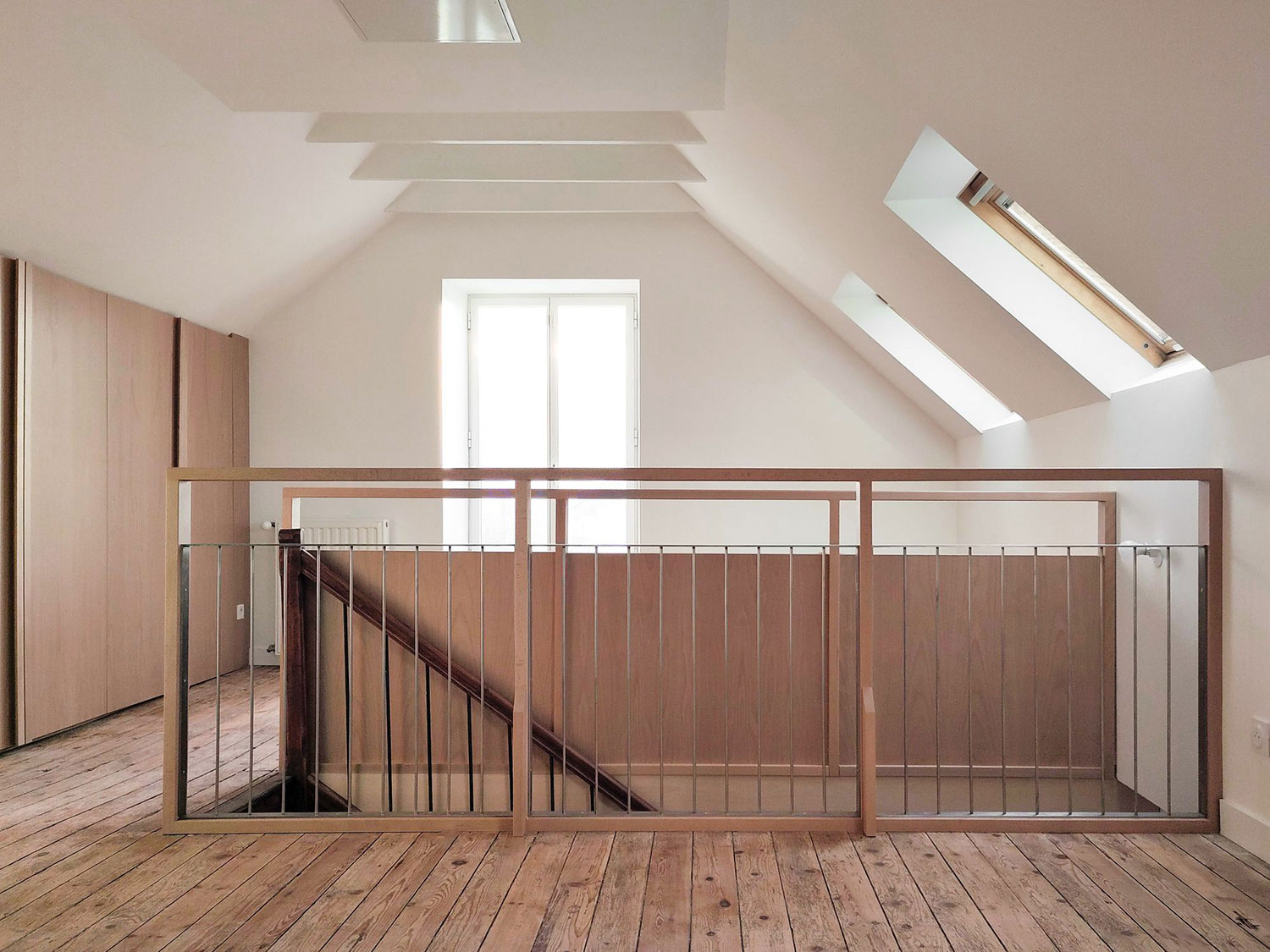
The owner’s desire to add two bedrooms for family and friends sparked a more ambitious undertaking. The project blossomed into a comprehensive renovation, encompassing a new entrance patio, a spacious terrace, a practical storage canopy, and a complete reorganization of the interior. The kitchen was opened to the living room, fostering a more convivial atmosphere, while a mezzanine, envisioned as a suspended cabin, was added, featuring a “habitable” window framing a breathtaking view of Groix Island. Further enhancing the living space, a walk-in closet was optimized to enlarge an existing bedroom, and two small attic rooms were combined to create a luxurious “suite” nestled in the upper reaches of the house.
The existing structure, a small stone fisherman’s house, had already been extended twice – once in 2007 with a minimalist white modern addition and again in 2014 with a garden-side extension featuring an English bow window. This latest project adds a new chapter to the building’s history, with a clear design language that distinguishes each construction period through distinct materials and styles. The 2024 intervention prioritizes local resources and bio-sourced materials, creating a truly sustainable and contextually sensitive addition.
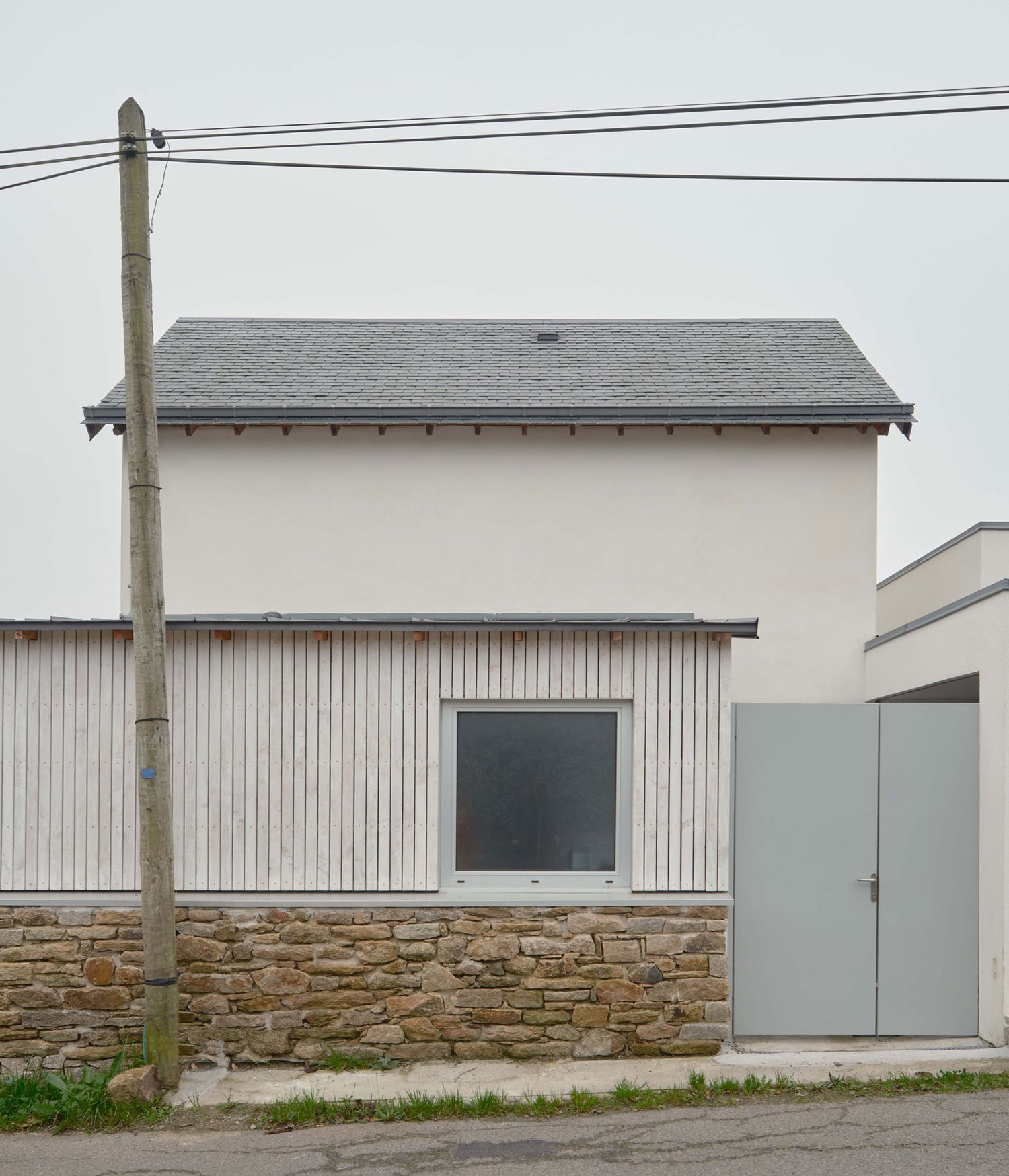
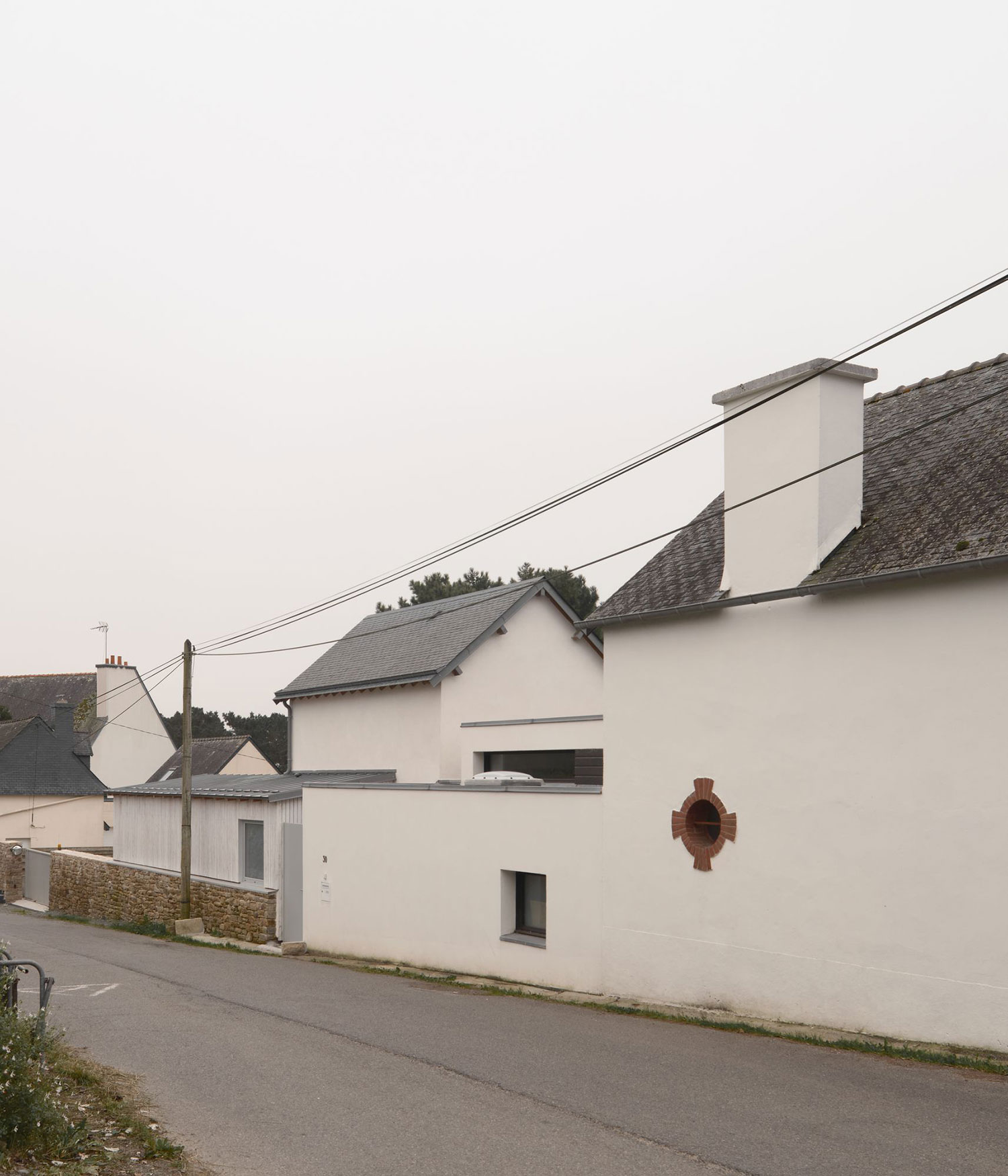
The new extension is constructed using prefabricated hempcrete blocks and timber framing, resting on a low wall built with locally sourced stones recovered from a nearby longhouse renovation. This echoes the existing street-facing walls and respects the area’s AVAP (Architectural and Landscape Heritage Protection Area) designation. The extension comprises two volumes: a two-story section set back from the street and a single-story section abutting the first and aligning with the street boundary, reminiscent of the lean-tos commonly attached to traditional Breton longhouses.
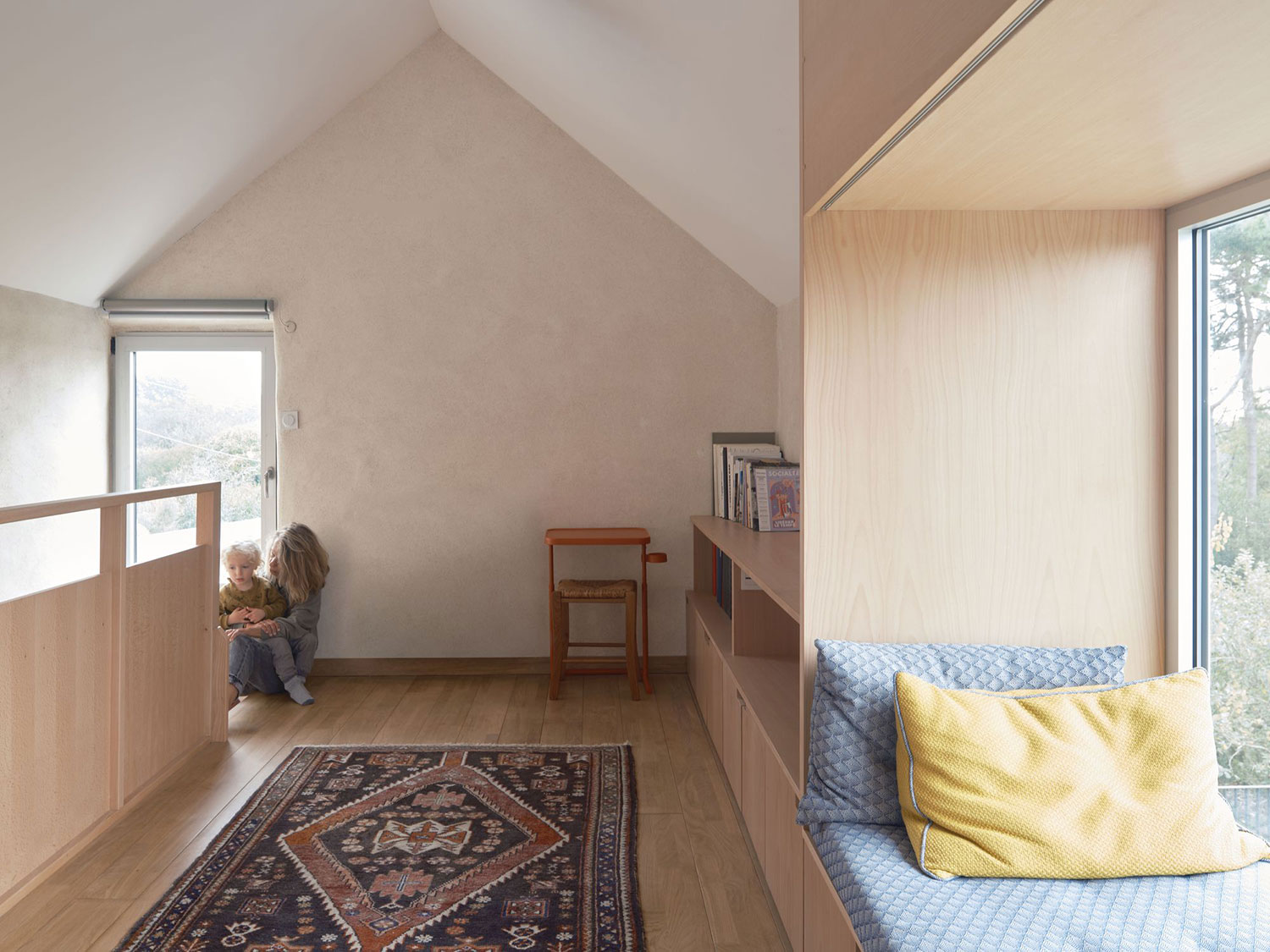
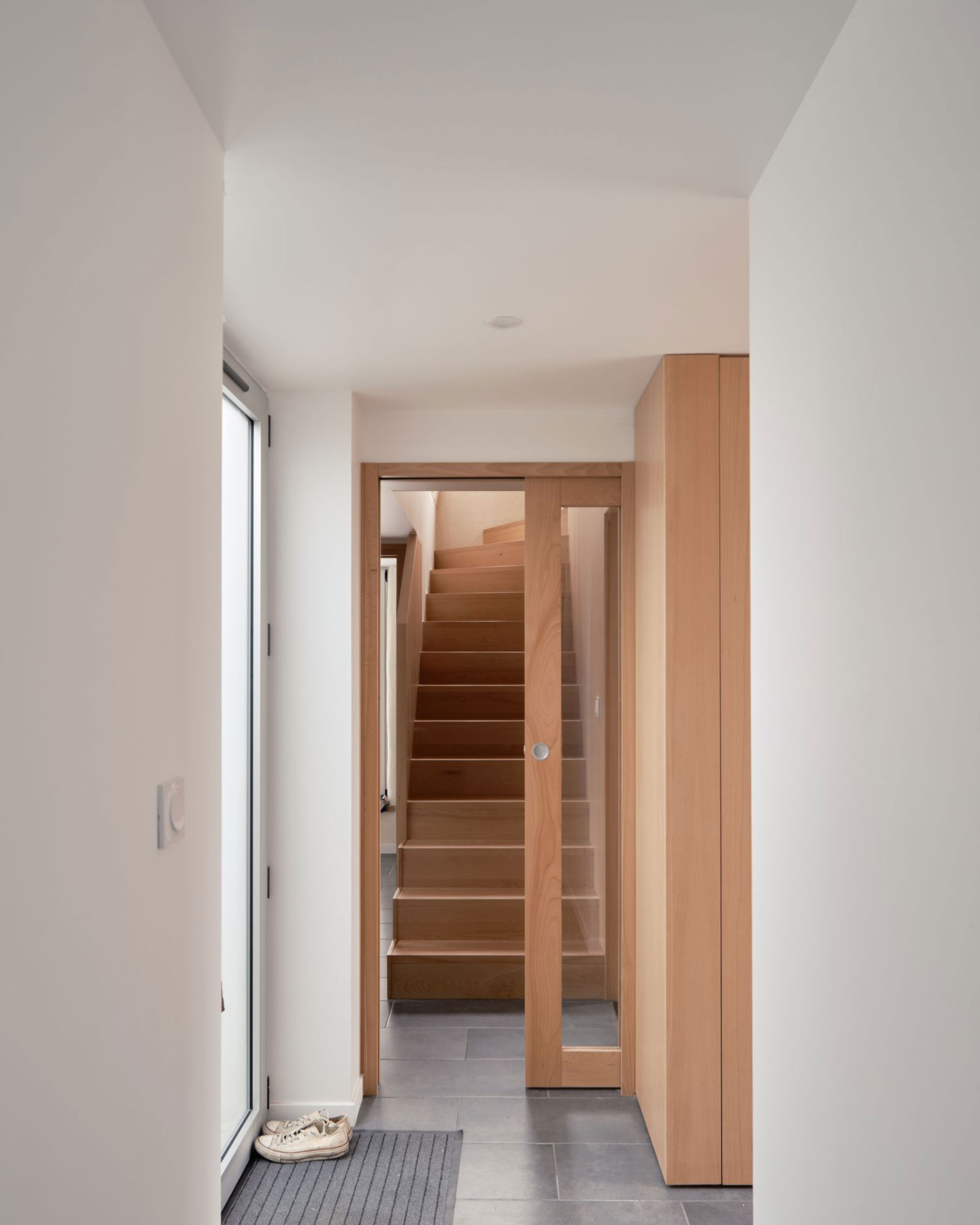
Sustainability is at the heart of this project. All insulation materials are bio-sourced, including expanded cork, wood wool, hemp wool, linen, and cotton used in the flooring. Custom-built plywood furnishings maximize functionality and create a warm and inviting interior. The hempcrete, finished with a lime and hemp mixture, contributes to the breathable and comfortable atmosphere within the extension.
Located in a residential neighborhood near the Laïta River estuary, the house serves as the owner’s primary residence. The gently sloping plot descends towards the sea, overlooked by houses on the opposite side of Rue du Port and offering views of a field with grazing horses on the garden side.
Upstairs, the centerpiece of the extension is the “perched cabin.” This unique space, with all four walls coated in lime-hemp plaster, offers a cozy and intimate atmosphere. From here, the carefully framed view of the sea and Groix Island creates a tranquil setting for relaxation, reading, and contemplation.
The project’s urban integration is both discreet and harmonious. The extension, featuring a two-story hempcrete volume and a single-story timber-clad volume, interacts seamlessly with the existing structure. A sliding interplay between these volumes creates an entrance patio and a west-side storage canopy. The new construction reinterprets the traditional Breton longhouse, with its two-pitched slate roof and adjoining lean-to, while embracing a contemporary facade design.
The extension and renovation of this seaside house in Clohars-Carnoët is a testament to sensitive and sustainable design. By respecting the existing architecture, utilizing local materials, and prioritizing the owner’s needs, Socle has created a home that is both beautiful and functional, a true sanctuary by the sea.