

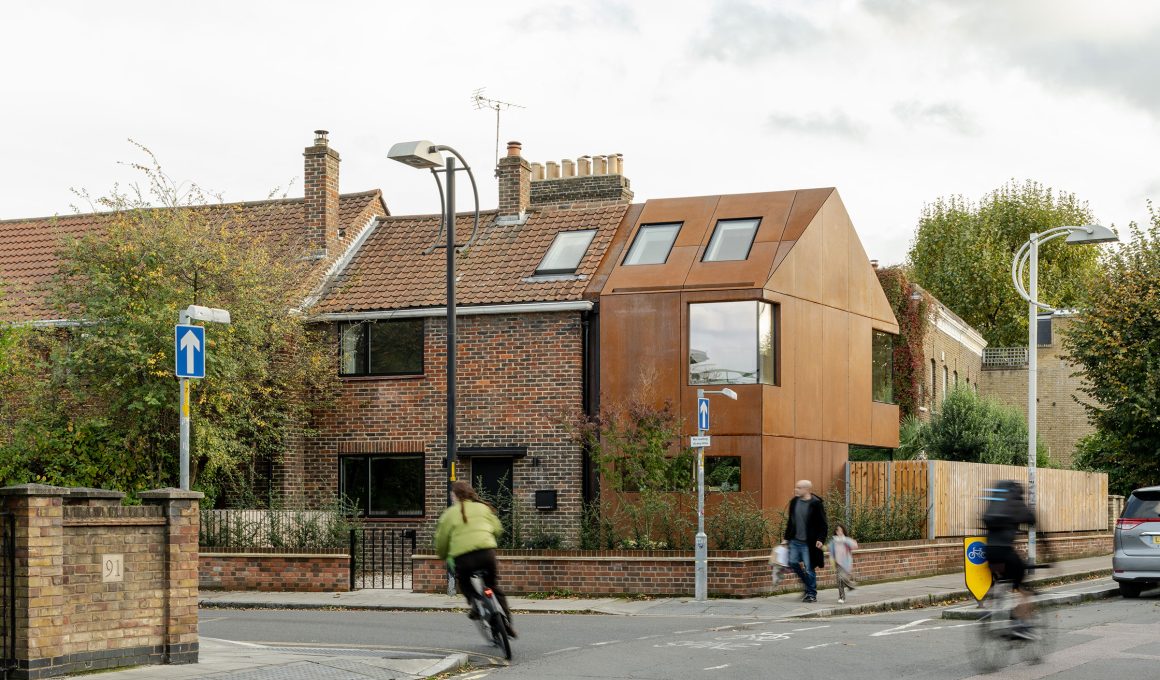
The Holly Grove Conservation Area in Peckham, South London, is now home to a striking example of modern architecture seamlessly integrated with its historic surroundings: the “Rusty House on the Rye.” This 1950s property, prominently situated on the corner of Bellenden Road and Rye Lane, has undergone a dramatic transformation thanks to its owner, Victoria, and local architect Sarah Borowiecka of Studio on the Rye.

Victoria, after years of fending off developers, decided to expand her home herself. She enlisted Sarah and her all-female team in early 2023 with a clear brief: a two-storey extension maximizing space while preserving the beloved garden and side access. Key additions included a larger kitchen (suitable for working from home), a snug, a utility room, and a new master bedroom suite. The existing house also required modernization, addressing damp, ventilation, and energy efficiency.

Working within a conservation area presented unique challenges. Studio on the rye’s solution was to avoid mimicking historical styles, instead opting for a contemporary design that harmonized with both the 1950s house and the older buildings nearby. A key decision was the choice of weathered Corten steel cladding. This striking material, with its distinctive rusty patina, not only complements the existing red brick but also adds a unique visual element. The weathering process was accelerated to achieve the desired look upon installation, creating a cohesive aesthetic within the conservation area.
The design emphasizes simple, monolithic forms, with recessed gutters and shadow gaps subtly separating the extension from the original house. This creates a clean, modern aesthetic while respecting the existing structure.
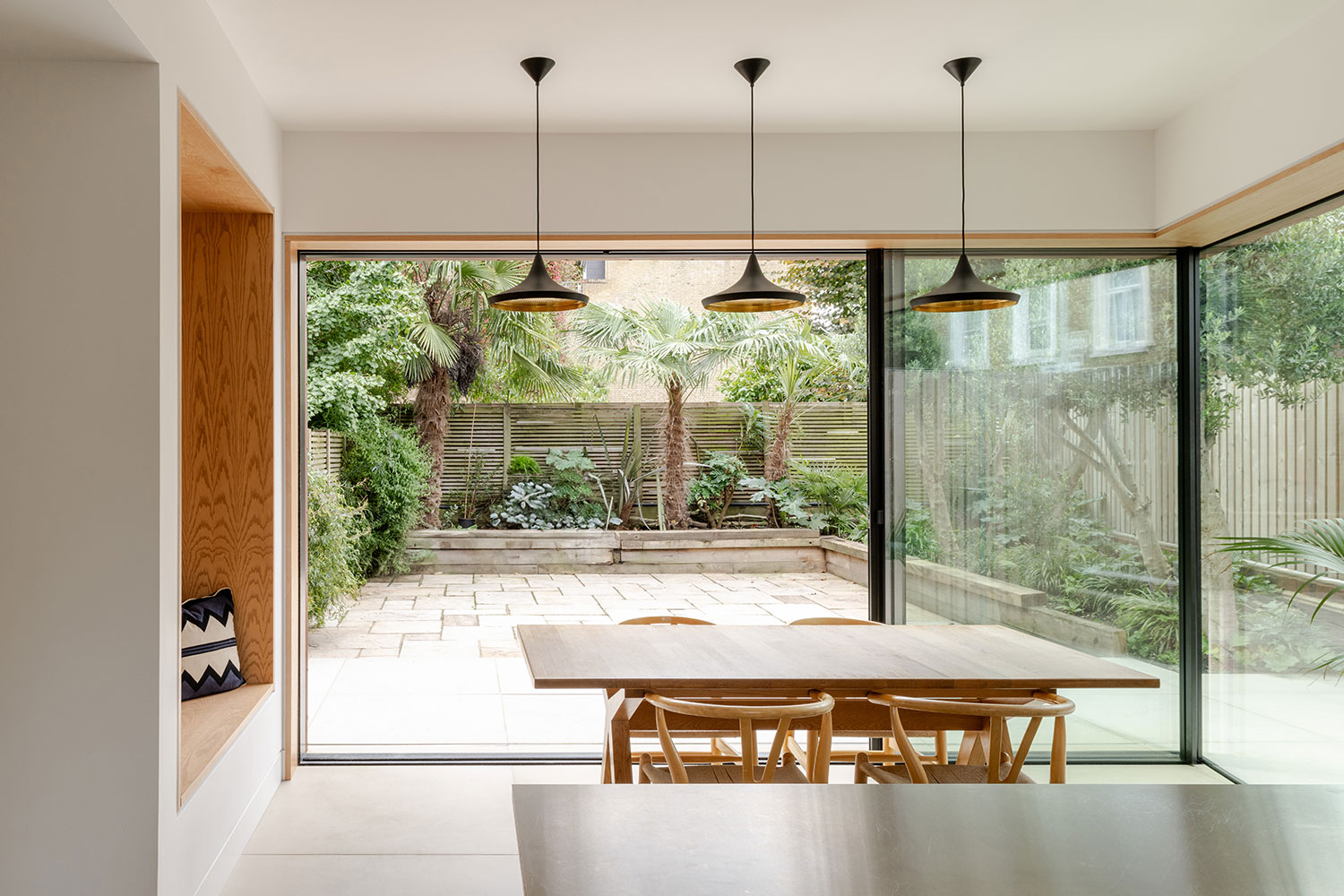
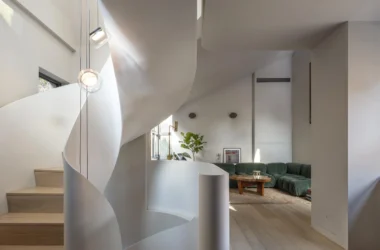
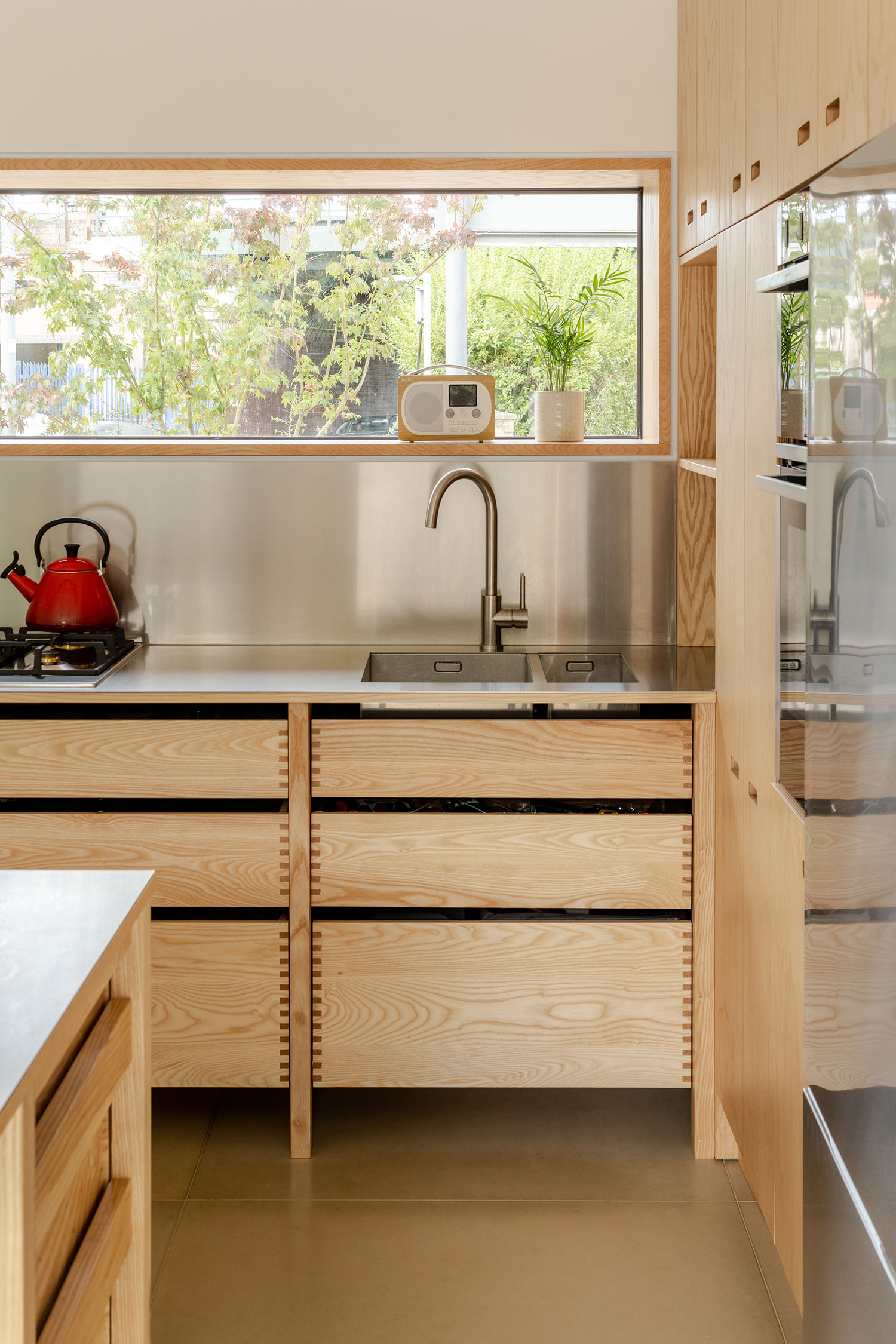
The extension significantly expands the living space, encompassing a new kitchen/dining area, utility room, and snug on the ground floor, and a master bedroom with an ensuite and walk-in wardrobe upstairs. Inside, new windows, doors, a revamped stairwell, and a new staircase enhance the flow and functionality of the home. The kitchen, designed by studio on the rye, features bespoke ash joinery, while polished concrete tiles and oak flooring create distinct zones within the open-plan layout.
A standout feature is the bespoke corner windows in the kitchen and master bedroom. Their unusual angle, dictated by property lines, required sourcing specialized glass from Fluid Glass. The project prioritized UK-based suppliers, including Havwoods for timber, Lazenby for concrete tiles, Astro for lighting, and The Rooflight Company for roof lights.
Working with Corten steel posed technical challenges. The potential for rust runoff staining was addressed with a sealant. Extensive collaboration with metal suppliers and the contractor ensured a seamless installation of the steel panels.
The corner windows in the master bedroom presented a challenge for blackout solutions. Studio on the rye designed bespoke sliding MDF shutters that conceal within the walls, offering a practical and aesthetically pleasing solution.
Maintaining a strong connection to the garden, despite the reduced side garden space, was a priority. Large sliding doors, a glazed corner in the kitchen, and expansive windows create a seamless transition between indoors and out. Sustainability was also a key focus, with improved insulation, triple-glazed windows, and an energy-efficient bioethanol stove.
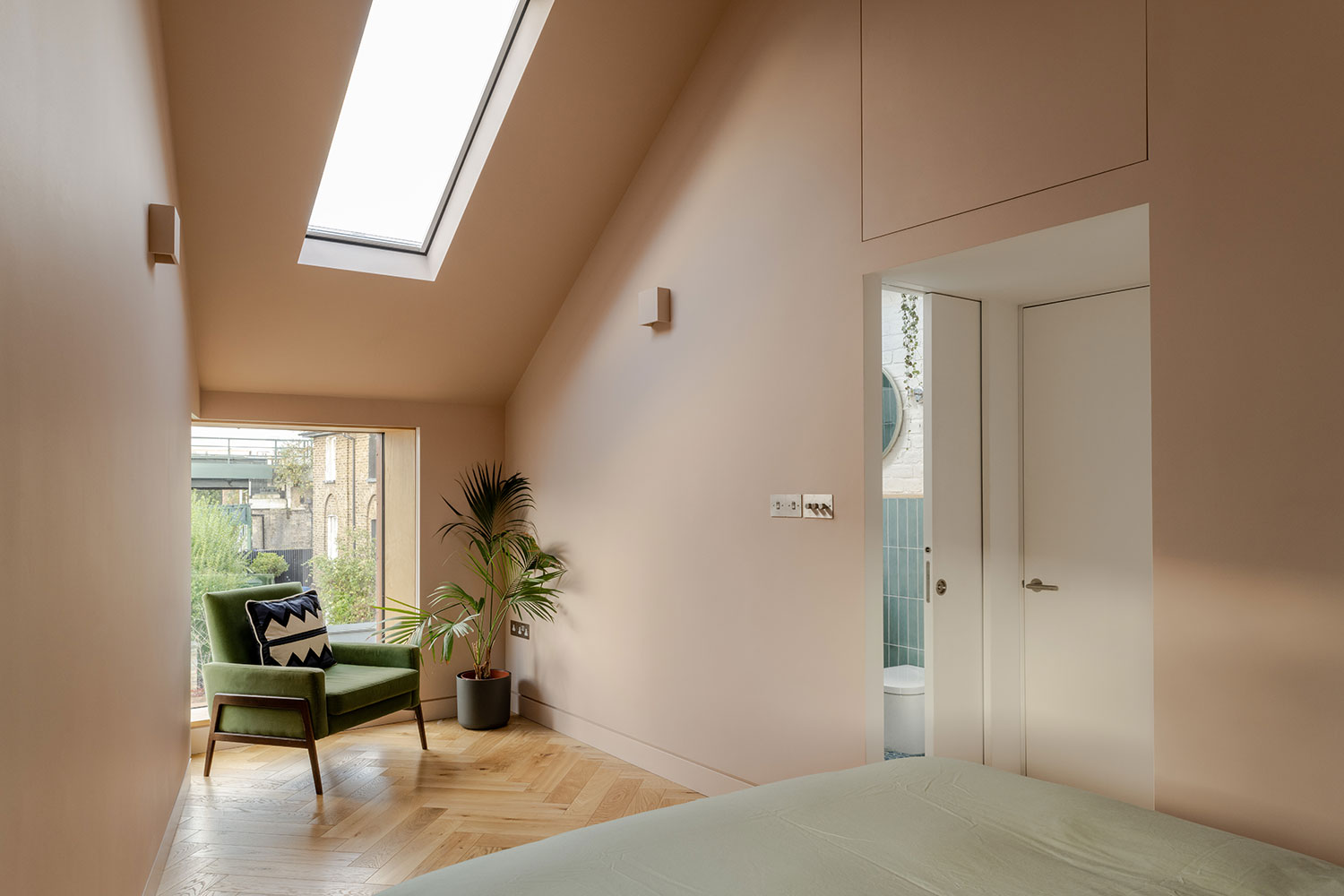
The interior aesthetic is defined by simplicity and calm, using natural materials to add warmth and texture. Ash window surrounds, bespoke joinery, oak parquet flooring, and concrete tiles create a minimalist, Scandinavian-inspired atmosphere. Natural light is maximized through roof lights and large windows.
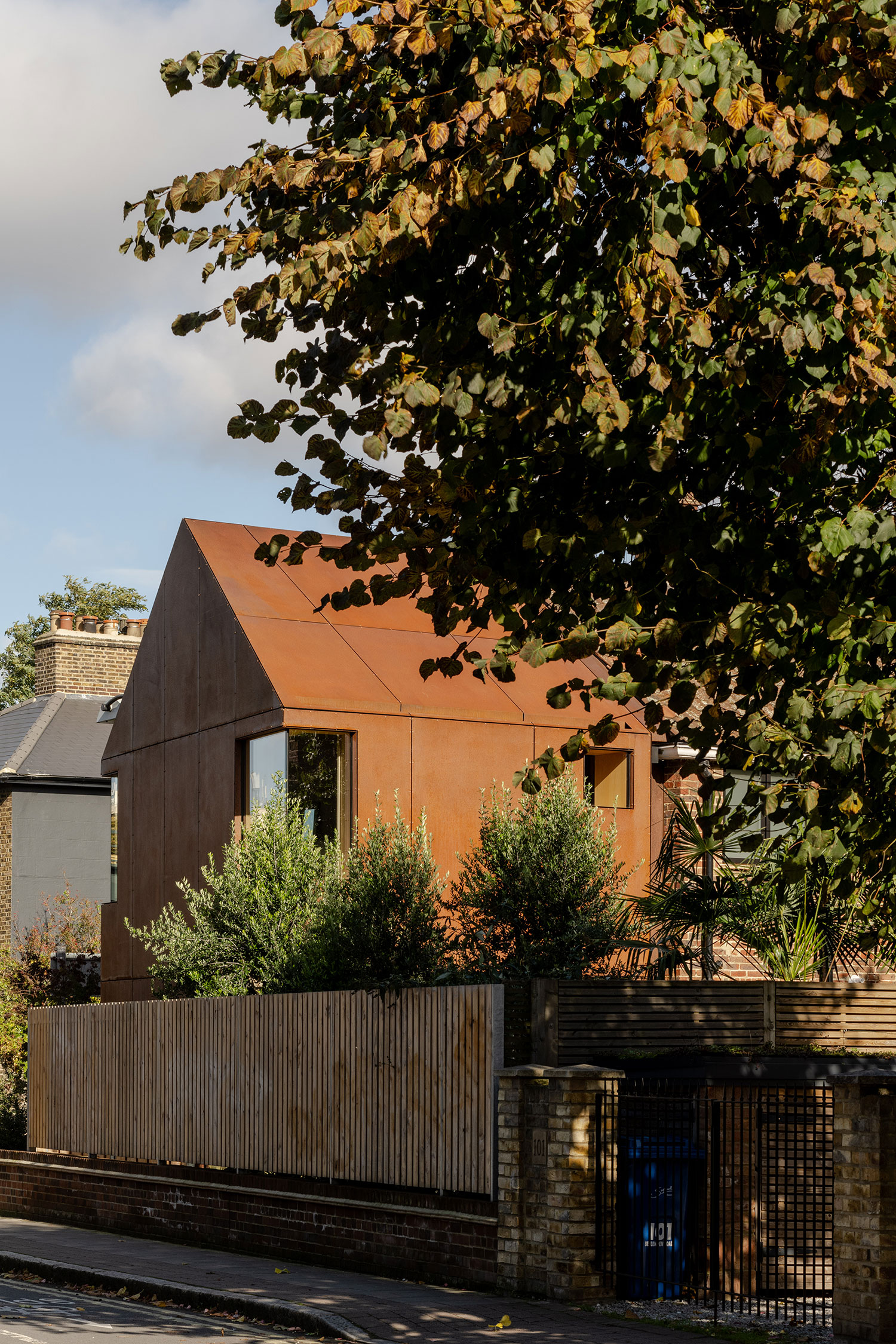
For Sarah Borowiecka, who named her practice after the area and has lived in Peckham her entire life, the “Rusty House on the Rye” is more than just a project. It represents a meaningful contribution to her community, a visible and lasting addition to the neighborhood. Her deep local connections facilitated smooth collaboration throughout the design and construction process. This project is a gateway into Peckham, reflecting Sarah’s personal and professional identity, and a testament to the power of thoughtful, contextually sensitive design.