

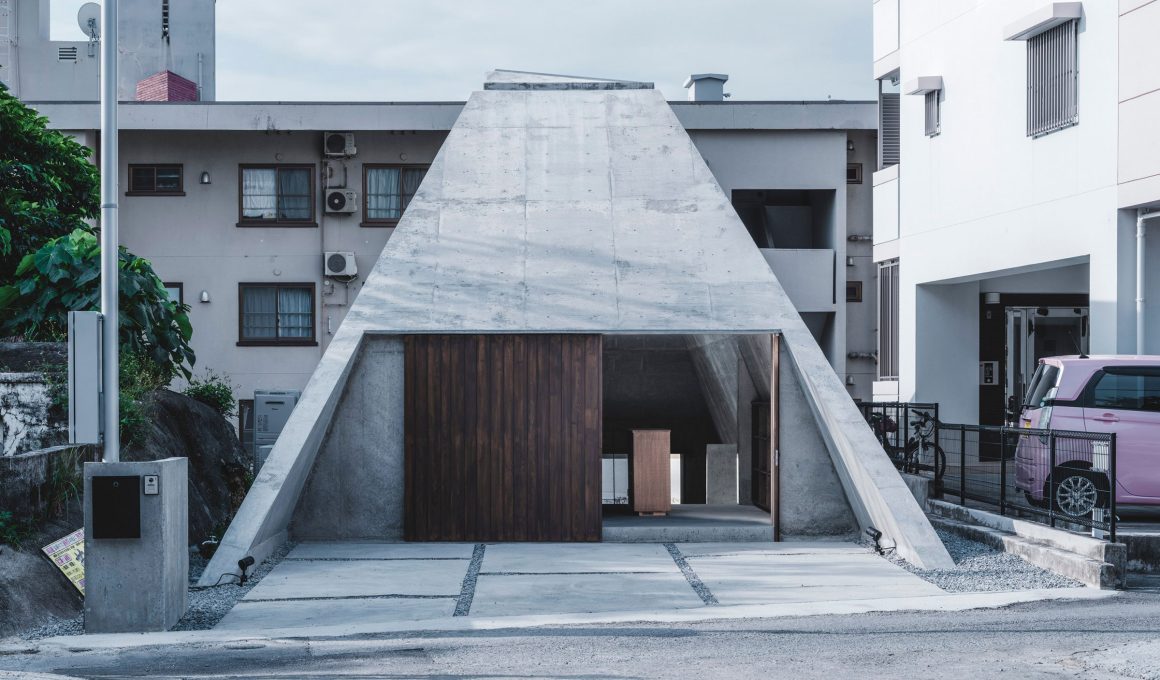
Nestled in a valley-like setting in Okinawa, Japan, surrounded by apartments, a cemetery, and a gently sloping landscape, stands a unique residence: the Pyramid Hut. Designed by IGArchitects, led by Masato Igarashi, this concrete structure challenges conventional Okinawan architectural styles, offering a dignified and private sanctuary for a married couple.
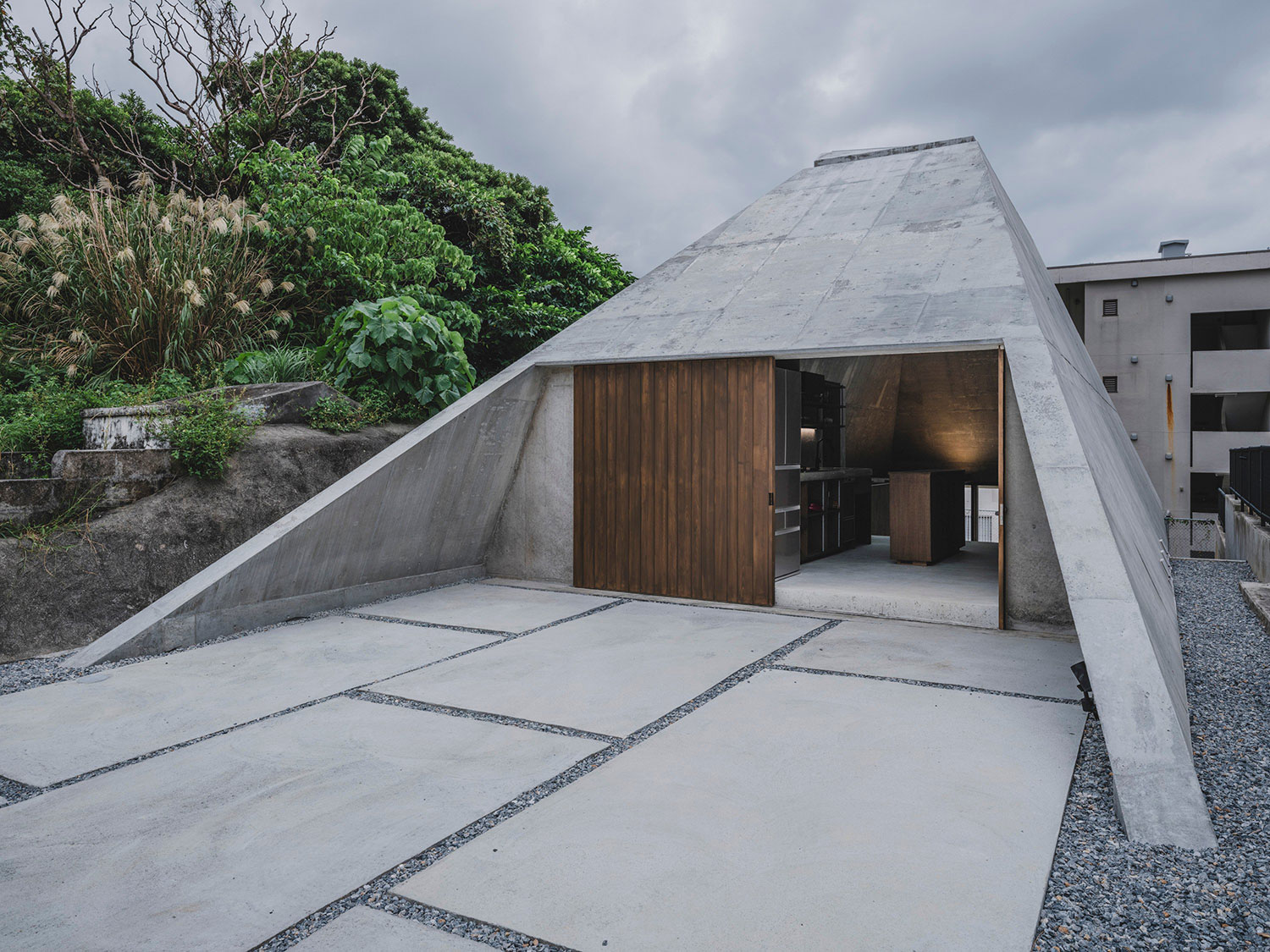
The site presented several challenges. Hemmed in on three sides and with the adjacent cemetery’s vegetation spilling onto the property, the location felt enclosed, almost like the bottom of a valley. The architects felt that the typical Okinawan style, characterized by large openings and a strong connection to the outdoors, was inappropriate for this context. Instead, they envisioned a building that, while maintaining a sense of openness within, would create a deliberate distance from its surroundings.
The studio’s aim was to create a building with a “dignified appearance” and an “austere interior free from external influences.” They sought to design a structure with an enduring quality, one that would retain its value and purpose even after changes in ownership or function – a timeless piece of architecture.
The design solution was a bold one: a square pyramid, reminiscent of a portable shrine, perched atop a stepped foundation. The sloping site was terraced into three levels, with the retaining walls serving as the foundation. This ingenious approach not only addressed the site’s topography but also created a visually striking form. The pyramid, elevated from the Ryukyu limestone layer, appears to stand on “clogs,” as the architects describe it, creating a sense of permanence and stability, as if it would remain steadfast even if the surrounding earth eroded.
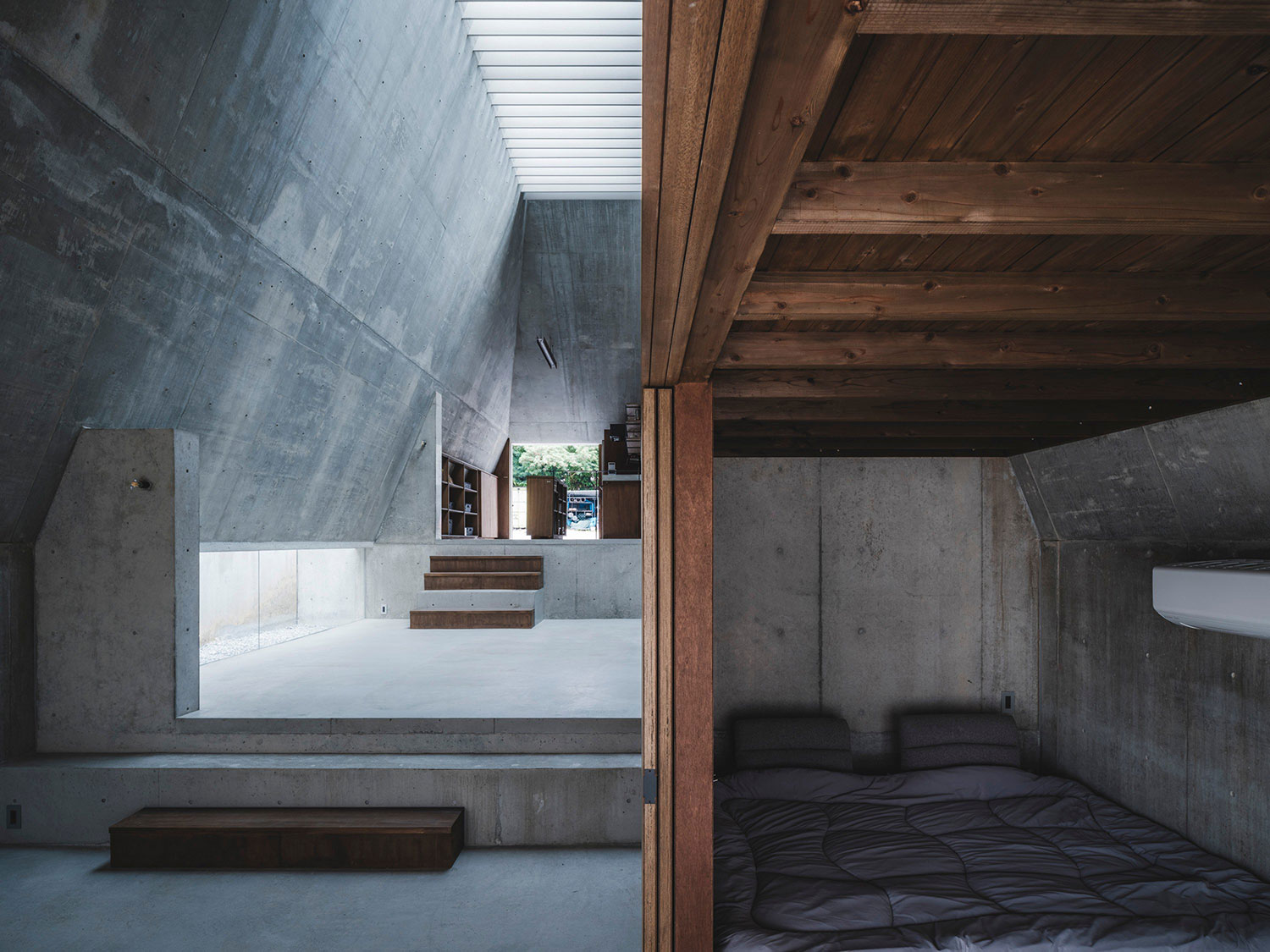
This closed pyramidal form offers more than just structural stability; it provides privacy and a sense of dignity. While openings were strategically placed in the foundation and roof to provide light and ventilation, the overall form maintains a sense of enclosure, creating a peaceful and introspective space.
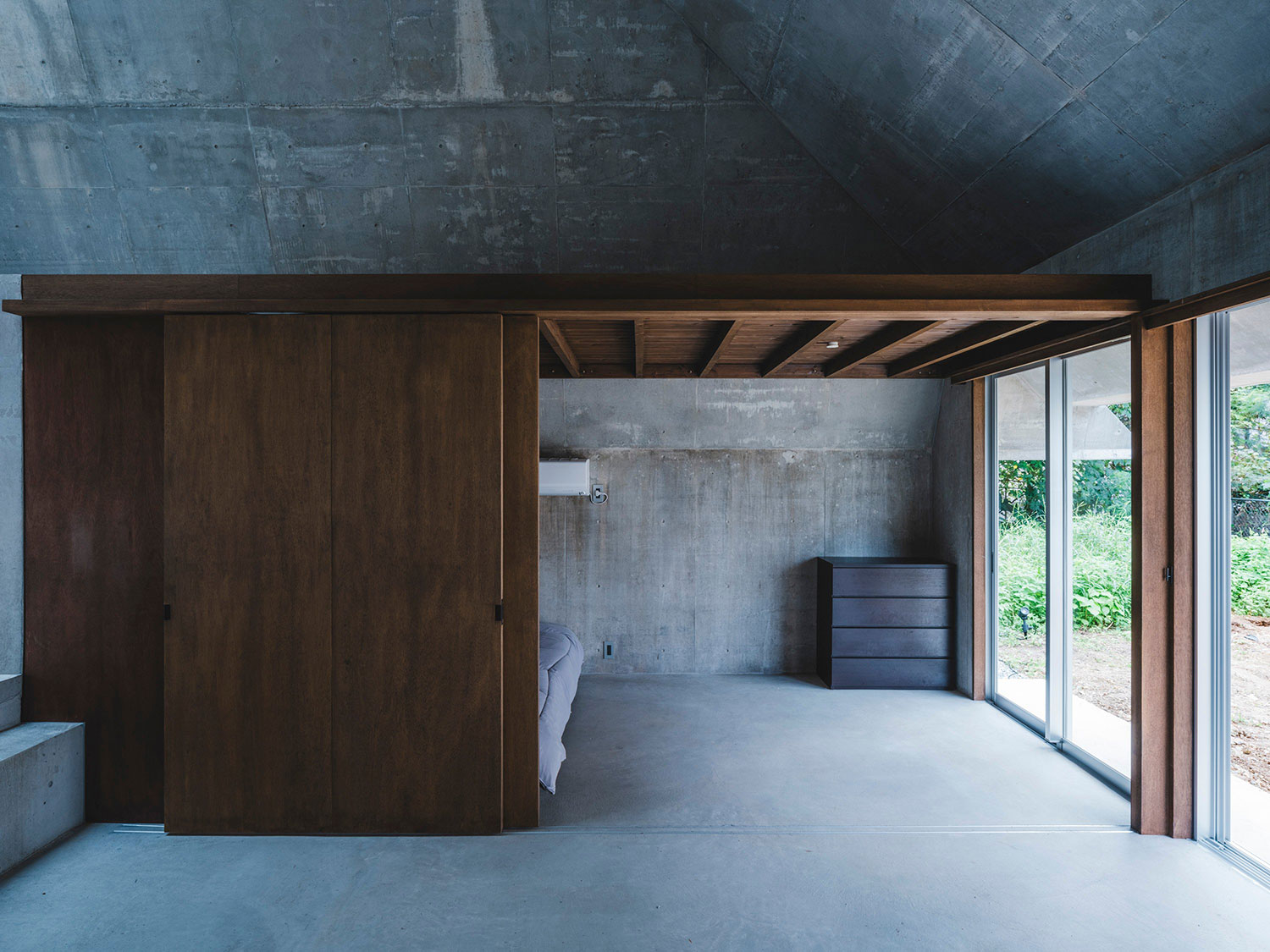
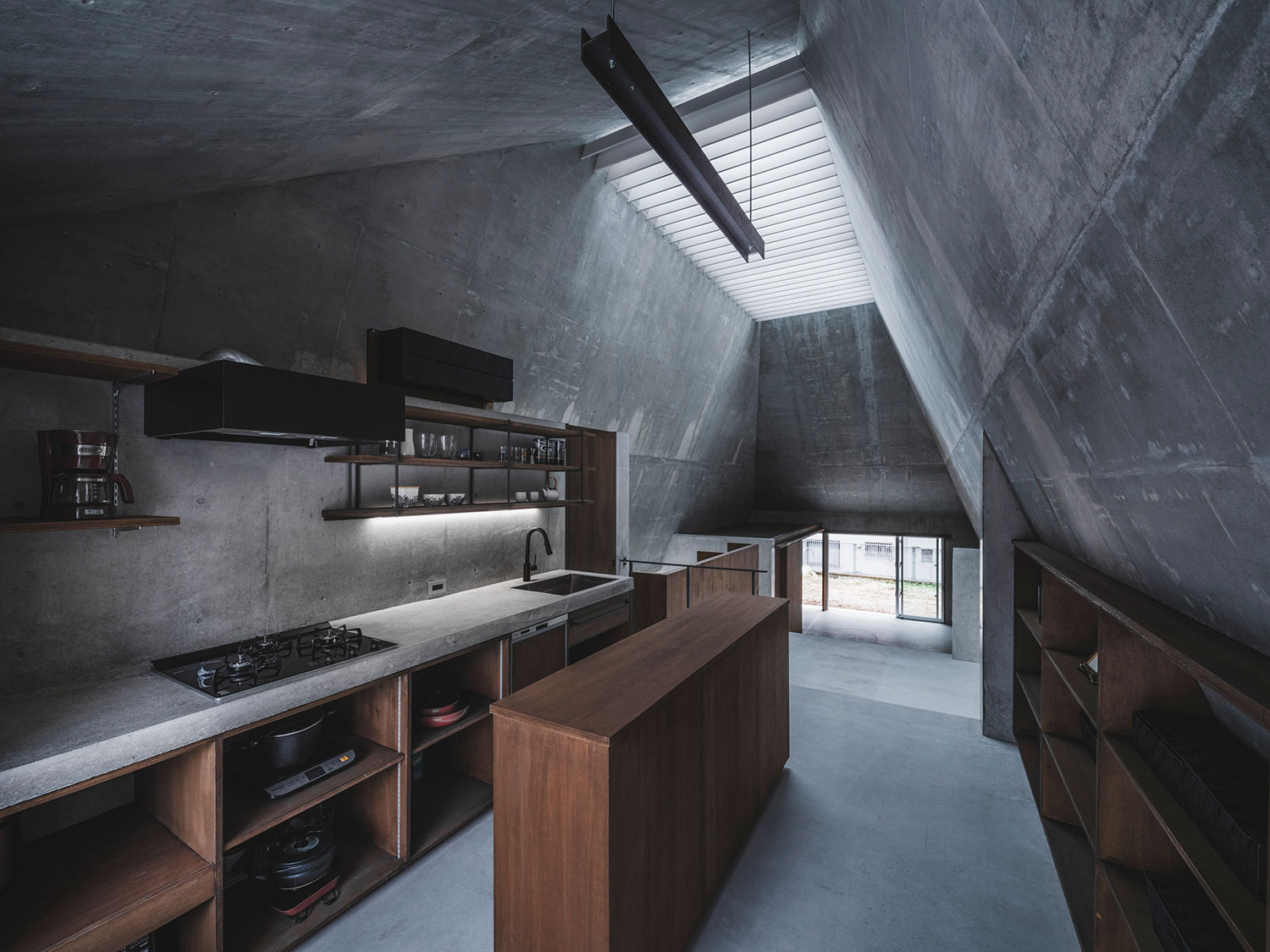
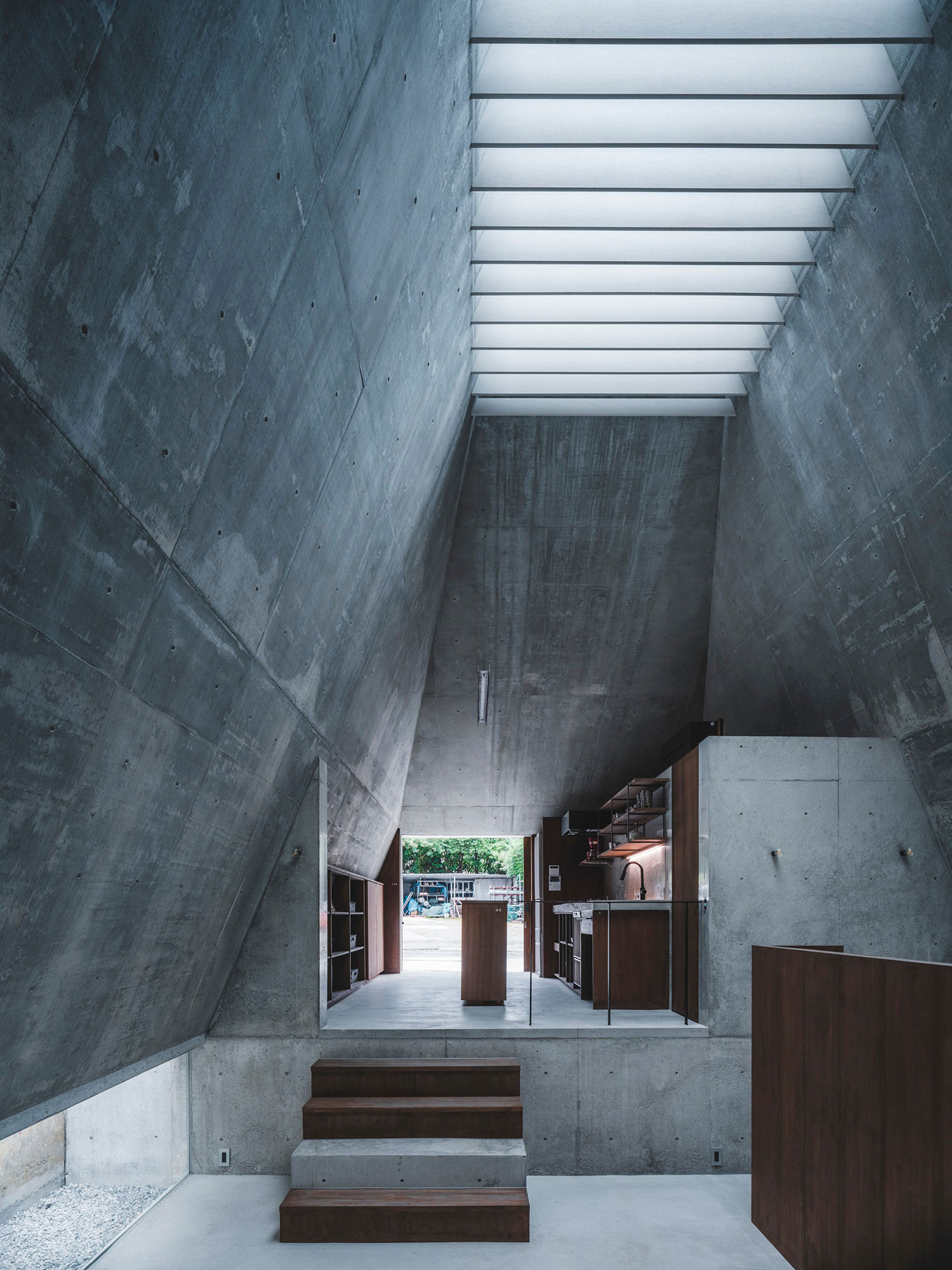
The interior is simple and functional. The lowest level houses the bathroom and entrance, efficiently grouping the plumbing. Stepping down one meter leads to the combined living/dining room and study. The uppermost level, at the back of the pyramid, contains the bedroom and other private spaces. The architects describe the interior as a living space created with wood under a skylight, nestled within the concrete mass like a ruin, evoking a sense of history and timelessness.
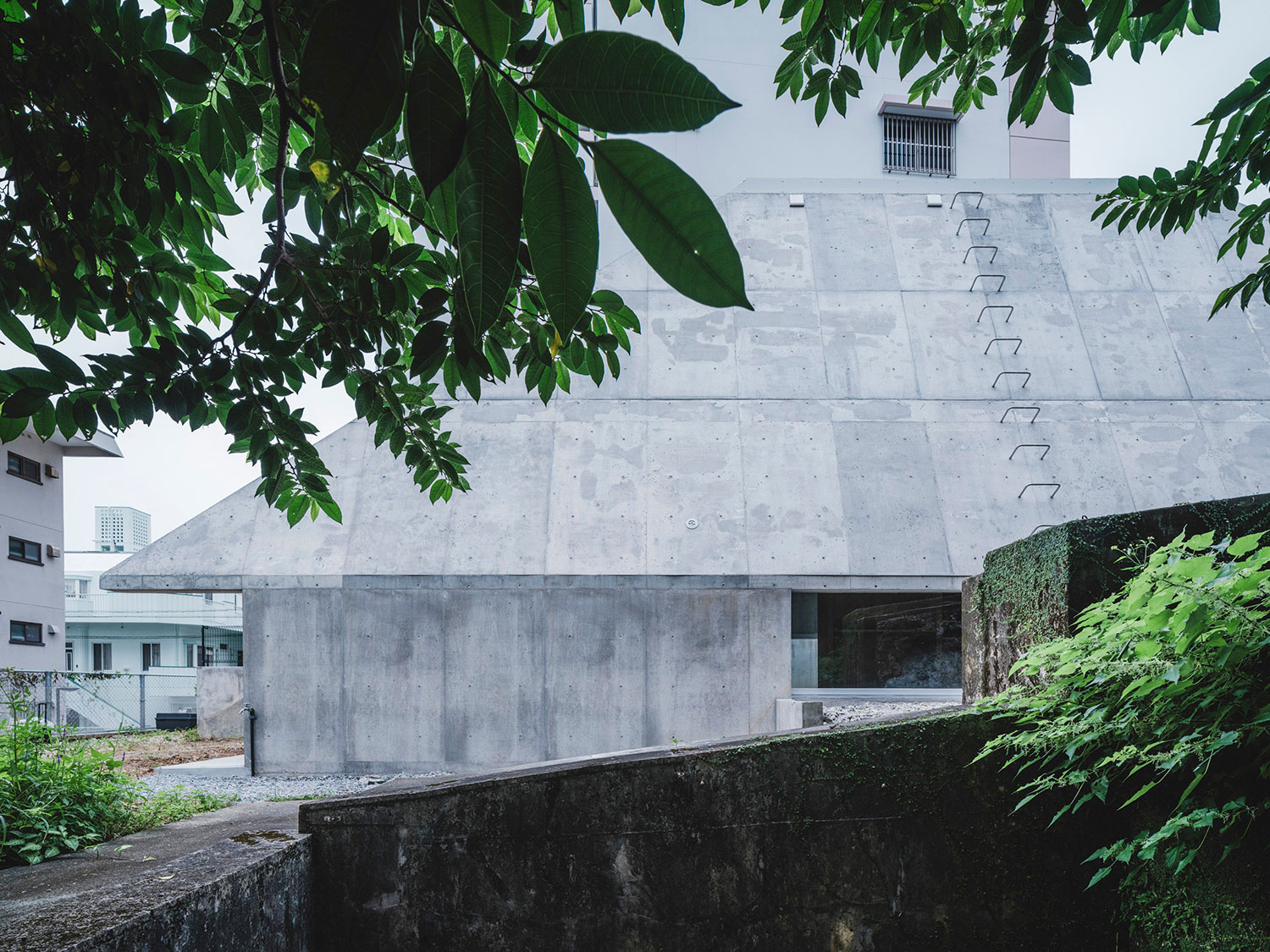
The architects drew inspiration from Okinawa’s ancient tombs, which are designed to withstand the harsh climate and endure for generations. These tombs serve as places of gathering, celebration, and reverence, embodying the wisdom and culture of the island’s ancestors. The Pyramid Hut, with its pyramidal form, shares a visual kinship with these ancient structures.
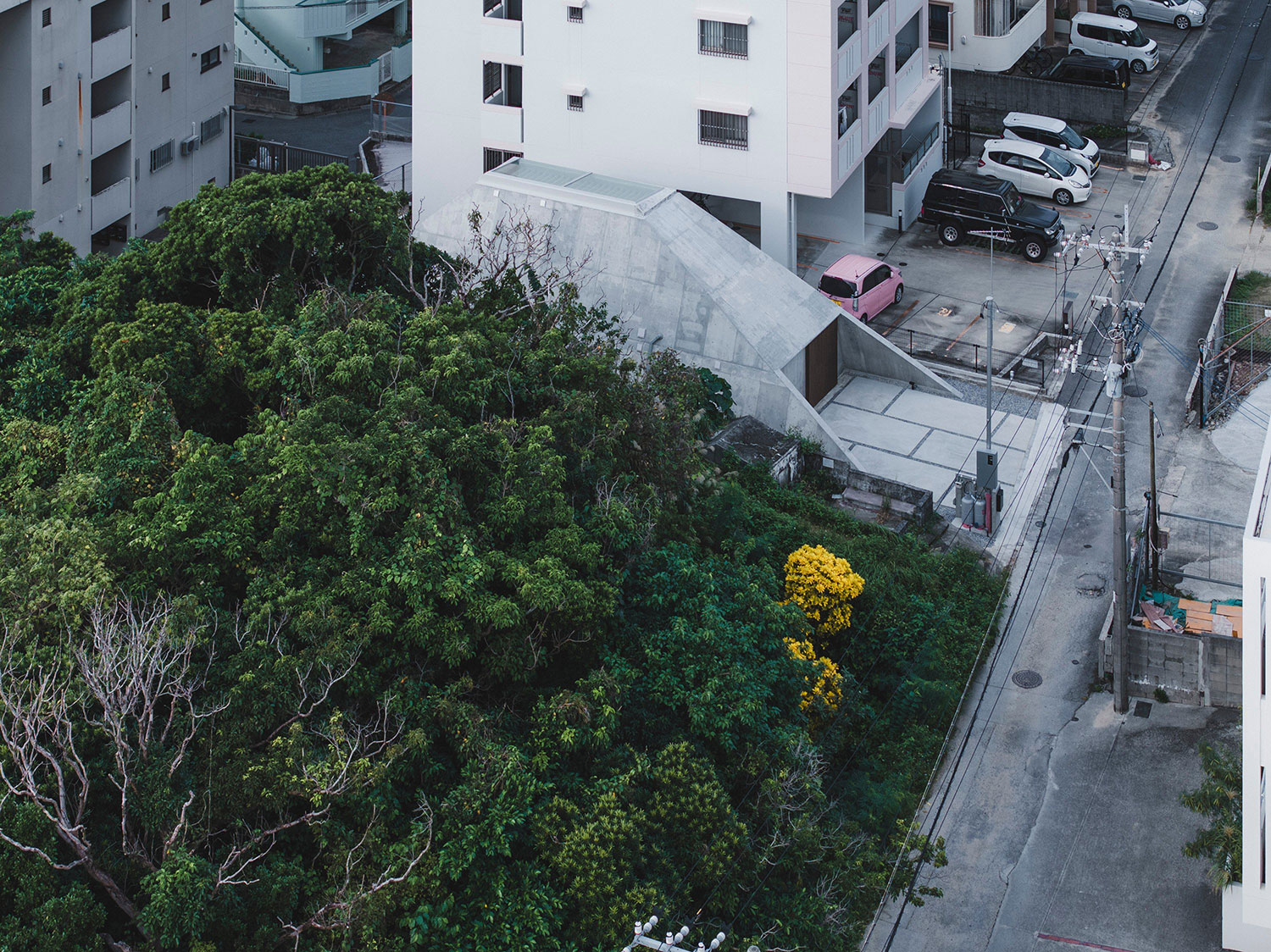
While the shape was primarily driven by considerations of climate, wind, rain, surrounding environment, and budget, the completed structure resonated with a deeper meaning. It seemed to embody the same sense of permanence and festivity that the Okinawan ancestors instilled in their tombs. Despite its unconventional form, the Pyramid Hut possesses a distinct Okinawan character, a testament to the architects’ sensitivity to the local context and their desire to create a building that is both modern and timeless. The Pyramid Hut stands not just as a residence, but as a modern-day mausoleum, a testament to enduring design and a unique response to a challenging site.