

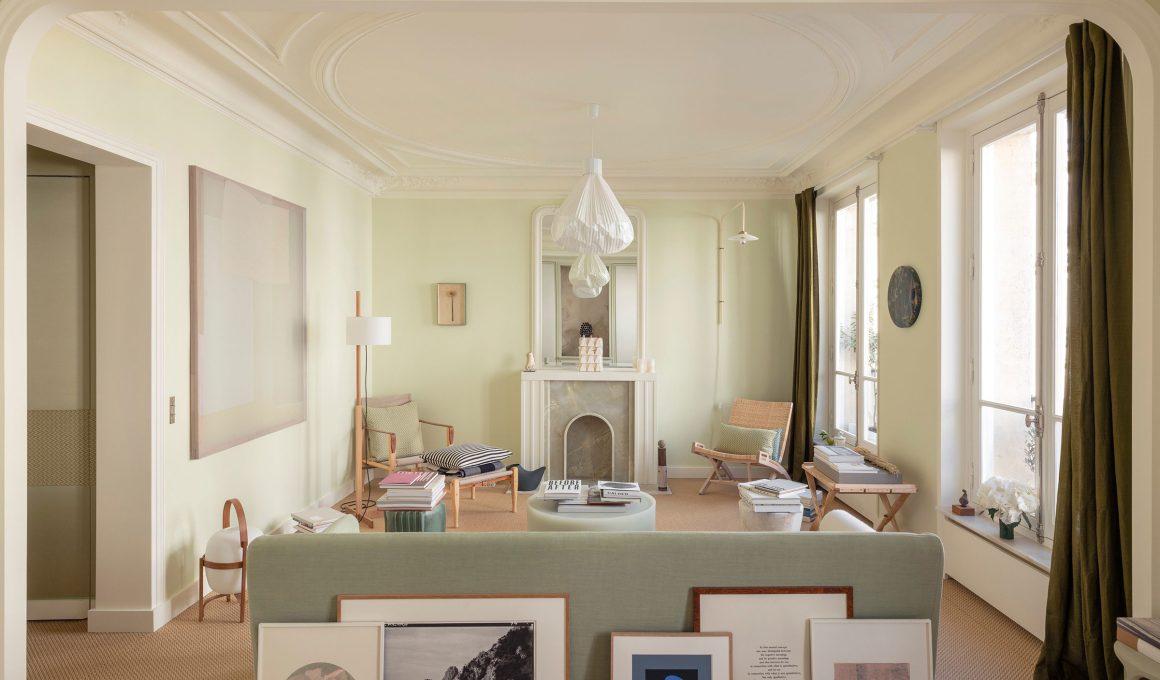
Nestled in the heart of the charming Village d’Auteuil in Paris‘ 16th arrondissement, a Haussmann apartment has been reborn as a sophisticated haven, reflecting the vision of designer Francesco Balzano and his studio, After Bach. This residence serves not only as a home but also as the designer’s personal studio, a stone’s throw from the Villa Montmorency and the Le Corbusier Foundation.
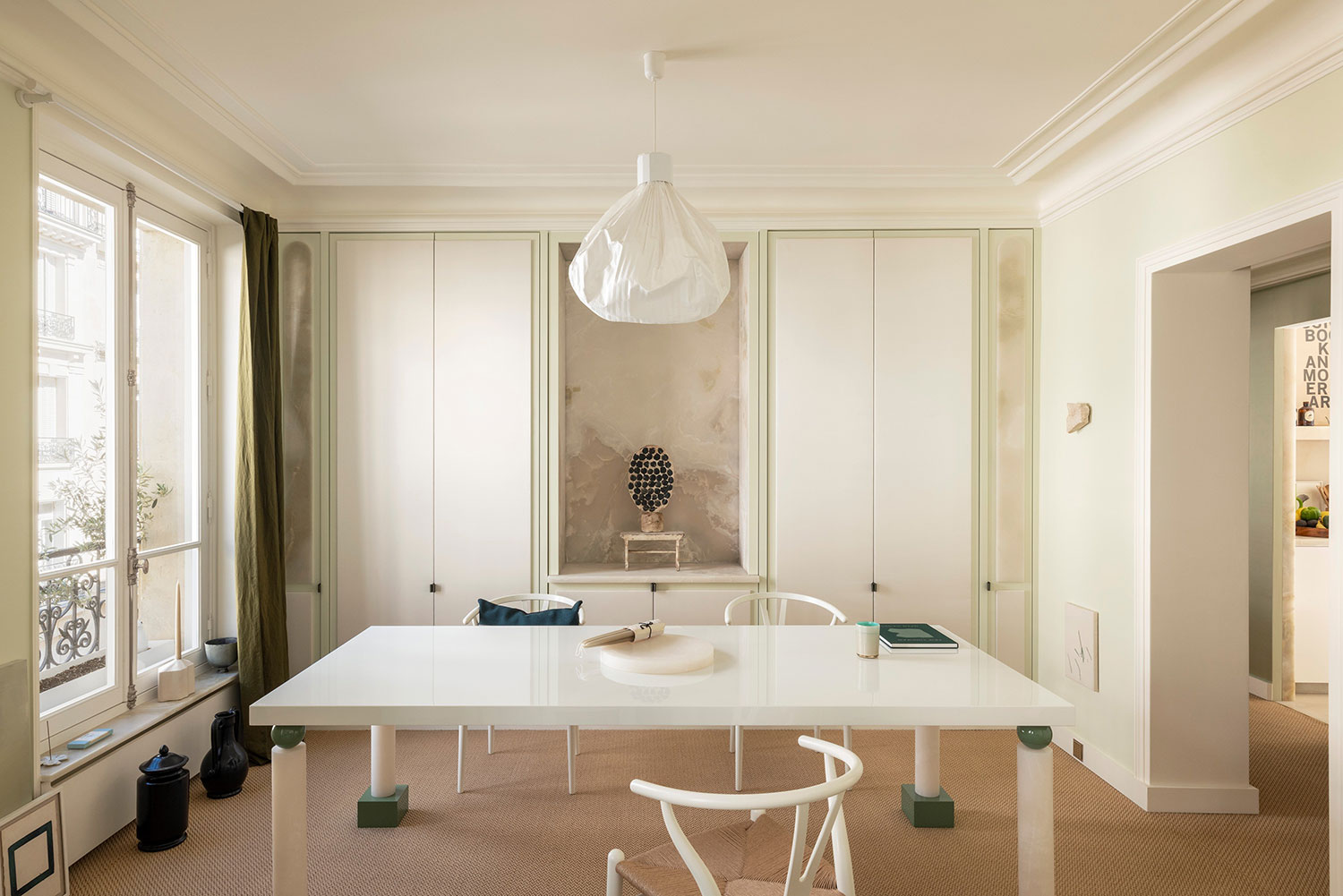
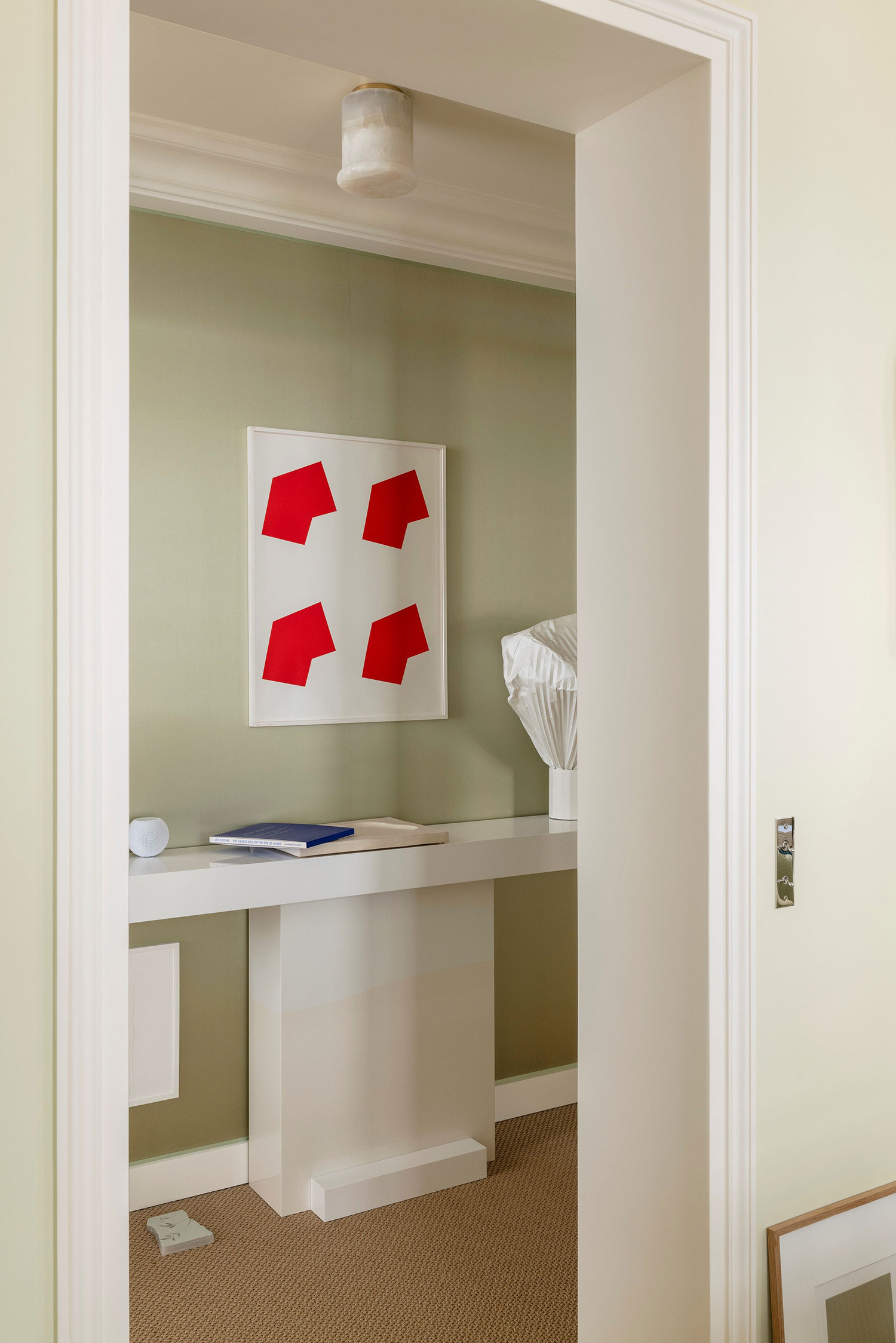
Balzano’s design philosophy for the Auteuil Apartment centers around a return to nature and the integration of art into everyday life. The apartment unfolds as a refined Parisian garden, a tranquil and precious space. Shades of green and ivory tones create a harmonious backdrop for a curated collection of art and furniture, many pieces designed by Balzano himself.
The layout is thoughtfully arranged for a couple, with a gallery-like entrance providing access to the main living areas. A double exposure, east to west, illuminates the spacious living and dining room, as well as the bedroom on the west side. The east side houses a private office and kitchen. The bathrooms, conceived as luxurious installations, command attention, reminiscent of the grandeur of Versailles.
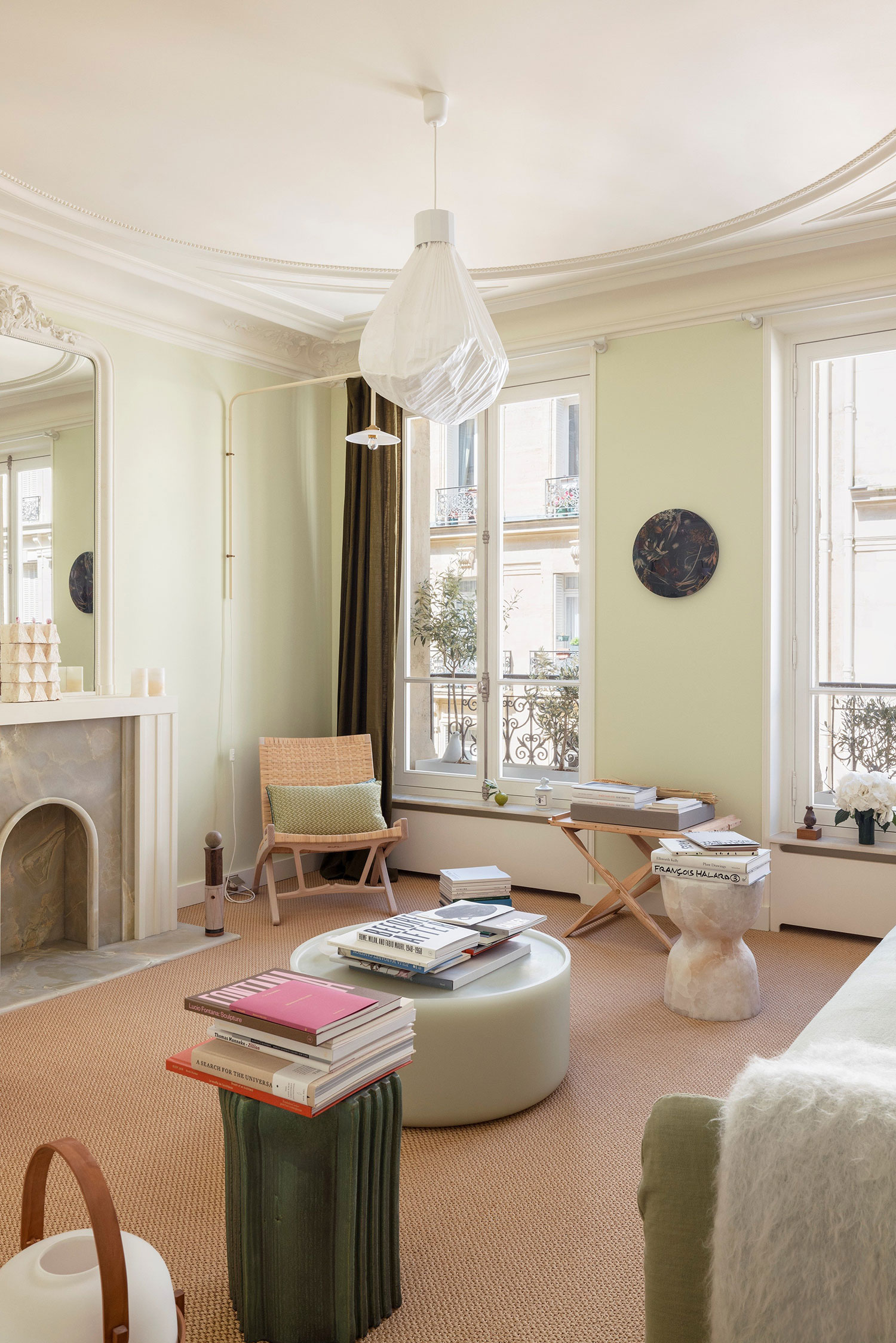
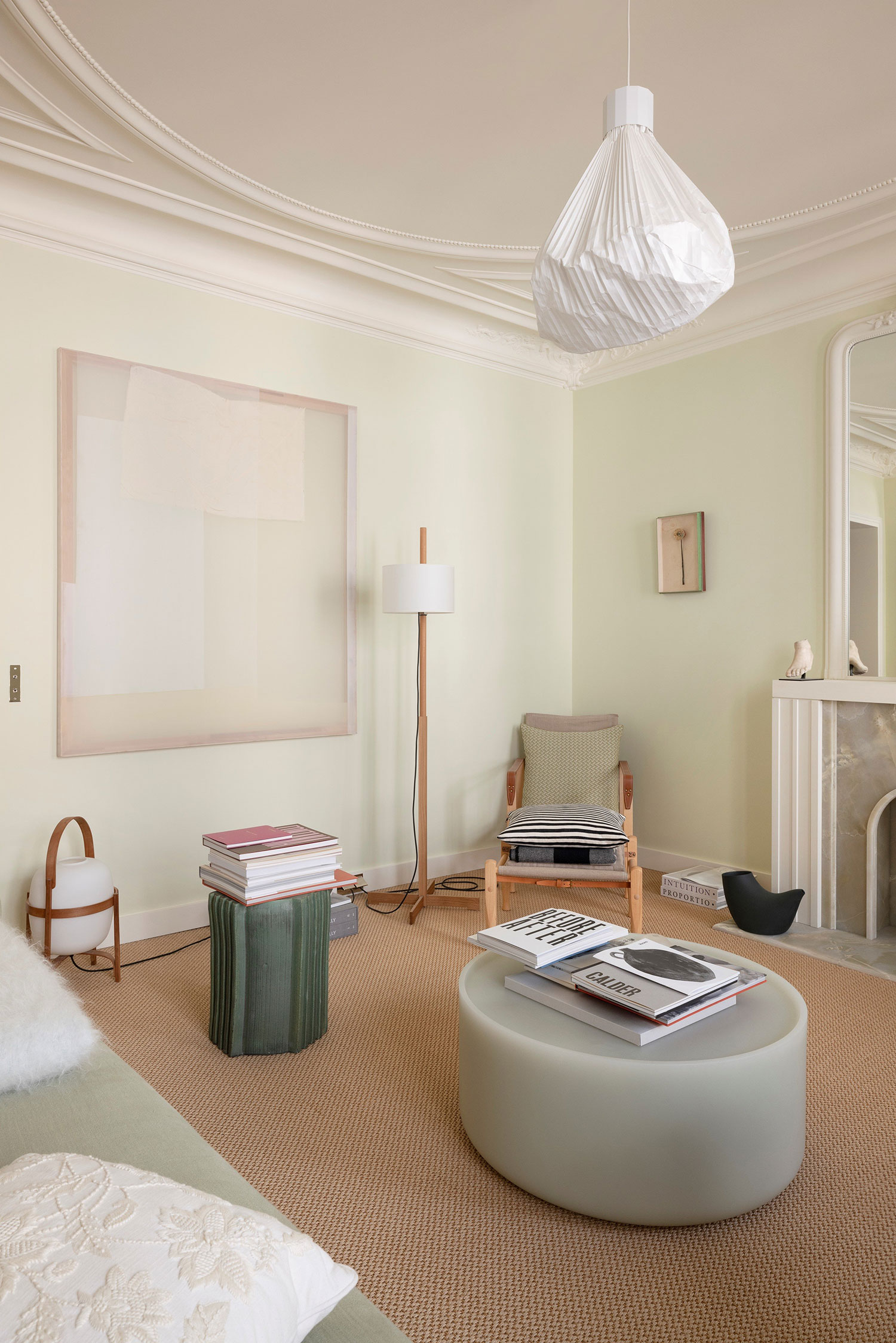
Balzano’s material and color palette subtly nod to the Italian architect Piero Portaluppi. Pale green fabrics and satin ivory, ultra-matte paint, and white and green onyx create a recurring motif throughout the apartment. Natural materials such as sisal and abaca carpets, ash parquet flooring, and light green onyx further enhance the organic feel.
The living room’s focal point is a sculptural fireplace from Balzano’s MOSAICO collection, which is symmetrically balanced by a library inspired by the Italian Renaissance. The APOLLO coffee table and dining table, also from the MOSAICO collection, and a white onyx pedestal from the CLOUD collection, are further examples of Balzano’s design contributions. Photophores from his XXS collection, also in onyx, interact with antique pieces and works by artists including Mirco Marchelli, Nicolas Lefevre, and Laetitia de Bazelaire, reflecting Balzano’s connection to the Tourrette gallery.
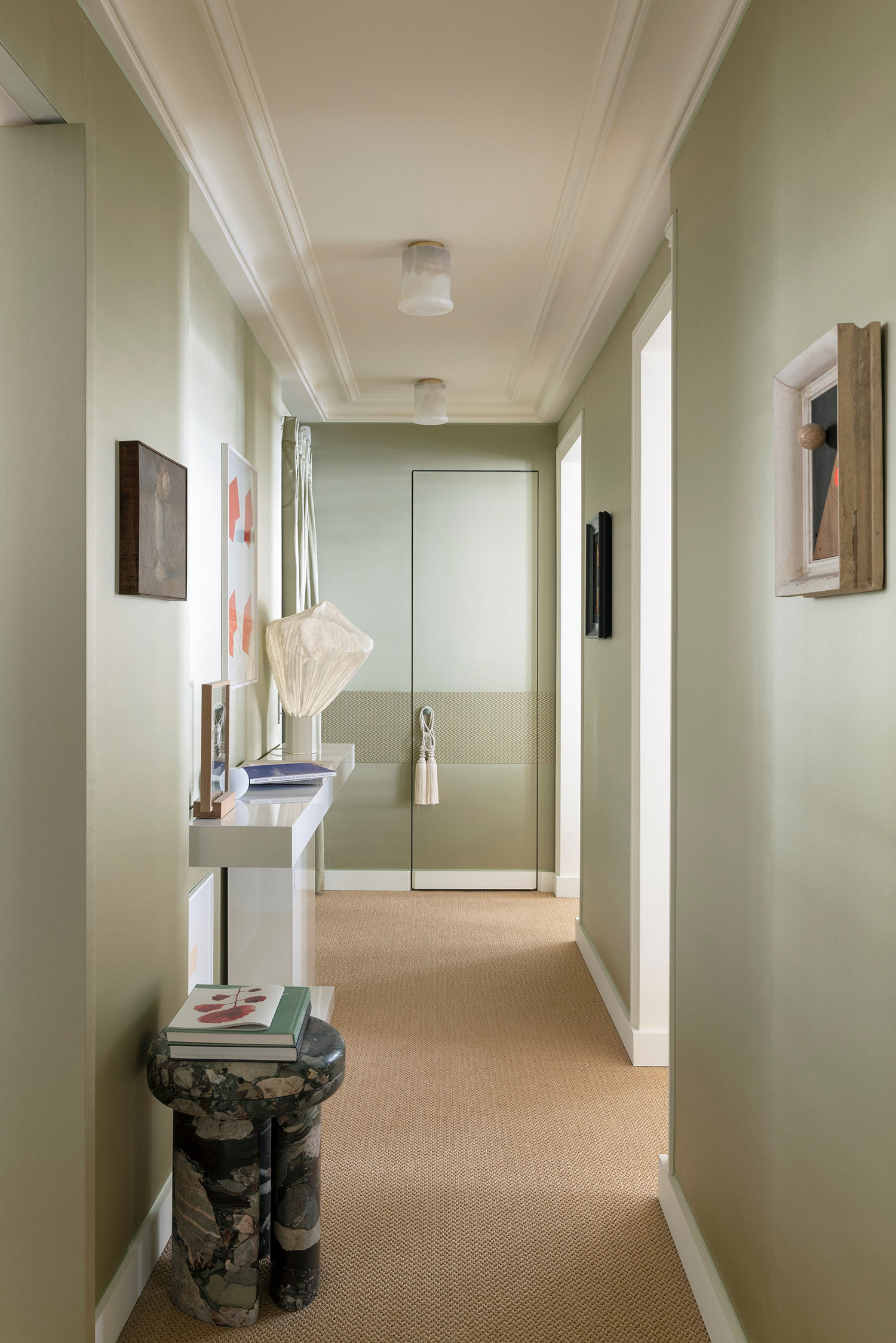
The entrance gallery, enveloped in cotton satin fabric and silk braids, features a subtle interplay of doors beneath draperies and pivots adorned with Danish ceramic buttons. Original plaster cornices maintain the apartment’s historical character.
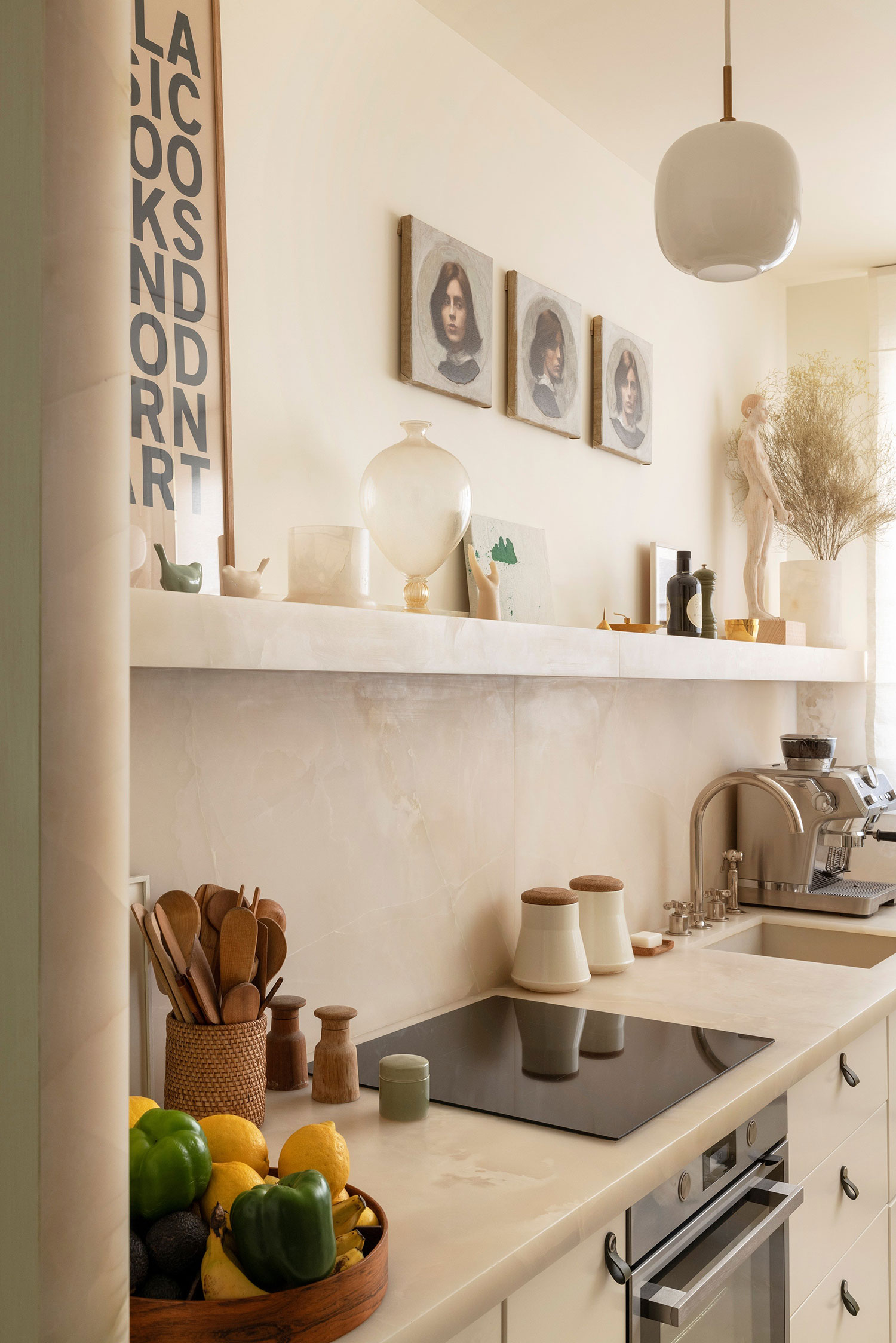
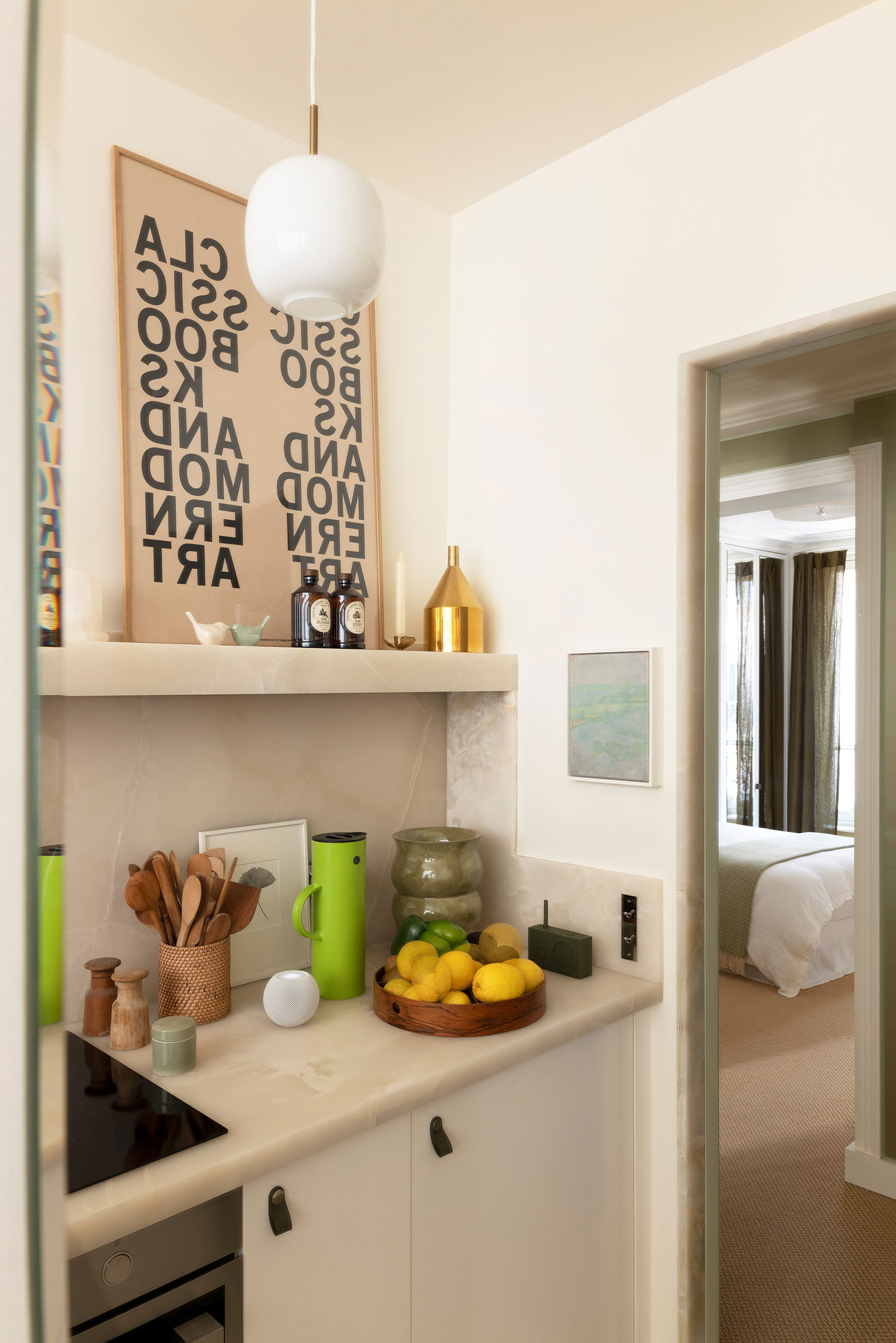
The elongated kitchen is visually divided by full-height mirrors, maximizing light and showcasing carefully chosen objects. In a secluded area, Balzano’s office provides a space for him to work surrounded by samples, artwork, and furniture. A custom-made piece from his MURANO II furniture collection, entirely encased in leather, serves as a striking desk. Lamps from his LUCE collection, available exclusively through the Parisian gallery Kolkhoze, illuminate each room.
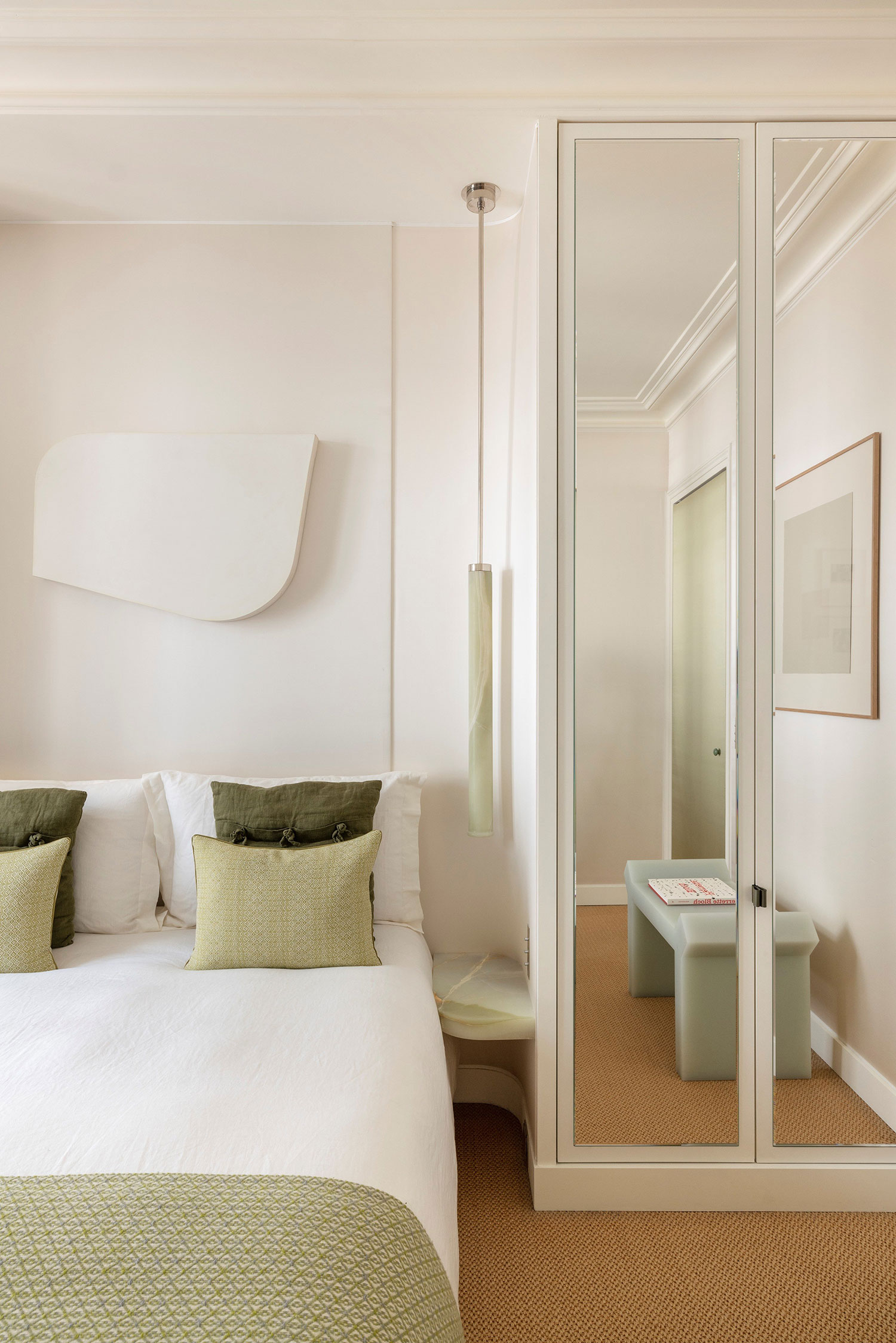
The bedroom, also upholstered, features a curved niche and mirrored wardrobes flanking the bed. Two tablets, designed in homage to Ellsworth Kelly and carved from solid onyx, add a touch of artistic elegance.
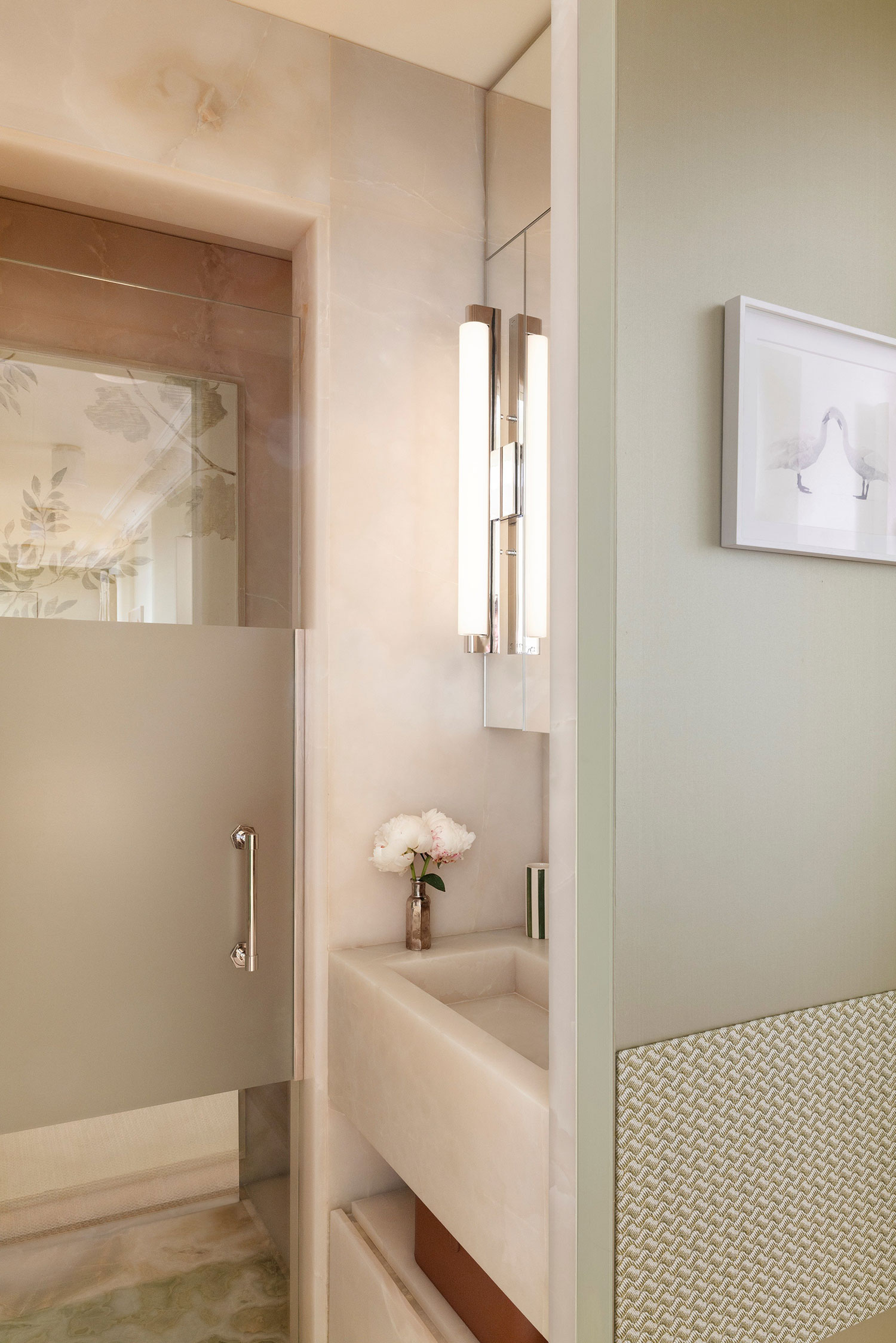
The bathroom is a study in minimalist luxury, clad entirely in pale green onyx. A washbasin and a large walk-in shower are complemented by a fresco painted with marble powder by Nicolas Resse, a replica of ceiling decorations found in one of the pavilions of the Villa Medici.
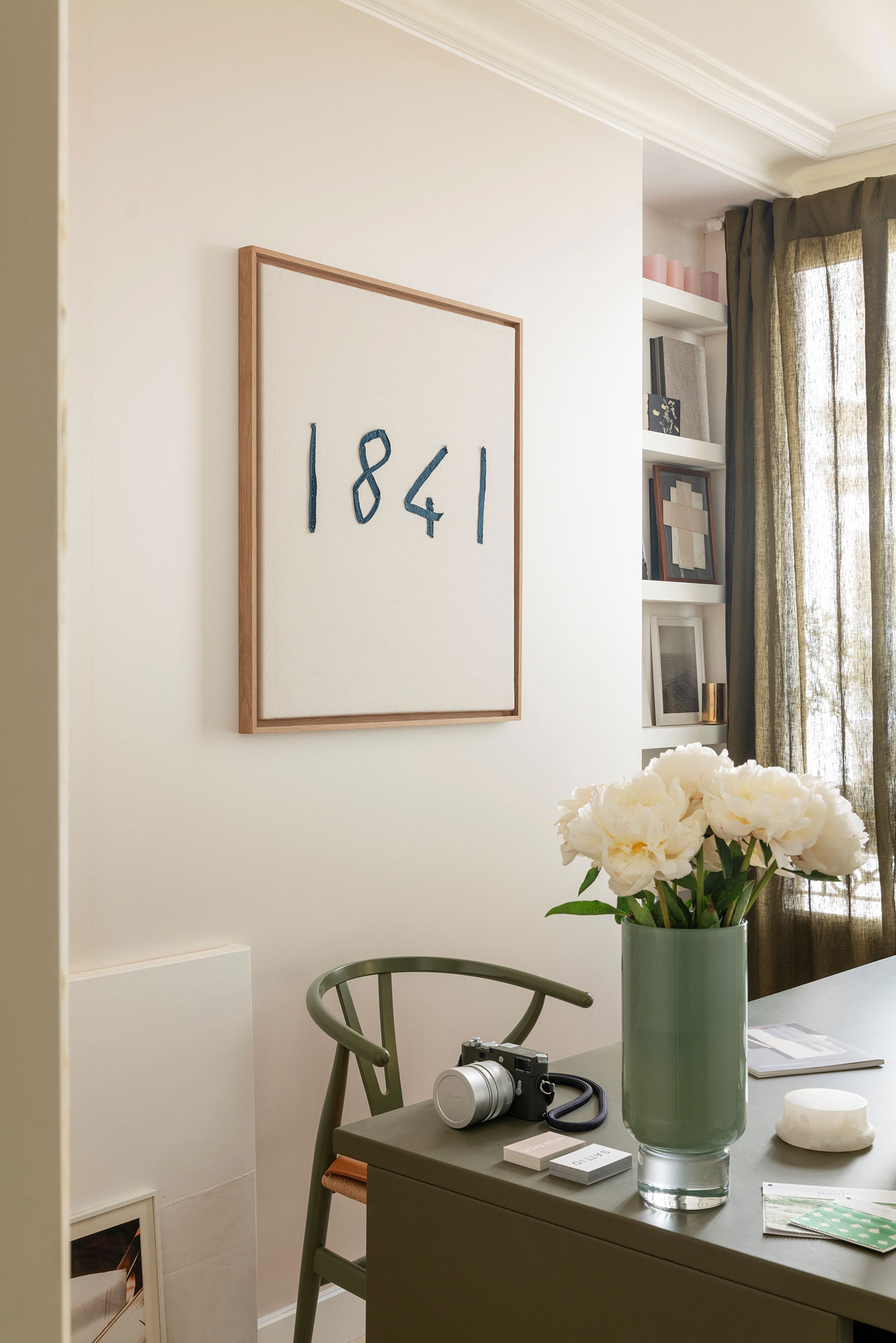
Throughout the apartment, photographs, sculptures, paintings, and engravings interact with the architecture, creating a true art of living for Balzano and his partner. While showcasing his own furniture designs, Balzano also enjoys juxtaposing them with 1950s Danish design and the work of contemporary designers such as Aldo Bakker, Marcin Rusak, Isabelle Sicart, and Sattio Studio.
For this project, After Bach collaborated with skilled artisans such as Ateliers Saint Jacques, upholsterer Phellipeau, and Ateliers Perrault. Fabrics were sourced from Holland & Sherry, taps from Waterworks, and the dead flat finish paints from Farrow & Ball. The result is a harmonious blend of artistry, craftsmanship, and personal expression, creating a truly unique Parisian home.