



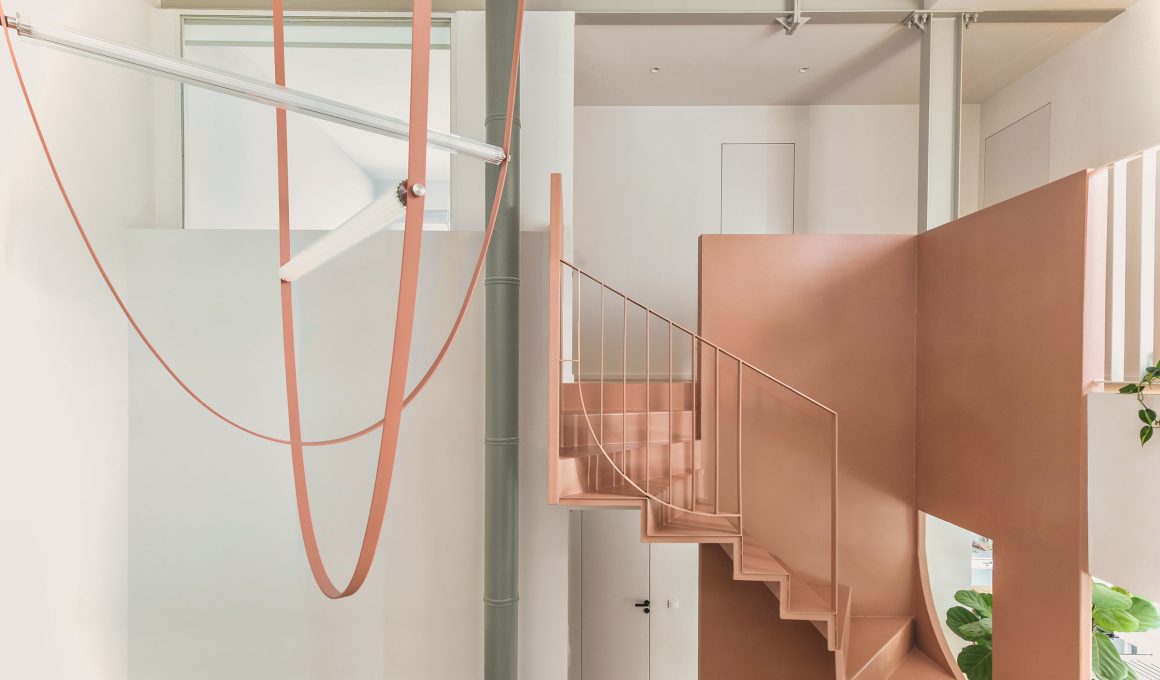
Nestled within the diverse tapestry of Holargos, Athens, House D stands as a compelling example of sensitive renovation and expansion, a volumetric exercise in solidity and light. Barcelona-based studio Cometa Architects have masterfully transformed a 1960s house, not just updating it for modern living, but imbuing it with a sense of calm and privacy within a bustling urban context. The project is a compelling example of minimal intervention, maximizing the reuse of existing structure while creating a contemporary dwelling that respects its surroundings.
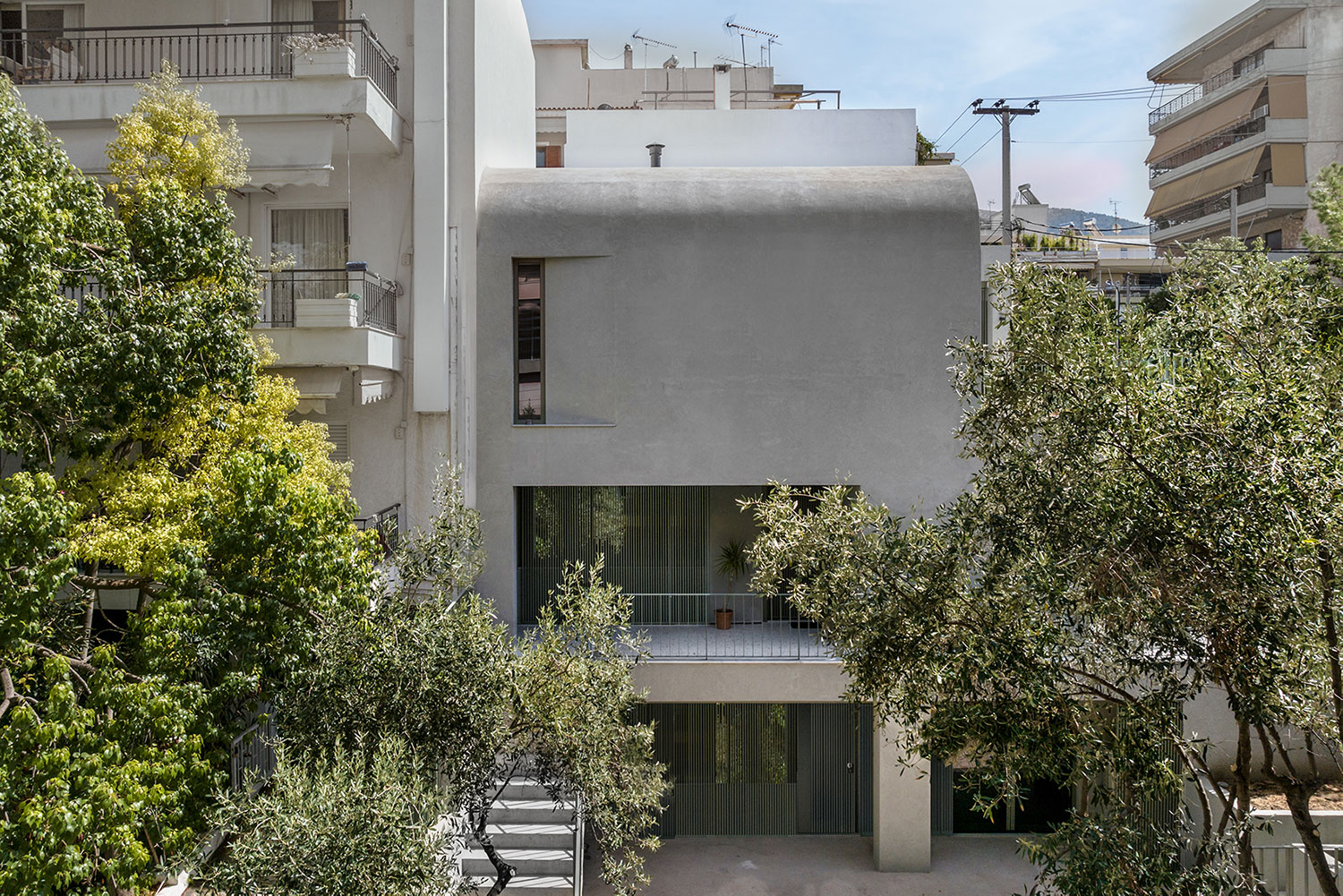
The architects’ choice to keep the building’s profile low amidst a neighborhood characterized by varying heights is a significant and thoughtful decision. This approach not only minimizes the new structure’s impact on the streetscape but also makes clever use of the existing structural core, including its foundations and footprint. By doing so, they effectively reduce construction waste while honoring a piece of the area’s historical fabric.
The original concrete structure has been skillfully repurposed, with sections of the slabs meticulously cut to create vibrant double-height spaces. Above this, a new steel framework, reinforced to withstand seismic activity in accordance with the region’s strict regulations, rises gracefully, merging seamlessly with the existing foundations. This harmonious blend of old and new enhances the building’s character while ensuring safety and stability.
The surrounding urban landscape posed a distinctive challenge, particularly with taller buildings to the northwest and southwest that boasted prominent balconies, which threatened the privacy of the residence. In response, Cometa Architects designed an intentionally opaque volume, serving as a protective shell that shields the interior from prying eyes. This thoughtful design choice creates a sense of security and seclusion for the inhabitants.
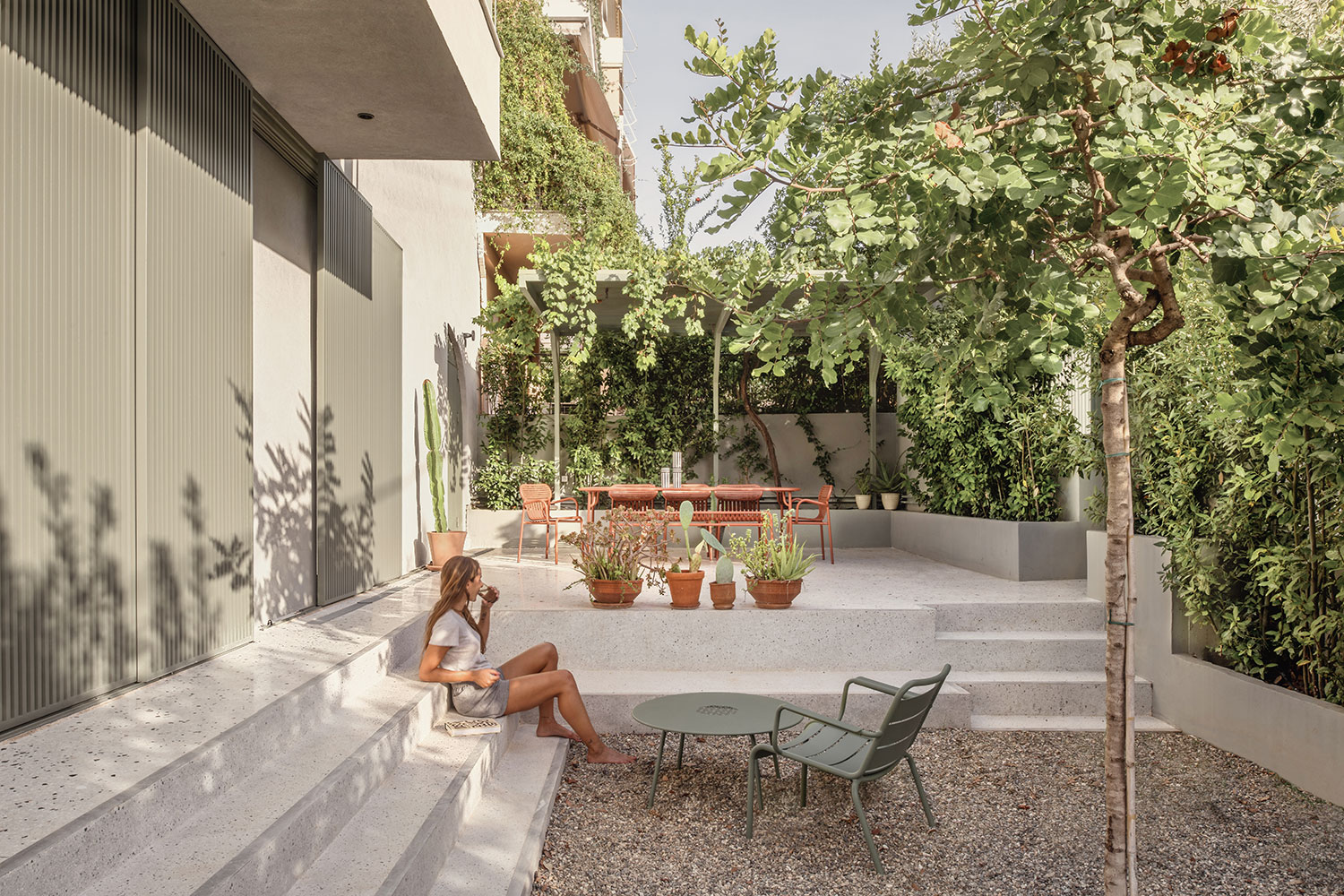
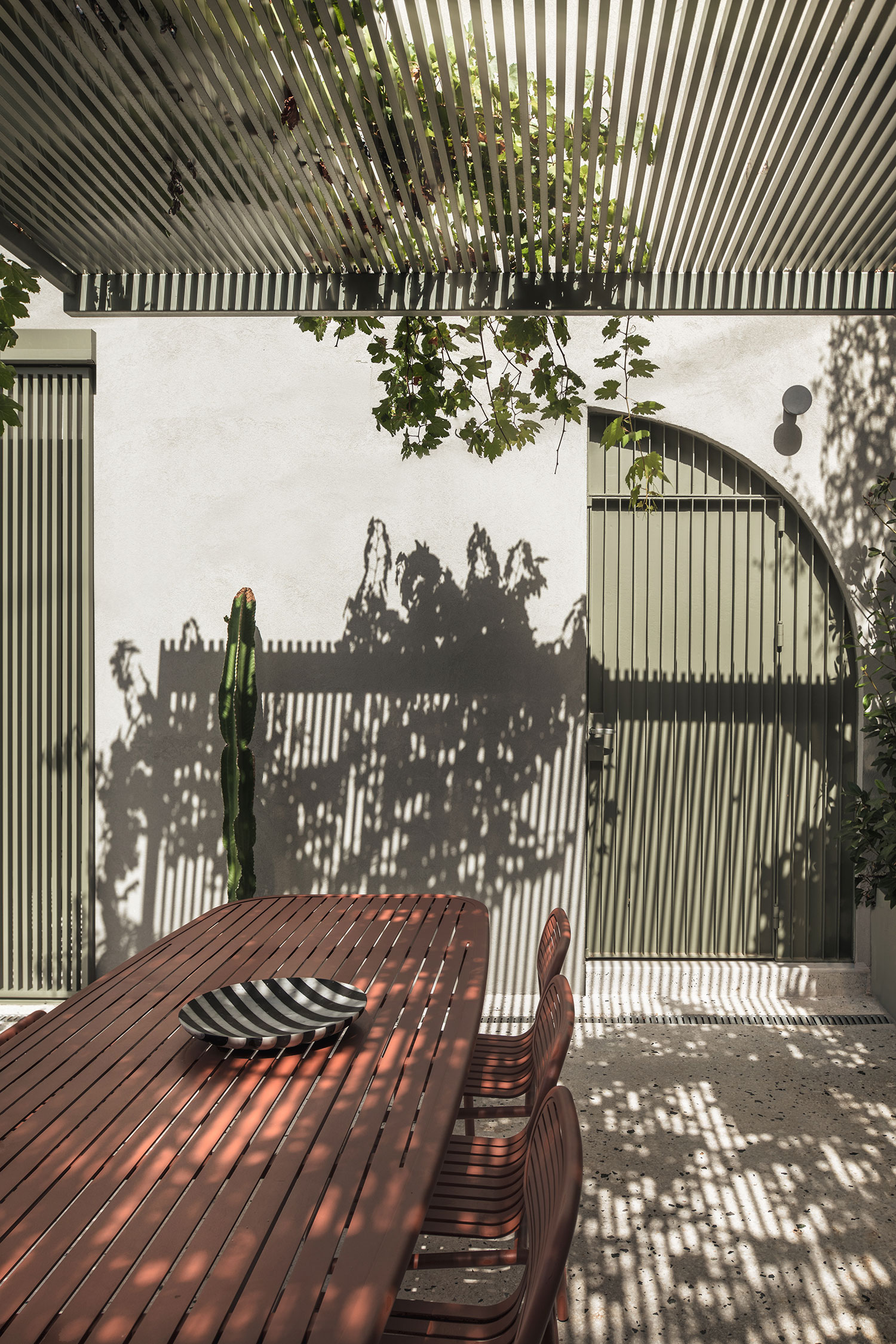
Yet, this opacity is not without its exceptions. The western vertex of the house has been artfully carved away, resulting in a serene exterior oasis—a small courtyard that enjoys a greater distance from neighboring structures. The presence of mature trees further enhances this buffer, allowing light to flood into the heart of the home. This deliberate opening transforms a potential limitation into a remarkable design opportunity, blending privacy with illumination.
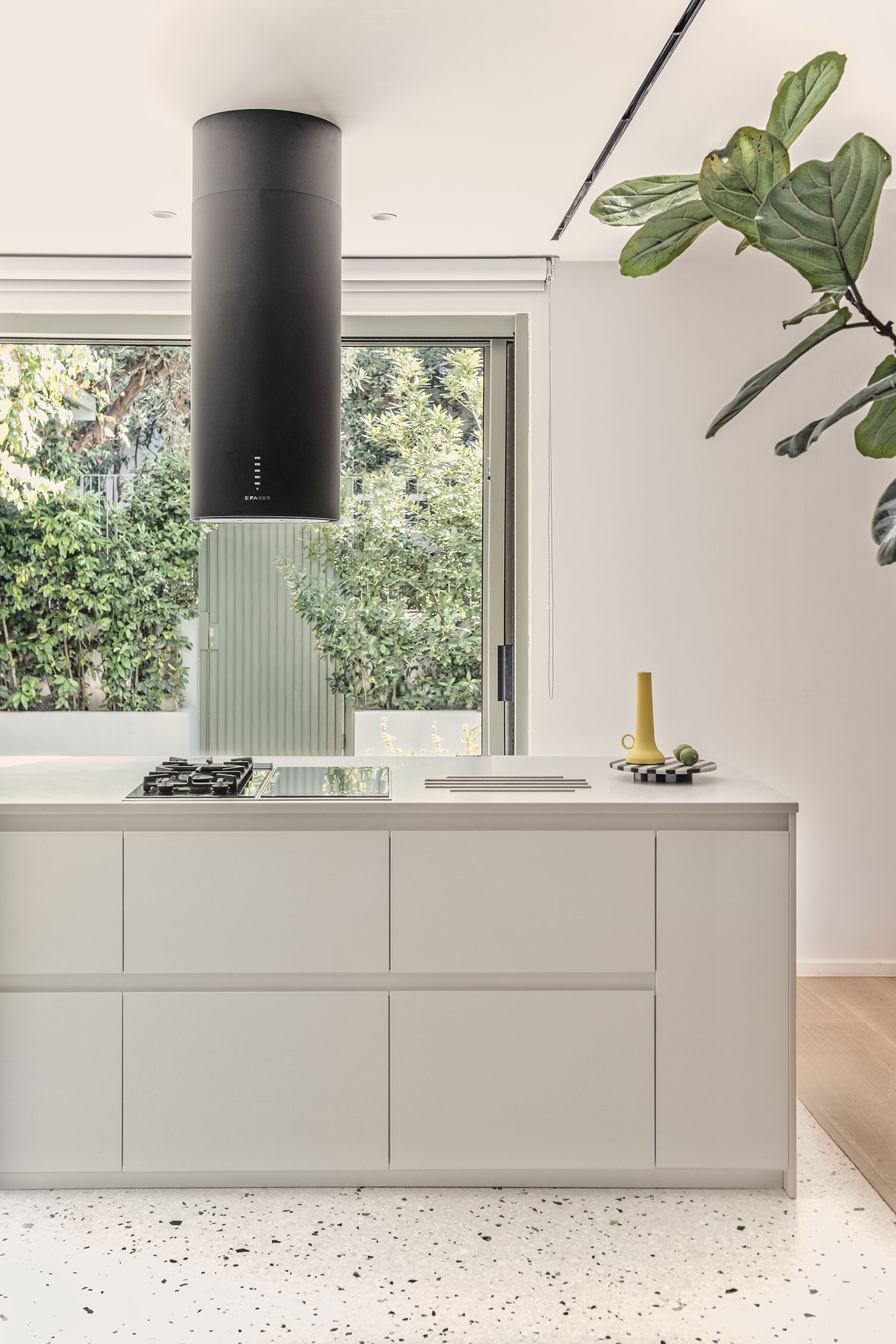
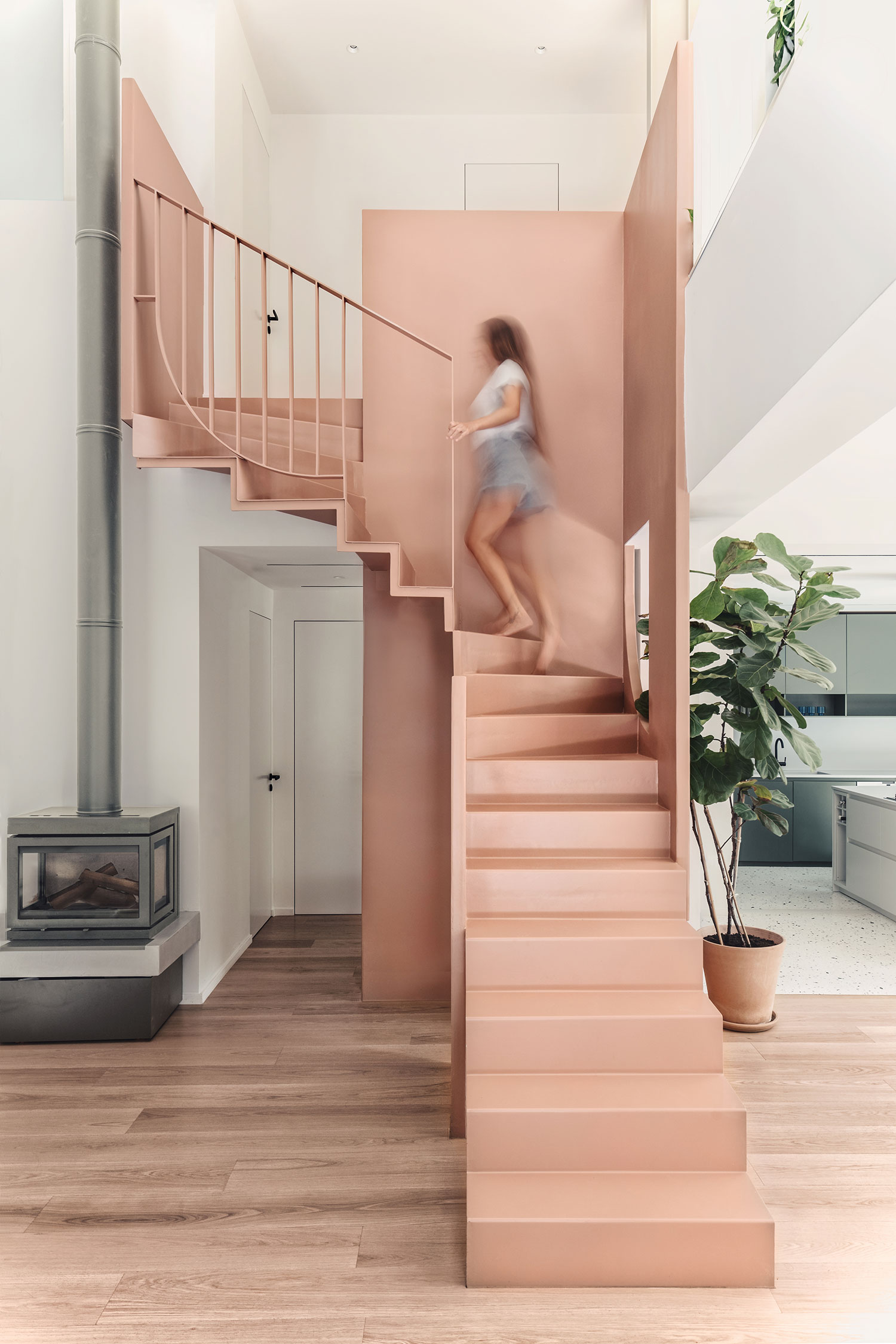
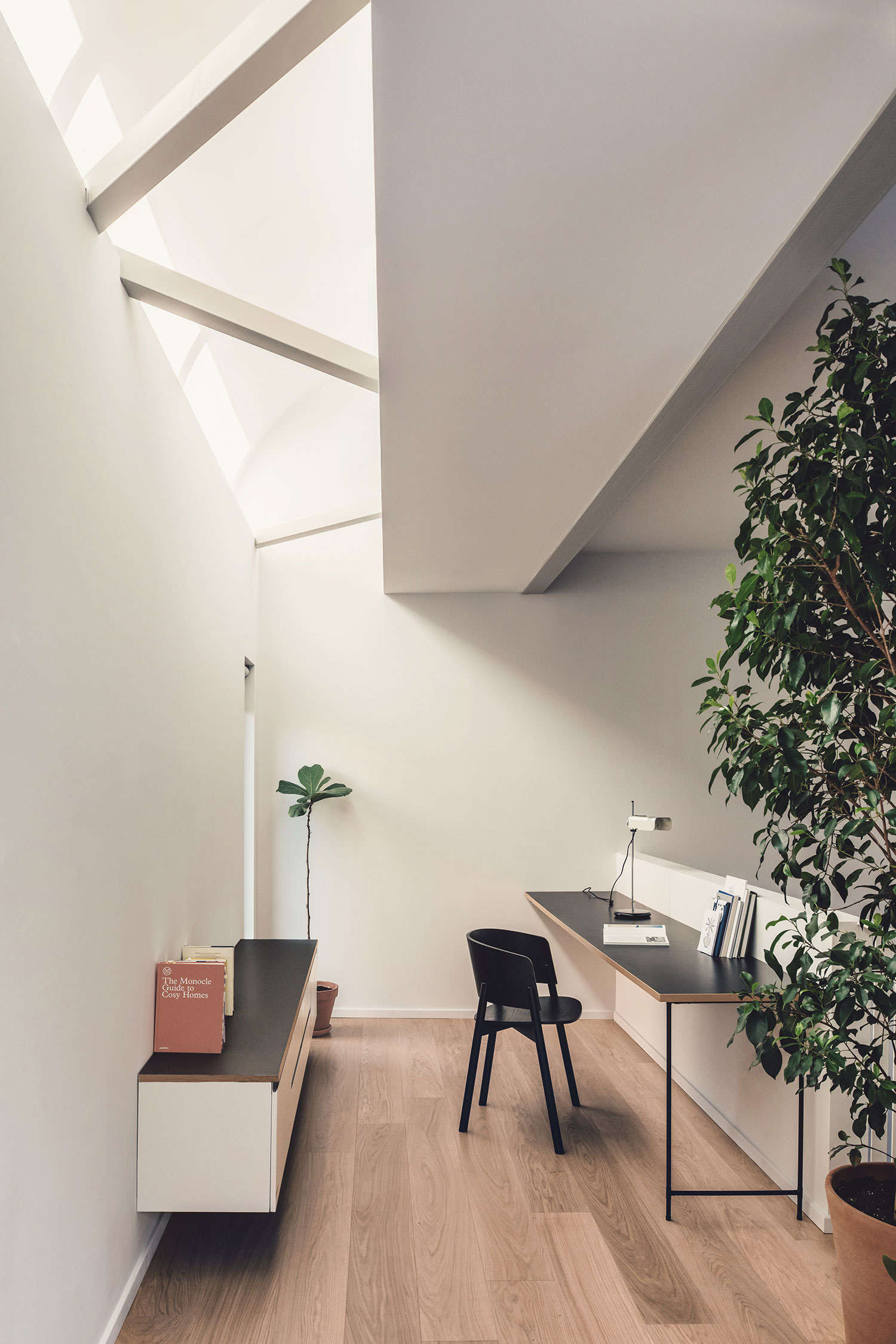
The interior layout of House D is centered around a striking double-height space, a result of the partial removal of the original slabs. This central void is home to the staircase, which elegantly links the ground floor living areas and kitchen to the upper-level bedrooms and studio. A skylight positioned above the studio floods the entire house with a gentle, diffused light, especially in the mornings, fostering a bright and inviting ambiance.
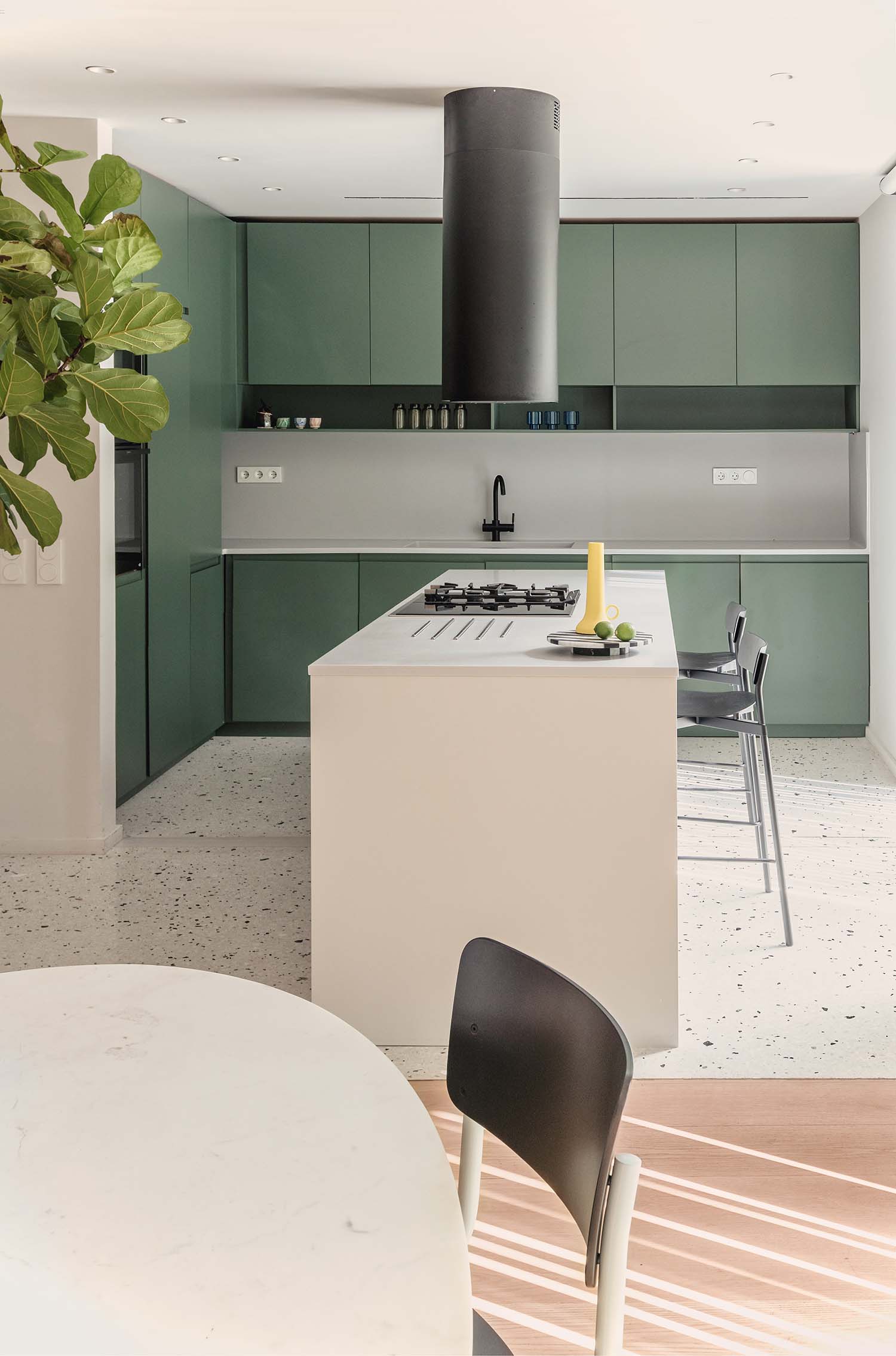
The living spaces and kitchen seamlessly extend into the garden, which cascades across three levels. The architects took great care to preserve the existing fruit trees during construction while also introducing new plantings, including drought-tolerant Mediterranean vegetation. This thoughtful landscaping creates a cool, lush retreat, providing a refreshing escape from the sweltering Athenian heat.
Beyond its aesthetic merits, House D also embodies a commitment to sustainability. The residence features a comprehensive and autonomous energy system for domestic hot water and air conditioning. Radiant and cooling floor systems, along with fan coils, provide comfortable temperatures year-round, powered by an aerothermal system. Solar collectors and photovoltaic panels, discreetly integrated onto the new flat roof, further enhance the home’s energy efficiency and contribute excess energy back to the municipal grid.
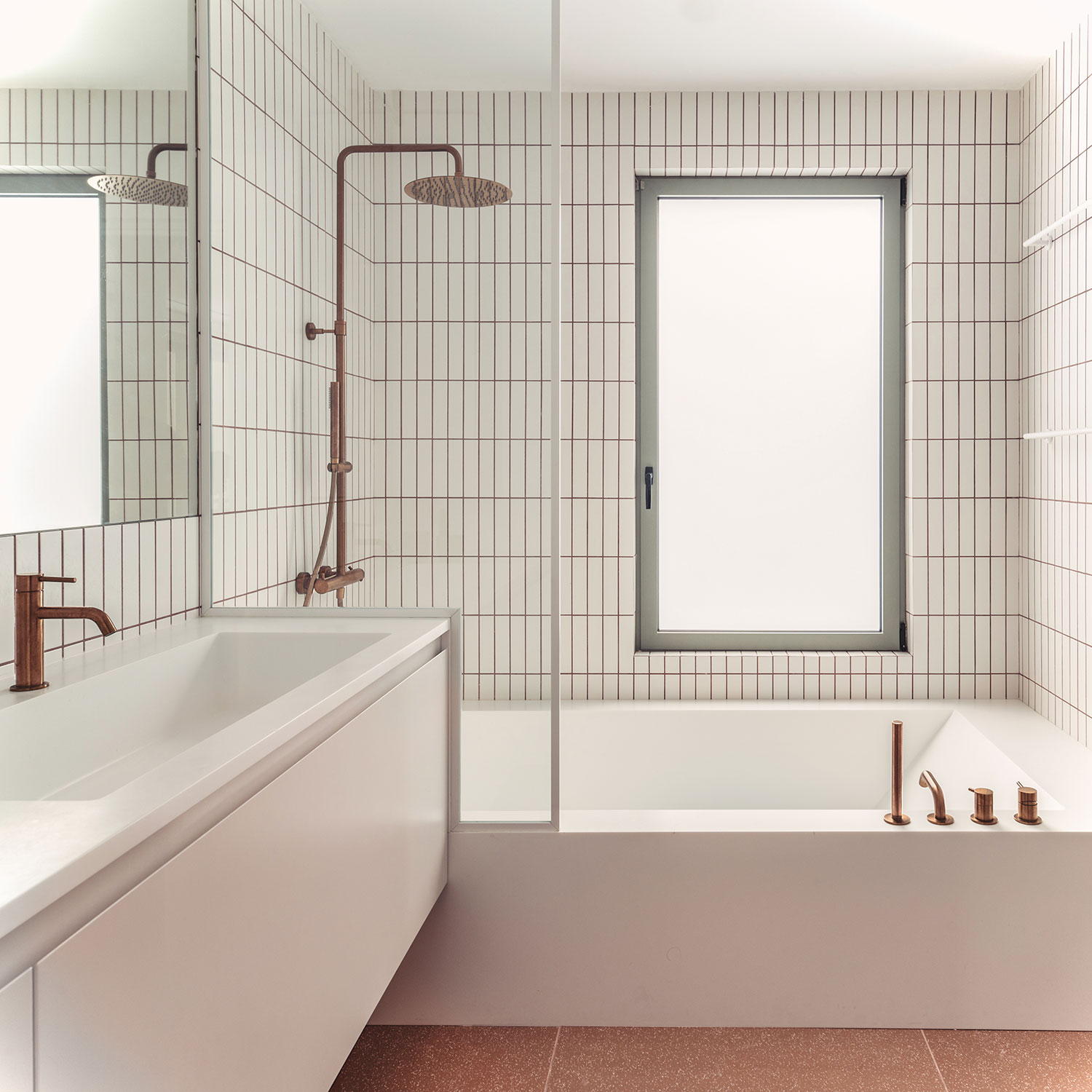
House D is more than just a renovation; it is a thoughtful dialogue between old and new, between privacy and openness. Cometa Architects have crafted a quiet oasis within the vibrant urban fabric of Athens, a home that respects its past while embracing a sustainable and contemporary future. It stands as a compelling example of how architectural sensitivity and innovative design can transform existing structures into exceptional living spaces.