


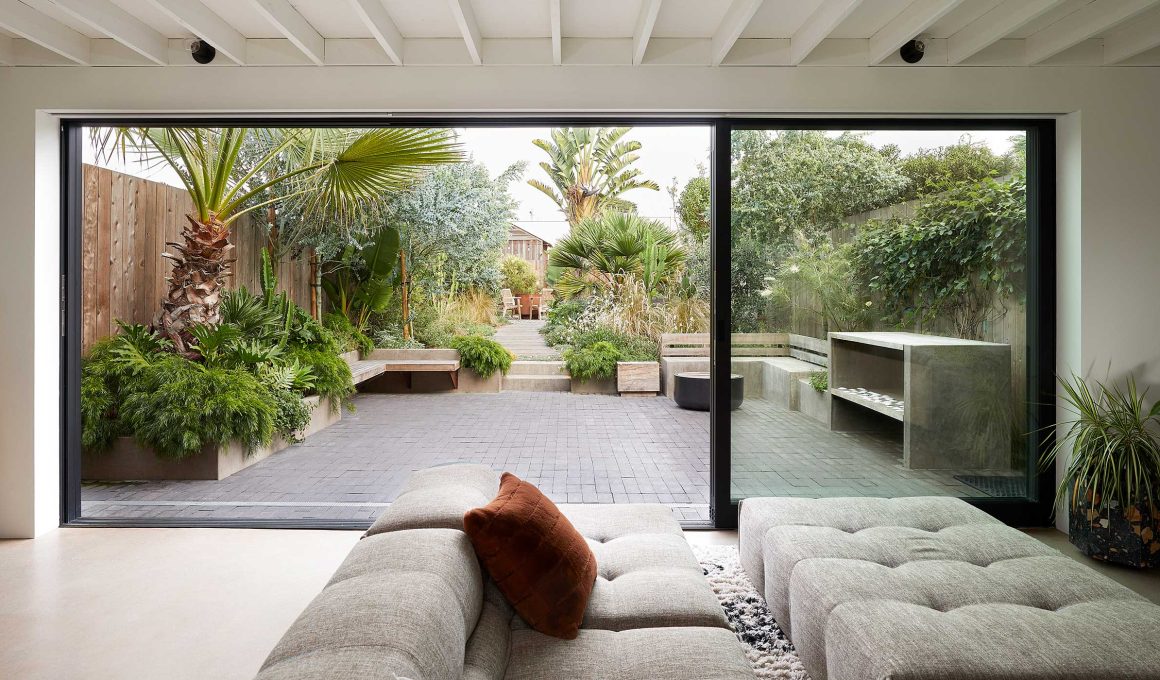
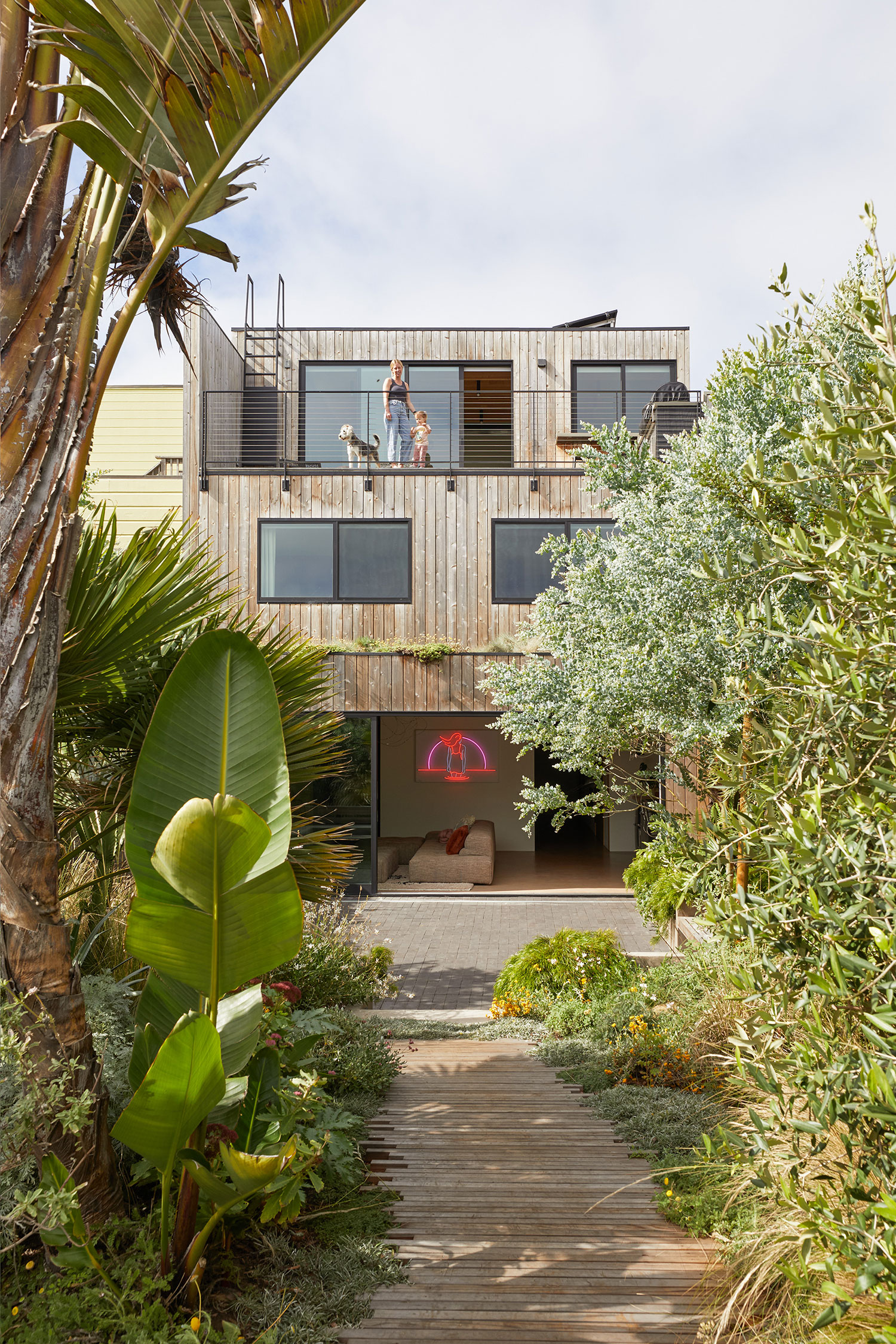
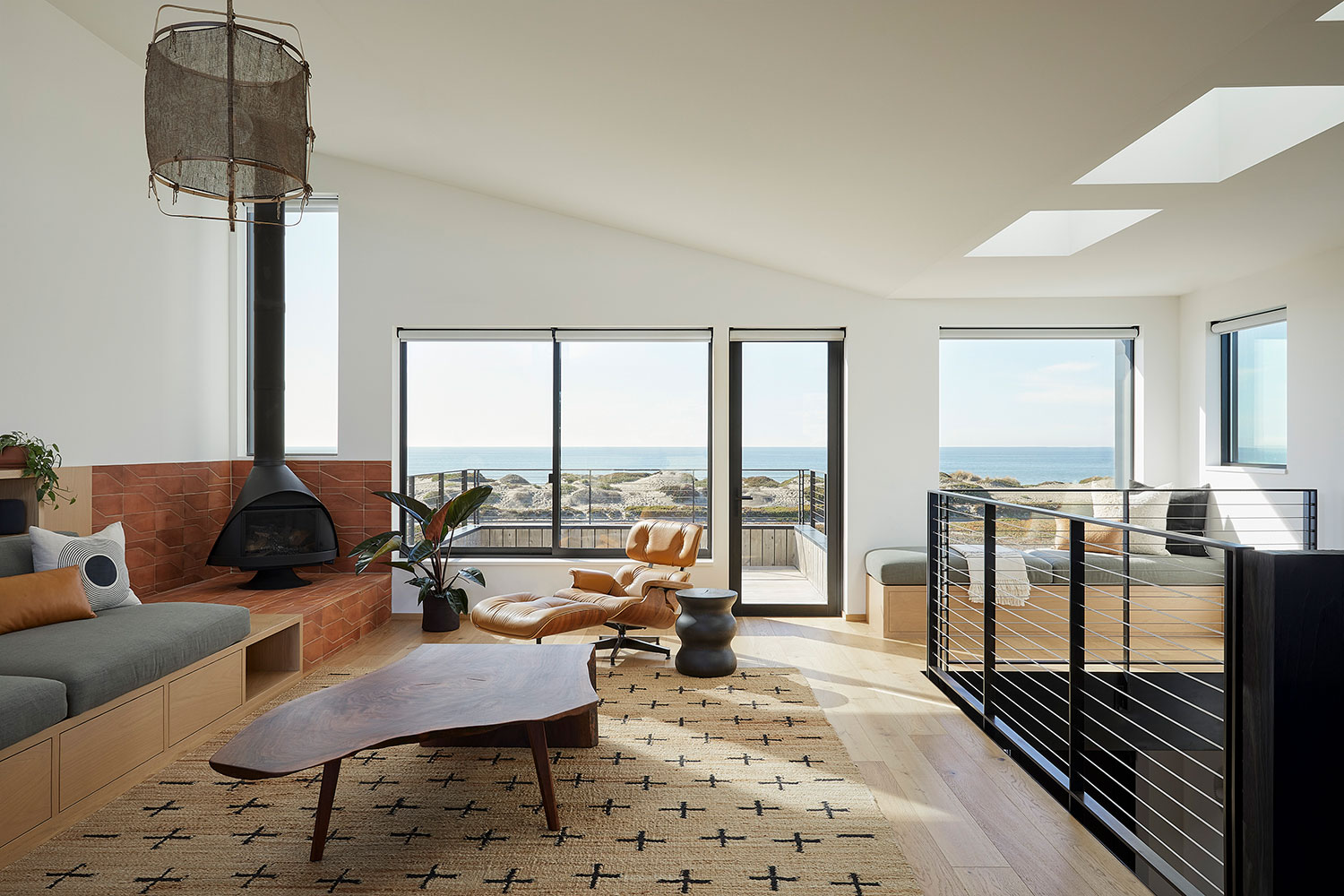
Just beyond the hustler of downtown San Francisco, nestled along the Pacific Ocean, stands the Great Highway Surfhouse—a striking three-story residence designed to embrace both its natural surroundings and the rhythm of coastal life. Its expansive windows frame sweeping views of the ocean, where golden sunsets spill across the horizon each evening. It’s currently home to a young family, and is designed to blend into the local scenery with its cedar exterior which will fade in time.
The project, a feat of both vision and craftsmanship, took four years to bring to life— from sketches through design and construction. Camille Peignet, a spatial designer at Red Dot Studio, calls it a perfect reflection of her design philosophy.
“It’s a harmonious blend of nature and architecture,” says Camille. Just as its expansive windows and open spaces frame breathtaking ocean vistas and celebrate the area’s surrounding beauty, its lower floor opens on a lush garden, giving the family a peaceful retreat. Combined with an interior that pops with subtle colors, the Great Highway Surfhouse is both inviting and sophisticated.
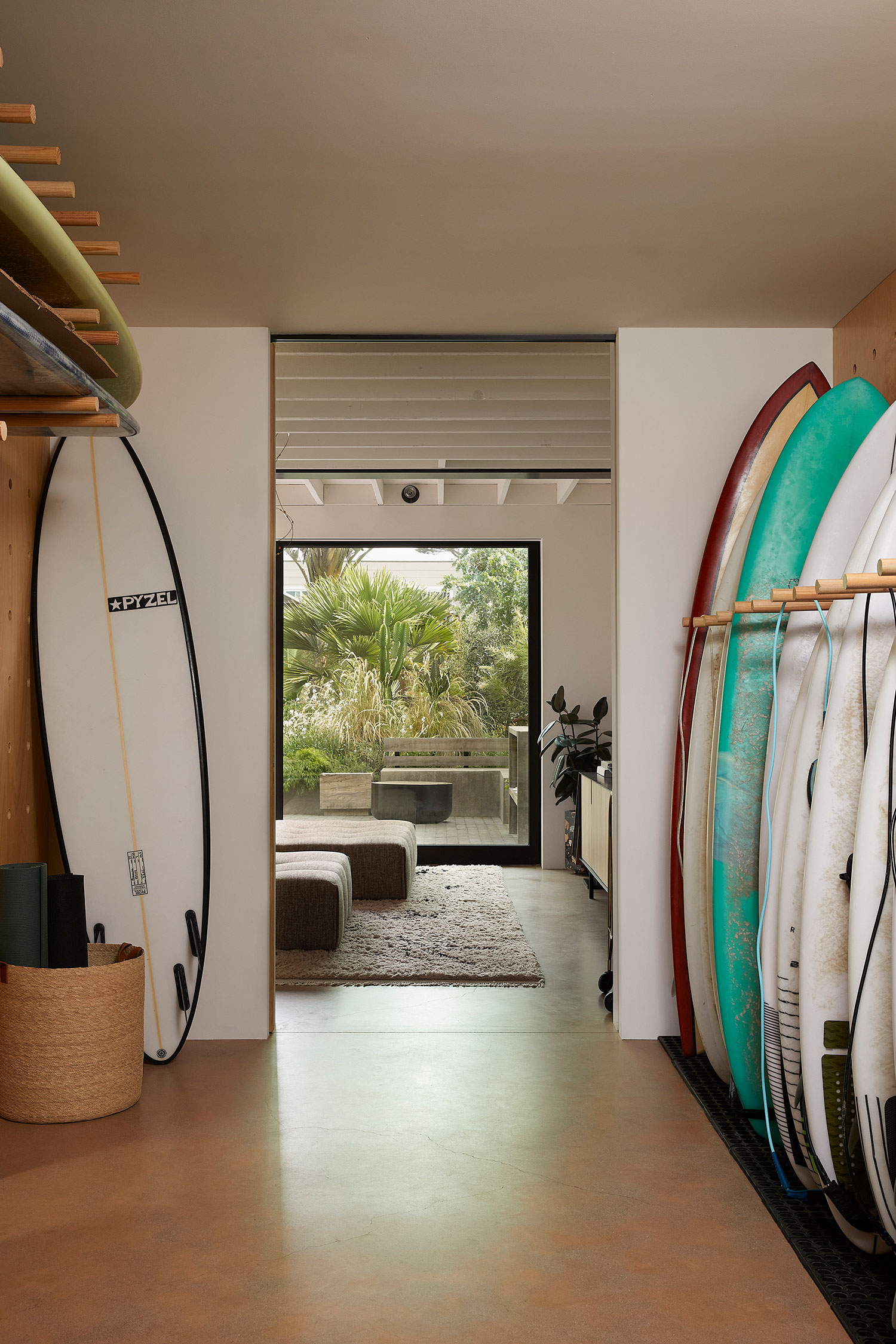
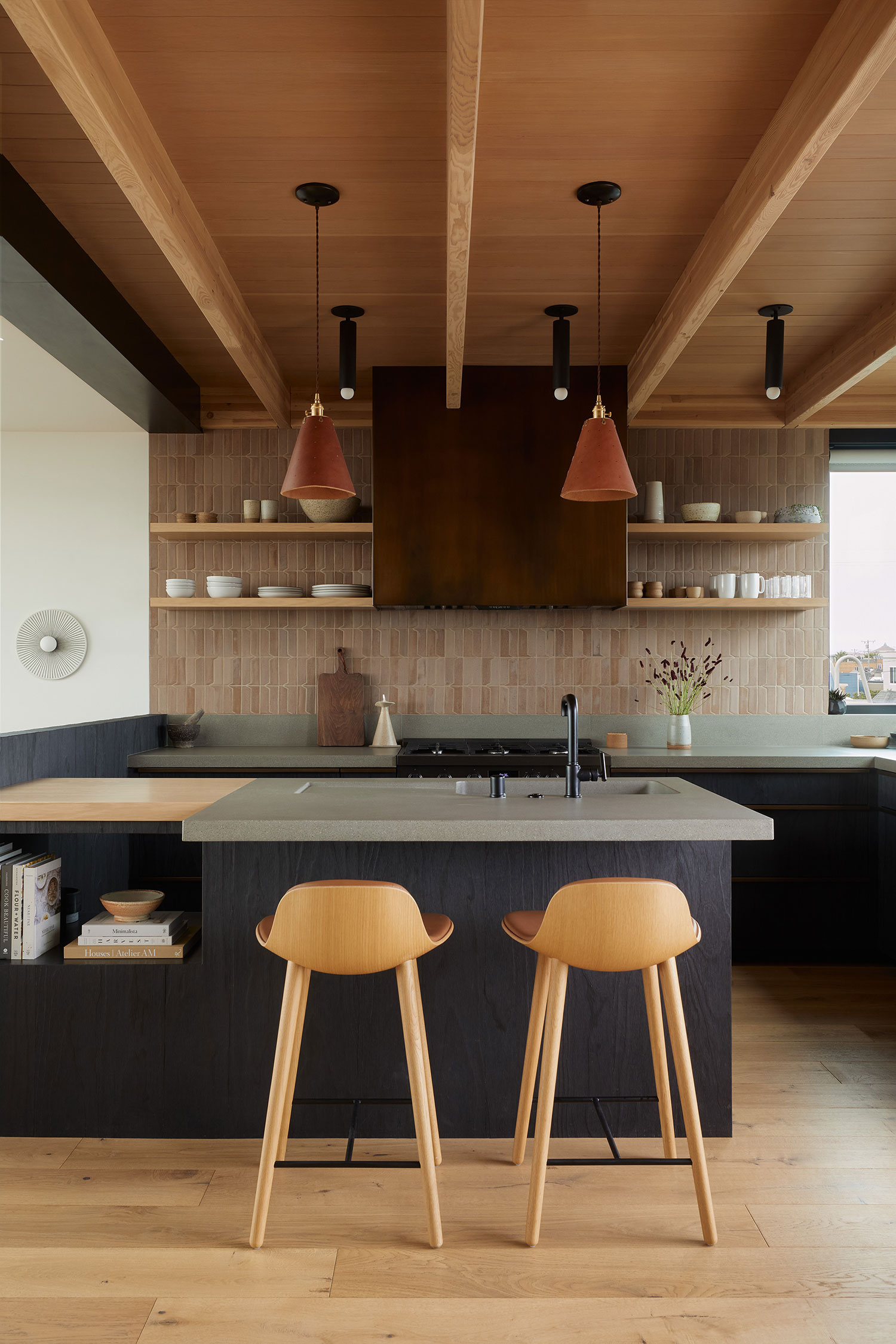
“This project exemplifies my ability to create spaces that are not only visually stunning but also functional and reflective of the inhabitants’ unique personalities and passions,” comments Camille. Every element, she notes, was meticulously planned and executed, ensuring that the home is as practical as it is beautiful.
Simplicity, Generosity, Respect
Camille has worked at Red Dot Studio, a renowned San Francisco architecture and design firm, since 2017. In her role as a spatial designer, she has embarked on a successful career framed by core values of simplicity, generosity, and respect, as well as a philosophy that considers her work to be a part of nature rather than in opposition to nature.
“My design philosophy is to integrate architecture as a part of nature, with a special focus on creating sustainable and human-centered spaces,” Camille says. “I seek to harmonize these built environments with their natural surroundings while prioritizing the well-being of the user.”
Bringing this vision to life requires navigating industry challenges, such as the limited availability of sustainable materials, as well as employing innovative strategies to incorporate eco-conscious solutions into her projects. In the case of the Great Highway Surfhouse, Camille created a climate resilient design while utilizing water reuse and so-called greywater, or wastewater from hand basins, washing machines, and baths. The house was also built in a way that anticipated the risk of future floods. All of these decisions helped to transform an old house into a sustainable and luxurious urban surf shelter, she says.
A Lifelong Passion
Some people spend years searching for their calling; Camille Peignet knew hers from an early age. Even as a child, she would imagine different home layouts and sketch them the next day as a way of making herself fall asleep. “I was designing houses from an interior point of view,” she recalls. “I focused on how the inhabitants would use the space.” She has always also had an ear for other people’s stories and liked to understand how they live and what they are drawn to.
At the time, she didn’t realize these instincts could shape a profession. That realization came later when she discovered the world of design and interior architecture. “I understood that design thinking should enhance people’s daily lives,” she says. She went on to study at L’École de Design Nantes Atlantique, where she soaked up the different aspects of design, including the use of graphic, industrial, and interface design tools. Her bachelor’s degree was in interior architecture and her master’s was in sustainable cities.
“This really fostered my passion for sustainability and research-driven design,” Camille recalls.
The Move to Red Dot
After completing her master’s degree, Camille Peignet set her sights across the Atlantic, landing an internship at Sara Story Design, an interior design firm in New York’s SoHo neighborhood. She didn’t stay in New York long though, opting to move across the US to San Francisco. She began her work at Red Dot Studio as an intern and later took on the role of senior designer.
“My work at Red Dot has spanned residential, private institutions, and commercial projects, including the design of private residences, offices, and educational spaces,” says Camille.
In addition to the Great Highway Surfhouse, another stunning achievement was the renovation of the historic Herb House at the Sabbathday Lake Shaker Village in New Gloucester, Maine. Sabbathday Lake Shaker Village is the last of its kind in the U.S. inhabited by the Christian sect, known for its ecstatic worship services and celibate, pacifist lifestyle. Beyond their religious practices, the Shakers have also left a lasting impact on the design world. Their contribution to design is well-documented, with Shaker craftsmanship known for its simplicity, functionality, and meticulous attention to detail. Their furniture, with its clean lines and minimal ornamentation, has influenced various design movements, including minimalism and modernism.
Red Dot Studio was contracted to help renovate the village, which contains 20 buildings, and Camille has led the redesign of its historic Herb House, in which the Shakers have long prepared medicinal herbs.
“Our aim has been to re-activate the Herb House for the purposes of herb processing and packaging,” says Camille, “as well as creating new educational spaces to serve the local community while maintaining the Shaker legacy for years to come.”
Under Peignet’s guidance, sustainability has remained a core focus of Red Dot Studio’s work. The firm has developed a long-term renovation plan for the village, aligning with its broader commitment to environmentally conscious design. During her tenure, Red Dot has achieved LEED Green Associate certification and earned Living Building Accreditation, reinforcing its dedication to sustainable architectural practices.
Forward-Thinking Spatial Design
Creating such sustainable, nature-embedded structures is not always easy. The construction agency, Camille notes, is a major polluter. About a fifth of air contamination, 40 percent of drinking water contamination, and 50 percent of landfill waste is derived from construction. Getting your hands on sustainable materials and code-compliant solutions is tough. And there’s apprehension among some clients, who worry it might cost more, or are just unfamiliar with sustainable architecture. Builders are also sometimes skeptical and might not know these new materials so well. All together, it takes time to make things happen.
Because of this, projects can get dragged out, and costs can go up. But each challenge is also an opportunity for Camille, who has learned to initiate discussions with clients and builders early in the design process, establishing clear goals and priorities from the get go.
“I take the time to understand their specific concerns and preferences, whether they prioritize water conservation, the use of local materials, or maximizing the reuse of existing elements,” Camille says. “By integrating sustainable strategies into the designs from the beginning, I ensure that sustainability becomes a core principle of the project rather than an afterthought.”
Her goal is to continue to innovate and to work on more projects that are respectful of the environment and the people who will live within her designs. She wants to stay at Red Dot Studio, while expanding her expertise, and adopting the newest methods and technologies.
“I aim to make a better narrative for a simpler and enhanced life,” Camille says.