


In the quiet, leafy streets of Barnet, North London, a remarkable architectural transformation has taken place, a testament to both contemporary design and the enduring spirit of its octogenarian owner, Kathryn. Woodbury, the new residence, is more than just a house; it’s a narrative of embracing change while lovingly preserving the essence of a life well-lived. This project, led by Of Architecture, stands as a shining example of thoughtful and sensitive architectural practice.
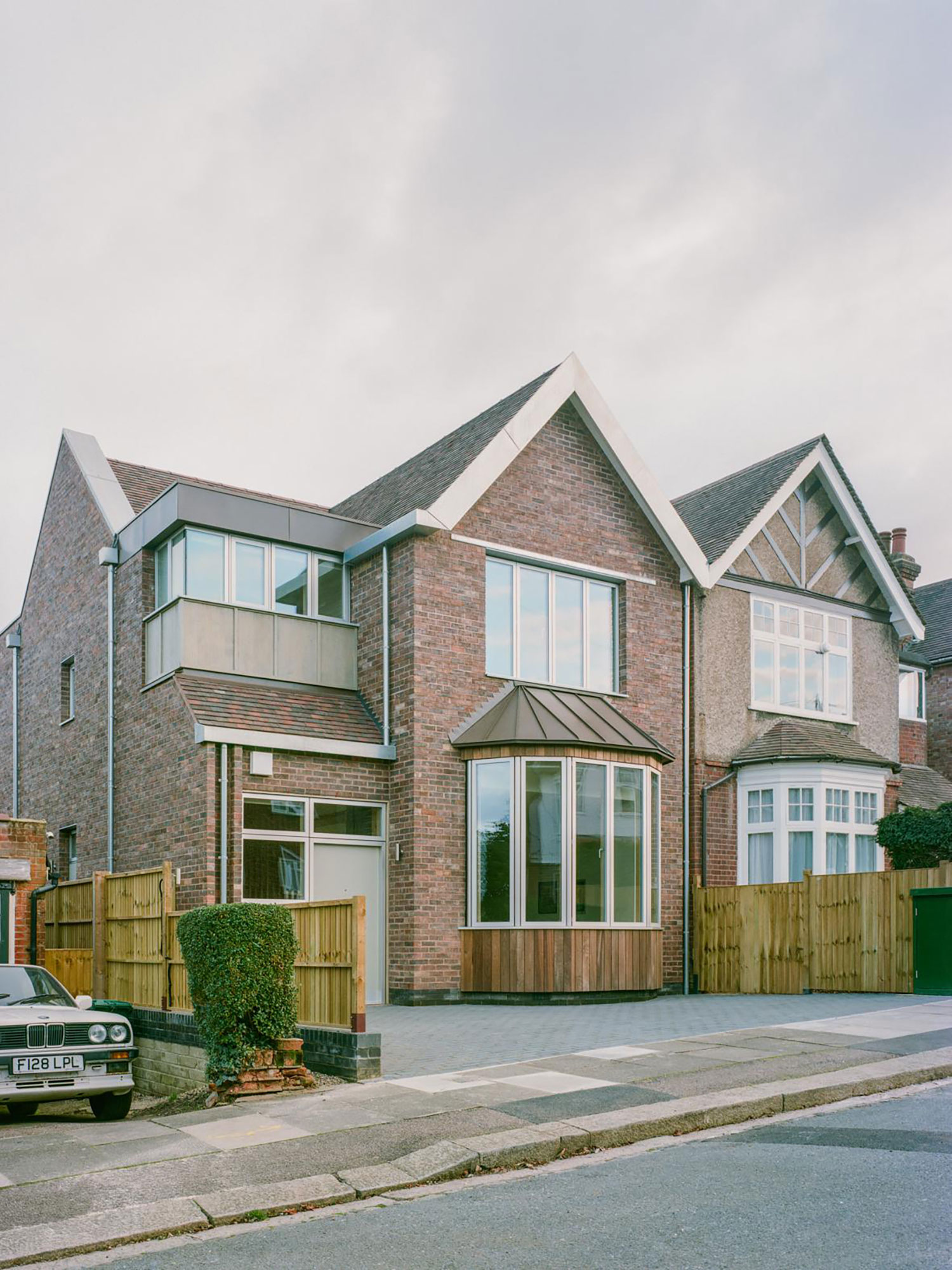
Kathryn, in her mid-eighties, approached the project with a vision reminiscent of the modernist pioneers. Eschewing the comfort of familiar surroundings, she chose to curate and edit, to move forward with a fresh perspective. Her inspiration stemmed from a visit to Of Architecture’s Pentire Residence in Cornwall, where she was captivated by its honest, utilitarian aesthetic. This appreciation for authenticity was deeply rooted, fostered by her late husband Jon, an architect with a shared passion for the timeless elegance of Edwin Lutyens and Alvar Aalto.
The architectural concept of Woodbury is ingeniously inspired by decalcomania, the art of creating mirrored patterns. However, this isn’t a simple replication. The design thoughtfully responds to modern needs: the ground floor seamlessly follows the natural site levels, while a continuous thermal envelope ensures optimal energy efficiency. An accessible ground-floor bedroom and bathroom cater to Kathryn’s needs, and the living spaces flow effortlessly, bathed in natural light from multiple aspects.
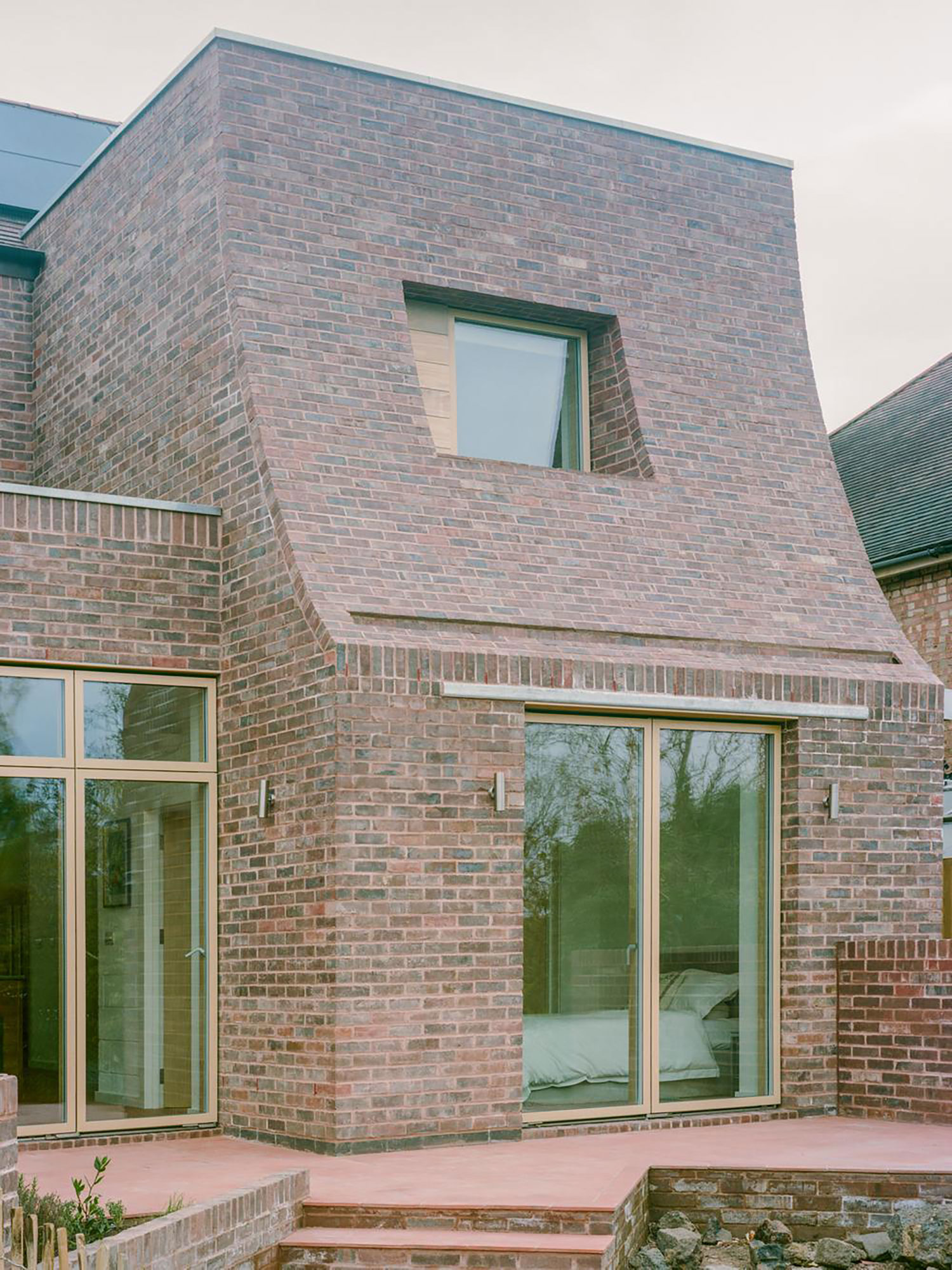
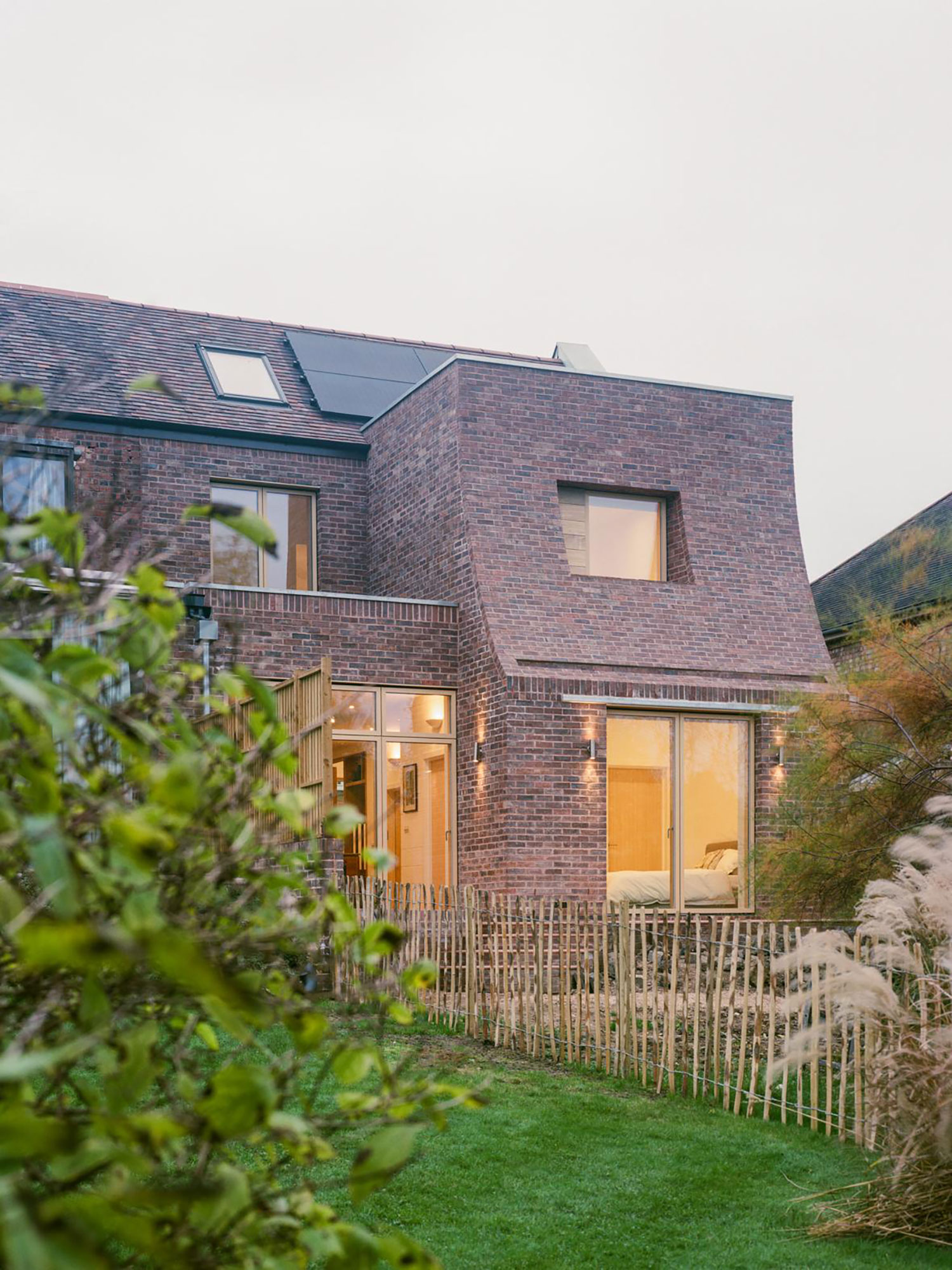
The material palette weaves together tradition and innovation. Dark burgundy red bricks, handcrafted by Furness Brick in Cumbria, establish a subtle dialogue with the existing house. In a poignant gesture of architectural conservation, rosemary terracotta roof tiles from the demolished music room have been meticulously preserved and reinstated, carrying forward the building’s history while minimizing waste and embodied carbon.
The rear façade is a masterstroke of architectural ingenuity. In homage to Lutyens’ distinctive style, a vernacular element is transformed into something uniquely familiar – an elegant, curved brick “ski-jump” that seamlessly integrates the roof, eaves, gutter, and façade. This contemporary reinterpretation of traditional brickwork demonstrates how historical references can be reimagined through a modern lens.
Environmental responsibility is paramount in Woodbury’s design. Adhering to Passivhaus principles, the house features substantial mineral wool insulation within the cavity masonry structure and an advanced mechanical ventilation heat recovery system. An air source heat pump powers the underfloor heating, while photovoltaic panels on the south-facing gabled roof minimize energy consumption.
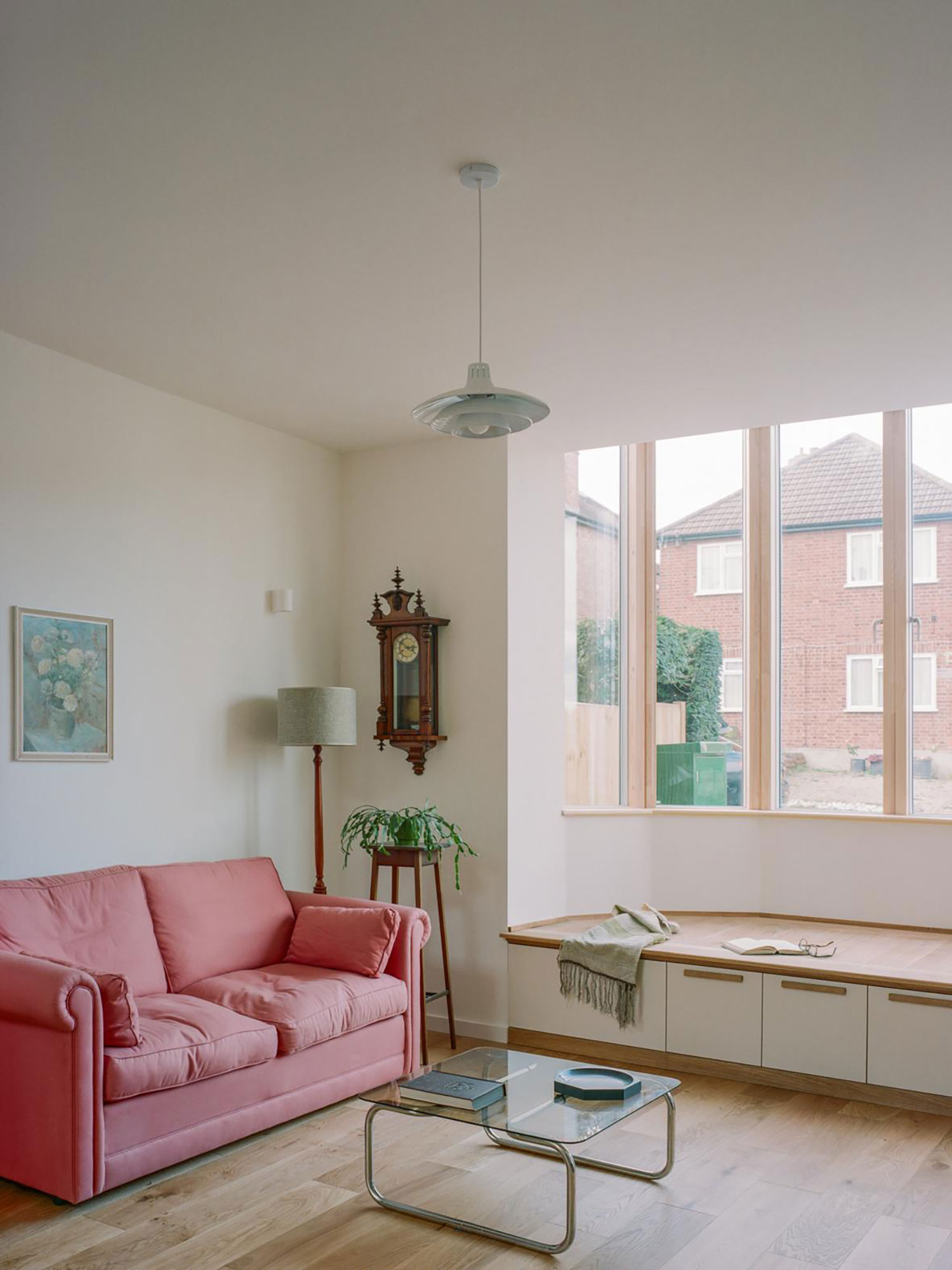
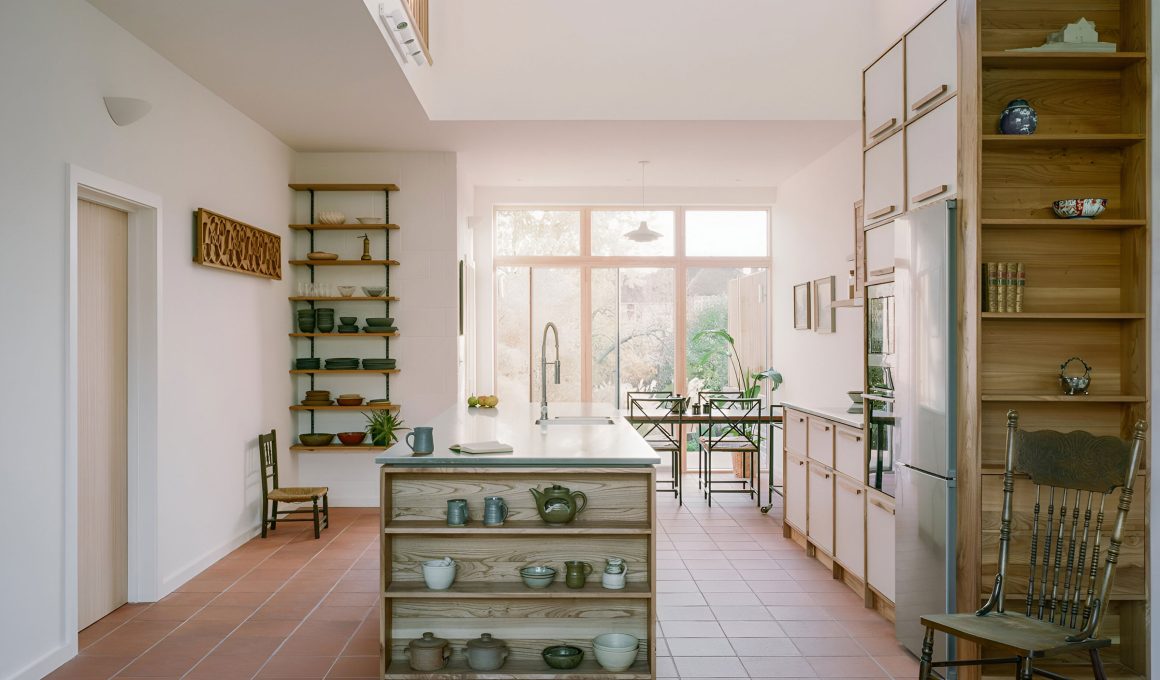
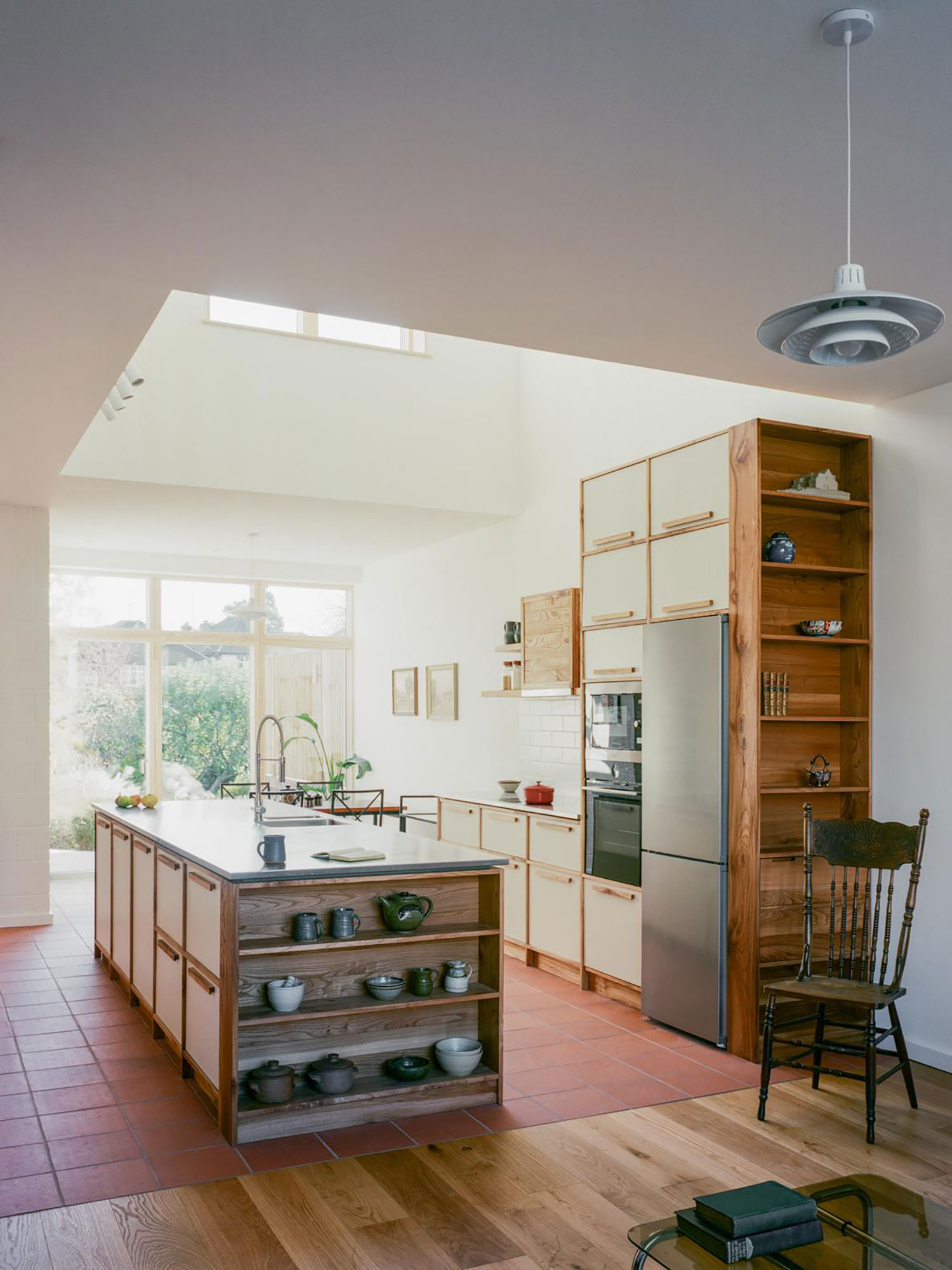
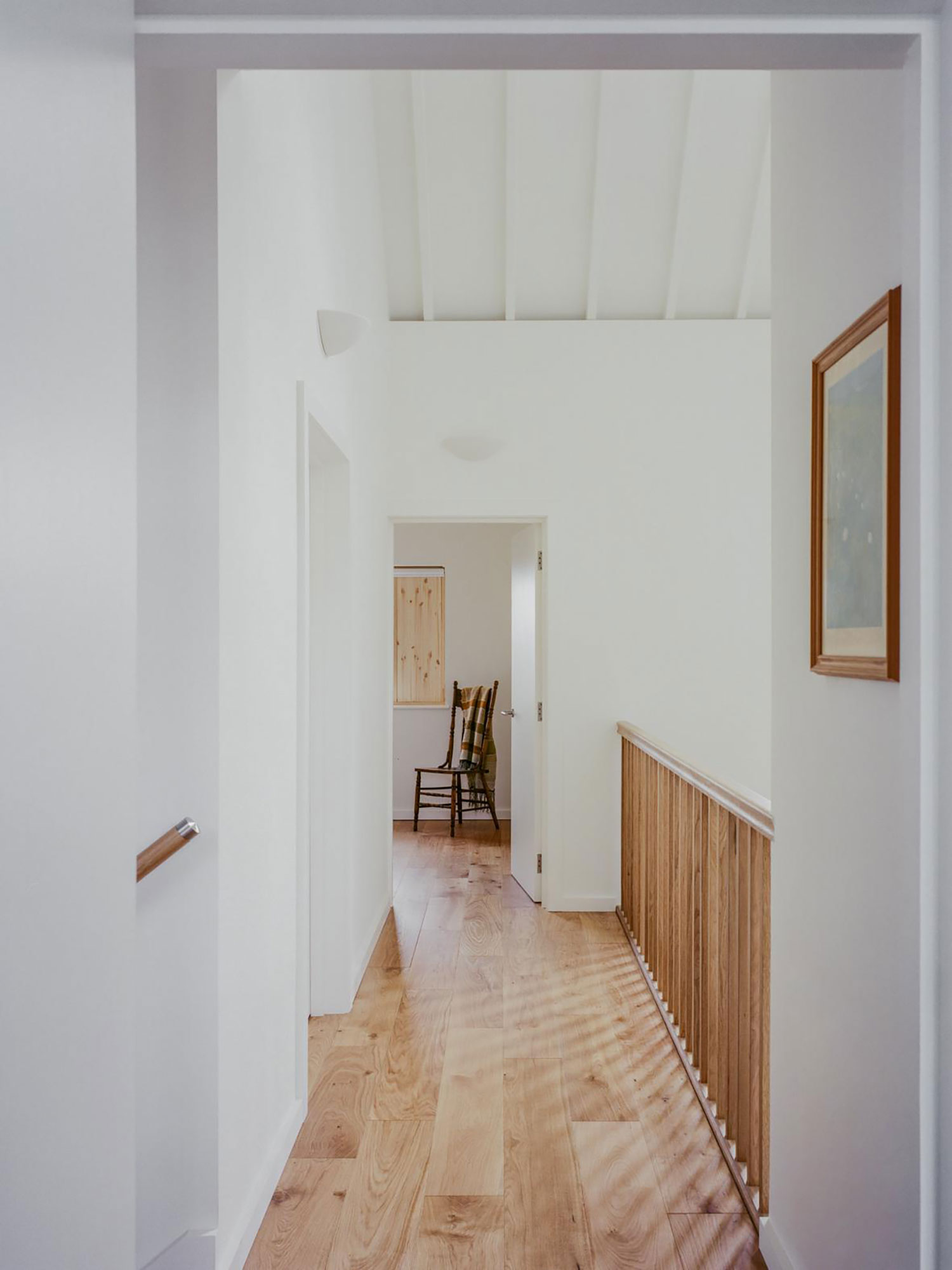
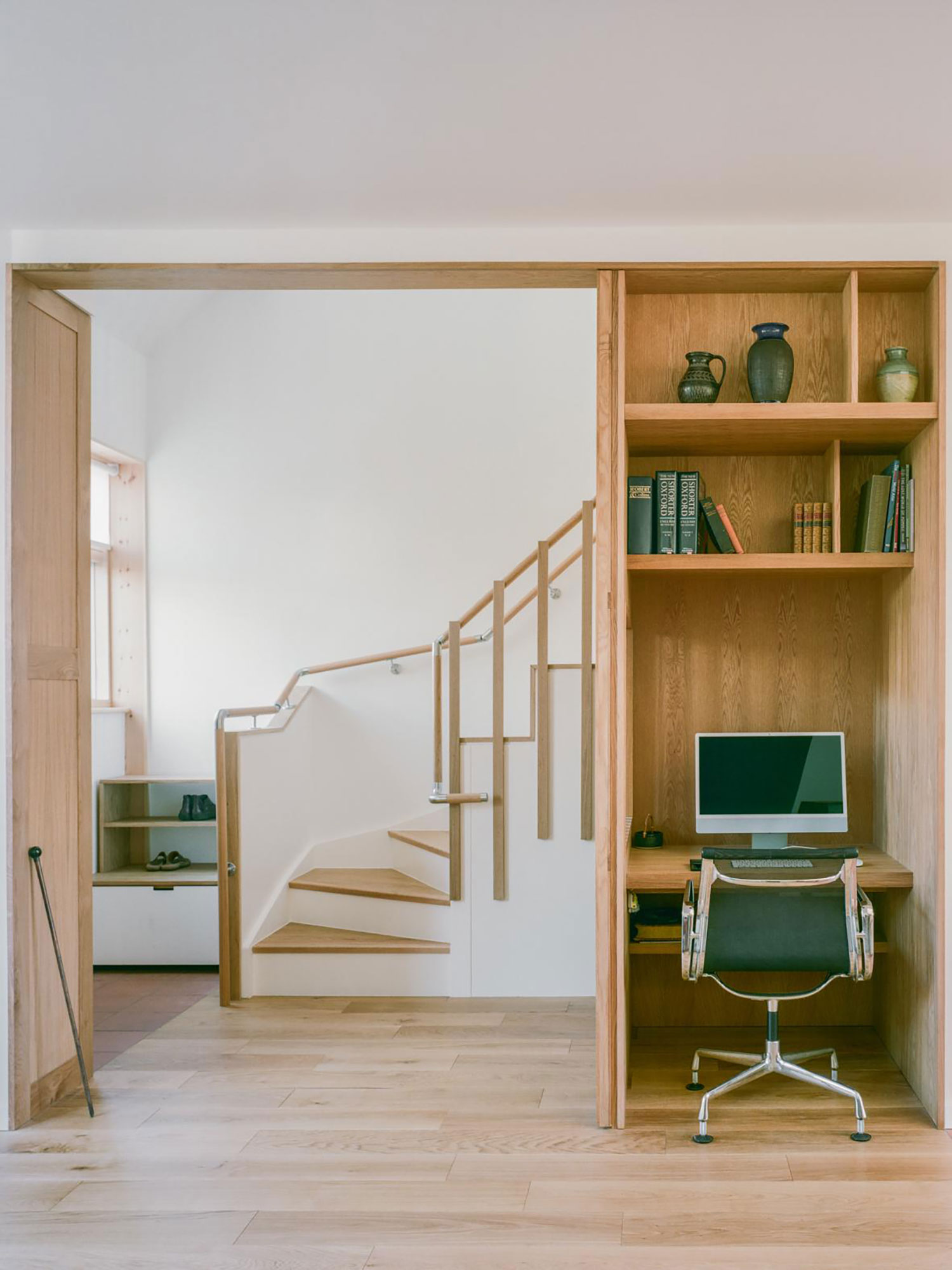
Inside, a double-height oak timber screen creates a welcoming, almost ecclesiastical entrance, functioning as both a stair handrail and a study alcove, a subtle nod to Jon’s work at the nearby St. John’s church. Oak flooring extends to the bay window seating in the living space, while the kitchen cabinets, crafted from salvaged elm floorboards from the original music room, tell their own story of family life.
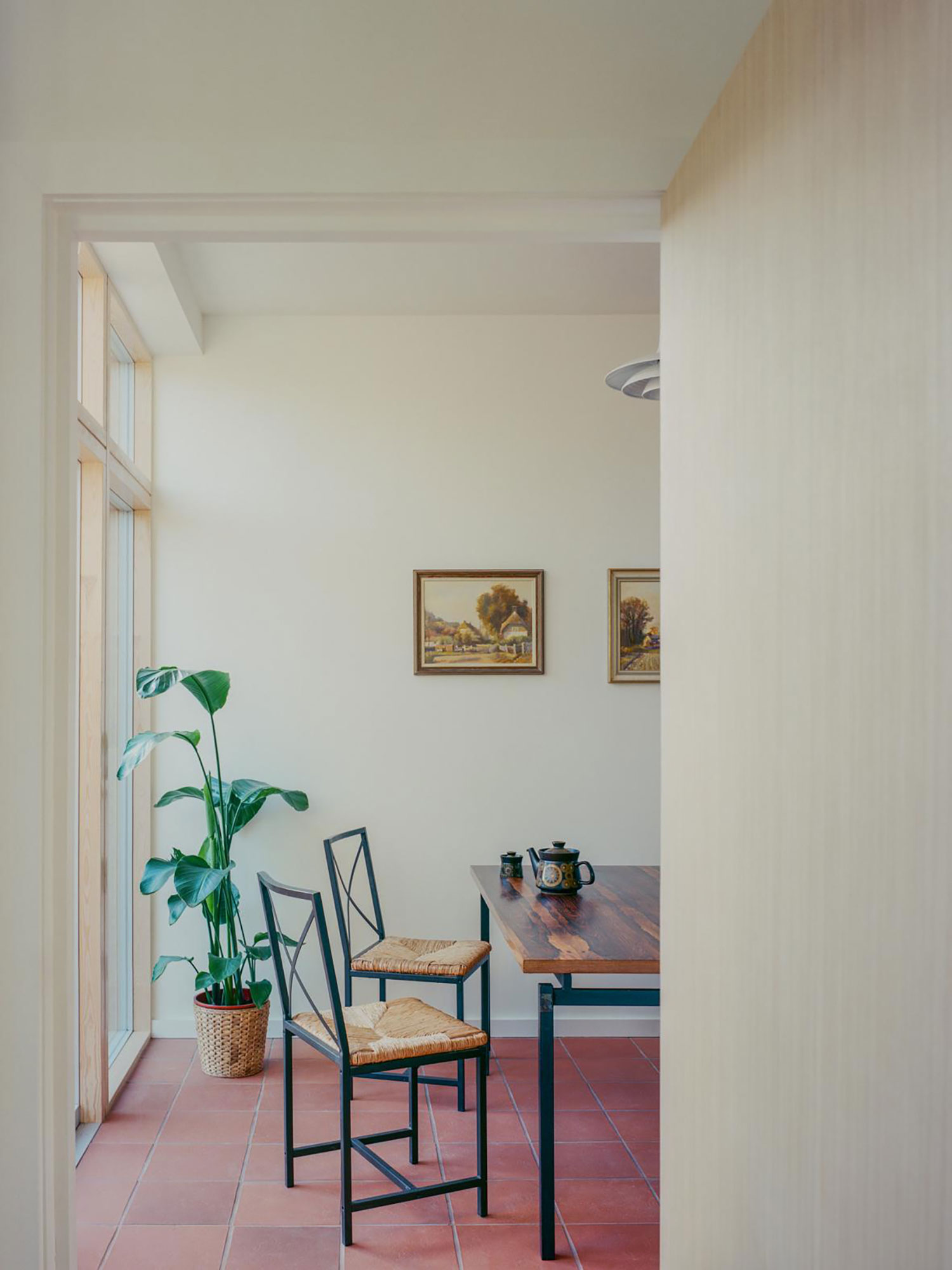
Kathryn has meticulously curated her favorite objects, creating a harmonious blend of past and present. Her mother-in-law’s handwoven shawls adorn the oak-lined walls, Edwardian timepieces and chairs converse with contemporary elements, and a rosewood table crafted by Jon anchors the dining space. Heirloom Georgian glassware and ceramics created by friends find new homes within built-in alcoves, each piece carrying its own narrative.
Woodbury is more than an architectural achievement; it’s a testament to the courage to embrace change while honoring heritage. As Kathryn’s cherished possessions find their places within these new walls, they weave together stories of the past and present, creating a home that confidently looks towards the future, celebrating the memories that have shaped it. This residence stands as a beautiful example of how architecture can be a vessel for personal transformation and the preservation of a life’s rich tapestry.