



Nestled amidst the rugged, forested slopes of Brownsburg-Chatham, in the heart of the Laurentian mountains, Canada, the Tsuga Residence by APPAREIL Architecture stands as demonstration of the harmonious integration of architecture and nature. Designed for an architectural historian and a pianist, this remarkable dwelling transcends the challenges of its steep, complex site, offering a sensory-rich living experience that is both refined and deeply respectful of its natural surroundings.
Chantal and Jacques, the discerning owners, sought a tranquil retreat, a departure from their urban life in Montreal. Their vision was clear: a contemporary, compact home that would seamlessly blend with the landscape, offering breathtaking views while maintaining an intimate sense of privacy. “We were drawn to Appareil’s ability to integrate architecture seamlessly into the natural environment,” Jacques explains. “Their honest use of materials and their approach—combining contemporary forms with vernacular motifs—resonated with us. It evokes a certain ‘Nordic’ sensibility, reminiscent of Scandinavian residential architecture.”
The site, characterized by its steep incline and natural basin, demanded a thoughtful and innovative architectural response.Appareil Architecture drew inspiration from the majestic pines that punctuate the landscape and the serene lake that lies nearby. The strategic placement of the residence maximizes the panoramic views while strengthening the connection between the home and its environment.
The construction of the Tsuga Residence was a technical feat, masterfully executed by the builders. Anchoring the structure on the steep slope required meticulous planning and precise sequencing of construction phases, incorporating innovative solutions to ensure long-term stability and durability. Particular attention was paid to water and soil management, safeguarding the structural integrity of the home. Rainwater from the flat roofs is directed into dry wells, and post-construction, the site was restored to its natural state, with native vegetation replanted to stabilize the soil and prevent erosion, preserving the landscape’s original contours.
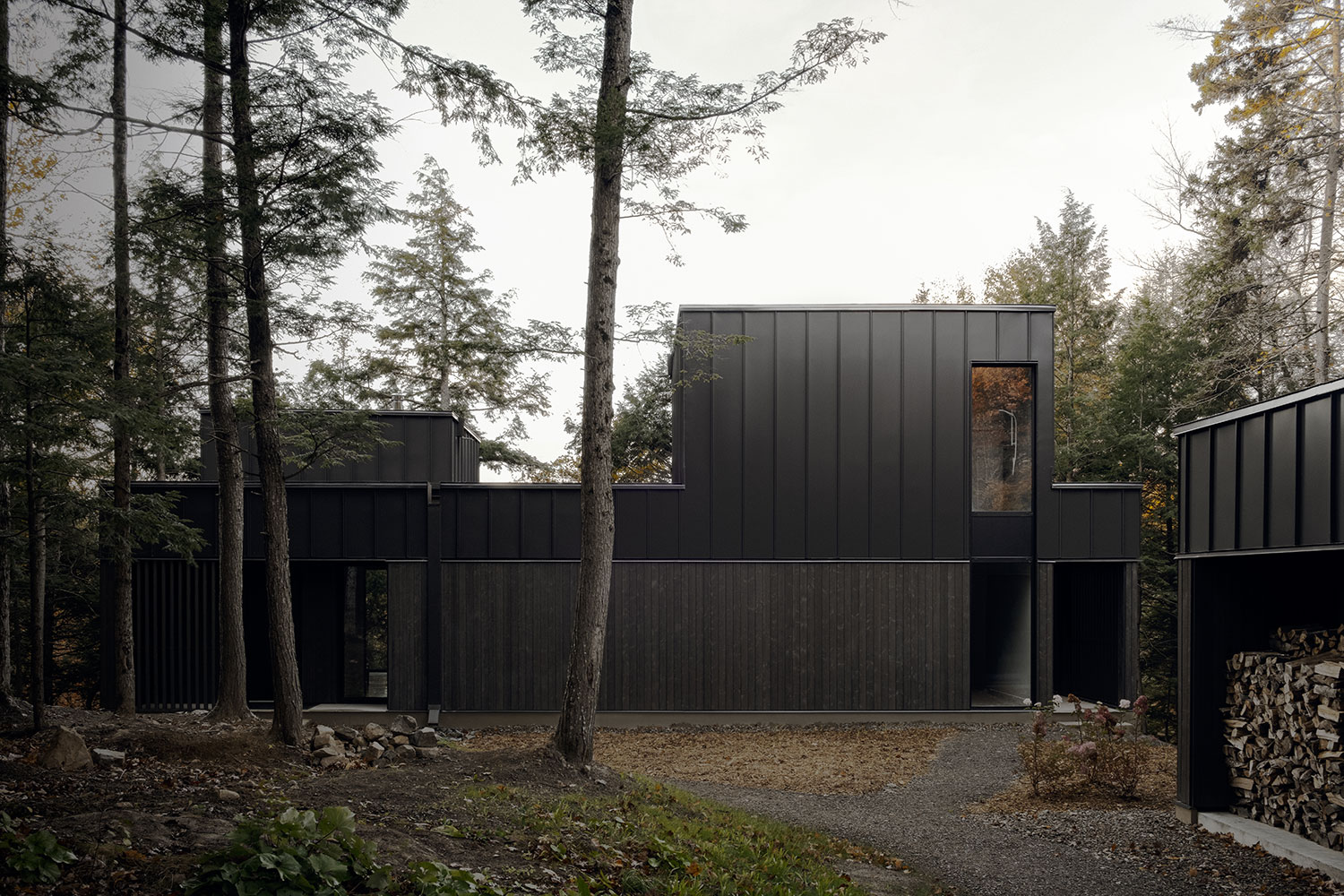
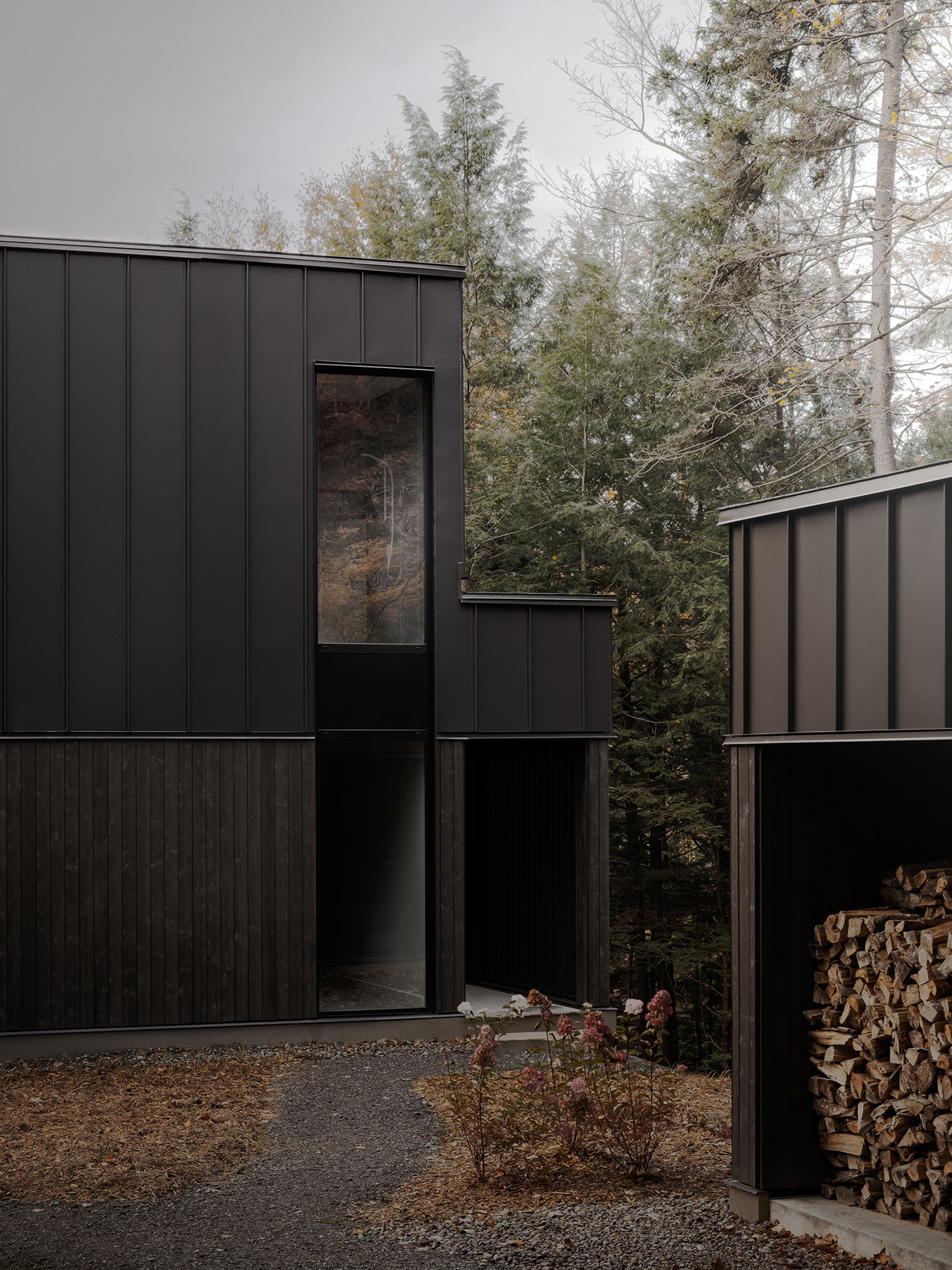
The residence, designed across three levels, plays with verticality, presenting a dynamic composition of overlapping volumes. A long rectangular prism forms the main floor, topped by two nearly cubic volumes set in a staggered formation, creating a bold yet balanced architectural statement. Cantilevered boxes, slatted wooden screens, and carefully positioned openings enhance the home’s vertical presence.
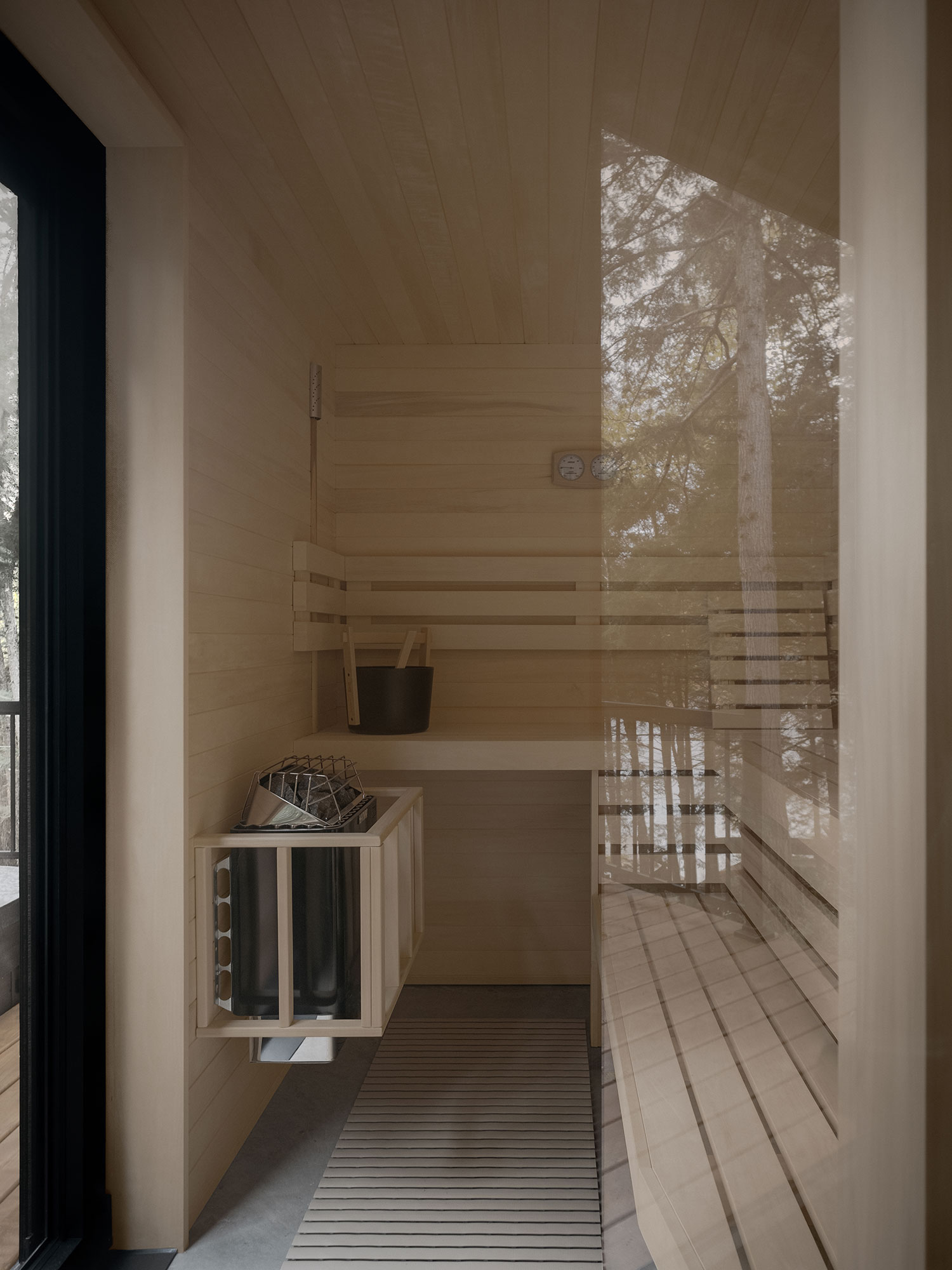
From the exterior, the Tsuga Residence unfolds like an orchestrated architectural composition. The nearly windowless front façade heightens the element of surprise, revealing at the rear a breathtaking vista of the lake and forest. This strategic positioning reinforces the concept of a perched refuge. Each level establishes a unique relationship with nature: at the garden level, the forest is perceived from the base of the trunks; on the main floor, the sensation of being in a suspended cabin prevails; and on the upper level, one is fully immersed in the treetops.
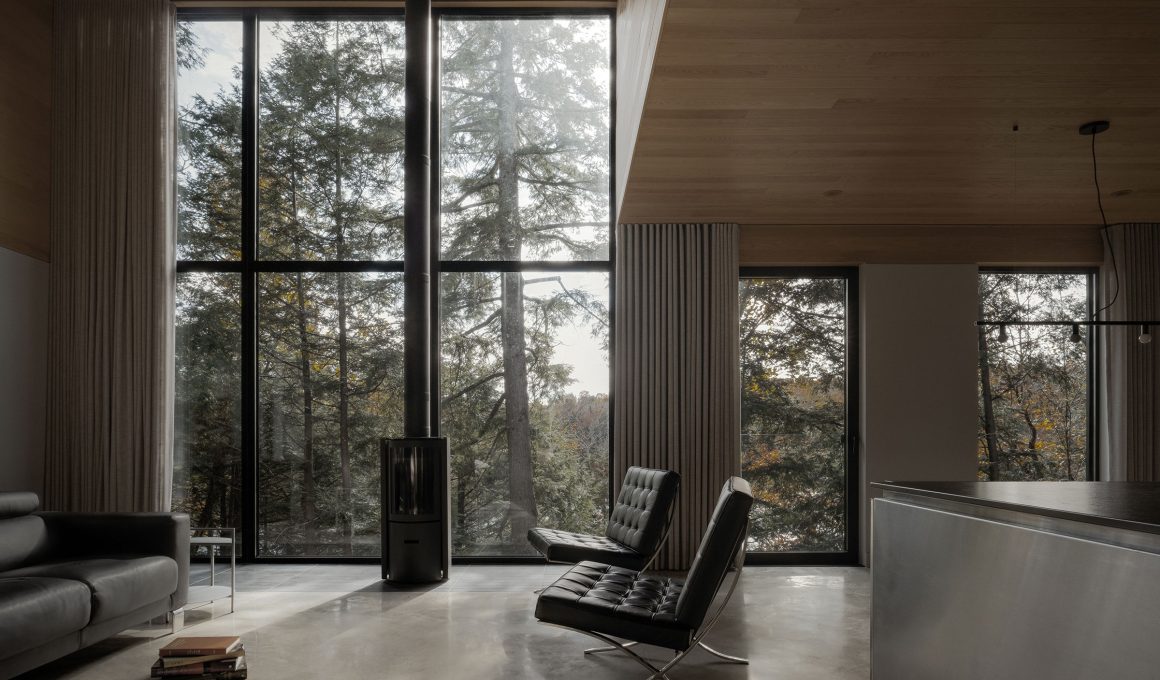
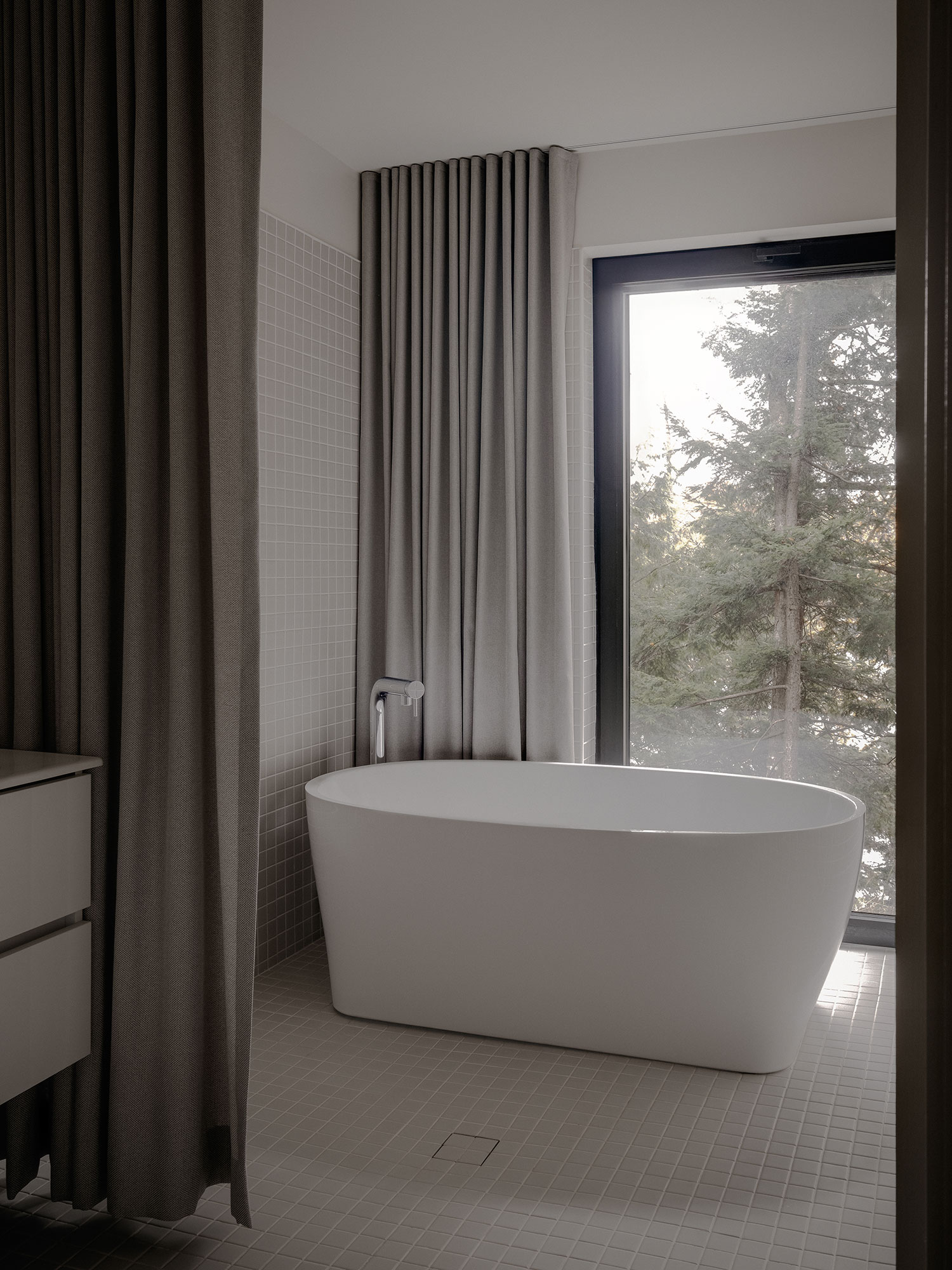
Expansive double-height windows on the main floor frame the trees and lake, forging an intimate connection with nature.The shifting light throughout the day transforms the living space into a constantly evolving tableau. At the garden level, guest rooms and a sauna open onto a different perspective, where the trees appear within reach. At the top, a private mezzanine serves as an intimate retreat, leading to a perched terrace that overlooks the landscape. This mezzanine also houses the master suite, secluded from the rest of the house to foster an absolute sense of tranquility.
By night, the house takes on a lantern-like presence, its soft glow filtering through the slatted wood screens. This subtle lighting, combined with the warmth of natural materials, lends the home a calming presence in the landscape.
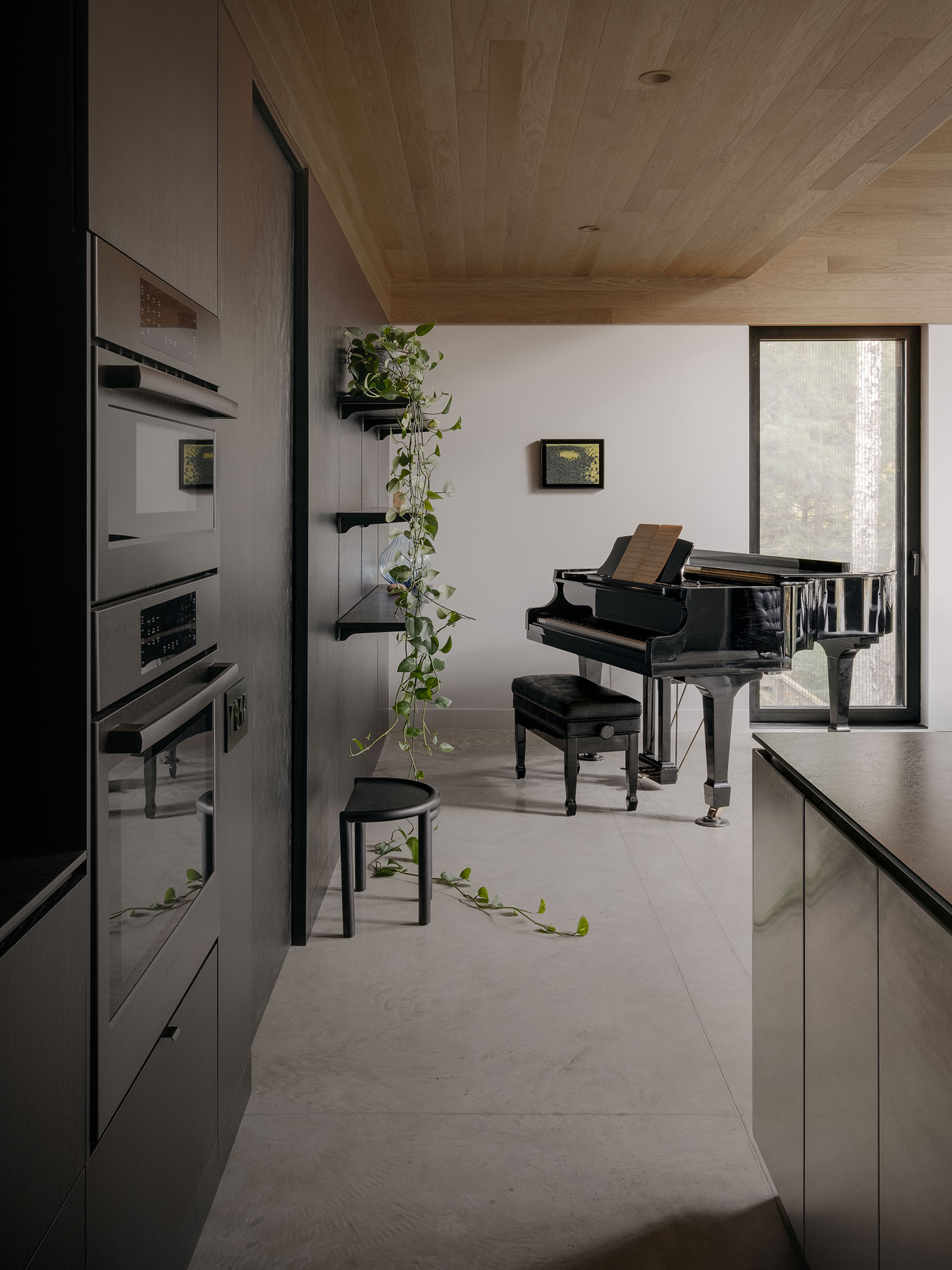
The interior was conceived as a seamless extension of the natural surroundings, while also serving as a stage for the owners’ passion for music. The living room, with its grand piano at its heart, becomes a contemplative space reminiscent of a concert hall. Red oak paneling, extending from the ceiling to the upper walls, unifies and amplifies the space, enhancing both its visual and acoustic qualities.
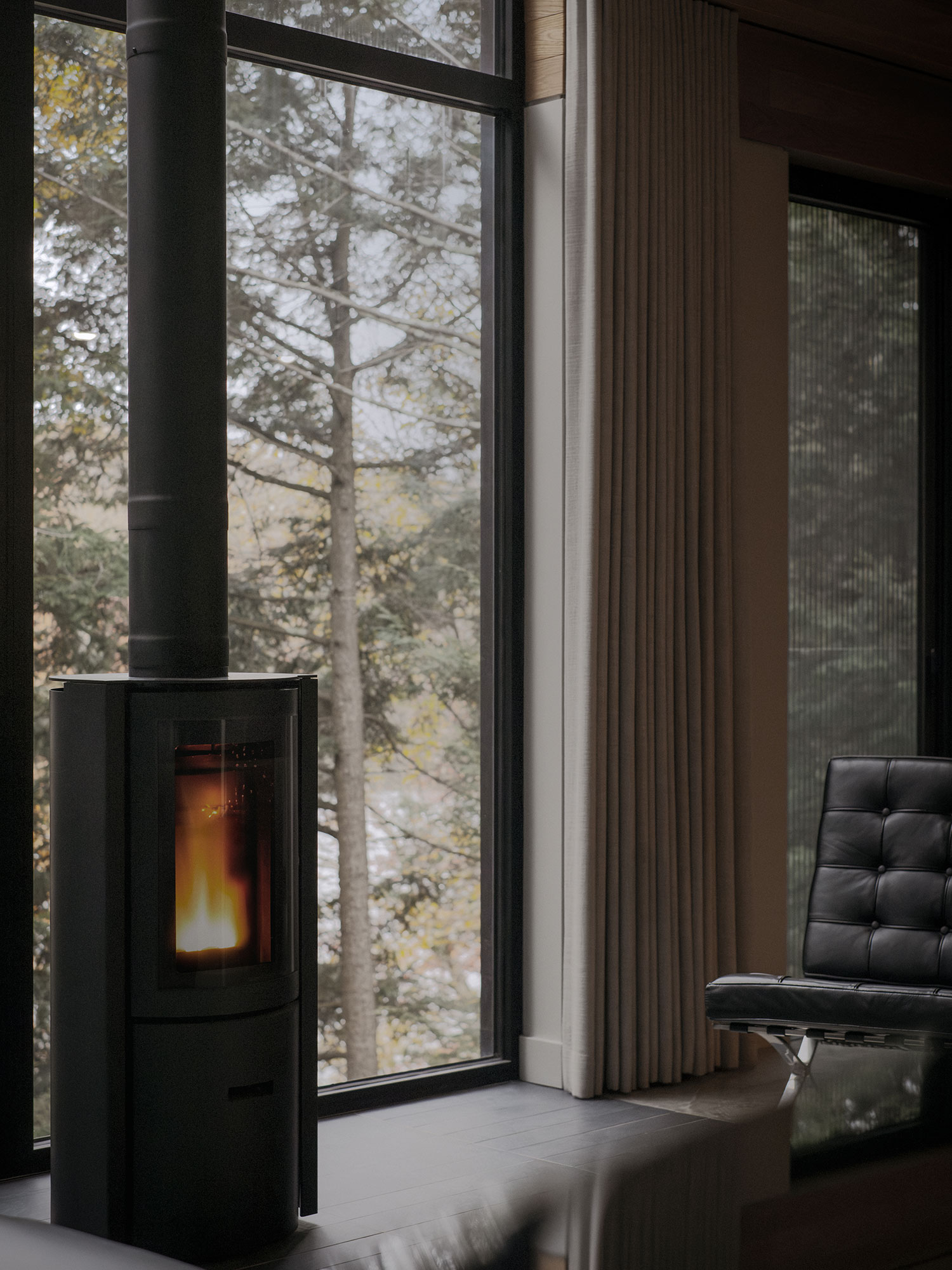
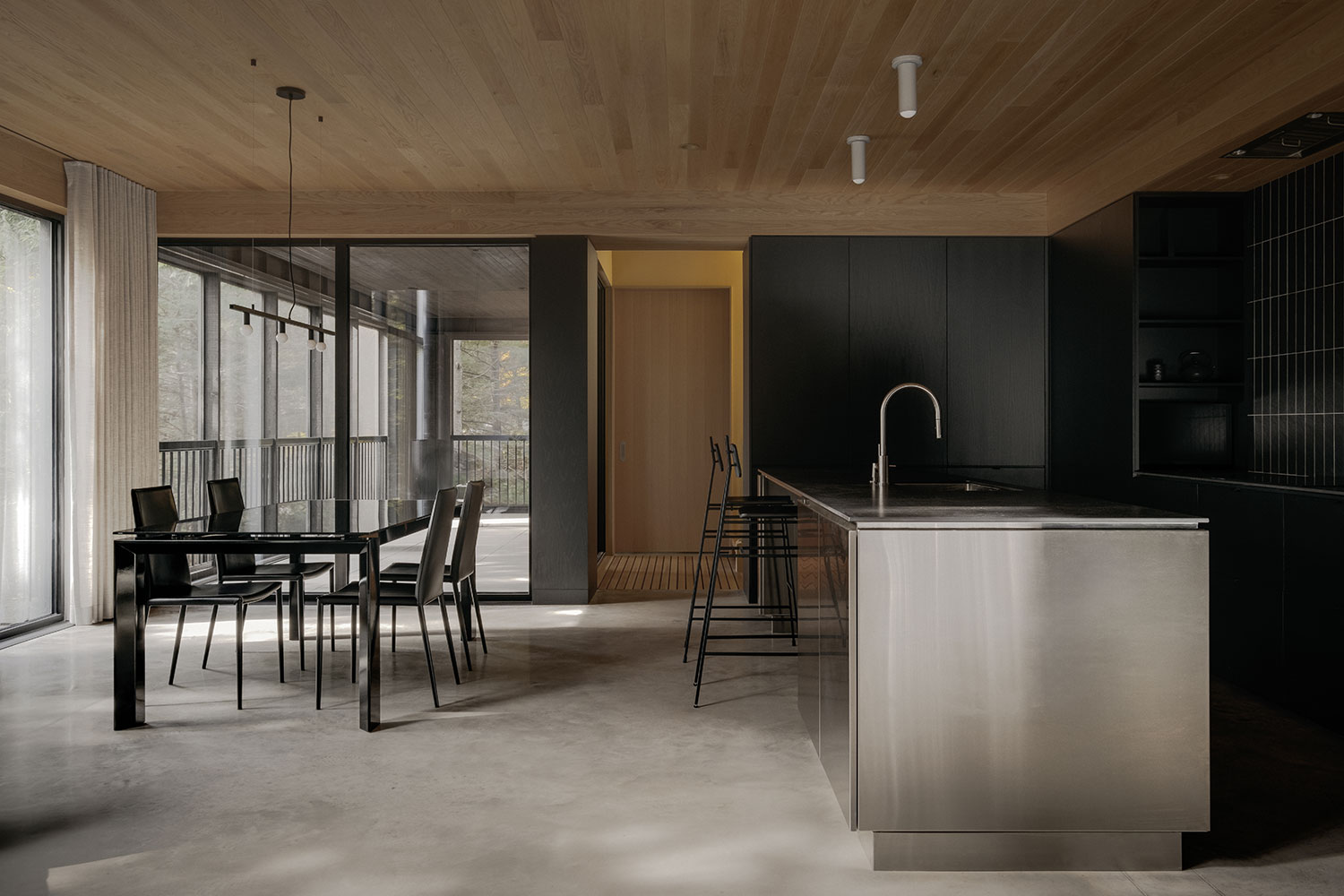
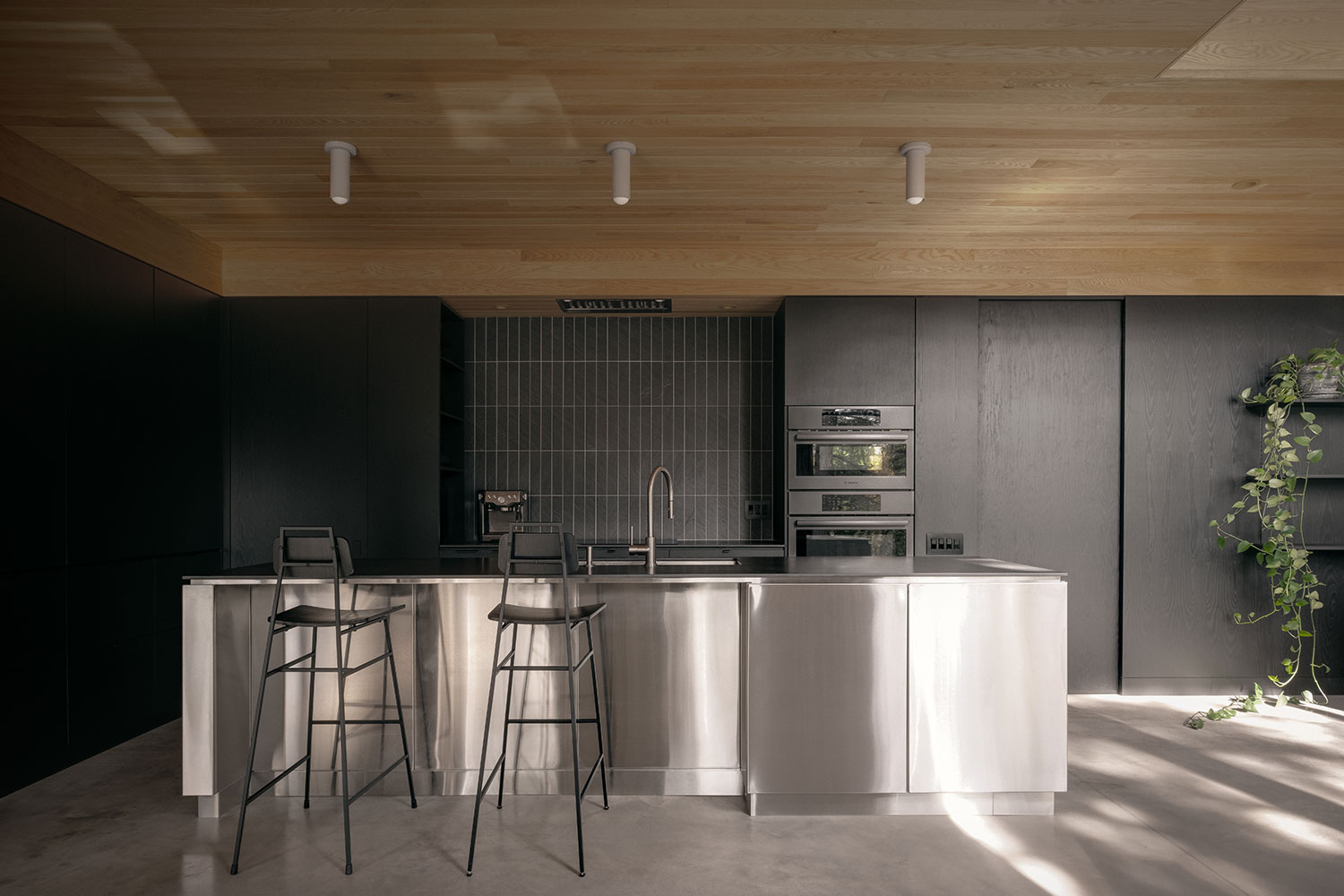
Anchored by a monumental double-height window, the living room serves as the luminous core of the home. The interplay of natural light, accentuated by wooden surfaces and fine materials, fosters an ambiance that is both contemporary and inviting. Furniture and material selections reflect a commitment to quality and craftsmanship. In the kitchen, the north and west walls are clad entirely in black ash, concealing storage while unifying the space. A central stainless-steel island, porcelain countertops, and a curated selection of design pieces contribute to an understated elegance.
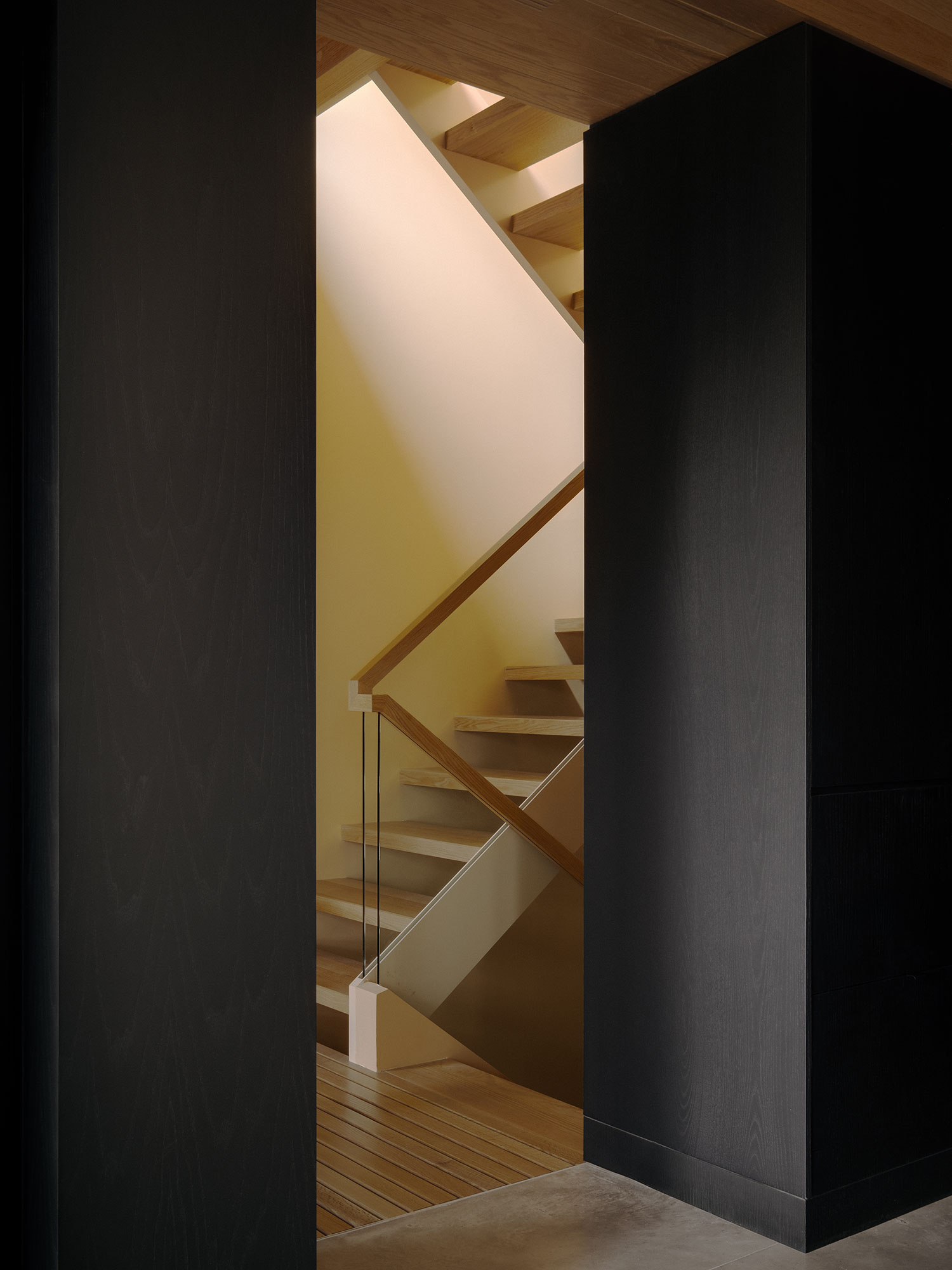
Despite its compact footprint, the home offers remarkable flexibility. A bedroom on the main floor anticipates intergenerational living or evolving needs. A screened-in terrace extends the outdoor living space, creating a serene, sheltered retreat. Meanwhile, the sauna on the garden level provides a meditative escape with a stunning view of the lake.A sculptural staircase, a defining feature of the home, accentuates its verticality with open-riser landings that allow natural light to filter through. Its minimalist design, complemented by red oak doors, reinforces the home’s enveloping warmth.
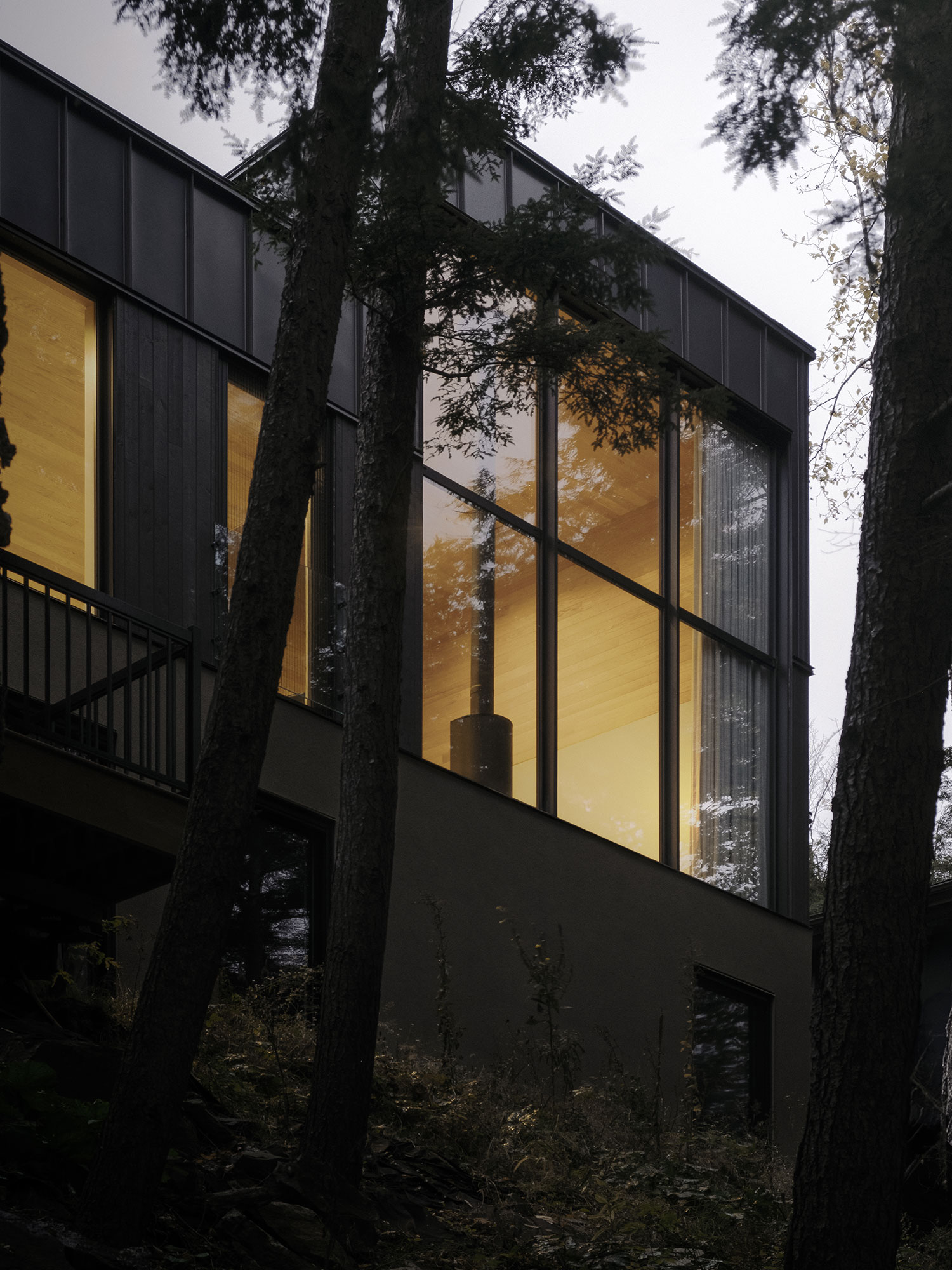 A guiding principle of the project was to minimize the home’s footprint while prioritizing high-quality, durable materials. Spread across three compact levels, the design optimizes every square meter, aligning with principles of socio-ecological transition. Passive strategies, including strategic window placement to harness natural light, reduce reliance on heating and cooling systems. The home’s superior insulation ensures optimal energy efficiency, with airtightness test results that surpass Novoclimat standards.
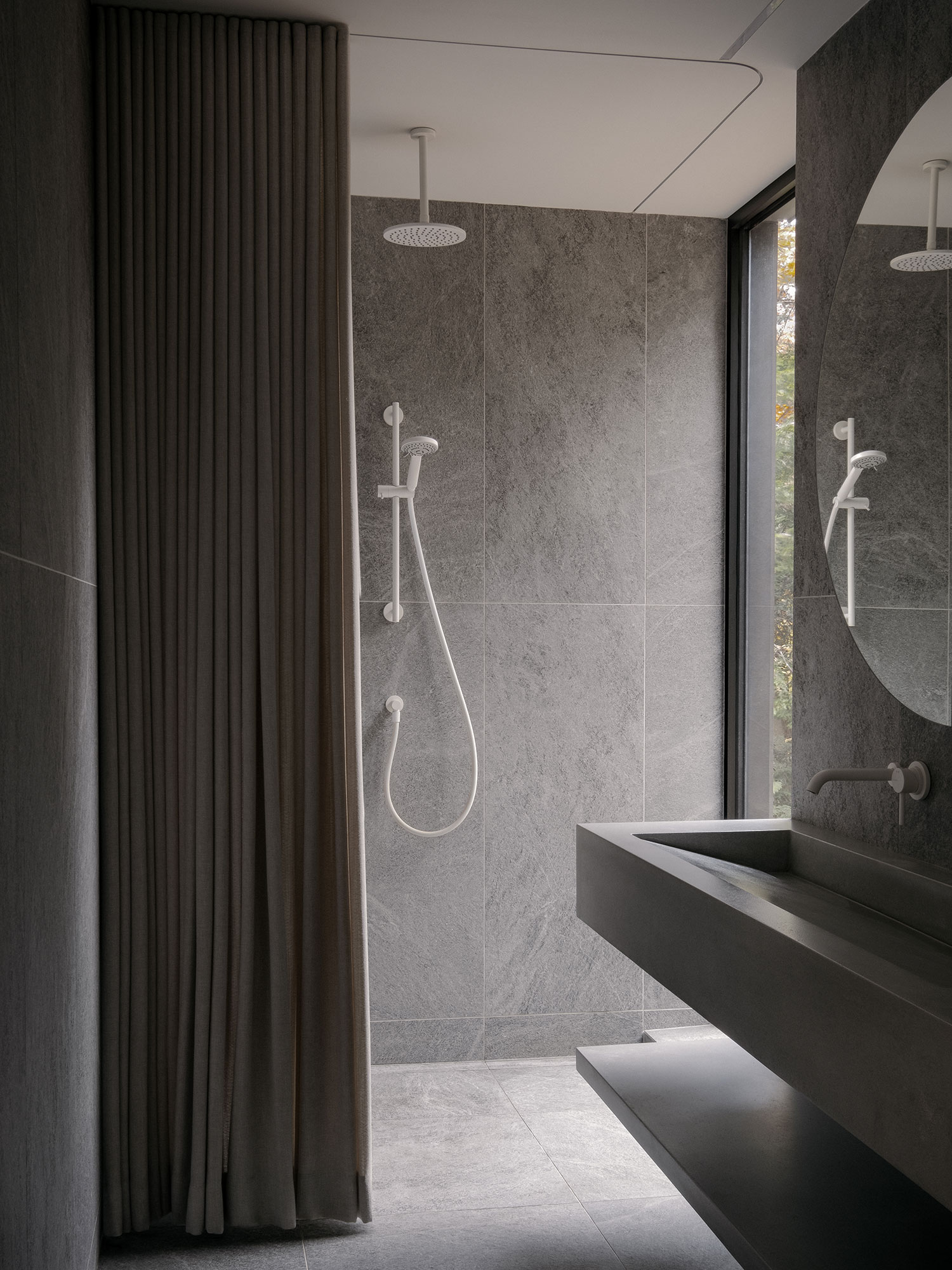
Wood, the primary material, is sourced locally, underscoring an eco-conscious approach. The upper sections of the exterior volumes are clad in metal to enhance the durability of the building envelope. Expansive glazing embodies a biophilic design philosophy, dissolving the boundary between indoors and out, allowing the forest to permeate the very heart of the home.
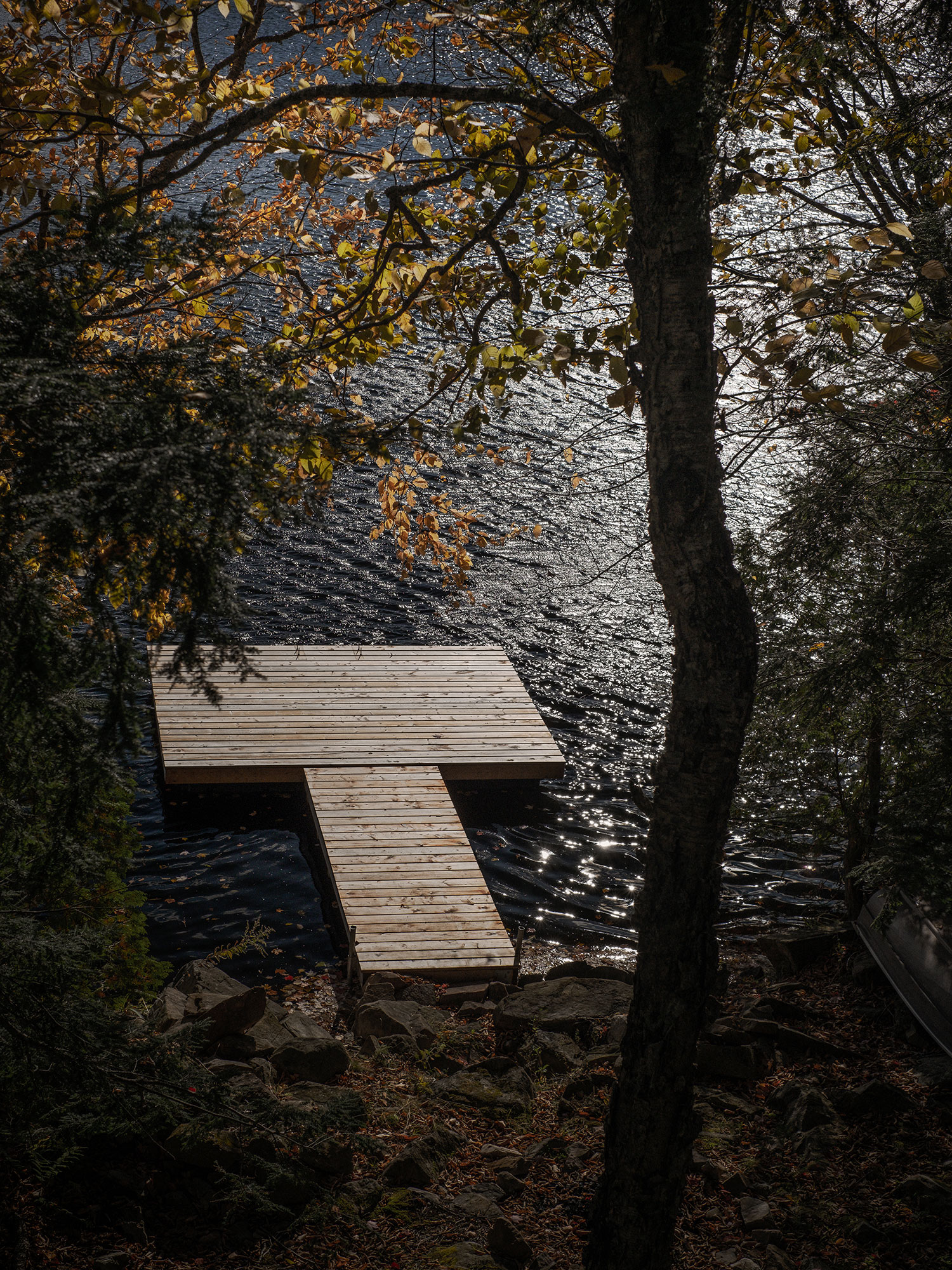
The Tsuga Residence, in its essence, is a celebration of architecture as an art form—one that engages in a profound dialogue with nature, elevating and magnifying its beauty. Through thoughtful site integration, bespoke design, and precise execution, APPAREIL Architecture has created not just a dwelling, but a tree-perched sanctuary, a testament to the power of architecture to harmonize with and enhance the natural world.