


In the serene landscape of Vagos, Portugal, where the estuary whispers tales of time and tide, Rómulo Neto Arquitetos have woven a narrative of renewal. The challenge: to bridge not just the banks of Vagos and Sousa, but also the chasm between history and the present. The canvas: the ruins of the Fareja Bridge, a silent sentinel of 1855, its once proud span now a skeletal echo.
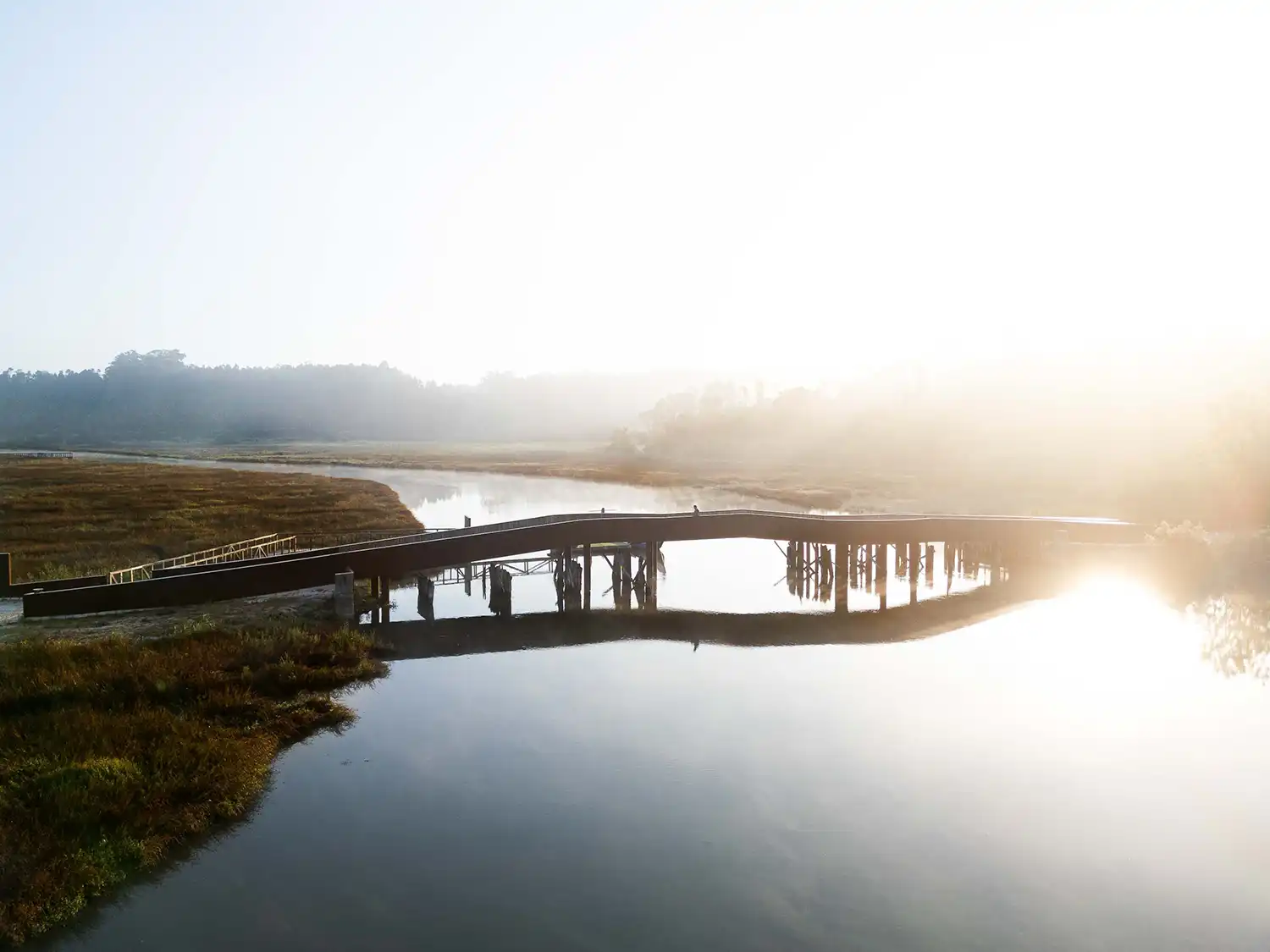
The architects, guided by a deep respect for the site’s historical resonance, embarked on a journey to create a “museum bridge”—a structure that would not merely coexist with the ruins but actively engage with them, transforming a functional crossing into a poignant experience. The inherent fragility of the historical remains, a stark reminder of time’s relentless march, necessitated a design that could stand independently, a testament to enduring relevance.
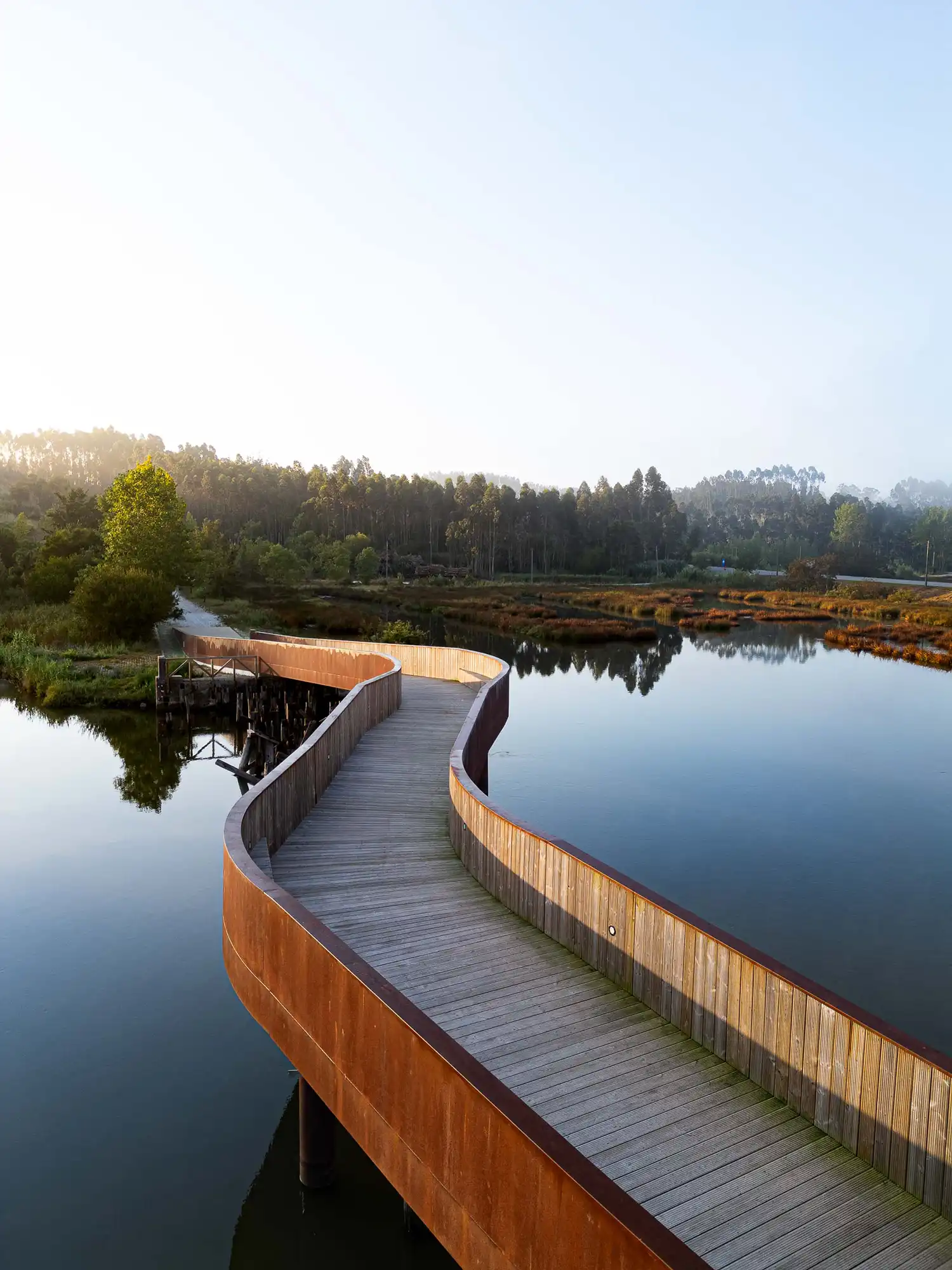
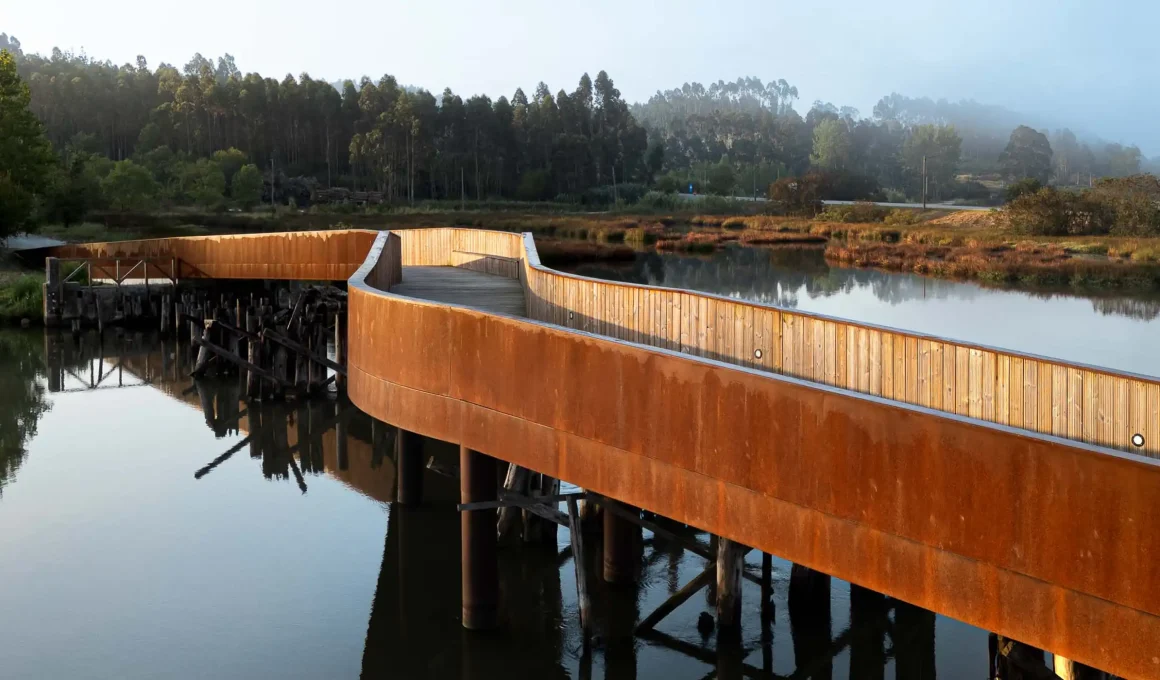
The solution emerged as a graceful curve and counter-curve, a sinuous path that orchestrates a continuous dialogue with the ruins. This deliberate choreography of movement ensures that the visitor’s gaze remains captivated by the remnants of the old bridge, a constant visual reminder of the past. The new bridge, conceived as a stage for this historical drama, offers vantage points both along its span and from beneath its structure, allowing for intimate encounters with the weathered stones.

Rómulo Neto Arquitetos embraced a minimalist aesthetic, choosing materials that harmonize with the natural palette of the estuary. Corten steel, with its earthy patina, and warm, textured wood, create a visual symphony that complements the surrounding landscape. The bridge’s organic form, a gentle undulation against the horizon, minimizes its visual footprint, ensuring a seamless integration with the environment, even as the old bridge fades into memory.

Economic constraints, a reality of many public projects, became a catalyst for innovation. With a budget of €180,000 + VAT, the architects devised a modular construction strategy. The bridge was segmented into five prefabricated sections, each under 14 meters, simplifying transportation and on-site assembly. This pragmatic approach not only optimized resources but also ensured a swift and efficient construction process. The bridge’s scale, meticulously calibrated to accommodate both cyclists and pedestrians, maintains a minimum width of 2.50 meters, balancing functionality with spatial efficiency.
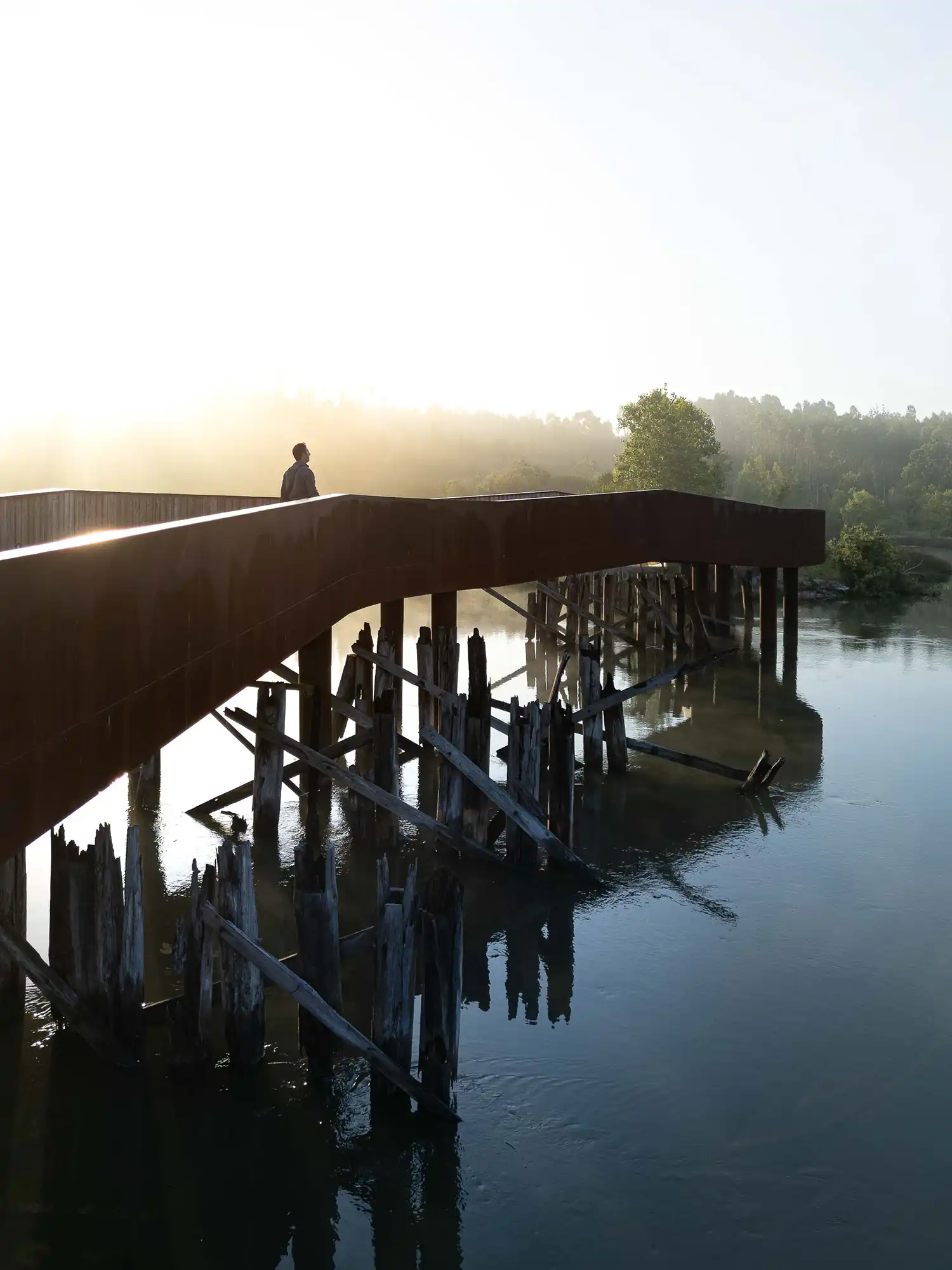
Beyond its role as a crossing, the bridge transforms into a social space. At the transitions of the ramps, leisure areas unfold, furnished with benches that invite pause and contemplation. These spaces become impromptu fishing spots, scenic overlooks, and communal gathering points, enriching the pedestrian experience beyond mere transit.

The architects’ poetic description, a testament to their profound connection with the site, speaks of a “rebirth,” a phoenix rising from the estuary’s embrace. The old bridge, “worn down by the tides, strong winds, and storms,” is juxtaposed with the new, “born old, born raw,” yet destined to endure. This conceptual layering of time, where past and present merge in “the mirror of the estuary,” encapsulates the essence of the project.
Rómulo Neto Arquitetos have not merely built a bridge; they have crafted a poetic narrative, a tangible link between generations. The Pedestrian and Cycling Crossing Over the Fareja Bridge stands as a great example of the power of architecture to preserve memory, foster connection, and enrich the landscape with a touch of enduring beauty. It is a bridge that crosses, yes, but also a bridge that transcends.