



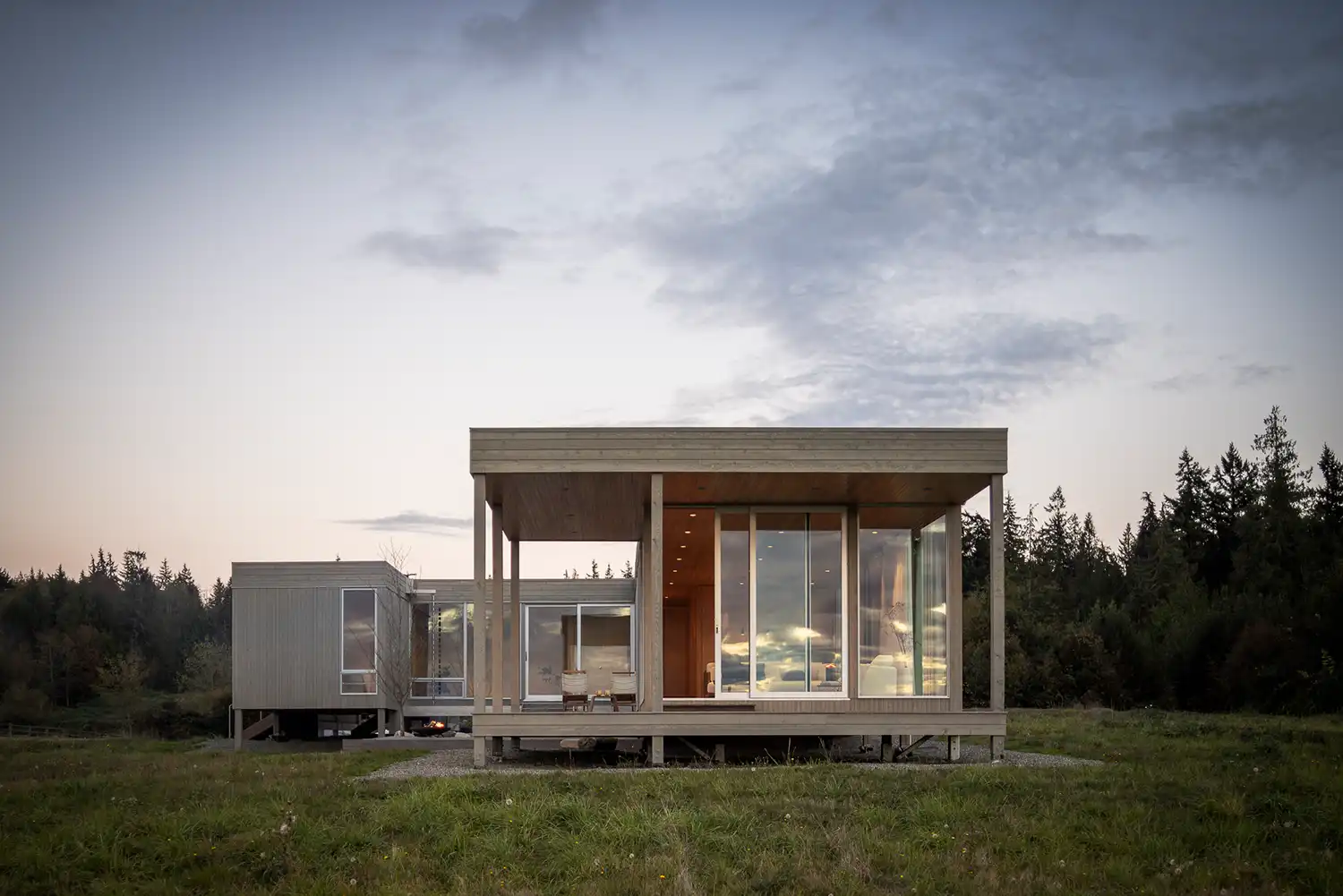
Nestled on Whidbey Island, Washington, the Whidbey Uparati is a family retreat designed for meditation, bonding, and “stillness” – or uparati in Sanskrit. Conceived by architect Matt Wittman of Wittman Estes, the 1,880-square-foot house minimizes its visual and physical impact on the natural landscape, appearing to float above a meadow and blend seamlessly into its surroundings.
The approach to Whidbey Uparati is a deliberate journey, beginning with a ferry crossing over Puget Sound from Bellevue to Mukilteo Clinton and continuing into the rural landscape of Whidbey Island. A winding path through a meadow of Blue Oat Grasses, Mexican Feather Grasses, Adagio Maiden Grasses, Cone Flowers and Flowering Sage leads up a gentle slope to the house, an experience crafted by lead landscape designer Jody Estes. Estes describes the landscaping approach as an effort to “rewild” the site through the removal of invasive species and the implementation of a plan for forest restoration. A walking path meanders around the perimeter of the five-acre lot and will eventually lead to a meditation pavilion in a future phase.
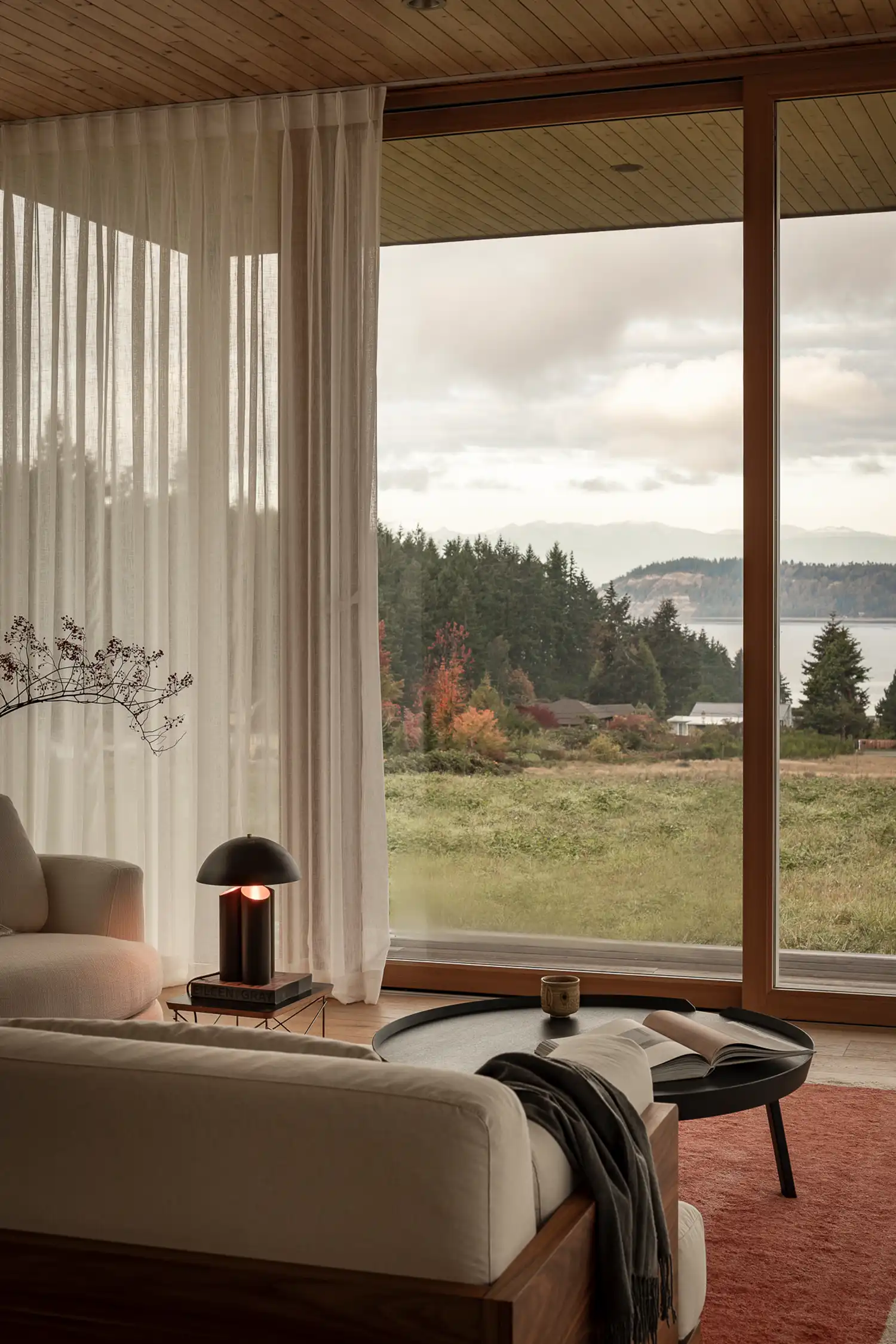
The house itself is perched on the highest point of the lot, offering panoramic views of Useless Bay and the Olympic Mountains. Entry stairs elevate the owners into the house, where a low ceiling creates a moment of compression before opening into the more spacious living room and kitchen. The transparency of the house is revealed further in, with floor-to-ceiling windows framing views of the water and mountains.
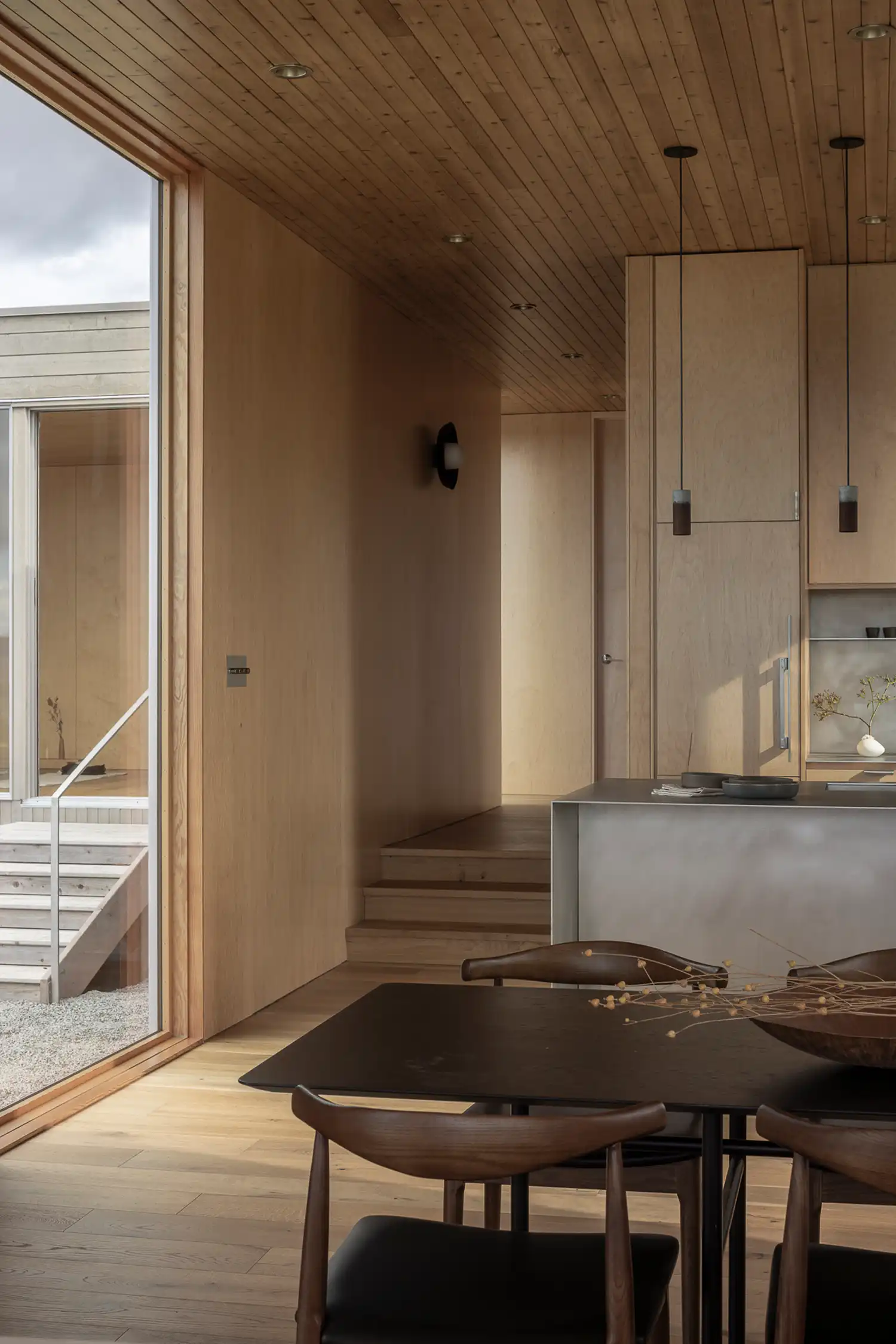
The residence features two bedrooms, two bathrooms, a multi-purpose room, and a living room and kitchen designed to foster communal activities. During the warmer seasons, a generous west-facing deck extends the living space. A courtyard plan layout, complete with a crushed granite patio, reflecting pool, firepit, and a single Stewartia tree, further connects the house to the outdoors.
Wittman Estes faced a limited budget, which led to a design emphasizing simplicity in construction to reduce both timeframe and cost. The structure follows a 4’ grid, with floors and the roof framed with off-the-shelf TJIs spanning a rational order of columns and walls on 12’ and 16’ intervals. Eschewing a traditional concrete foundation, the house utilizes a Ground Frame foundation system, reducing the carbon footprint by 77%. The micro pile technology of this system acts like roots, anchoring the house to the ground both structurally and visually.
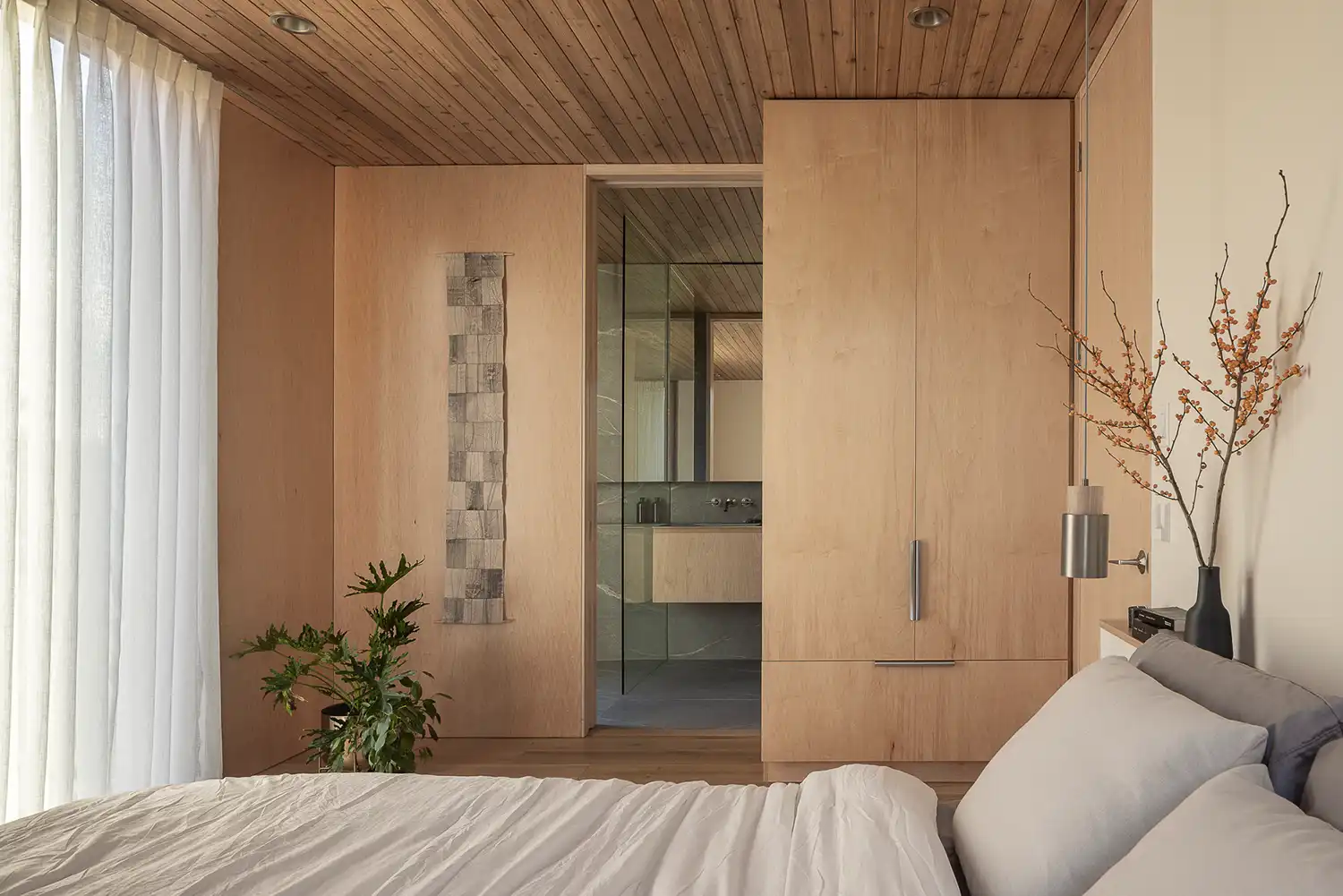
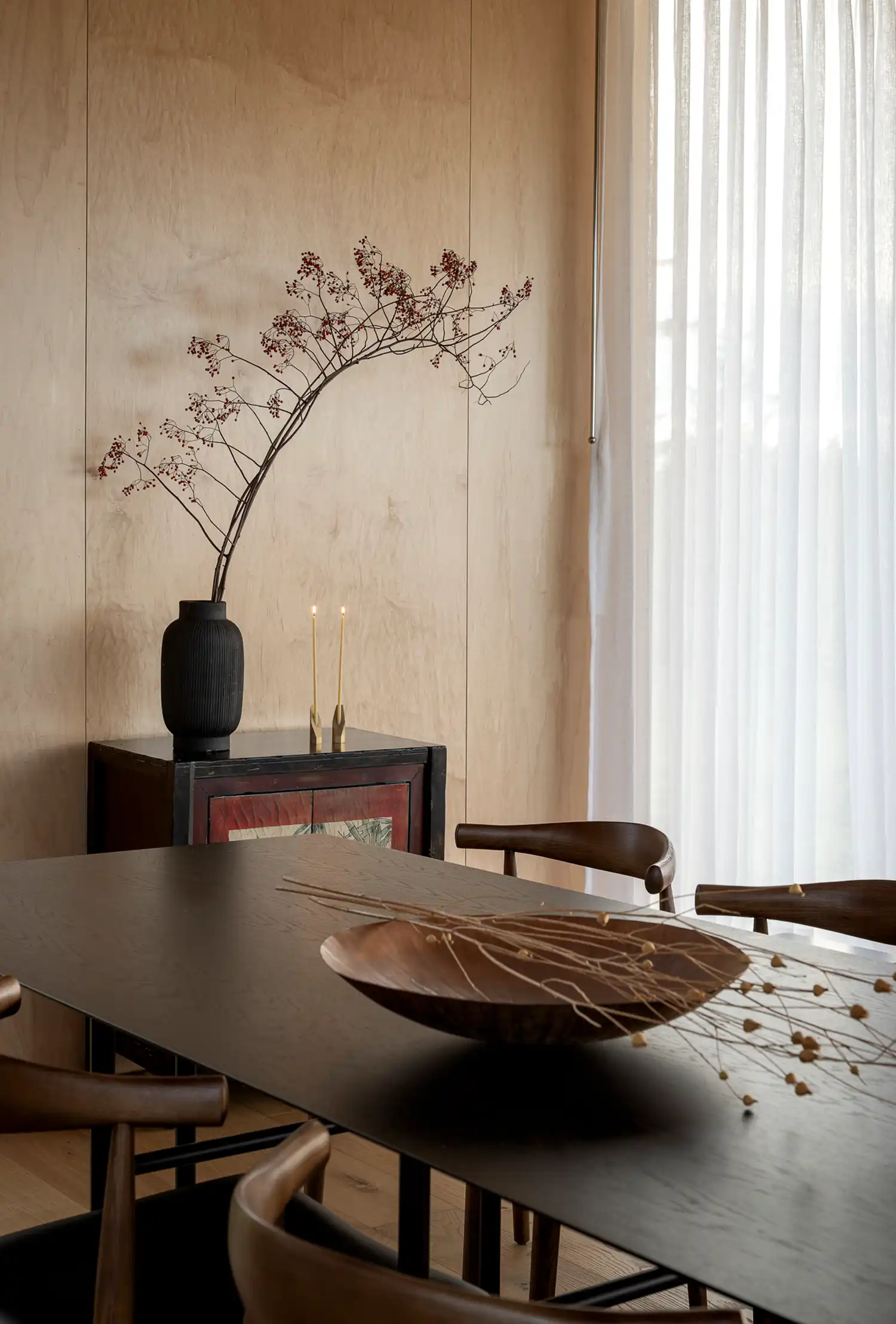
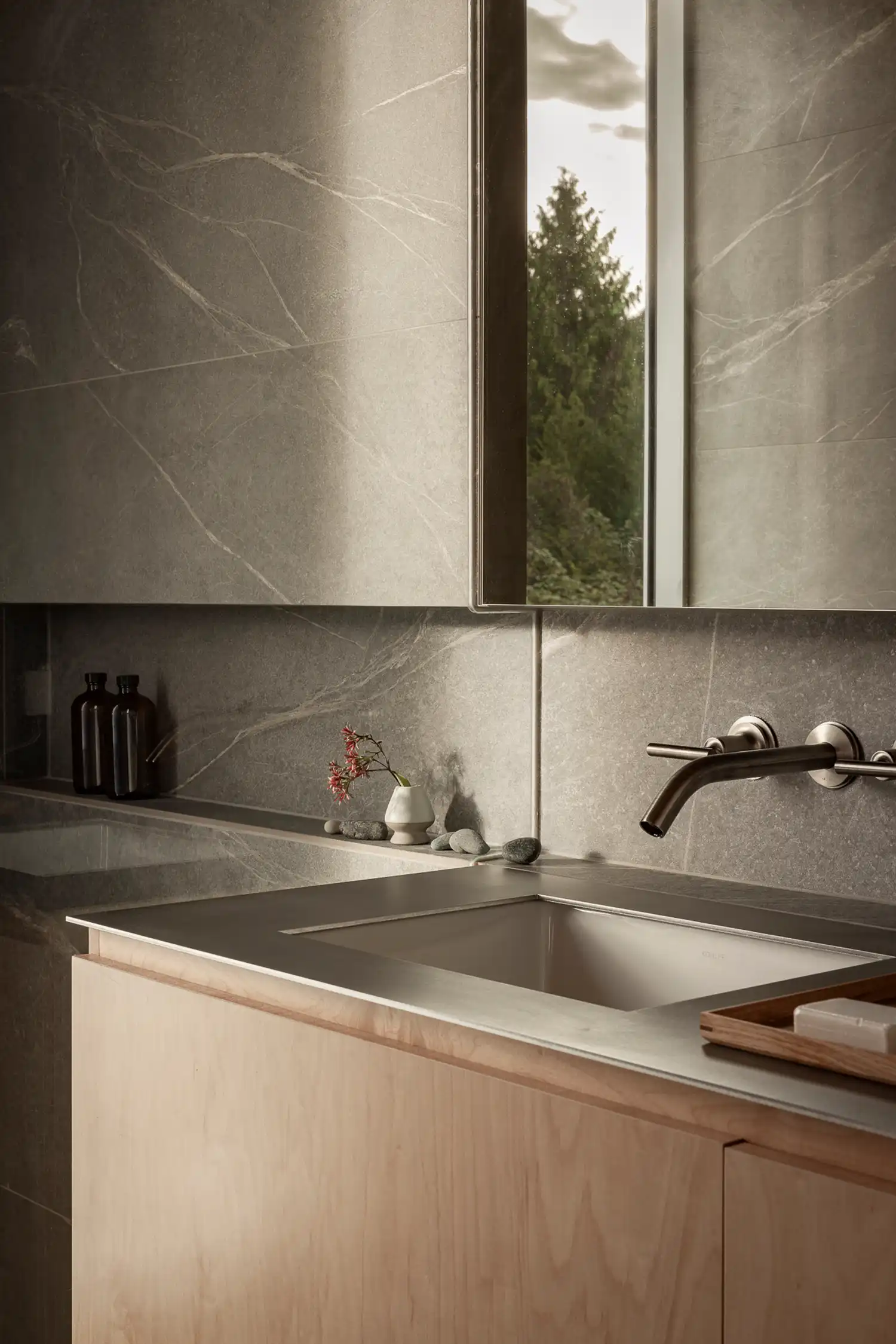
The interior spaces are characterized by simple wood details, including plywood walls, cedar tongue and groove ceilings, and white oak floors. Neutral tones form the base of the interior palette, allowing the residents’ personal objects to introduce color and visual focus. Inspired by film, the clients sought a cinematic visual composition for both the interior and exterior of the house. The sequence of interior spaces is designed to allow light and shadow to shift the perspective and mood of each room.
Wittman Estes’s commitment to blurring the lines between building and landscape is evident throughout Whidbey Uparati. As Wittman states, “We wanted the house to touch the ground lightly and float above the meadow.” The quiet nature of the house’s material palette and structural simplicity allows its most coveted quality to resonate: in stillness, nature speaks.