



In a bold response to the global climate crisis, the Living Room Collective unveils Picoplanktonics, a revolutionary 3D-printed living sculpture at the Canada Pavilion for the 19th International Architecture Exhibition – La Biennale di Venezia. Running till November 23, 2025, this groundbreaking exhibition merges biodesign, carbon sequestration, and architectural innovation to propose a radical shift in how we cohabit with nature.

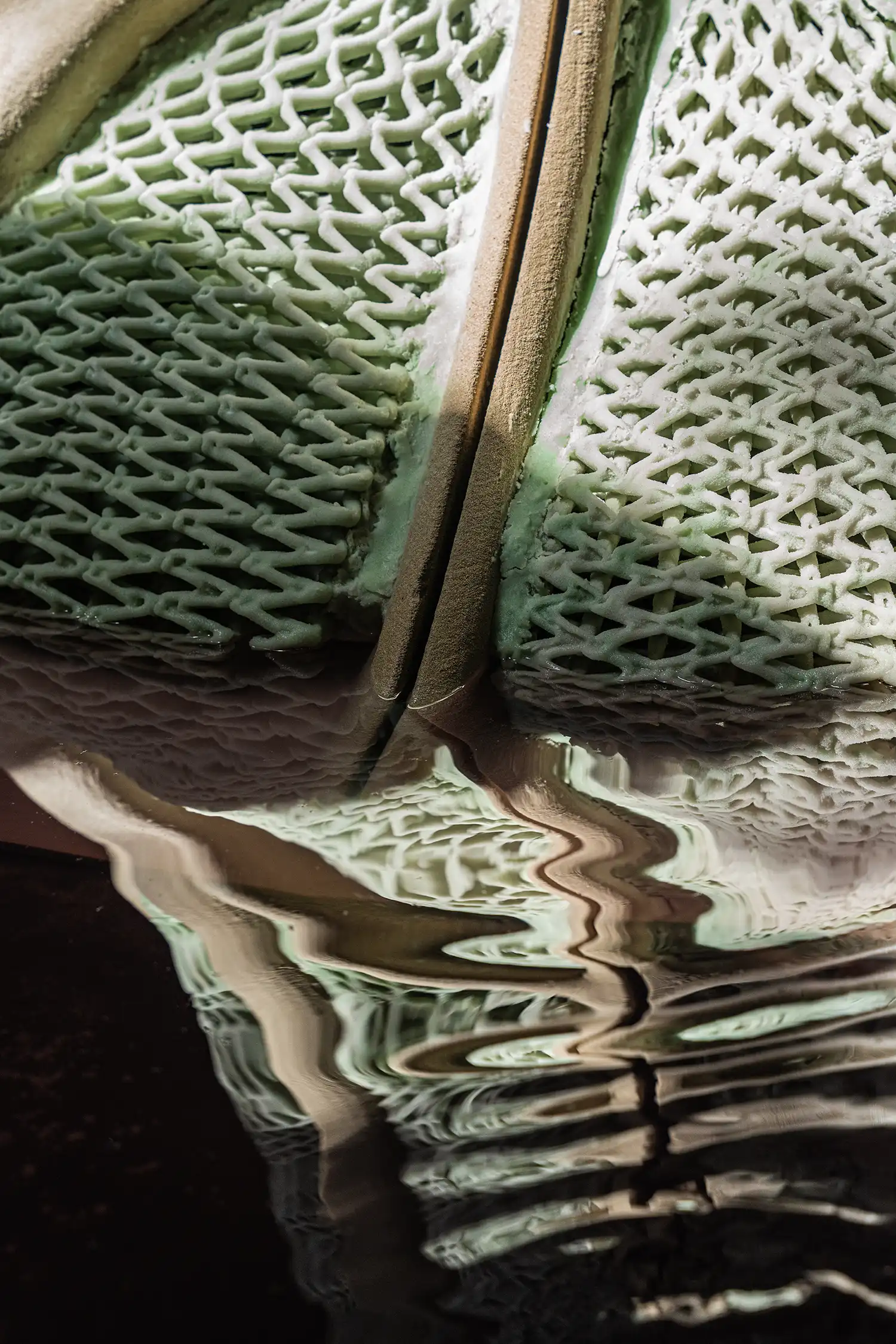
At the heart of Picoplanktonics are 3D-printed structures embedded with live cyanobacteria, organisms capable of absorbing carbon dioxide. Fabricated at ETH Zürich, these are the largest living material structures ever produced using a pioneering biofabrication platform. The project transforms the Canada Pavilion into a dynamic ecosystem, where light, moisture, and warmth nurture the cyanobacteria, allowing them to grow, evolve, and even decline—highlighting the fragility and resilience of living systems.

Led by Canadian architect Andrea Shin Ling, the Living Room Collective challenges conventional architecture by prioritizing ecological resilience and regenerative design. “This is an open experiment,” says Ling. “We’re revealing all phases of the material’s life—growth, sickness, death—to reimagine construction as a reciprocal relationship between humans and nature.”

The project’s caretakers play a crucial role, tending to the structures throughout the exhibition. This emphasis on stewardship reflects the collective’s vision for a future where architecture actively remediates the planet. Michelle Chawla of the Canada Council for the Arts praises the exhibition as a catalyst for global dialogue: “It bridges technological innovation and ecological ethics, inspiring us to rethink how built environments can harness natural systems.”

Supported by interdisciplinary collaborators from ETH Zürich, Toronto Metropolitan University, and the University of Toronto, Picoplanktonics is more than an installation—it’s a prototype for sustainable architecture. Its 3D-printed bio-structures demonstrate how design principlesborrowed from nature can create intelligent materials that adapt and thrive.
As carbon emissions reach critical levels, Picoplanktonics offers a hopeful blueprint: architecture that doesn’t just exist in nature but collaborates with it. For visitors to the Venice Biennale 2025, the Canada Pavilion becomes a living lab, inviting them to witness the future of ecological design—one where buildings breathe, grow, and heal.