

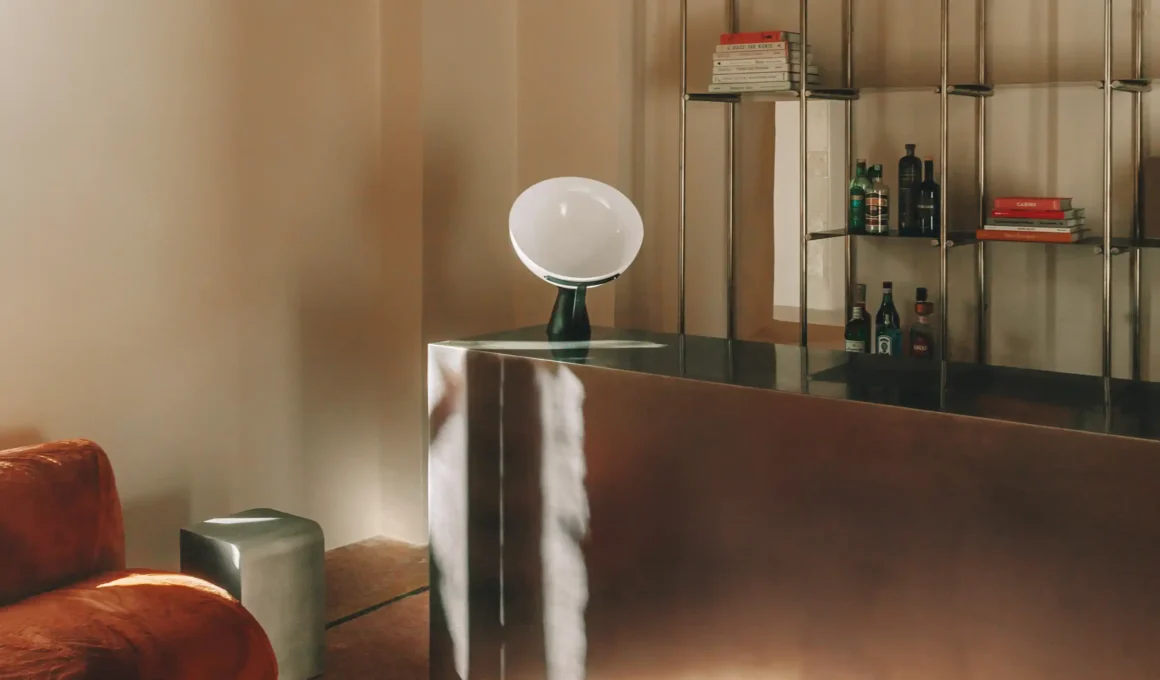
In the sun-drenched heart of Italy’s Salento region, Valari Studio has masterfully reawakened a forgotten 300-year-old structure into Palazzo San Vito—a holiday home that distills the Greek philosophy of Eudemonia into architectural form. Located in Lequile, just outside Baroque-rich Lecce, this historic building renovation transcends typical hospitality projects, embodying what owner Fabio Moro describes as “a state of grace: well-being both physical and mental.”
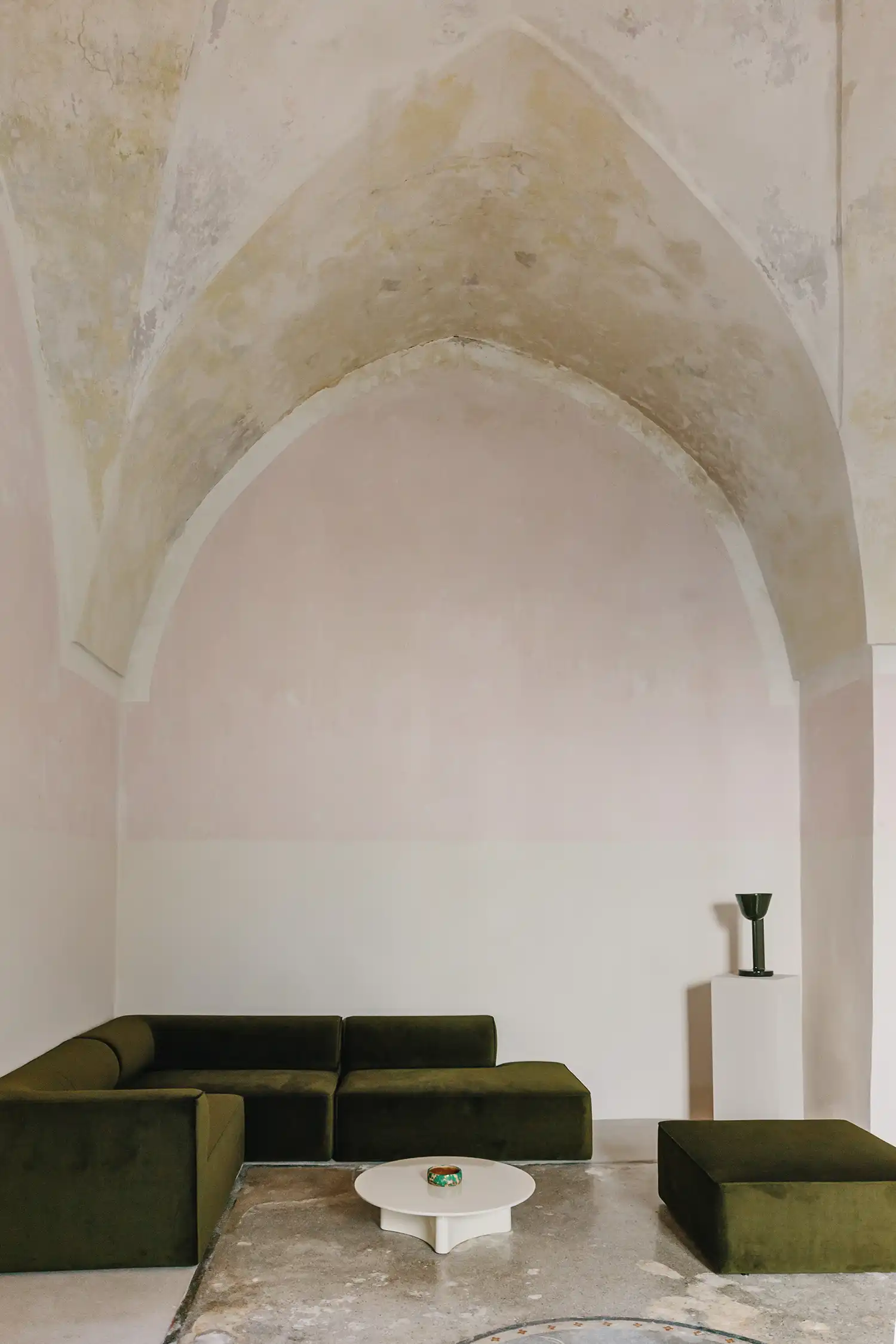
Originally discovered in near-ruin—its facade modest, courtyards overgrown, and interiors shrouded in grime—the palazzo revealed hidden treasures beneath layers of neglect: original terrazzo floors with intricate flora-and-fauna motifs, two astonishing mosaic medallions, and soaring star-vaulted ceilings. Valari co-founders Nicolò Lewanski and Federica Russo approached the 300m² interior and 700m² gardens with surgical sensitivity, preserving these relics while injecting contemporary fluidity. The result? Four ensuite bedrooms woven into a tapestry of communal spaces that champion indoor-outdoor living—a hallmark of Italian architecture in Puglia.

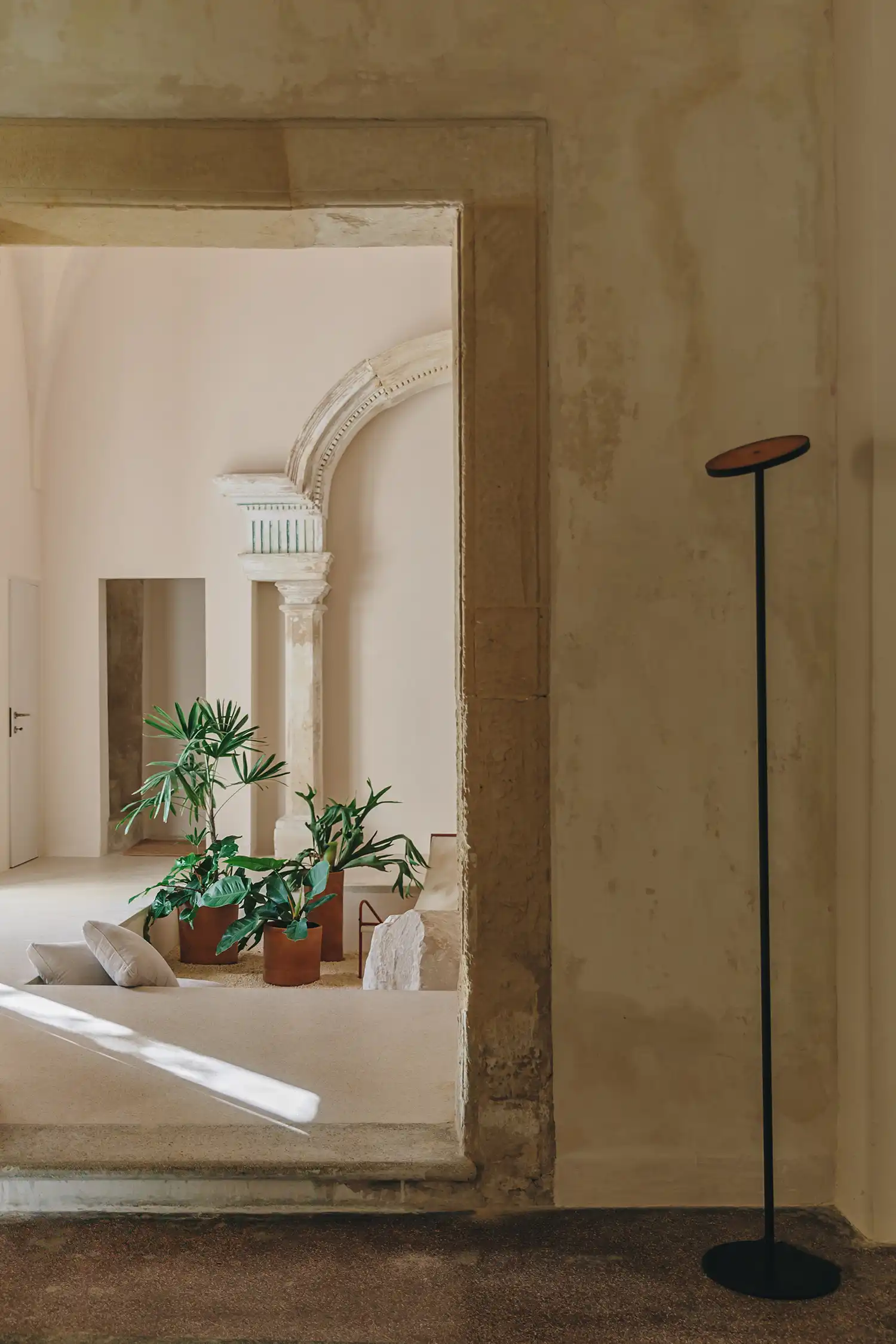
The studio’s gentle rehabilitation strategy honored the building’s DNA—like the enfilade of rooms overlooking citrus groves—while reimagining functions. In the former family chapel, the Garden Roomemerges as a subterranean oasis: gravel beds, lush ferns, and cushions nestle beneath historic stone arches.
Nearby, the dining hall pulses as the social heart, centered around a bespoke steel-and-oak table dialoguing with ancient stone walls. Bespoke furniture recurs throughout, from sculptural steel kitchen elements to monolithic travertine sinks, all crafted by Salento artisans using traditional techniques.
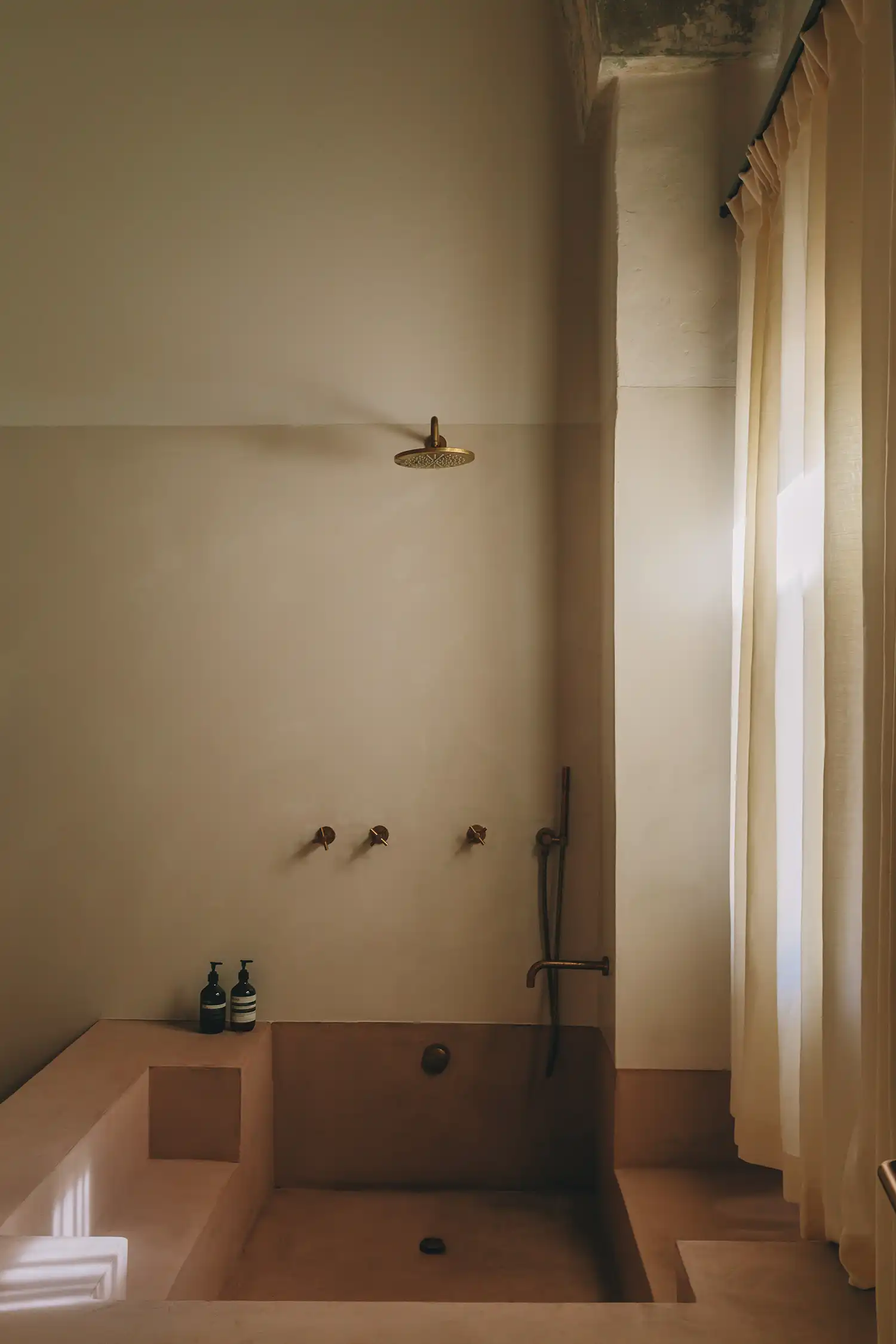
Materiality orchestrates the narrative. Original cementine tiles, terrazzo, and carved friezes converse with contemporary brass fixtures, blackened steel, and linen textiles. The master suite dissolves boundaries entirely: an open-air shower and floor-carved terracotta tub nestle amid foliage, turning ritual into immersion. Outside, courtyard gardens unfold—minimalist terraces with stucco benches gaze toward Palazzo San Vito’s dome, while a pool shimmers under century-old eucalyptus and orange trees.
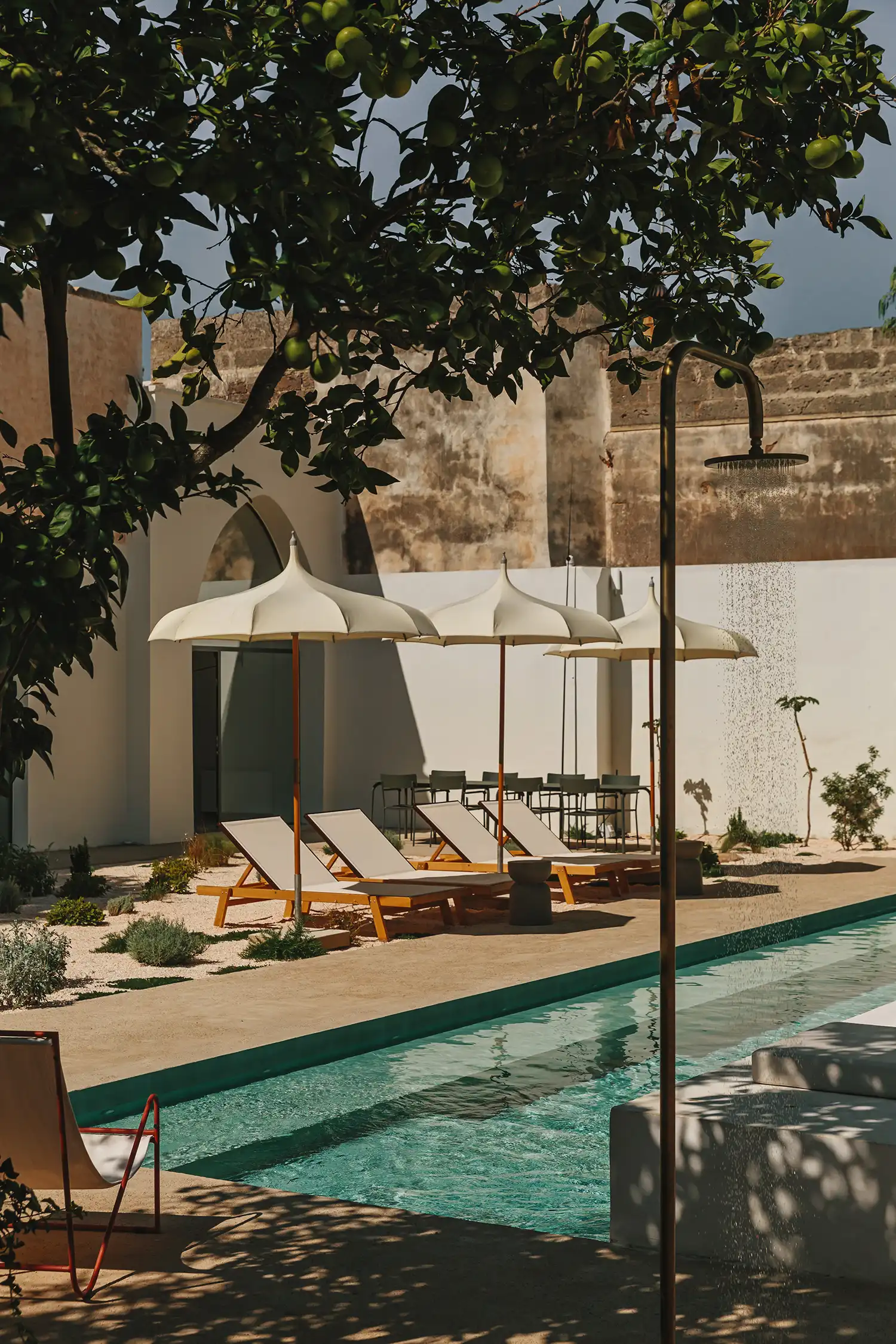
This project epitomizes quiet luxury—no gilded excess, but reverence for craft, history, and wellbeing. Valari’s sustainable design ethos shines through conservation-first tactics and local material sourcing. As Lewanski notes, the palazzo’s magic lies in its “atmosphere between luxury and domesticity,” where star vaults whisper past lives while contemporary interventions frame slow-living rituals.
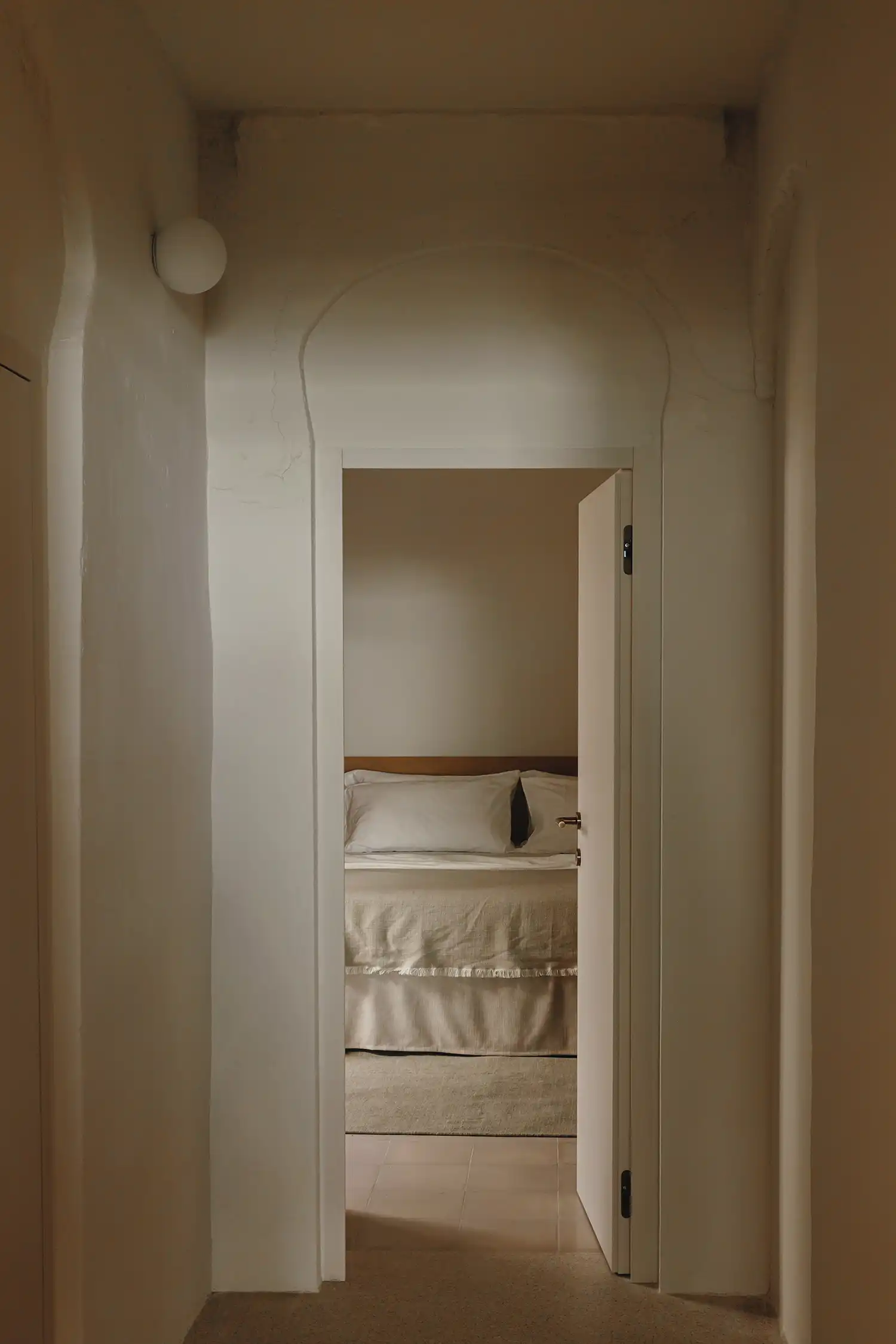
For travelers and design aficionados, Palazzo San Vito offers more than a stay: it’s a meditation on Eudemonia, proving that the most profound luxury is harmony—between eras, materials, and one’s inner peace.