

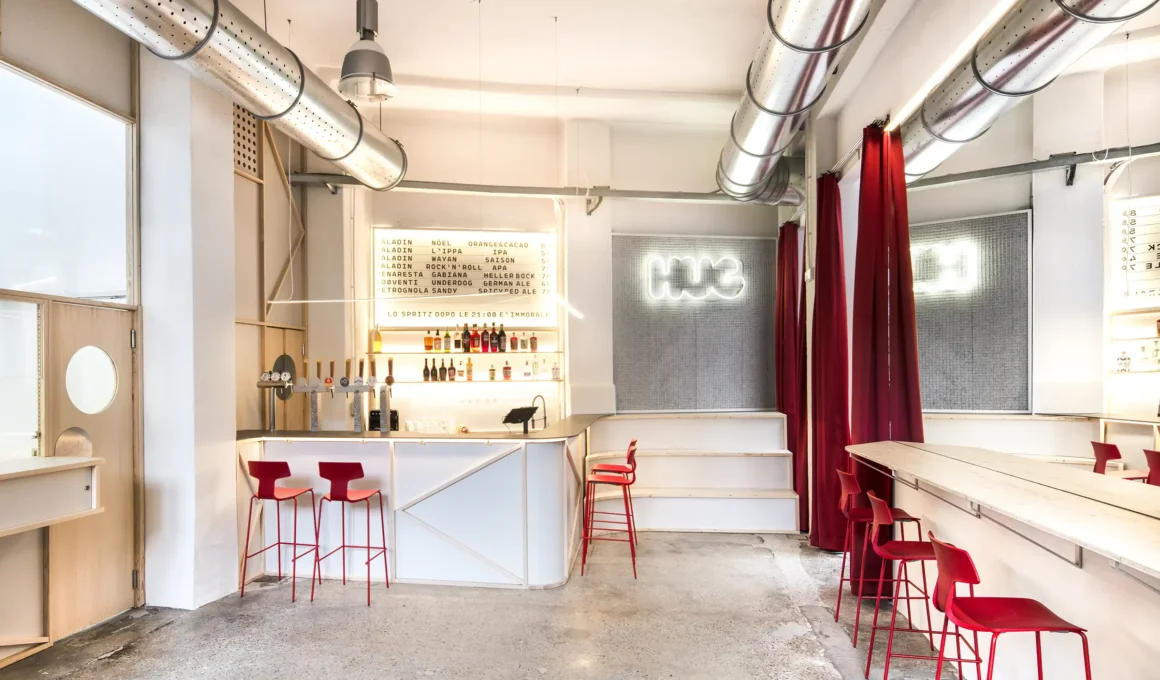
In Milan’s bustling northern district, a derelict 1920s chocolate factory has been reborn as HUG, a vibrant bistrot/pub that wears its industrial history like a badge of honor. Designed by Quinzii Terna Architecture, the project masterfully navigates decades of stratifications—from workshop to cultural hub, coworking space, and even bicycle repair—transforming fragmented memories into a cohesive, multifunctional space. This isn’t mere renovation; it’s a poetic dialogue between past and present, where scars become design features and historical preservation fuels contemporary community life.
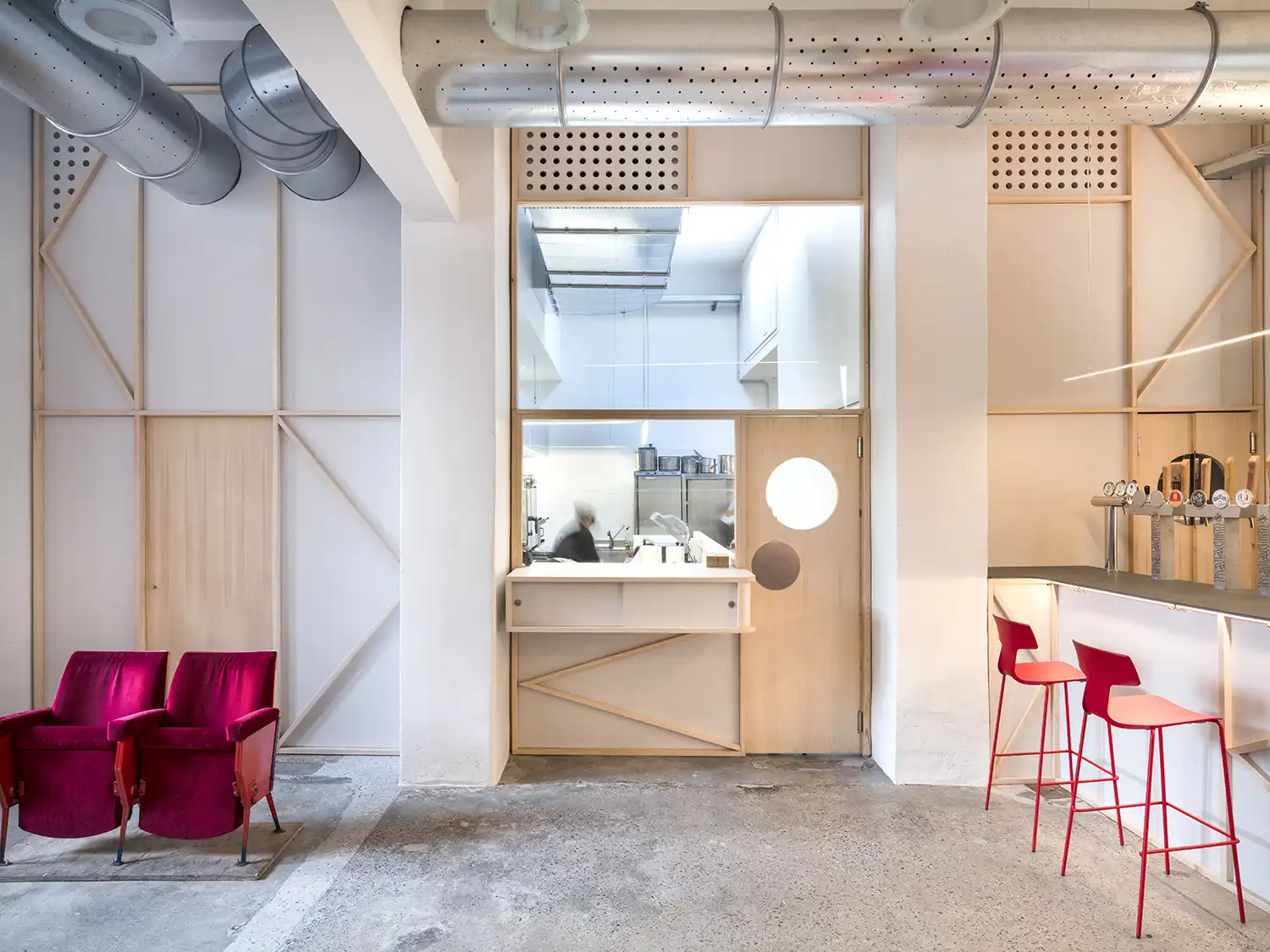
Walking into HUG feels like stepping into a living archive. The architects deliberately preserved the building’s “rings,” akin to a tree trunk’s growth: terrazzo floor patches form a chaotic mosaic, metal studs punctuate the ground, and exposed electrical traces interrupt the floor’s uniformity. Above, original wooden mezzanines stretch skyward, remnants of the factory’s quest for space.
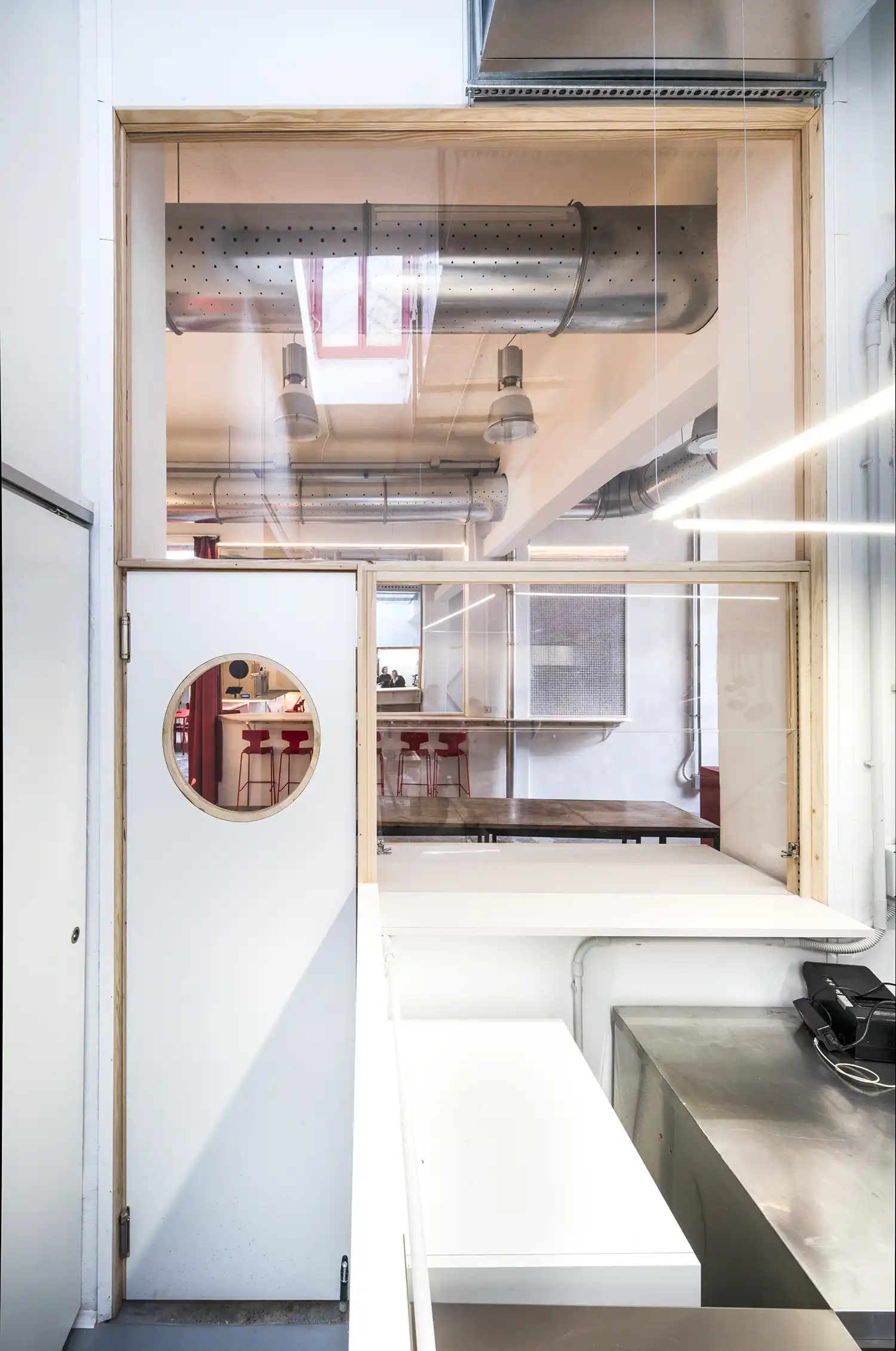
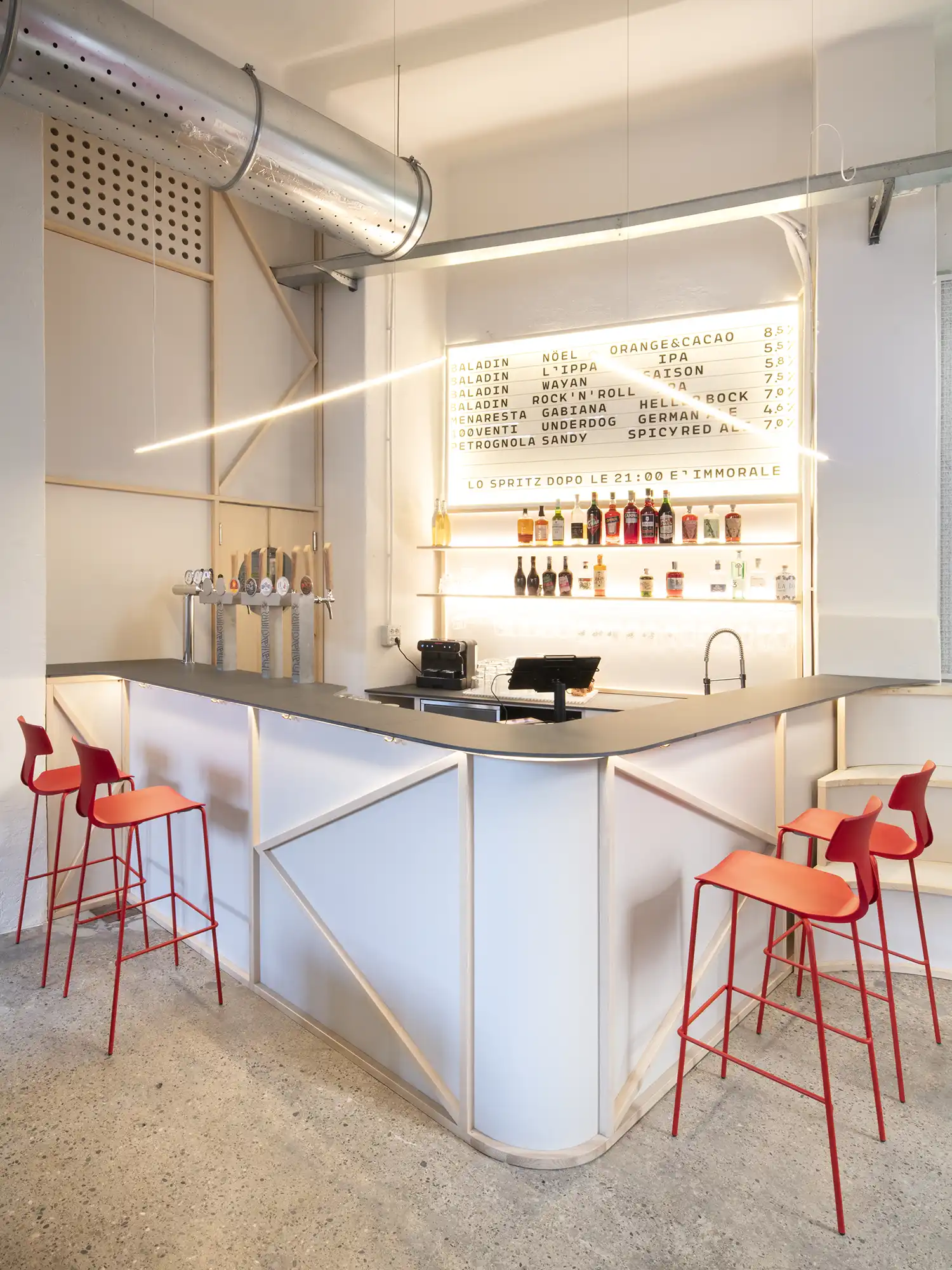
Instead of erasing these layers, Quinzii Terna amplified them through a light, insertive structure. A new wooden wall—crafted partly from reclaimed materials—subtly divides the open kitchen from the dining area, while a strategic lineup of furnishings “empties and equips” the volume: a glowing bar counter, a convivial arena for gatherings, director’s tables, and deep benches nestled among climbing plants.
Acoustic panels clad in gridded metal netting are the project’s unsung heroes. These warm, fibrous surfaces tame the factory’s cavernous acoustics, making conversation effortless during dinner service or live performances. The grates double as vertical gardens and exhibition walls for local artists, embodying HUG’s community-driven ethos. Flexibility reigns supreme: guests perch on reclaimed cinema seats near the entrance, cluster around the chef’s-view kitchen table, or lounge on benches engulfed by foliage. Every seat is a vantage point—whether for people-watching via oversized mirrors or admiring the restored skylights, now echoed by bold red chairs.
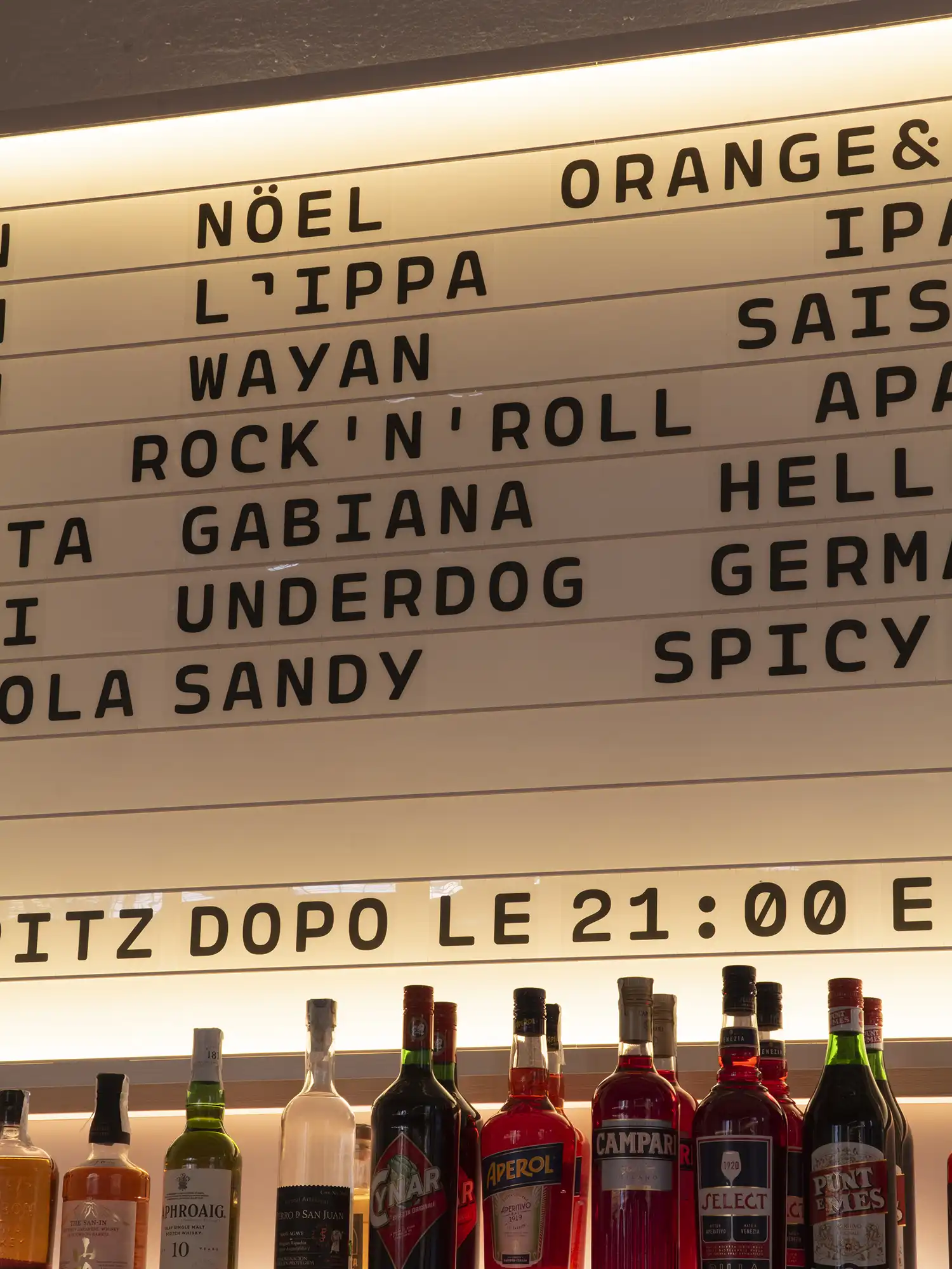
Above the space, a custom neon sign spells “HUG” in retro script—a nod to Milan’s vanishing artisanal neon culture. This glowing centerpiece bridges eras, casting a warm hue over sanded floors whose once-humble materials now gleam with patinated luxury. Even the “chaotic” flooring tells a story: its imperfections are testament to the building’s resilience.
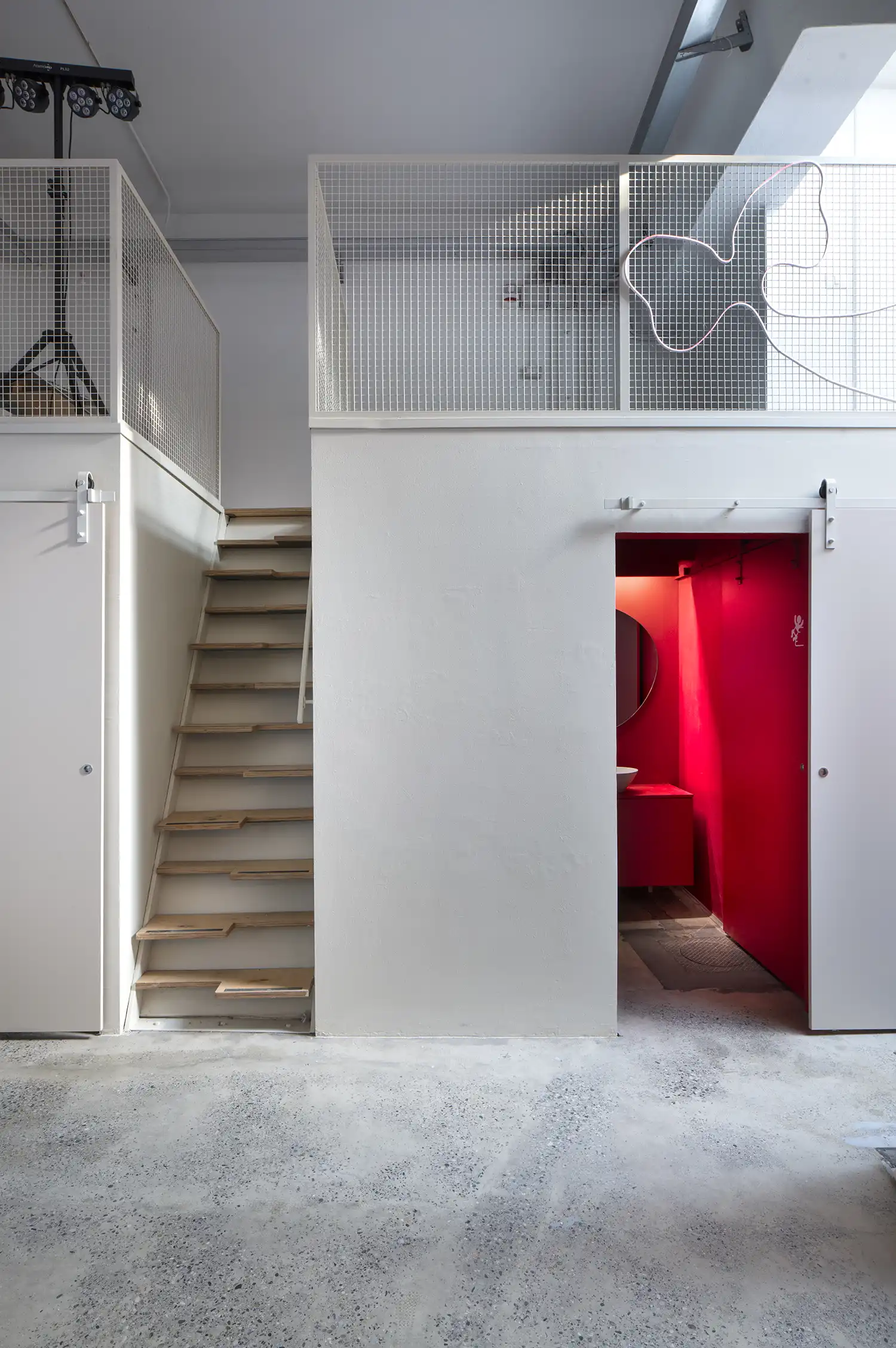
HUG exemplifies radical adaptive reuse, where history isn’t sanitized but celebrated as narrative texture. By curating—not concealing—the factory’s evolution, Quinzii Terna Architecture has crafted a space that’s both functional and deeply evocative. It’s more than a bistrot; it’s an embrace of time, community, and Milan’s layered identity. As the city races forward, HUG reminds us that the richest designs are those that listen to the whispers of the past.