




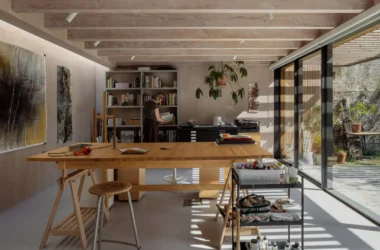
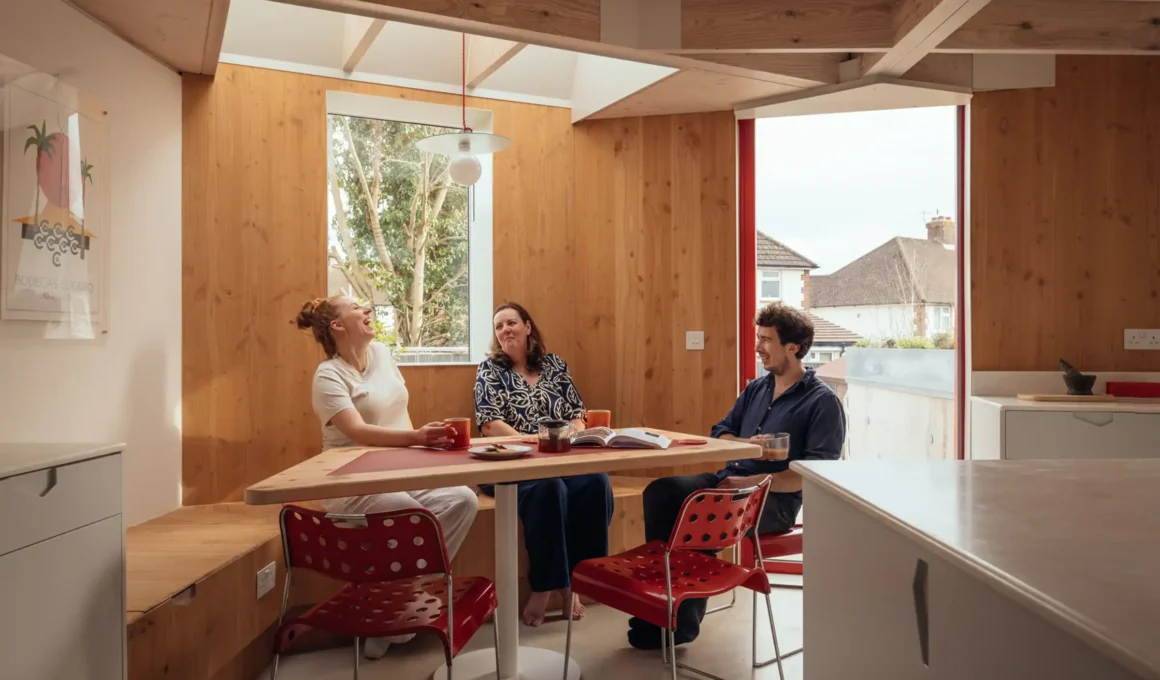
Nestled on a challenging sloped site in Brighton, UK, Banfield Wood has crafted a deeply personal and architecturally audacious extension: Room for All Stages. Born from a simple, profoundly human wish – to enable a paralyzed family member to participate fully in garden gatherings and celebrations with dignity – this project transcends its modest brief to become a striking statement on material innovation, structural bravery, and collaborative spirit. Eschewing the pristine finishes often expected in contemporary architecture, the studio embraced a hands-on, experimental approach, resulting in a space that is both technically rigorous and warmly tactile.
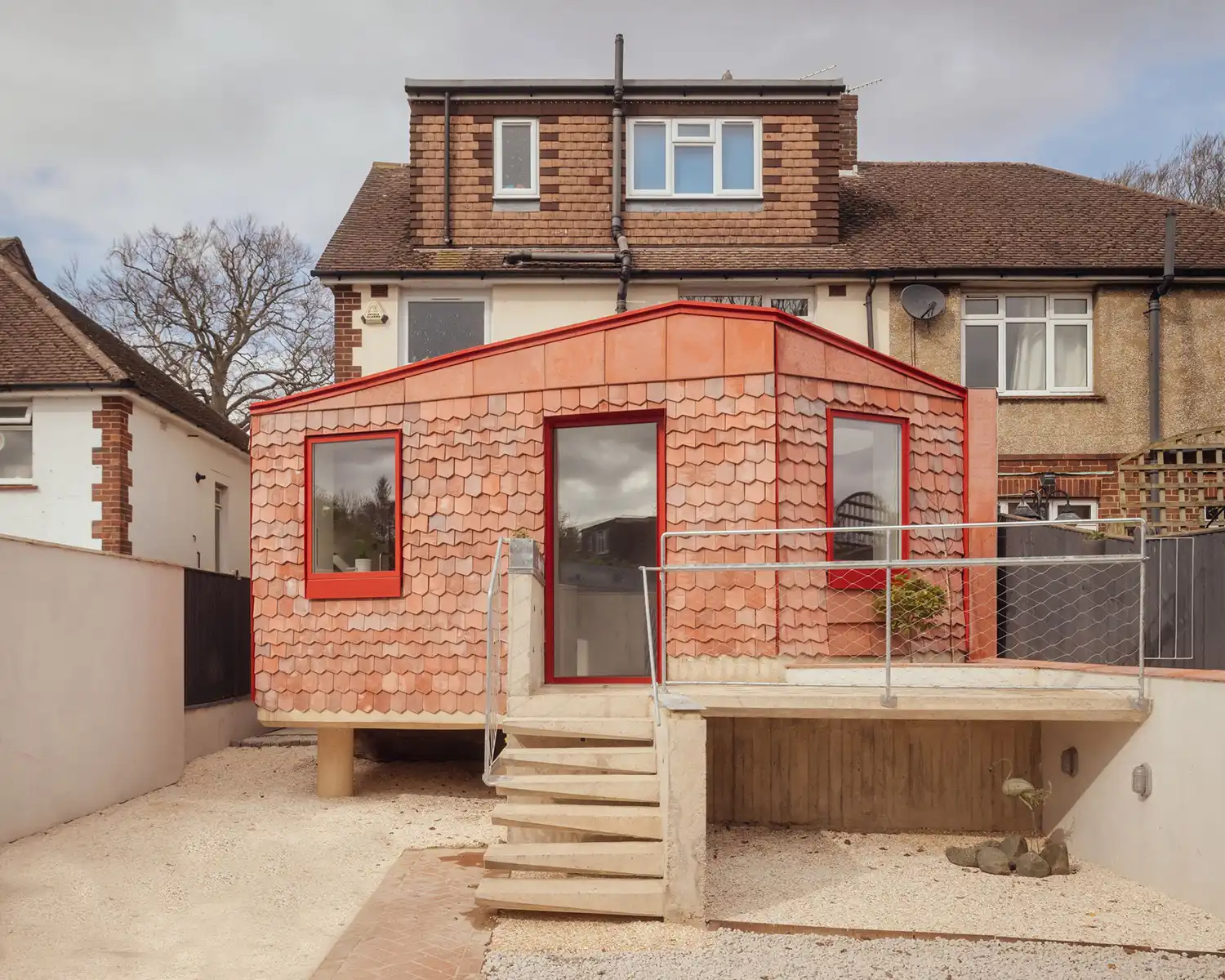
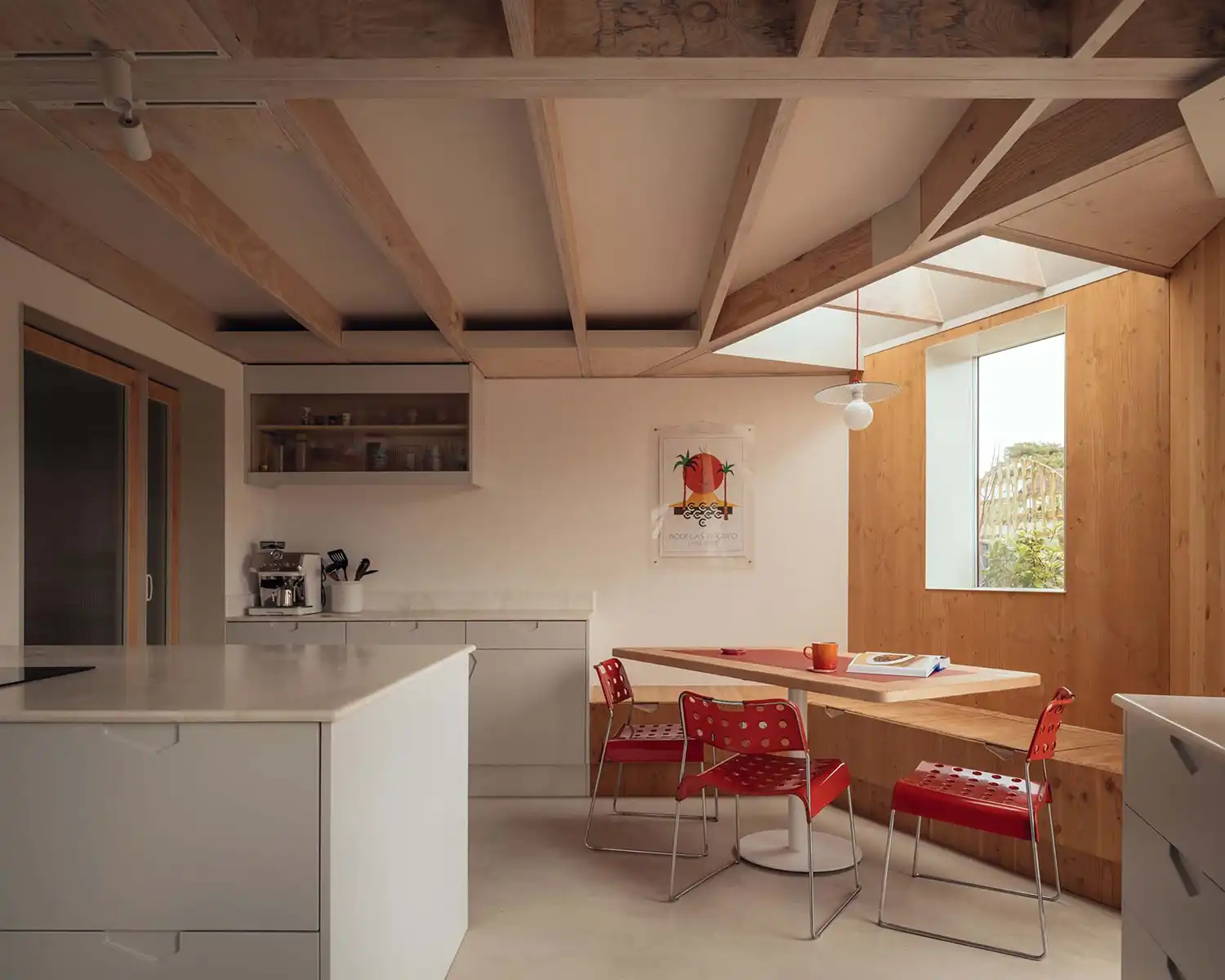
The project’s heart lies in its breathtaking cast-in-situ cantilever, a feat of engineering prowess extending boldly from the ground floor. Designed and meticulously built by hand by the joint architectural and engineering practice, this dramatic gesture creates a spacious, lozenge-shaped kitchen and dining area. Within this uniquely formed space, panoramic views are carefully framed, drawing the eye over Brighton’s rooftops towards the serene South Downs. The cantilever isn’t merely functional; it’s the foundational act of generosity that lifts the living space into the light and landscape.

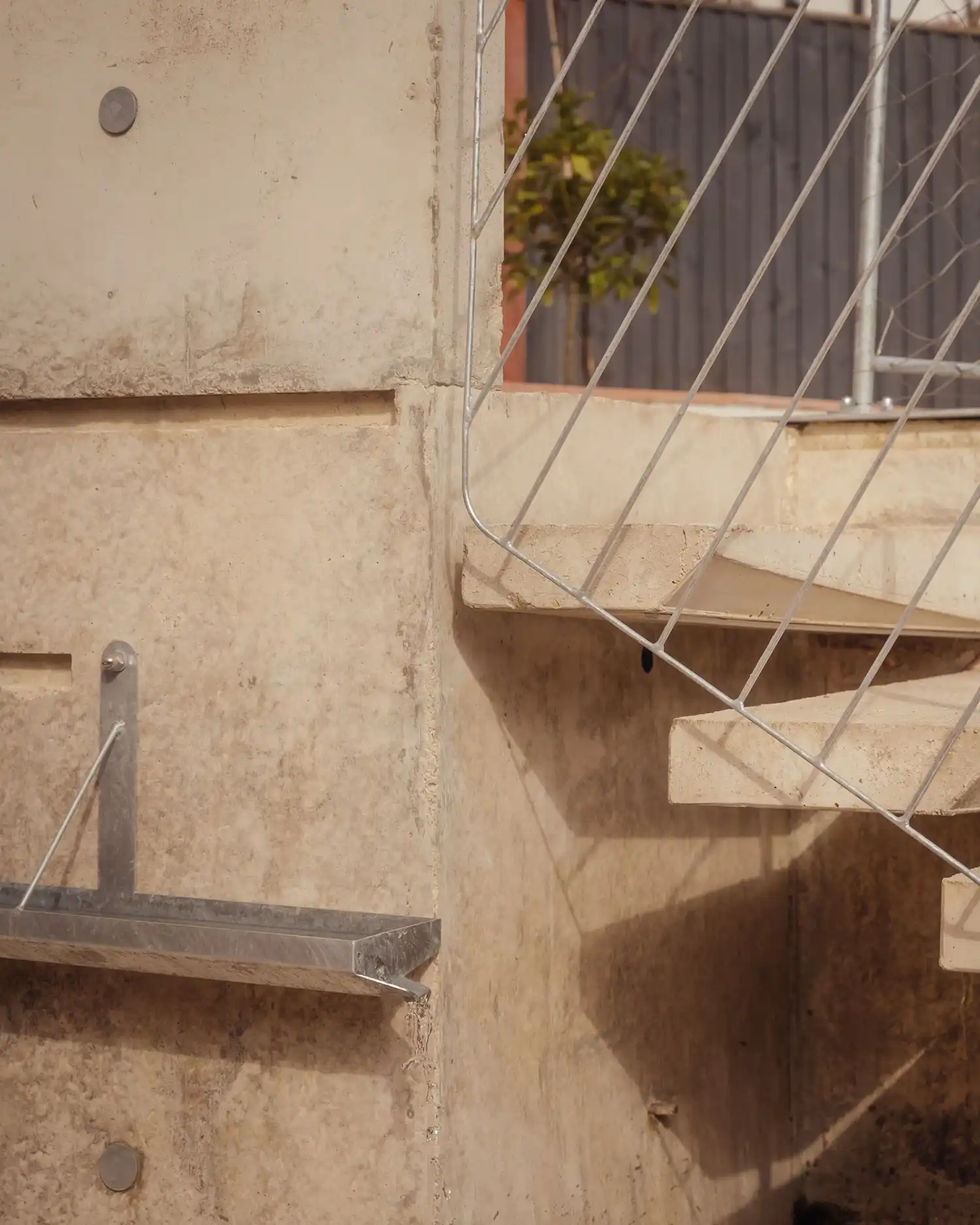
Externally, the drama continues. A modest terrace provides a contemplative pause, leading to garden steps that echo the structural gymnastics of the main build. These steps appear to float, anchored only by a robust solid central spine wall, a testament to Banfield Wood’s integrated design thinking where structure and form are inseparable. Yet, the most captivating exterior element is undoubtedly the facade. Over 1,900 handmade tiles drape the walls, a contemporary homage to the historic ‘mathematical tiles’ found across Southern England.
Developed using a proprietary moulding system invented by the practice, each tile was crafted on-site through a remarkable collaborative process involving both the architects and the client, imbuing the facade with a unique, variable texture. This rich, handmade tapestry creates a powerful juxtaposition against the crisp, striking ‘Signal Red’ glazing and window boxes – a bold chromatic statement visible from afar.
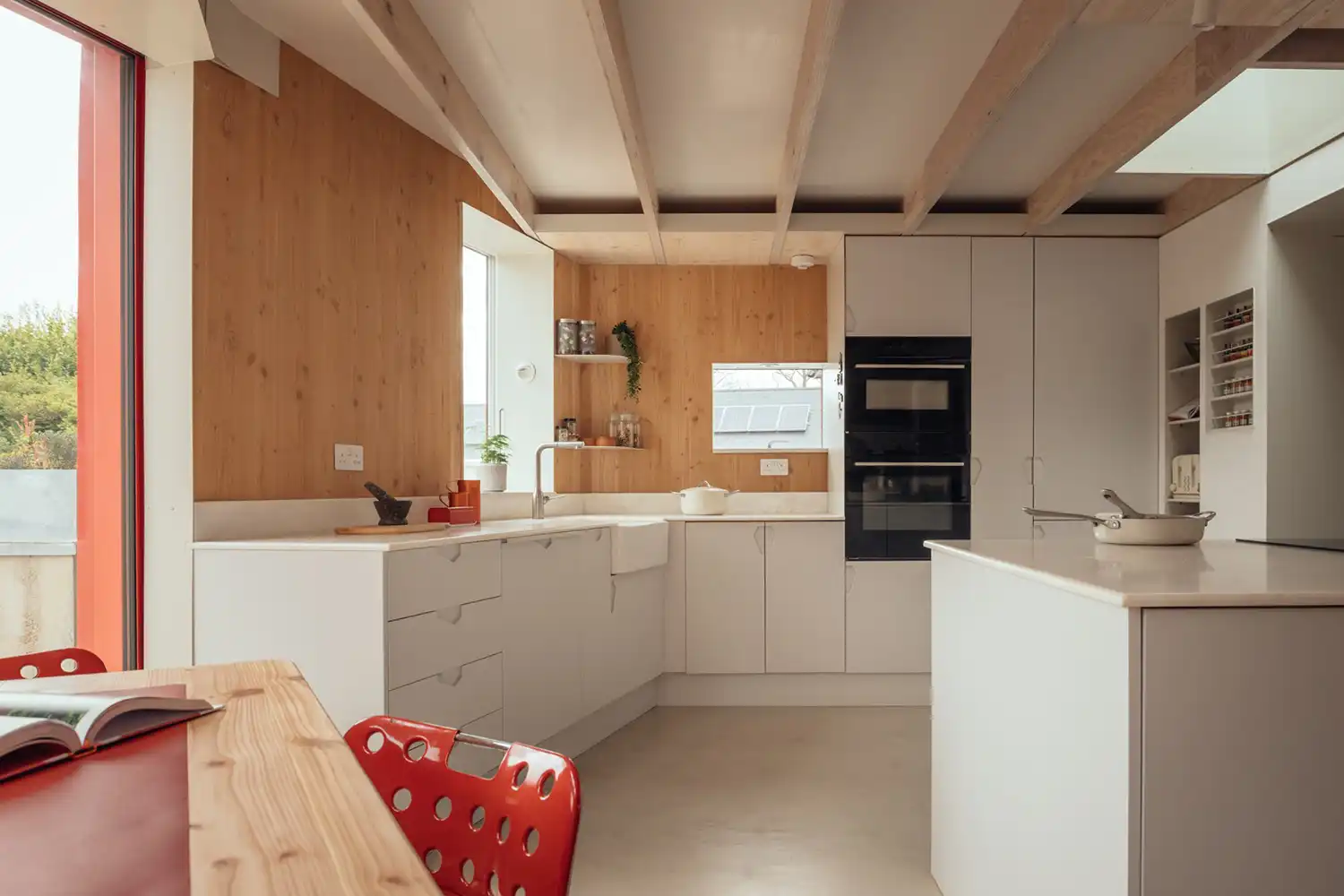
Stepping inside, the atmosphere shifts to one of calibrated calm. A restrained material palette of warm Douglas Fir, cool polished concrete, and translucent fluted glass establishes a serene backdrop. This tranquillity is punctuated by vibrant shots of red, echoing the exterior accents, and the rhythm of the exposed structural skeleton – oiled LVL roof joists left proudly visible. This honest display of the building’s bones reinforces the project’s celebration of its making.
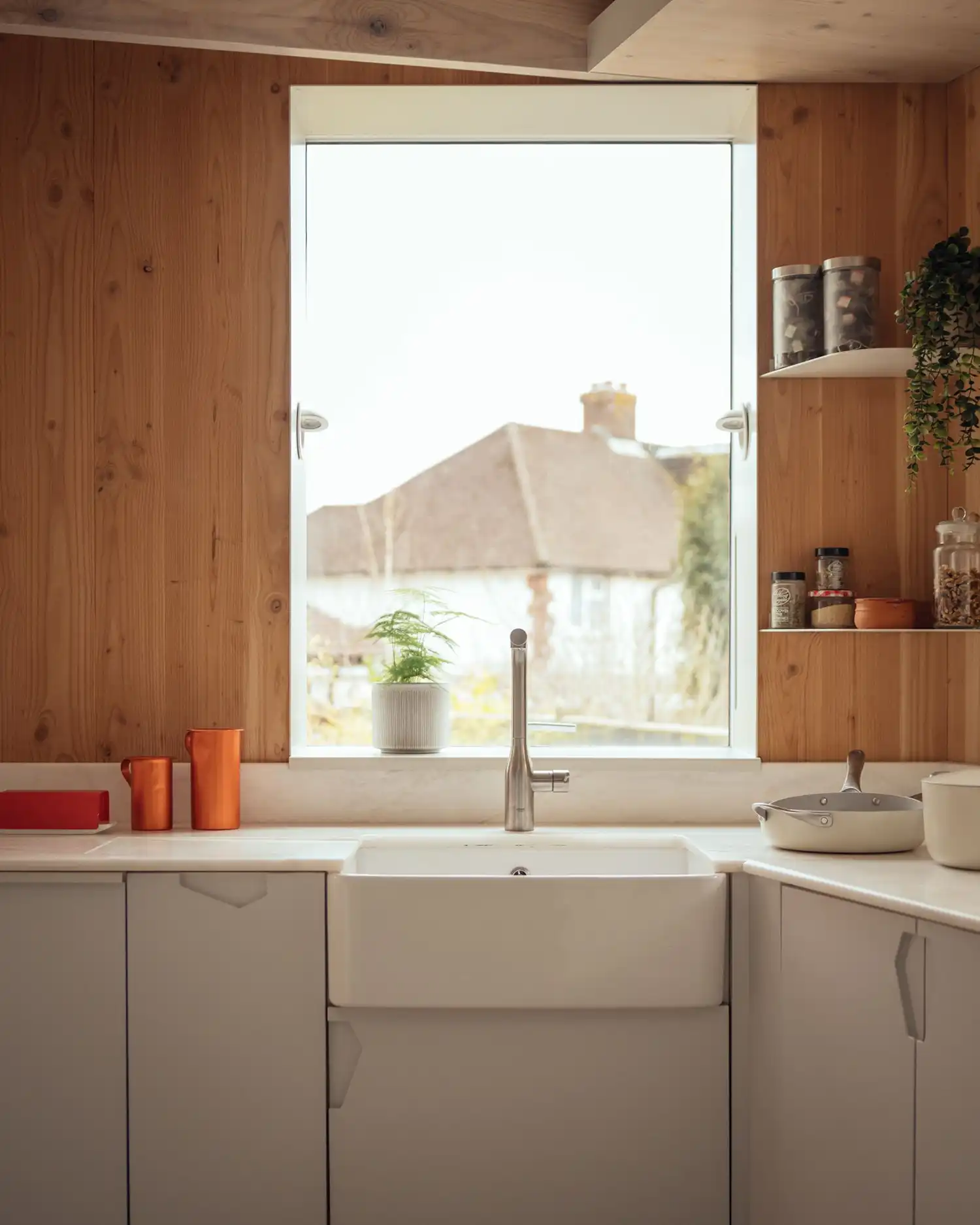
The Room for All Stages is deliberately rough in nature, rejecting the often-demanded polish of modern architecture in favour of material experimentation and exploratory practice. The texture of the concrete, the grain of the wood, and the variations in the tiles all speak of a process embraced, not hidden.
Ultimately, this Brighton extension is a powerful testament to what emerges when barriers dissolve. It showcases the extraordinary potential of a truly fused engineering and architectural team, pushing the limits of a conceptually simple yet technically challenging build. In an industry often constrained by contractor whims, Banfield Wood’s unwavering hands-on approach – from designing the tile system to pouring the cantilever – proved essential. It also stands as a moving tribute to a courageous client willing to take a risk on a young, ambitious team, trusting them to construct a deeply personal building constructed around them. The Room for All Stages is more than an addition; it’s a bold, red-tinged declaration of care, collaboration, and the transformative power of integrated design.