


Within the confines of a modest 16 by 6-meter hall at the Yunjian Huitang Cultural and Art Center, adjacent to Shanghai’s historic Zuibaichi Park, c+d studio has conjured a profound meditation on place and perception. Their spatial installation, titled Garden for the Eyes, formed the centerpiece of the “Creation | New Jiangnan Space Art” exhibition in Songjiang District, Shanghai. This immersive work, paired with abstract ink paintings by the late American artist Lyu Wujiu (1918-2013), offers a radical reinterpretation of Jiangnan culture, compressing the essence of the traditional Chinese garden into an intensely personal, eye-led journey.
The challenge was immense: how to evoke the rich, meandering experience of a classical Jiangnan garden – with its sequences of courtyards, bridges, wells, and corridors – within such a limited footprint? c+d studio‘s ingenious solution was a profound scale transformation. They condensed the experience to the scale of a single observer, focusing entirely on the sensory exploration of the head and eyes. The result is a 40-meter-long, one-way path where visitors, moving singly, encounter an abstracted landscape suspended at body height.
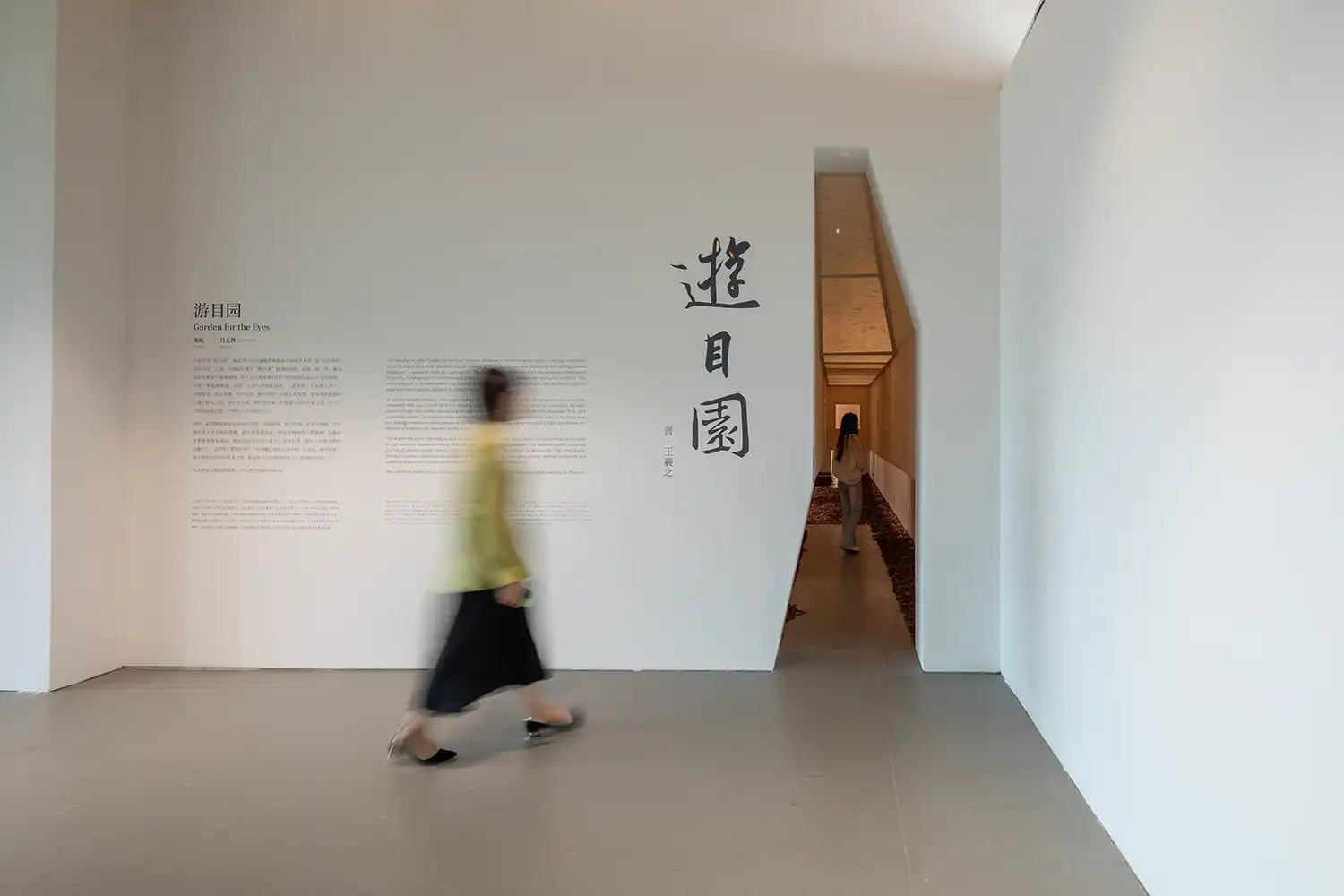
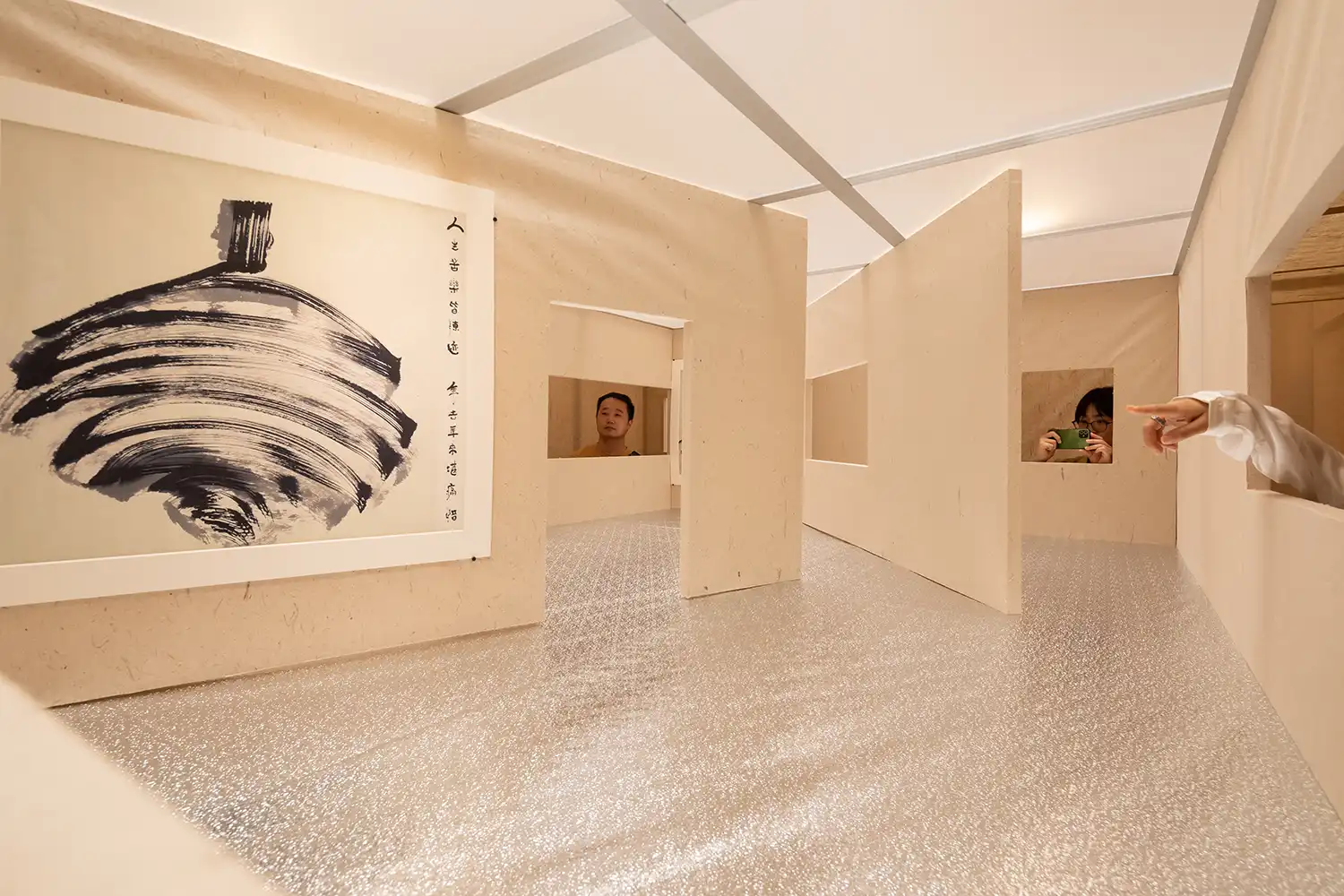
“Wandering around and enjoying yourself” becomes the guiding principle. Visitors crane their necks to peer into miniature courtyards situated below knee-level, encounter bridges scaled to the eyebrows, pass wells at close proximity, and navigate corridors barely wider than a shoulder. This deliberate compression forces a shift: perception converges with each turn of the head, demanding focused attention. The world outside fades, replaced by the intimate interplay of form, light, and shadow within the installation. The design meticulously controls the eye-wandering experience; viewing windows are precisely positioned between 1390mm and 1740mm high, with a restricted 350mm vertical scope, choreographing views to be either “intense or relaxed.”
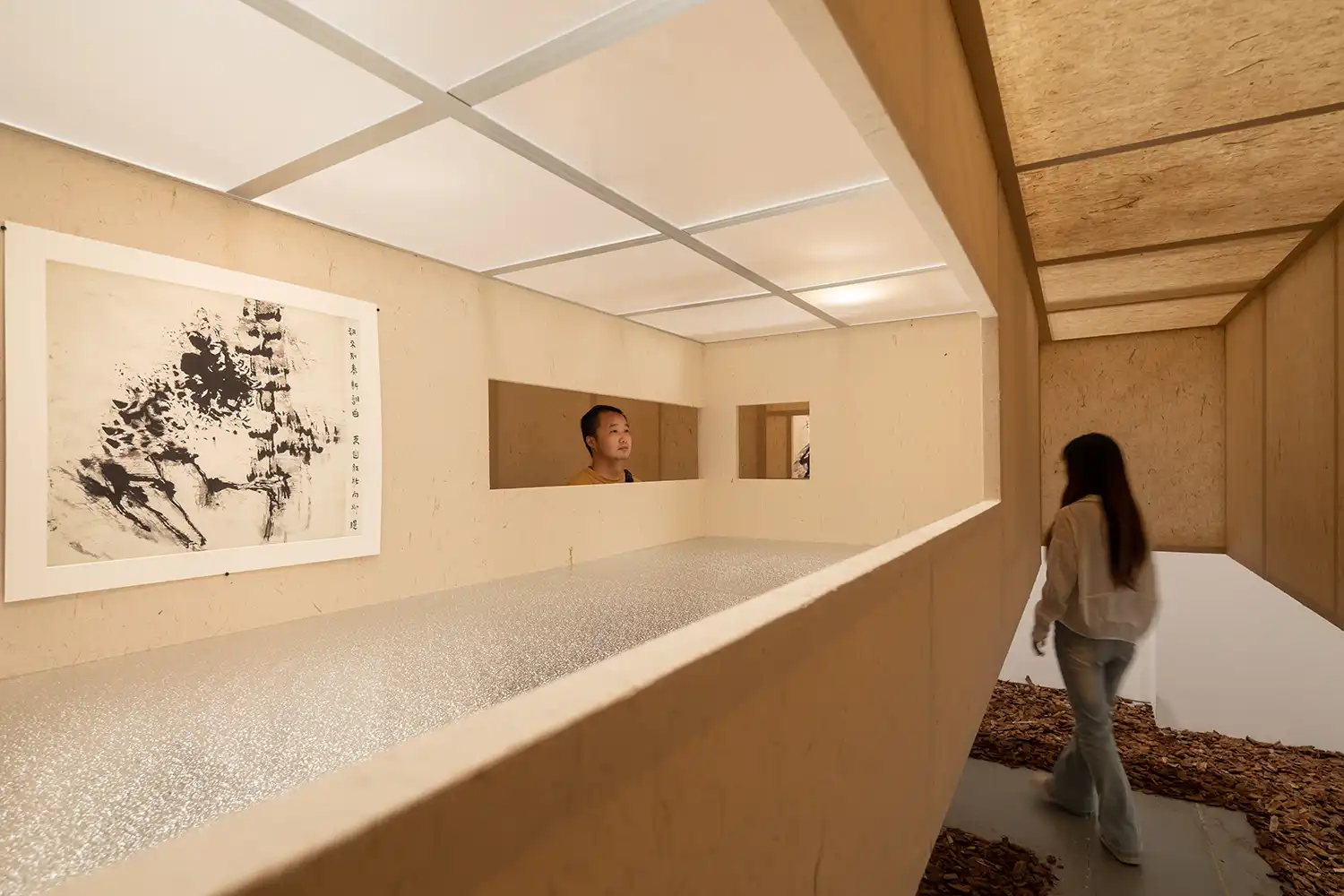
Crucially, this abstract garden is not merely an exhibit; it functions as the vessel for another. It houses reproductions of Lyu Wujiu’s 27 abstract ink paintings inspired by the poem “Yuanhu Qu,” originally held by the Seattle Art Museum. The spatial design, drawing inspiration from Zuibaichi Park’s local structures, defines the space for each painting, acting as a guide. Conversely, the paintings become clues within the garden’s narrative. As visitors navigate the compressed spatial sequence, the relationship between the ink interpretations of Jiangnan’s “vicissitudes” and the abstracted garden scenery constantly reorganizes, creating a layered exhibition duet.
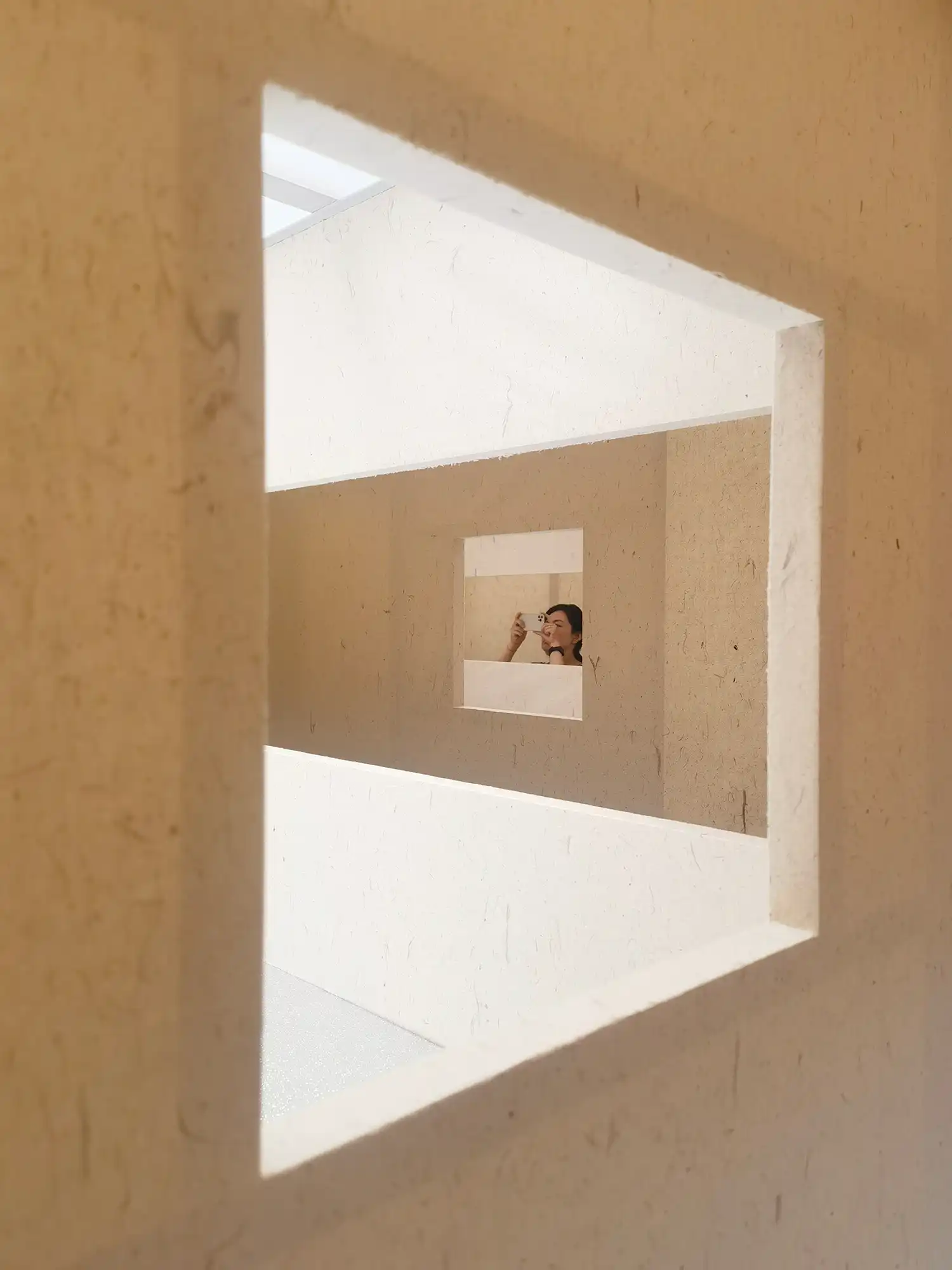
Material purity is paramount to achieving this ethereal effect. Embracing the maxim “simplicity is splendor,” c+d studio constructed the entire installation almost exclusively from handmade paper. Specifically, they chose leatherette paper from Jing County, Anhui province. This material boasts clear fibers, a thick yet soft hand-feel, appropriate light transmission, and a natural, warm texture resonating with both the garden’s spirit and Lyu Wujiu’s ink paintings. Its lightweight nature facilitated hanging and allows for potential future replacement.
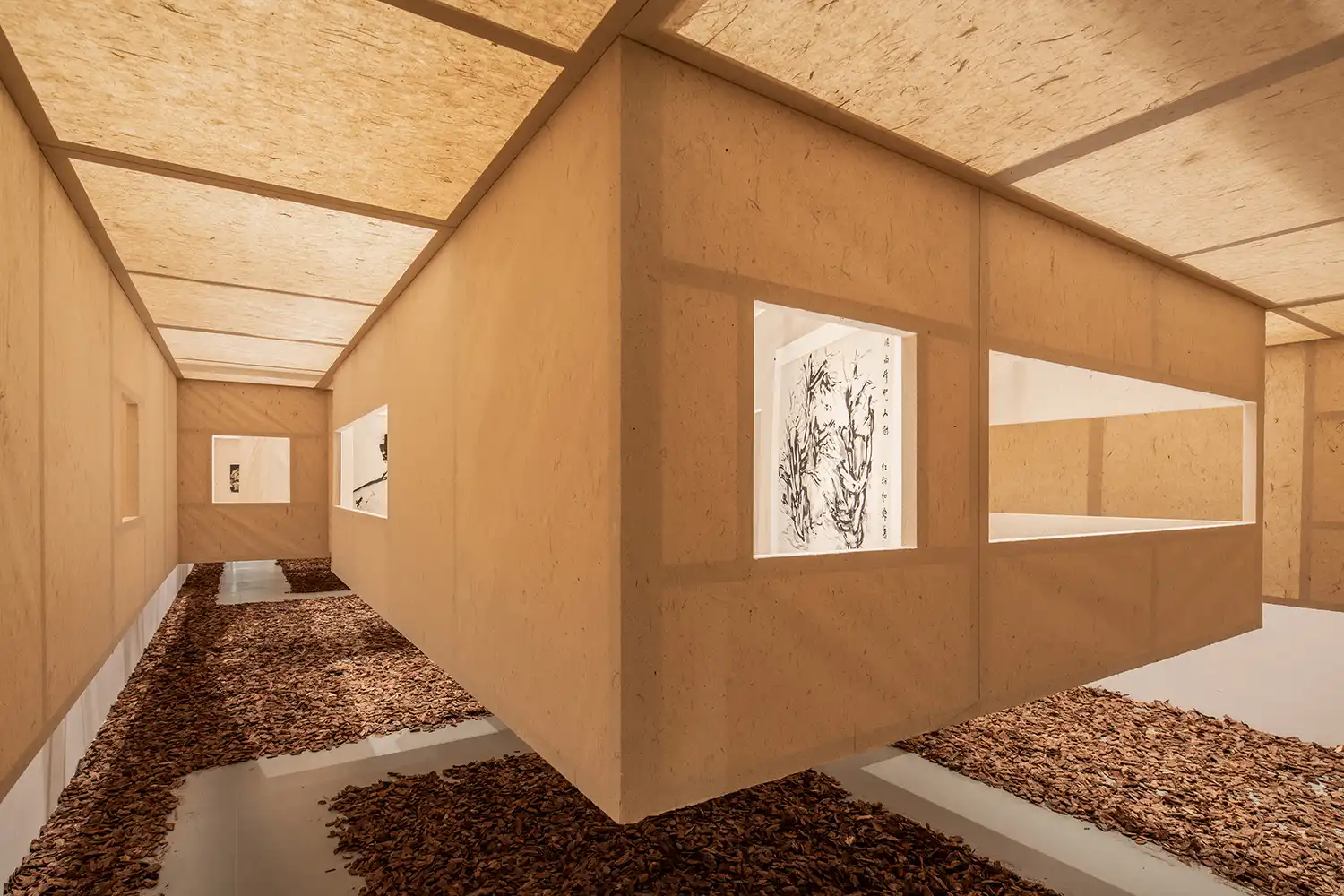
Supporting this delicate paper skin is a framework of 3cm x 3cm square pine poles. Selected after considering aluminum, bamboo, and acrylic, the pine offers ideal lightweight stability, ease of prefabrication, resistance to deformation, and the ability to disappear discreetly behind the paper surfaces. Sections are fixed to “T” aluminum profiles and suspended from above with thin steel cables. Abstracted elements enhance the illusion: translucent PP frosted sheets with overhead lamps simulate sky light for “ponds” and “courtyards,” while folded tin foil abstractly represents water. Pine barkscattered on the ground defines the path and subtly evokes the wildness of nature within this meticulously crafted indoor garden.
Garden for the Eyes masterfully demonstrates that constraint can breed profound richness. By radically condensing scale and focusing perception solely on the eye-wandering journey, c+d studiocreates a space where “the body is yet to move, while the heart has been far away.” It is a pilgrimage through an abstracted Jiangnan, where handmade paper becomes the membrane between memory and presence, and where Lyu Wujiu‘s paintings find a uniquely resonant home. This Shanghai art installation stands as a testament to the enduring power of Jiangnan culture, reinterpreted through contemporary spatial design and material innovation for a truly singular sensory experience.