

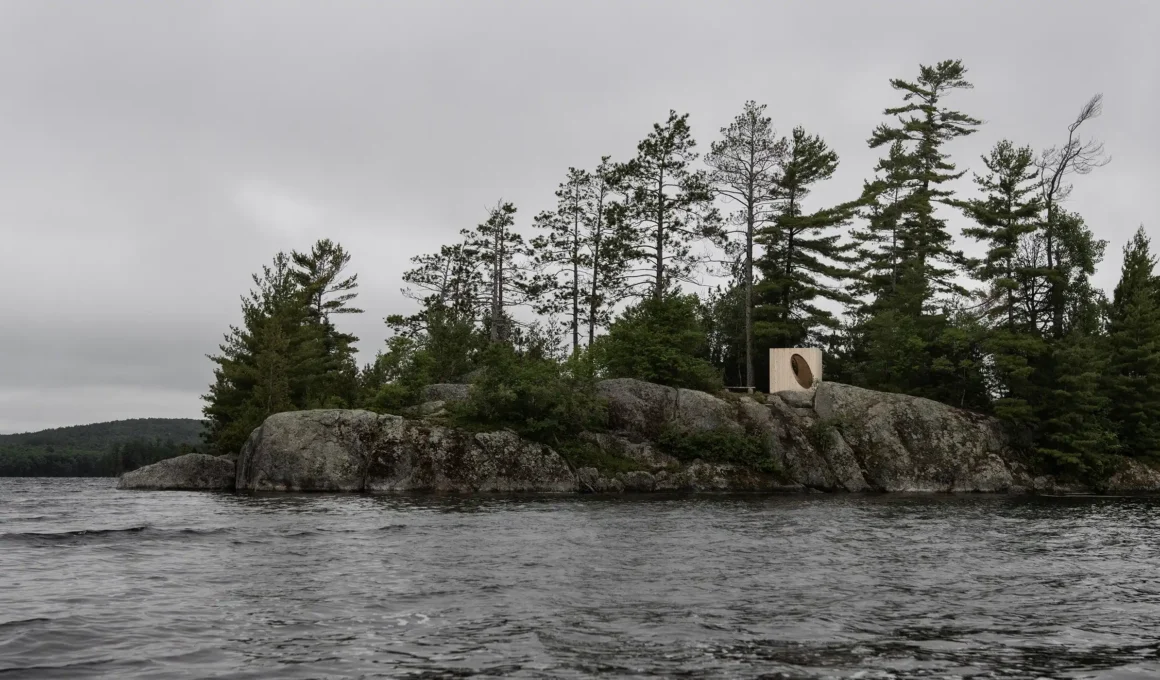
Tucked away on a rocky island within Poisson Blanc Regional Park in Notre-Dame-du-Laus, Quebec, lies an encounter with art that demands pilgrimage. Accessible solely by canoe or kayak, the striking public art installation Faire le vide emerges like a whispered secret against the vast Canadian wilderness. Designed by artist and architect Luca Fortin in collaboration with Atelier mock/up, this winning competition entry marks the ambitious first step in transforming the reservoir into a profound cultural destination.
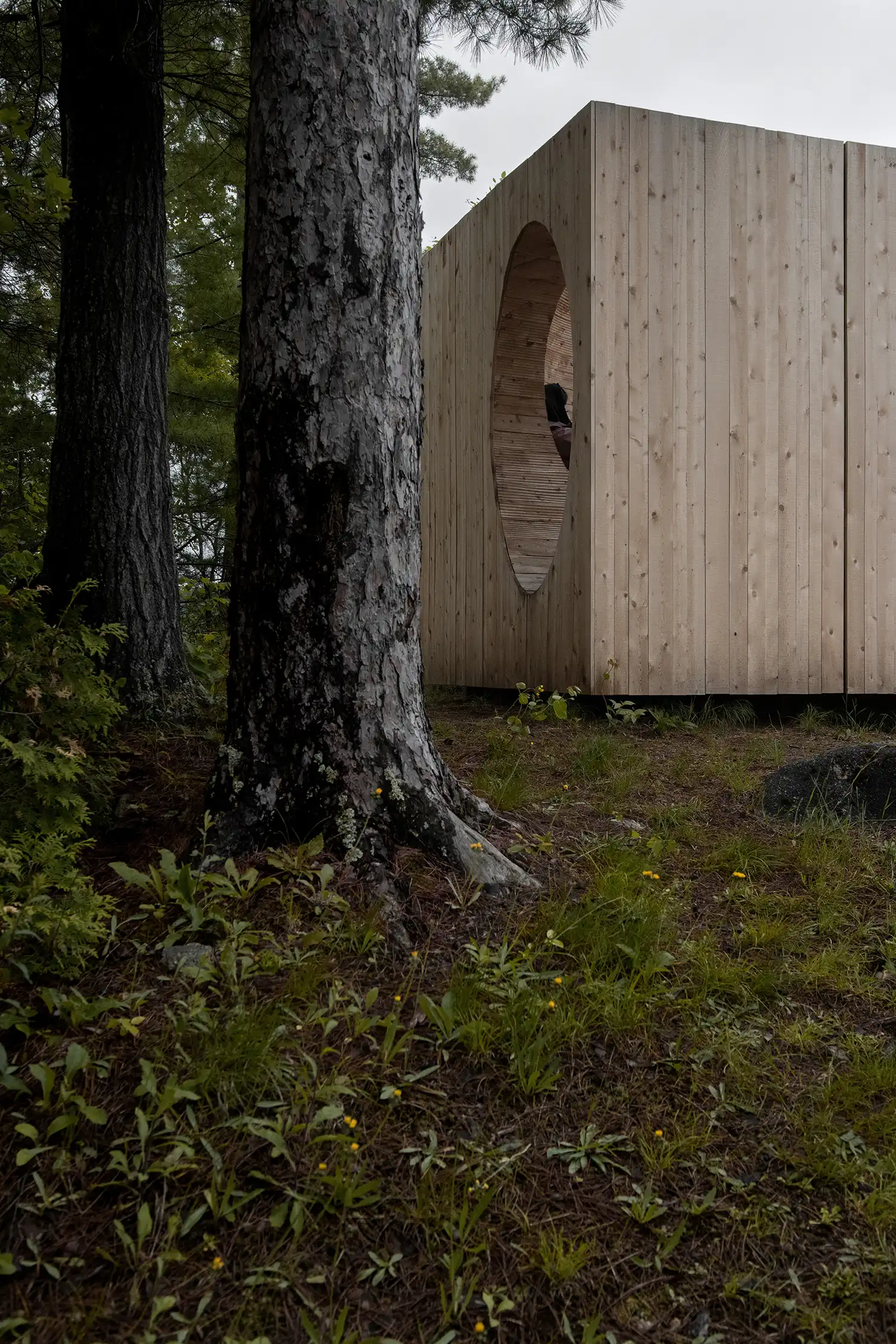
Perched atop a promontory on Island No. 22, the structure presents itself initially as a minimalist wooden cube, a near-monolithic form consciously designed to blend into its rugged, insular setting. Its orthogonal exterior, clad in vertical cedar slats mirroring the surrounding forest, offers little hint of the revelation within. This deliberate simplicity from afar acts as a subtle landmark on the water, inviting curiosity and drawing intrepid explorers ashore.
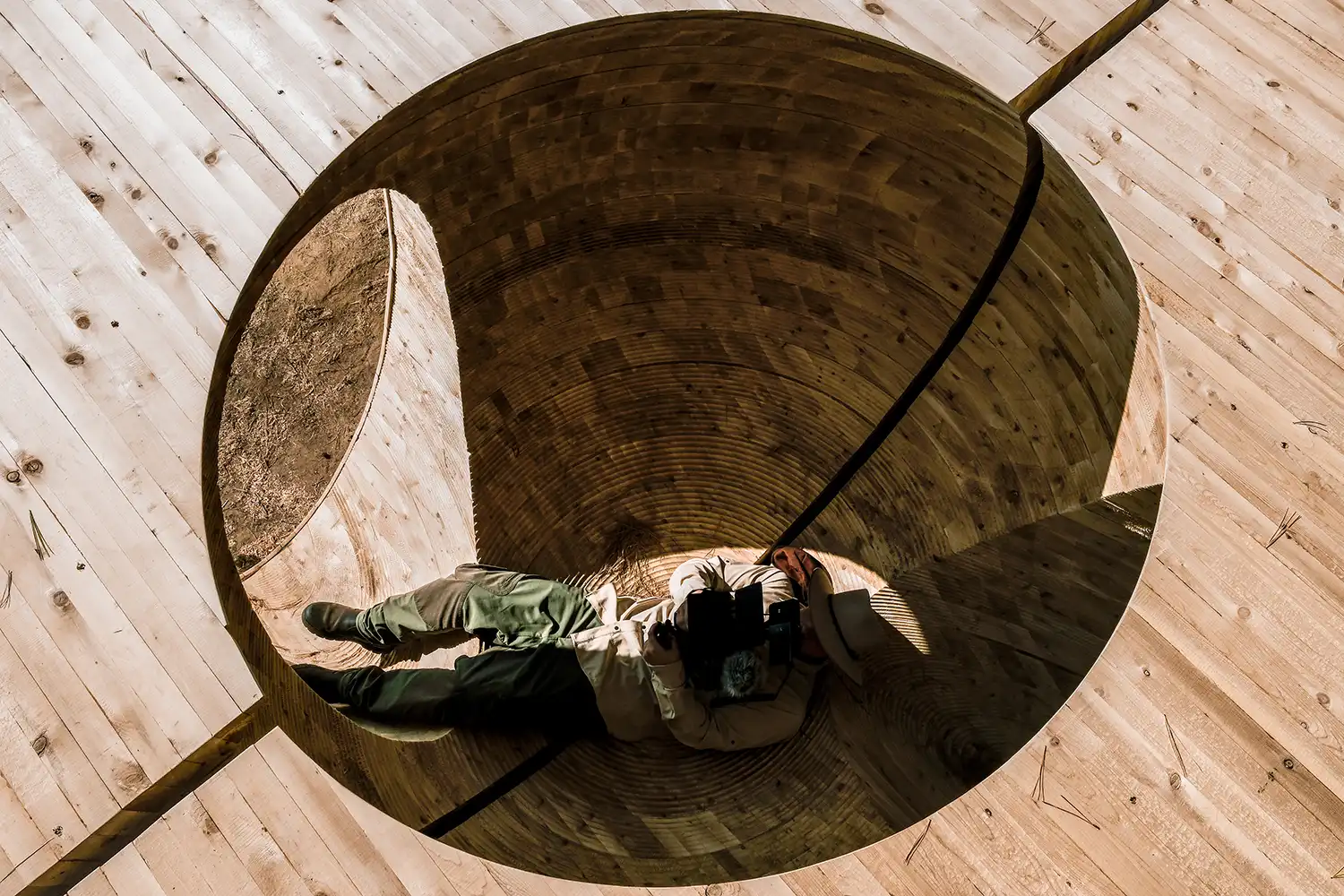
The true magic of Faire le vide unfolds upon entry. Behind the austere facade lies an interior chamber sculpted with astonishing fluidity. Crafted entirely from CNC-milled, laminated cedar, the space contrasts sharply with its outer shell. Intricate, flowing curves and meticulously crafted textures cover the walls and ceiling – grooves and flutes left deliberately by the milling tools.
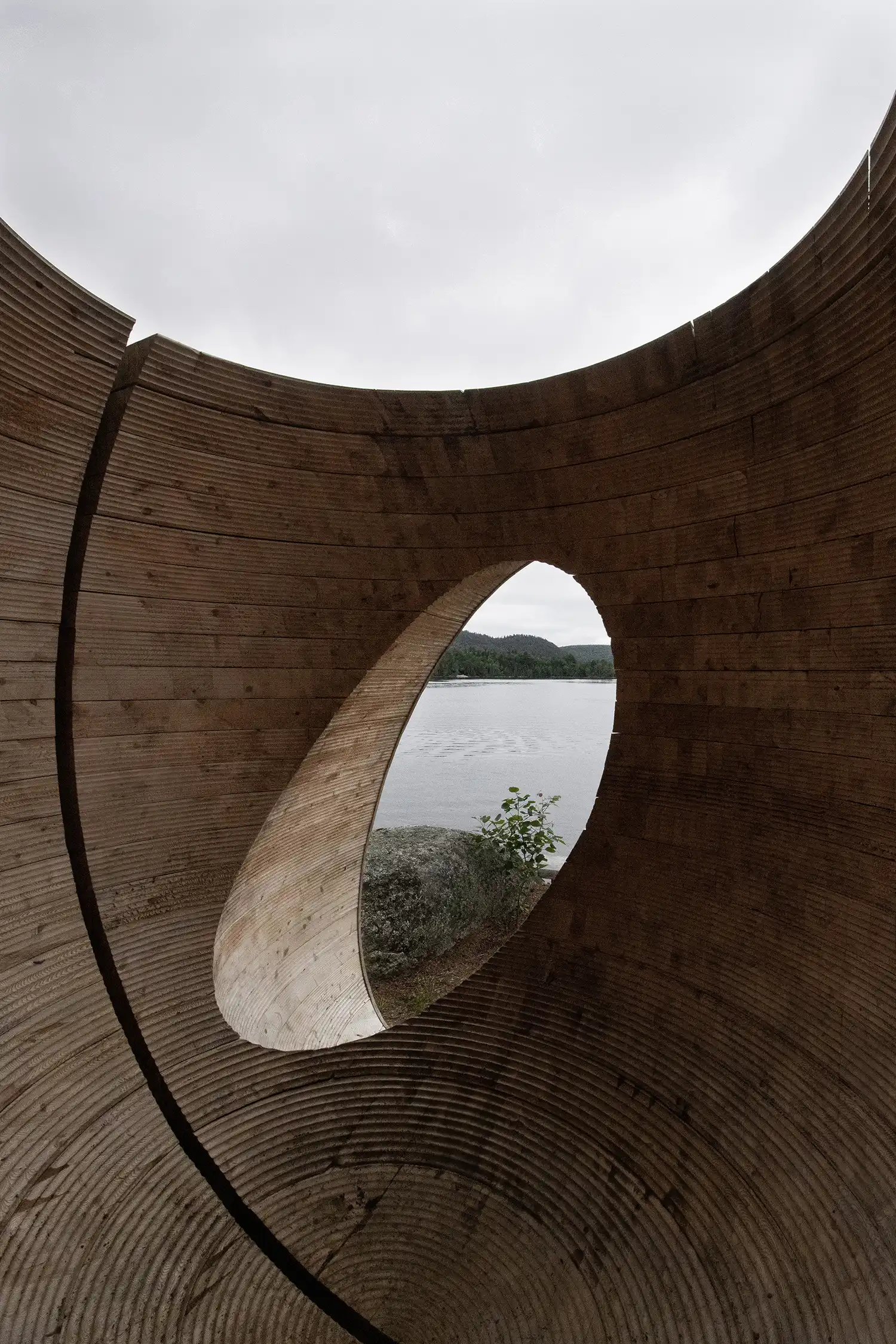
These marks evoke the gentle ripples on the water’s surface of the reservoir itself, a poetic translation of the landscape into tangible form. This interplay between the rigidly orthogonal exterior and the organically expressive interior creates a powerful sensory experience, a true encounter between place and craft.
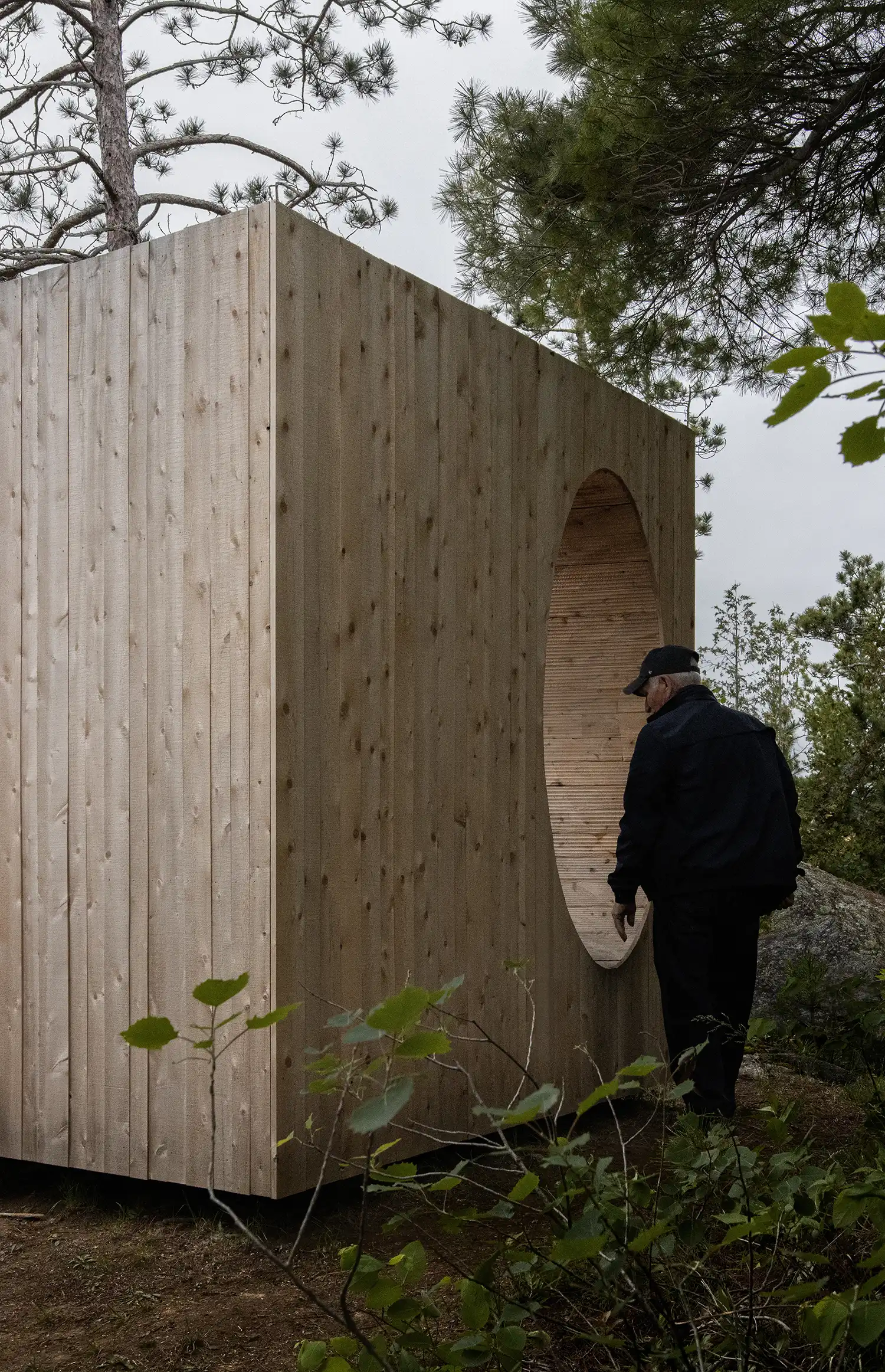
Born from deep sensitivity to the remote site, the project’s prefabricated architecture was a necessity turned into design innovation. Every wooden slab was fabricated off-site, transported by boat across the reservoir, and then carried and assembled entirely by hand – no heavy machinery disturbed the pristine location. This meticulous process ensured the structure minimized its impact on the delicate rocky outcrop and surrounding ecosystem, a testament to sustainable, site-specific intervention.
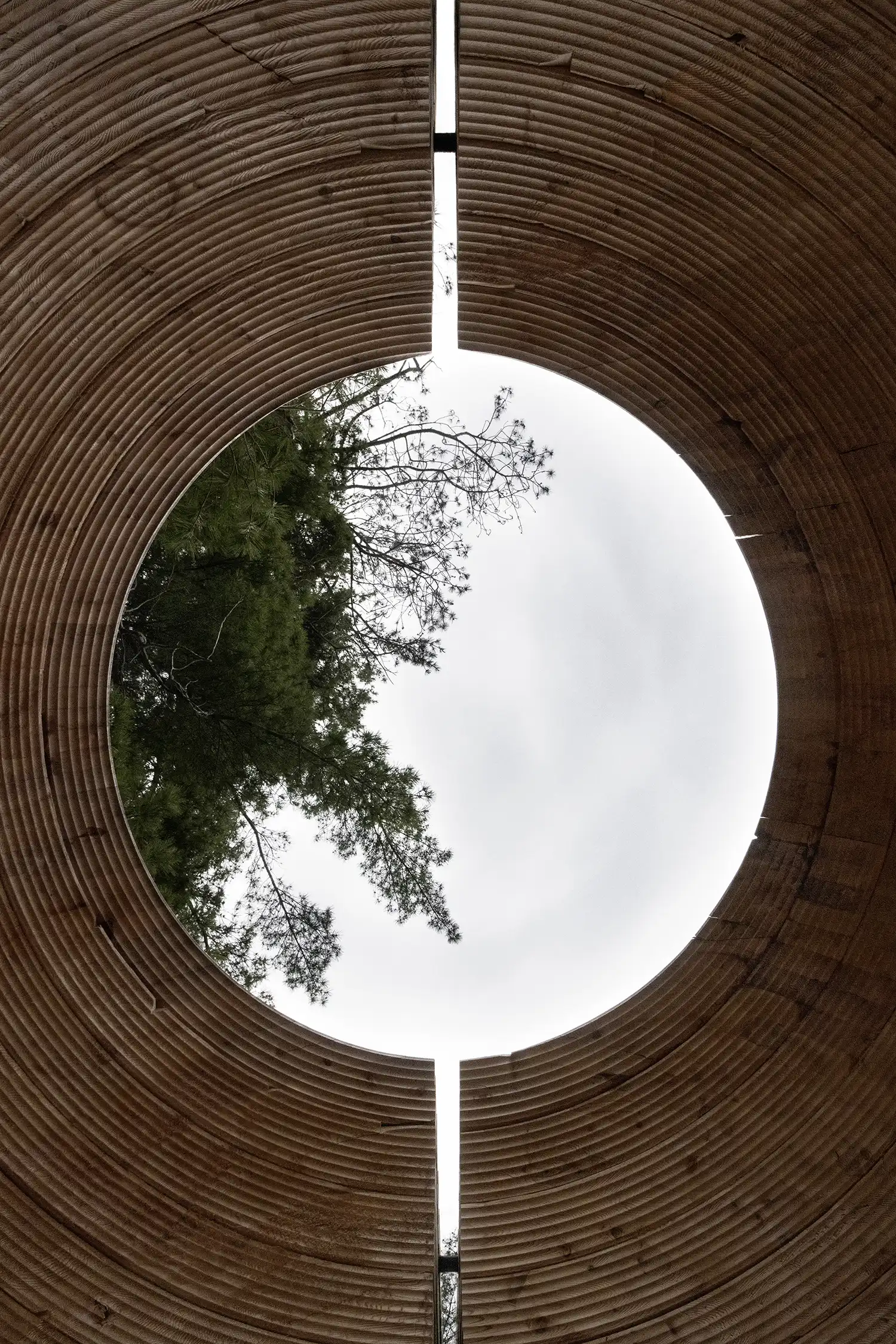
Faire le vide is more than an object; it’s a threshold between the visible and the invisible. It orchestrates a profound dialogue between gesture, material, and the elemental rhythm of the landscape. Standing within its cedar embrace, bathed in the dappled light filtering through the forest canopy, visitors are invited into a moment of pure presence.
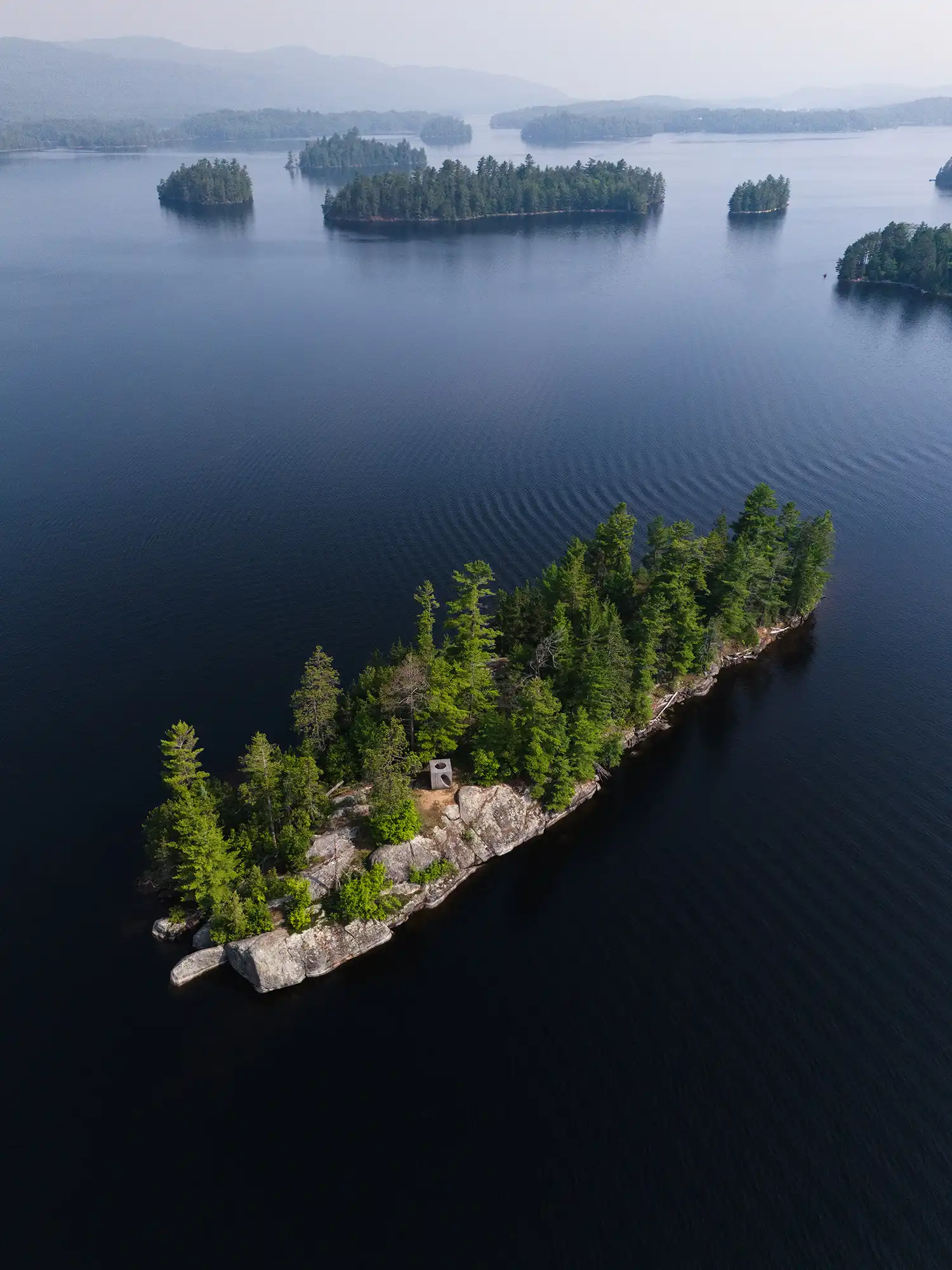
This poetic experience underscores the project’s core intention: revealing art’s power to shift perception in the most unexpected places – a remote island, a bend in a watery path, within the simplicity of a breath. It celebrates the poetics of place and time, solidifying Poisson Blanc Regional Park as a unique open-air destination where nature and profound artistic intervention converge.