

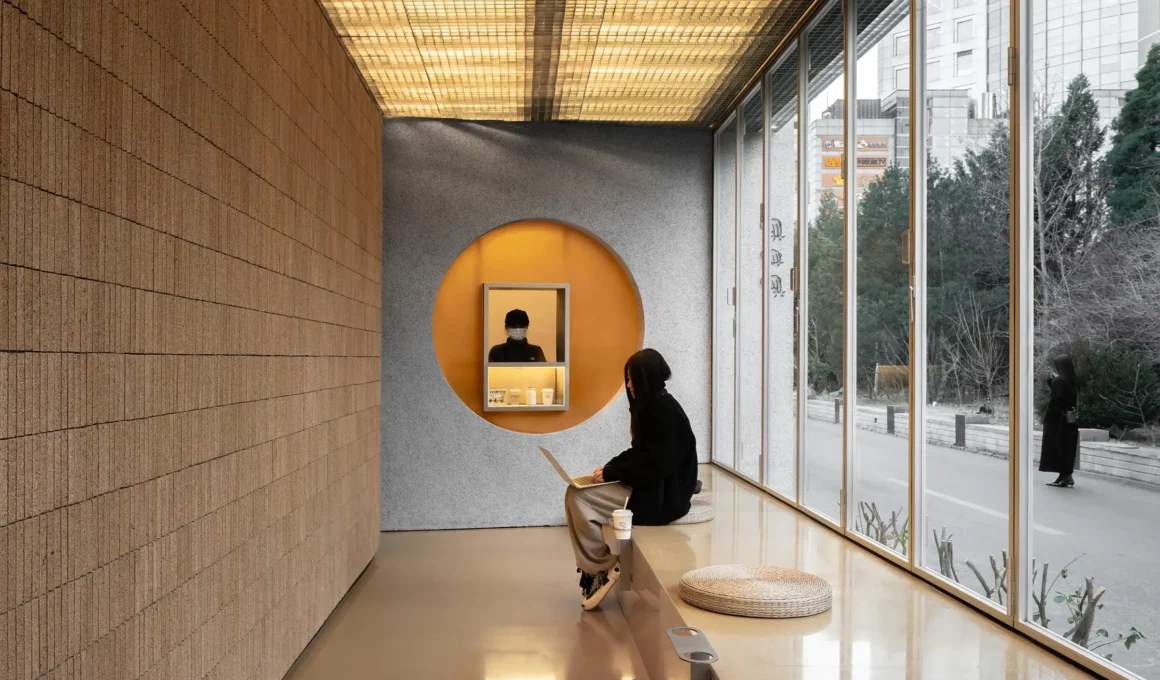
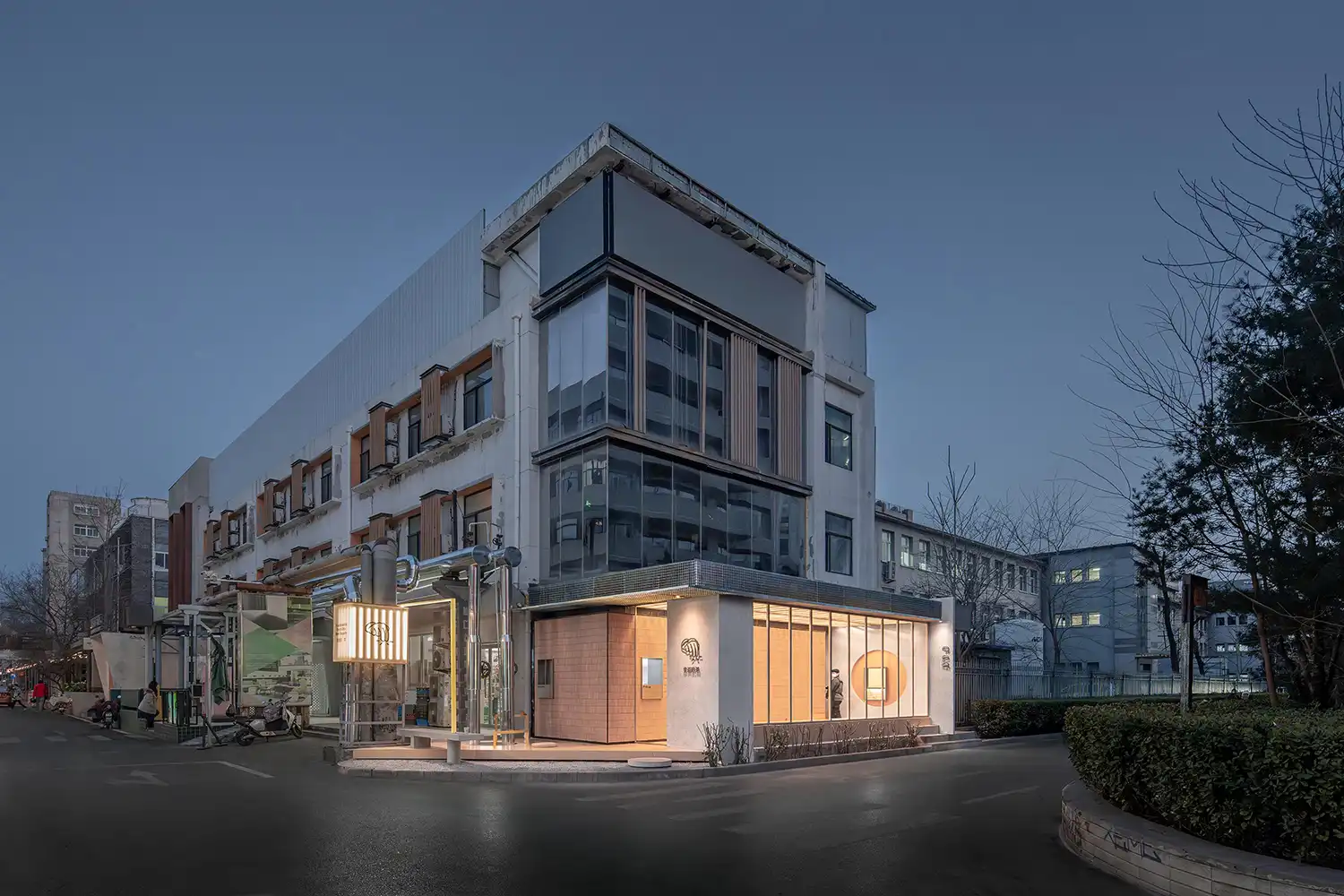
Perched at the edge of a weathered industrial structure in Beijing’s 798 Art District, Bufen Atelier’s Tea Pavilion emerges as a masterclass in spatial tension and tactile poetry. Composed of offset architectural volumes that appear delicately balanced in a state of apparent instability, this compact structure defies the gravity of its post-industrial context. Nestled at a prominent corner where creativity collides with historical memory, the pavilion functions as both a sanctuary for tea rituals and a dynamic social space, anchoring the district’s gritty aesthetic with a warm, luminous presence.
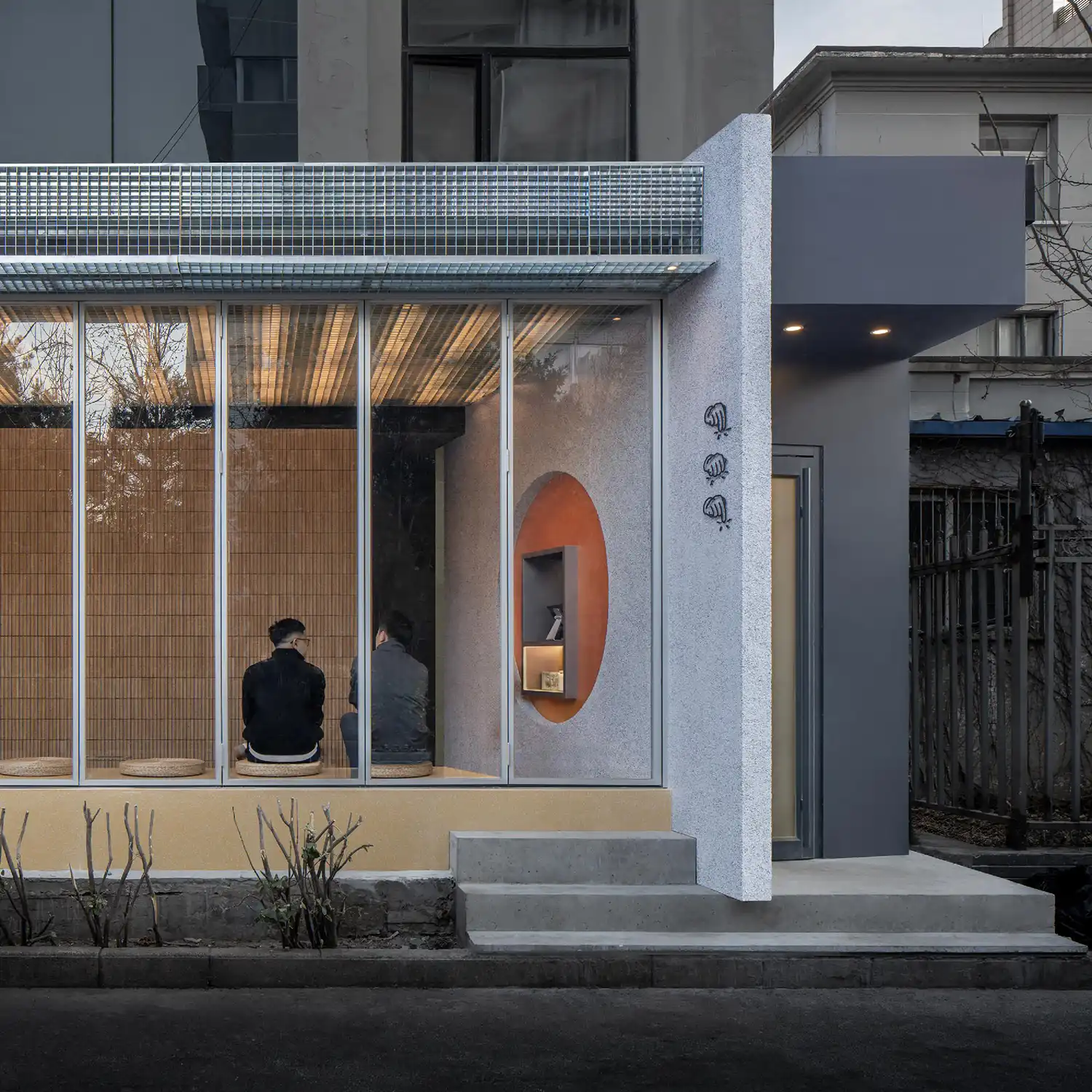
The architects embraced the challenge of layering complexity within a modest footprint. Rather than relying on rigid perimeters, the design unfolds through a rhythmic sequence of closures and openings, creating fluid transitions that blur conventional boundaries. At its heart, a large lateral opening—originally an industrial window—now functions as a pivoting boundary. When fully opened, this ingenious gesture dissolves the barrier between interior and exterior, transforming the intimate tea space into an open-air extension of the surrounding urban garden. The result is a seamless merger of architecture with atmosphere, where dappled light and shifting breezes become integral to the experience.
Materiality serves as a bridge between past and present. Hand-crafted brick tiles, raw cement finishes, and custom yellow terrazzo surfaces pay homage to the site’s industrial honesty while introducing subtle warmth. Selected for their ability to age gracefully and “belong” to the evolving narrative of 798, these textures echo with tactile authenticity. Above, a suspended metal grid ceilingacts as the pavilion’s luminous soul: by day, it filters sunlight into a soft, diffused glow; by night, it transforms the volume into a glowing urban lantern. This ethereal luminance—reminiscent of traditional Chinese lanterns—positions the pavilion as a quiet beacon within the district’s rugged silhouette.
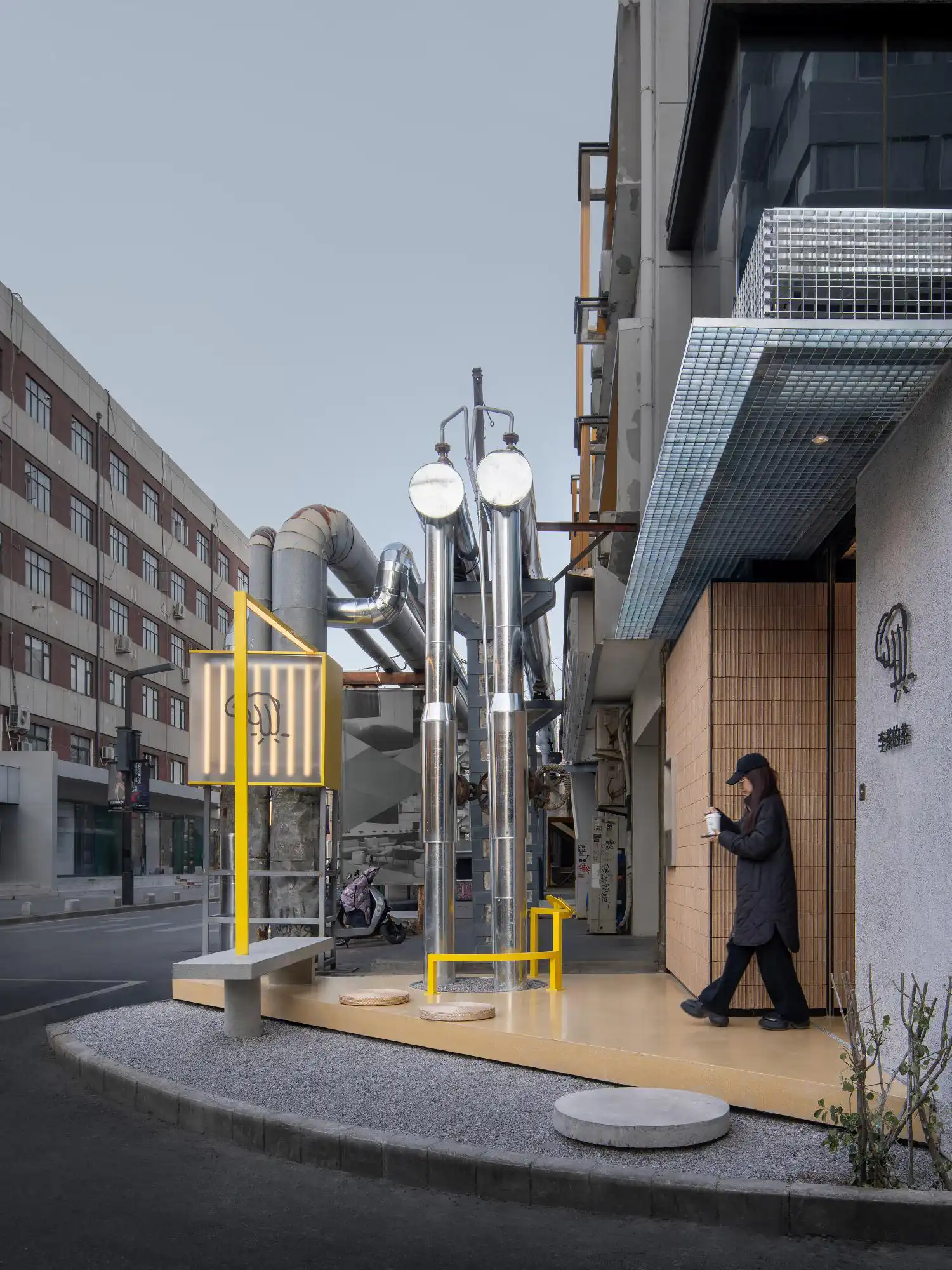
Externally, the pavilion asserts itself as an urban punctuation point. A vibrant yellow platform extends from the base like a stage, inviting passersby to pause amidst the tangle of roads and overhead pipework. This strategic gesture transcends mere aesthetics—it is a social catalyst, offering an unexpected moment of stillness and connection. As a convergence of “object, space, and social gesture,” the platform embodies Bufen Atelier’s vision of architecture as an active participant in urban life.
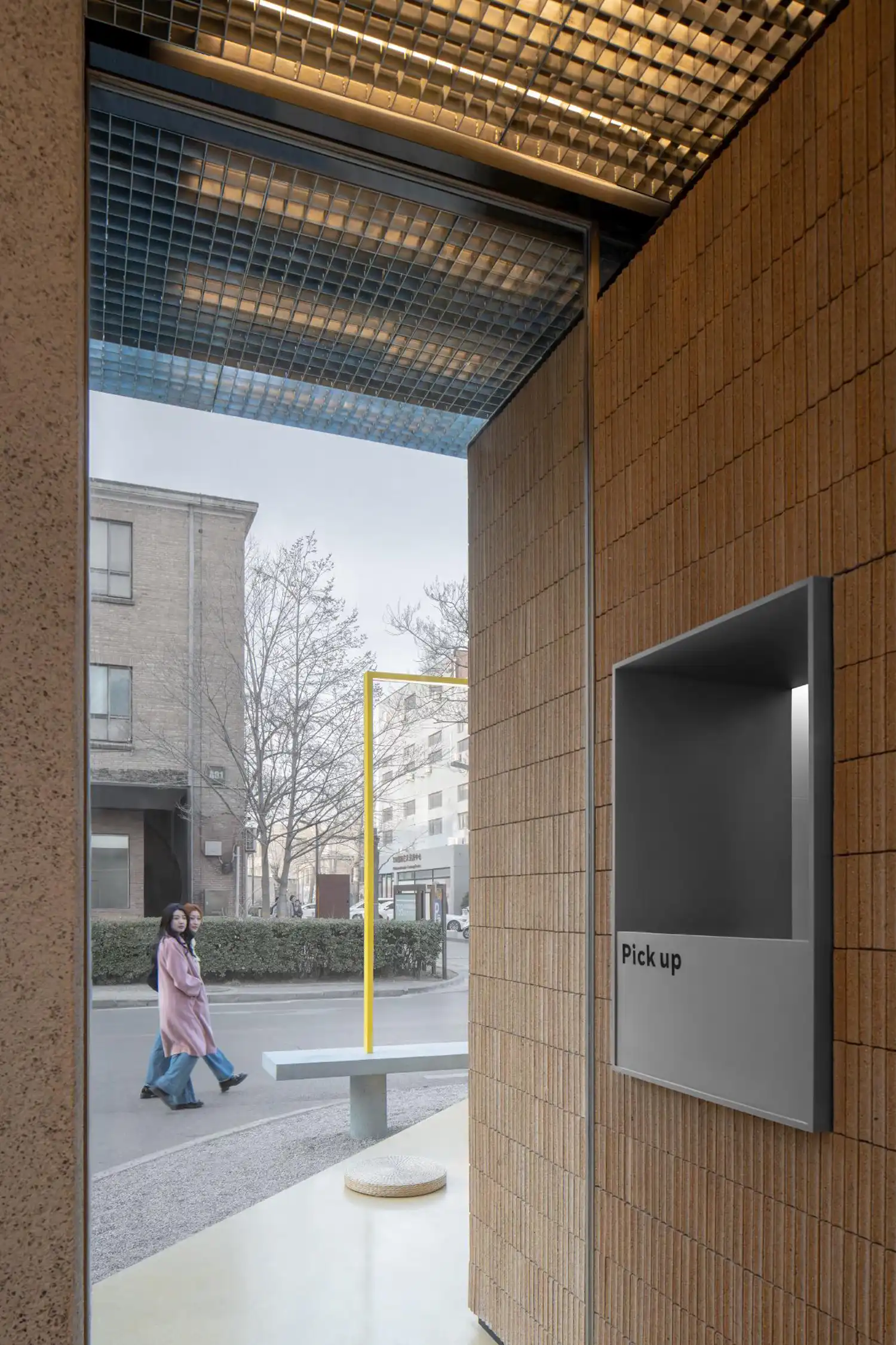
Contextually, the pavilion thrives within the 798 Art District—a former weapons factory complex reborn as China’s epicenter of contemporary art. Here, East German-designed factory buildings and relics like gasworks and overhead cranes forge a unique industrial aesthetic. Sasaki’s vision plan for the area emphasized preserving this heritage while injecting vibrant cultural programming, ensuring the district avoids becoming a static museum. The Tea Pavilion epitomizes this philosophy: it is both a relic revitalized and a living stage for social exchange, proving that post-industrial memory and modernity can coexist in resonant harmony.
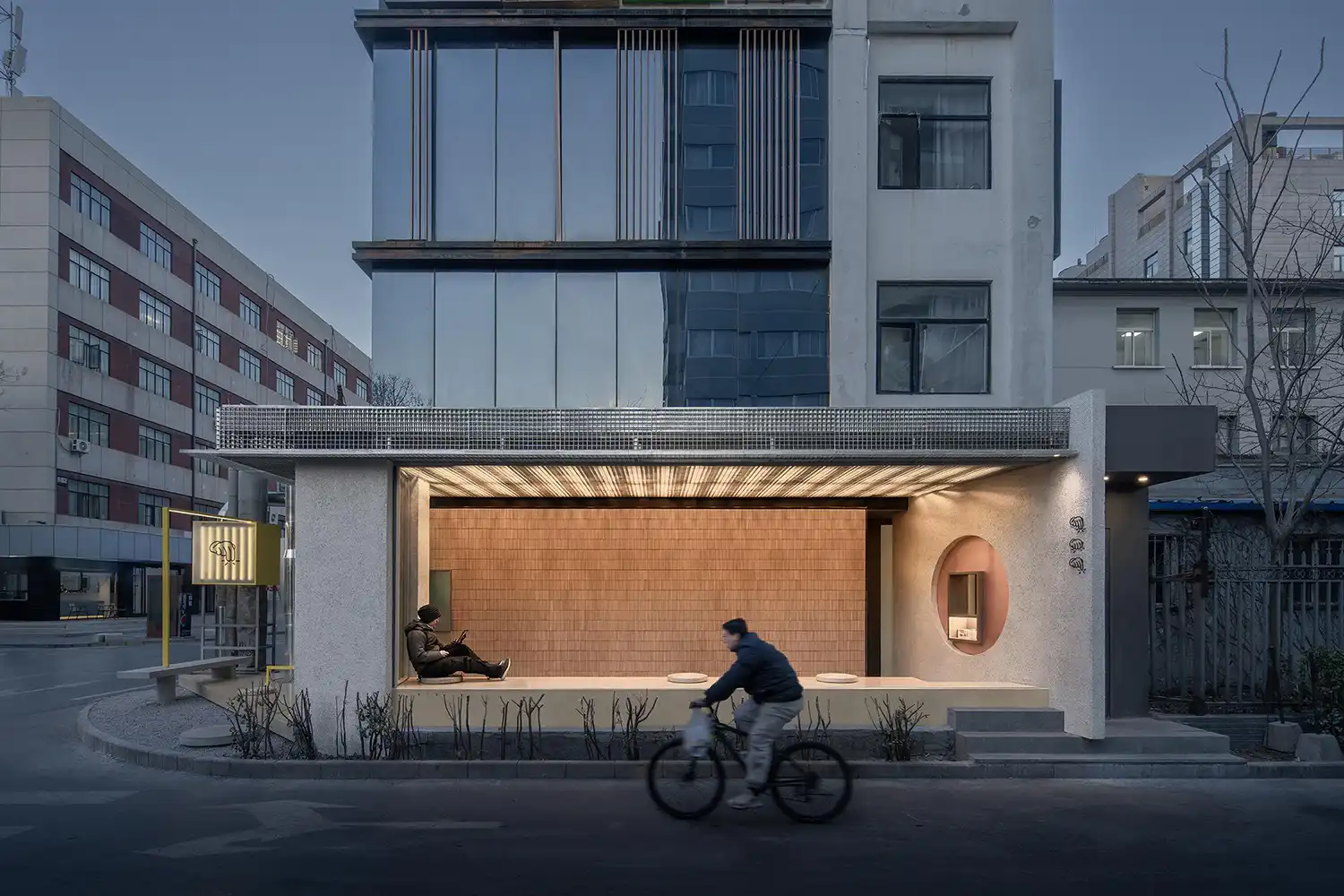
In a metropolis racing toward verticality, Bufen Atelier’s creation stands as a testament to the power of restraint and resonance. It is not merely a structure but an invitation to pause, reflect, and connect—a luminous footnote in Beijing’s ever-evolving urban saga.