



A sensitive yet striking intervention by Will Gamble Architects has revitalised Flint Farm, a dilapidated Grade II listed farmhouse nestled in the countryside of North Hertfordshire, UK. Tasked with rescuing the historic property from poor condition and unsympathetic past additions, the studio embarked on a meticulous process of sensitive restoration and thoughtful extension, fundamentally reconnecting the dwelling to its unique farmyard setting and surrounding landscape.

The project began by stripping away incongruous additions that had obscured the farmhouse’s original character. Internally, layouts were carefully reconfigured. A pivotal move was the introduction of a new double-height space within the listed structure, featuring a crafted oak staircase with slender steel spindles. This element not only improves house circulation but acts as a graceful pivot, unlocking the charm of the farmhouse’s existing cellular rooms and seamlessly linking them to the new contemporary extension.
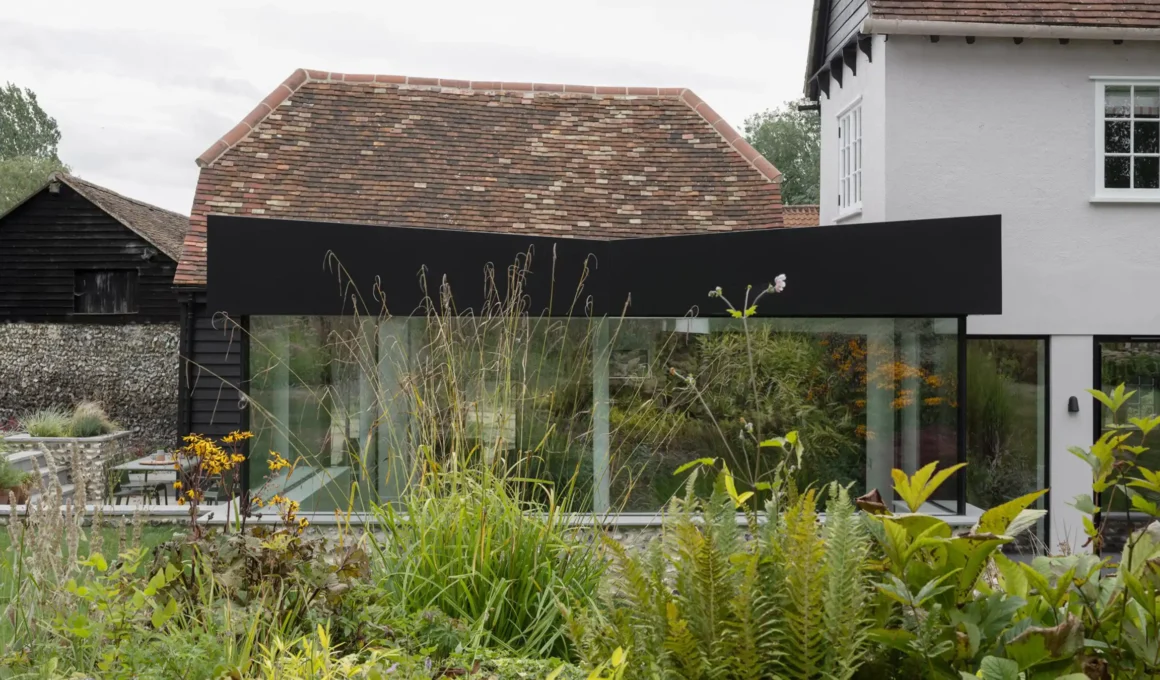
Crucially, the architects advised relocating the planned extension away from replacing an existing UPVC conservatory. This strategic shift maximises captivating garden views, enhances connectivity to the historic farmyard setting, and allows the neighbouring black timber clad barn to be integrated into the home’s functional envelope. The new addition is deliberately low-rise and embedded into the land’s topography, its lightweight appearance ensuring the historic farmhouse and outbuildings remain clearly legible.
The glazed link extension is a masterclass in contextual dialogue. Floor-to-ceiling glass sits atop a robust plinth of knapped flint walls, rooting the structure firmly in the landscape and directly referencing the material vernacular of the North Hertfordshire farmyard. Above this, a crown of dark, angular steel – resembling a folded black ribbon with shallow peaks and troughs – appears to hover. Its form draws direct inspiration from the distinctive black-timber-clad gables of the farmstead’s historic outbuildings.
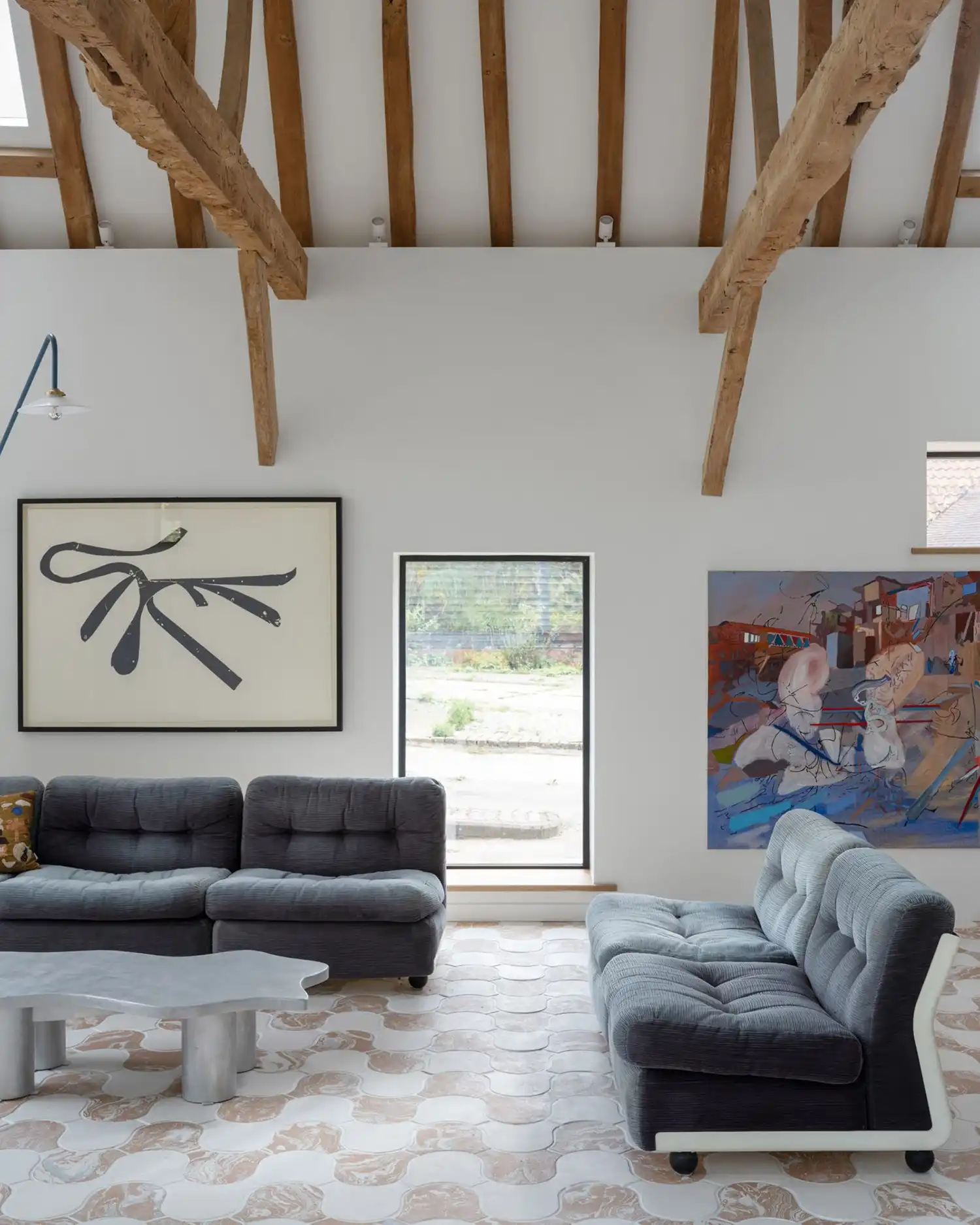
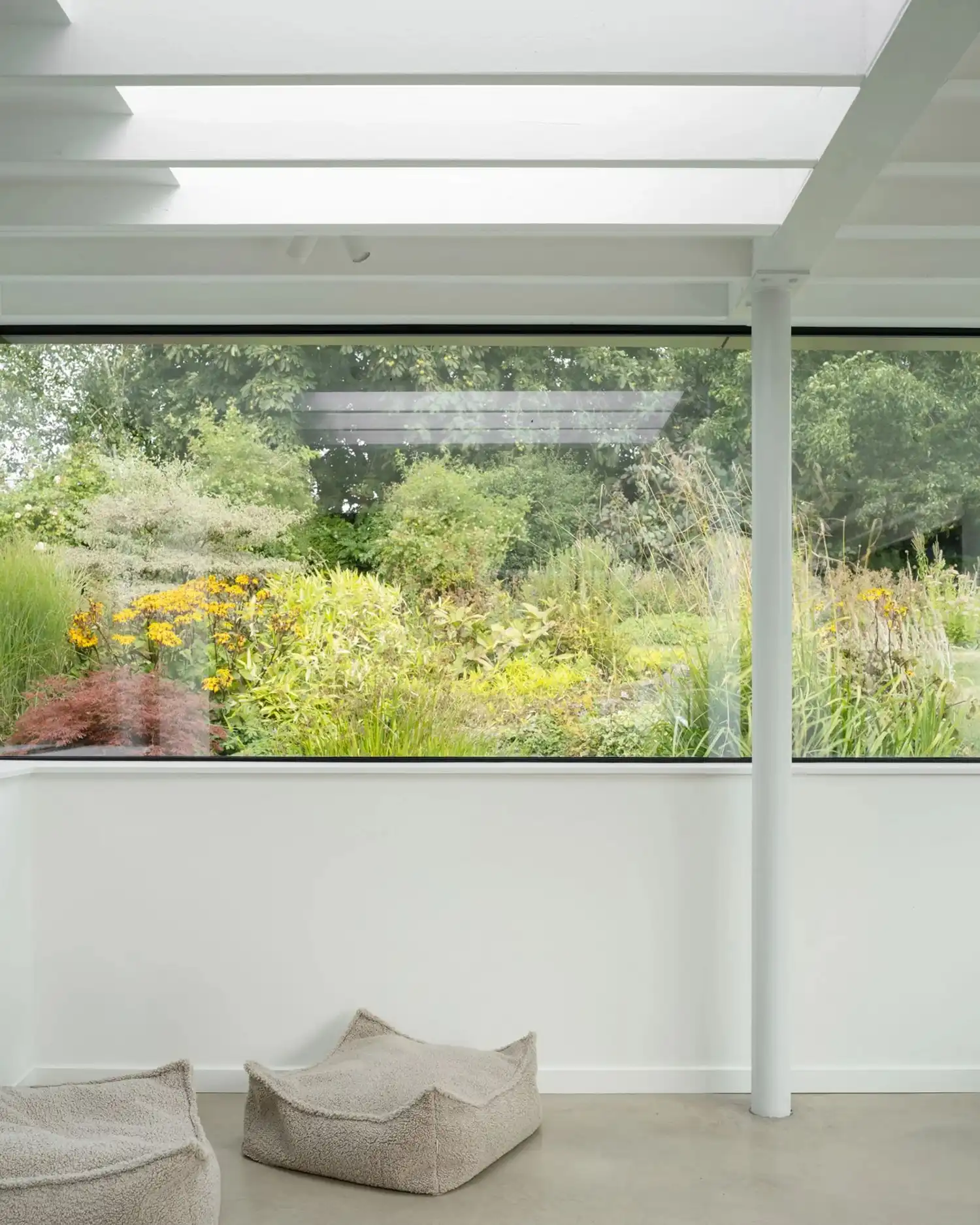
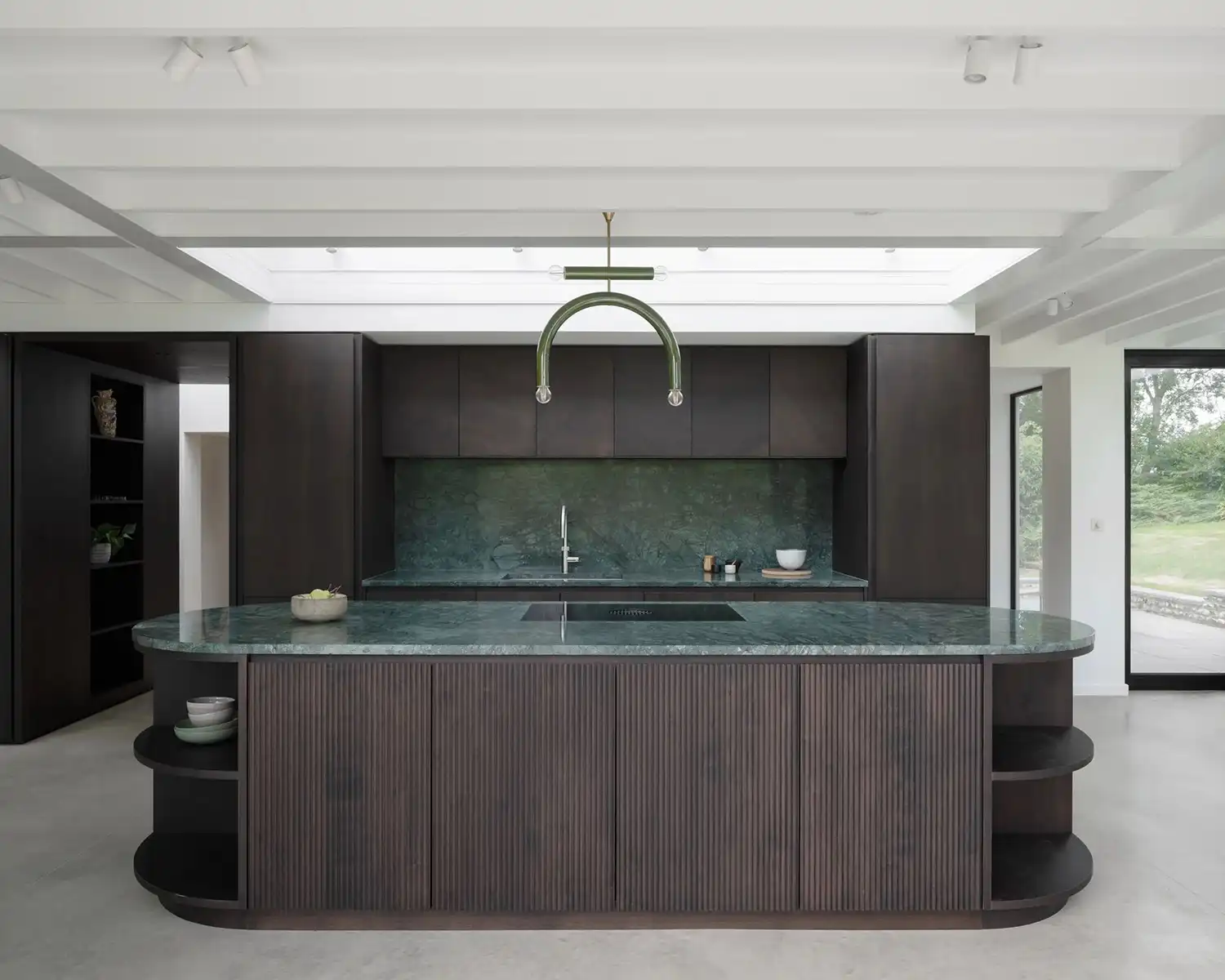
Internally, the extension celebrates texture and pattern, echoing the old farmyard. The ceiling structure is exposed, nodding to the timber frames of both the farmhouse and barn. A tactile material palette of polished concrete, blackened timber, natural oak, and exposed steel forms the foundation, accented by marble and terrazzo. This contemporary extension provides modern living spaces bathed in light and intimately connected to the outdoors.
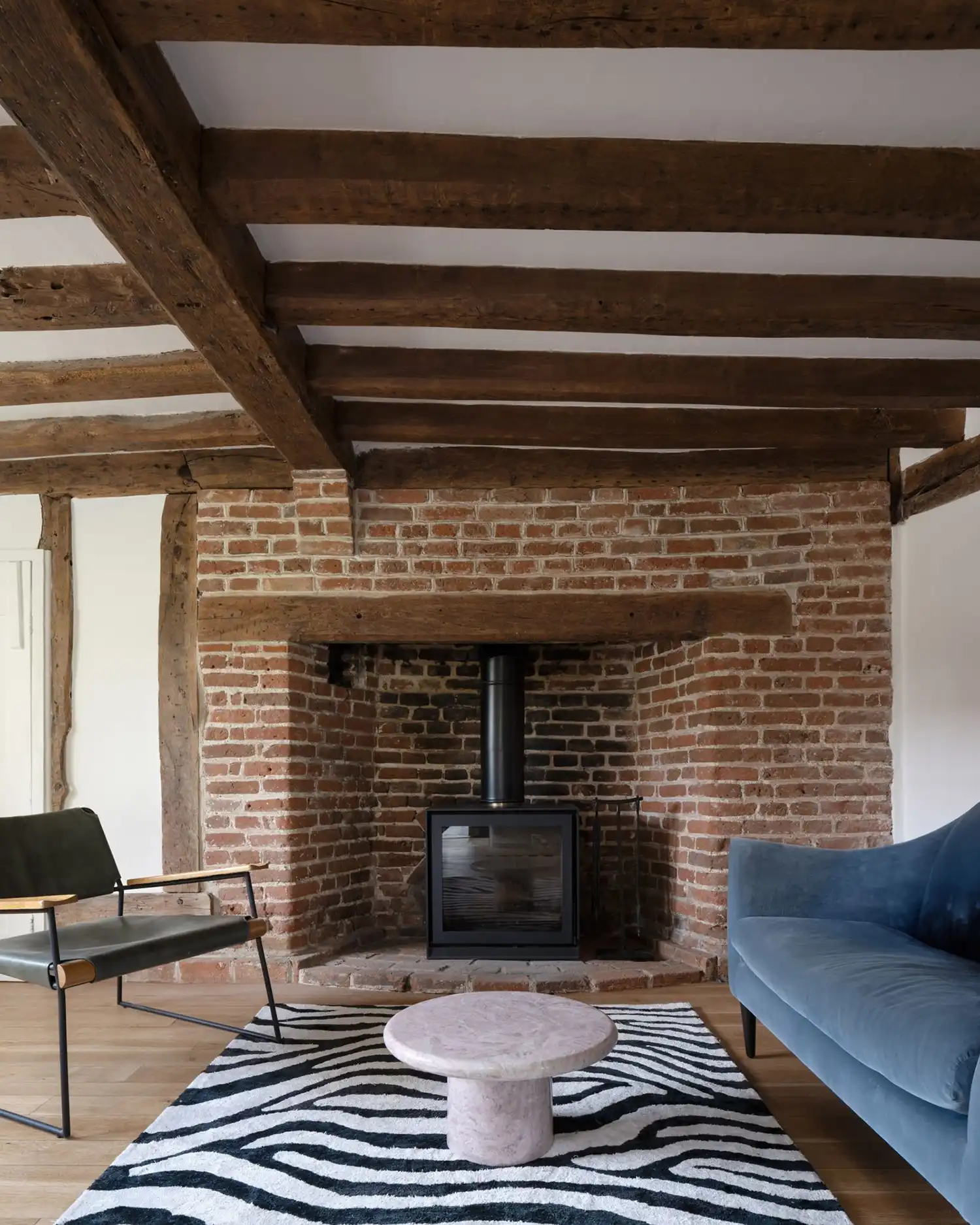
The adjacent black barn underwent its own meticulous sensitive restoration and conversion into an informal living area. Its historic timber frame was refurbished and left proudly exposed. Original black timber cladding and clay tiles were carefully removed, upgraded for thermal performance, and reinstated to preserve the barn’s unique, irregular character – including its distinctive uneven eaves and roof pitch. A contemporary picture window frames garden views while showcasing the historic timber within its reveals.
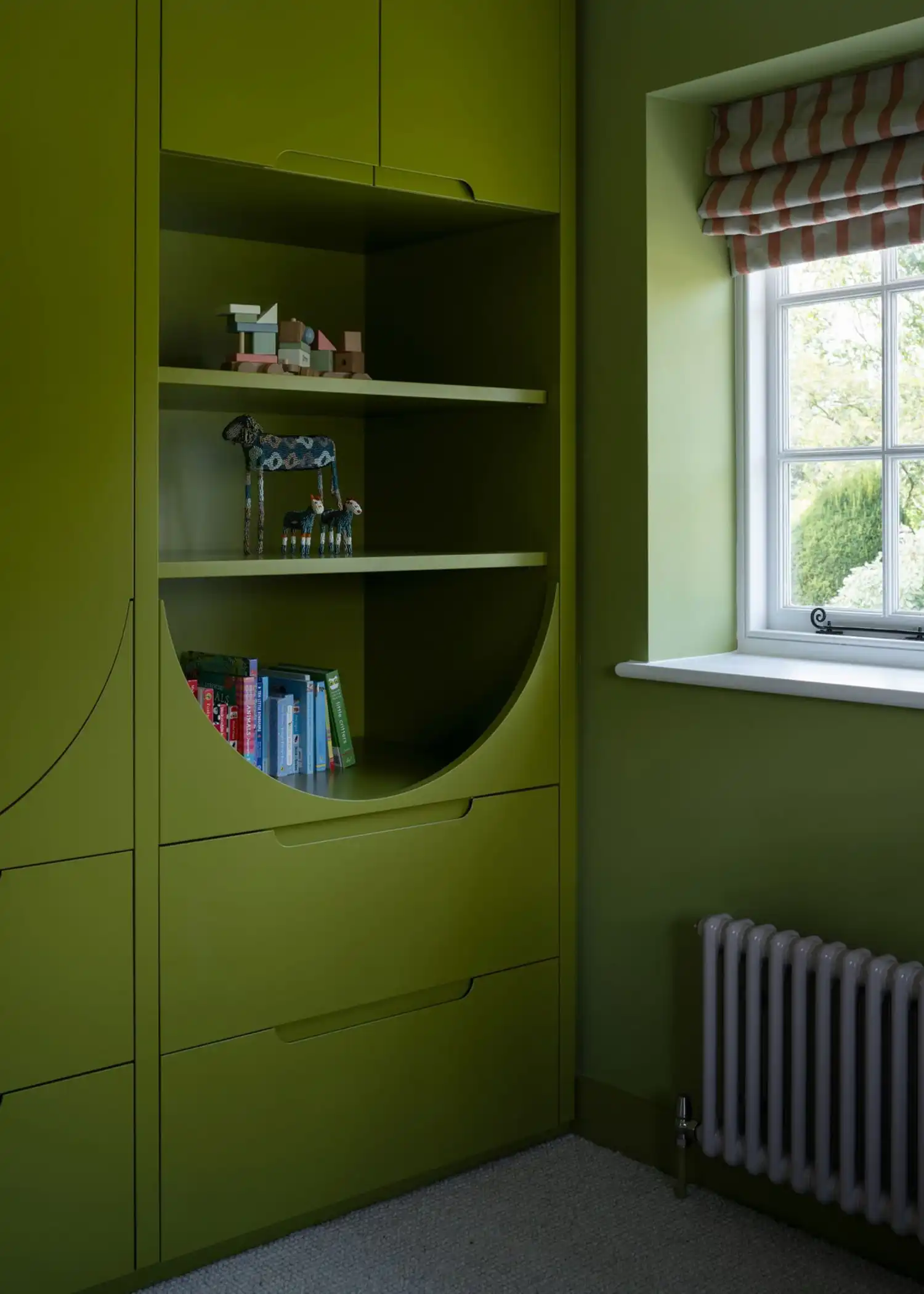
The result of Will Gamble Architects’ holistic approach is transformative. Flint Farm stands not as a frozen relic, but as a vibrant, unique family home. It masterfully meets the demands of 21st century living while celebrating every layer of its rich past.
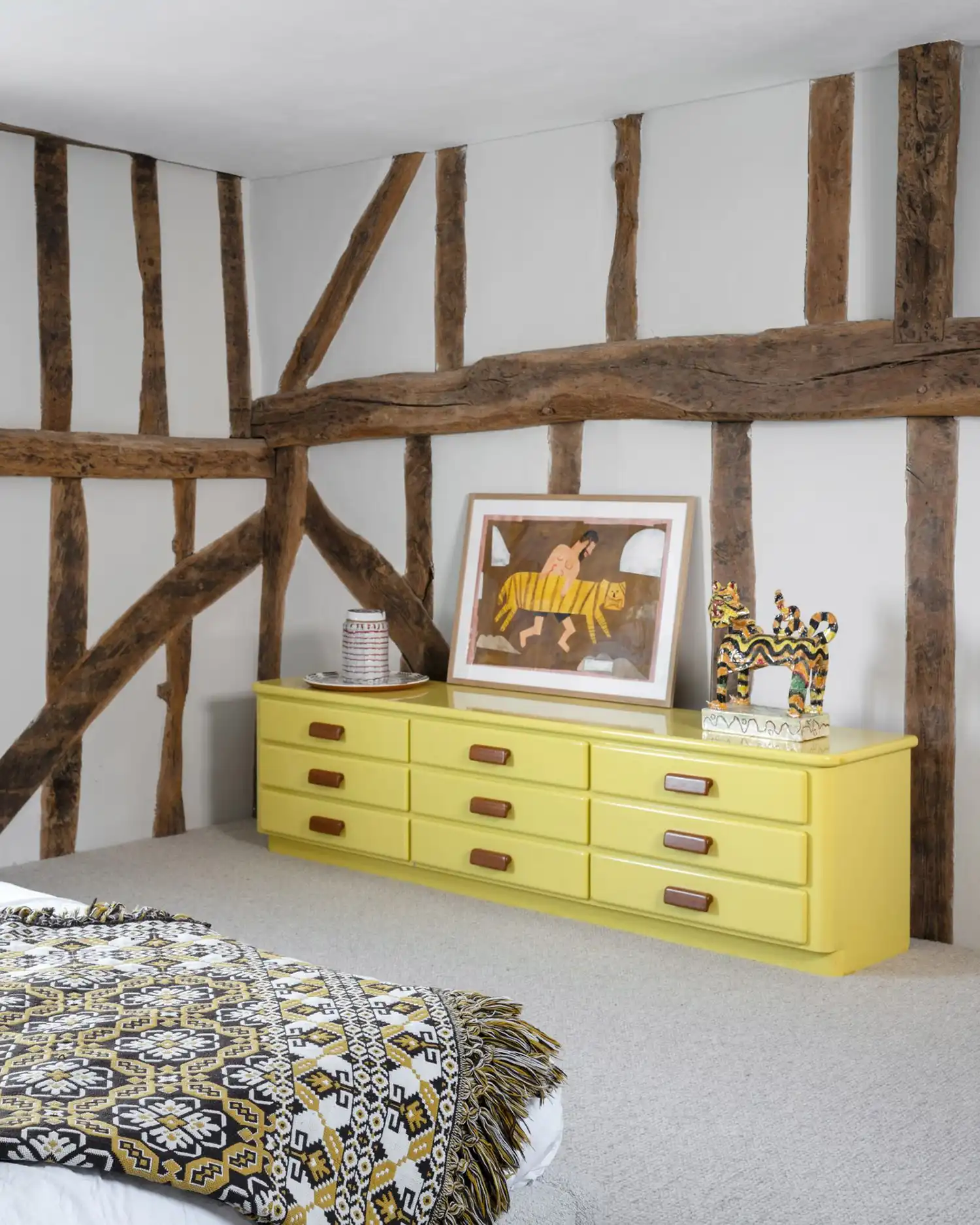
The sensitive restoration honours the Grade II listed farmhouse and its black timber clad companions, while the bold yet respectful contemporary extension and barn conversion ensure this North Hertfordshire treasure is preserved and enjoyed for generations to come. The dialogue between ancient knapped flint, weathered timber, and crisp modern steel is a testament to thoughtful intervention in a historic farmyard setting.