


Some houses are not designed; they are remembered. This is the foundational philosophy behind Casa Tao, a profound residential project in Puerto Vallarta, Mexico, conceived by the thoughtful architects at HW Studio. The house eschews a dramatic, image-driven statement in favor of a quieter, more profound goal: to craft a space for a specific way of living, where shade is the primary material and emotional refuge is the ultimate aim.
The narrative of Casa Tao is deeply intertwined with the life of its owner, Gustavo, who grew up in the region. His childhood, defined by the coastal climate where sun and humidity dictate daily rhythms, instilled in him an appreciation for shade not as an accident, but as a precious asset—a sanctuary. For HW Studio, this concept of shade became the central architectural concept, understood not just as a physical phenomenon but as an emotional condition: a promise of calm, breath, and protection.
Gustavo’s own rich, self-taught intellect, expressed through a library brimming with works on philosophy and the arts, and a shared journey to Japan with his family, further shaped the design. They expressed a desire to “feel as if we were living inside a Japanese museum,” not for its institutional solemnity, but for its compositional cleanliness, its aesthetics of emptiness, and the tangible quality of silence. This inspired a Mexican contemporary architecture that speaks a universal language of tranquility.
Situated in a neighborhood without dramatic vistas, the house turns its attention to a tree-lined plaza. Instead of a direct, glazed confrontation that would intensify the heat, HW Studio devised an oblique relationship with the landscape. The house observes the plaza at a diagonal, allowing the breeze and the scent of the not-so-distant sea to filter through while avoiding the full force of the sun. This bioclimatic design prioritizes environmental comfort through intelligent orientation.
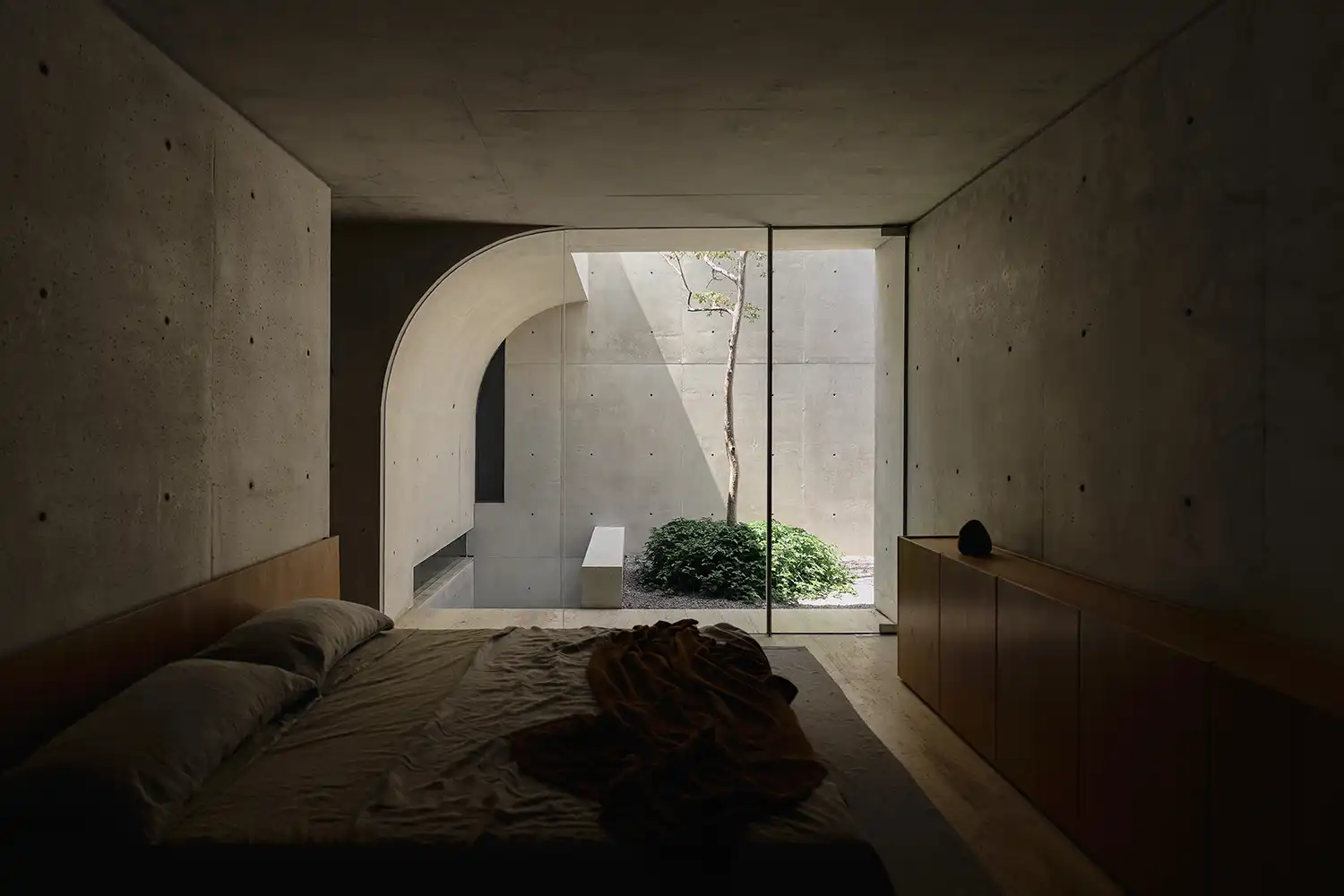
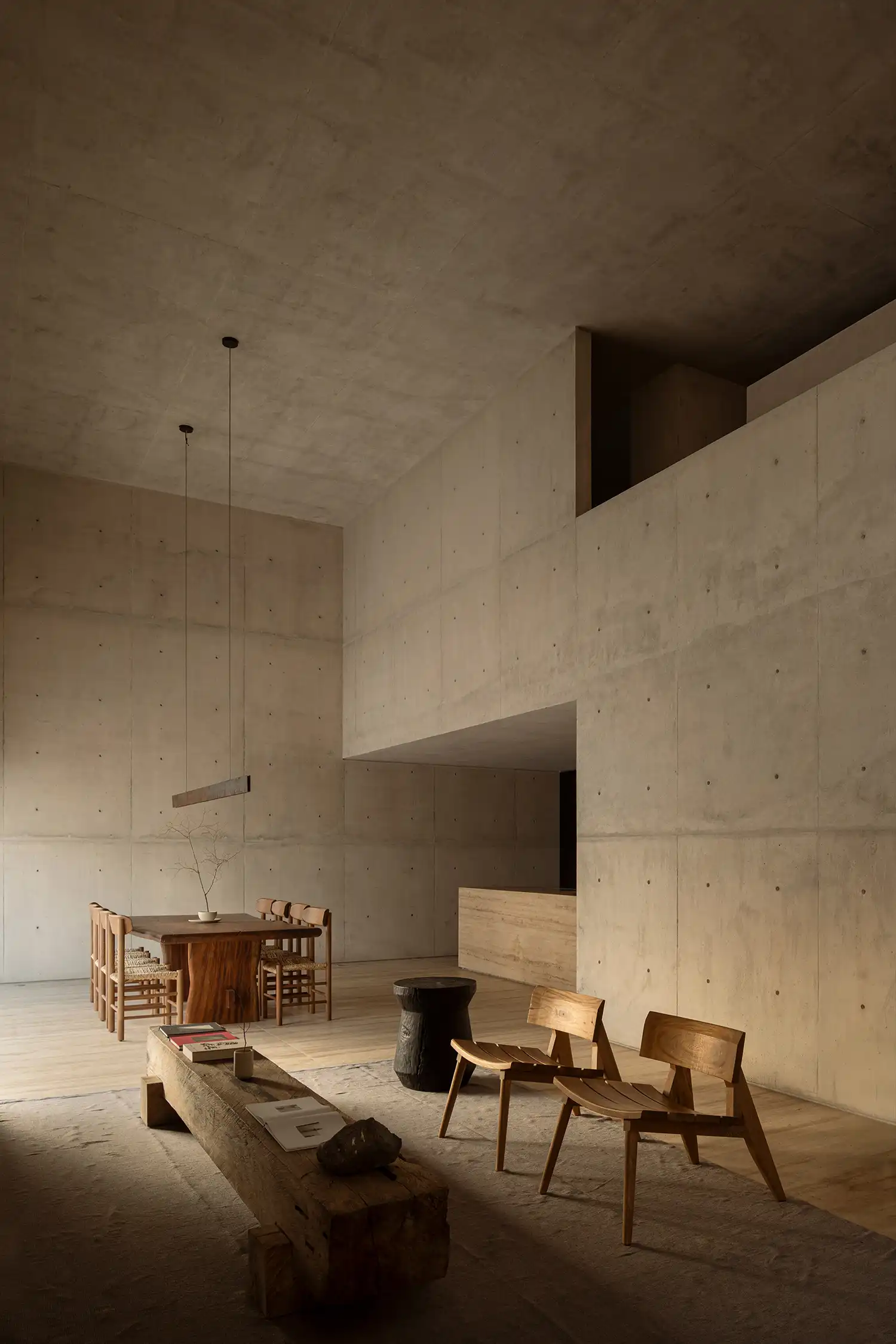
The program is strategically organized. The private zones—bedrooms, garage, and service areas—are anchored at the base, organized around a quiet, introspective patio. Above this solid base, a light, double-height volume containing the social areas seems to float. This elevation lifts daily life above the street, surrounding it with air and framing views of the treetops. Elevated patios become terraces for contemplation, enhancing the connection to nature.
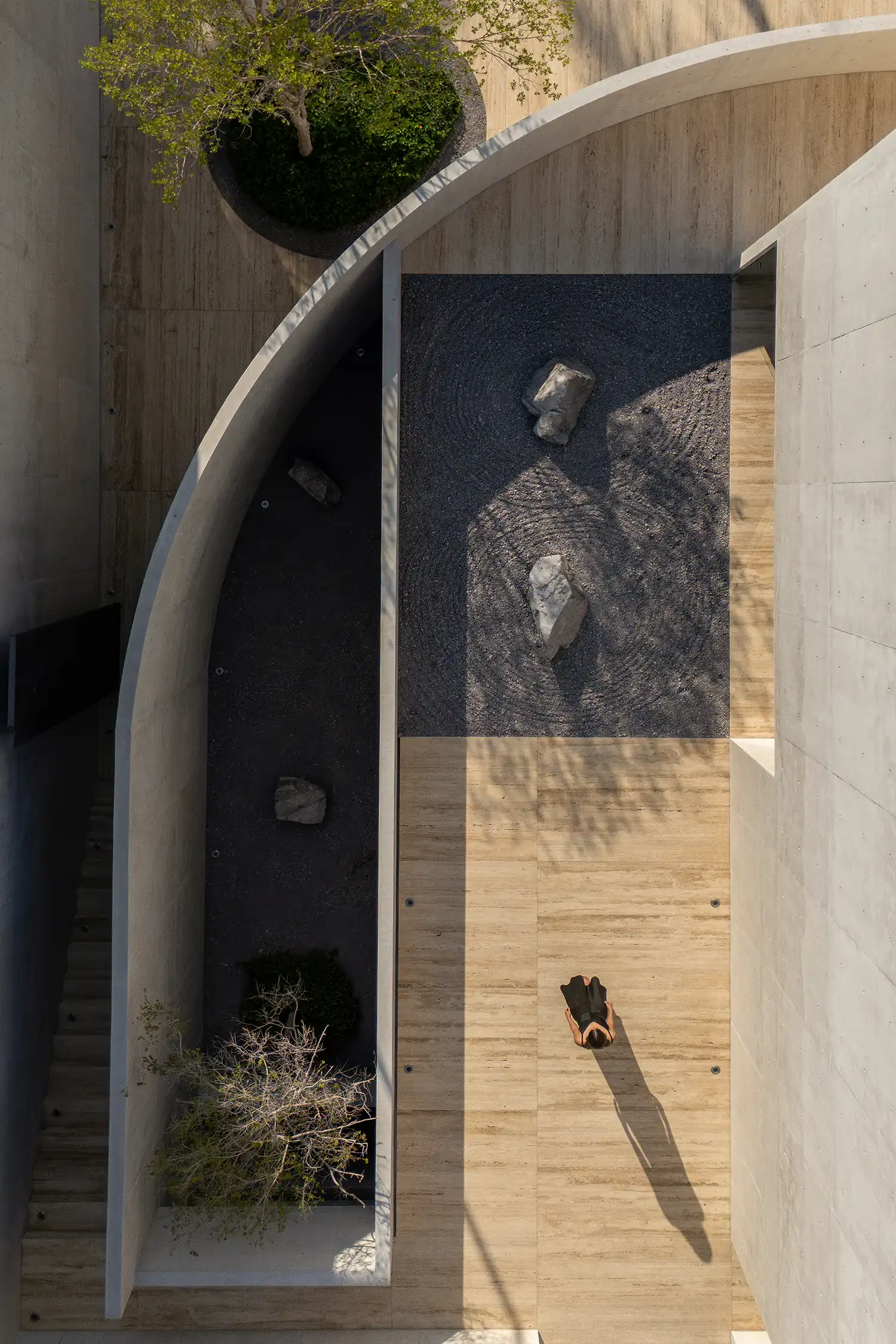
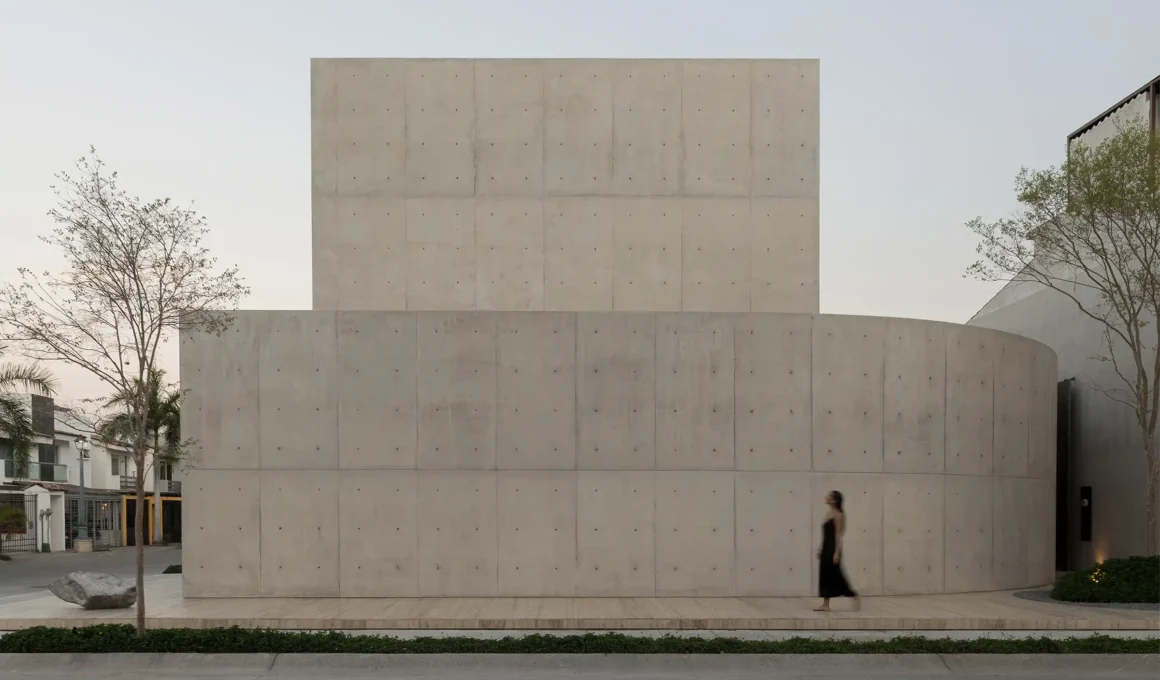
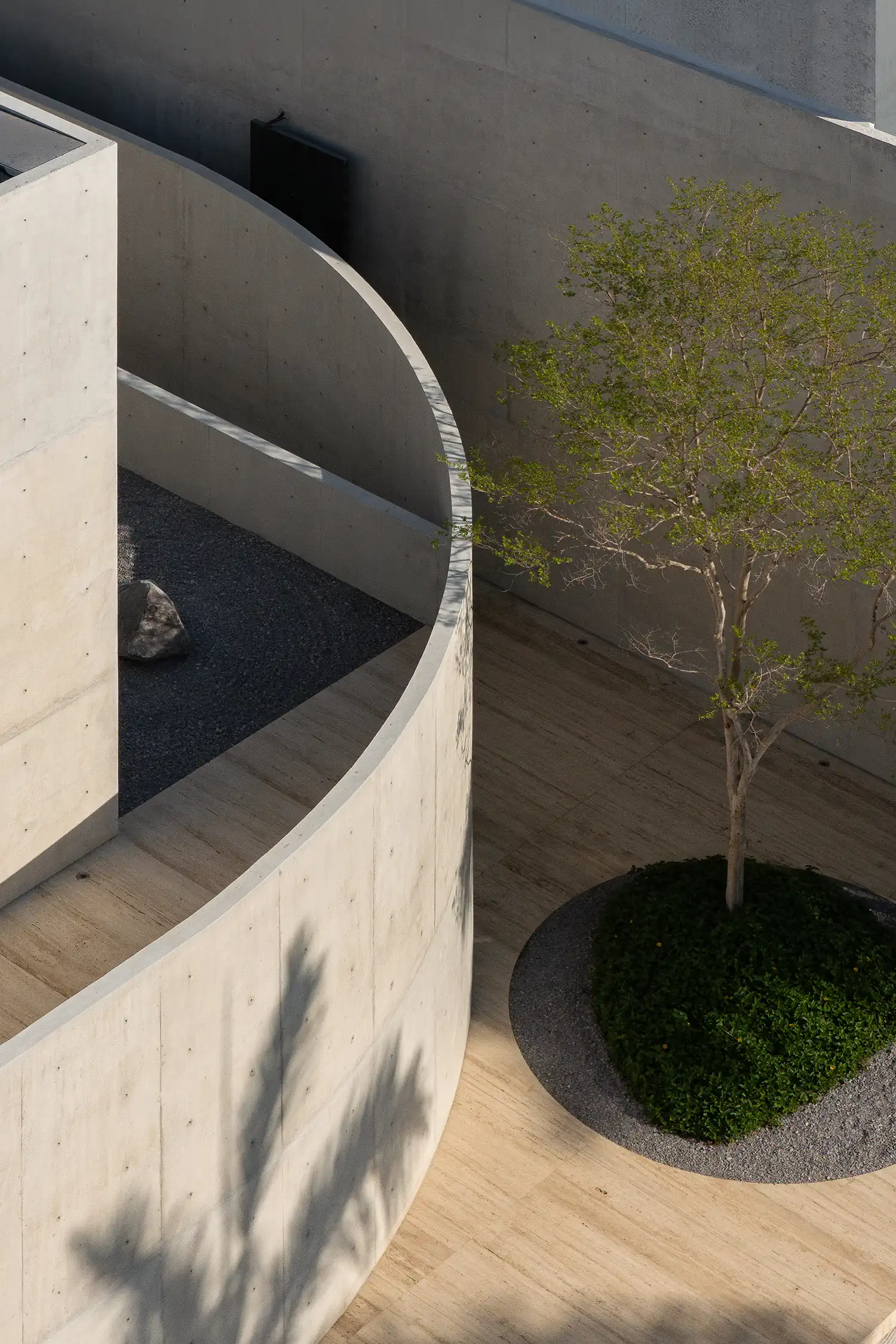
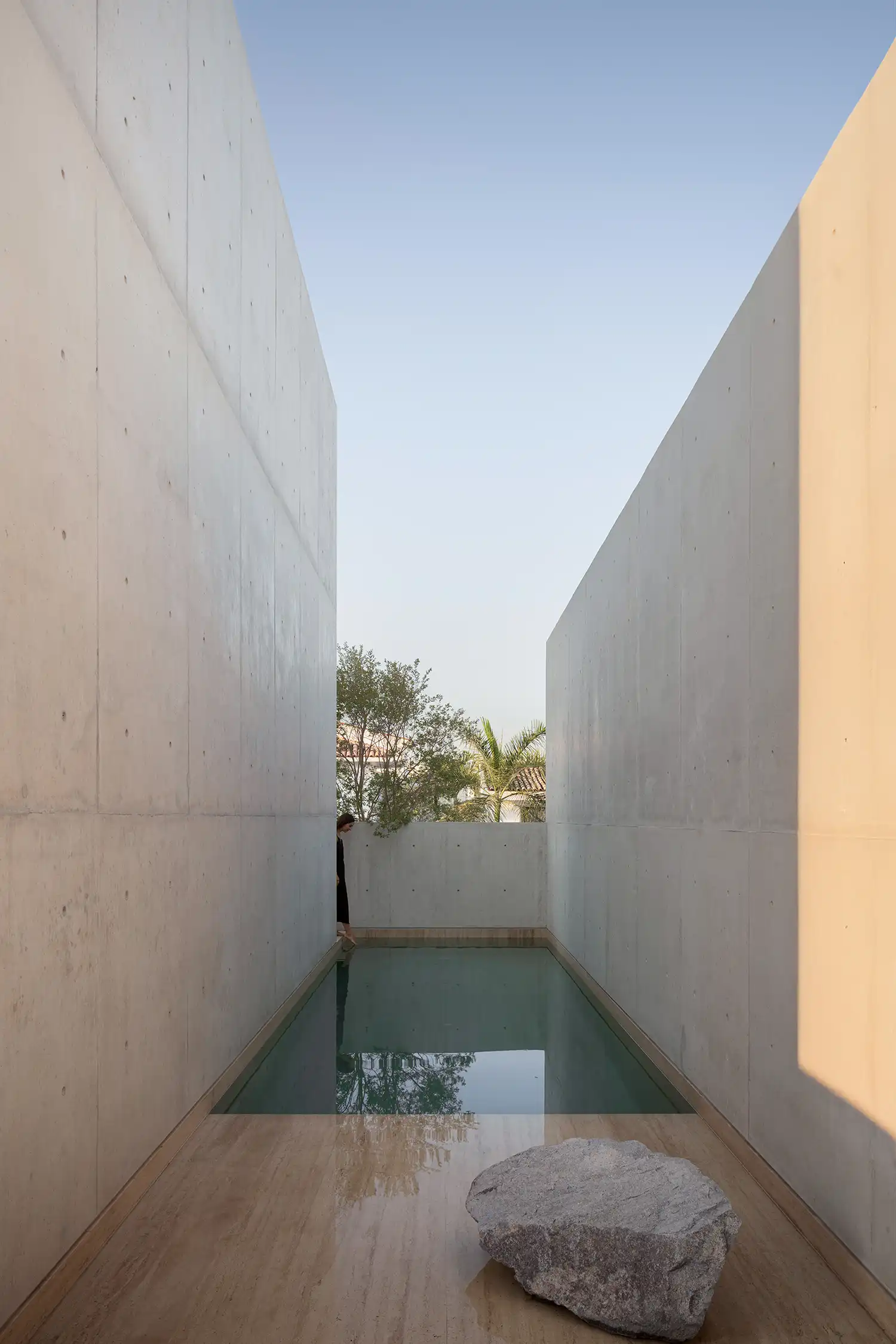
The materiality is sensory and honest. White surfaces dazzle under the sun, while heavy, textured concrete absorbs light with a delicate warmth. This is a concrete meant to age gracefully, acquiring character through use and time. Here, light does not bounce aggressively; it settles, creating a play of light and shadow that defines the interior atmosphere. A gently curved wall guides visitors into the home, establishing a welcoming threshold that emphasizes the inward-looking design.
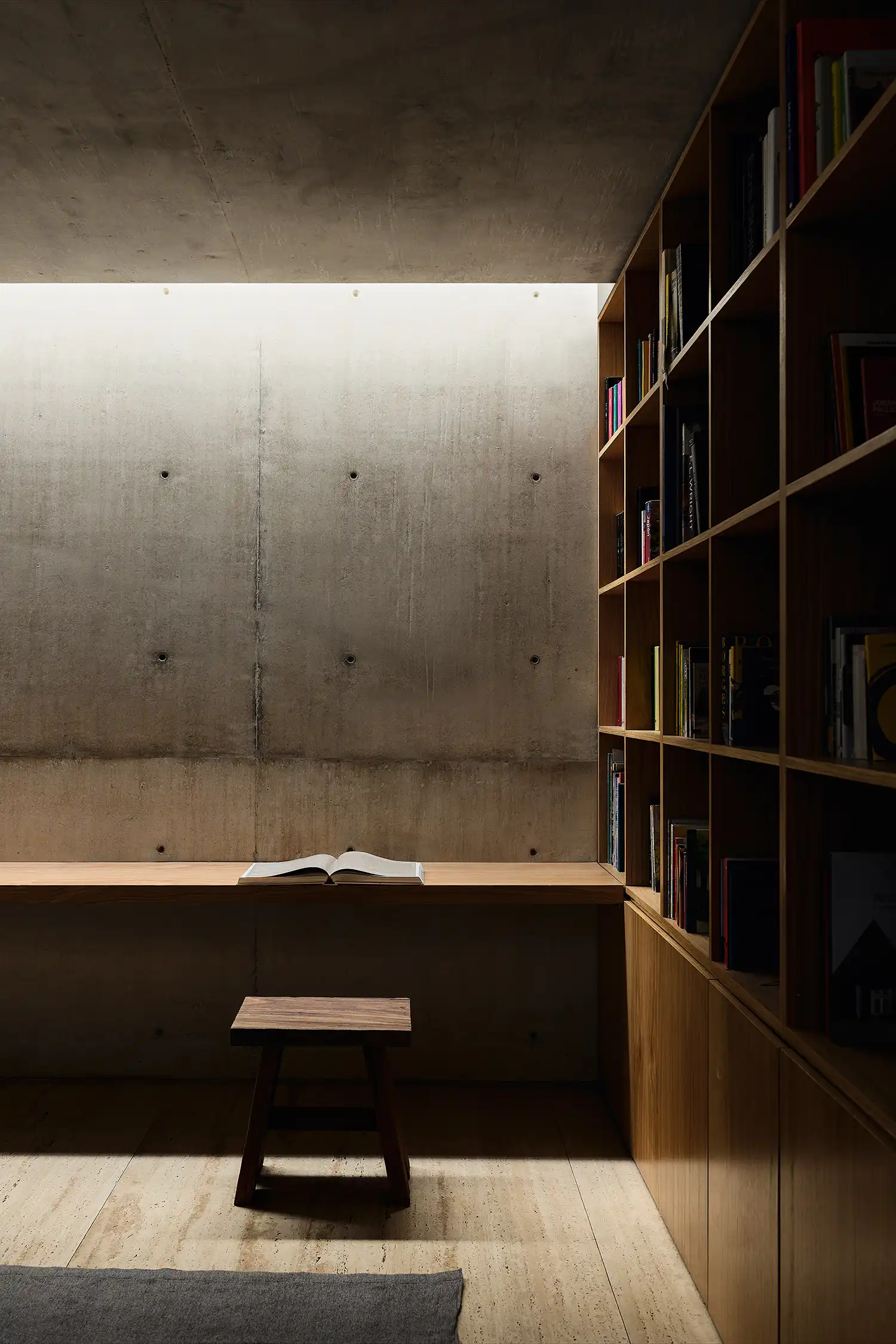
Ultimately, Casa Tao is an architecture of attention. It is a house that withdraws discreetly to offer spaces for contemplation. Its deliberate search for shade as a poetic quality brings to mind Junichirō Tanizaki’s “In Praise of Shadows,” where darkness is not an absence but a veil that ennobles, allowing beauty to emerge slowly. In this residential sanctuary, dwelling becomes a form of study, of pause, and of gratitude. Every corner invites one to remain, and every shadow is a promise of well-being, making it a standout example of sensitive contemporary design in Mexico.