


In the Czech town of Fulnek, where the landscape slopes gently beneath a historic château, a new kindergarten designed by XTOPIX architekti and Simona Ledvinková offers a quiet sanctuary. More than just a building, it acts as a gentle threshold between the carefree world of childhood and the structured beginning of school life—a last refuge of play, imagination, and discovery before the journey into adulthood. This architectural sanctuary for play is consciously crafted as a final haven of carefree exploration, nestled respectfully into its sloping garden site within a designated heritage conservation zone.
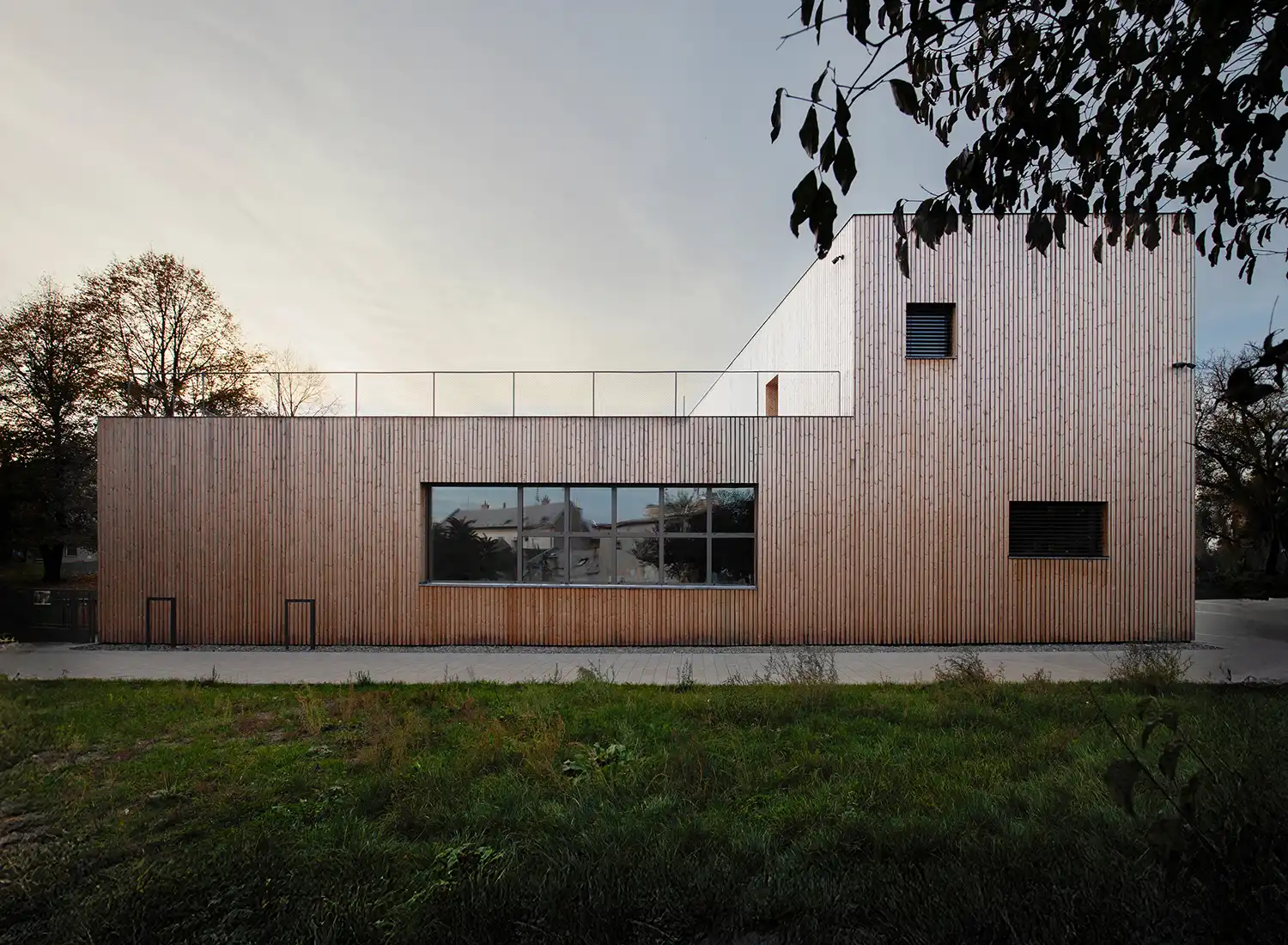
The building’s form is a masterful response to its context. Presenting a low, welcoming profile scaled to a child’s world, the architecture consciously blurs the lines between the built environment and the natural world. Its most striking feature is a charred pine façade, a deeply tactile and respectfully contextual material choice that allows the structure to fade into the wooded surroundings, appearing and disappearing behind mature trees. This approach ensures the building enters the site quietly, harmonizing with the existing natural scenery and its wild beauty.
The compact volume is ingeniously carved by two southern courtyards, or atria, which act as “inlets” where the garden penetrates the building and the interior life spills outward. This key design move ensures that every classroom maintains direct access to nature, a fundamental principle of the project that deeply connects the children’s daily routine to the outdoors. The building’s elongated form is clearly organized, with children’s spaces flowing into service areas. On the ground floor, four classrooms are paired around these shared outdoor atria, which also function as semi-sheltered entrances, facilitating a gradual and thoughtful transition from the public realm into the children’s familiar environment.
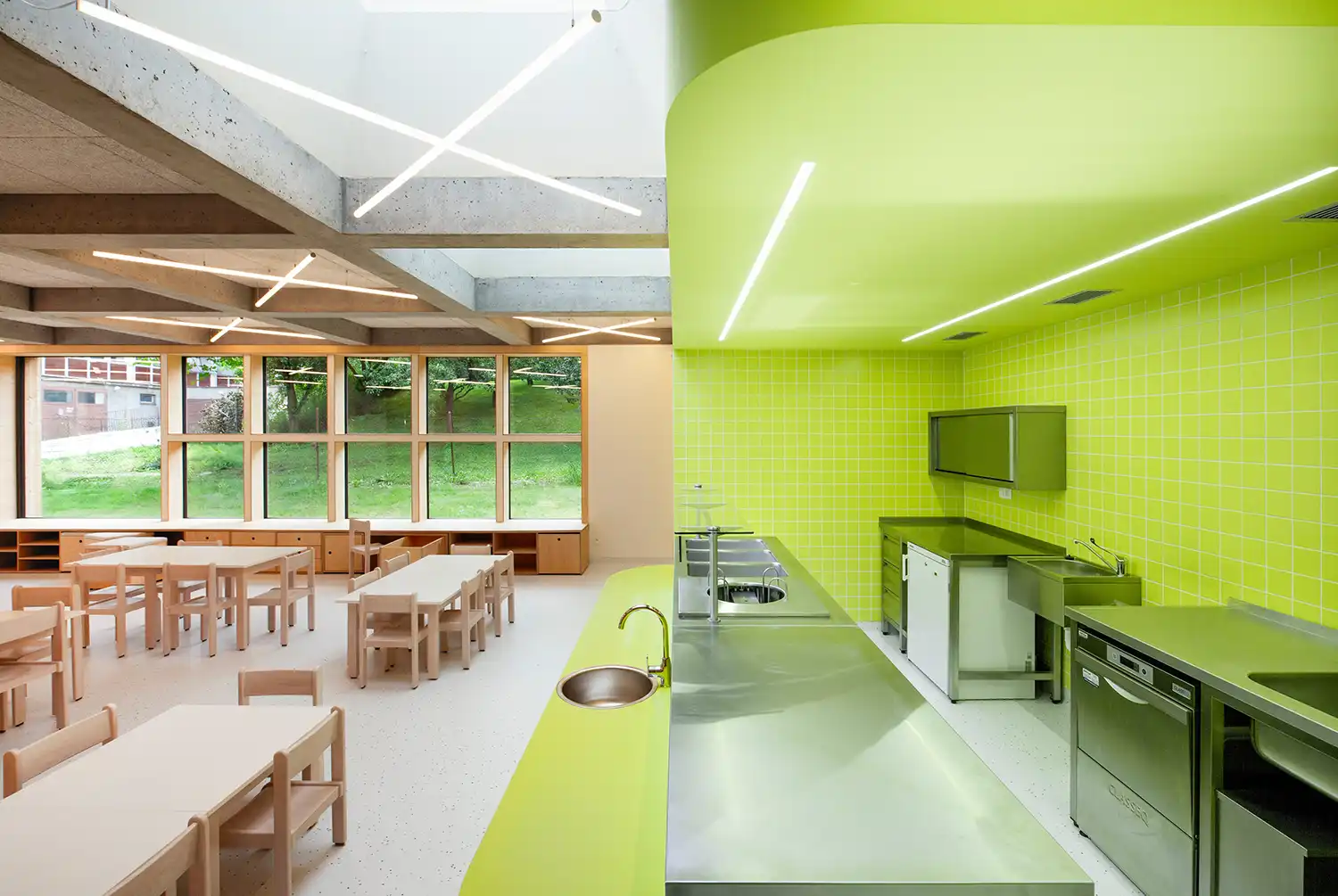
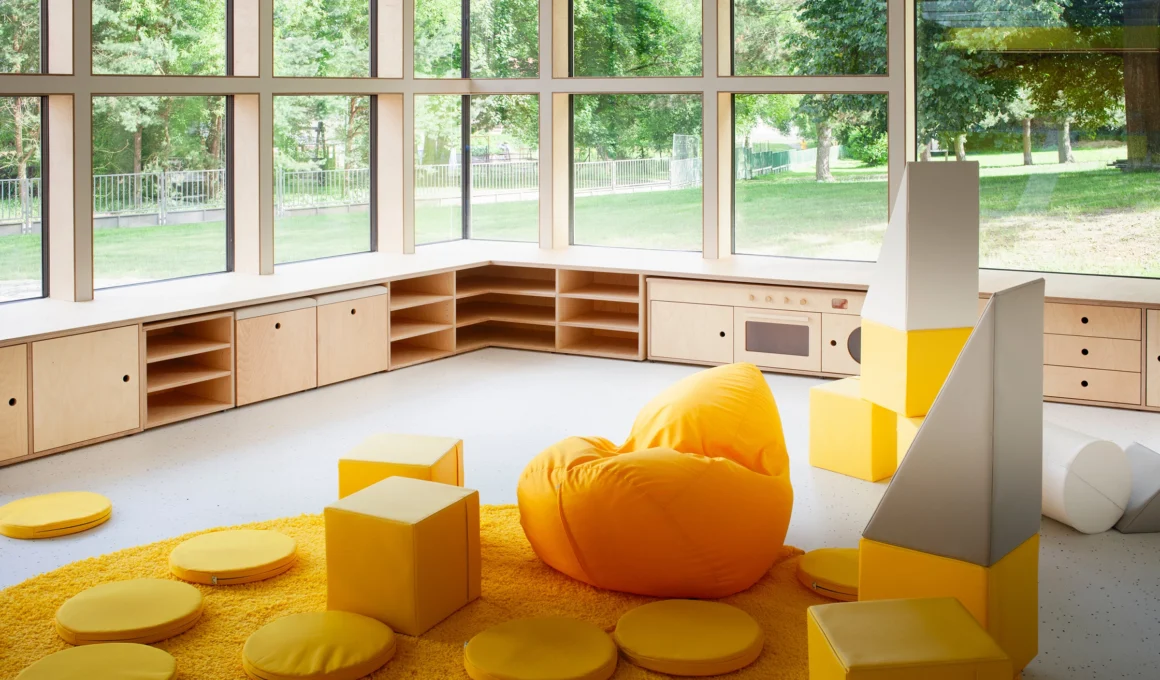
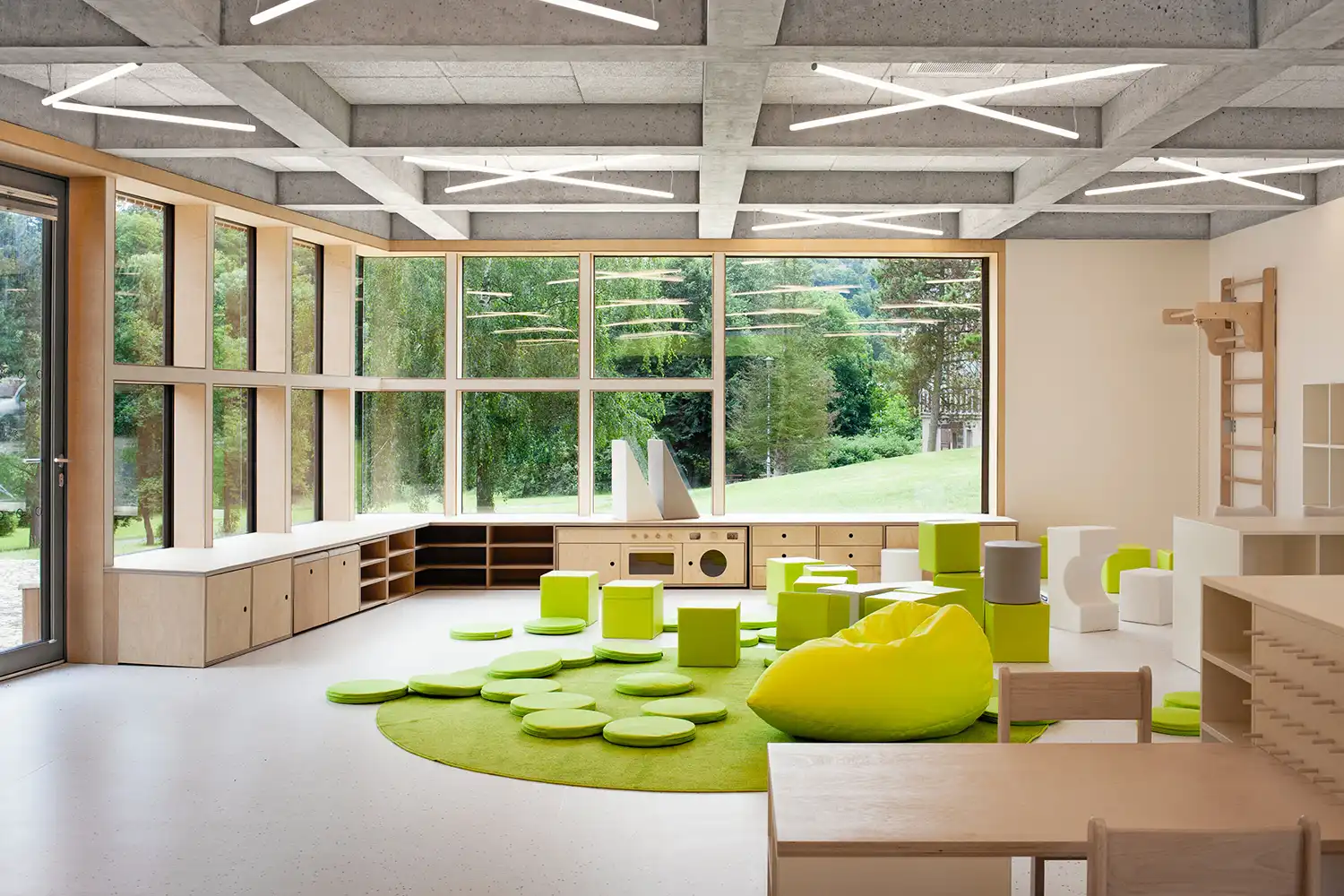
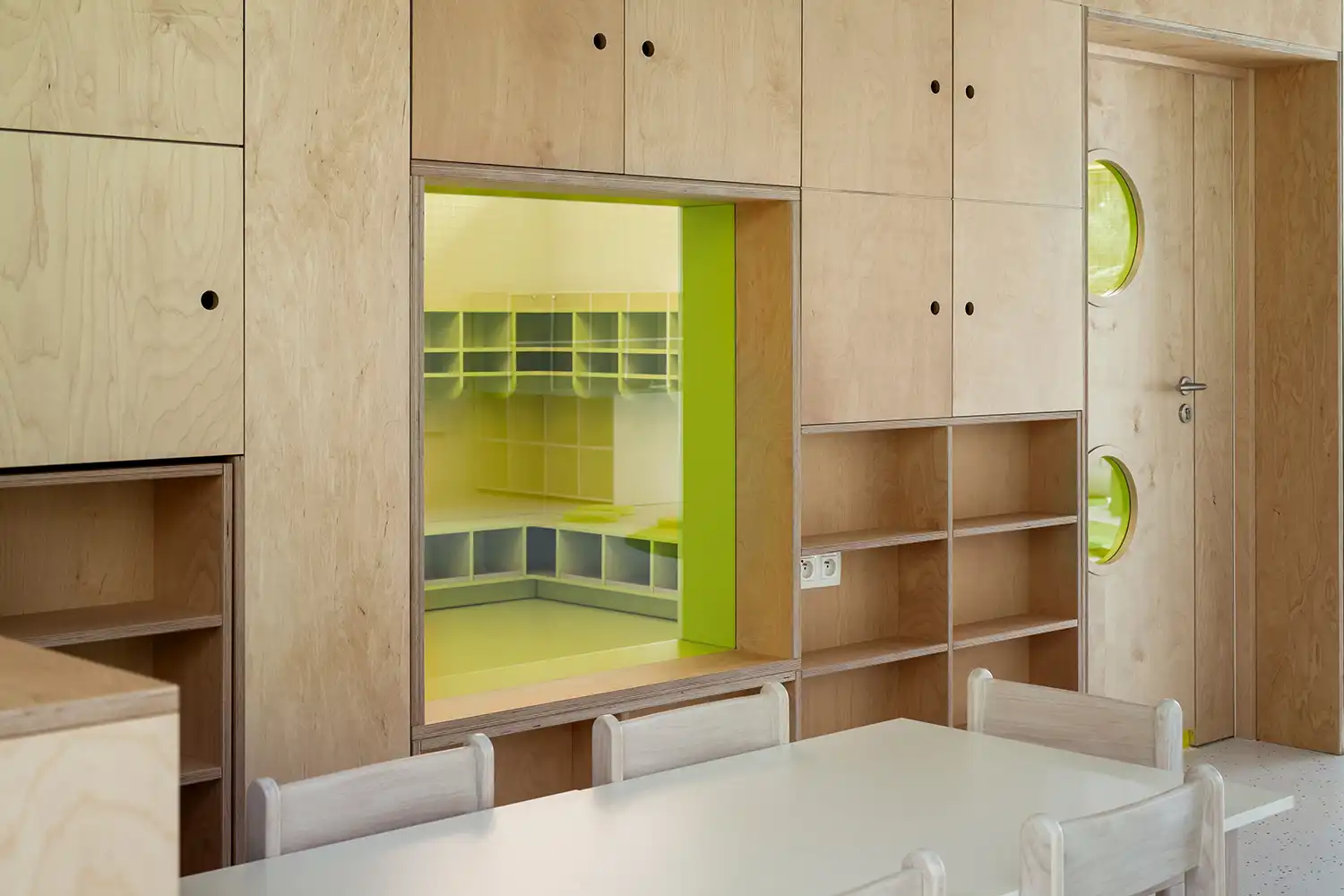
Inside, a sense of calm and order prevails, driven by a recurring square motif expressed at multiple scales. This cohesive design language is evident everywhere, from the ceiling joists and window frames down to the acoustic panels, modular furniture, and even movable storage boxes. Intuitive navigation is further supported by a unique color assigned to each classroom, reflected in the cloakrooms and washrooms, while the learning spaces themselves remain neutral. Defined by white tones, birch plywood, and polished concrete, the classrooms provide a calm, bright, and open backdrop for learning and creativity.
Ascending to the upper floor reveals a large, light-filled multi-purpose room for physical activity and community gatherings. From here, panoramic views of Fulnek’s château are further enhanced by an adjacent terrace with an extensive green roof, creating a powerful spatial and visual connection to the surrounding landscape and the town’s commanding landmark. This space elevates the experience, literally and figuratively, offering broad vistas that tie the kindergarten to the wider community and its history.
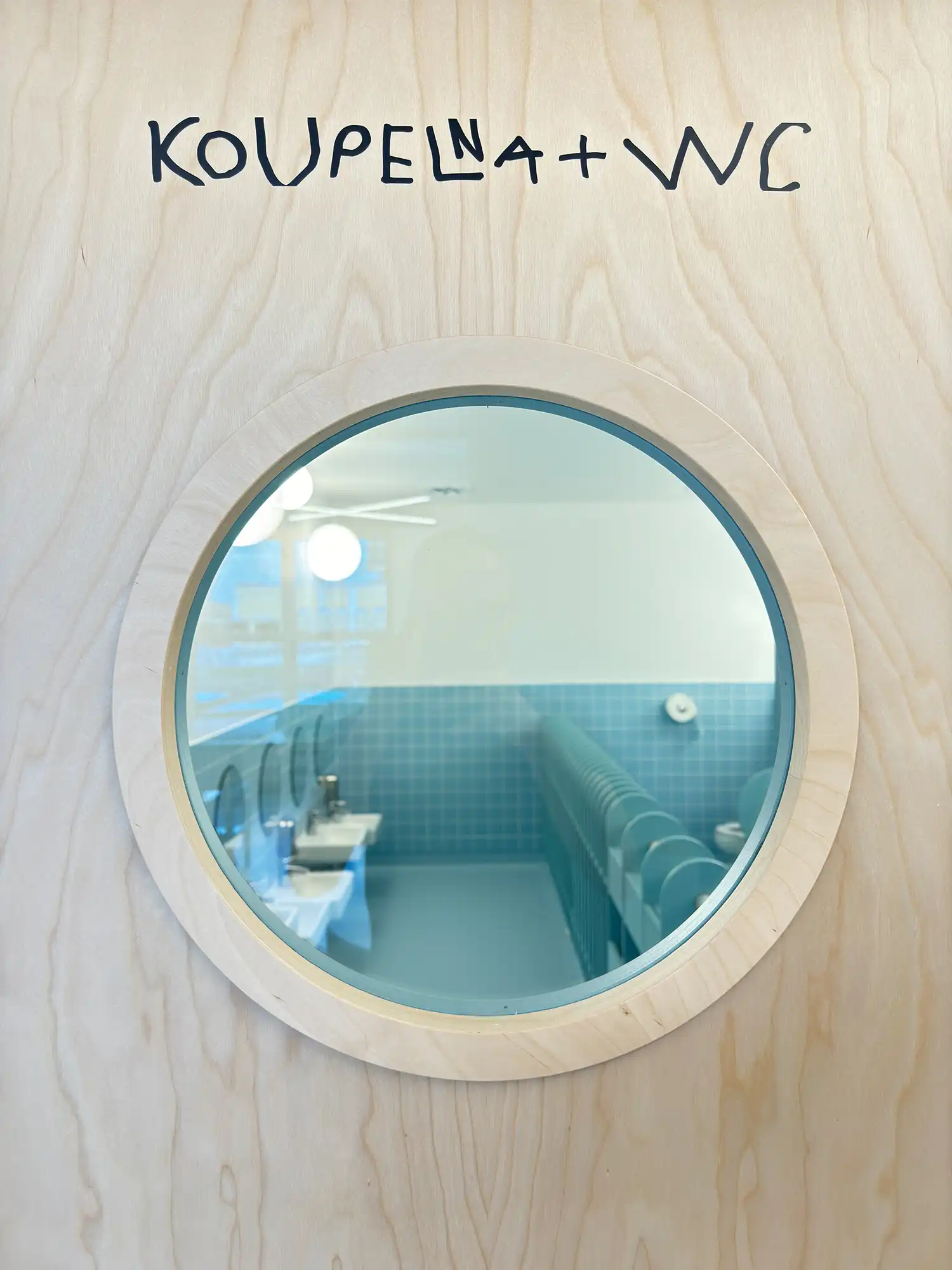
Perhaps the most poignant aspect of the Fulnek Kindergarten is its collaborative spirit, culminating in a remarkable collaborative design process with the children themselves. Through a workshop with the architects, graphic designer Jakub Wdowka, type designer Marian Misiak, and street artist Len, the children co-created a custom “kindergarten font” now used throughout the building’s signage. This initiative stands as a lasting reminder that this place was built not only for them, but meaningfully withthem, fostering a profound and lasting sense of belonging from the very first day and making the architecture truly their own.