





The shimmering edge of Sydney Harbour has welcomed a striking new addition: the Pier Pavilion, a permanent piece of civic architecture designed by the award-winning Australian firm Besley & Spresser. Born from a national competition win in 2020, this pavilion is more than just a shelter; it is a meticulously crafted host for special events and a place of public repose, offering uninterrupted views across the water. Its construction marks a significant achievement in the ongoing Barangaroo regeneration effort, focusing on revitalizing the western fringe of the city centre and seamlessly blending urban form with the natural coastline.

The architectural concept is deeply rooted in its marine setting, explicitly referencing the essential elements of land, sea, and sky. Besley & Spresser conceived the plan as a direct response to the topographical language of the harbour itself—a geometry of sweeping coves and jutting peninsulas. A captivating, complex arrangement of 86 moment-resisting columns supports the structure, creating a double colonnade that screens and modulates the relationship between the interior and the public domain outside, while a large roof oculus creates a dramatic, roving circle of light that balances daylighting throughout the day.

At the heart of the project’s identity is its revolutionary material application: Oyster Terrazzo. This is not a conventional finish but a proprietary material specially formulated by the studio. The process involved a year of intense mix experimentation and testing, combining whole Sydney Rock Oyster shells with a variety of recycled aggregates to create a bespoke, variegated surface. When honed, the material expresses the distinctive, pearlescent forms of the shell across every plane it touches, providing the pavilion with a palpable, organic texture.

This material choice is a profound statement on sustainable design and local connection. The use of Oyster Terrazzo ties the contemporary structure directly to its ancient site, where these mollusks have thrived for millennia, continuing long traditions of local materiality in architecture. Crucially, nearly half a million oyster shells were recycled and used in the construction—a monumental diversion of waste that would otherwise have been committed to landfill. The material is expertly hung in the manner of traditional stone cladding from the ceiling, walls, columns, and fascia, celebrating recycled materials at an architectural scale.
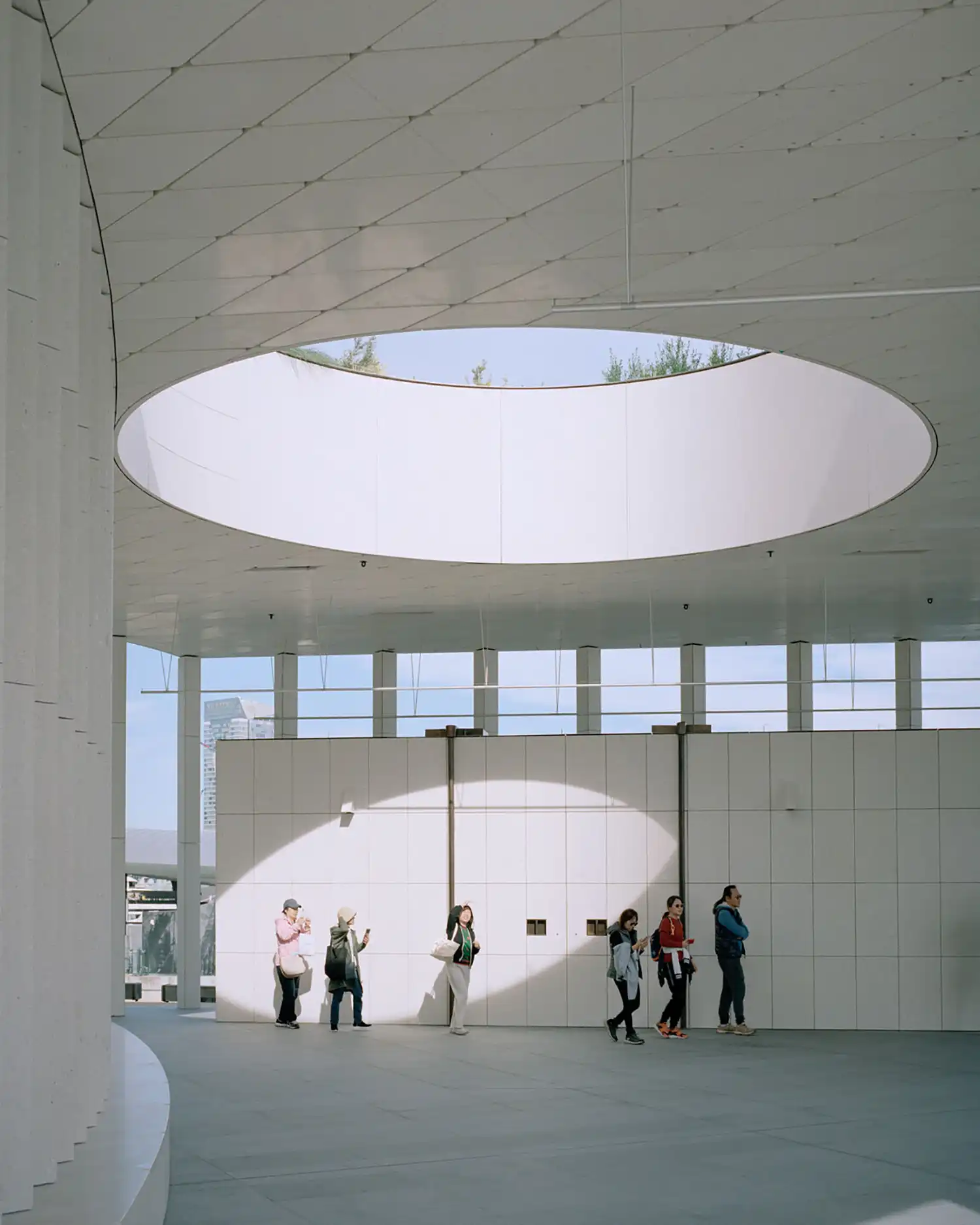
Structurally, the building achieves a magnificent long free span, with its intricate roof trusses resolving elegantly around the central oculus. Within the main enclosure, a separate, freestanding volume houses all the service requirements—a dedicated servery, bar, store, and technical area—essential functions that fully support the building’s primary role as a dynamic events venue. All necessary service routes, including drainage, electricity, and communications, are ingeniously concealed within the hollow profiles of the perimeter columns, avoiding the clutter of exposed downpipes and risers.
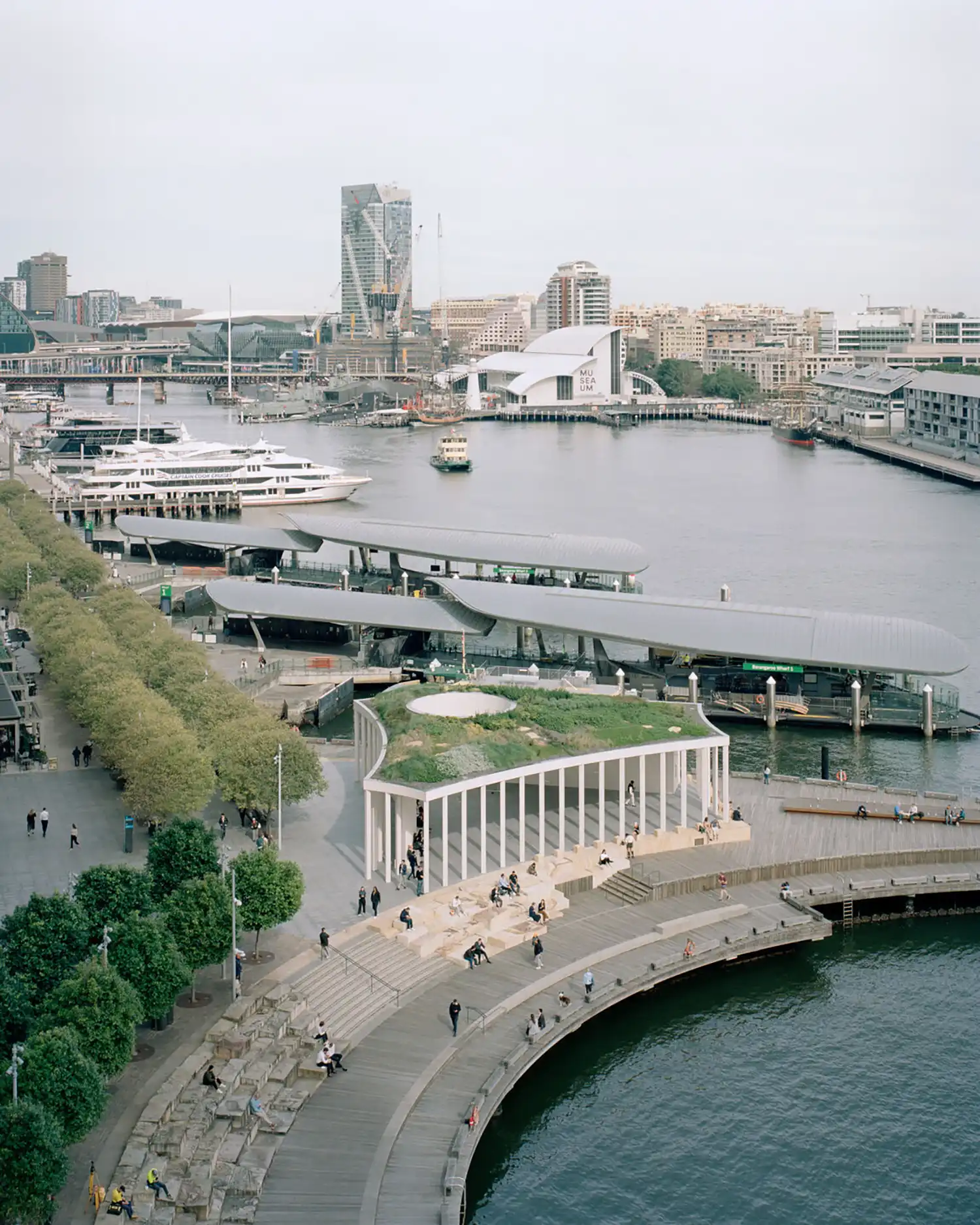
Crowning the pavilion is the dynamic landscape roof, supported by a folding laminated timber deck. This living canopy features a selection of endemic planting, integrated with local sandstone and hollow logs typical of the surrounding harbour headlands. This attention to detail extends beyond aesthetics; the plant species were deliberately sought out to attract native insects and birds, thereby creating crucial microhabitats that integrate architecture and nature. The Pier Pavilion stands as a sophisticated model for future urban development—a functional, sustainable, and materially rich landmark that honors the history and ecology of Sydney Harbour.