




The burgeoning field where efficient logistics meets elegant prefabricated architecture finds a striking new example in Casa Caballete, a highly adaptive dwelling commissioned by the Grupo Forestal company in Florida, Uruguay. Designed by the Chilean firm Urzúa Soler, the project was conceived with a remarkably flexible design program, allowing it to transition seamlessly between uses. Its primary function is to provide accommodation for company workers and associated visitors, yet it also serves as a private, restful retreat for the families of the firm’s employees when not in work rotation, demonstrating a pragmatic and humane approach to sustainable design and occupational well-being.
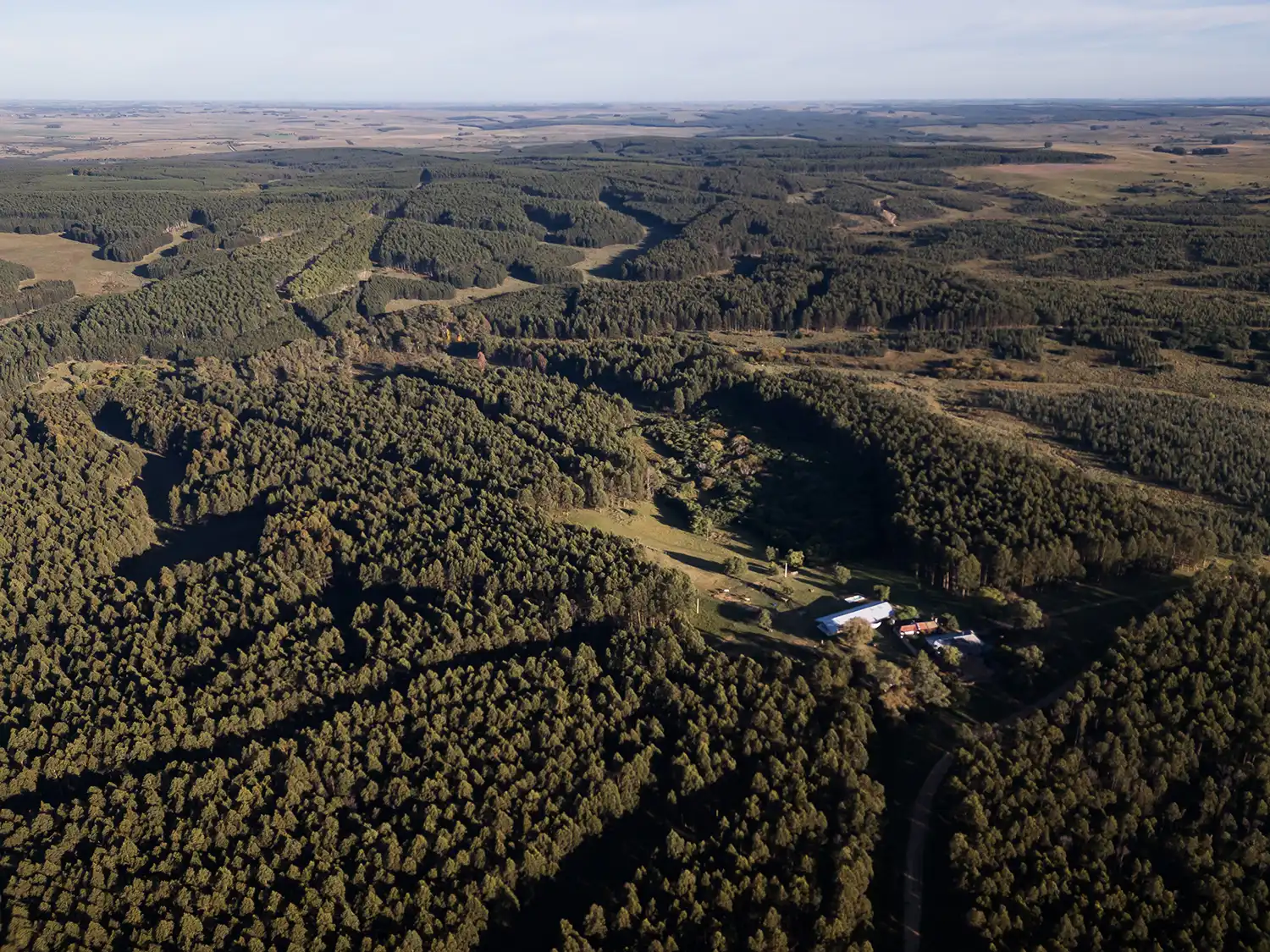
The execution of the project is a masterclass in remote construction, a strategy driven by necessity and innovation. Urzúa Soler managed the entire build process from Chile, necessitating a comprehensive prefabrication approach. Every component of Casa Caballete was carefully standardised and manufactured to facilitate its complex logistical journey across the continent, from the Pacific coast to the Atlantic. This systematic planning was crucial not only for the remote management but also for a significant reduction in project costs, especially given that Uruguay does not possess an internal production base for the necessary structural timber.
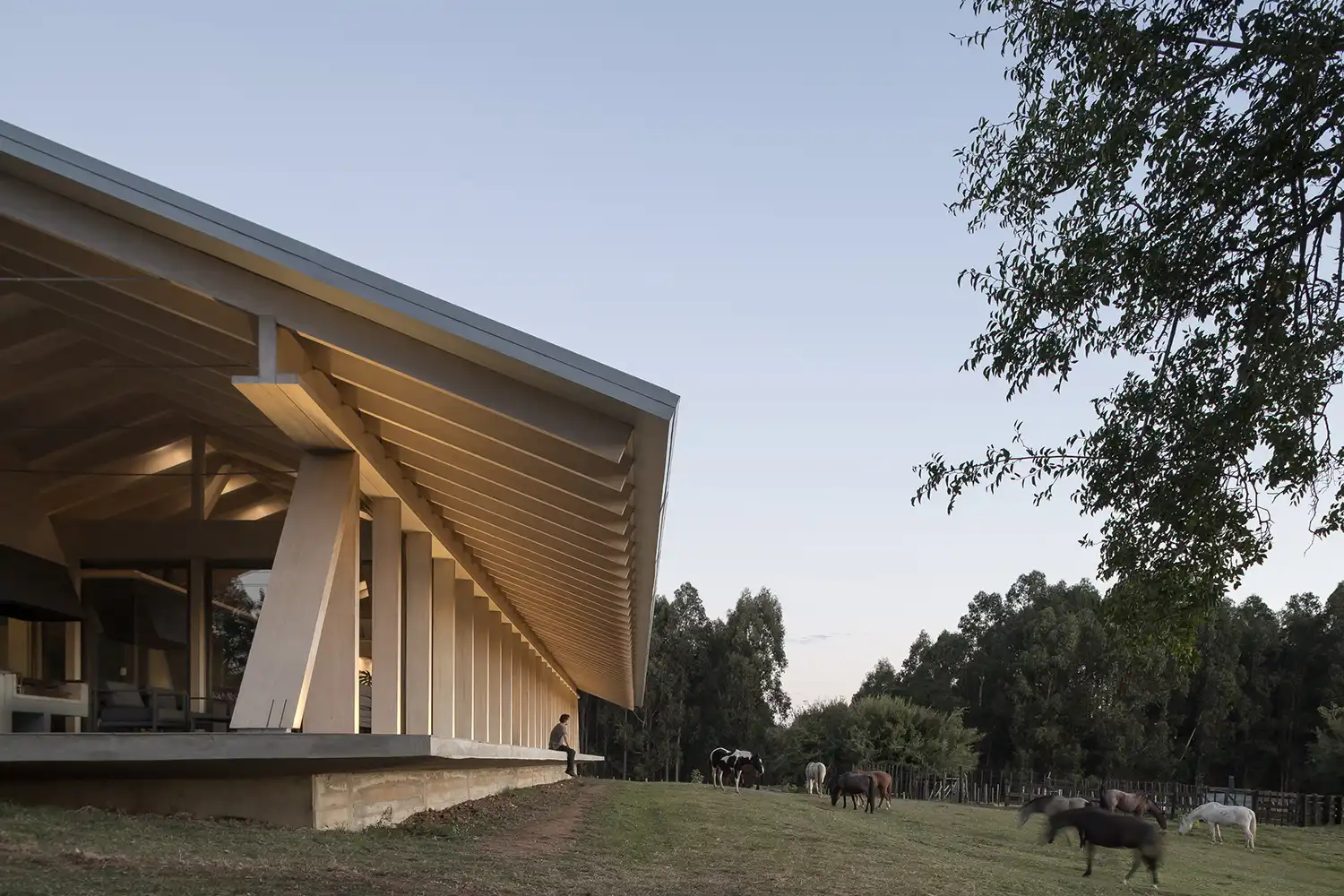
At the heart of the architectural statement is an honest and powerful expression of its structural system, which Urzúa Soler deliberately chose to leave exposed, allowing it to function as the building’s final interior and exterior finish. The entire construction is based on a deceptively simple assembly of wooden pieces. This modular design principle was so effective that local teams were able to erect the main house structure in an astonishingly short period—just one week—a testament to the precision of the initial fabrication and planning phases inherent in high-level prefabricated architecture.
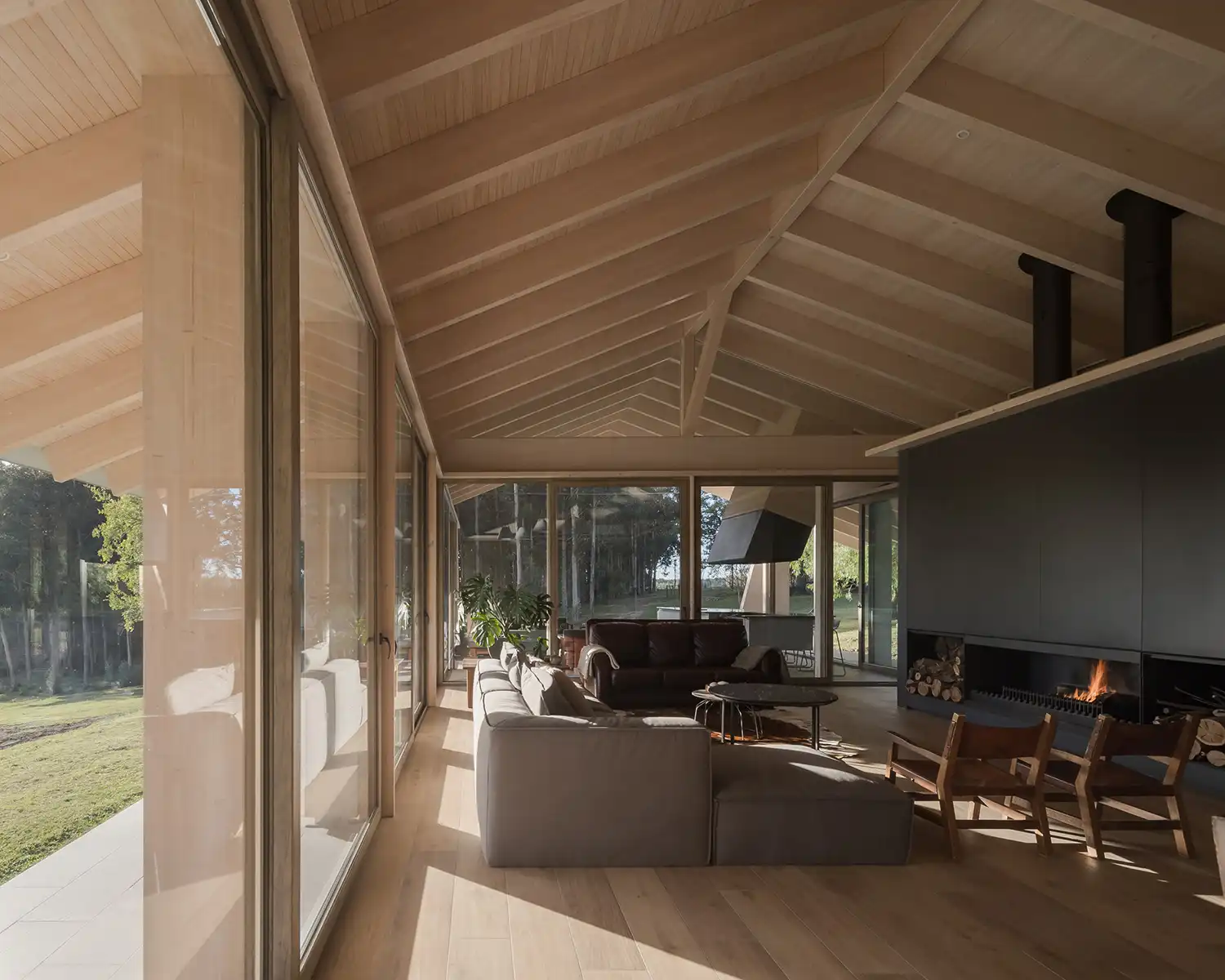
The defining element that gives the project its name, Caballete (Spanish for easel or trestle), is the prominent trusswork. The main construction is defined by two continuous lines of structural columns and beams, which are then reinforced by striking diagonals. These elements act as trusses, or caballetes, providing the lateral stability and robust support required for the large, characteristic pitched roof. This clear, repetitive rhythm of the wooden structure gives the home its distinct identity, merging engineering rigor with architectural clarity in Florida, Uruguay.
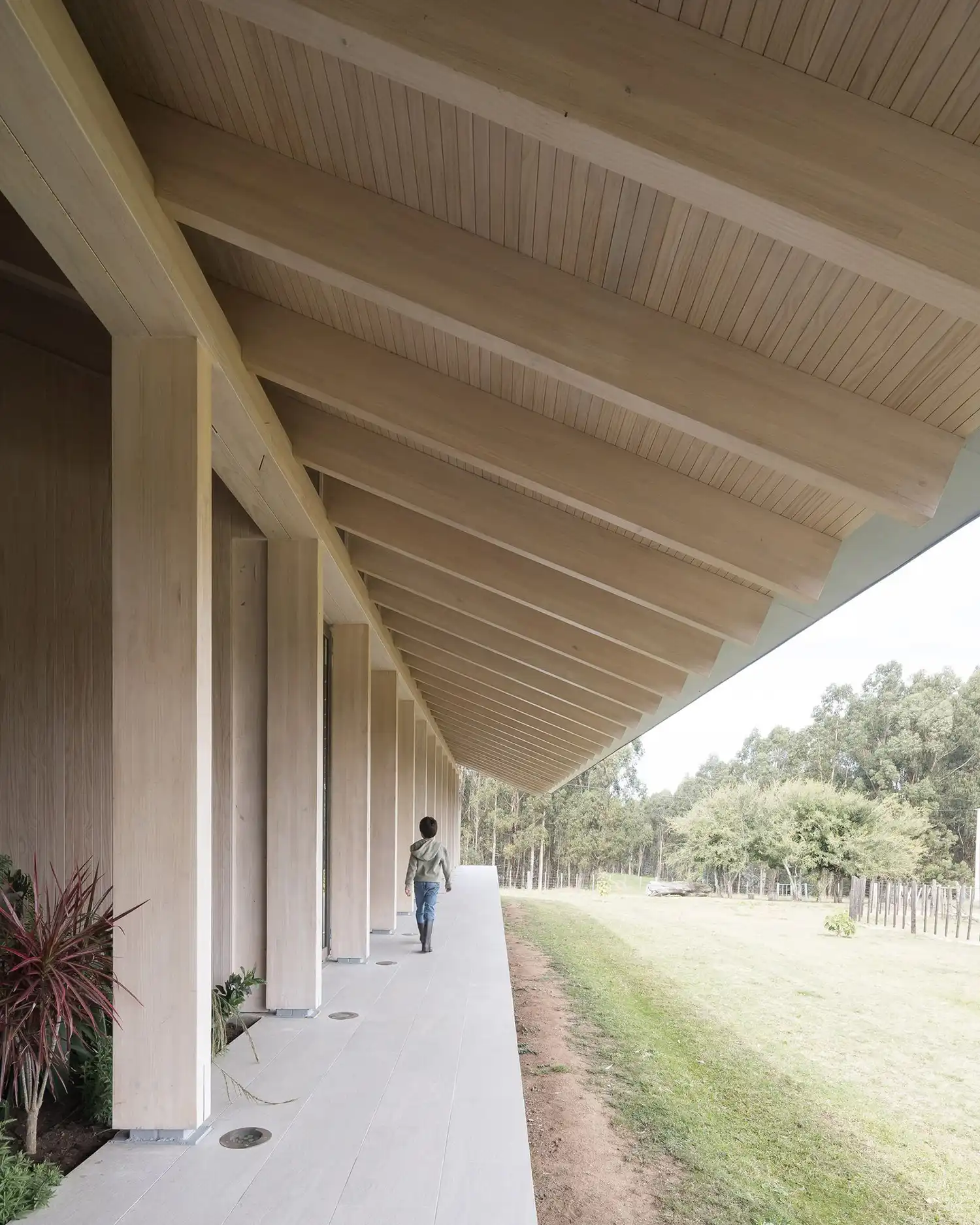
The process begins with a foundation that is highly responsive to the site itself. A solid base was strategically employed to adapt to the inherent gradients of the sloping terrain, a pragmatic necessity that also serves an architectural purpose by elegantly elevating the entire home from the ground. Once this stable plinth was established, the primary structural system of columns, beams, and the distinctive trusses was mounted, followed swiftly by the standardised enclosure panels, ensuring maximum efficiency and minimal site disturbance throughout the phase of the remote construction.
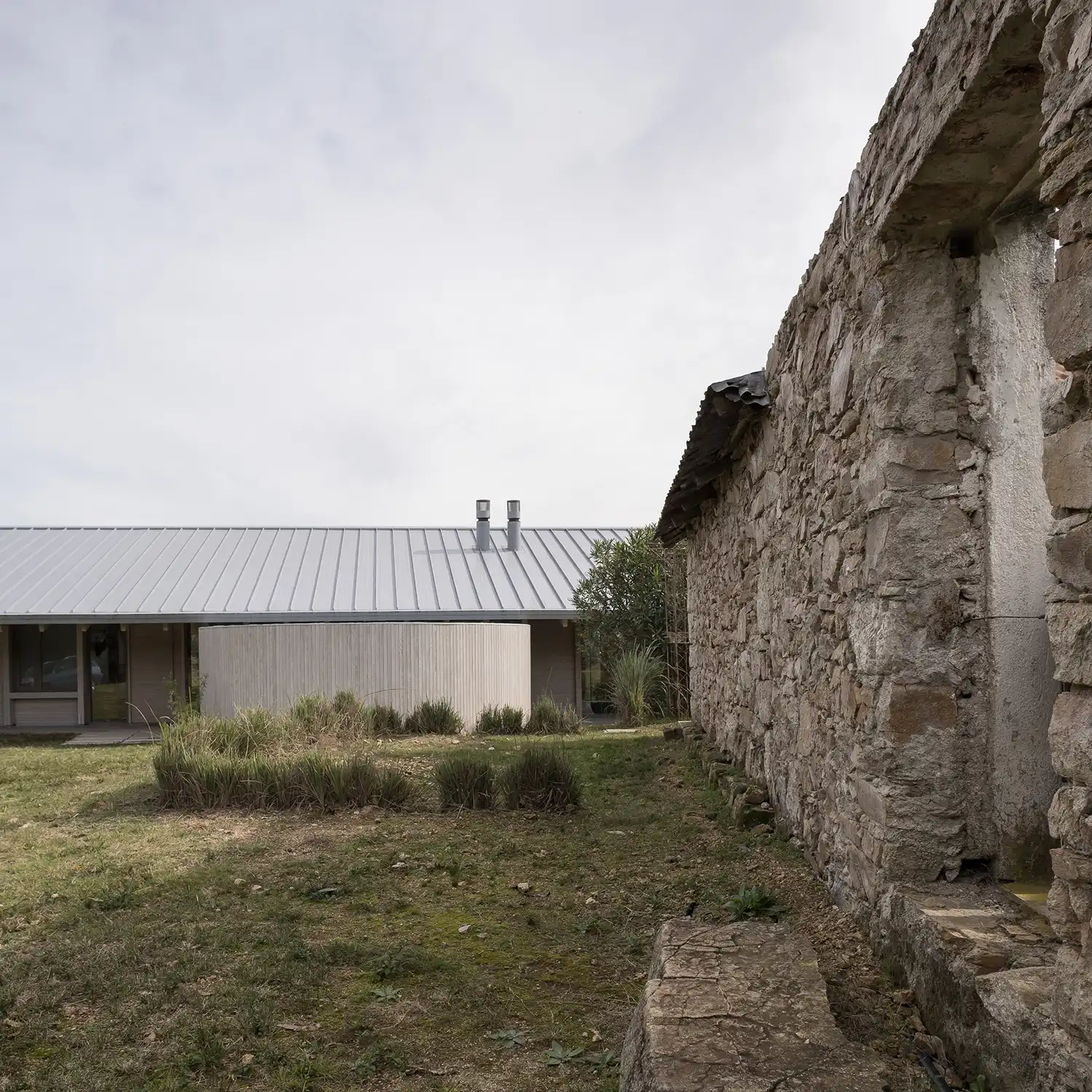
Internally, the flow of Casa Caballete is intuitive and highly functional, perfectly supporting its dual-use brief. The common areas—including the living, dining, and kitchen spaces—are situated centrally, forming the social nexus of the dwelling. Flanking these central spaces are the bedrooms and terraces at either end, allowing for a degree of separation and privacy. Unifying the whole composition is a generous covered perimeter corridor, a crucial element that not only manages circulation but also thoughtfully frames the surrounding landscape, connecting the internal life of the home to the vast exterior of Florida, Uruguay and solidifying its role as a beautiful and practical example of modern timber construction.