

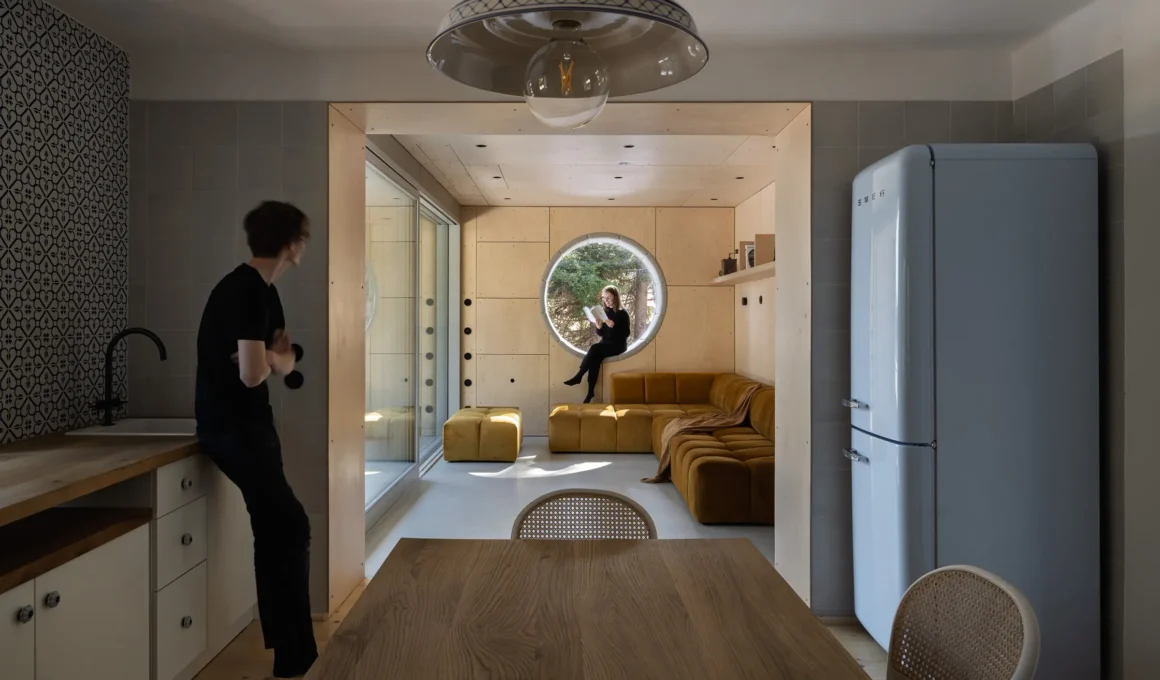
The Bohemian Forest has long been home to a particular strain of vacation-housing, and it is here, along a road that trails deeper into the majestic landscape, that Studio Plyš undertook the sensitive yet spirited transformation of the Borová Lada Cottage. This late 19th-century dwelling demanded a respectful architectural renovation—a process that wasn’t about erasing history but about celebrating the building’s survival through time. The design philosophy hinges on a compelling balance between reverence for the past and a playful introduction of modern living, ensuring the structure remains a considerate presence rather than a loud new neighbour in the historic Czech Republic village.
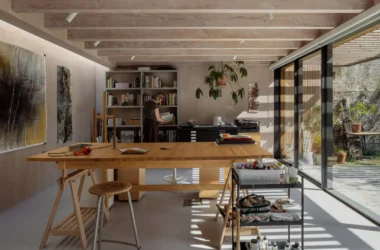
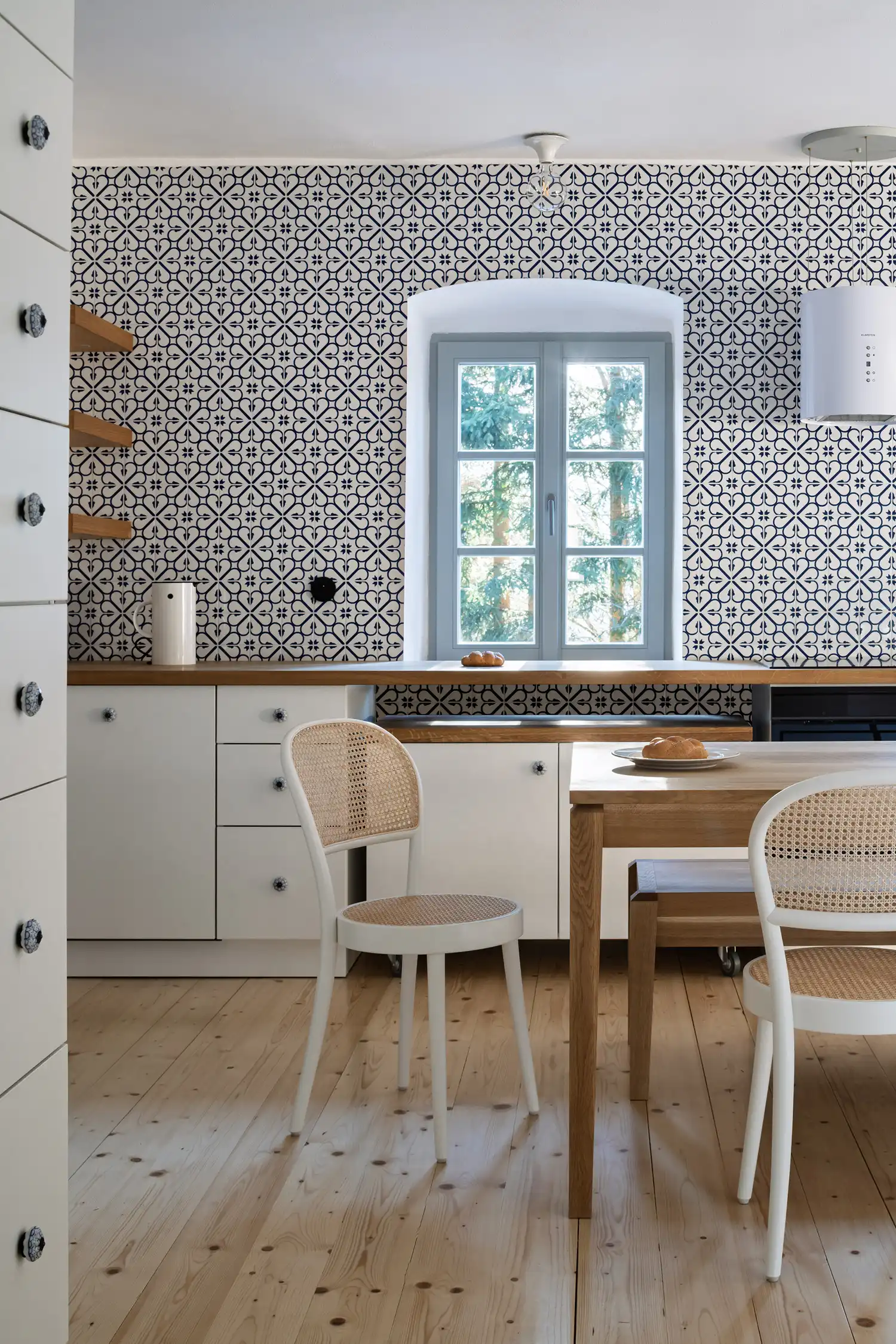
The approach to the cottage’s deep history treated its flaws as design opportunities. The structure, which required cleansing from ill-advised 20th-century modifications that had caused damage, now sees its formerly compromised core reborn as the home’s vibrant heart. This new living area opens expansively into both the garden and the kitchen housed in the preserved section. Crucially, the sole barn underwent a bold vertical extension, transforming it into a highly versatile space. This transitional zone sits halfway between inside and outside, warmth and cold, designed to accommodate everything from everyday use to atmospheric autumn gatherings.
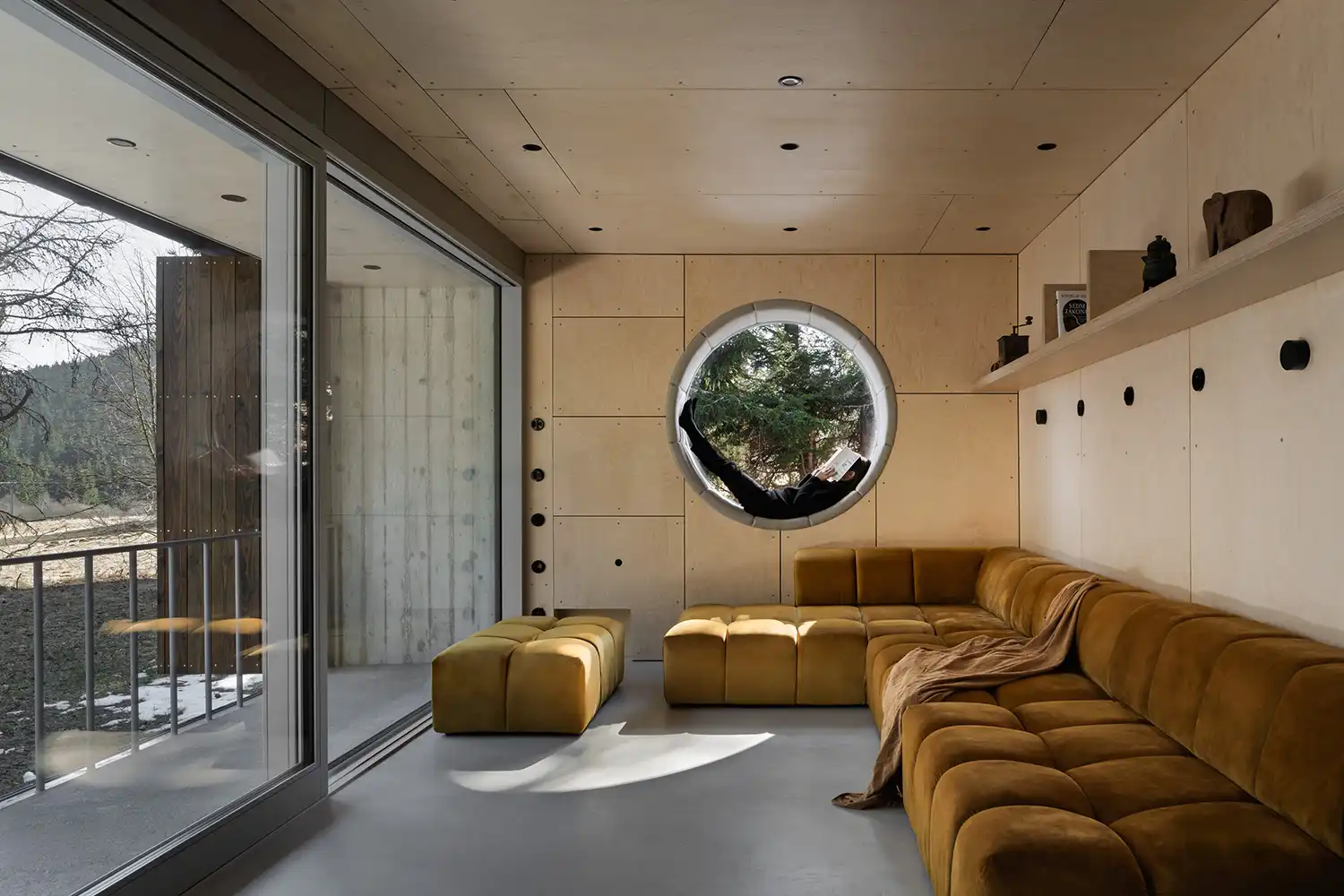
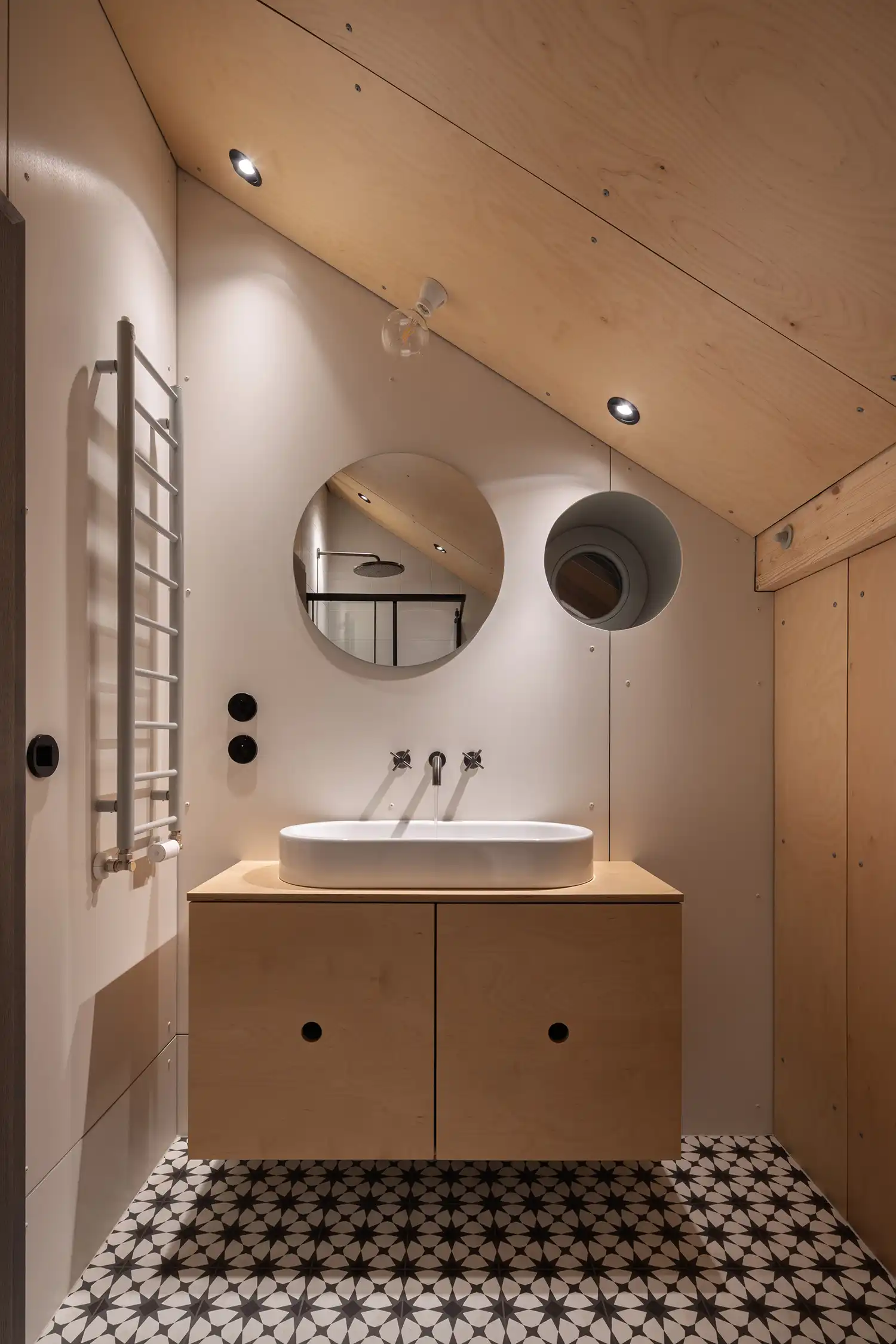
In a move that preserves the integrity of the historic envelope, Studio Plyš introduced a witty, distinct inserted volume—quite literally screwed into the building. This contemporary addition resides within the attic and the former stalls area, neatly housing all modern functions, including sanitary facilities, without structurally compromising the original shell. Clad in natural and recycled fibre-cement boards over a lightweight timber structure, this insulated segment maintains a crucial separation from the historic masonry, ensuring the traditional vapour-open character of the original walls remains intact.
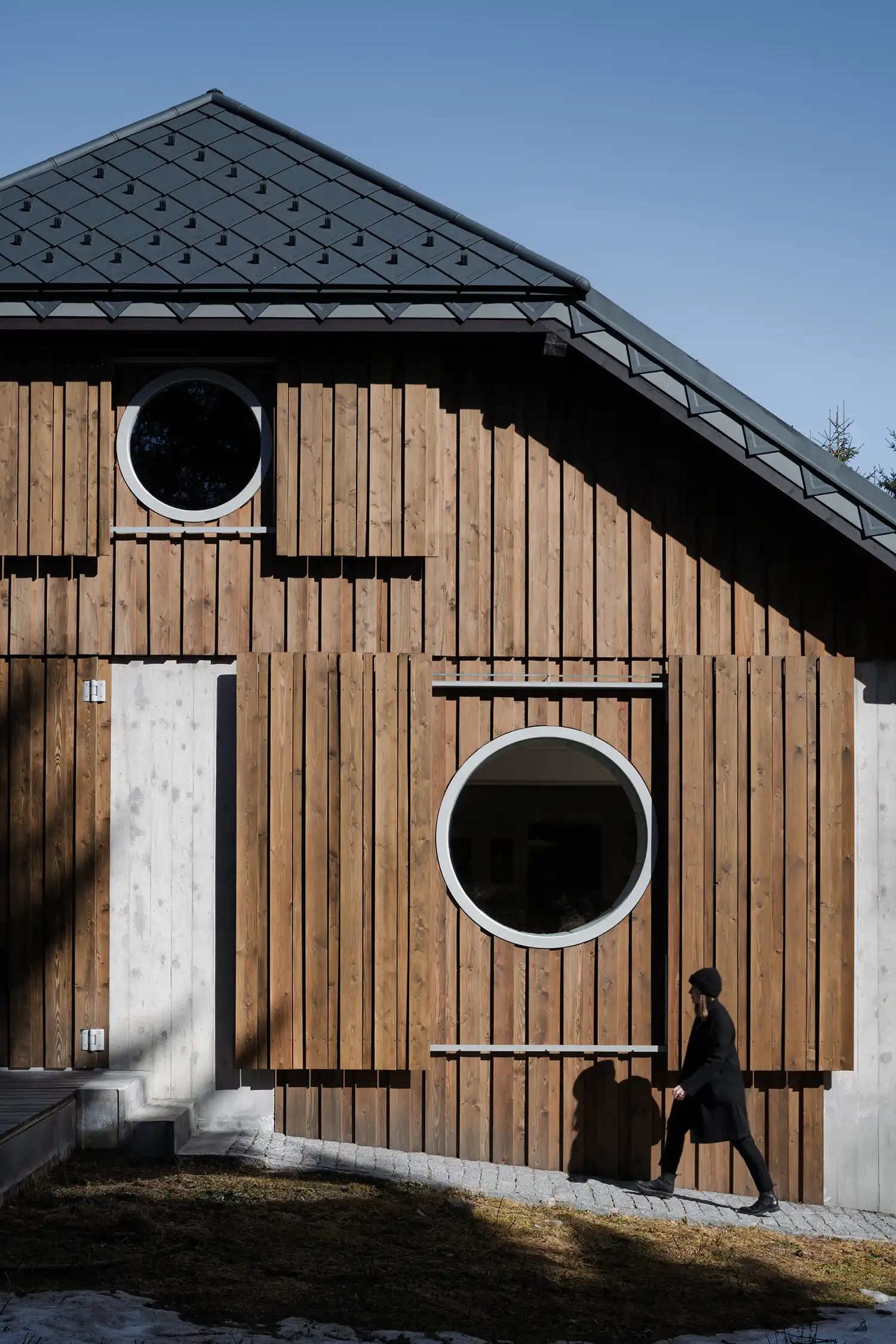
A careful consideration of the facade ensures the cottage’s silhouette remains unchanged, a nod to its deep-rooted context. However, the introduction of dramatic large-format glazing invites copious daylight and frames the surrounding landscape dialogue with cinematic clarity. These expansive openings are thoughtfully protected by large, functional shutters, shielding the interior from both harsh weather and curious eyes. In a gesture of material honesty common to contemporary design, the exposed concrete elements and visible shutter rails proudly declare the new layer brought by the renovation, intentionally avoiding the need to hide the interventions away.
Underpinning this renewal is a significant focus on structural integrity and sustainable technology. Three massive, reinforced concrete columns now support the roof, cast alongside the new foundations of the barn. While the original roof truss was salvaged, heavy concrete tiles were replaced with lighter aluminum, and steel beams provided necessary reinforcement. This strategic move created room for proper thermal insulation and new living areas under the roofline. Furthermore, while a preserved tiled stove provides atmospheric heating, the home’s everyday climate is managed by an air-to-water heat pump integrated into a central smart home system.
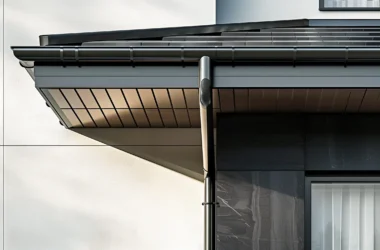
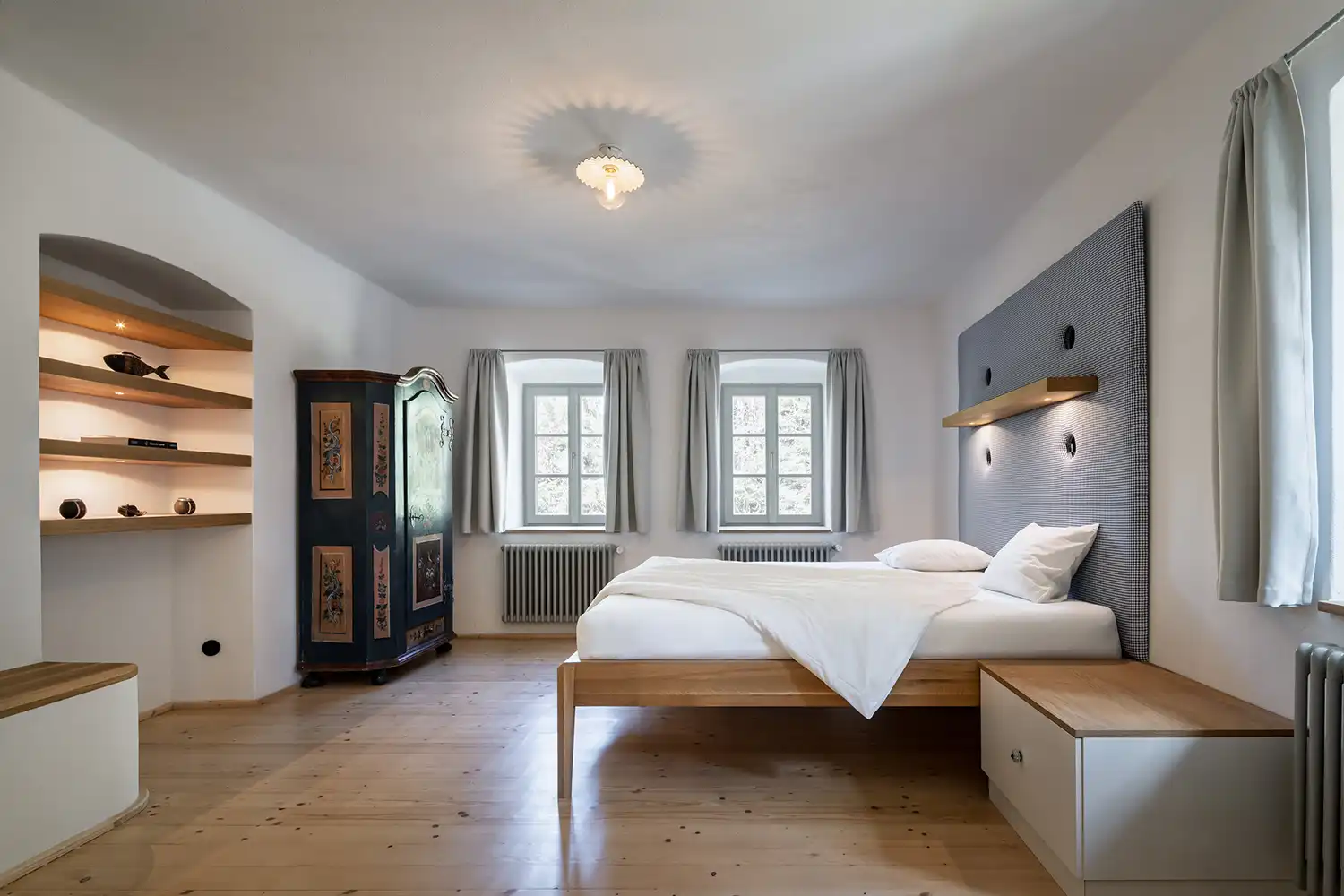
The meticulous attention to detail extends into the interiors, where the balance of new and old culminates in the custom-made furniture series named Bedřich—a charming tribute to the carpenter’s dachshund. These solid oak pieces, including a folding dining table, bed, and bench, were designed with almost engineering precision to complement the home’s refurbished antiques. Finally, paying homage to the spirit of vacation-housing tradition that kept the cottage alive, the roof edge features an insulating detail mimicking the zmijovka, the classic conical cap worn by generations of Czech cottage-goers, transforming this act of preservation into a truly living, playful poetry suitable for multigenerational living.