



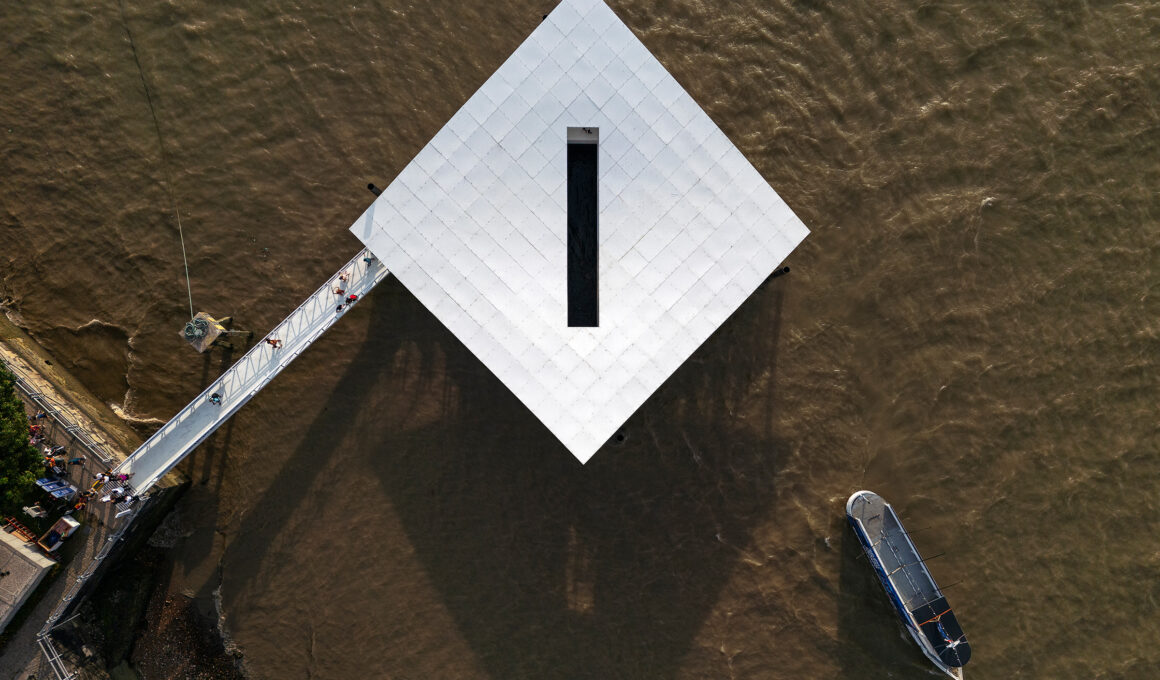
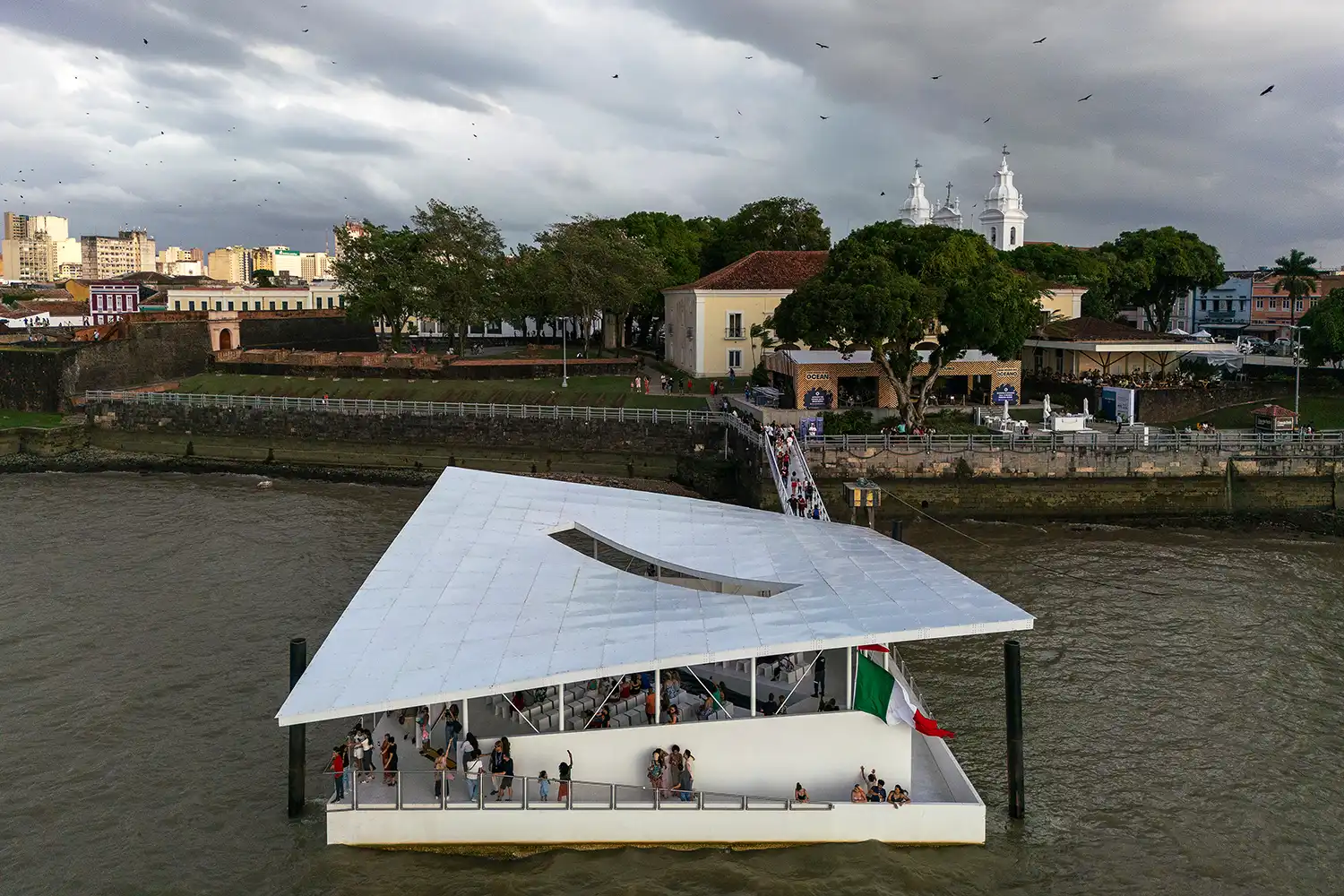
The global dialogue on climate change has found a striking new stage with the unveiling of AquaPraça at the UN Climate Change Conference COP30 in Belém, Brazil. Designed by the innovative firms CRA-Carlo Ratti Associati and Höweler + Yoon, this floating public square for global climate dialogue served as an integral part of the Italian Pavilion and a key landmark for the summit. Following its debut in Venice, Italy, in a simpler form, the completed structure now anchors along the Guajará Bay within the Amazon River system.
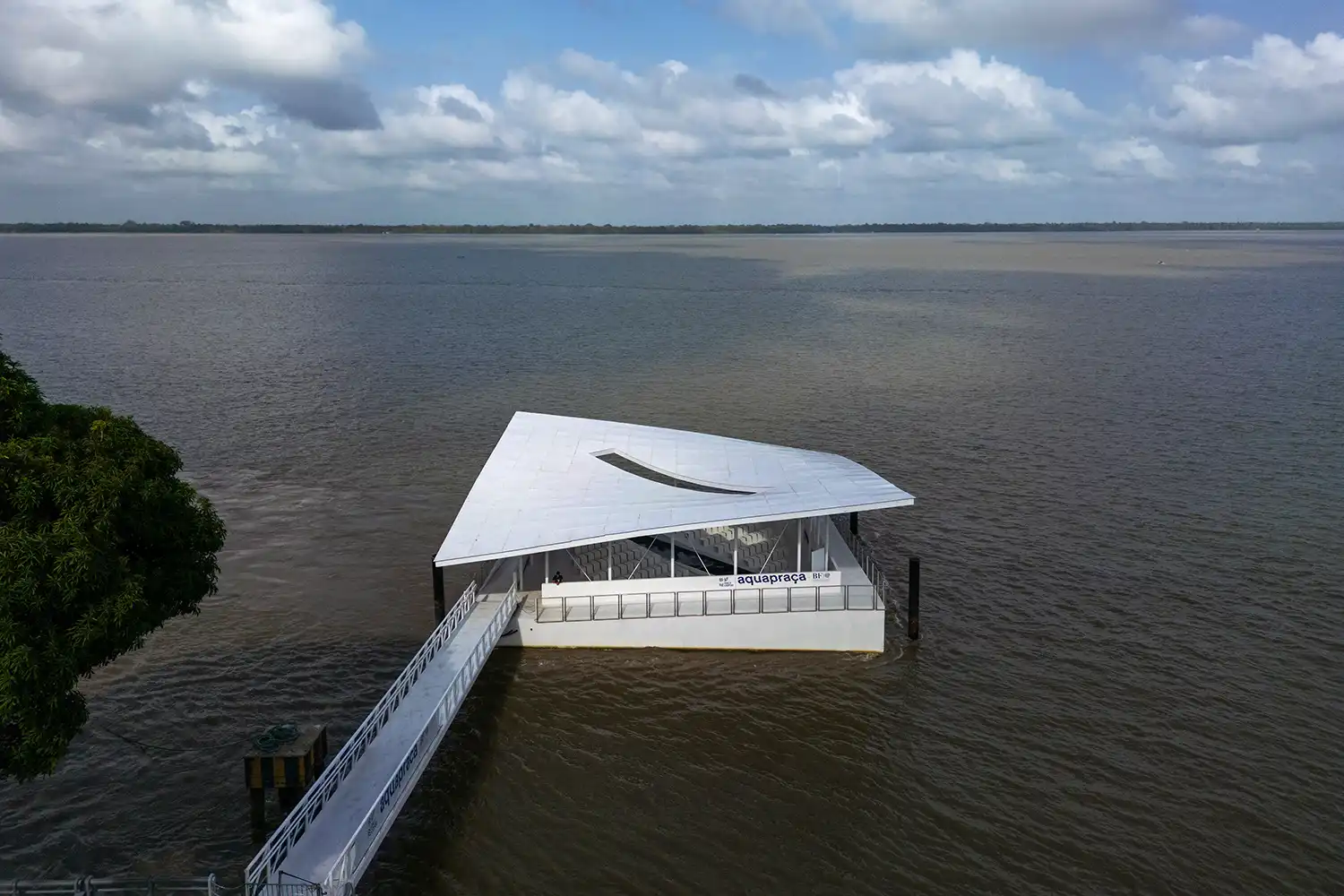
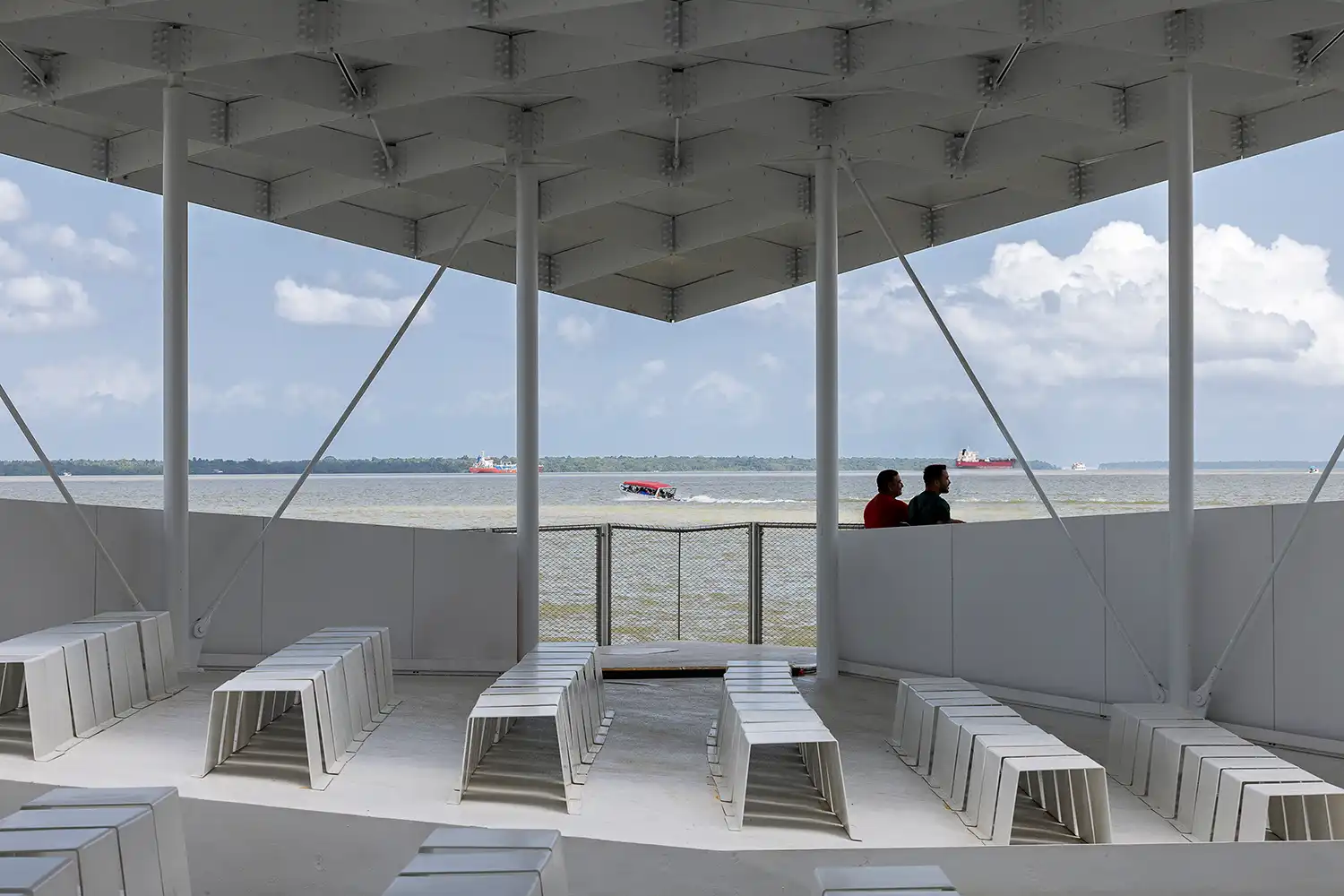
Measuring 400 square meters (4,000 square feet) , the platform is conceived as a global agora where visitors can engage with the impacts of climate change at a human scale. The adaptive architecture of AquaPraça is particularly relevant in the Amazon Delta, where daily tidal shifts can reach up to four meters, revealing the underwater landscape. Its floatingdesign cleverly employs Archimedes’ principle , allowing it to mediate between varying water levels and human activity, giving visitors a unique eye-level experience of natural and built systems. As J. Meejin Yoon of Höweler + Yoon notes, the platform is “both literal and figurative” for deepening our collective understanding of sea level rise.
More than just a novel structure, AquaPraça is a symbol of international cooperation between Italy and Brazil. It was presented at COP30 by Italy’s Ministry of Foreign Affairs and International Cooperation, the Ministry of Environment and Energy Security, and the COP30 Presidency. Key support for the project came from a coalition that included the Italian Agency for Development and Cooperation, CIHEAM Bari, and the World Bank Group’s Connect4Climate program, alongside corporate partners like Bloomberg Philanthropies and ENEL. The advanced steel construction was executed by the Italian leading company, Cimolai.
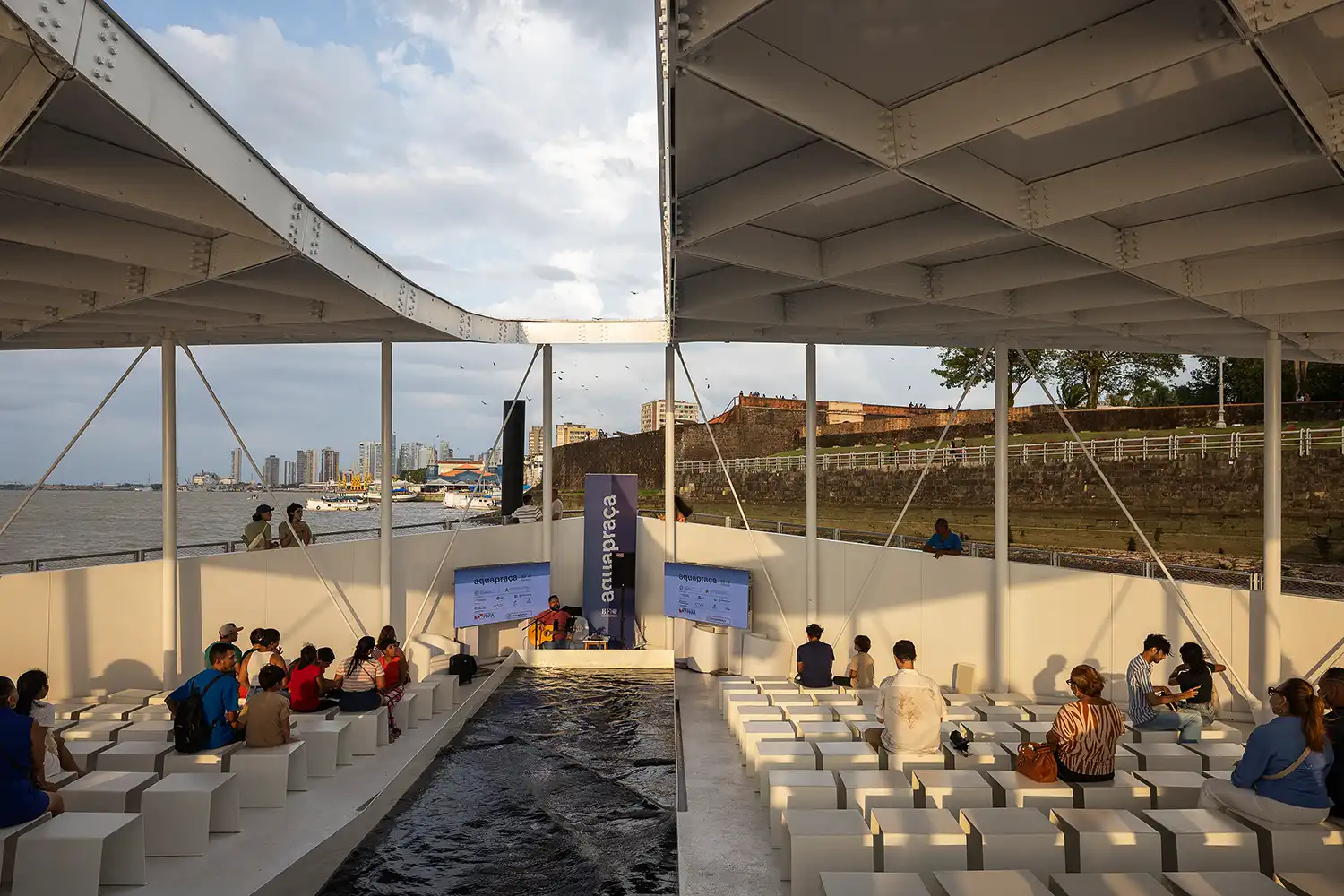
After the conclusion of COP30, the structure will not be dismantled. Instead, Italy is donating AquaPraça to Brazil, ensuring it remains in Belém as a permanent cultural platform. This will allow it to continue serving as a community space for promoting social engagement on climate, cultural strategy, and creative industries in partnership with the State of Parà. This commitment to a lasting legacy highlights the project’s essence of circularity and continual reinvention over time.
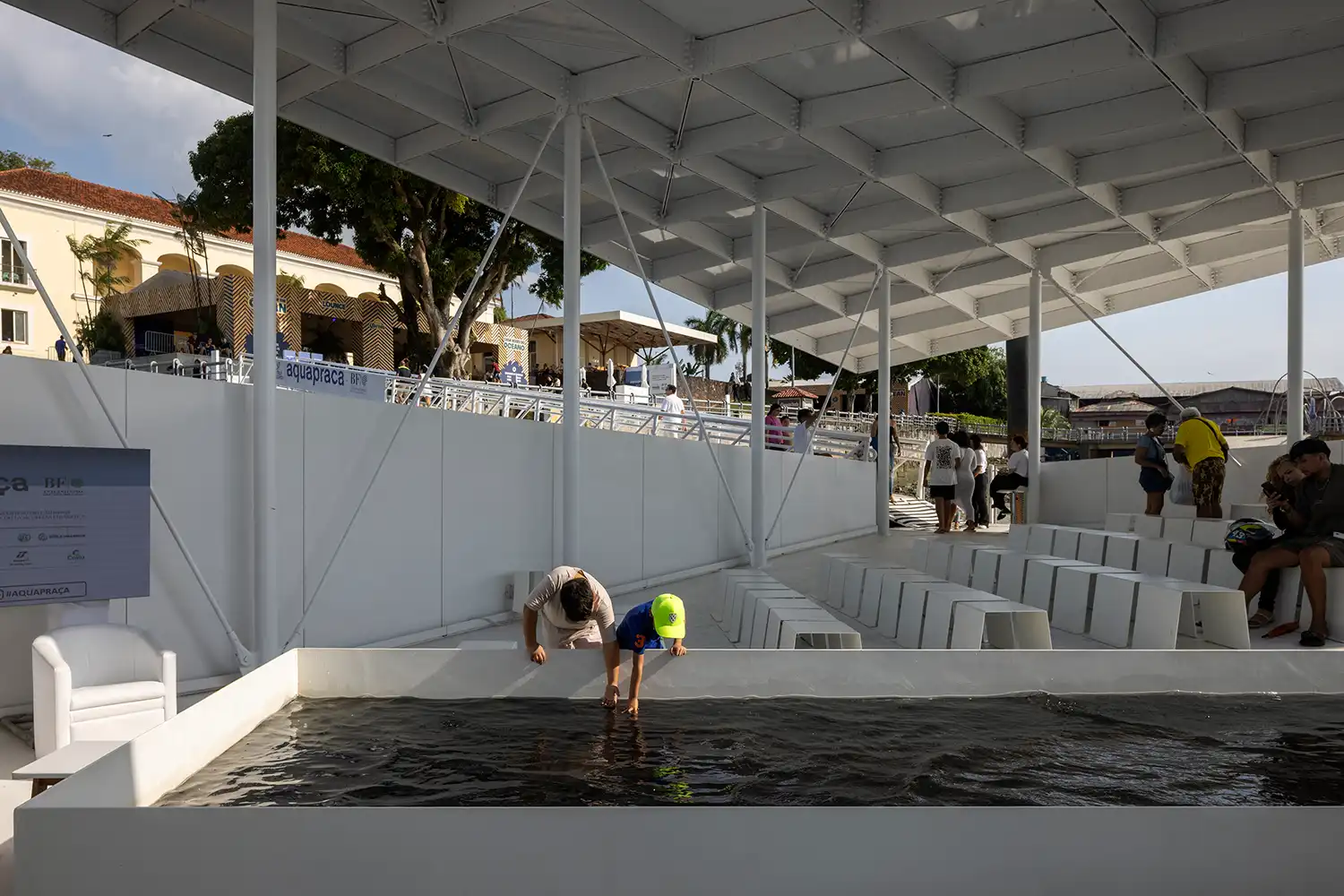
The architects emphasize the structure’s forward-looking design philosophy. Carlo Ratti, professor at MIT and co-founder of CRA, noted that the project explores how to “build with nature, not against it”. In Belém, the civic catalystincorporates an additional roof structure to host symposia, cultural programs, and crucial discussions on climate policy. Eric Höweler describes its sloped surfaces and shifting levels as embodying a “delicate equilibrium”.
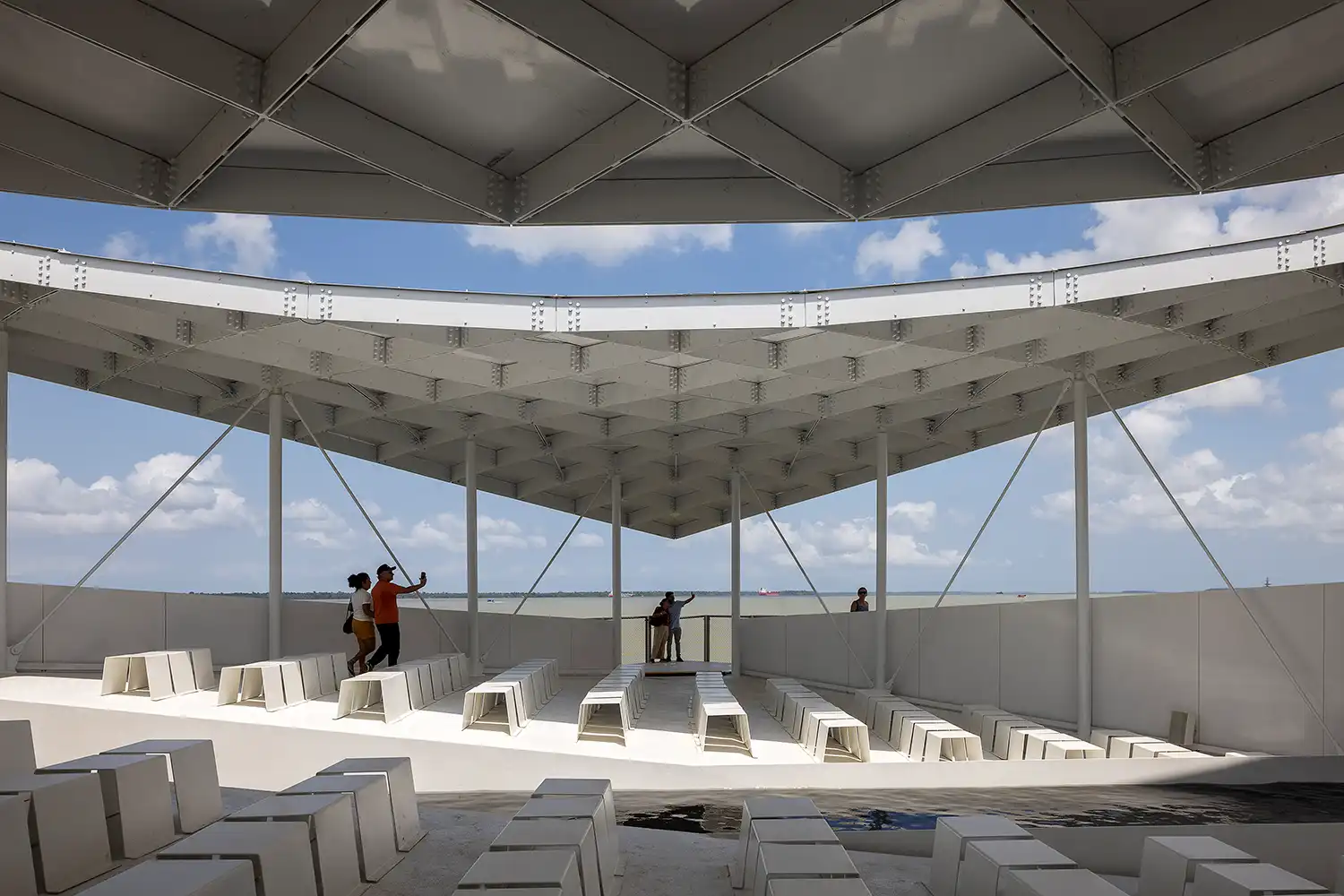
AquaPraça, which will be anchored in Belém from November 10 to 21, 2025 , is a powerful example of how design and technology can offer concrete solutions for communities impacted by the climate emergency. Its journey from Venice to the Amazon, and its new role as a cultural landmark , establishes it as a compelling symbol of dialogue, sustainability, and architectural adaptability in the face of a changing planet.
The continued search for innovative and sustainable solutions characterizes the approach of CRA-Carlo Ratti Associati across different scales. Recently, CRA also unveiled a digitally fabricated bivouac for the Milano Cortina 2026 Olympics , another example of their Italian engineering excellence and their ability to combine technology and sustainability in the field of adaptive architecture. This highlights their vision, which spans from urban planning to furniture , always exploring how to build “with nature, not against it”.