



In the ecologically sensitive expanse of the Dianchi Laoyu River Wetland Park, near Kunming, architecture firm Atelier Deshaus has completed the Laoyuting Pavilion, an intricate steel structure designed to act as a porous threshold between a busy road and the tranquil wetland. Conceived for the 2024 Dianchi Art Season, this permanent installation fundamentally reinterprets the traditional Chinese ting – or pavilion – as a modernist yet contextually responsive architectural design.
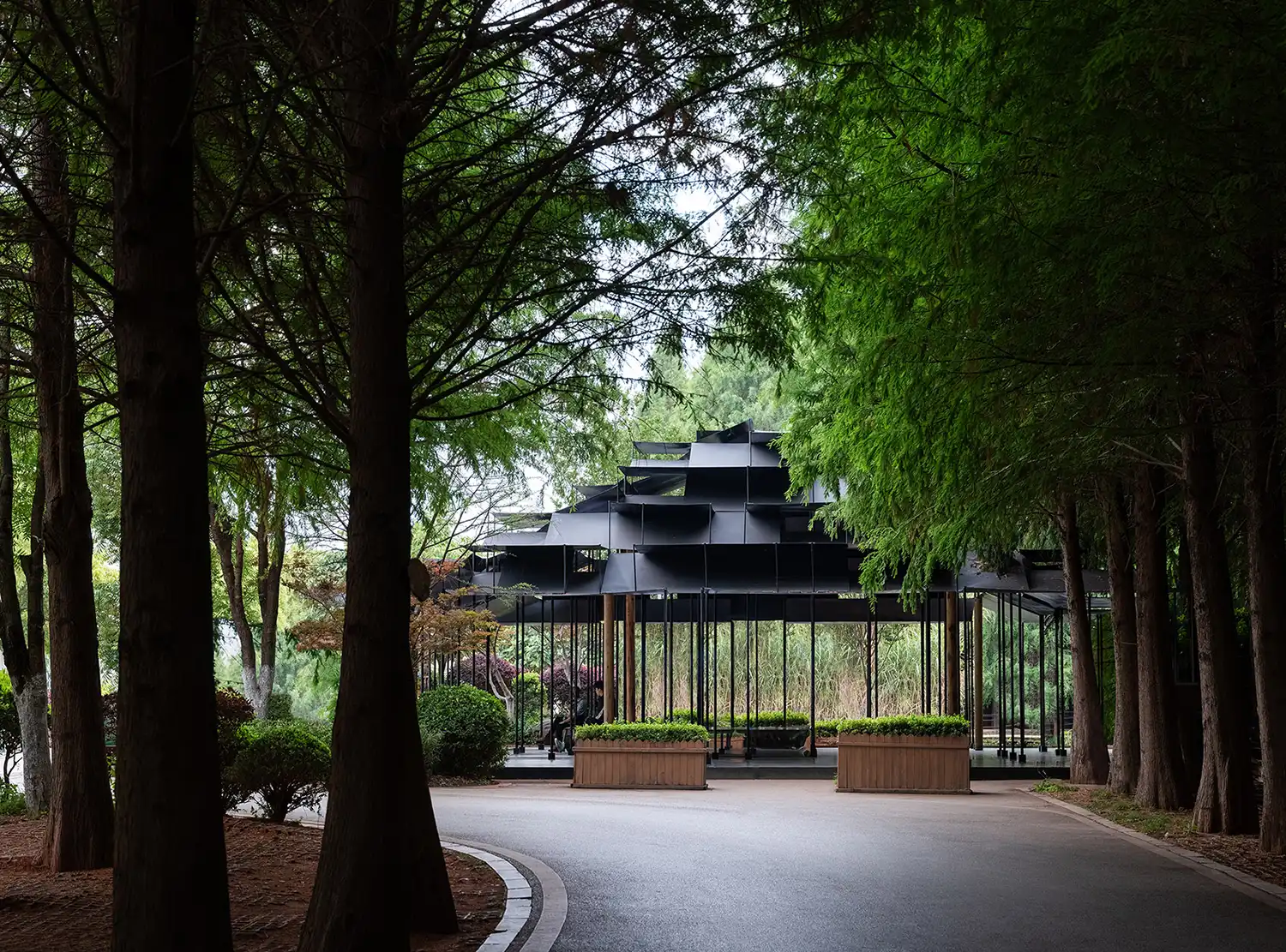
The project’s site is critical: the wetland is a vital component of the city’s water-purification infrastructure, the final natural filter before water enters Dianchi Lake. Its informal use by locals for leisure fishing gave rise to its name, the Fishing Pavilion. Atelier Deshaus responded to this unique setting—a place where nature and engineered infrastructure meet—by creating an artificial forest of slender steel columns.
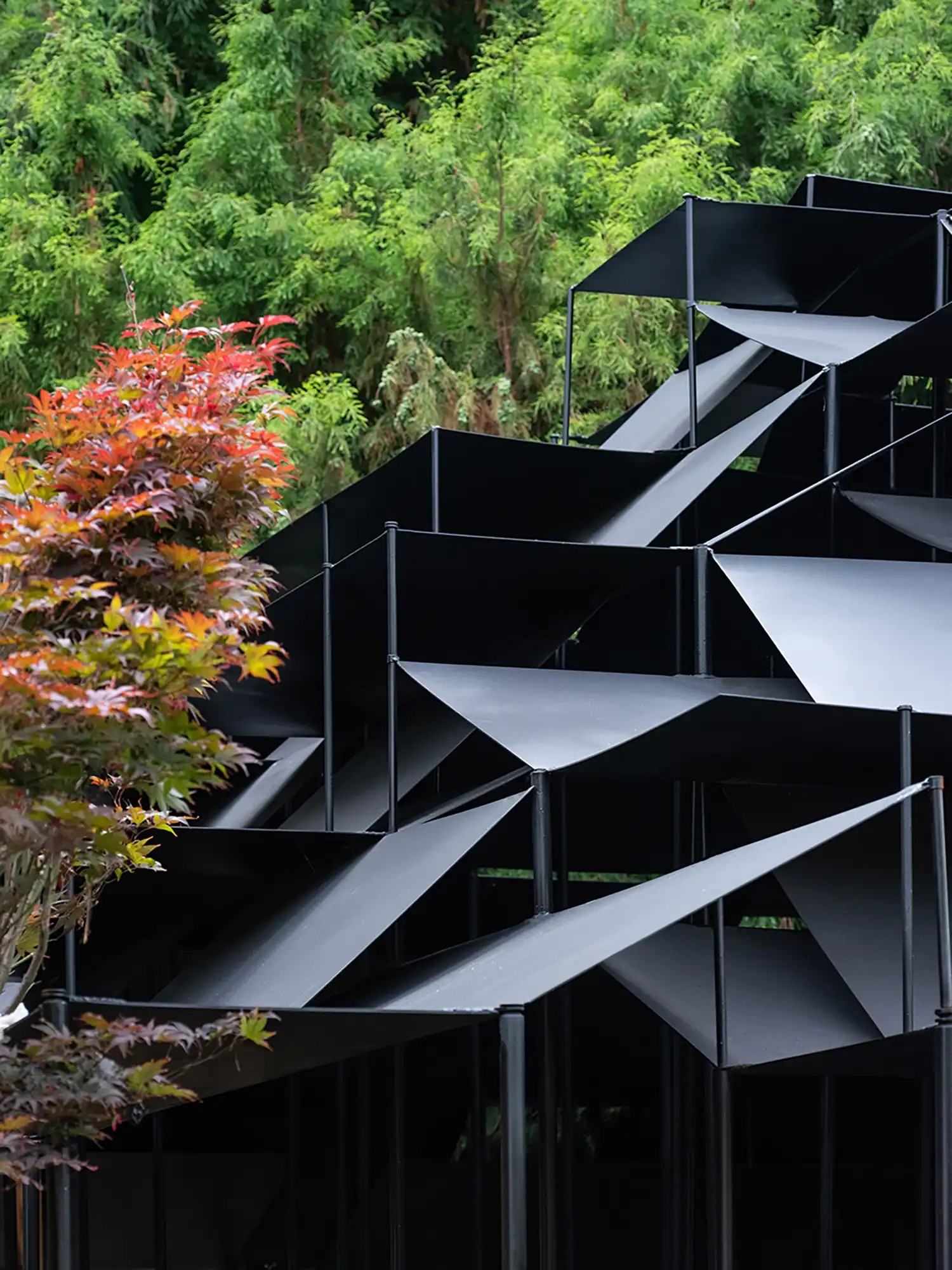
This design intention manifests in a striking composition of 93 ground-touching steel columns, each a 40 mm-diameter solid round bar, supporting a fragmented, multi-layered roof. The architects describe the resulting experience as existing in a poetic state somewhere between being “within the woods” and “beneath a primitive hut,” expertly blurring the lines between the “manmade” and the natural atmosphere. The density and staggering of these thin columns subtly guide movement through the space, where two paths gently unfold toward the lake.
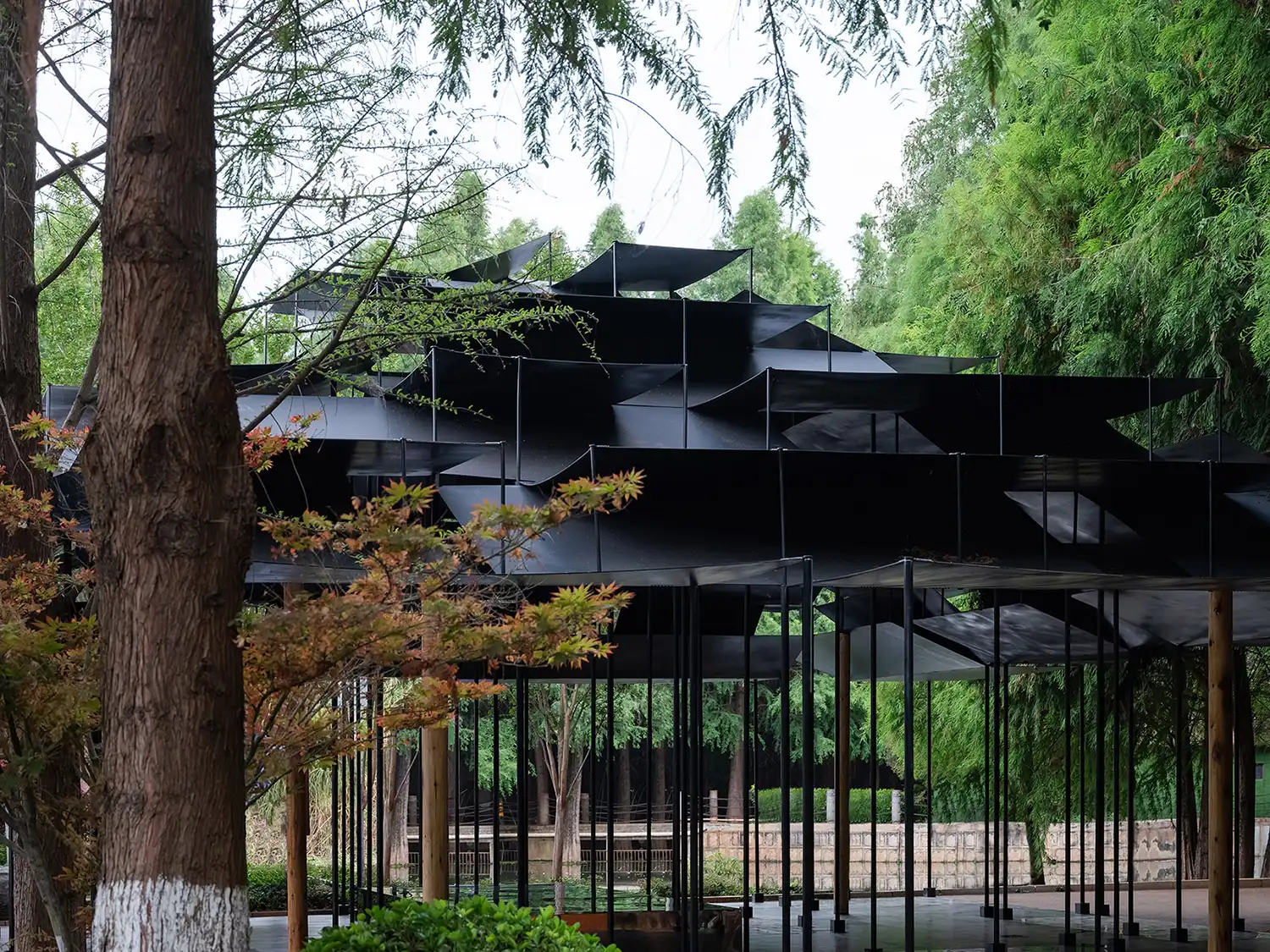
The structural approach was governed by the park’s strict environmental mandates, which forbade disturbing the existing ground. To achieve this, Atelier Deshaus developed a system of prefabrication, treating the building process like assembling a large-scale outdoor installation. Instead of traditional foundations, a steel plate rests directly on the original surface, with each column fixed atop a small, ten-centimetre square steel block—a “micro-foundation”—to ensure minimal contact and protect the delicate terrain. This lightweight construction methodology exemplifies how modern technology can respect fragile ecologies.
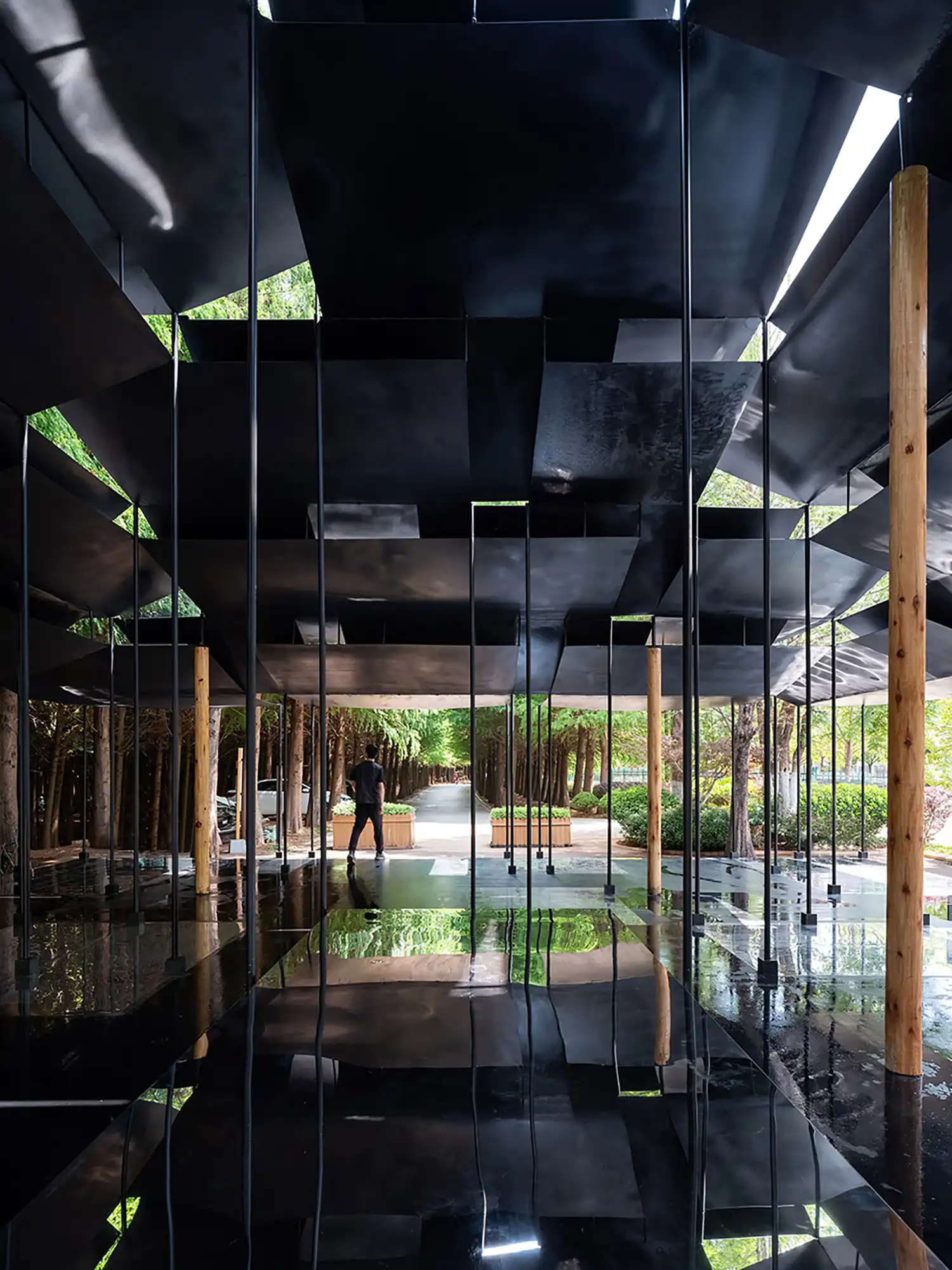
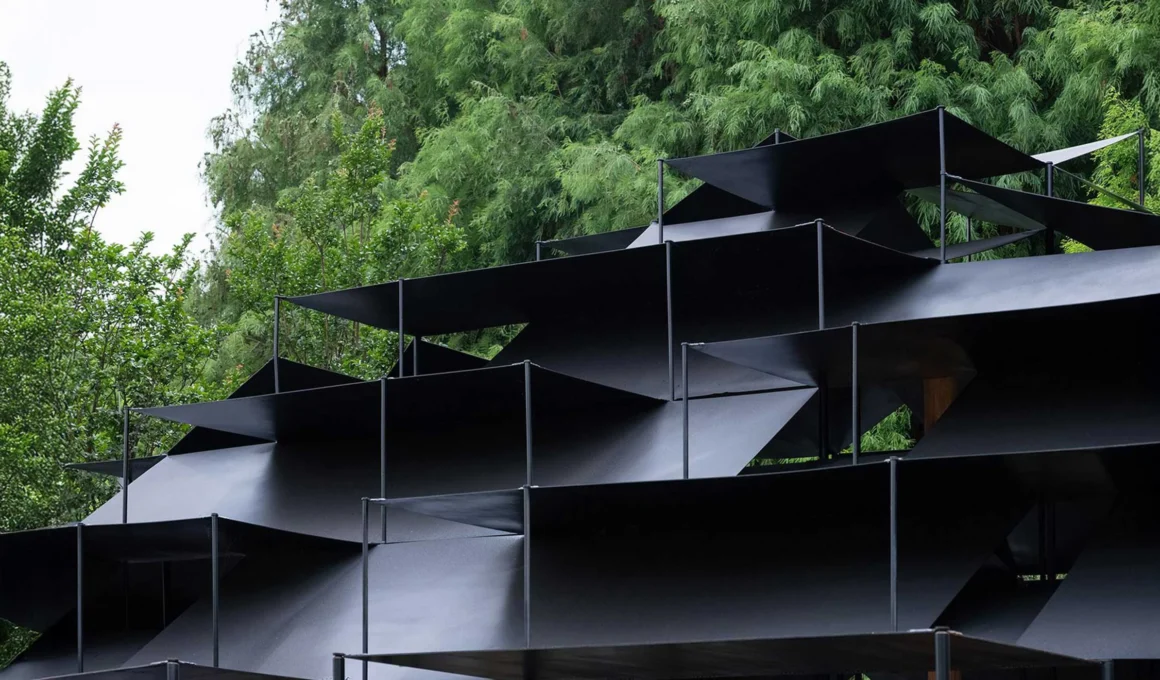
The seemingly irregular roof is a sophisticated assembly formed from overlapping modules of flat and sloped steel plates.Above the main supports, 125 thinner, 20 mm-diameter short columns add layers of complexity, creating areas of varying column densities and lending the roof a structural character somewhere between rigidity and flexibility. This technique achieves an effect where the solid steel material becomes beautifully dematerialized, its industrial character giving way to an illusion of deep shade and a thatched-roof-like appearance when viewed from afar.
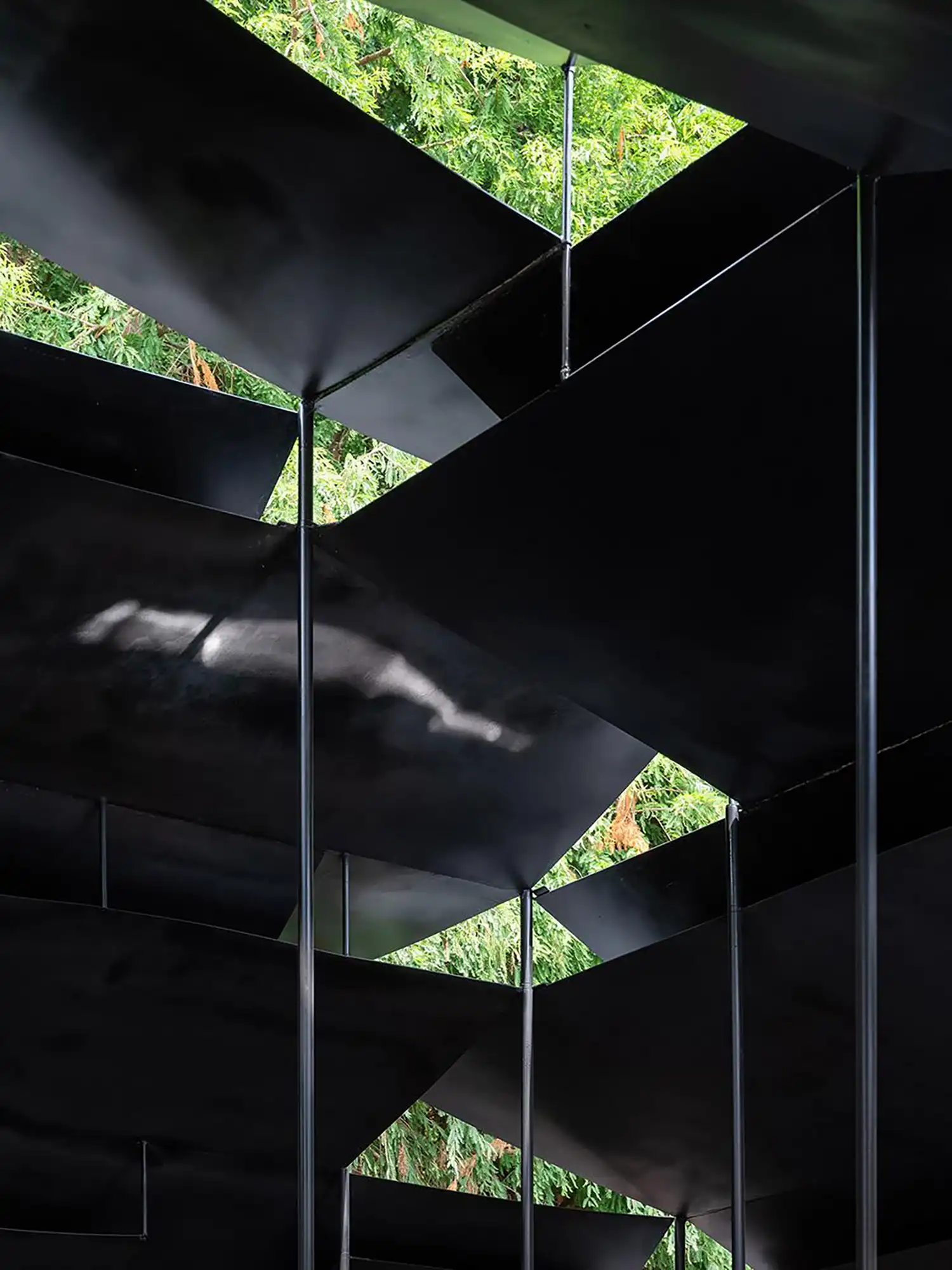
By deconstructing the traditional four-slope roof into these fragmented layers, the pavilion achieves a remarkable visual lightness. Atelier Deshaus posits that the structure revisits the metaphor of the ‘tree’ as the original structural archetype for human shelter, fostering a space that is breathable, traversable, and inherently inviting for visitors to pause. Ultimately,the Laoyuting Pavilion is a compelling piece of contemporary architecture that initiates a fresh, essential dialogue between technology and nature within the context of the Chinese landscape.