



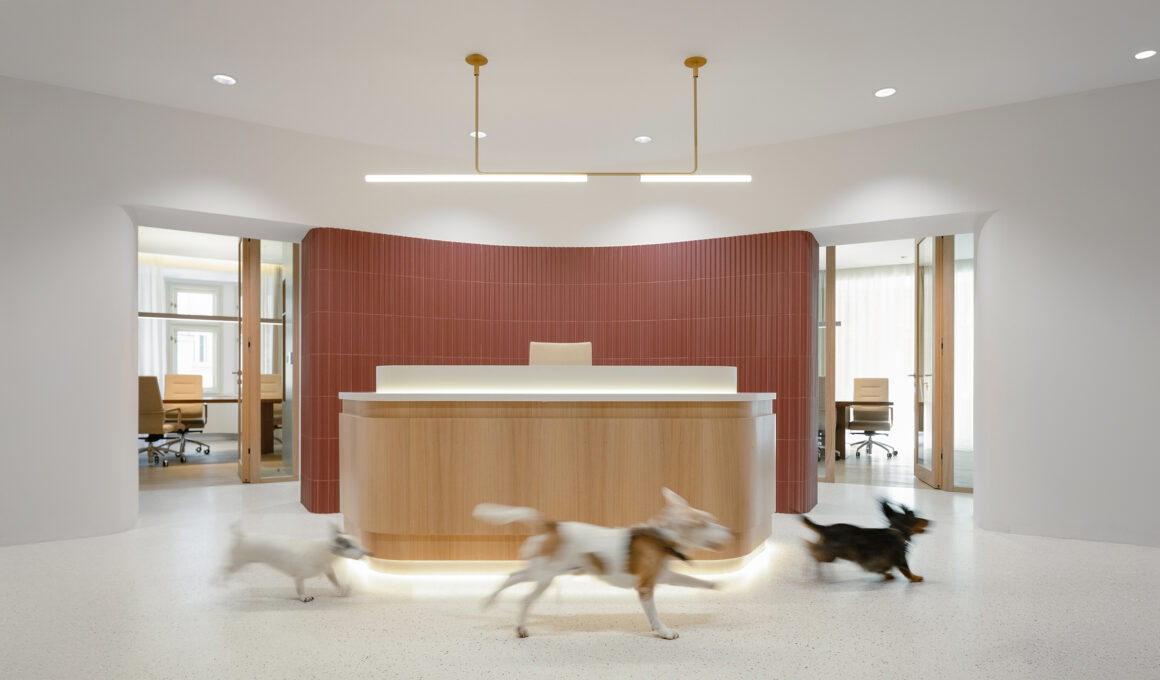
The presence of dogs in professional settings is no longer a fringe benefit but an established component of holistic workspace design. The integration of dogs into the workplace is increasingly recognized as a vital component of modern corporate wellness strategies, with research consistently demonstrating the stress-reducing effects of their presence. However, the true test of a truly pet-friendly office design lies not in its policy, but in its architecture. Architects and interior designers face the complex challenge of creating spaces that simultaneously cater to high-performance human work and the unique sensory needs of a canine co-worker. This requires moving past superficial additions and focusing on durable materials, acoustic solutions, and intelligent zoning.
We must approach this design problem with the precision we afford any bespoke corporate fit-out. Here is how to furnish and structure an office that balances canine ergonomics with high-end interior design principles.
1. Material Science: The Imperative of Tactile Flooring
The pursuit of minimal, polished surfaces—be it exposed concrete or high-gloss resin—is fundamentally incompatible with effective canine ergonomics. While materials like high-gloss resin or concrete appeal to minimalist sensibilities, they are detrimental to dog joint health (lacking necessary grip). Reputable veterinary design consultants emphasize the essential slip resistance required to mitigate long-term orthopedic issues.
The design solution lies in intelligent material specification:
High-Performance LVT: The deliberate selection of commercial Luxury Vinyl Tile (LVT) or woven vinyl is crucial. These materials provide the necessary paw traction while delivering essential resilience against moisture and high-traffic wear.
Integrated Rug Segmentation: Where hard flooring is retained for aesthetic reasons, the use of large format, PET felt rugs must be considered a structural element, not a decor item. They serve as primary noise-dampeners and define distinct areas of canine rest and transit.
2. Acoustic Ecology: Controlling the Soundscape
In the modern open-plan office, uncontrolled sound is the primary destroyer of human productivity and the chief trigger of canine anxiety. A pet-friendly workspace must therefore be engineered for acoustic ecology.
Sub-Meters Baffling: Acoustic absorption cannot be limited to ceilings. Strategic deployment of acoustic panelsand upholstered partitions below one meter (the dog’s height) is necessary to mitigate high-frequency reflections and absorb vocalized sounds at their source.
Spatial Partitioning: The use of tall, upholstered furniture systems—acting as internal architecture—provides crucial visual segmentation. This deliberate spatial partitioning prevents dogs from reacting to every movement within the office perimeter.
3. Biomorphic Segmentation: Designing the Den
A core principle of canine design is the instinctual need for secure enclosure. The failure to integrate a proper retreat results in an anxious animal and a disruptive environment.
Integrated Joinery Solutions: The sophisticated approach replaces standalone crates with built-in modular joinery. Designers should specify integrated shelving or cabinetry units that feature a lower, padded aperture. This creates a secure, dark, and acoustically buffered den-like space that seamlessly integrates into the office architecture.
Sensory Zoning: These safe retreats must be located away from high-traffic axes, such as elevator lobbies or kitchen entrances, minimizing sensory overload.
4. Active Design and Circulation Flow
A successful workspace promotes movement. A well-designed canine office utilizes its layout to encourage necessary breaks and prevent the stagnation that leads to disruptive behavior.
Defined Circulation Loops: The architectural plan should explicitly define a circulation path around the working core. This path, often delineated by color-blocked flooring or different texture transitions, provides a non-disruptive channel for movement.
Intentional Pauses: This intentional path encourages owners to take structured, short movement breaks with their dogs, benefiting the mental clarity of both user groups.
5. Hygiene, Air Quality, and the Biophilic Layer
Aesthetics must not override hygiene. The introduction of animals requires a strict adherence to material selection and air quality management. The biophilic design trend isn’t just a buzzword; it’s a powerful hygiene strategy.
HEPA Filtration Mandate: The specification of HEPA-filtered HVAC systems is a non-negotiable component of multi-species air quality, managing dander and allergens effectively.
Performance Textiles: All upholstered elements must use high-performance textiles such as commercial-grade Crypton or sealed leather. These materials repel moisture and hair, maintaining the aesthetic integrity and hygiene standards of the workspace.
FAQ: Designing for Dogs
What is the best flooring for a dog-friendly office?
The most effective and safe flooring is commercial-grade Luxury Vinyl Tile (LVT) or high-traction rubber flooring. These materials provide superior slip resistance for paw health, are fully waterproof, and contribute positively to the office acoustic ecology.
How do you soundproof an office for dogs?
Soundproofing is achieved by using acoustic baffles at low levels (dog height), integrating sound-absorbing materials like PET felt, and implementing visual spatial partitioning to minimize reactive barking.
What is the primary architectural challenge in a multi-species workspace?
The primary challenge is balancing human efficiency with canine sensory needs, specifically by designing for instinct (denning) and managing acoustic complexitywithout compromising the aesthetic and functional performance of the workspace.