



Louis Vuitton has inaugurated Visionary Journeys Seoul—a monolithic six-story installation conceived by OMA Partner Shohei Shigematsu—within the historic Shinsegae Main department store. This project is not merely an exhibition but a decisive architectural maneuver that redefines the luxury retail experience, formally merging commerce and culture within a historic core of Seoul.
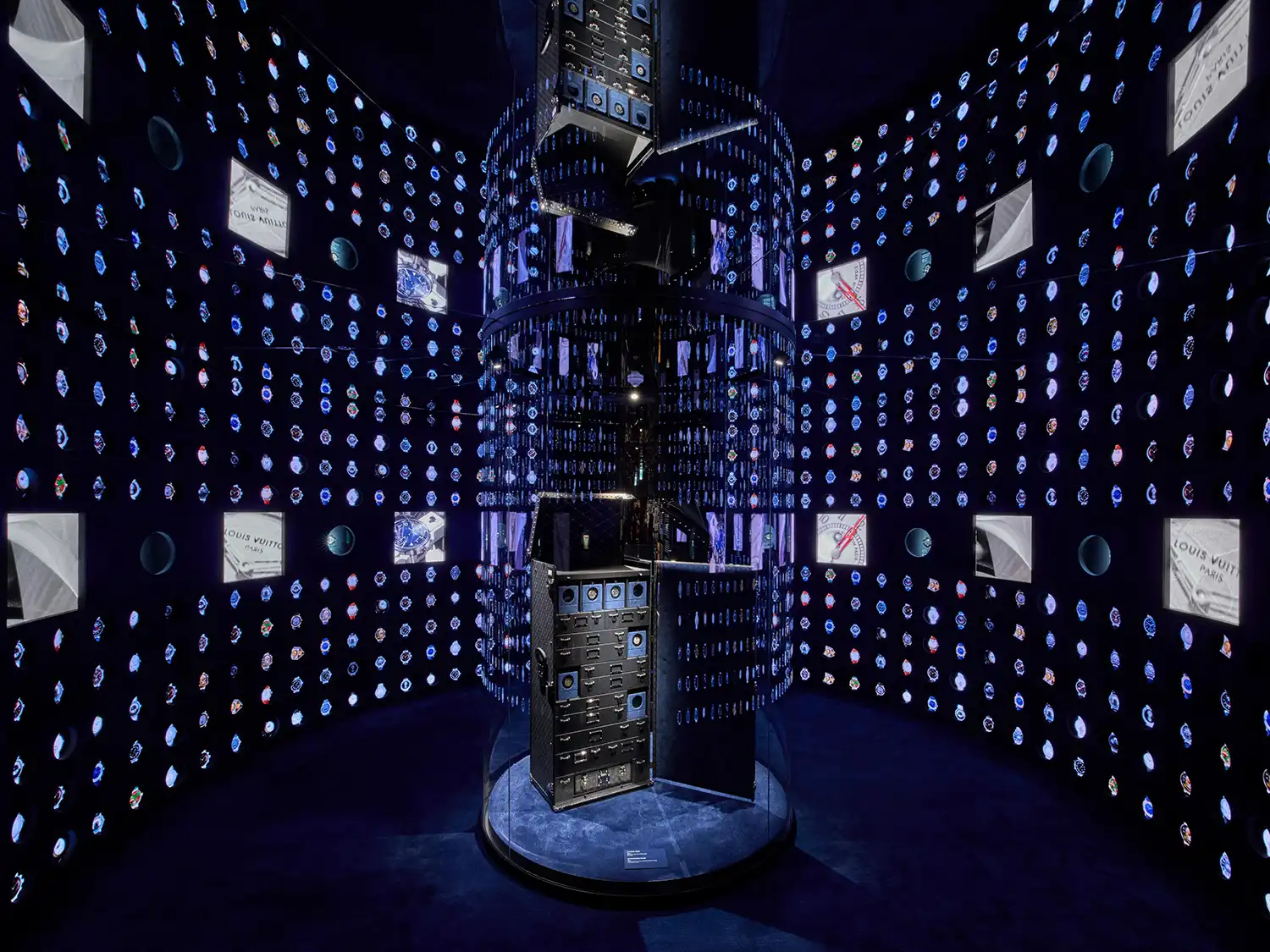
The sheer scale of the operation is unprecedented: occupying half a dozen floors, OMA dedicates two full levels to the cultural program, transforming the main branch of Shinsegae into a hybrid retail-museum. The design employs strategic “inside-out moments” where curated galleries reveal themselves to the retail floor, acting less as traditional storefronts and more as scenographic displays of narrative. This blurring of lines—where points of sale are seamlessly woven into the cultural fabric—reflects the rapidly evolving trend in Korean retail towards museum-grade consumption spaces.
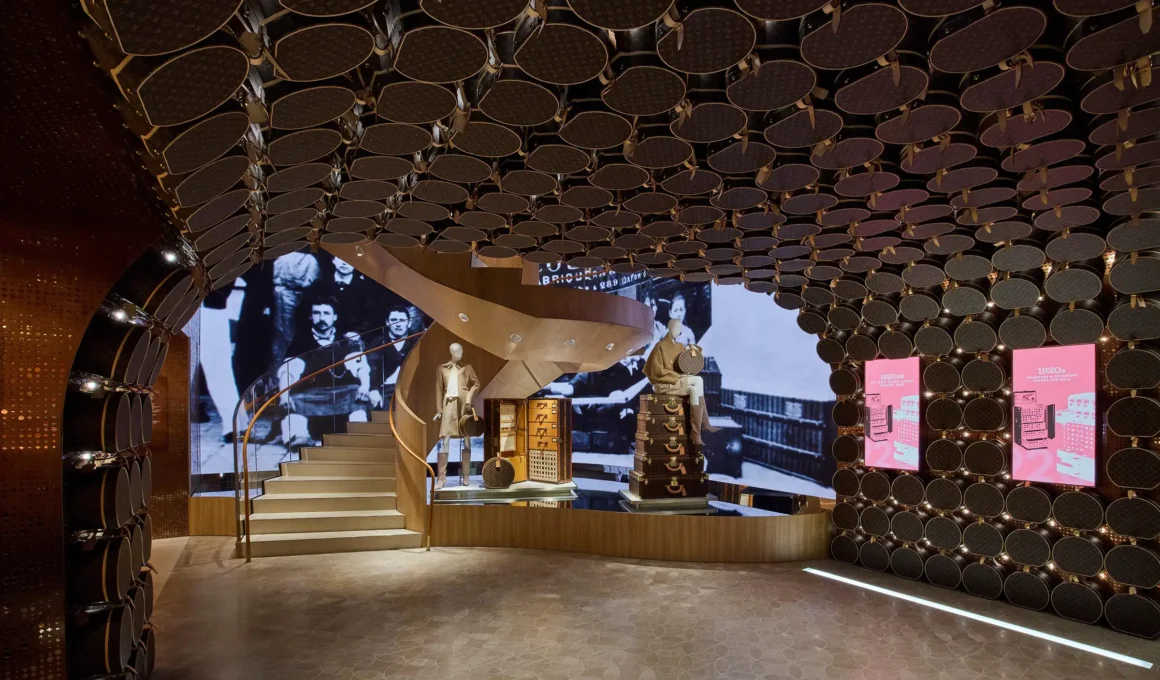
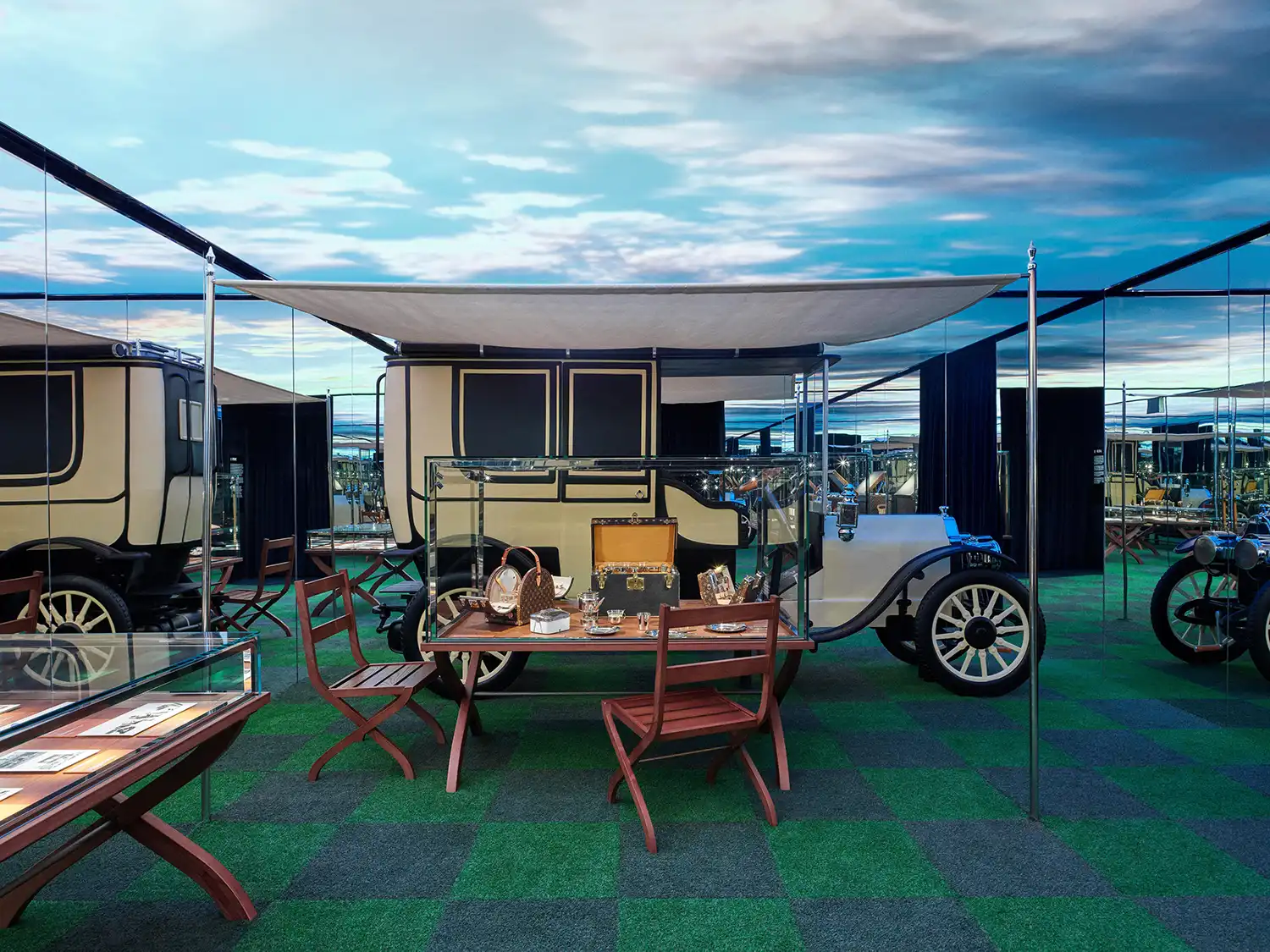
The 1,300 square meter exhibition is an architectural device structured around eleven themed rooms, organized by the four pillars of the Maison: history, lifestyle, craftsmanship, and collaboration. The journey commences with a powerful threshold: a ground-floor Trunkscape—an immersive portal composed of 270 Monogram Hat Boxes. This sculptural element serves as the first visual commitment to the overarching theme of travel and bespoke creation.
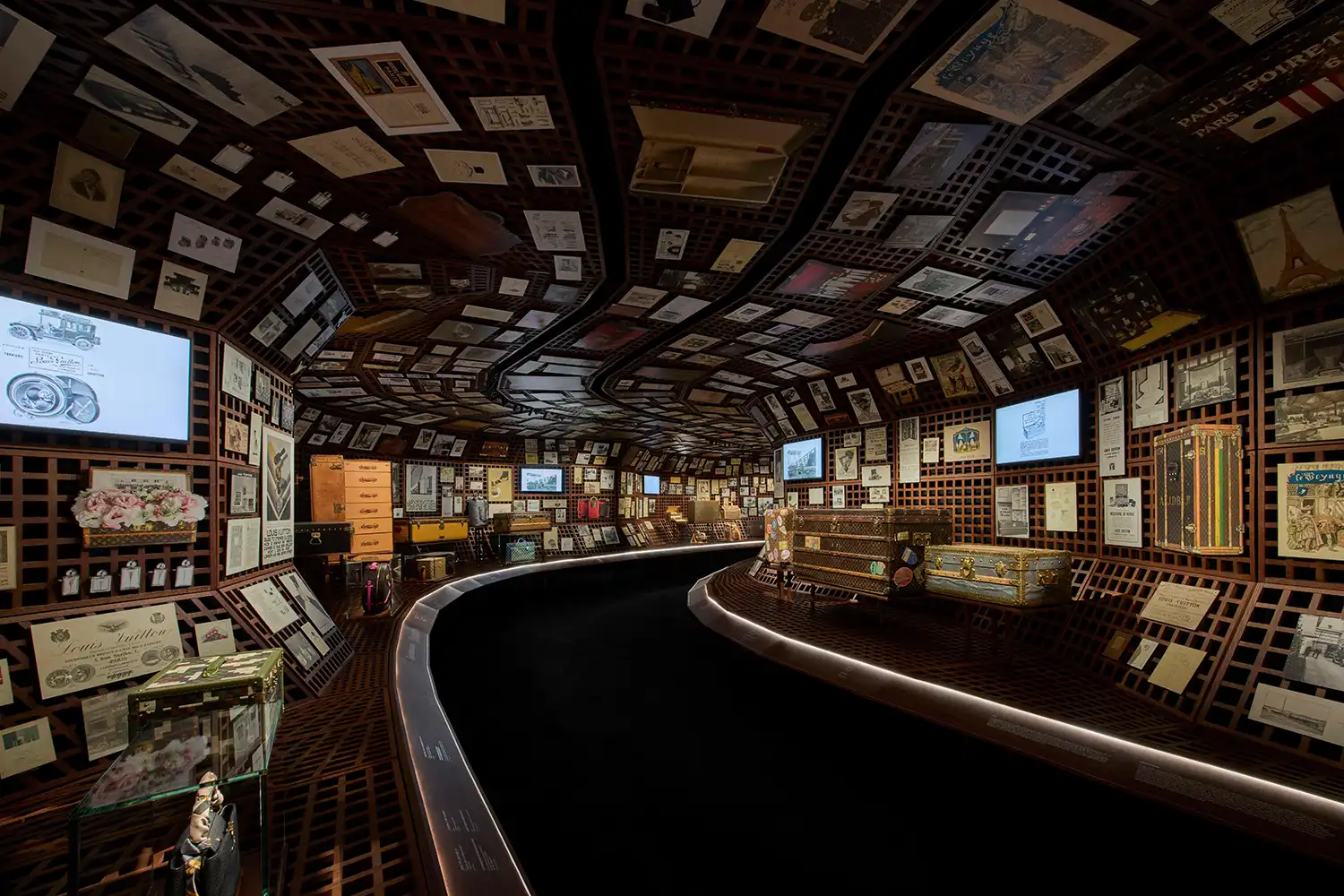
Ascending into the Origins gallery, the House’s foundational story is materialized as a constellation of documents and artifacts, shielded by a faceted wood enclosure. This architectural element takes its visual cue from traditional Korean screens, creating a continuous, pocketed armature that provides the exhibition‘s structural ‘façade.’ This contextual consideration anchors the global brand to its Seoul setting.
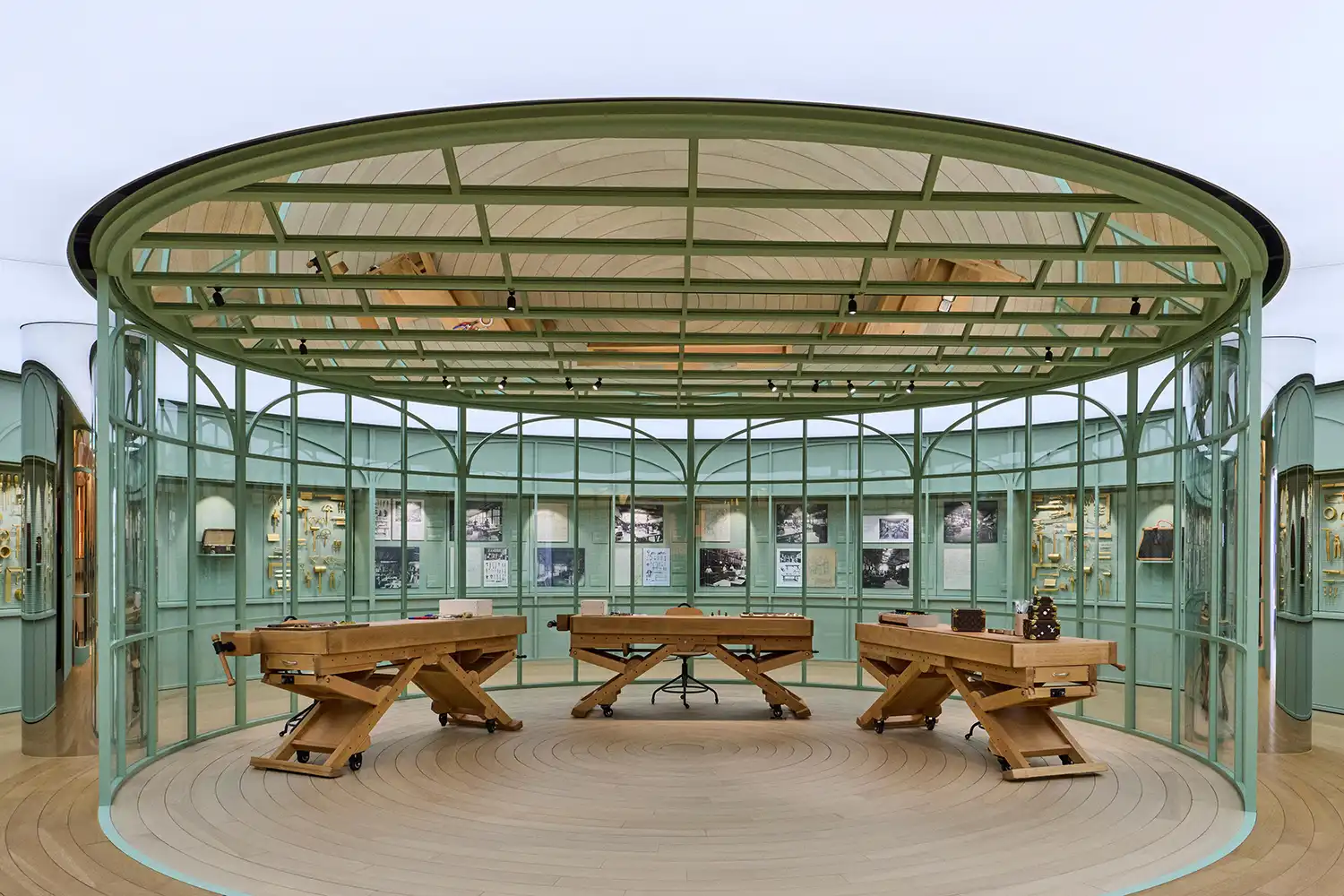
The exploration of craftsmanship is perhaps the most explicit architectural narrative. The Workshop space directly references the Asnières atelier, featuring a distilled design vocabulary of sawtooth roofs and arched windows. It houses live demonstrations where artisans build and personalize trunks, their work captured in mirrored “skylights” overhead. Complementing this, the Testing room is a stark, almost industrial gallery that reveals the brand’s rigor, utilizing devices like the robotic arm “Louise” to conduct durability tests—showcasing the hidden mechanical processes that underpin Louis Vuitton’s design durability.
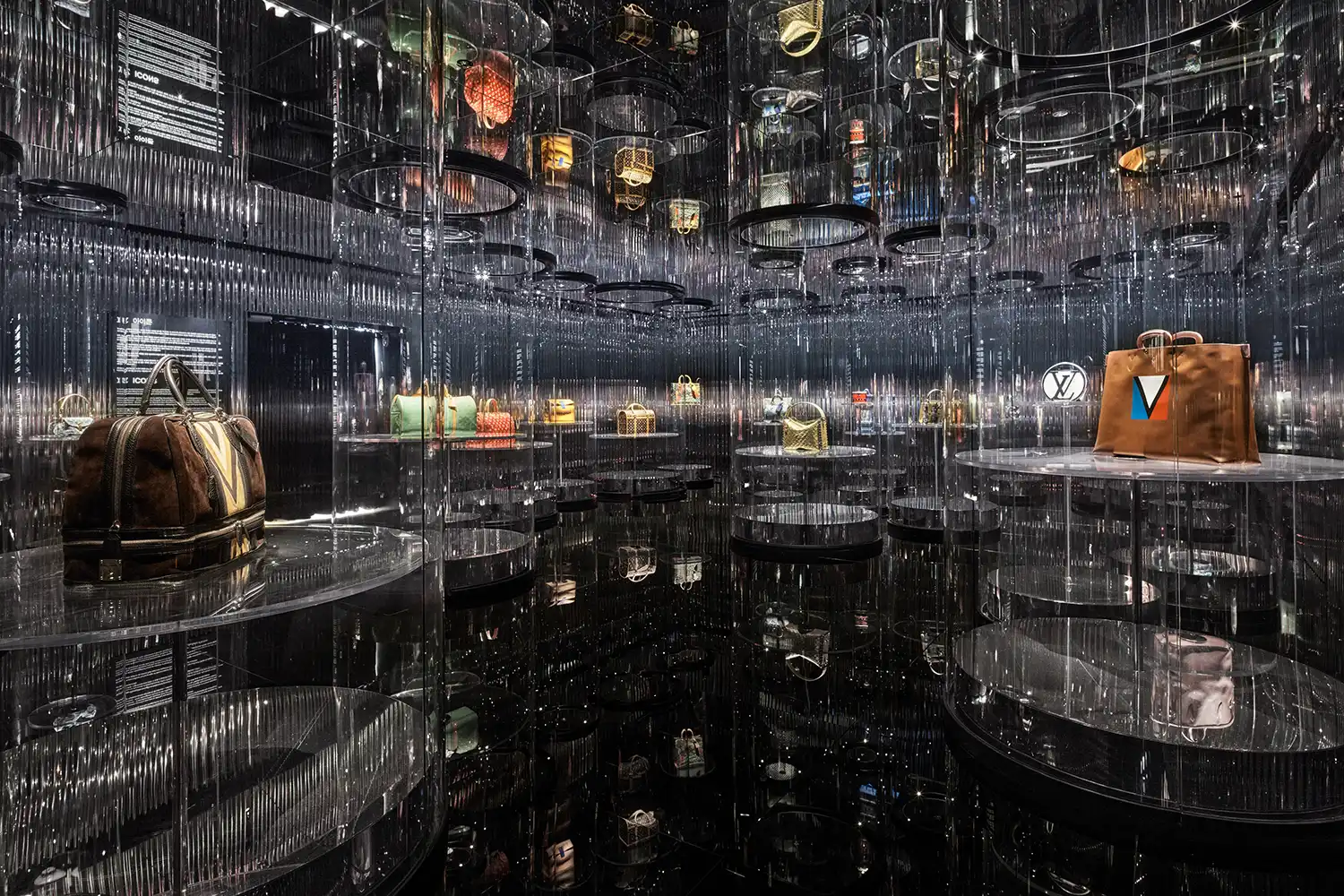
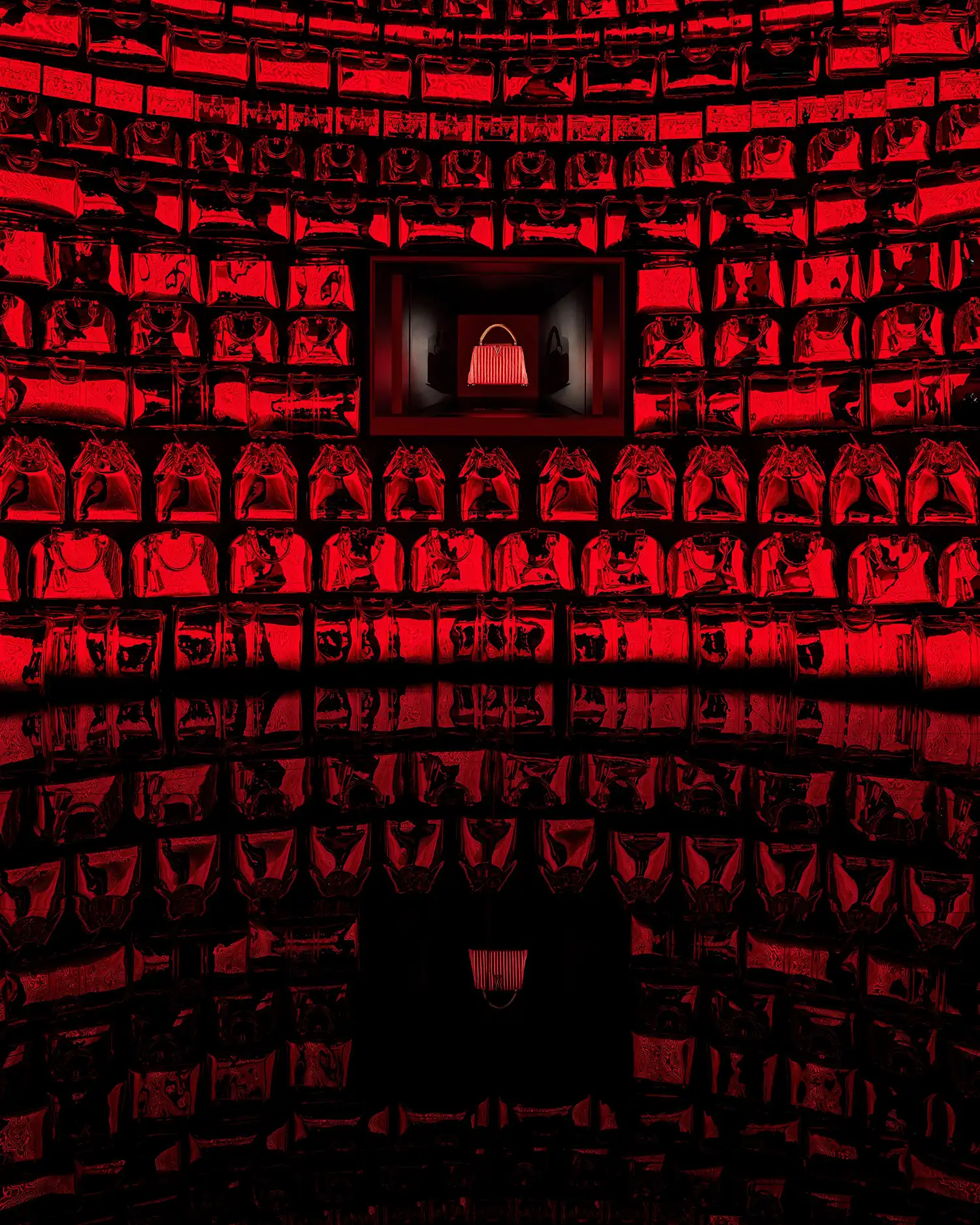
The conclusion of the journey shifts focus from origins to contemporary identity. The Icons gallery creates a dizzying field of 22 suspended bags, each representing the tension between timelessness and creative reinvention. The Collaboration gallery provides a fitting finale, where six contemporary artists’ interpretations are showcased on a rotating carousel, set against a wall of 313 chrome-dipped bags. This hyper-reflective environment, conceived by Shohei Shigematsu, is the ultimate architectural statement on the infinite possibilities of the brand’s future.
The Visionary Journeys Seoul exhibition ultimately reinforces the cultural legacy established by the project’s successful debut. Much like the previous installation in Japan—which saw OMA deploy a similarly radical spatial strategy to articulate the Maison’s history within a distinct local context—the Seoul iteration proves that the collaborative vision between Louis Vuitton and Shohei Shigematsu transcends the traditional boundaries of architecture and retail. To explore the initial chapter of this architectural narrative and see how OMA first tackled the challenge of marrying heritage and innovation, you can read our previous coverage here.