


The Tskneti hillside, a mountainous refuge overlooking Tbilisi, has long been characterized by a paradox: a natural escape that became an architectural enclave of rigid separation. For decades, from Soviet-era dachas to post-1990s elite fortifications, the instinct in this region has been to withdraw, symbolized by towering concrete walls that served as social as much as physical borders. The Detached House in Tskneti, designed by Wunderwerk, is an architectural counter-proposal to this inherited culture of enclosure, a project advocating for a radical transparency and a minimal-impactengagement with the steep, ecologically sensitive landscape of Georgia.
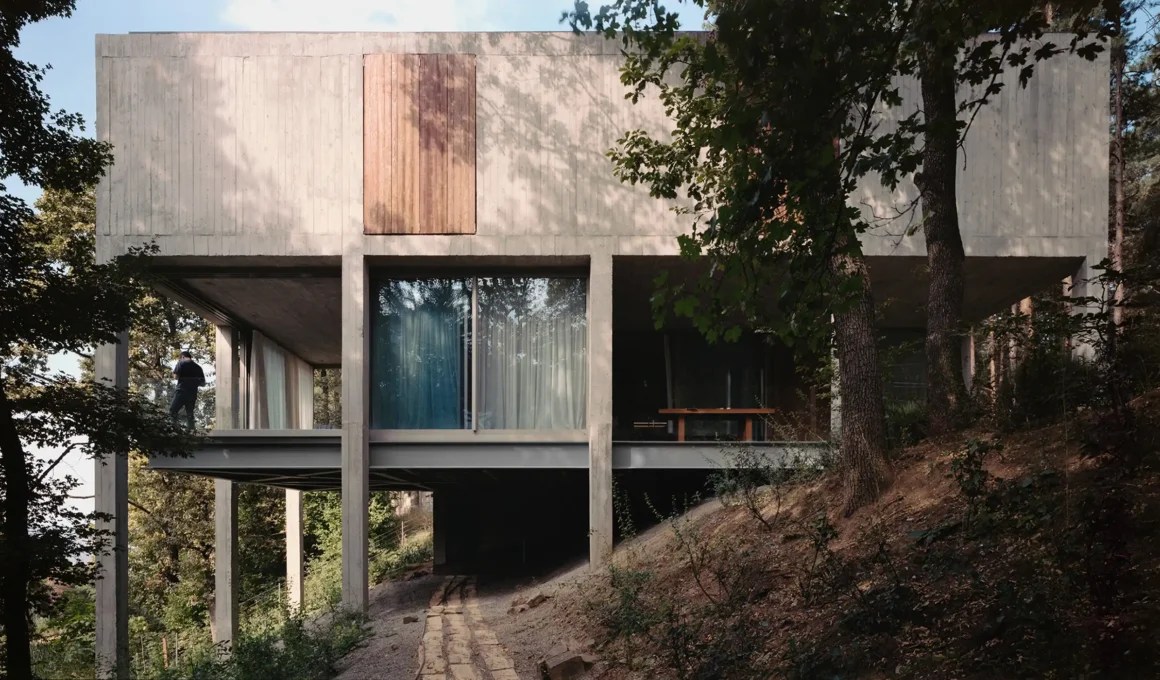
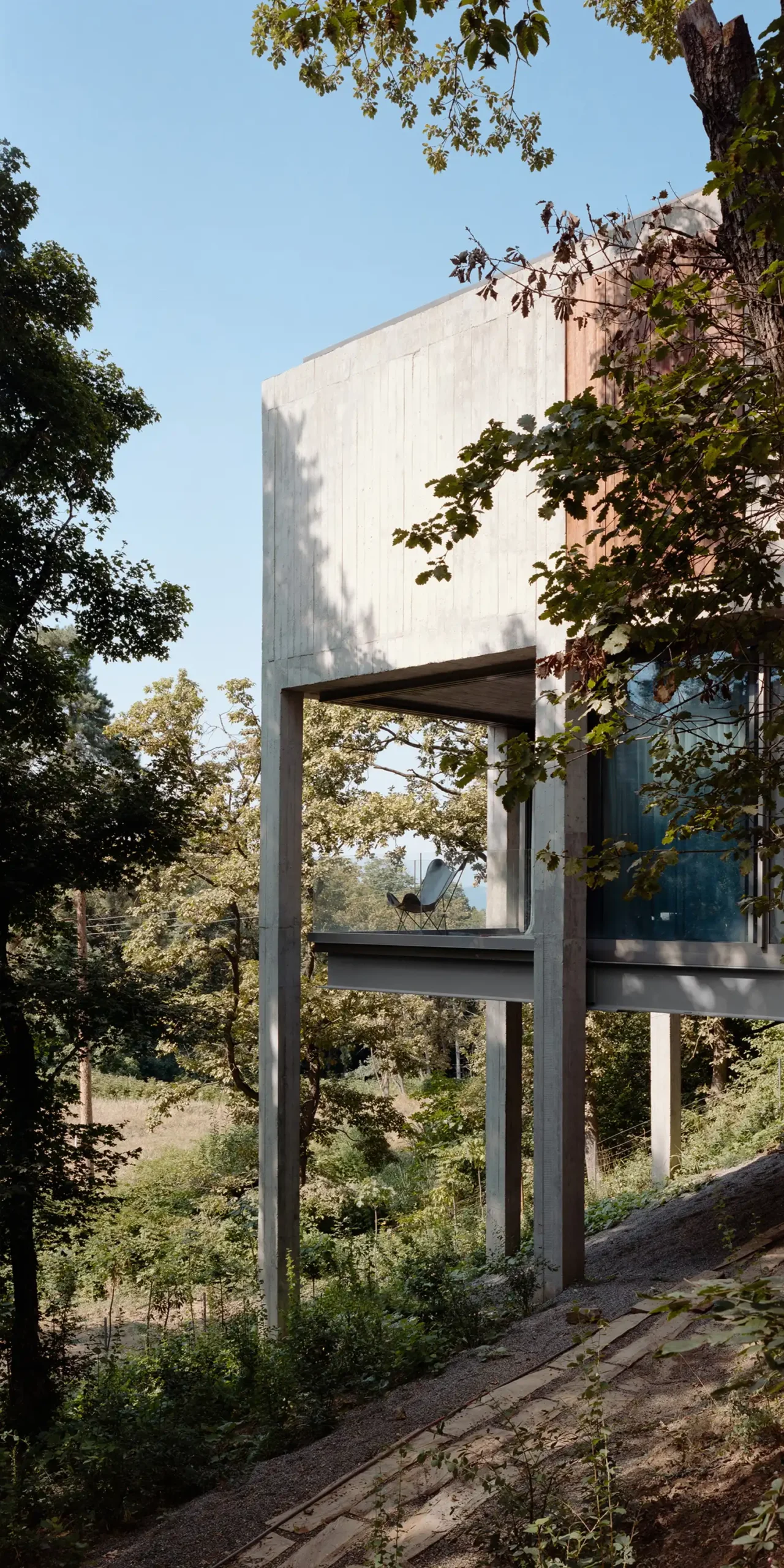
The site itself is unforgiving. Situated on the southeastern flank of the settlement, it drops precipitously into a natural ravine—a vital component of the area’s ventilation system. The challenge for the architecture was not merely to build onthe land, but to inhabit it without damage. Wunderwerk’s solution is a masterful study in suspension: the house is raised high above the slope on tall, slender concrete columns anchored to the bedrock. This structural lightness allows the native topography to flow essentially unimpeded beneath the structure, ensuring the landscape remains an active, continuous participant in the design.
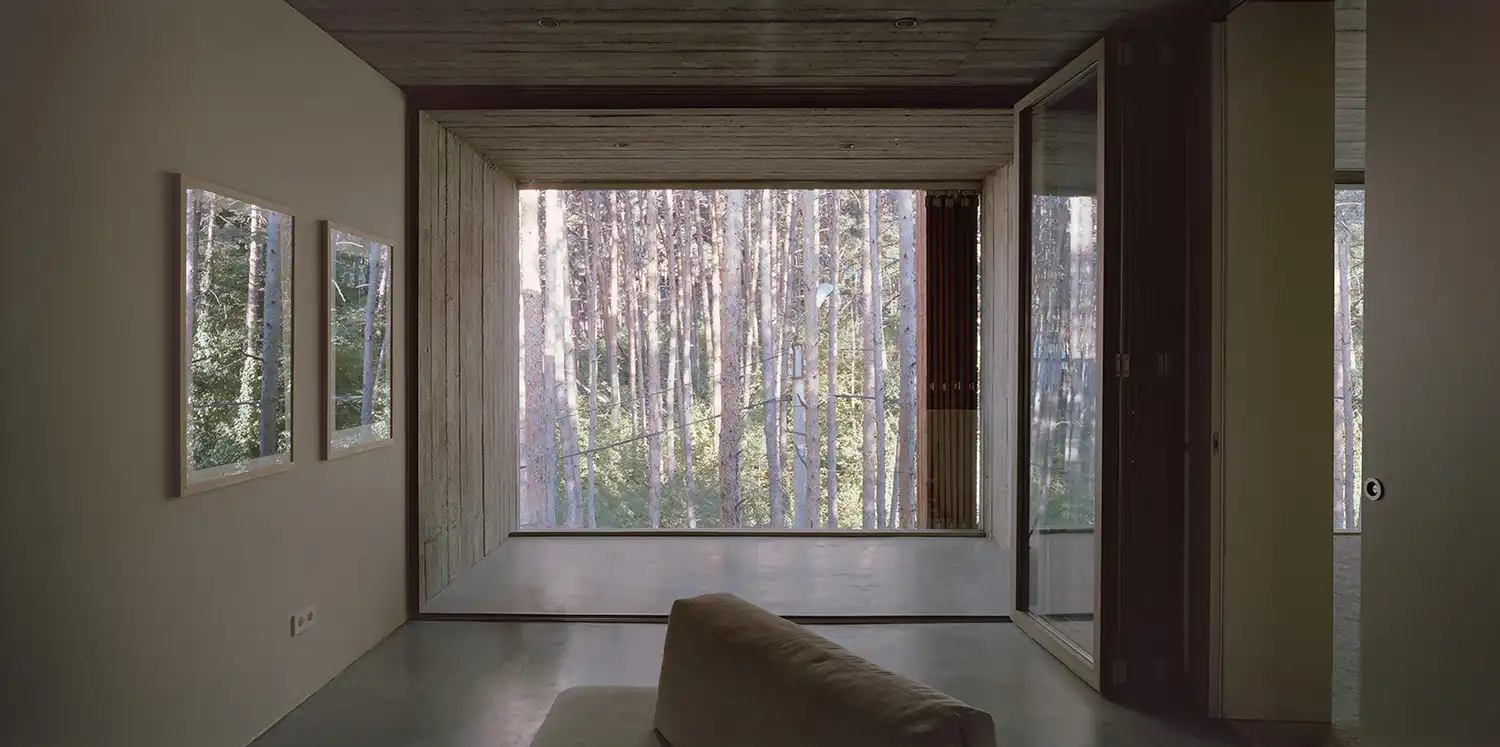
The dwelling is expressed through a powerful dichotomy of volumes. The upper section is a protective, monolithic concrete volume that houses the private rooms. This heavy mass is textured using rough timber forms, creating a tactile, almost rugged exterior finish that is intended to age and blend with the surrounding forest. This defensive shell is paired with meticulously framed windows and folding wooden shutters, which echo the rough-hewn surface while allowing for a dynamic modulation of light and privacy within the upper levels.
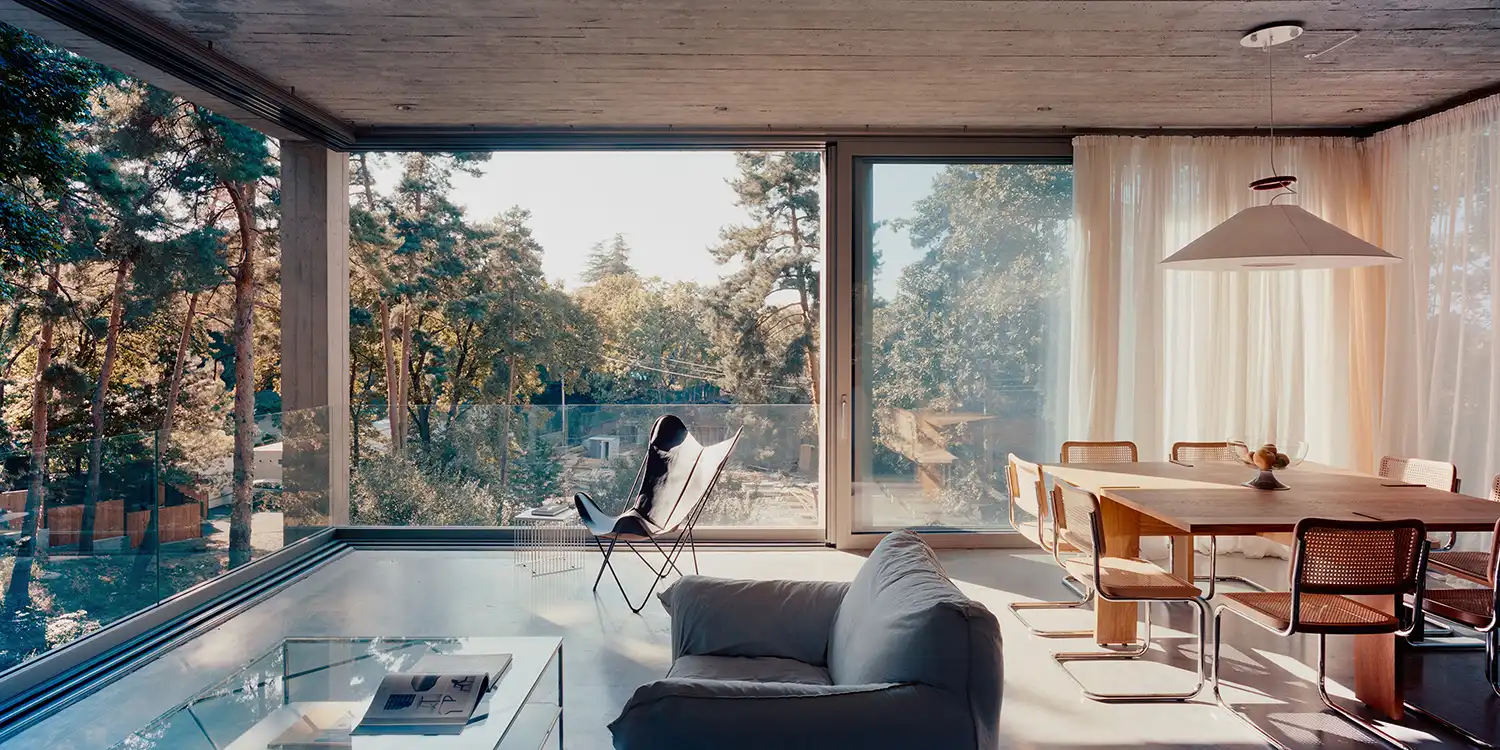
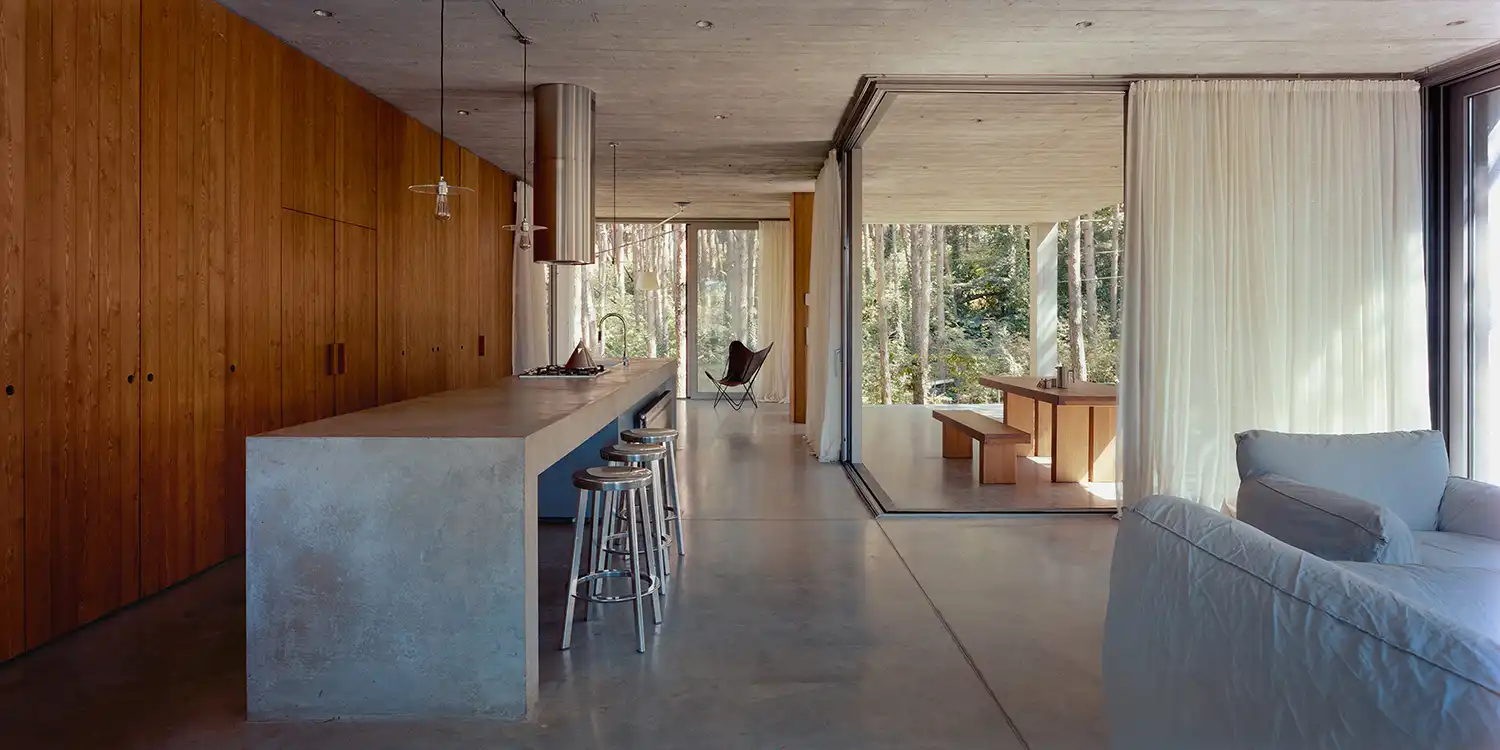
In sharp contrast to the protective volume above, the ground floor is an exercise in radical permeability. Formed by a suspended metal frame, this level contains the open living spaces and is defined by a fully glazed facade. Crucially, a sliding corner facade allows this entire platform to dissolve, blurring the boundary between indoors and outdoors entirely. This opening establishes a direct, immediate connection to the environment, making the air, light, and scent of the pine and oak forests integral to daily life—a pointed rejection of the fortifying impulse that has dominated Tskneti’s past contemporary design.
The project’s philosophy of openness is extended by studio Ruderal‘s landscape design. By reintroducing and sustaining native species, the vegetation is allowed to continue its natural course, maintaining ecological continuity and eliminating the perceived need for any enclosing barrier. The architecture thus reinterprets the traditional ‘Tsknetian wall’—transforming the defensive impulse into a suspended, textural volume that protects, while offering a radically open and inviting ground floor platform. The Detached House in Tskneti is ultimately a quiet, yet profound, architectural intervention that seeks to restore a sense of shared space and natural immersion in a community long defined by withdrawal.