


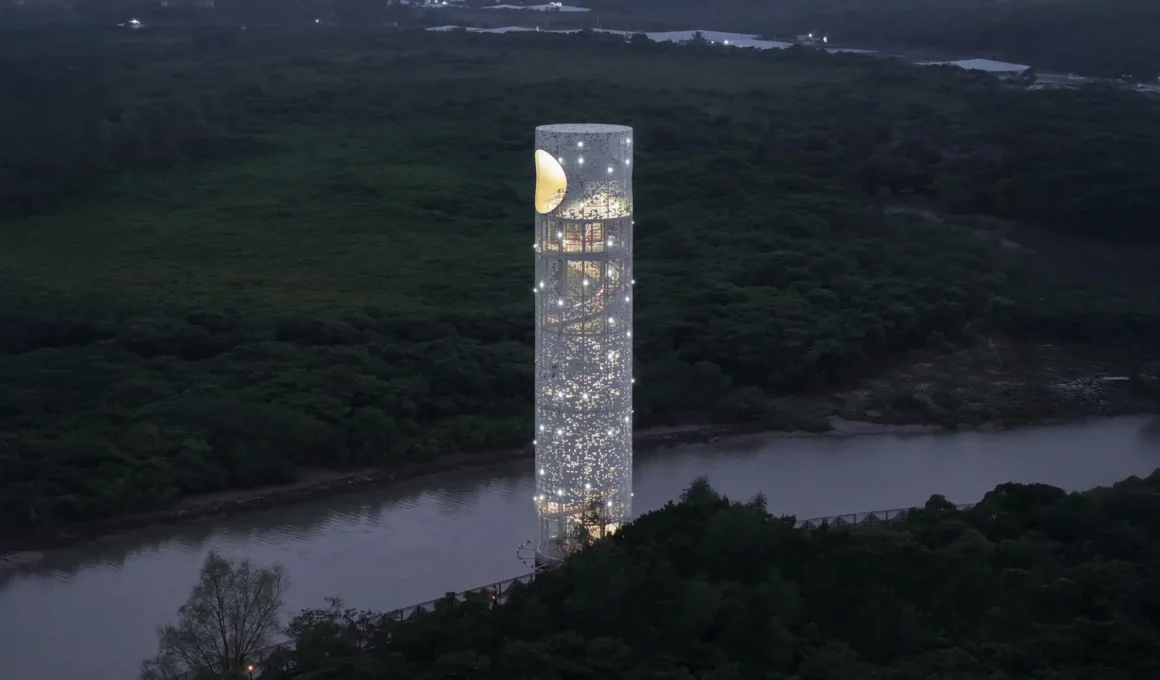
Rising in elegant defiance of its vulnerable coastal setting, the Lunar Tower, designed by the South China University of Technology Architectural Design and Research Institute Co. Ltd. (SCUT), is a pure, cylindrical gesture set against the dense green expanse of the Hainan Dongzhaigang National Nature Reserve. This is not just an observation point; it is a sculptural object dedicated to ecological sensitivity, a coastal landmark marking China’s most important sanctuary for mangrove forests and their rich biodiversity.
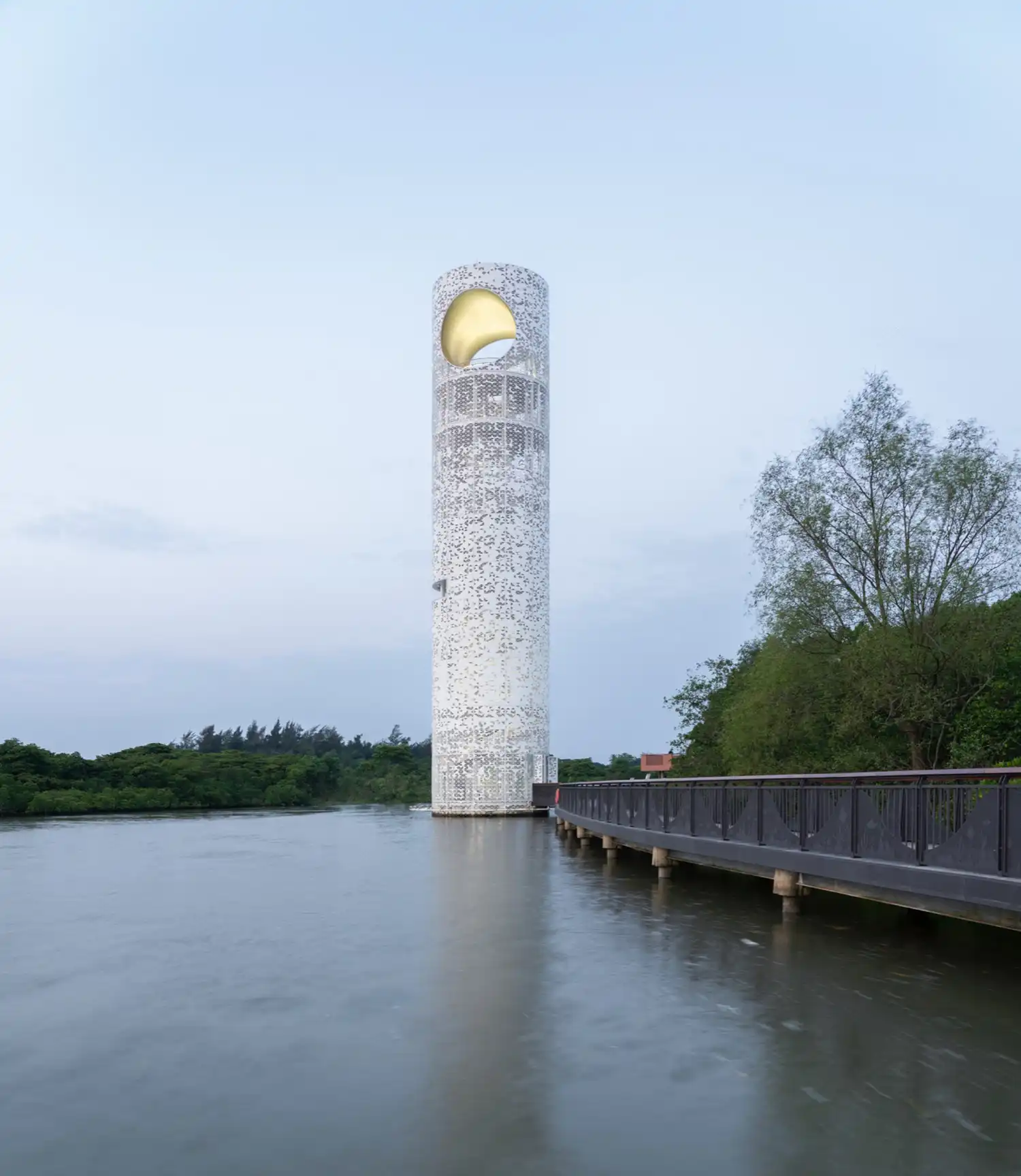
The structural concept distills the brief—scientific research, sightseeing, and disaster prevention—into a singular, minimalist form. The verticality and simplicity of the cylindrical design were strategic, ensuring the lowest possible ecological disturbance to the wetland. The tower’s poetic name, “The Lunar Tower,” is drawn from the structure itself: the viewing aperture at the summit is shaped to frame the sky like a perfect full moon, creating a dramatic, serene focal point that appears to hover above the sea and the surrounding canopy, particularly as daylight fades.
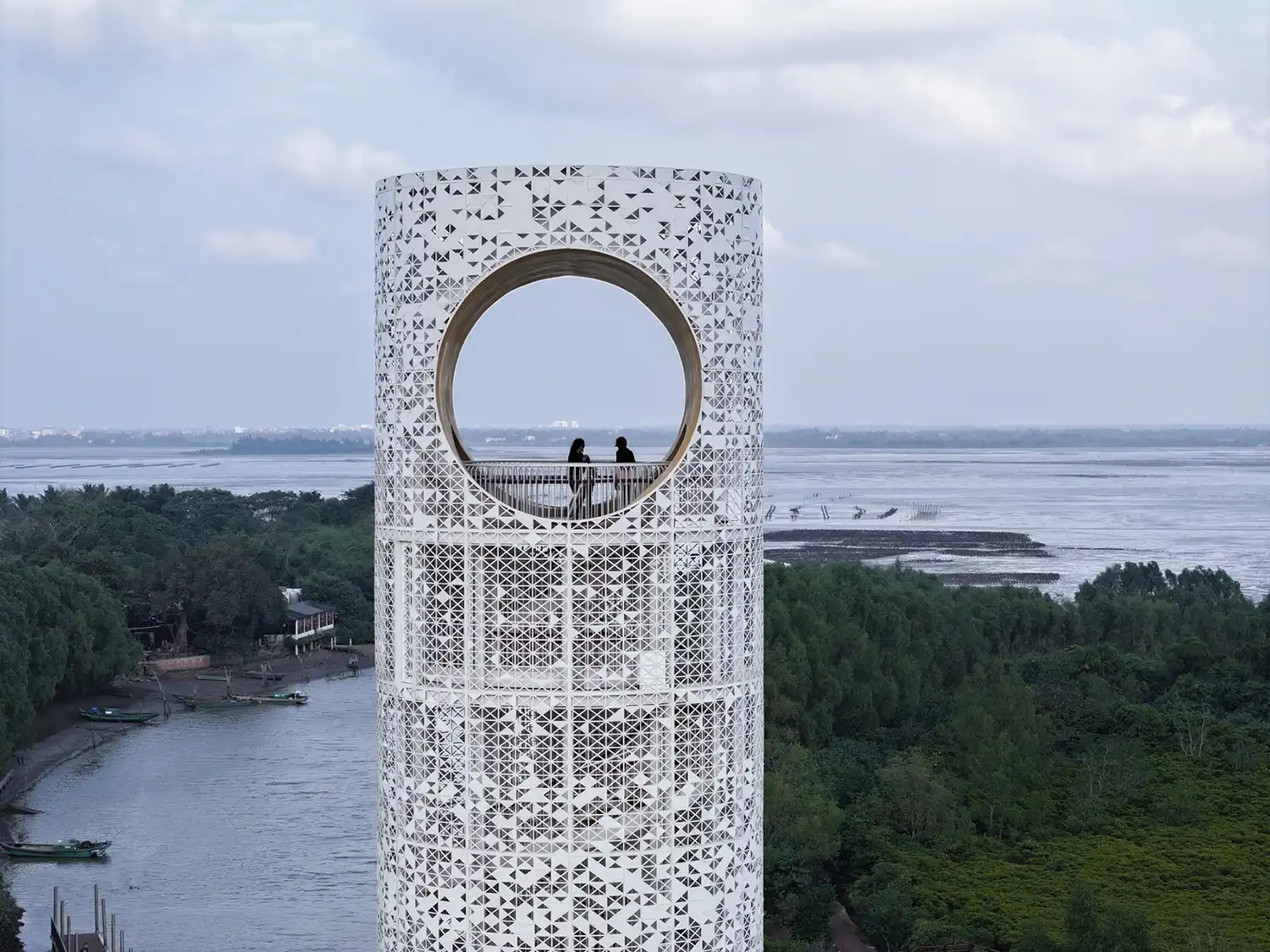
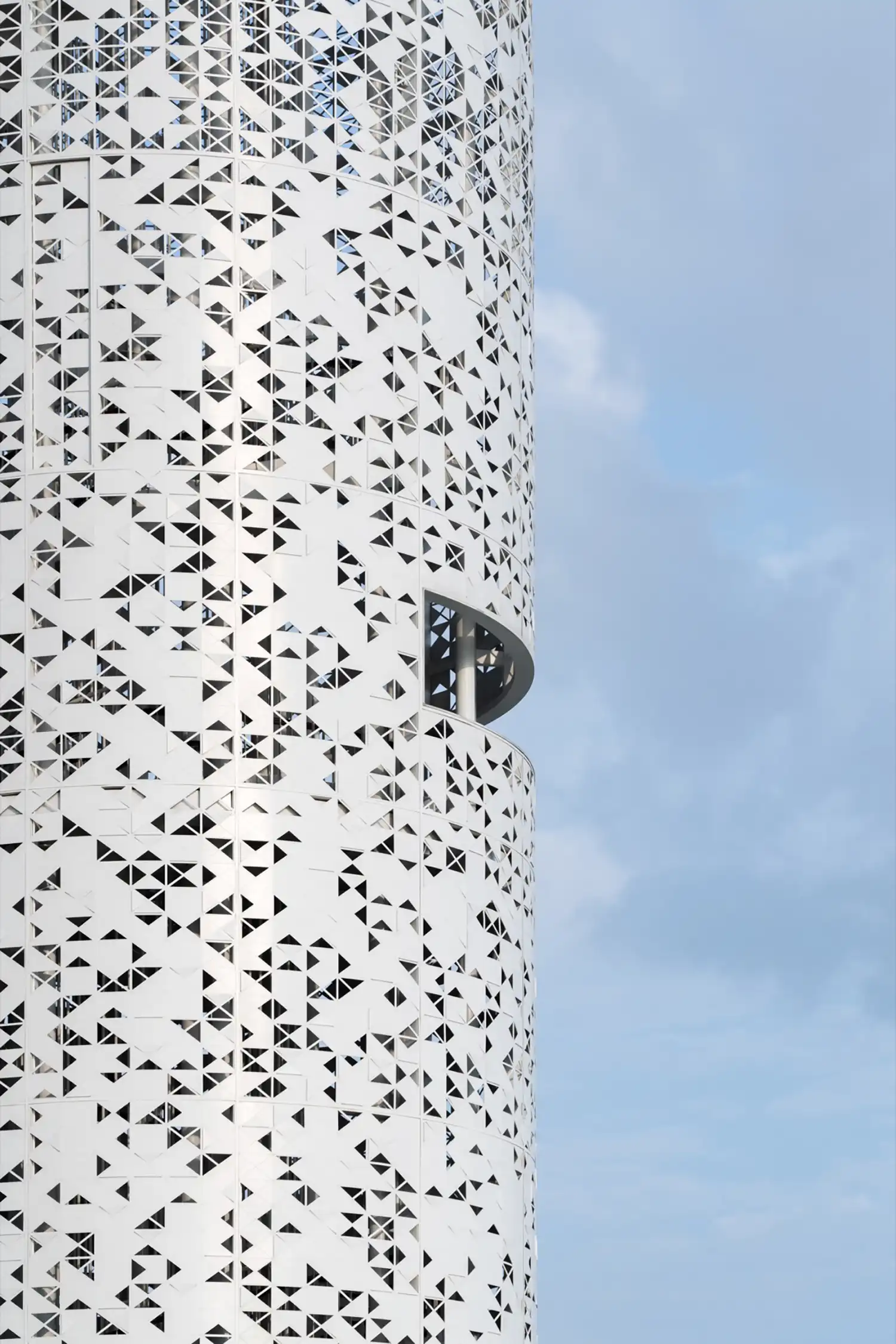
The facade is where the dialogue between the built environment and nature is most explicit. SCUT clad the tower in perforated, low-reflective white aluminum plates. These surfaces are patterned to abstractly represent the leaves of the local mangrove trees, creating a kinetic texture that appears to organically grow upward. Critically, this outer skin is separated from the inner stair core, forming an ecological buffer layer. This gap is a simple, yet profound, measure to diminish the impact of human presence on the migratory bird population, making the structure a conscious habitat collaborator.
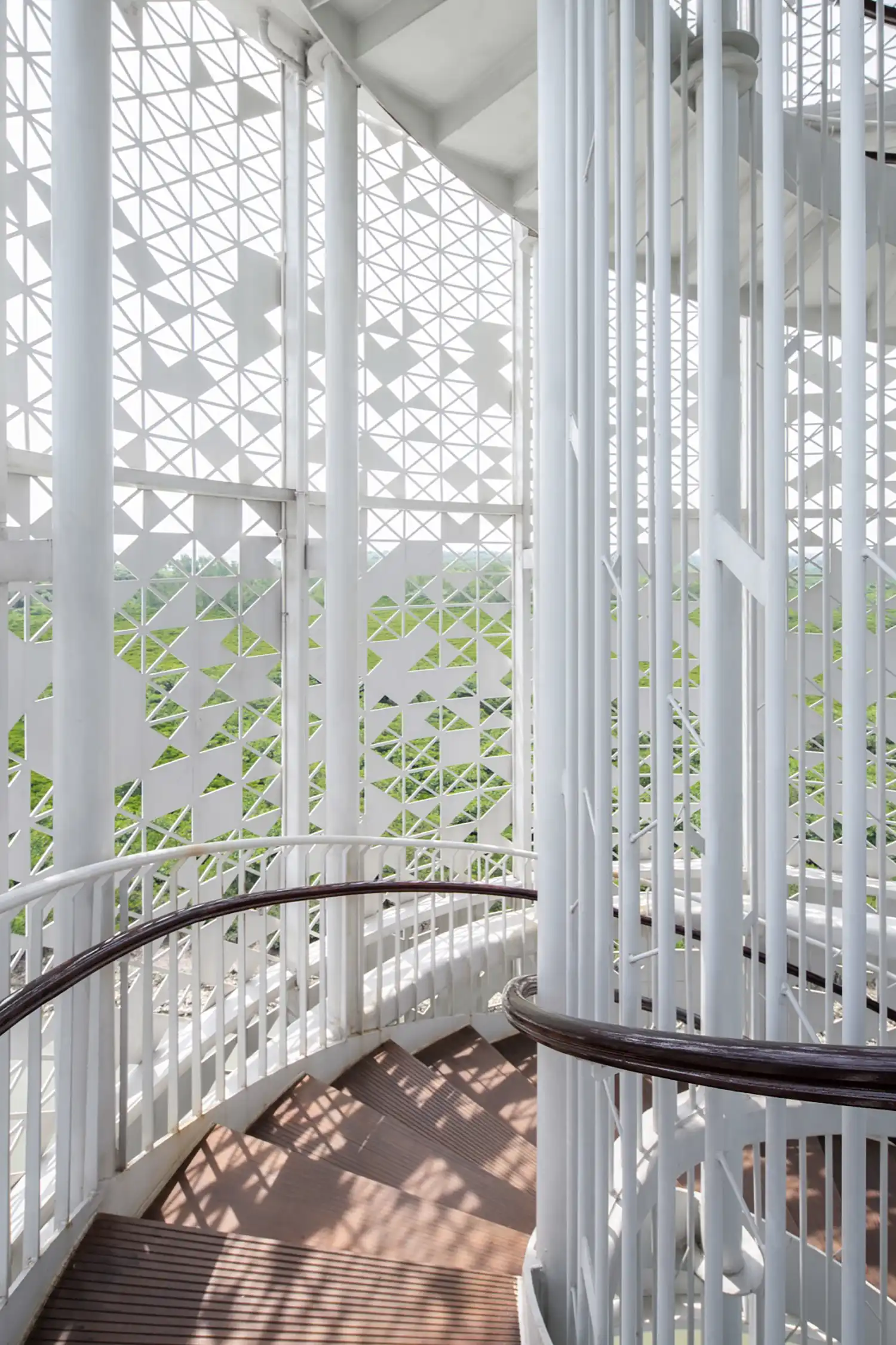
The internal experience is defined by a slow, controlled ascent. Visitors climb a gracefully spiraling staircase that weaves between three rest platforms, culminating in the 27-meter-high viewing deck. This journey is crafted to offer continuously evolving perspectives—from intimate views of the mangrove roots at the base to the full panorama of the Qiongzhou Strait at the top. The interior finish, utilizing white structure and wooden flooring, maintains a light, airy, and non-intrusive material palette, emphasizing comfort and the connection back to the natural world.
The engineering is a masterclass in achieving structural lightness in a hostile environment. Situated in an exposed offshore area, the 33.5-meter architecture required robust wind load resistance. SCUT opted for a high-rise steel frame structure composed of 18 slender, upright steel pipe columns. These columns are subtly tied together by the ribs of the spiral staircase and ring beams, achieving a cohesive spatial stiffness. The columns below the 12-meter mark are fortified with high-grade concrete, ensuring the coastal structure can withstand the forces of a Level 15 typhoon without compromising its delicate, ethereal aesthetic.
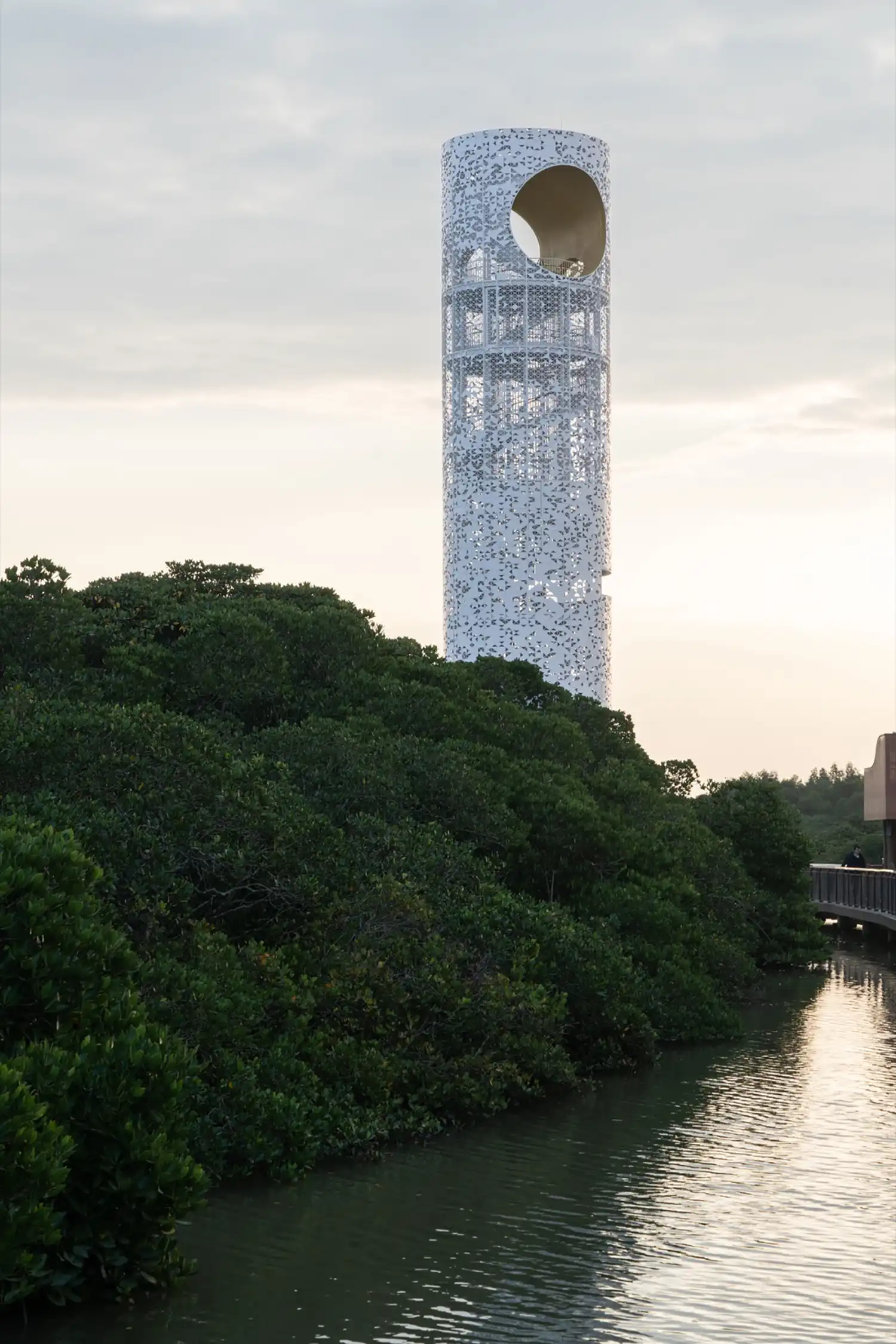
Finally, the lighting design completes the architectural integration. Conscious of the sensitive habitat, the design avoids strong internal light. Instead, the focus is on a subtle outer surface illumination that, combined with the illuminated top space, evokes the effect of a starry sky and moon tips. This minimal approach ensures the structure is not a beacon of disruption but an ethereal element, showcasing its upright character and seamlessly merging the Lunar Tower with the sea and the surrounding mangrove forest—a fitting new cultural landmark for the region.