



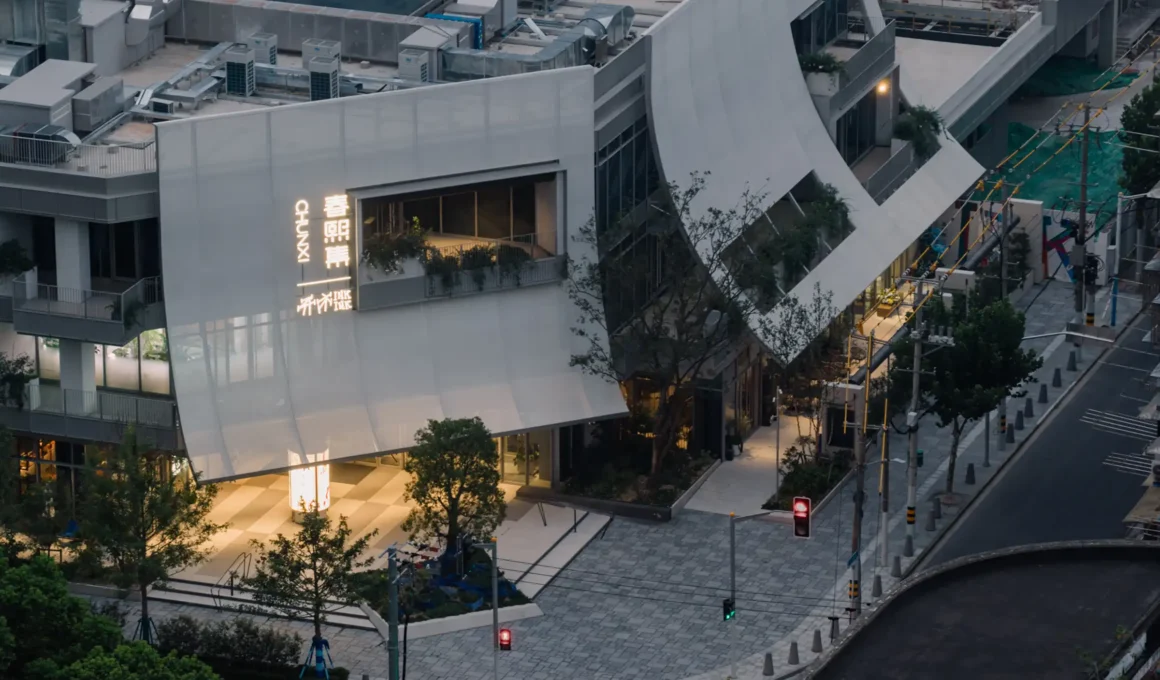
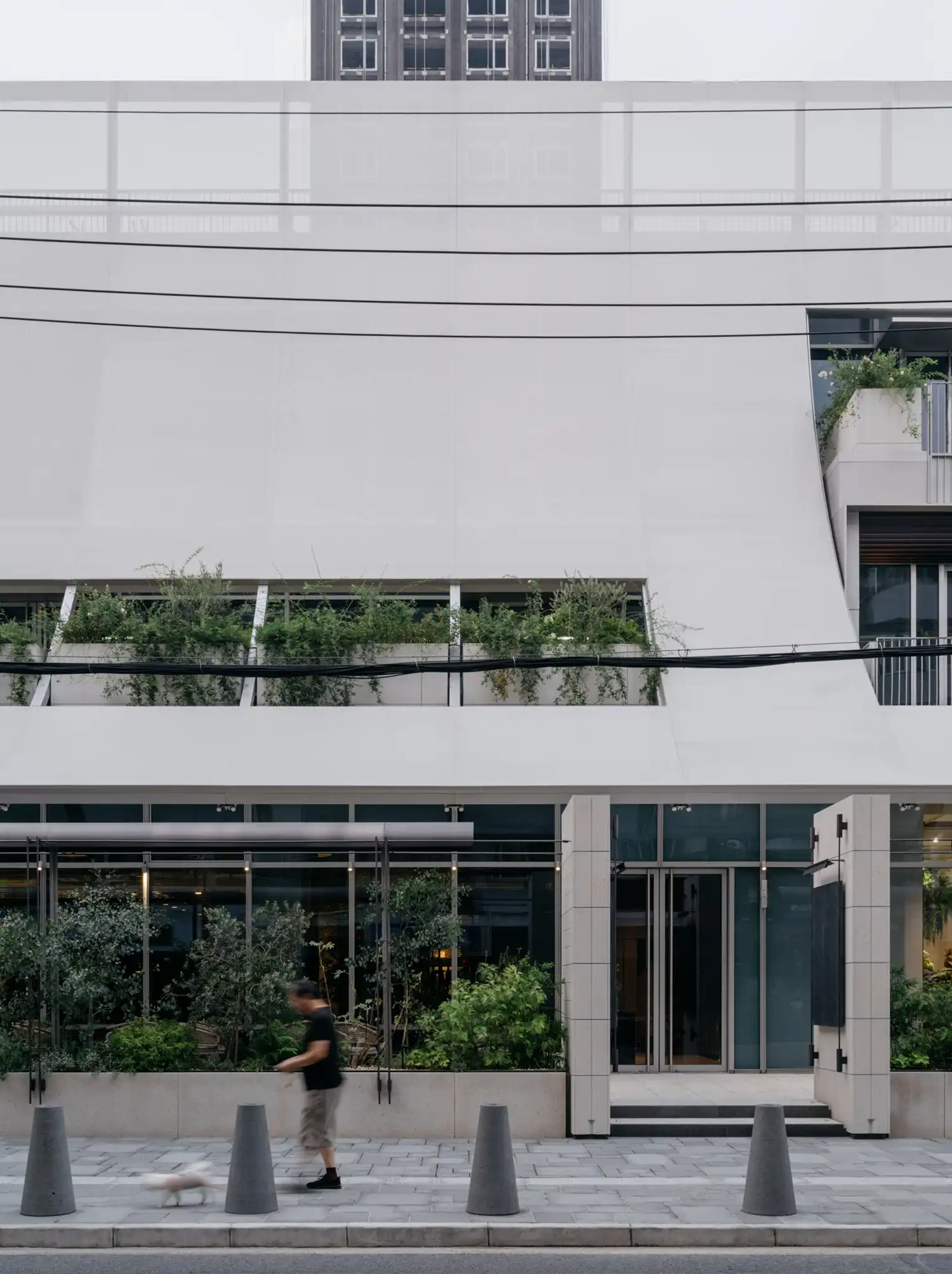
Linehouse has completed the Ink Ink Market in Shanghai, cloaking the three-storey commercial building in a dynamic, multi-faceted membrane that nods to the city’s vernacular architecture. Located within a fast-developing residential neighbourhood, the project reinterprets the clustered, sloping rooflines and “chimney windows” of traditional Shanghai laneways using a lightweight, translucent skin of PTFE membrane. The resulting design is a striking, permeable structure that is conceived less as a static building and more as a glowing, adaptable anchor for community life and contemporary urban ritual.
The core concept for the design centres on reinterpreting the intimate, vernacular spatial qualities of traditional Shanghai laneways, particularly their characteristic sloped roofs and haphazardly protruding windows. Linehouse has abstracted this familiar geometry into a lightweight, three-storey volume, successfully translating a dense, historic typology into a striking modern urban context.
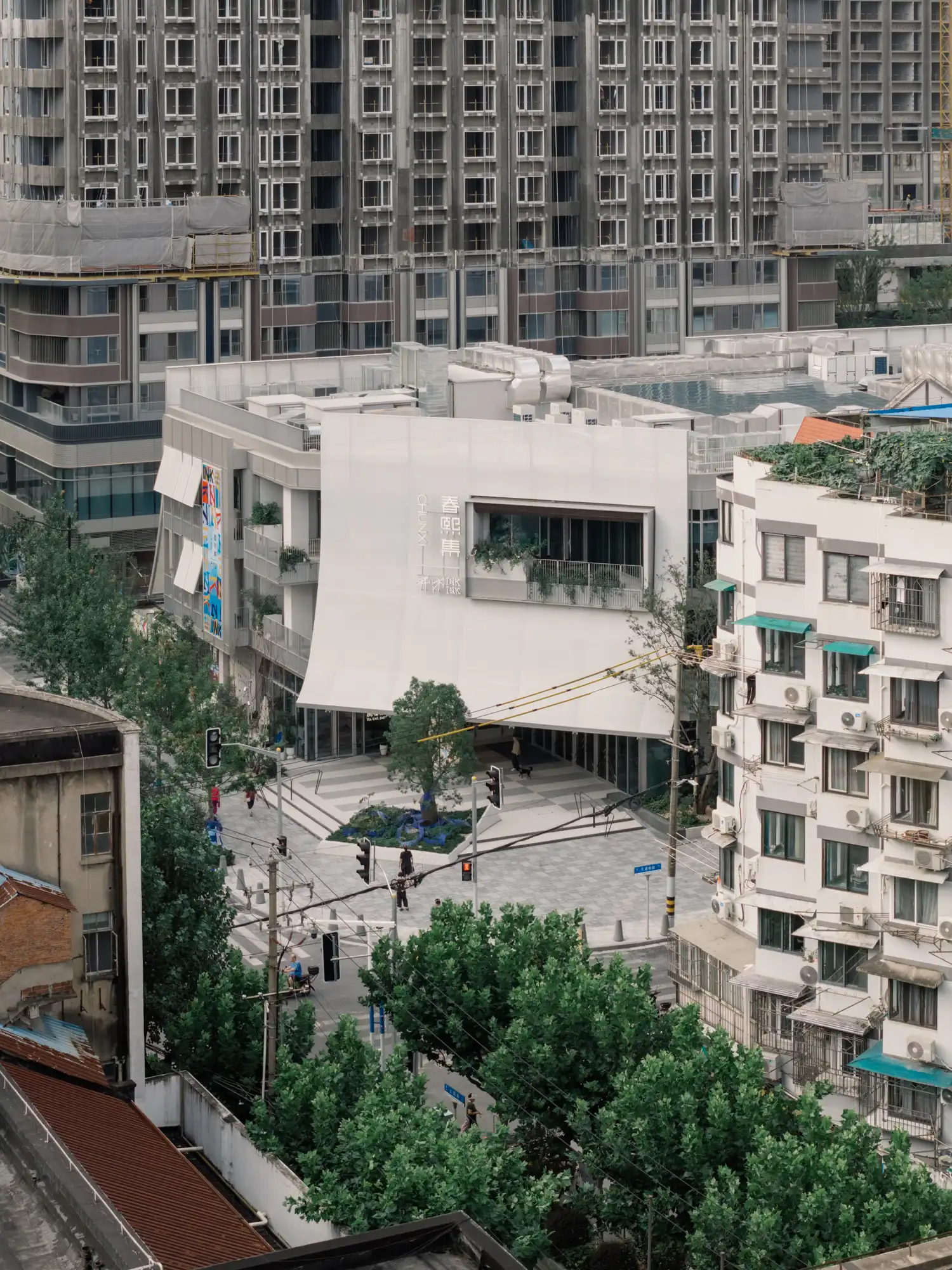
Dominating the exterior is the expressive, multi-faceted skin—a series of overlapping, sloping planes crafted from a translucent solar film: PTFE membrane. This translucent facade is the primary element of engagement, creating shaded ‘in-between’ spaces along the balconies and acting as a secondary screen to modulate the harsh eastern sunlight, offering glimpses into the life within.
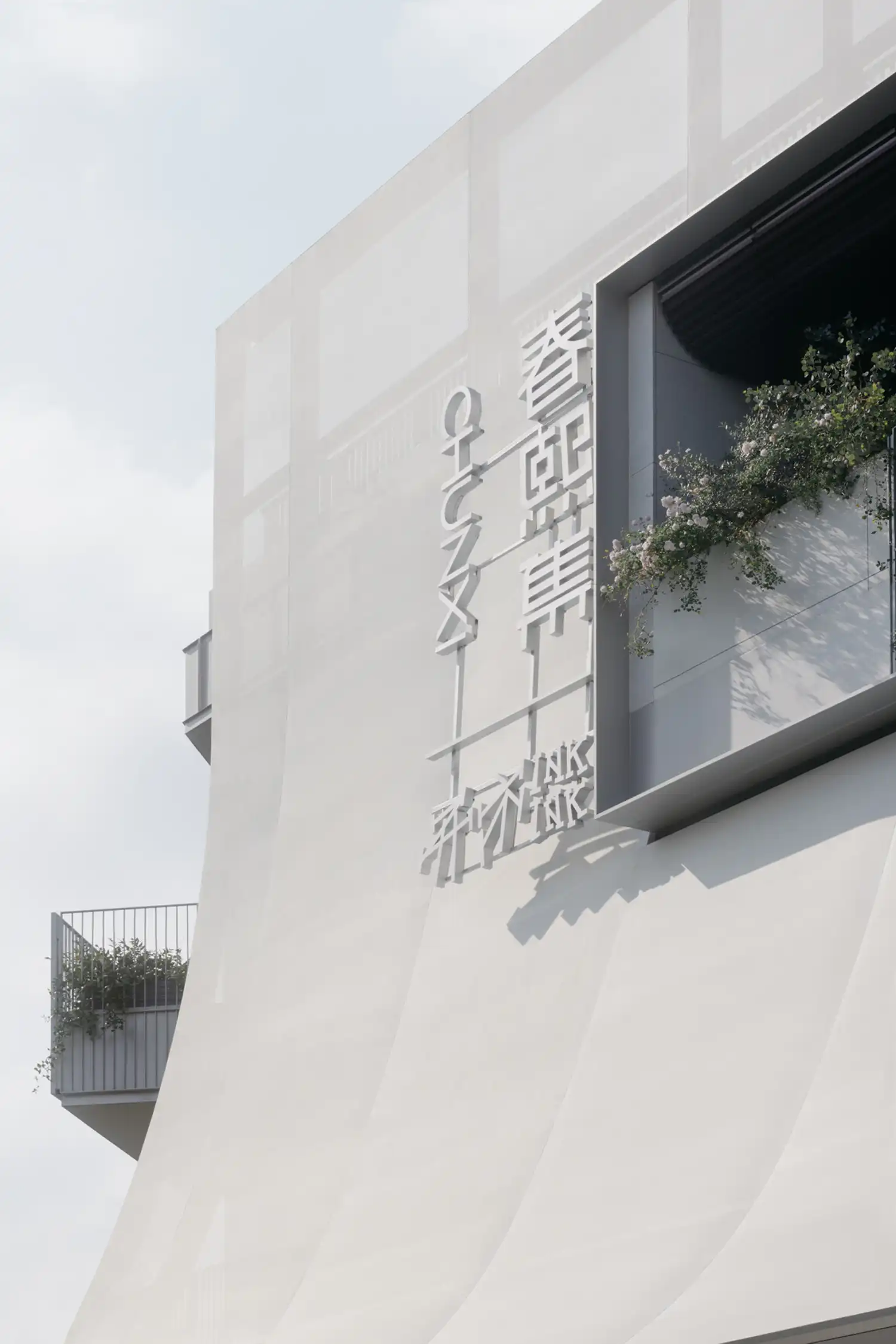
During the day, the sheer material filters and diffuses light, bathing the internal volumes in a soft, bright glow that enhances the market atmosphere while managing thermal performance. This thoughtful handling of daylight transforms the interior experience, moving away from conventional, artificially lit commercial spaces towards a more open, naturalistic environment.
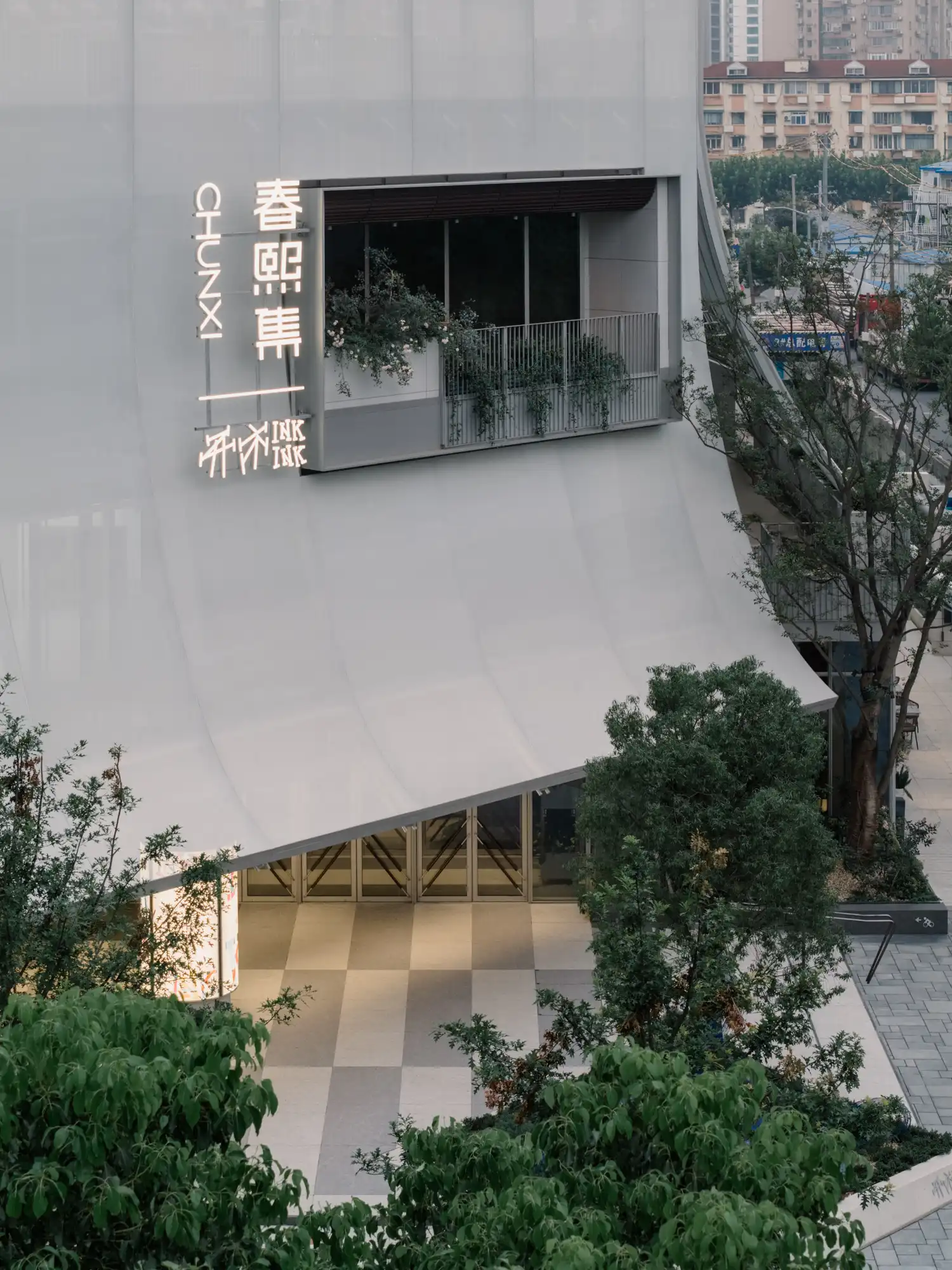
The structure’s performance shifts dramatically at night, with the internal lighting radiating outwards through the PTFE membrane. This transformation turns the Ink Ink Market into a living, luminous installation—a vibrant collage of movement and activity that serves as a vital beacon for the neighbourhood, celebrating the congregation and energy housed within.
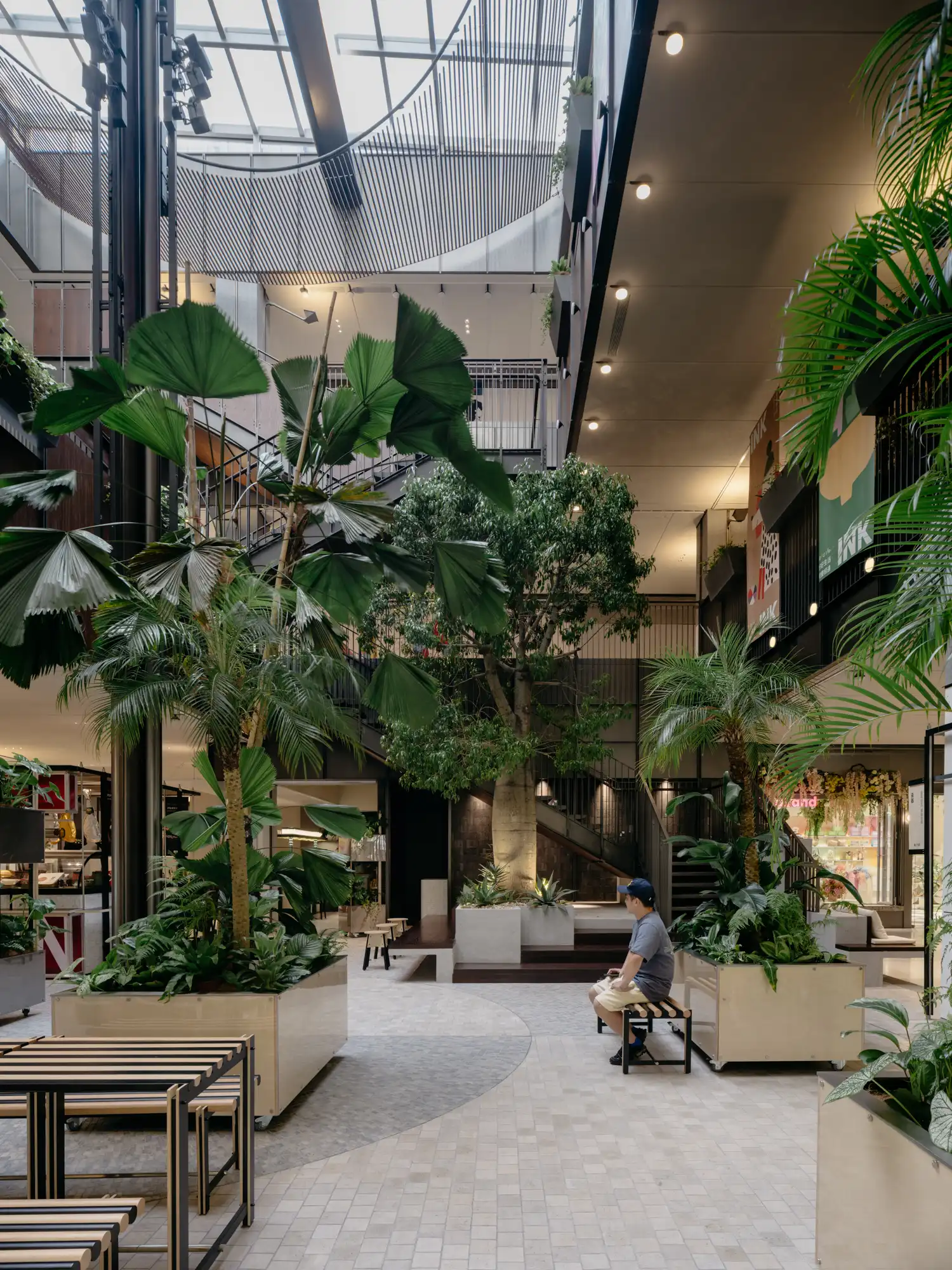
At ground level, the architecture thoughtfully resolves the public-private interface by carving out a large, welcoming covered piazza beneath one of the major sloped planes facing the main crossroad. This gesture ensures the market hall immediately integrates with the community, providing a sheltered zone for daily ritual and blurring the line between the sidewalk and the commercial space.
Internally, the three-storey vertical circulation is unified by an open atrium that pays distinct homage to the grand, public halls of historic train stations. This monumental scale and layered structure, achieved through stepped terraces, were designed to promote a dynamic, overlapping atmosphere, creating varied sightlines across the smaller market kiosks and perimeter shops.
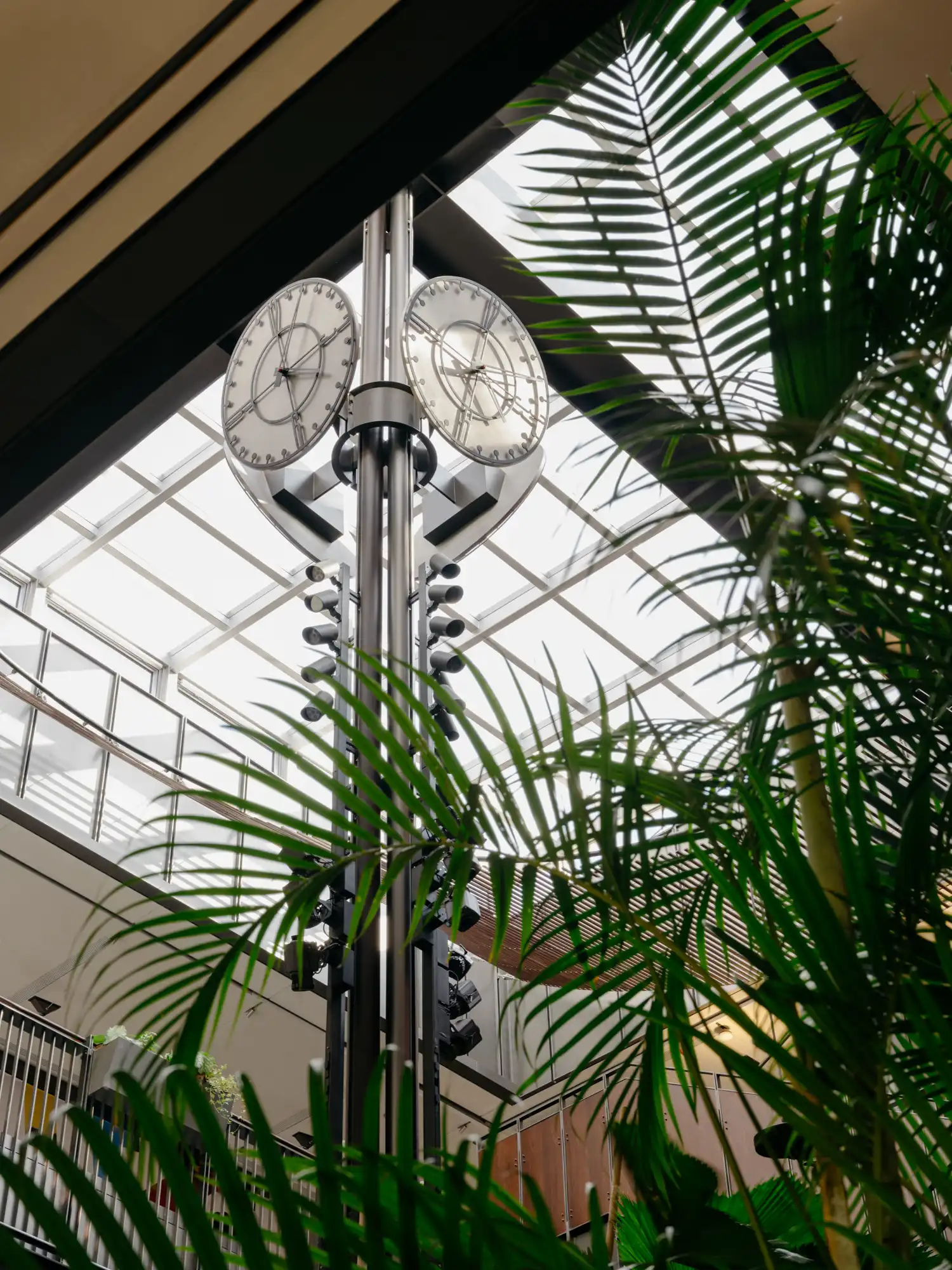
A focal point within this soaring void is the central column that rises to hold a custom-designed clock, deliberately referencing the iconic timepieces that once anchored railway terminals. A radial floor pattern of tumbled cobbled stone extends from its base, further cementing its role as the central meeting point and the symbolic heart of the market hall.
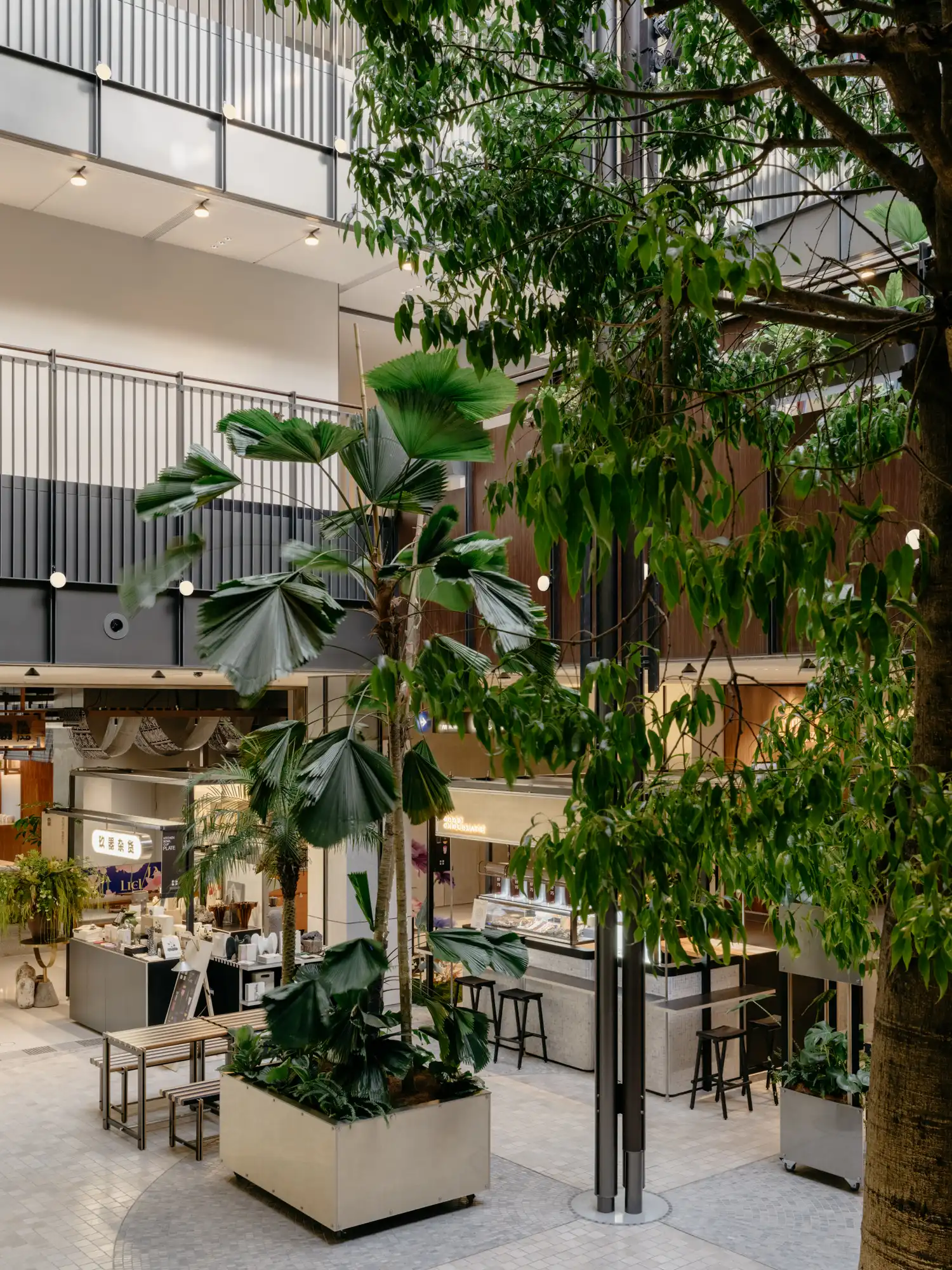
The interior design employs a refined palette that blends nostalgia with contemporary craft. This includes the extensive use of dark walnut wood on the floating staircases and wall linings, offering a tactile contrast to the black metalwork and the playful, complex patterns of the mosaic paving underfoot. The upper two floors are dedicated to larger restaurants, with metal boxes protruding through the mesh to frame specific views and connect to the exterior balconies.
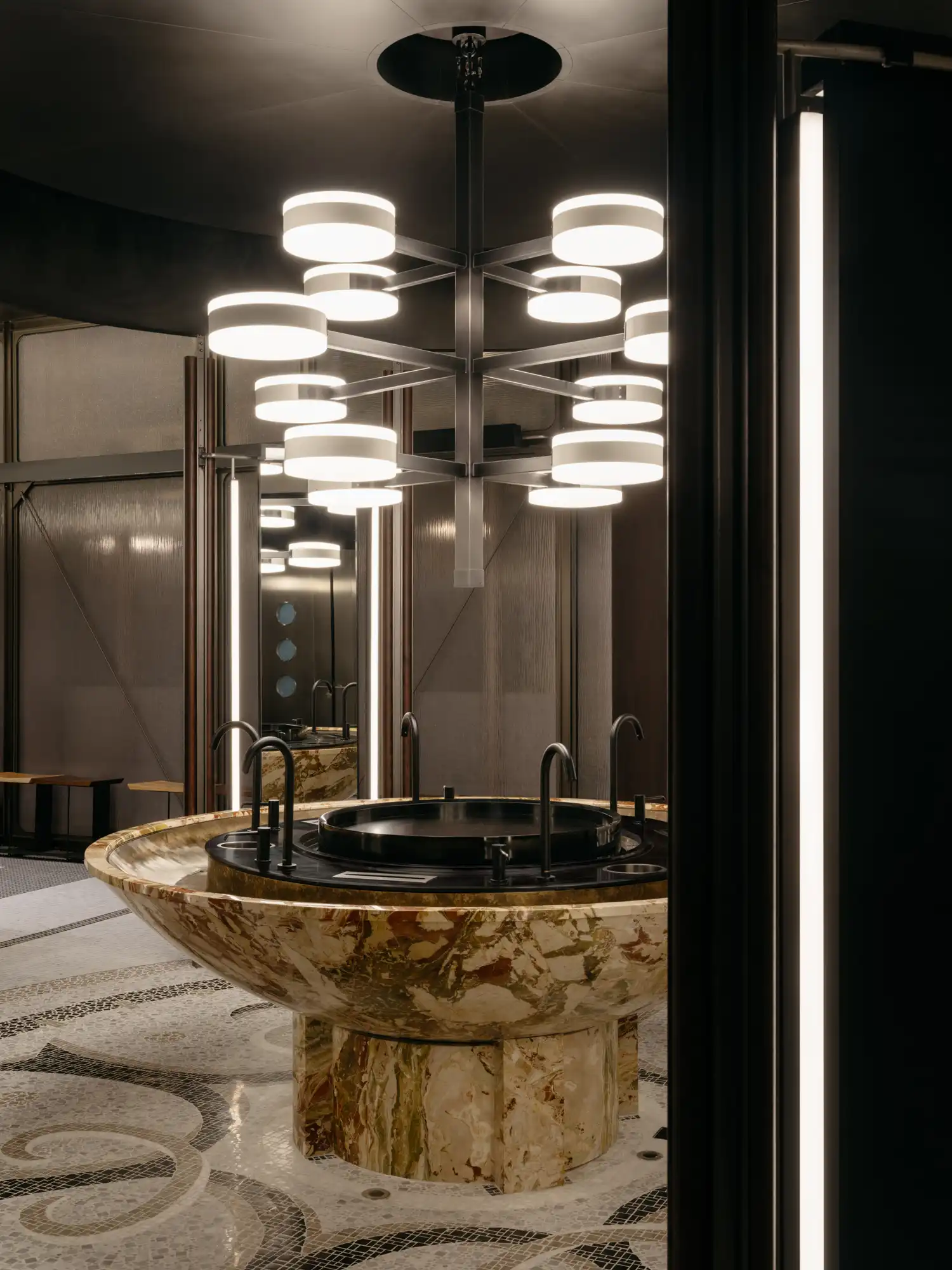
Even the most utilitarian spaces are elevated to theatrical experiences, with the ground-floor bathrooms echoing the grandeur of old Shanghai meeting halls. A custom-carved, round marble sink is framed by a colonnade of mirrors and vertical lights, complementing the intricate layering of Carrera marble mosaics and green-toned tiles, secured by sleek metal trims, underscoring the project’s meticulous attention to detail.
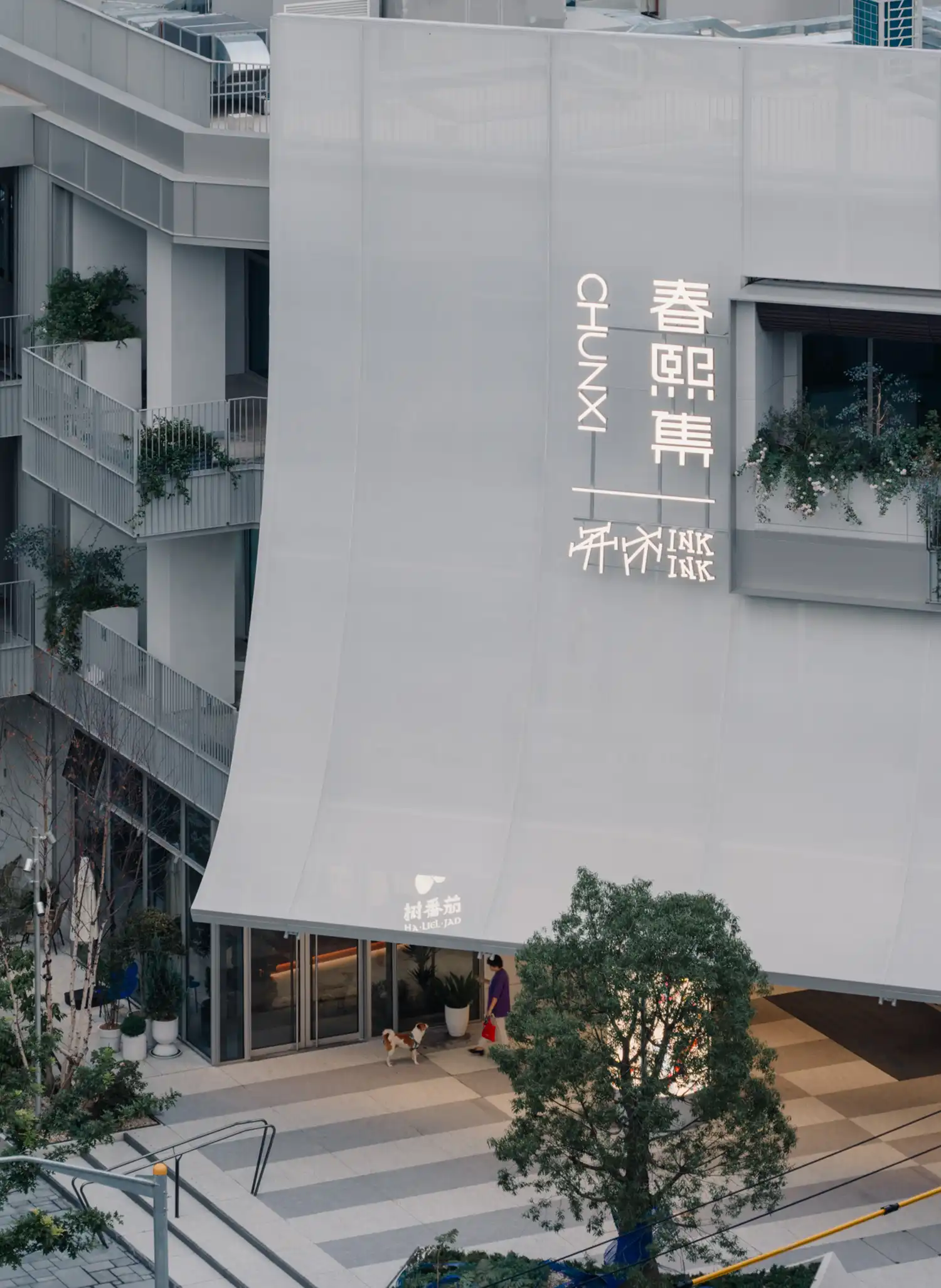
The 1790 sqm Ink Ink Market, delivered for client Vanke, is a significant addition to Shanghai‘s commercial architecture landscape. By grounding the aesthetic in local memory and employing highly adaptive floor plans and flexible vendor spaces, Linehouse has delivered a compelling, visually arresting public building that is expertly suited to the rapidly evolving social and retail demands of its residents.