

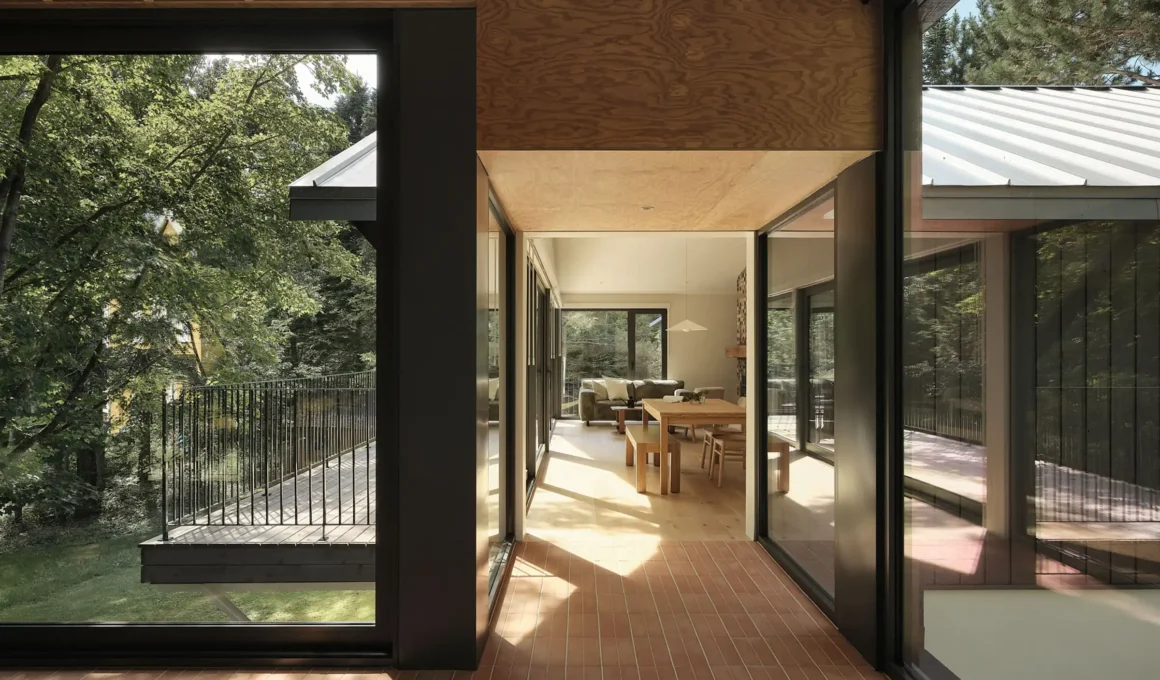
Montreal-based studio Jérôme Lapierre Architecte has added a minimalist timber-and-glass pavilion to a residence in Saint-Ferréol-les-Neiges, designed to “slip between the trunks” of the surrounding boreal forest. Located in a wooded area of Québec, the Saint-Ferréol Résidence is a sensitive extension of an existing secondary residence modeled after traditional Austrian chalets. The original home featured a compact, elevated volume and deep roof overhangs—elements the architects chose to reinterpret through a contemporary lens rather than mimic directly.
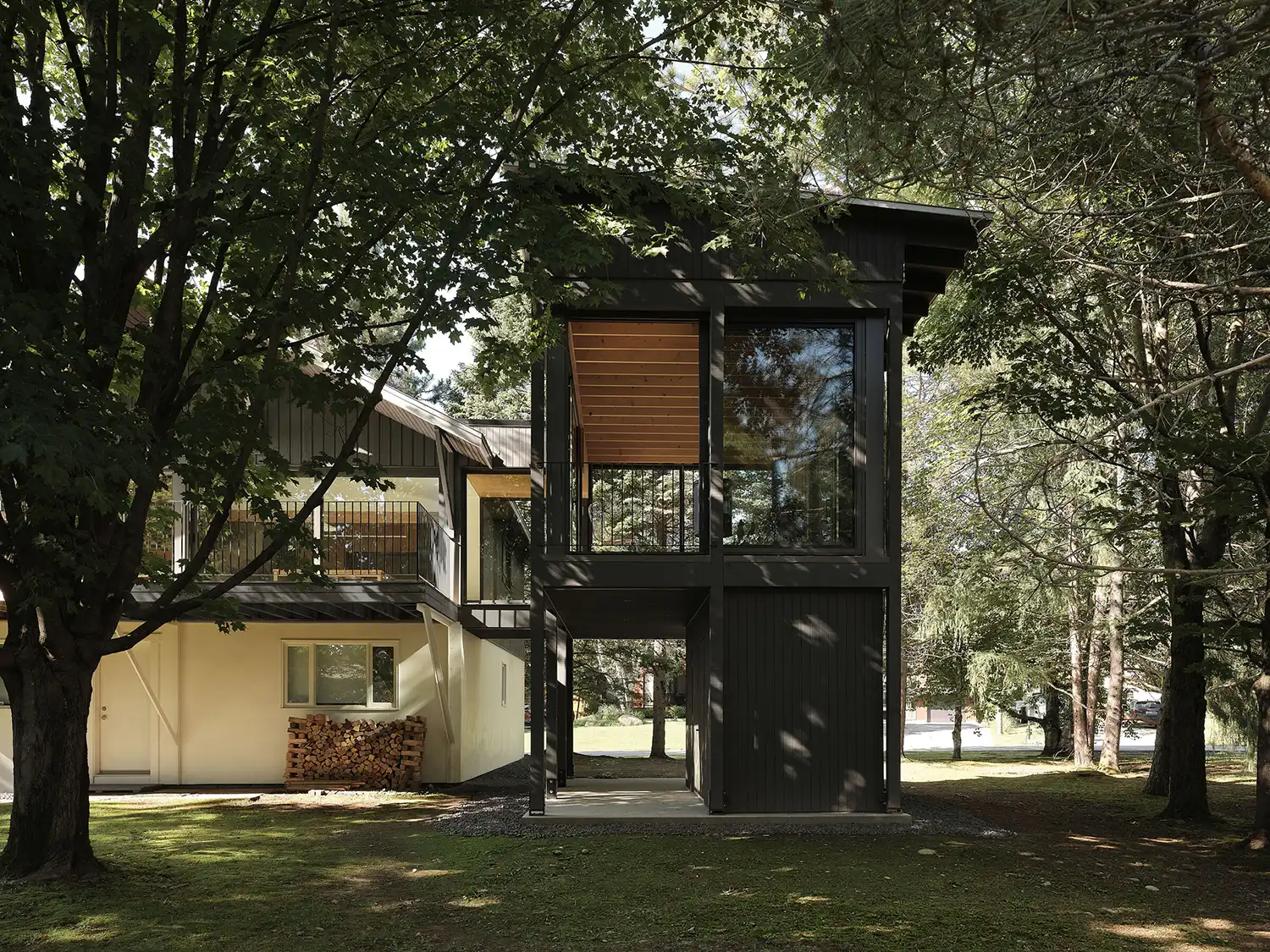
The new addition is raised above the forest floor on a minimal base, a move intended to preserve the site’s mossy topography and mature spruce trees. By utilizing a structural slab with a reduced footprint, the studio ensured the building could be positioned with “choreographed precision,” allowing the tips of nearby branches to brush against the roofline.
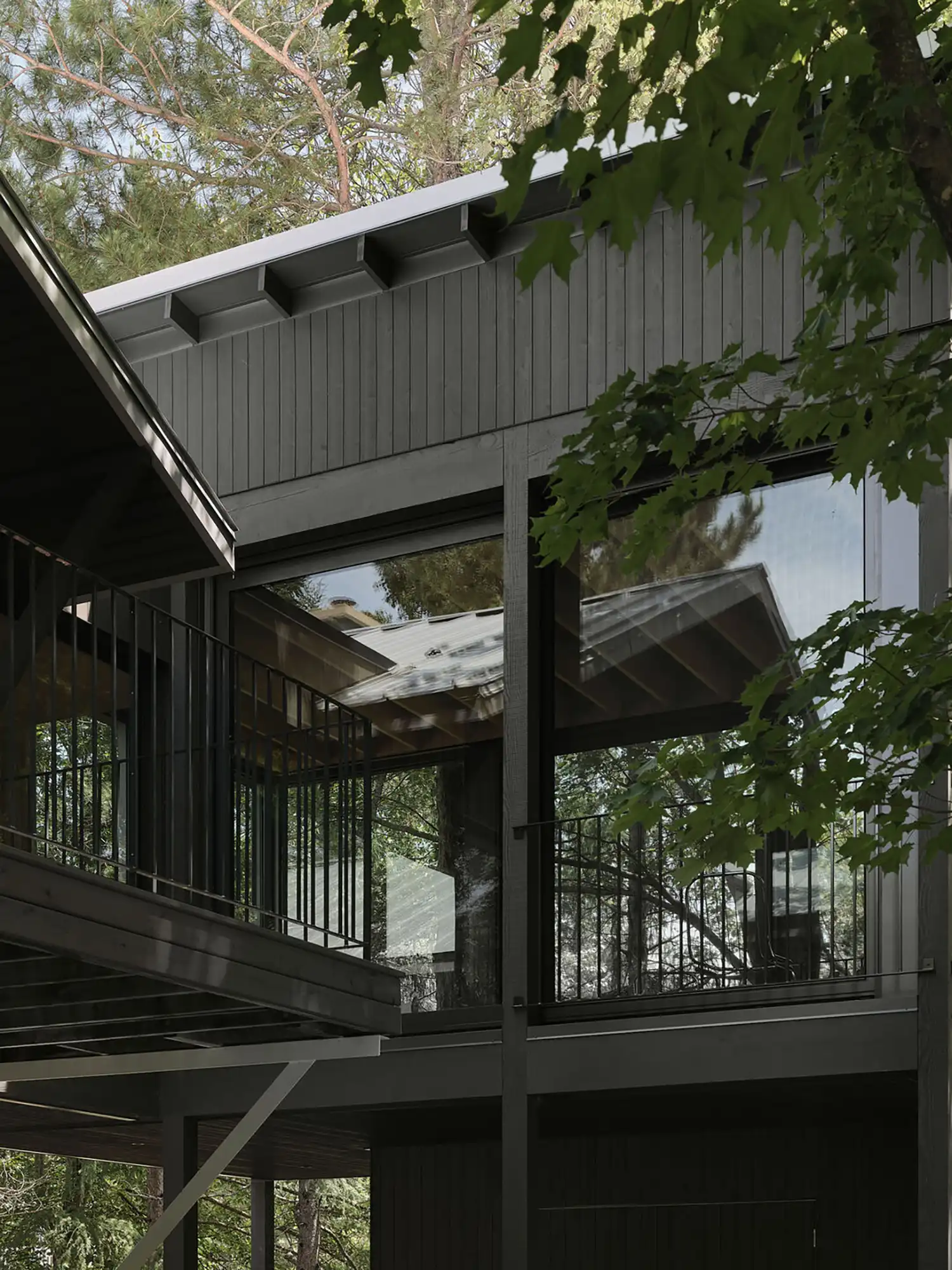
Connected to the main house by a lightweight aerial walkway, the extension functions as a detached pavilion. This physical separation creates a distinct threshold, enhancing the sense of the structure as a private sanctuary suspended within the Canadian landscape. The wood architecture of the exterior utilizes a contextual materiality that allows the building to recede into the shadows of the timber environment.
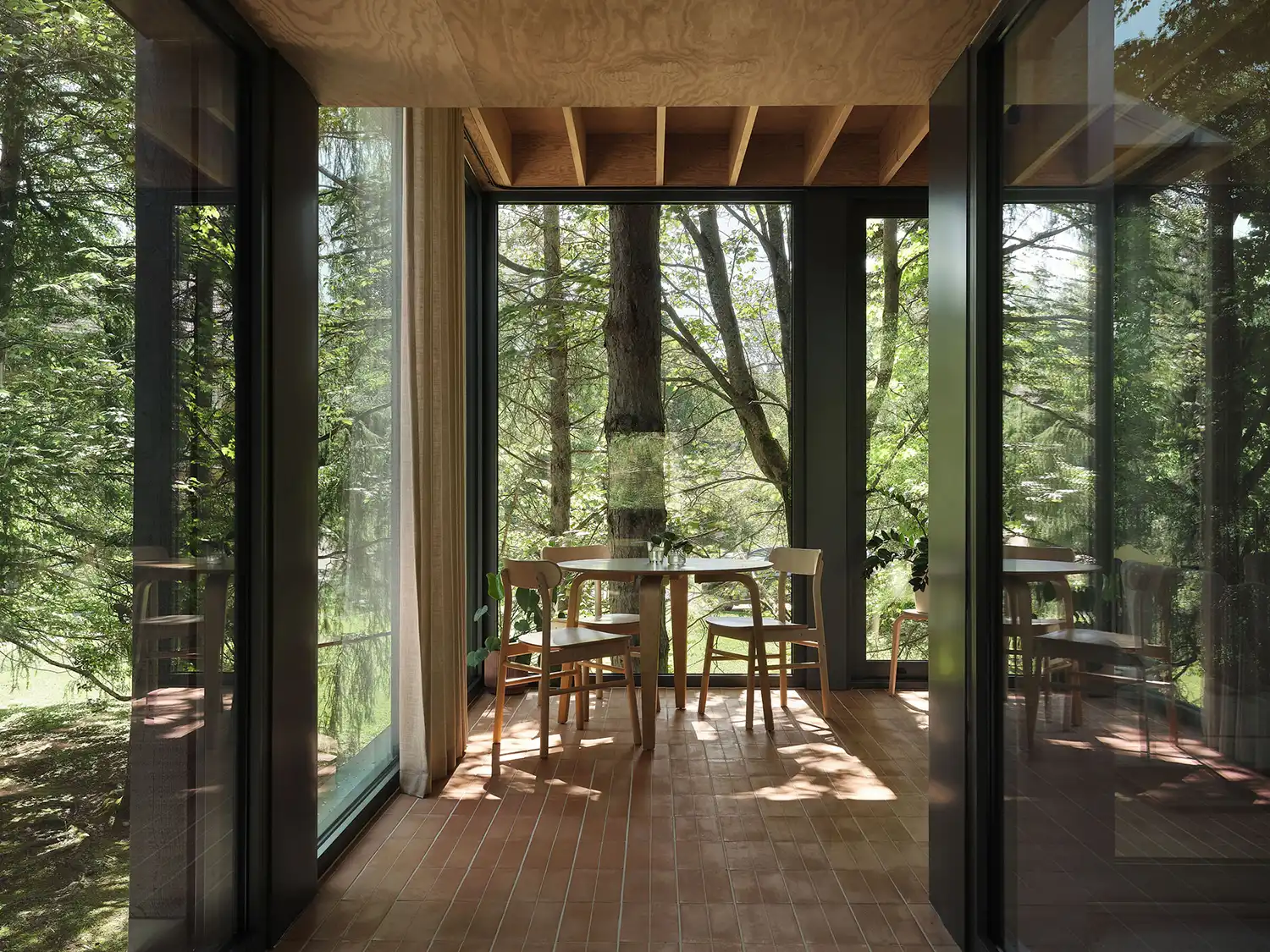
Inside, the pavilion’s character shifts with the local climate. The interior design features a fully glazed envelope tucked behind an exposed structure, paired with a terracotta floor that provides thermal mass. In the summer, the walls can be opened to transform the room into a screened-in space that breathes with the wind. During the winter, the space becomes a “warm cocoon,” offering a contemporary take on forest refuges tucked away in the snow.
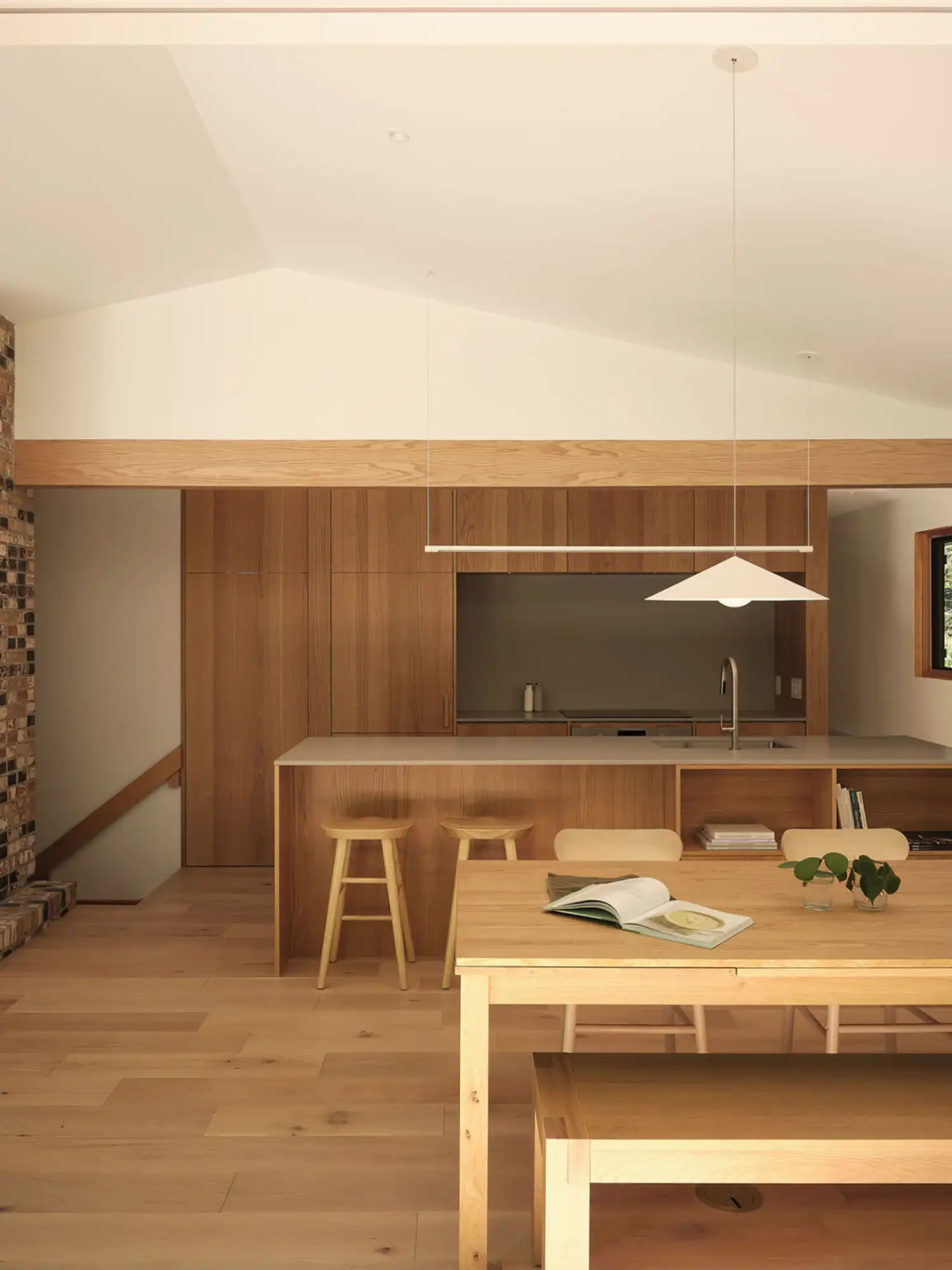
The architects focused on “tectonic expressiveness” by detaching the primary structure from the glass skin. This creates a rhythmic internal frame that emphasizes the building’s minimalist design and structural clarity. Because the building is so tightly integrated into the woods, the glass facade generates reflections that make the branches appear to extend directly into the living space.
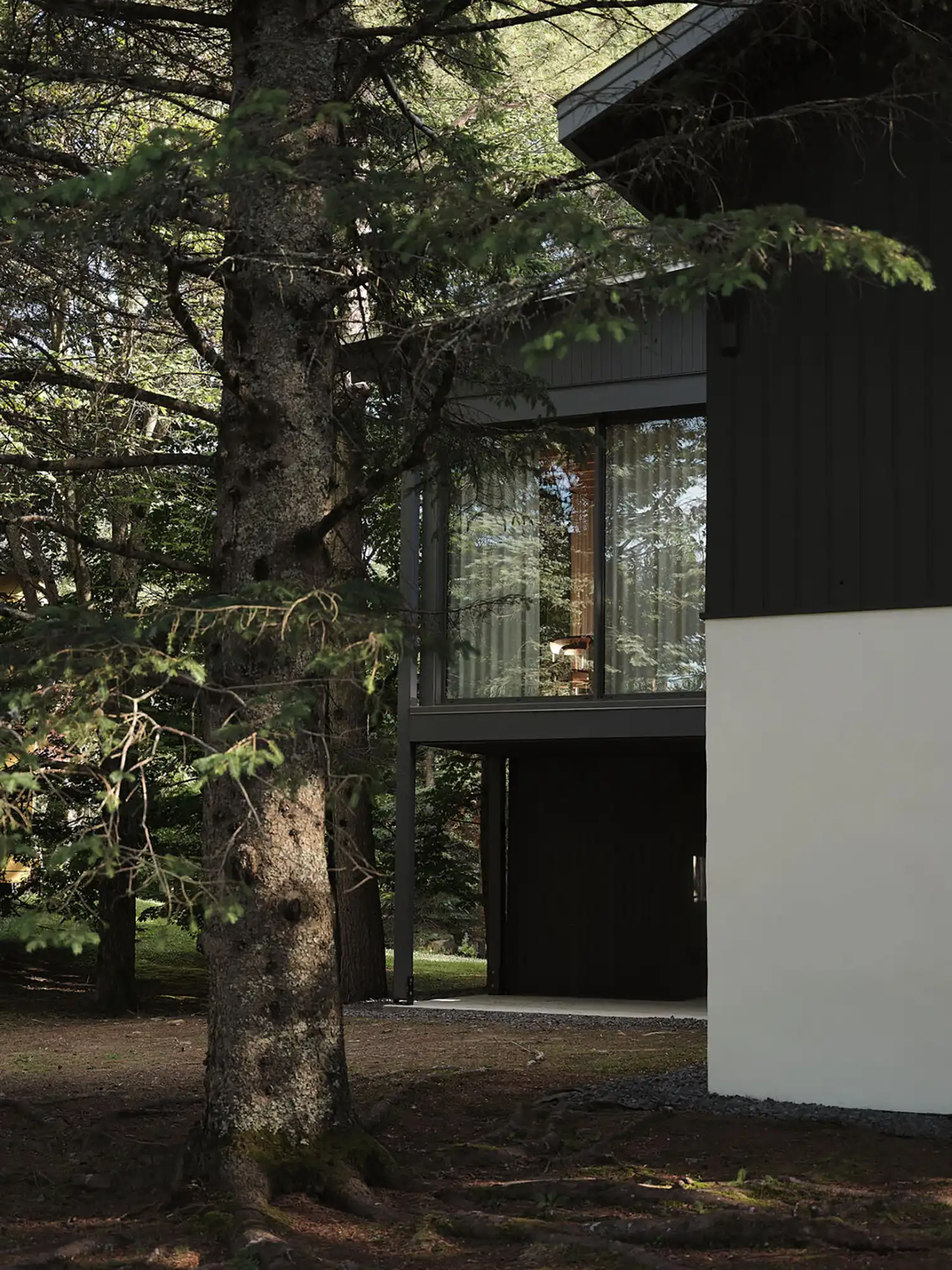
The project concludes as an exercise in architectural restraint. By balancing modern residential architecture with a deep respect for the existing woodland setting, Jérôme Lapierre Architecte has created a retreat that prioritizes the sensory experience of the forest over formal bravado.