



In the ever-evolving landscape of contemporary play, the boundary between the physical and the digital is increasingly being redrawn not through screens, but through the tactile medium of the object itself. At the Consumer Electronics Show (CES) 2026 in Las Vegas, the LEGO Group unveiled LEGO SMART Play, a platform that signals a profound shift in the brand’s spatial configuration. This is not merely a technical upgrade; it is a fundamental evolution of the System-in-Play philosophy that has governed the Danish company since the mid-20th century. By embedding intelligence directly into the plastic vernacular, the project seeks to animate the static brick, allowing the built environment to respond to the human touch with unprecedented autonomy.
A core conceptual vision drives this innovation, moving away from the “passive” model of construction toward a “reactive” ecosystem. Julia Goldin and Tom Donaldson presented the system as a bridge between imaginative storytelling and physical reality, where the materiality of the brick remains the protagonist. The “invisible” nature of the technology is key; rather than distracting from the act of building, the integrated sensors and haptic feedback loops enhance the sensory experience. It is a sophisticated juxtaposition of traditional craftsmanship and cutting-edge miniaturization, ensuring that the act of “clicking” two bricks together remains a tactile joy while becoming a digital trigger.
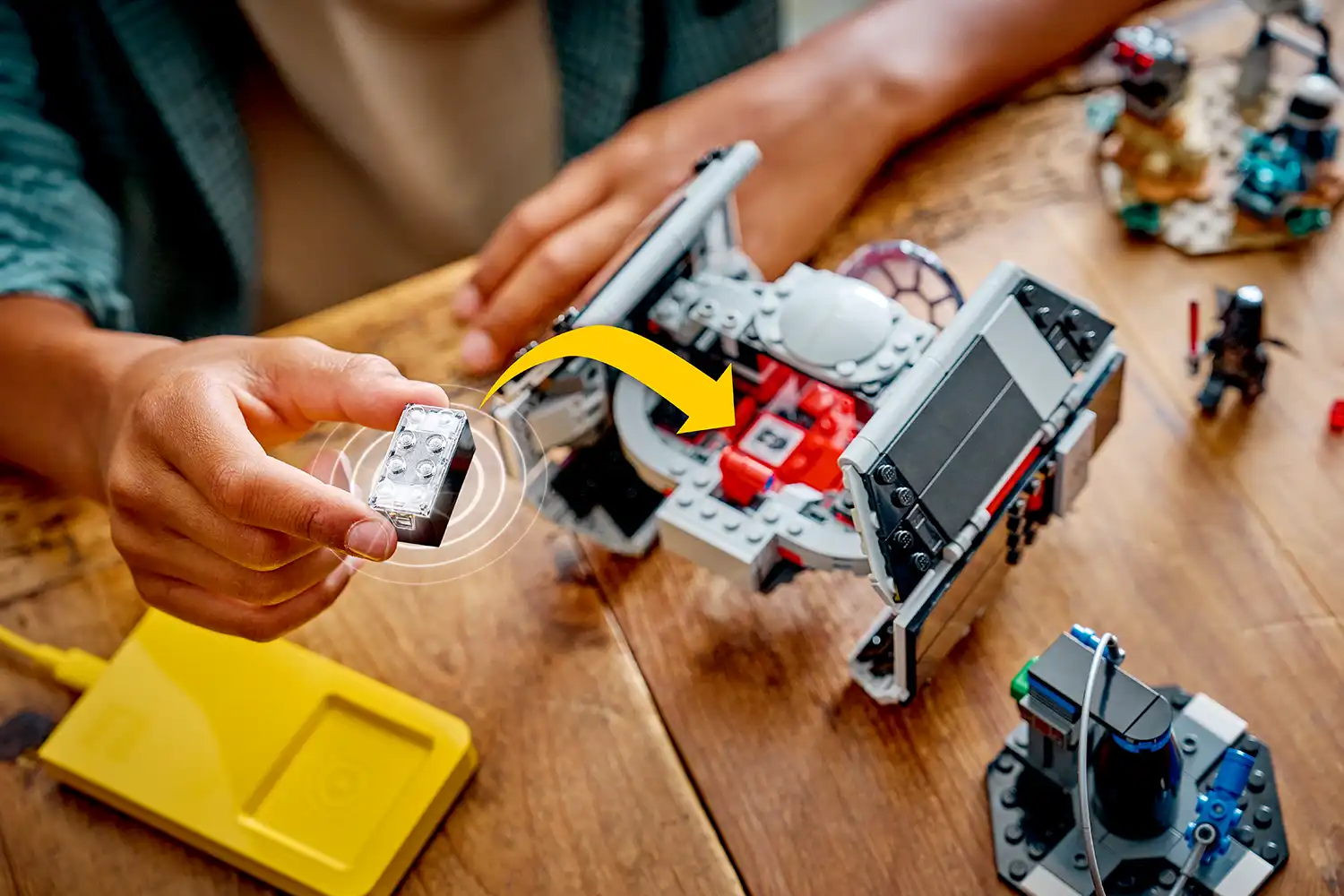
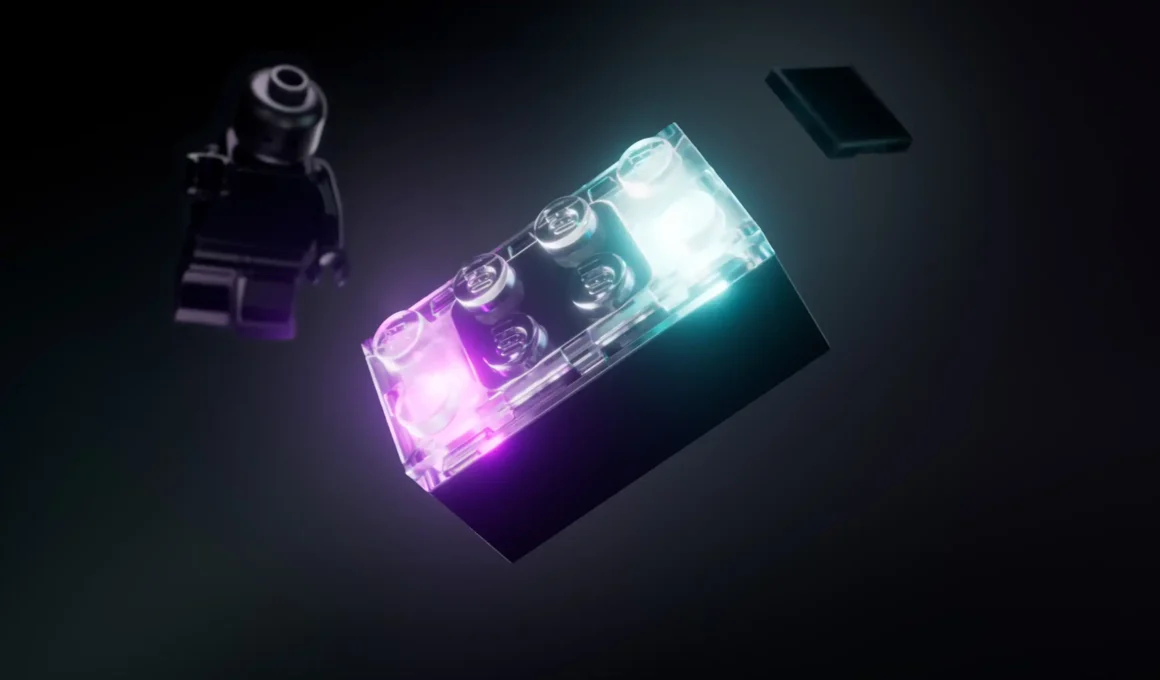
The technical details of the platform revolve around the LEGO SMART Brick, a masterwork of engineering that houses a custom-made chip smaller than a standard 1×1 stud. Within this diminutive volume, the Creative Play Lab in Billund has integrated a suite of sensors—accelerometers, light detectors, and sound sensors—coupled with a miniature speaker and onboard synthesizer. This allows the brick to function as the “brain” of any structure, identifying LEGO SMART Tags and SMART Minifigures to trigger context-specific responses. The result is a system that understands its own geometry and orientation, transforming a pile of ABS plastic into a living, breathing interface.
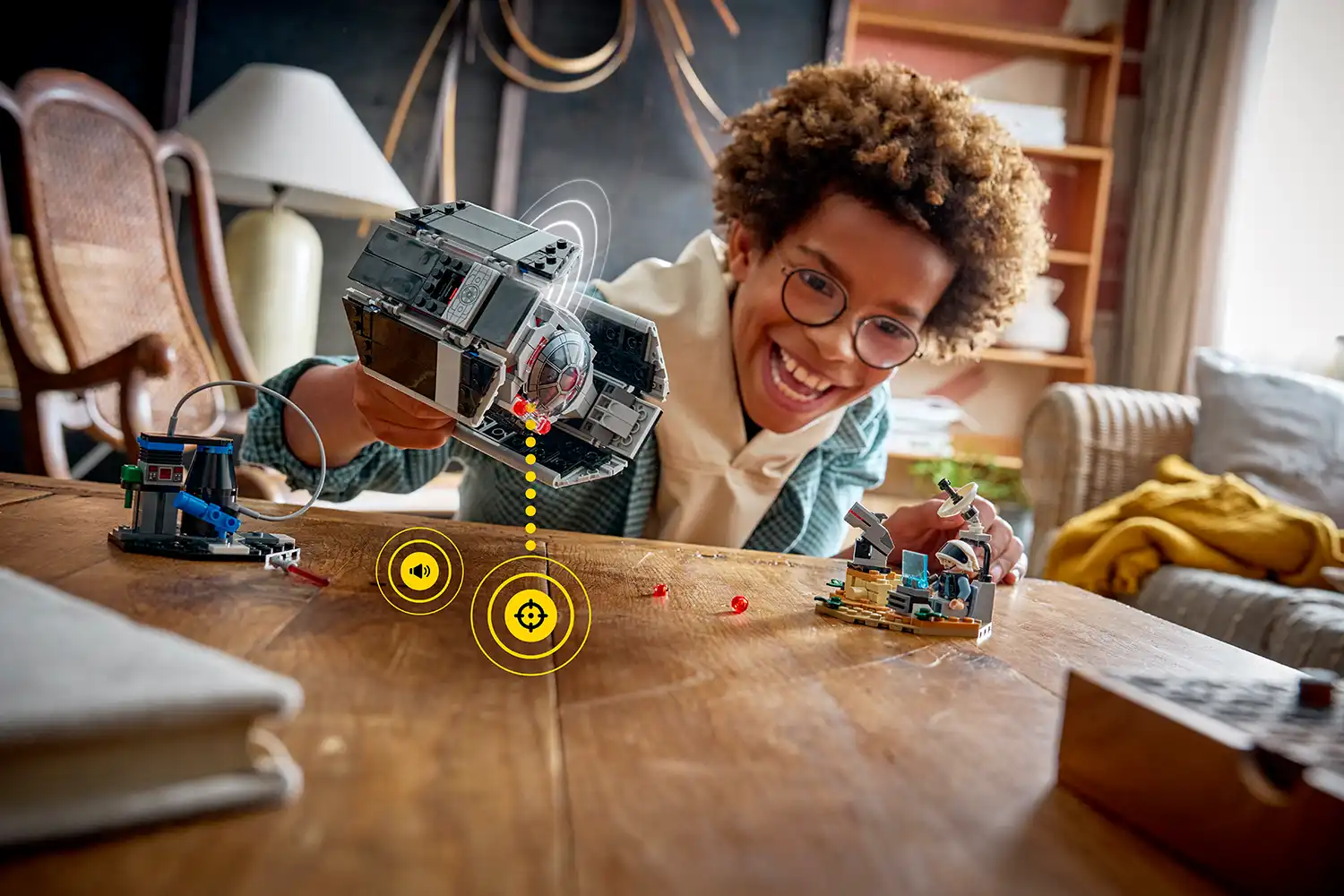
Contextual impact and narrative depth are further explored through a high-profile collaboration with The Walt Disney Company and Lucasfilm. Launching on March 1st, 2026, the debut sets bring the Star Wars universe into this new interactive dimension. In sets like Luke’s Red Five X-Wing and Darth Vader’s TIE Fighter, the technology facilitates a “galactic” scale of immersion. When a SMART Minifigure of Luke Skywalker enters the cockpit, the ship doesn’t just look the part; it reacts. The hum of a lightsaber or the roar of an ion engine is no longer a sound effect generated by a child’s imagination alone, but a physical manifestation of the play-state, synchronized with the movement of the model.
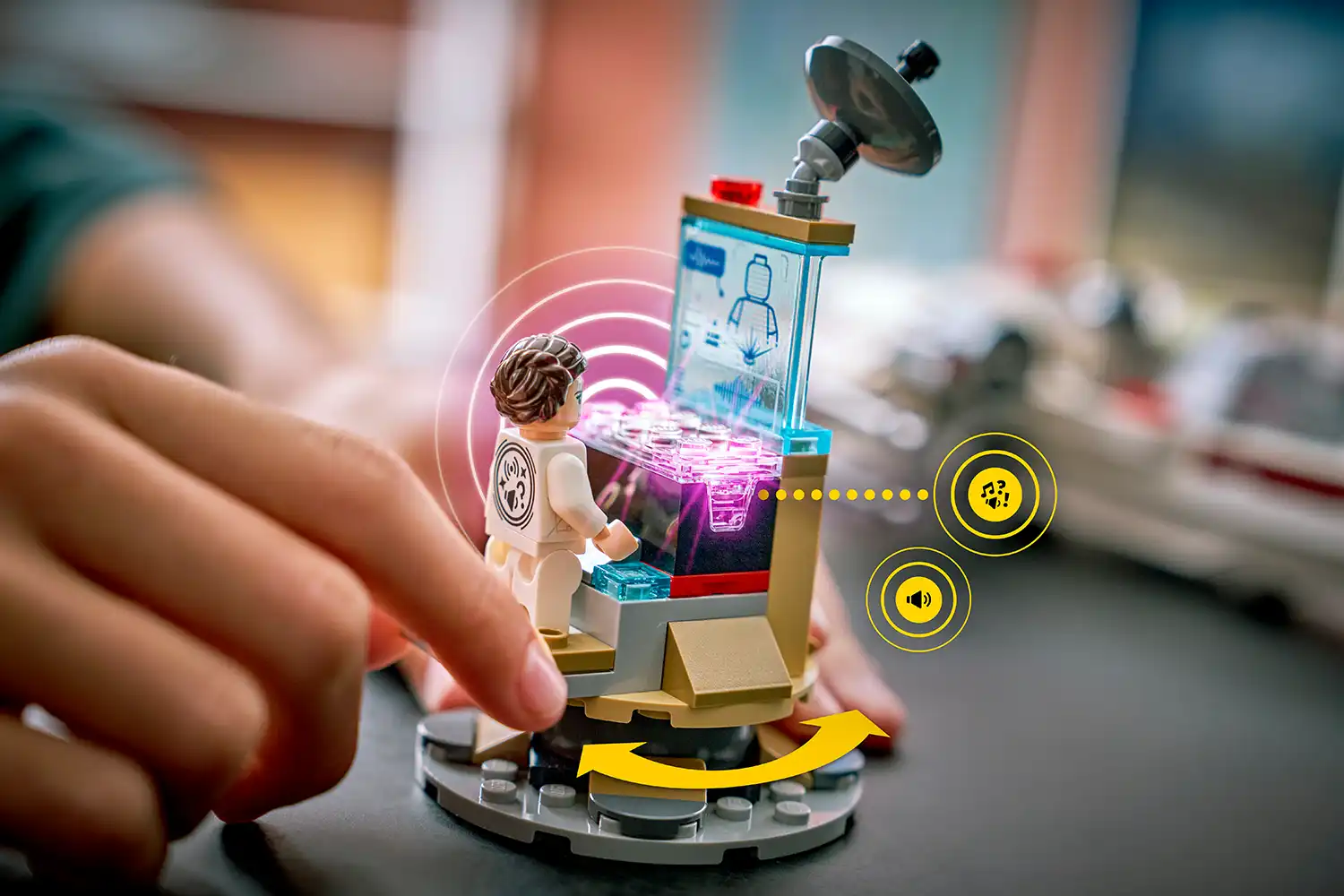
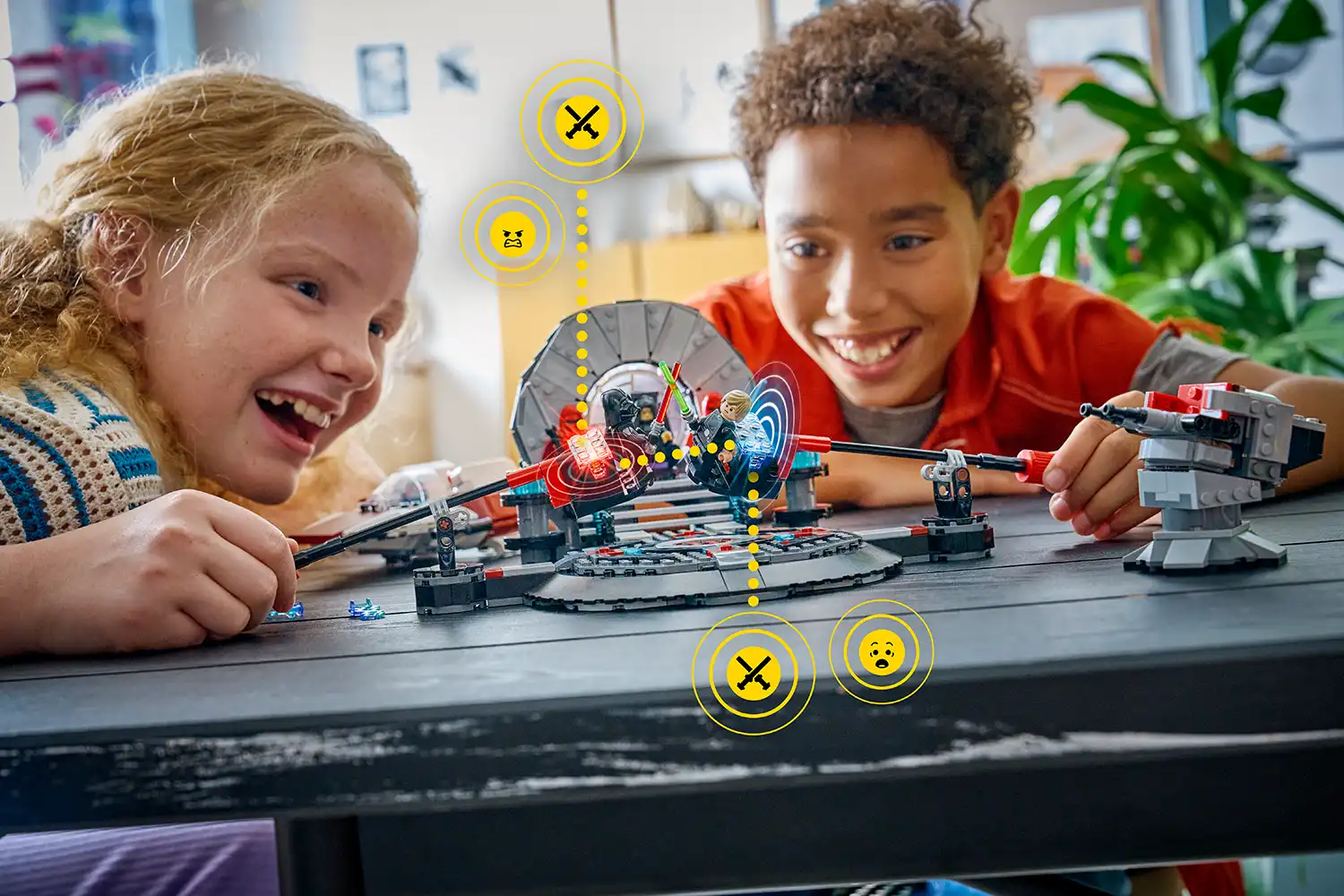
The spatial experience of the Throne Room Duel set highlights the potential for complex environmental storytelling. Spanning 962 pieces, this set utilizes the SMART Play ecosystem to recreate the atmospheric tension of the Death Star. By placing Emperor Palpatine on his throne, the system can trigger “The Imperial March,” effectively turning the architectural model into a localized soundscape. This creates a multi-sensory loop where the user’s interaction with the spatial configuration—moving figures, opening hatches, or engaging in “combat”—is met with an immediate, non-screen-based response. It is a bold rejection of “digital distraction” in favor of “digital enhancement.”
As an architectural evolution, LEGO SMART Play represents a significant milestone in the history of modular design. By ensuring that all new components are backwards-compatible with the existing LEGO System-in-Play, the company preserves the democratic and infinite nature of their building blocks while adding a layer of sophisticated interaction. In the markets of London, New York, and Tokyo, where the intersection of tech and lifestyle is most visible, this launch sets a new standard for the “phygital” object. It suggests a future where our built environments—whether they are toys or the rooms we inhabit—are no longer silent, but active participants in our daily narratives.