


In the Muide district of Ghent, near the city’s industrial ring, a curious urban void has spent decades masquerading as a wild thicket. Since the demolition of a row of dilapidated workers’ houses in the 1970s, nature had reclaimed the space in an unplanned, “accidental” fashion—a landscape of high grasses, wandering shrubs, and a solitary, steadfast oak. Recently, the city decided to close this gap in the urban fabric, and it is here that Marge Architecten has realized a project that challenges the traditional definitions of luxury, proving that a constrained budget and a compact footprint can yield a residence of profound character and sustainable soul.
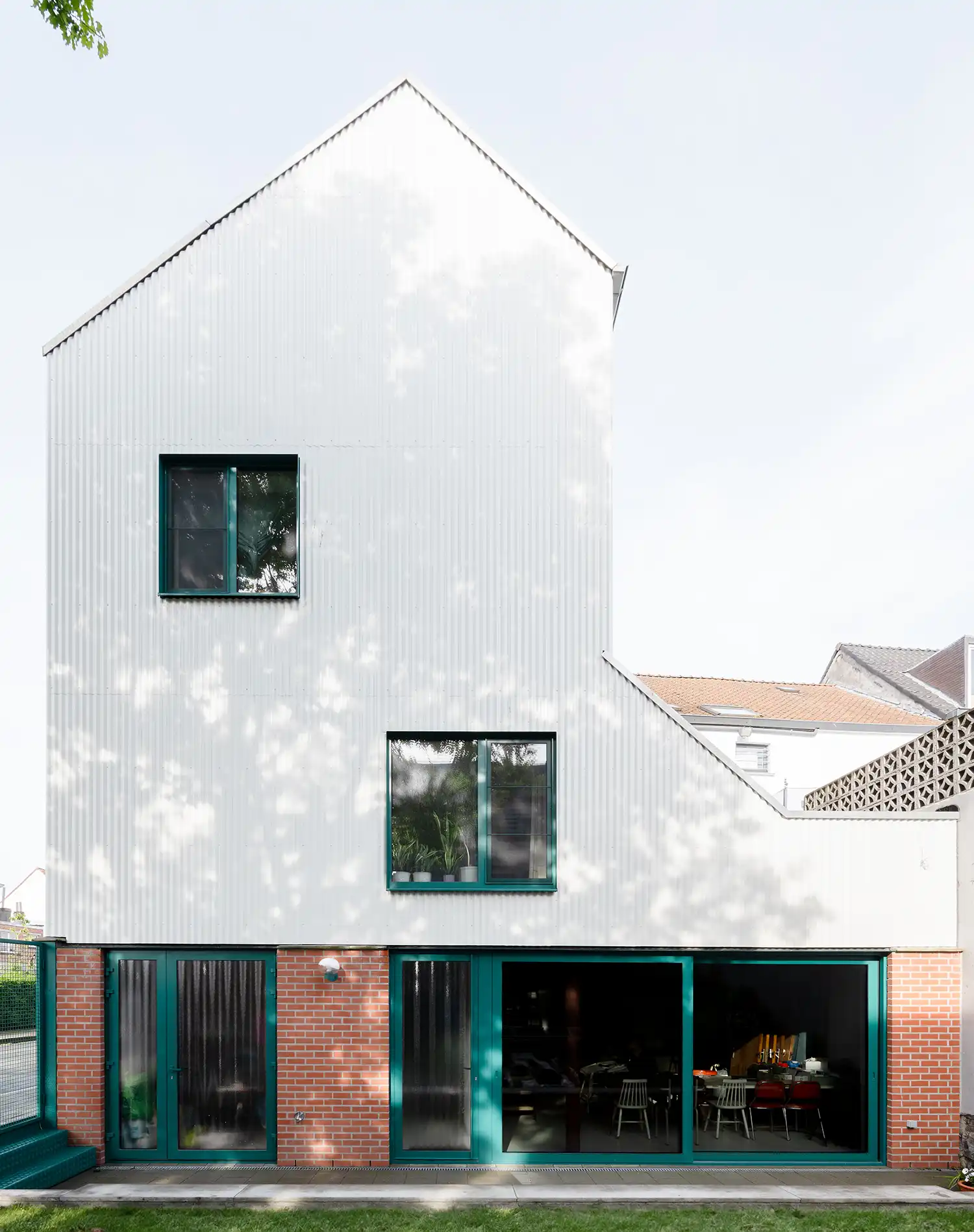
A return to the logic of the compact begins with a footprint that echoes the modest dimensions of the neighborhood’s industrial past. Restricted to a mere six-meter width, the house is a “very-high-effort” response to limited resources, where the spatial richness is derived from structural gymnastics rather than expensive finishes. By adhering to the mandatory garden requirement, the architects have preserved the original oak tree, allowing the new structure to nestle against the greenery as if it has always belonged to this specific Belgian streetscape.
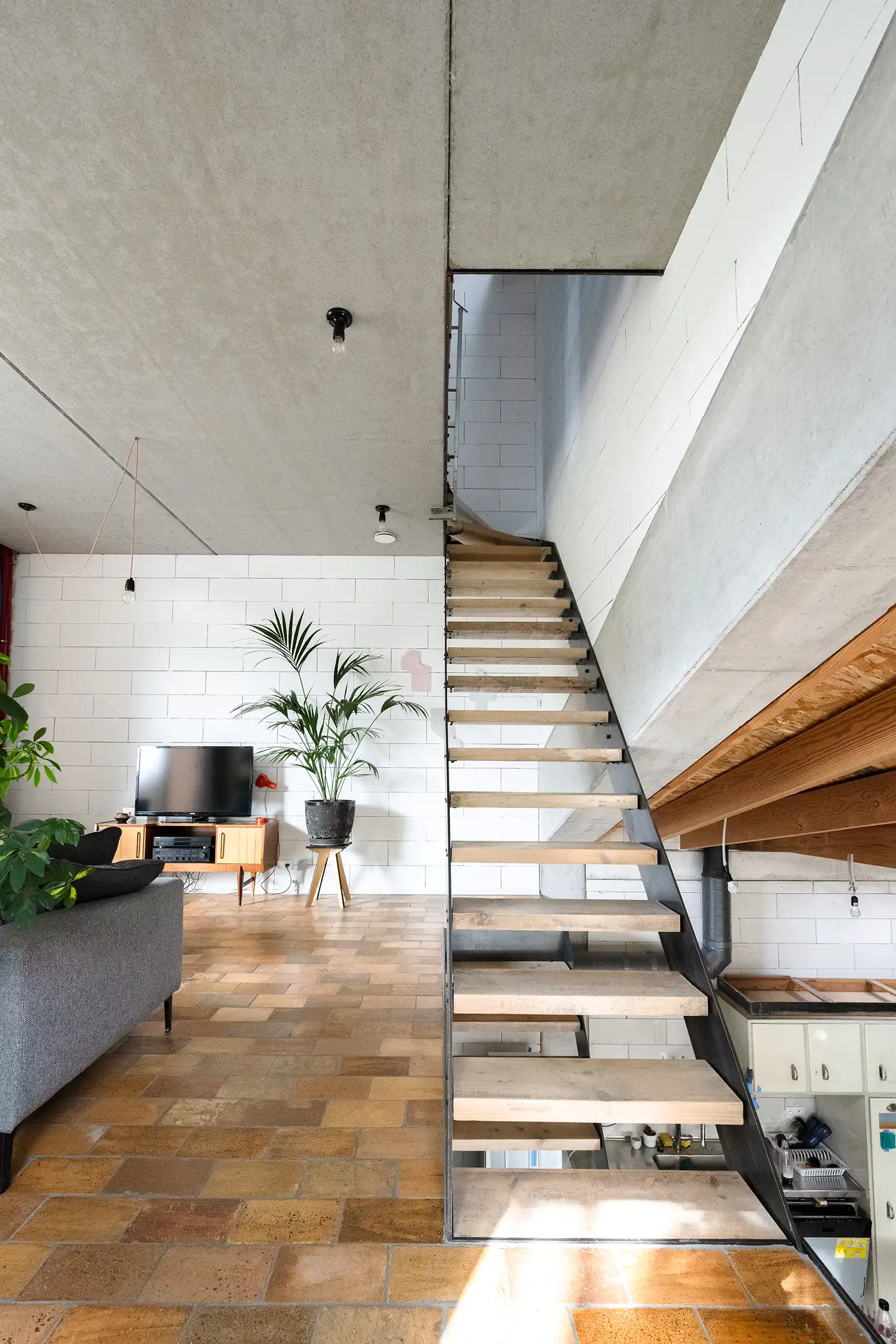
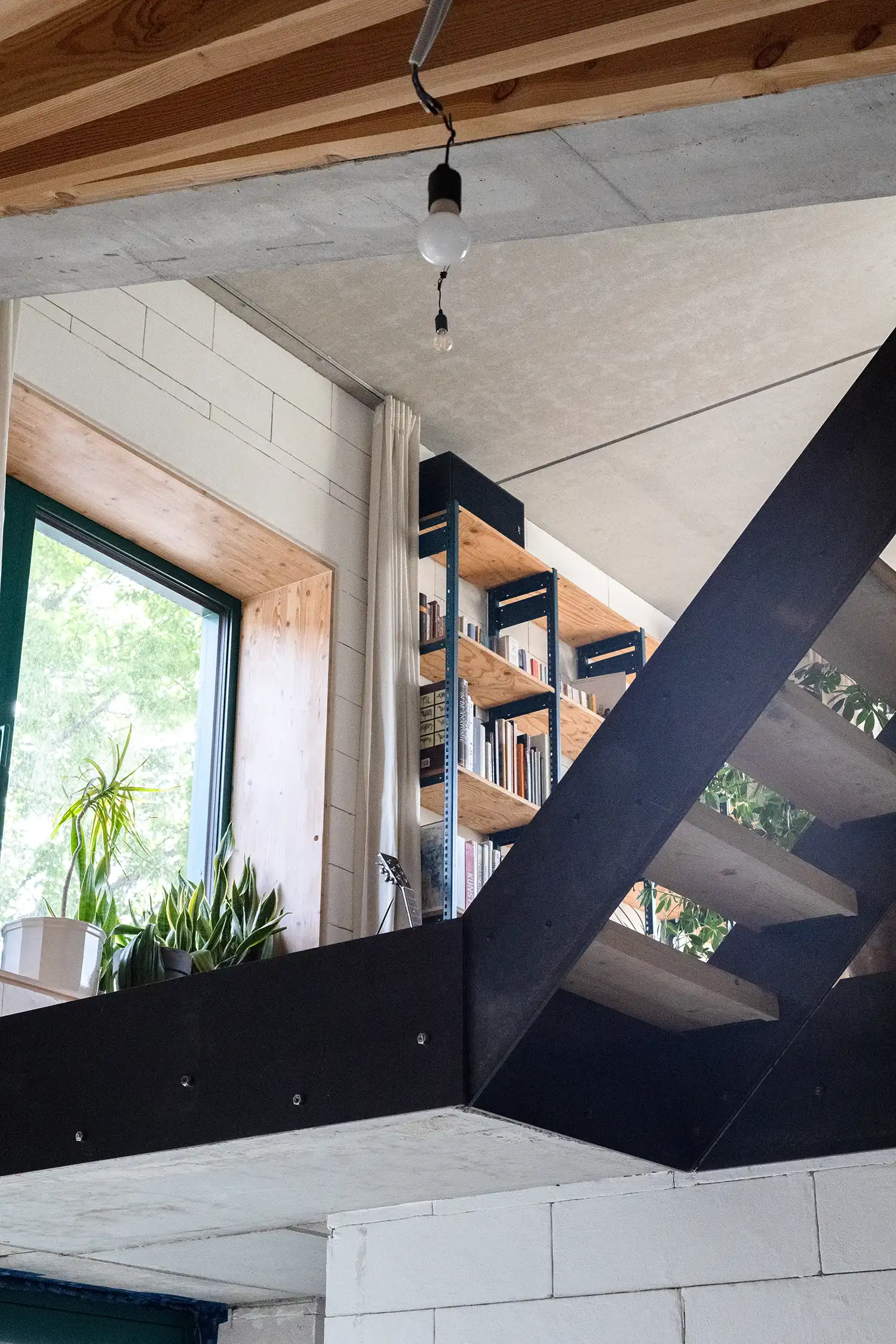
The choreography of internal volume is defined by a singular, strategic gesture: the kitchen roof. Instead of a standard flat ceiling, the plane folds upwards along a sloping beam, creating a “person-like” connection between the culinary heart of the home and the living area above. This mezzanine allows for a constant dialogue between floors; those arriving home are greeted by voices from above, while the kitchen itself is flooded with the southern sun. This manipulation of light and sightlines creates a sense of “spatial luxury,” making the compact semi-detached home feel far more expansive than its physical borders suggest.
A materiality rooted in circularity defines the exterior, where the house wears its history on its sleeve. The architects utilized stones from the site’s original masonry buttresses for the plinth, while the upper volume is wrapped in “overstock” corrugated metal. This choice echoes the rhythmic utility seen in projects like House Comet in Riga, where corrugated steel is used to create a dialogue between industrial aesthetics and residential warmth. The juxtaposition of the rough, reclaimed stone and the crisp, metallic skin creates a façade that feels both permanent and light.
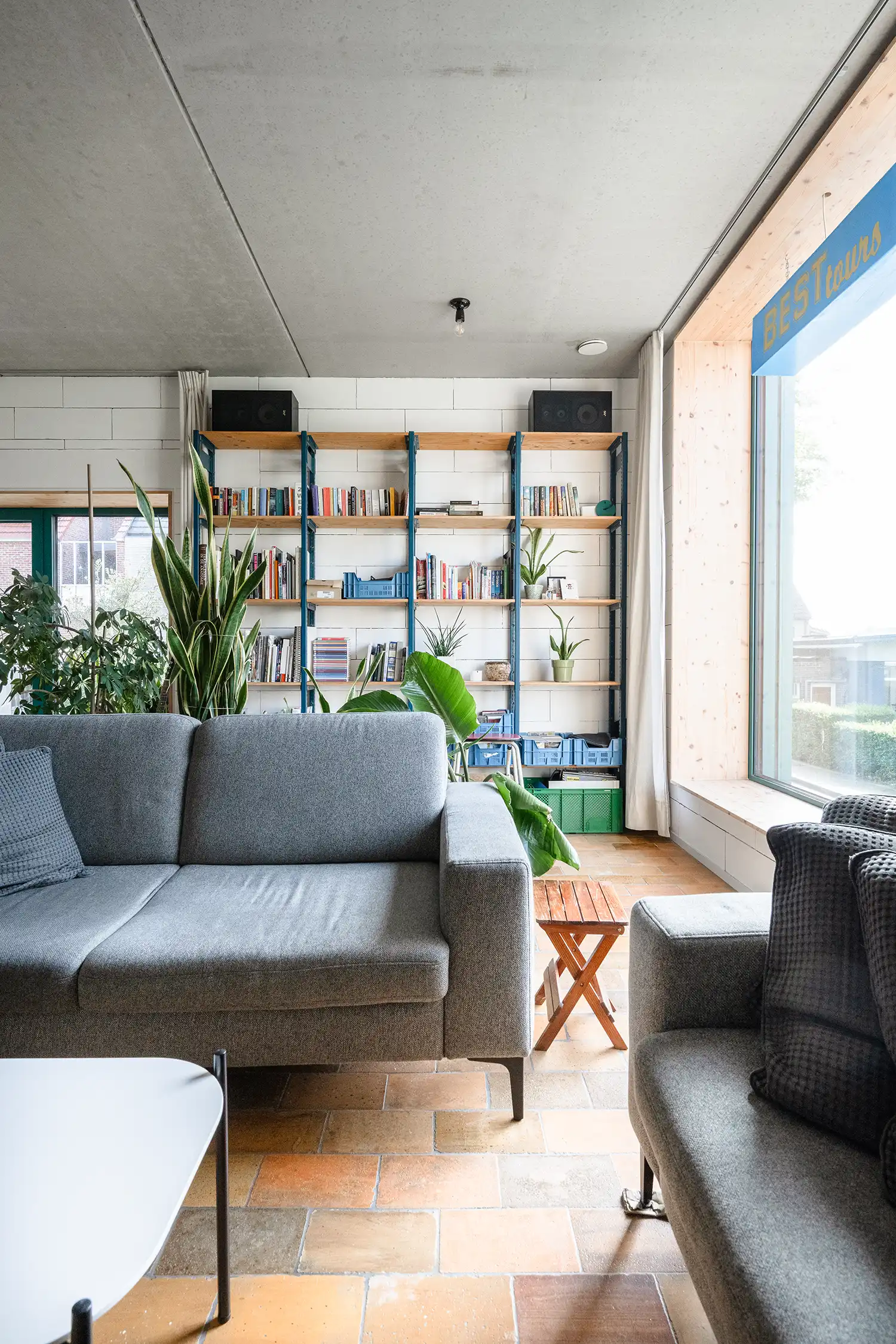
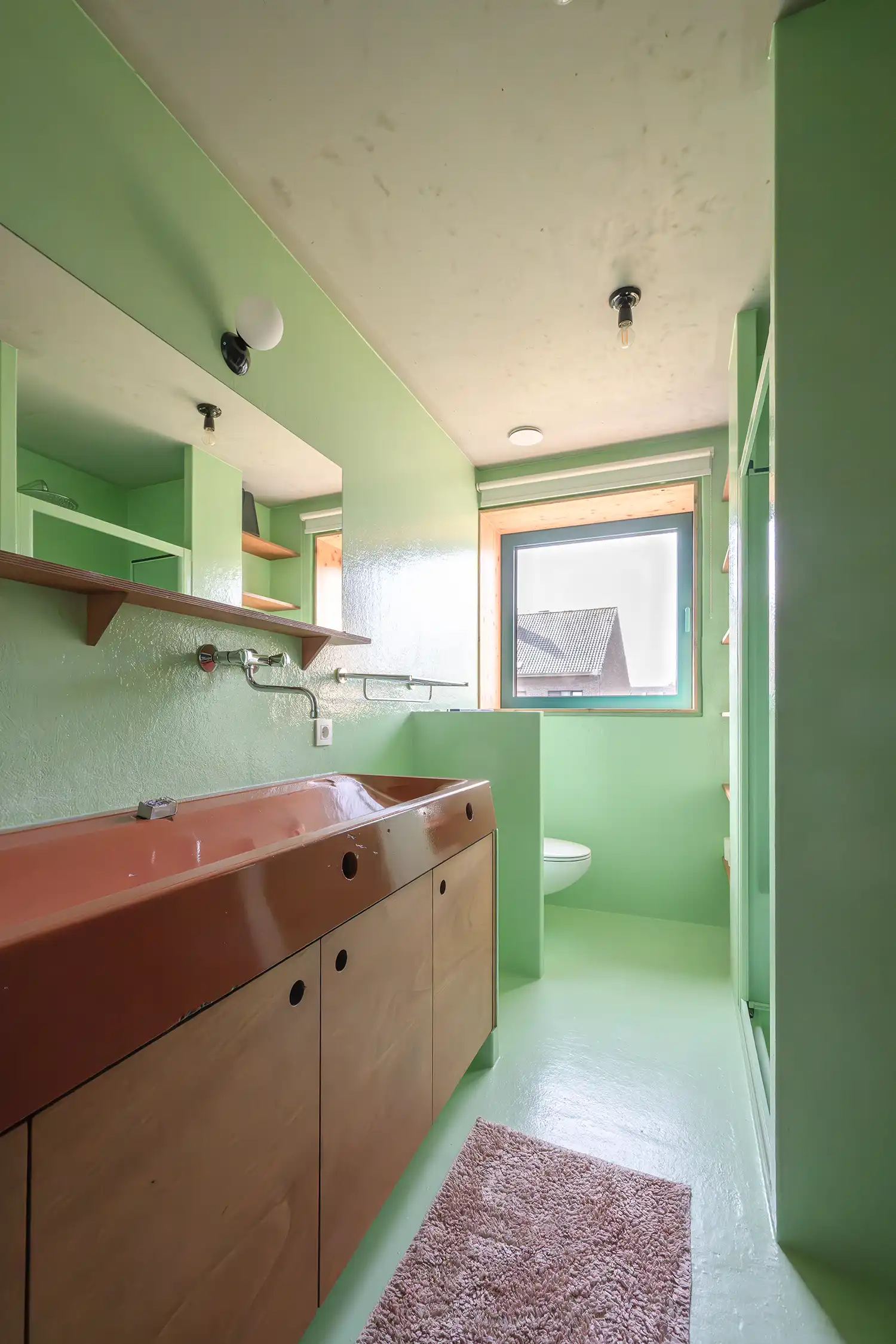
The sensory experience of the interior is a curated collage of “beautiful old things.” The walls, constructed from 50 cm thick insulating stones, remain visible, providing a massive, thermal-regulating shell. This honesty of construction is paired with warm plywood and natural textures, similar to the material palette of the Hempcrete House in Szentendre, which celebrates the raw beauty of sustainable building blocks. These elements are softened by salvaged treasures: heavy doors from a Brussels bank and a vibrant pink sink, turning the home into a gallery of the residents’ personal history.
The final composition stands as a contemporary archetype, resembling a child’s drawing in its pure, geometric form. With its pointy roof, ad hoc window placements, and the deep red of its brick accents, the house sits in quiet conversation with the large oak tree that predates it. It is a testament to the idea that sustainable housing in Belgium—and beyond—does not require a surplus of wealth, but rather a wealth of thought. By embracing a “soberrich” philosophy, Marge Architecten has transformed a forgotten urban fragment into a vital, breathing home.