



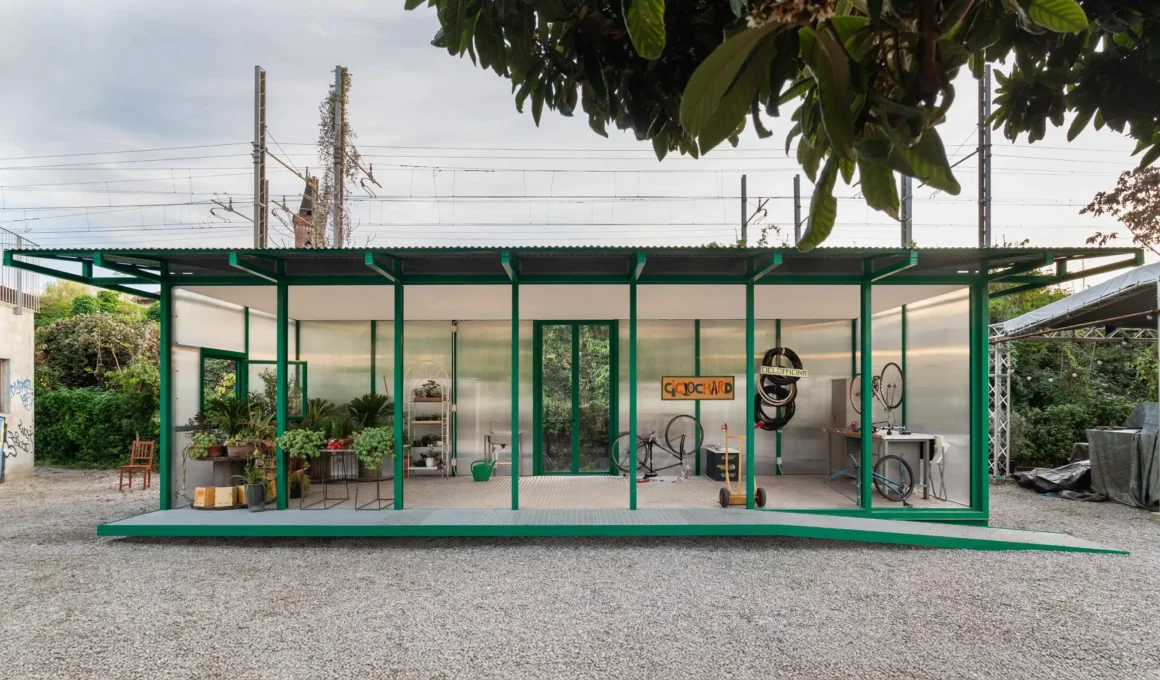
A residual slice of land nestled between the rhythmic hum of active railway lines and the urban pulse of Municipality 6 in Milan has been transformed into a beacon of civic engagement. Designed by Tommaso Aliverti, Paolo Catrambone (founder of the practice ORTUS), and Tommaso Sossi, the San Cristoforo Ciclofficina is not merely a building but a temporary architectural device. It occupies the former railway tollbooth area on Via San Cristoforo, reclaiming a disused grassy field and repositioning it as a vital node for the local community. This intervention demonstrates how architecture can act as a lightweight, reversible bridge between a site’s industrial past and its social future.

The conceptual vision is rooted in the preservation of the ground’s continuity. Eschewing permanent concrete foundations, the structure rests upon a delicate 25-centimeter embankment of compacted soil. This decision underscores a commitment to full reversibility, ensuring that the landscape remains unscarred should the project ever be relocated. Three exposed steel beams form the structural base, a subtle aesthetic nod that echoes the linear geometry of the adjacent Milanese tracks. It is a dialogue with the site’s infrastructural identity, where the cold precision of metal meets the softness of an uncultivated field.
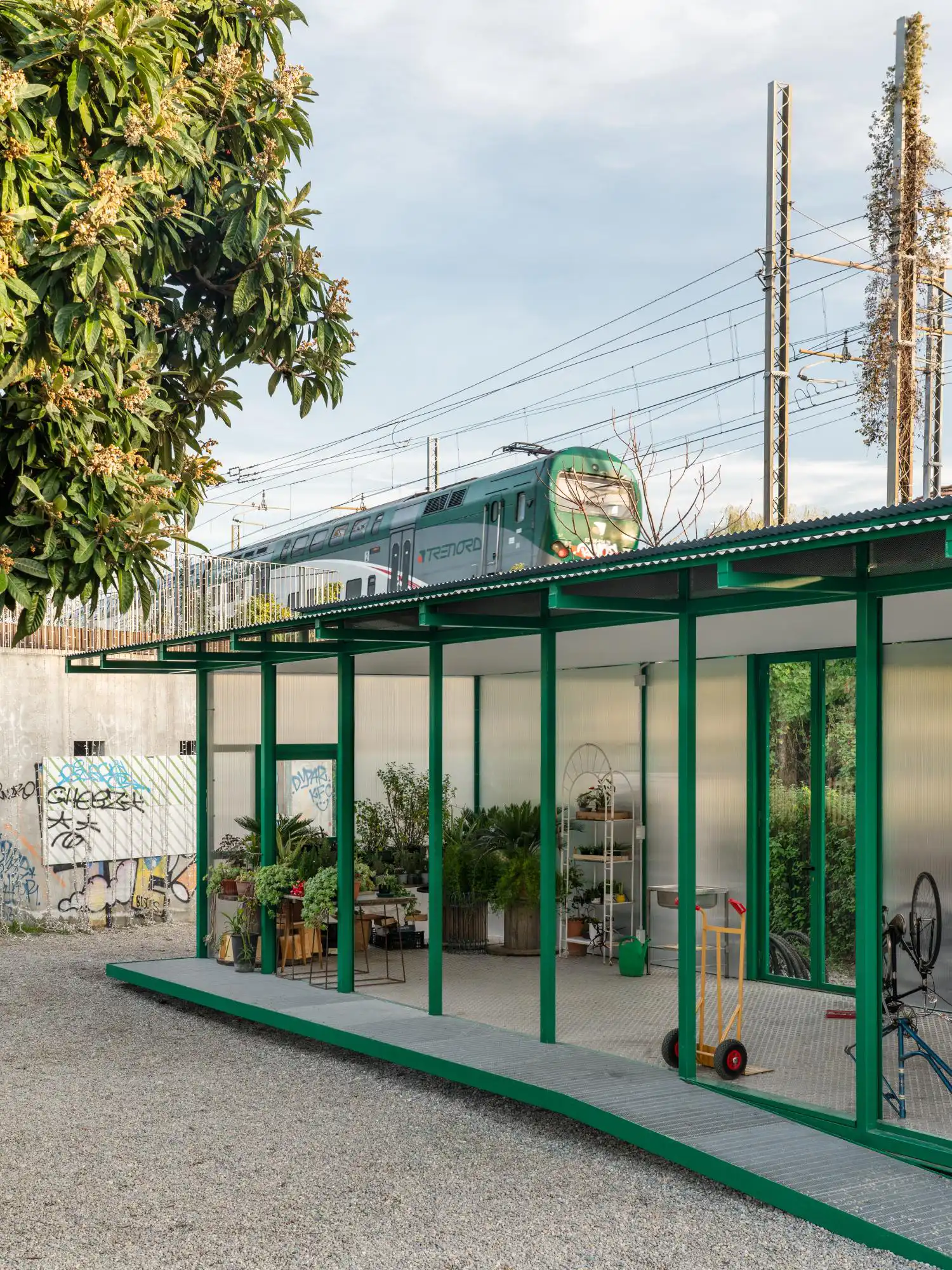
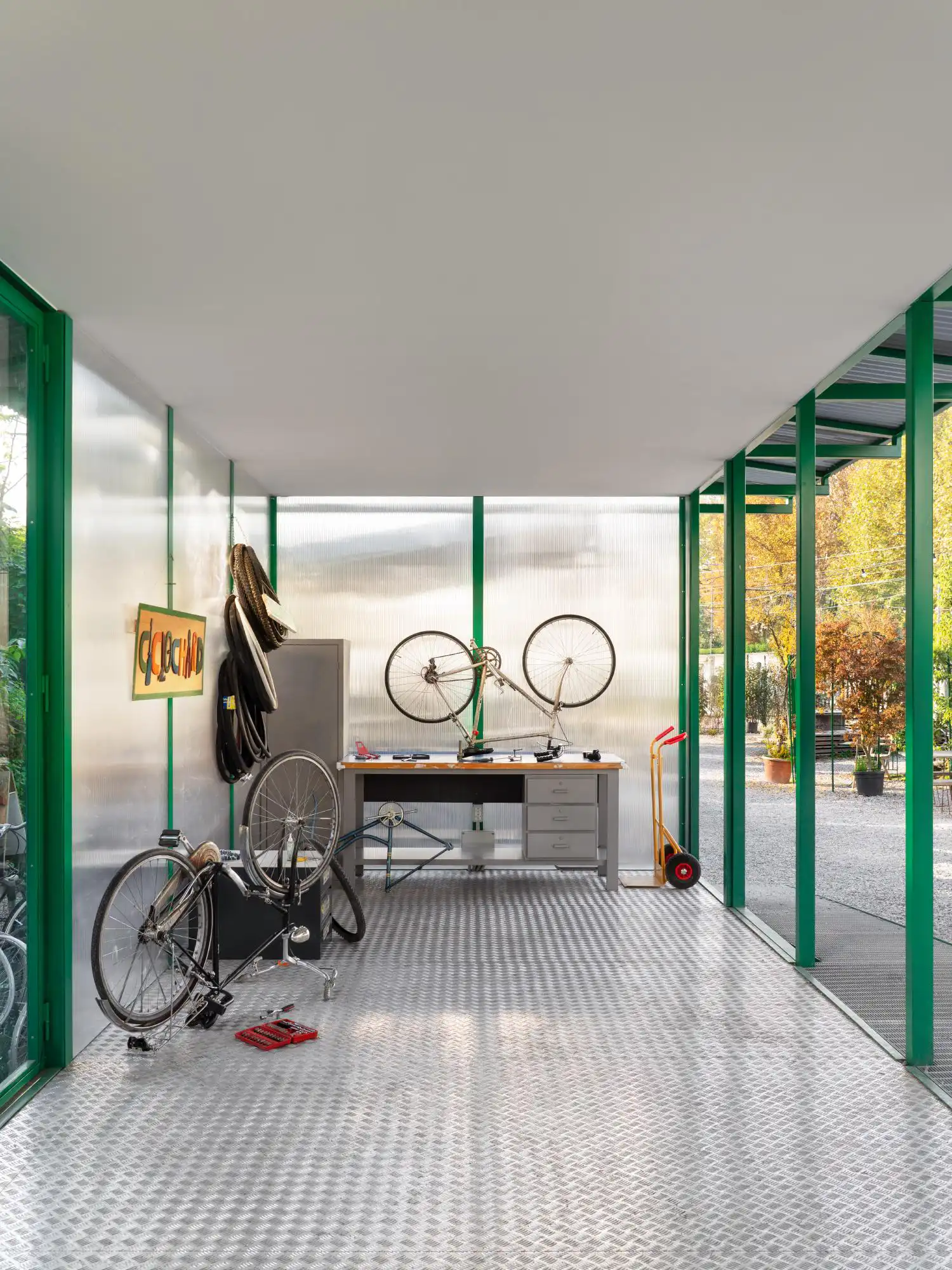
Technical sophistication defines the building’s modular skeleton. A system of braced steel frames provides a repeatable framework designed for future expansion, draped in an envelope of thick cellular polycarbonate panels. By day, these semi-transparent walls bathe the interior in a diffused, ethereal light; by night, the structure is transformed into a glowing lantern, restoring a sense of safety and visibility to the Casello garden. The sensory experience is one of lightness and air, facilitated by large aluminum French doors that invite natural cross-ventilation and provide a constant visual connection to the passing trains.
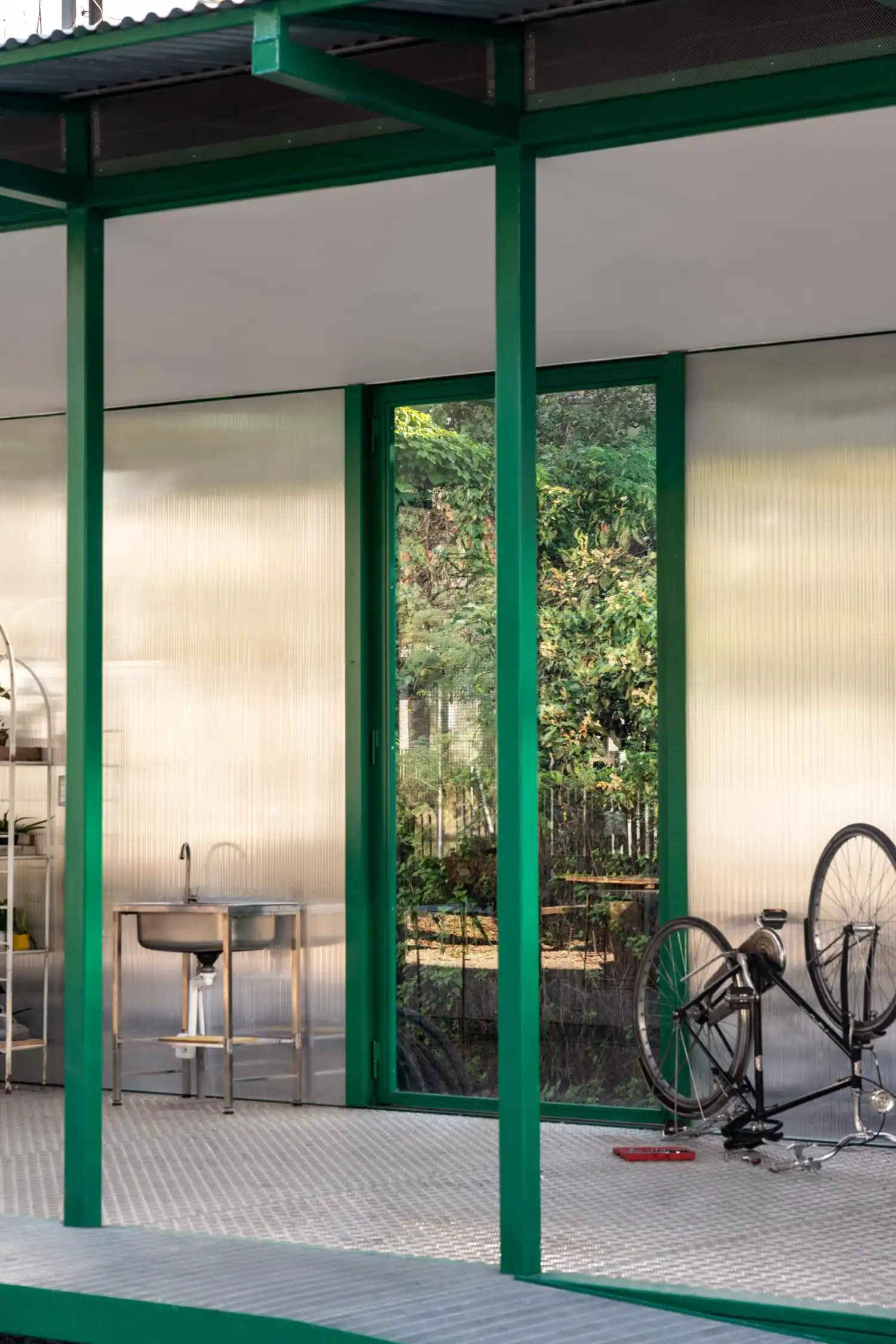
Material circularity serves as the project’s interior soul. Within the workshop, the architects have integrated reclaimed aluminum sheets and plywood panels, proving that high-quality design can emerge from the intelligent reuse of resources. This philosophy of “making do” with refinement mirrors a global shift toward expressive, tactile environments where the history of the material adds to the narrative of the space. Such an approach to creating a multifunctional social hub through material storytelling reflects a growing trend seen in avant-garde retail and community spaces alike, where the physical environment must adapt to diverse human interactions.
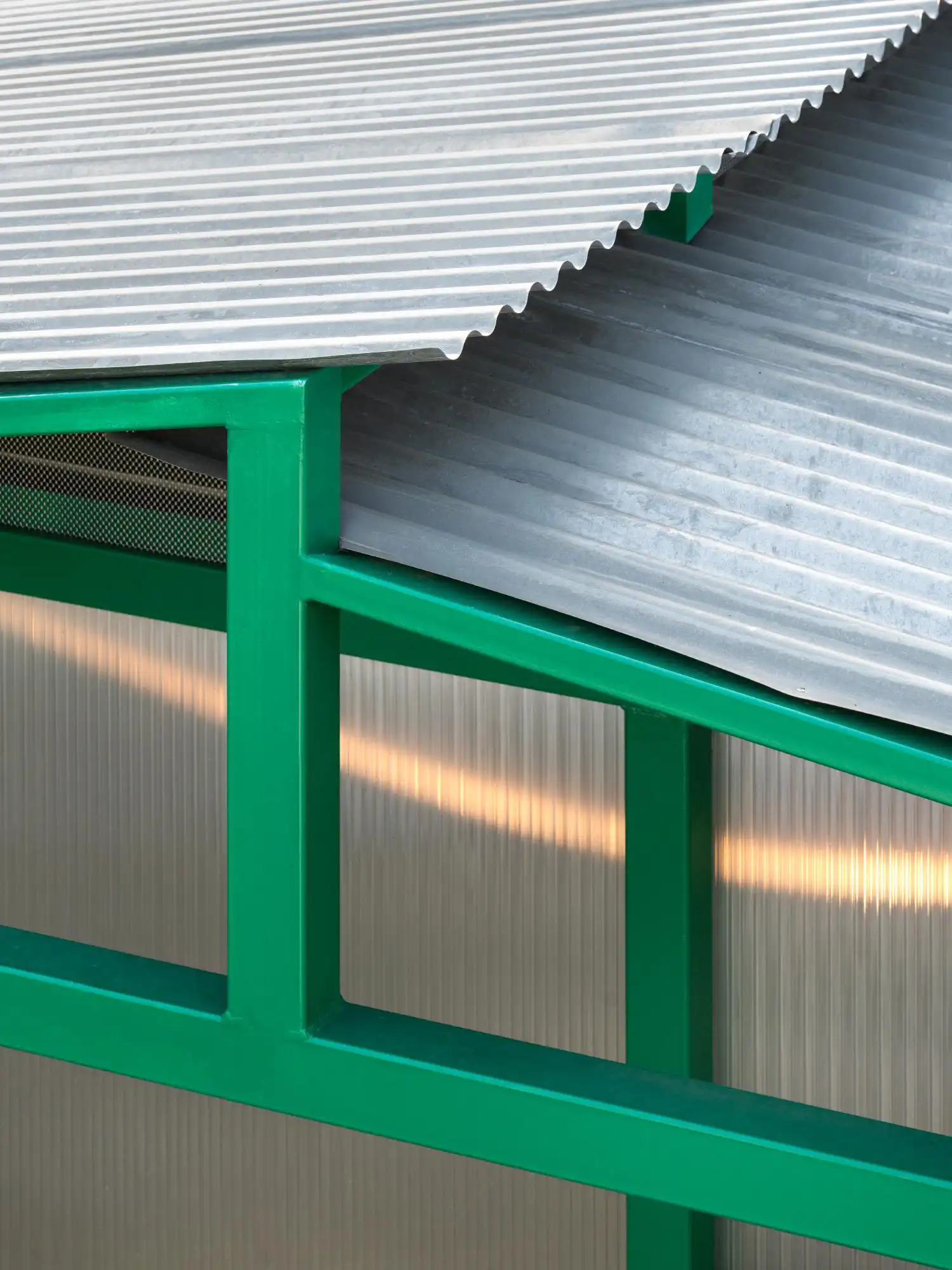
Functional adaptability is at the core of the Ciclofficina’s mission. While its primary identity is that of a bicycle repair workshop, the open-plan interior is intentionally ambiguous. It serves as an information point, a neighborhood meeting venue, and a laboratory for urban activism. The transition from a repair station to a social hub is seamless, enabled by the generous overhangs of the ventilated sheet metal roof that create sheltered outdoor “micro-piazze.” In this corner of Lombardy, the building operates as an inclusive infrastructure, anchoring new forms of collective life within an evolving landscape.
The contextual impact of the San Cristoforo project lies in its ability to turn a “non-place” into a destination. By embracing its position between the tracks, the architecture validates the beauty of the peripheral and the temporary. It suggests that the future of Milan’s urban development does not always require heavy, permanent monuments, but rather agile, sensitive structures that can glow in the dark and breathe with the city. The Ciclofficina stands as a testament to the power of minimal means achieving maximal social value, proving that even a temporary workshop can leave a permanent mark on a community’s heart.