



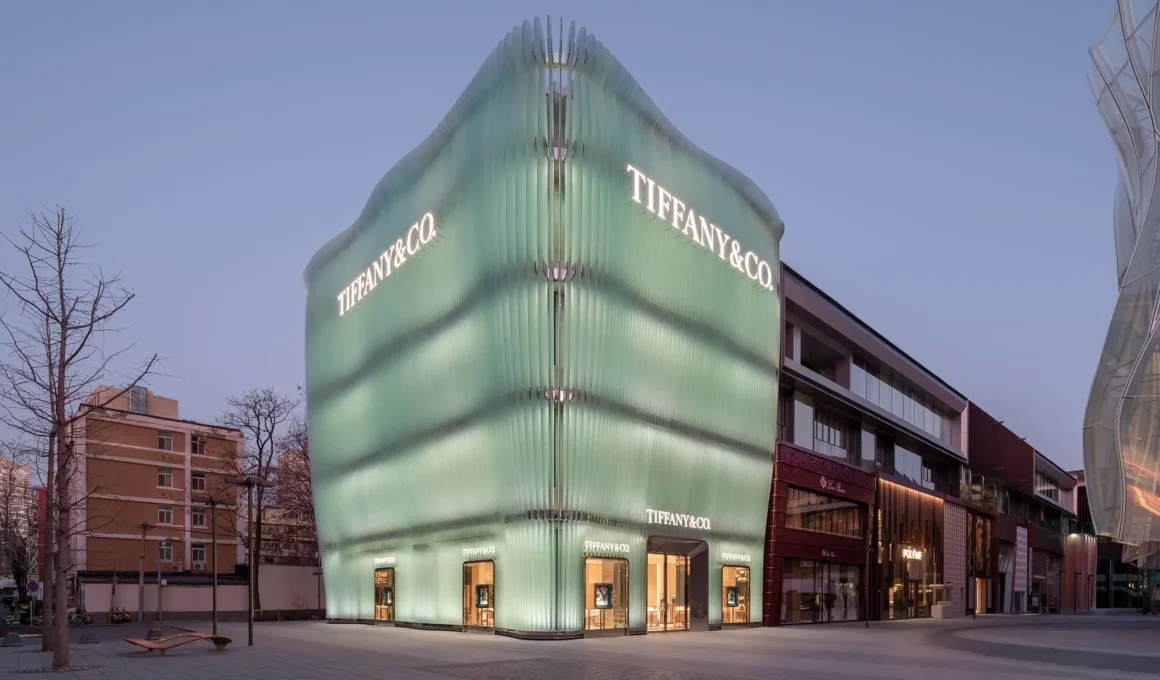
In the heart of Beijing, where the pulse of luxury beats loudest, a new landmark has emerged that blurs the line between high-end retail and sculptural art. The Tiffany & Co. flagship in Taikoo-Li Sanlitun is more than a commercial space; it is a structural tribute to the fluid, organic legacy of the late Elsa Peretti. By translating the tactile sensuality of jewelry into a large-scale urban intervention, MVRDV has created an ethereal presence that stands in quiet, shimmering contrast to the dense, high-gloss environment of the city’s premier shopping district.

An evolving narrative of materiality and brand identity has defined the partnership between the Dutch studio and the legendary jeweler. This Beijing project marks the fifth chapter in a series of bespoke facades, each a unique exploration of how light and form can define a brand’s physical presence. It follows the shimmering glass interventions in Stuttgart, the geometric diamond-inspired facade in Shanghai, and the pioneering coral-inspired 3D-printed texture that characterizes the brand’s Singapore presence. While previous iterations leaned into digital fabrication or prismatic geometry, the Taikoo-Li Sanlitun store embraces a more primal, anatomical inspiration: the iconic Bone Cuff.
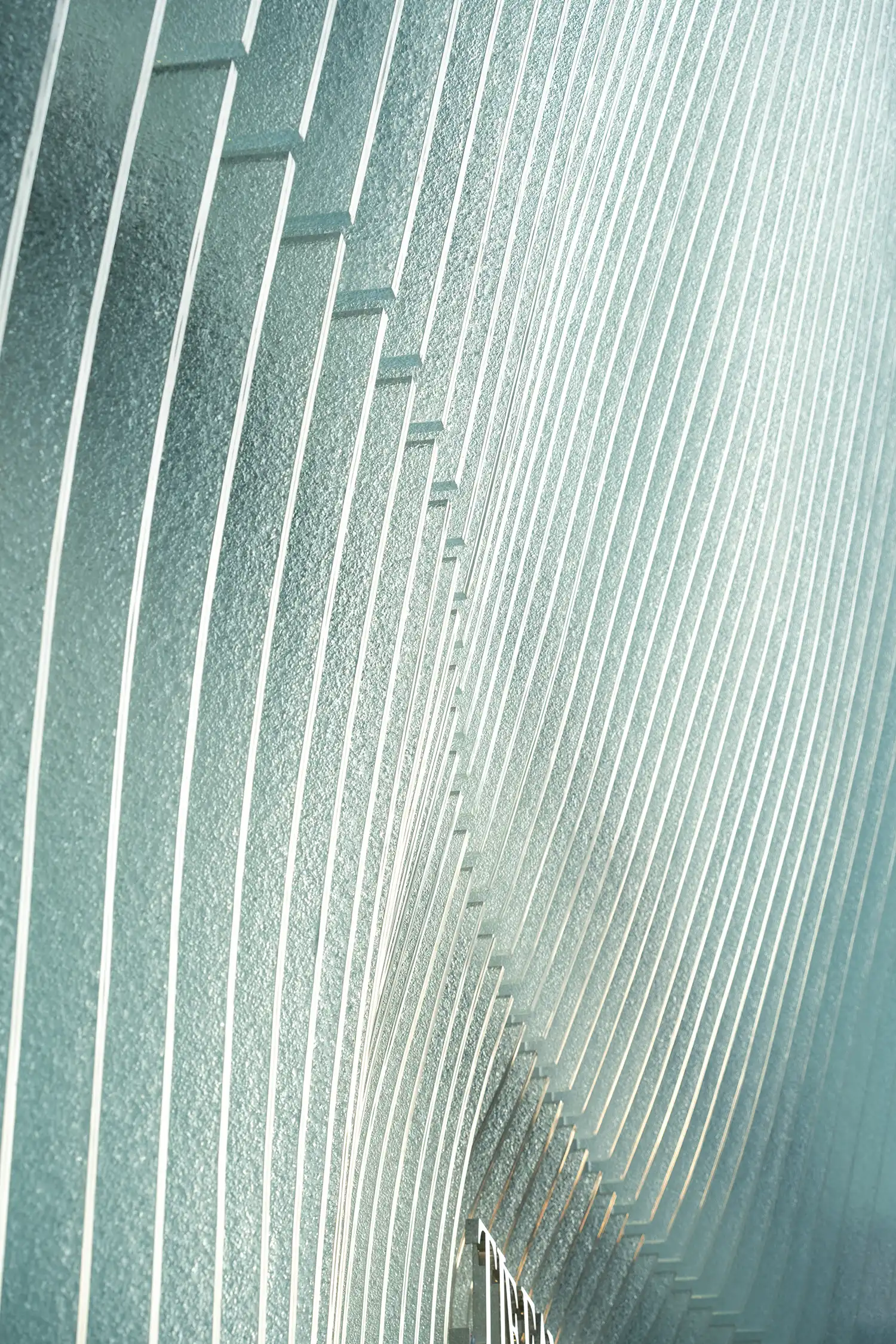
The conceptual vision takes flight through a series of vertical glass fins that wrap the four-storey building in a rhythmic, translucent veil. These fins, with their gently curved edges and varying depths, mimic the ergonomic contours of Peretti’s masterpieces. The choice of material—responsibly recycled and locally manufactured glass—adds a layer of contemporary ethics to the aesthetic. These glass elements possess a natural blue tint, a subtle nod to the brand’s heritage that remains visible even in daylight, creating a soft, watery texture that seems to ripple as pedestrians move along the crossroads of the northern section of Sanlitun.
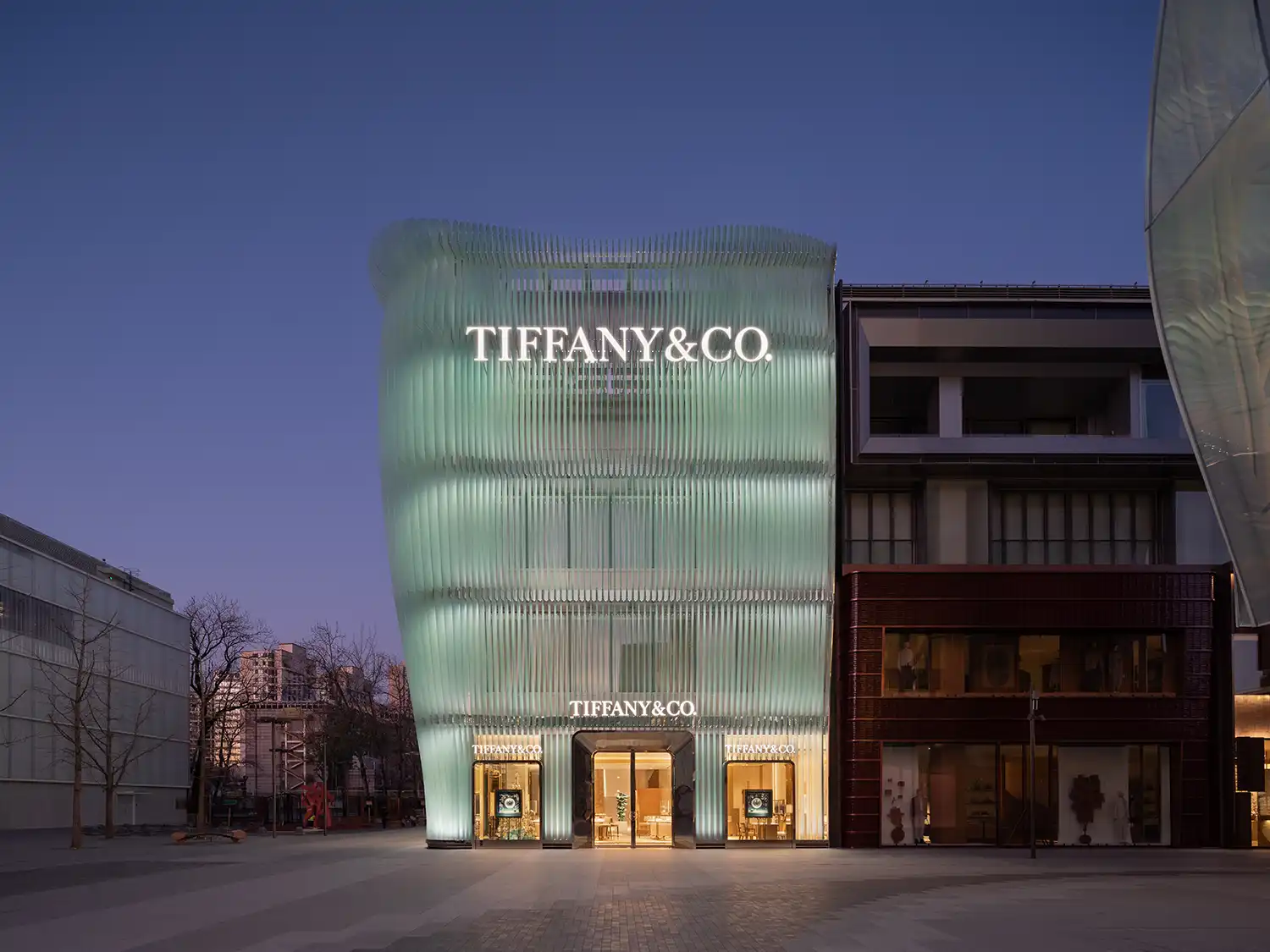
Experiencing the building is a lesson in optical depth and movement. As one approaches the flagship, the dense layering of the fins creates a moiré-like effect, where the building appears to shift between opacity and transparency. Jacob van Rijs, founding partner of MVRDV, notes that the interplay of light filtering through the glass creates a “delicate interplay that is constantly changing.” From a distance, the facade is a monolith of soft light; up close, it reveals glimpses of the treasures within, offering a sensory journey that mimics the act of peering into a velvet-lined jewelry box.
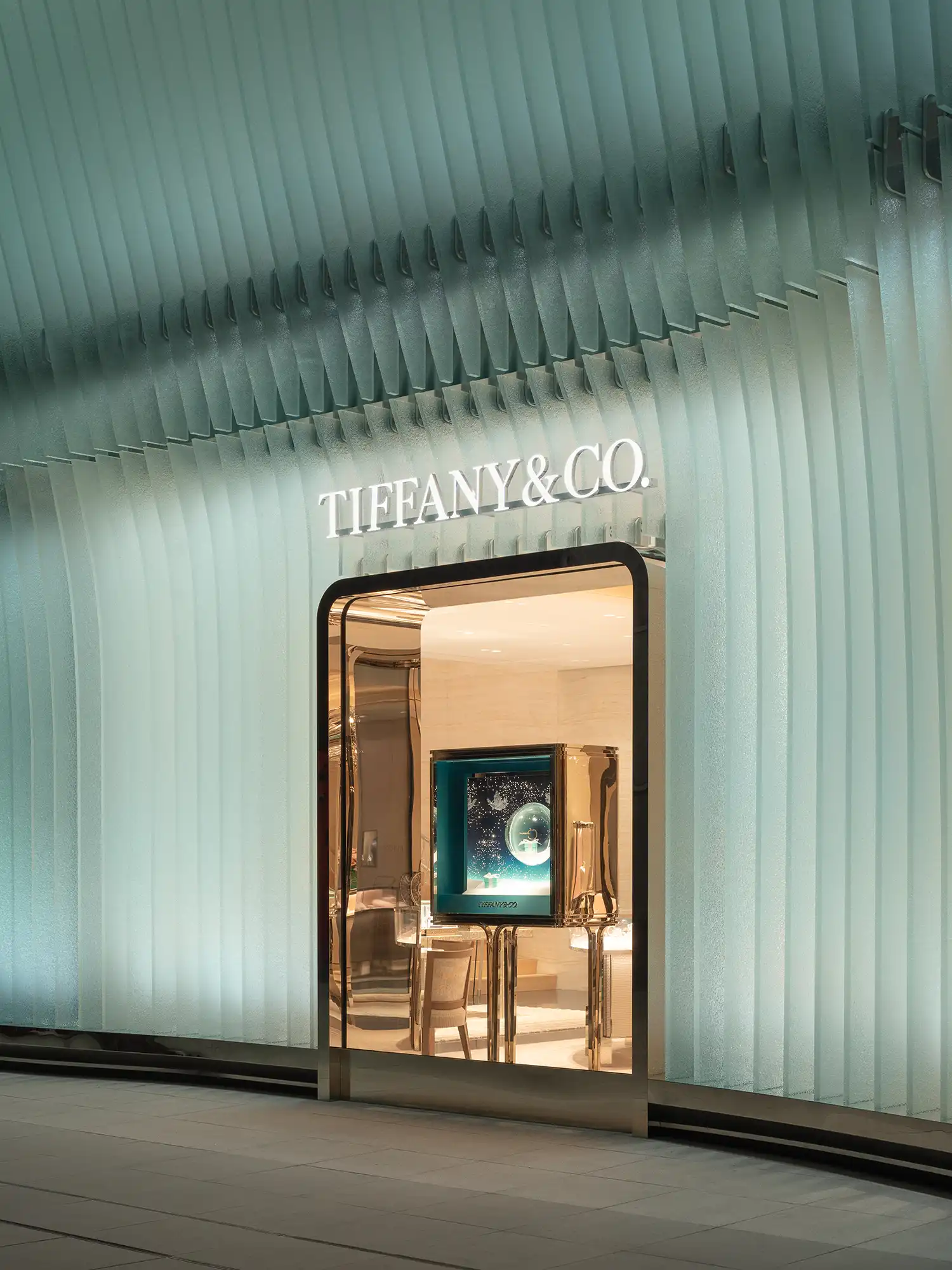
Technical precision ensures that the nocturnal identity of the store is as refined as its daytime appearance. At night, the facade undergoes a transformation, illuminated by a diffuse glow of the iconic Tiffany Blue. The genius of the execution lies in its invisibility; the lighting modules are integrated directly into the custom-designed brackets that secure the fins. This “hidden” technology eliminates visual clutter, allowing the glass to become the primary medium of light. The result is a building that doesn’t just sit in the city but radiates from within, casting a soft, turquoise aura onto the surrounding Beijing streets.
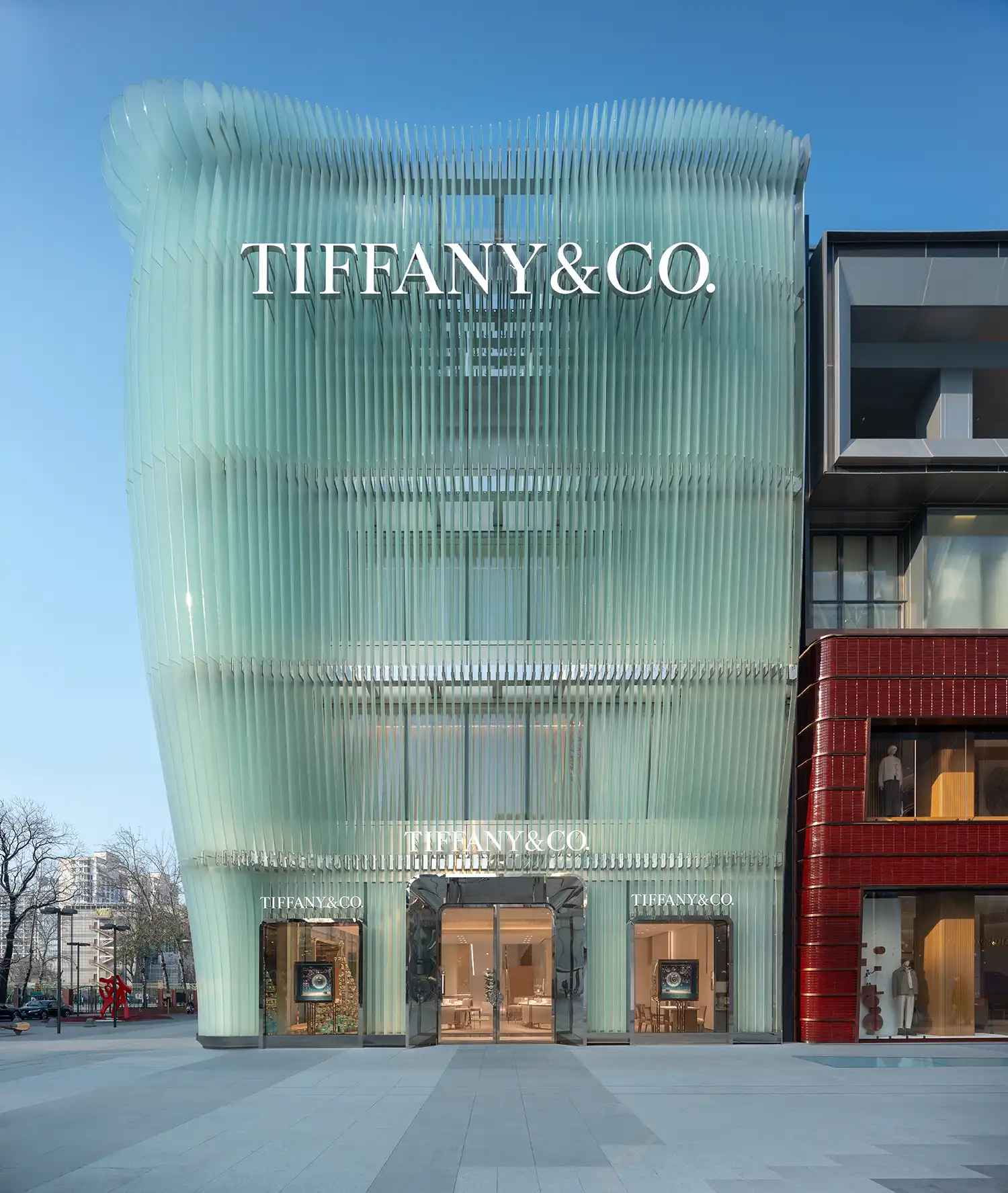
The contextual impact of the design concludes with a commitment to circularity and future-proofing. Beyond its visual allure, the facade is designed to be entirely demountable. The mounting brackets and glass fins can be removed without damage, ensuring that at the end of the building’s lifecycle, the components can be repurposed or recycled. In an era where luxury is often synonymous with excess, MVRDV and Tiffany & Co. have delivered a project in China that balances high-impact storytelling with a respectful, modular approach to construction, proving that the most beautiful forms are those that leave the lightest footprint.