



In the rapidly evolving landscape of consumer electronics, the retail experience often suffers from a sterile, transactional coldness. Delar Studio challenges this paradigm with the ILIU Cell Store in Mexicali, Baja California, Mexico, a project that reframes technology retail as a space of human connection. By moving away from the generic, bright-white aesthetics of global tech giants, the studio has crafted a regional landmark that prioritizes trust and proximity, proving that even a compact commercial unit can possess a profound architectural soul.

The conceptual foundation of the project stems from the brand’s six-year history as a local reference for mobile device repair and exchange. Rather than imposing a rigid, pre-existing corporate identity, the designers treated the space as an evolving framework. The challenge of a controlled budget was met with a sophisticated duality: the precision of modern innovation balanced against the raw honesty of timeless materials. It is a dialogue between the digital world and the physical touch, where architecture acts as the primary medium of communication.
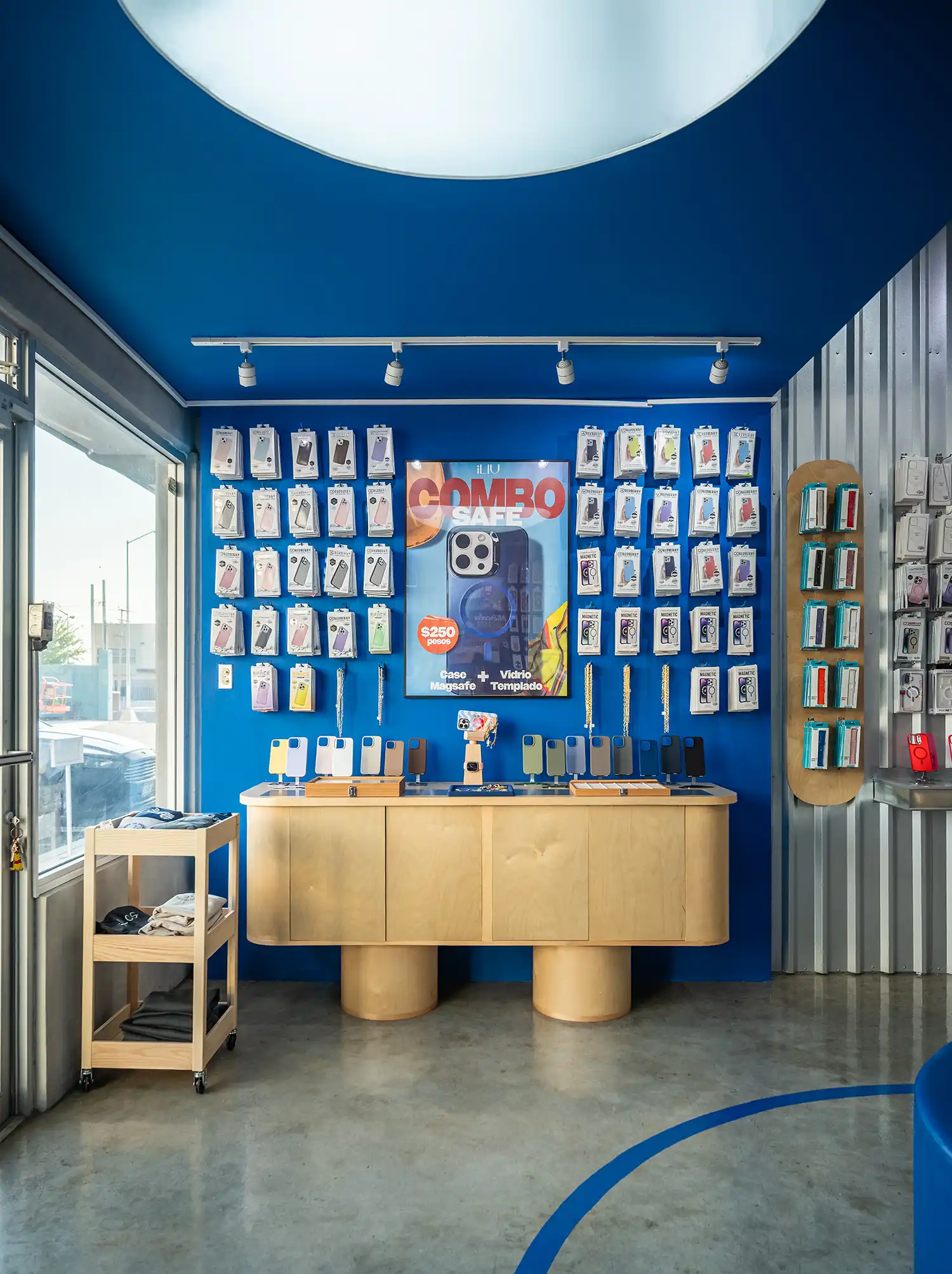
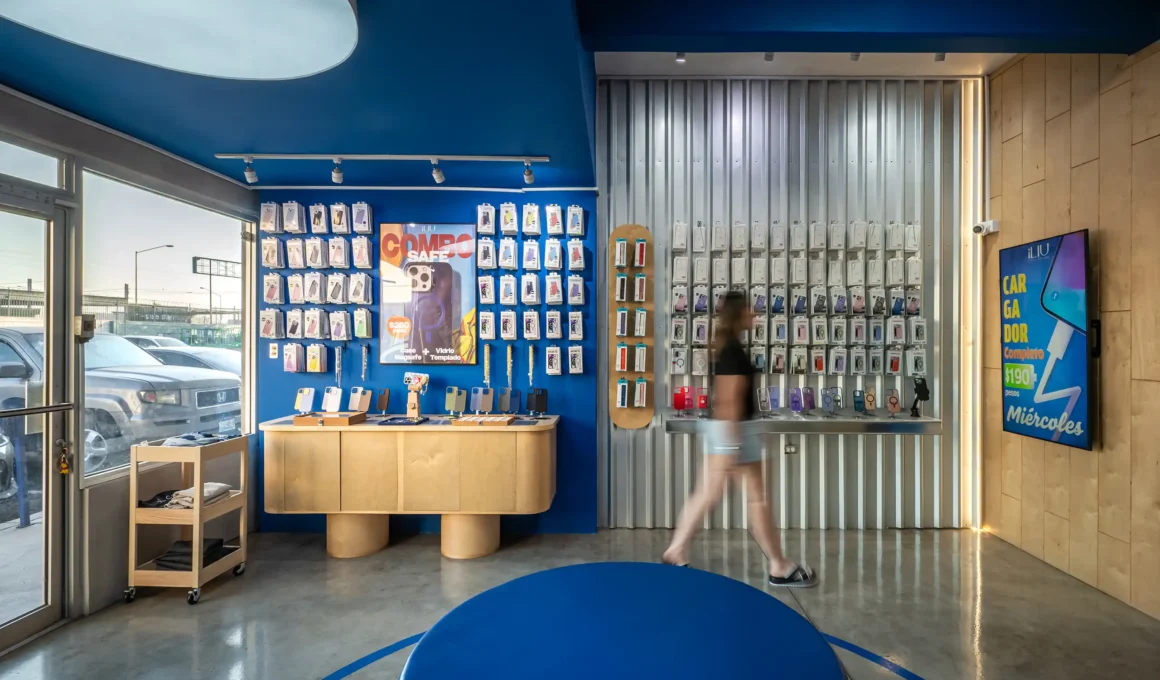
A sensory exploration of the interior reveals a masterful play of textures that bridges the gap between industrial utility and residential warmth. Blue-toned surfaces weave through the store like a digital pulse, yet they are grounded by the tactile presence of galvanized corrugated metal, exposed steel, and polished concrete floors. Natural wood elements are strategically placed to soften the edges, creating an atmosphere that feels more like a curated gallery than a repair shop. This “Bold Aesthetic” and the use of monochromatic color blocking to define a brand’s territory recalls the immersive retail design in Madrid by Lucas y Hernández-Gil, where a singular vision transforms a functional space into a ritualistic experience.
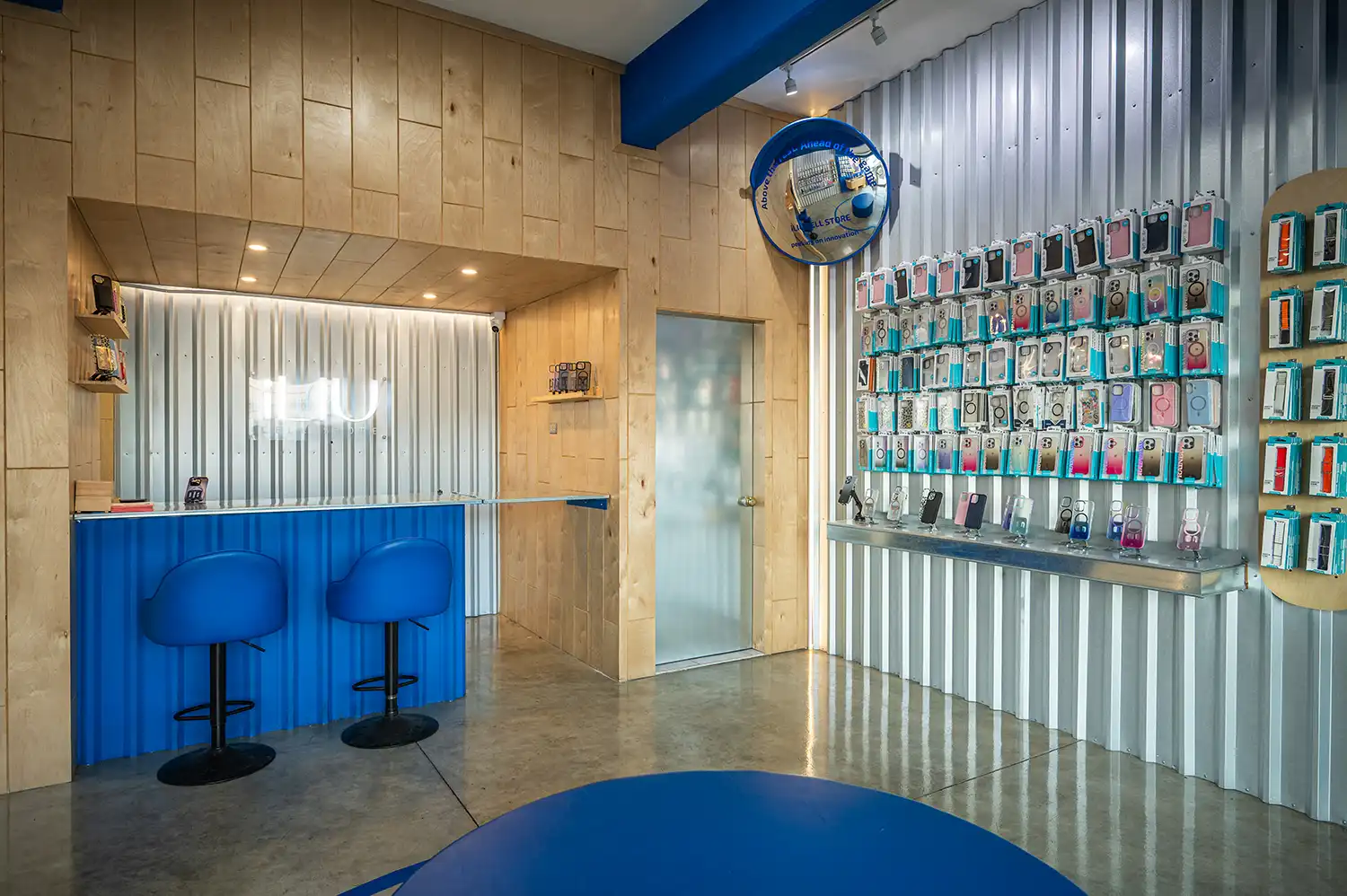
The spatial choreography is defined by movement, organized into three distinct yet fluid zones: reception, a central display area, and a dedicated service zone. A continuous circular circulation path guides visitors intuitively through the store, encouraging a sense of exploration rather than a forced path to a checkout counter. This emphasis on flow and the transformation of a compact footprint mirrors the historic adaptive reuse in Lisbon, where architecture serves to elevate the product through a carefully sequenced narrative of discovery.
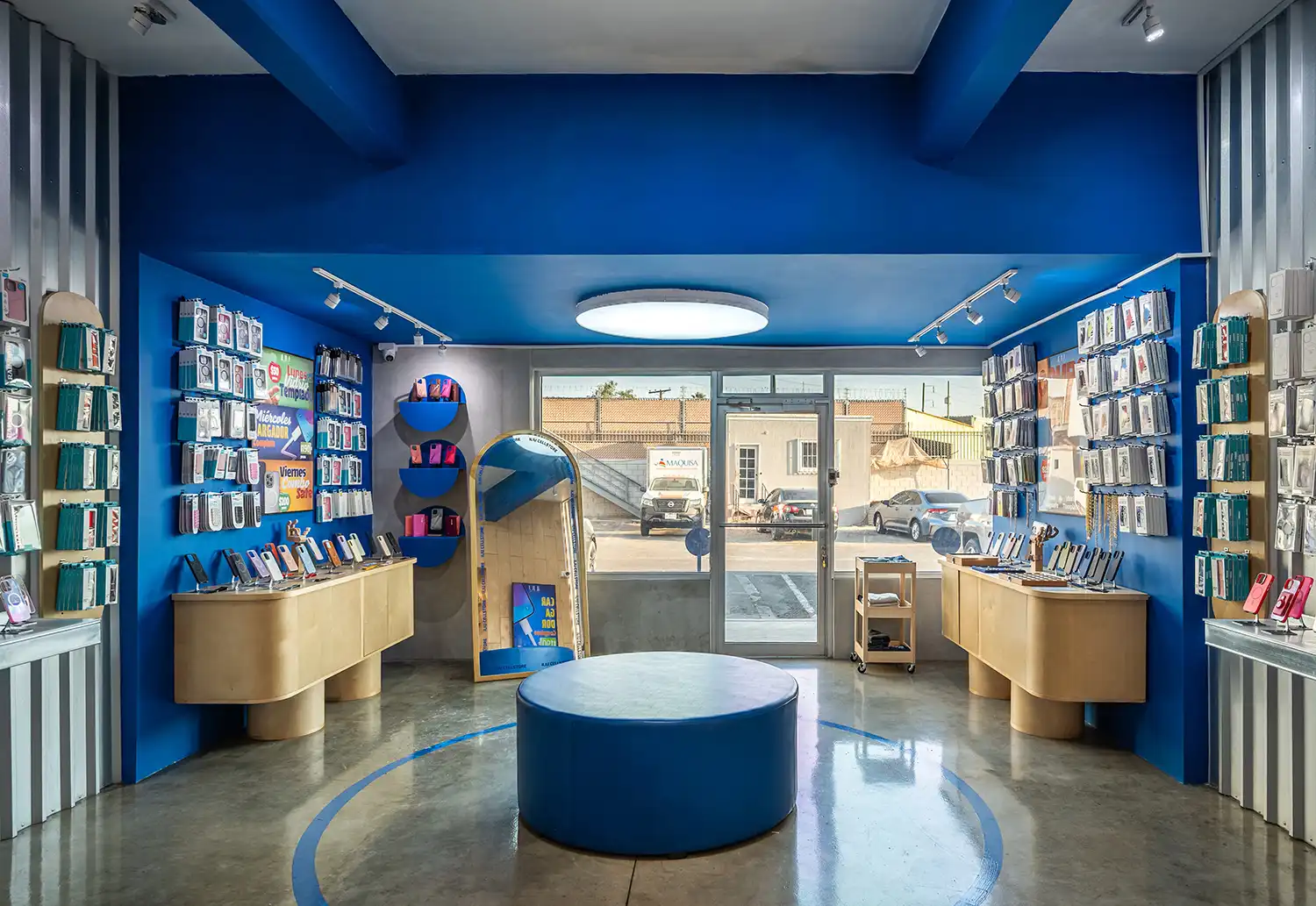
Technical restraint and material intelligence allow the ILIU Cell Store to achieve a high-impact presence without unnecessary excess. Every joint and surface is exposed, celebrating the “honesty” of the construction. The use of industrial materials like corrugated metal in Mexicali serves as a subtle nod to the city’s urban fabric, while the refined lighting ensures the technology on display remains the focal point. This approach demonstrates that a limited budget is not a barrier to quality, but a catalyst for more thoughtful, deliberate design decisions that resonate with the local community.
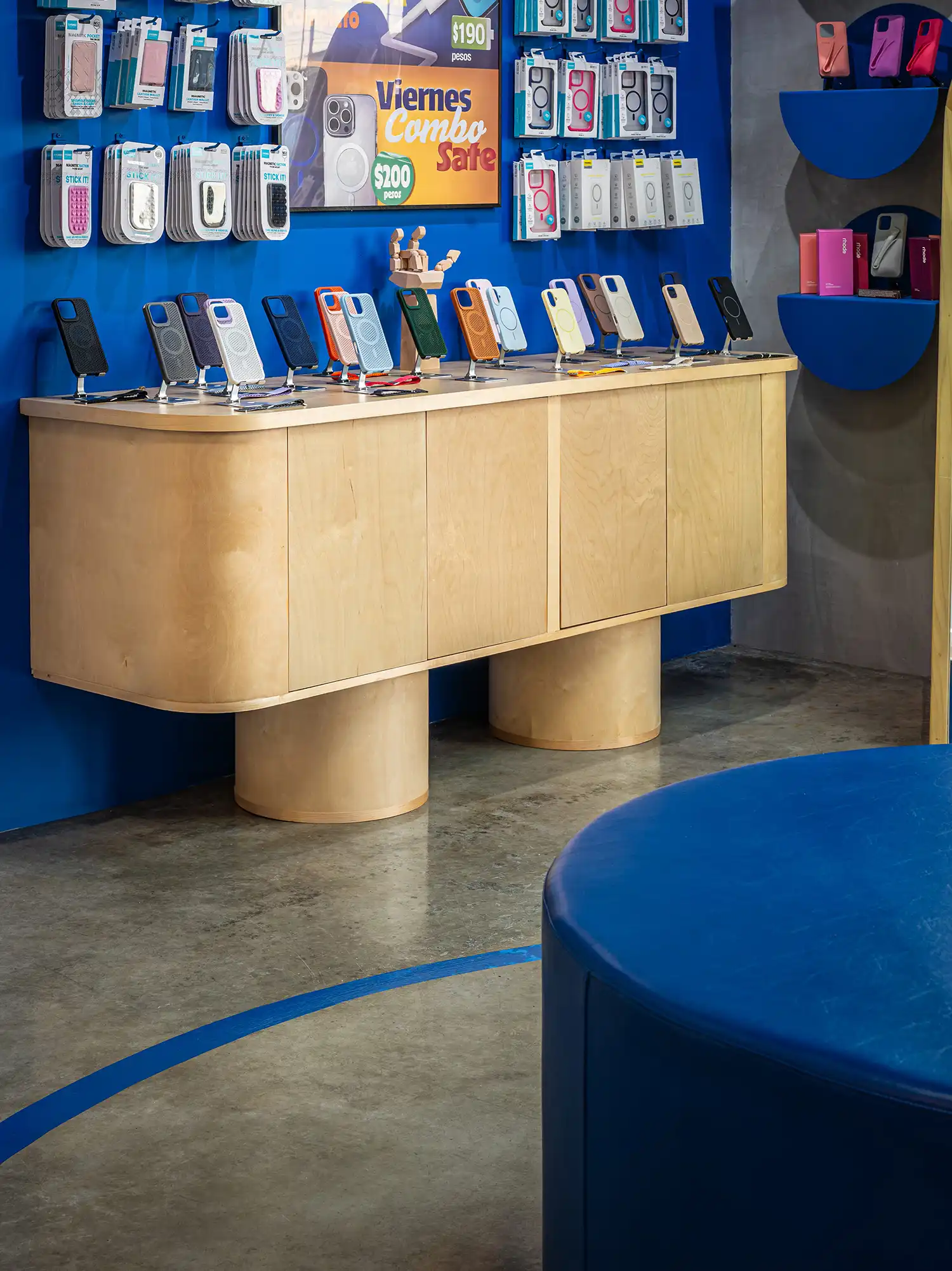
The project stands as a testament to the power of retail architecture to communicate values through silence and structure. By focusing on the “tactile balance” of the environment, Delar Studio has created a sanctuary for technology that feels approachable and authentic. It is a space that doesn’t just sell gadgets; it fosters a sense of permanence in a world of fleeting digital updates, ensuring that ILIU remains a vital part of the urban fabric in Baja California.