

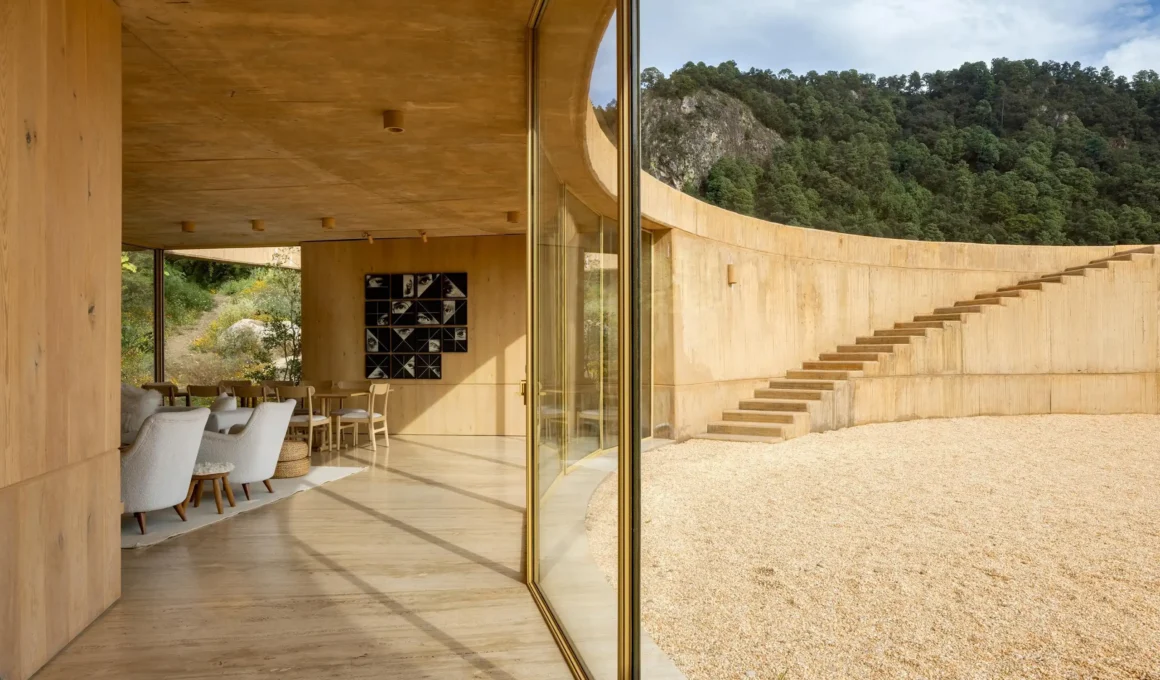
In the lush, rugged expanse of Valle de Bravo, a three-hour drive from the kinetic energy of Mexico City, architect Fernanda Canales has realized a project that functions less like a traditional dwelling and more like an optical instrument. House 720 Degrees is a sophisticated exercise in geometric duality, doubling the standard panoramic perspective to create a living experience that is simultaneously introverted and expansive. By centering the design on a perfect void—a circular patio—Canales has crafted a residence that registers the shifting light and shadow of the Mexican highlands, acting as a habitable solar clock that marks the rhythmic passage of time.
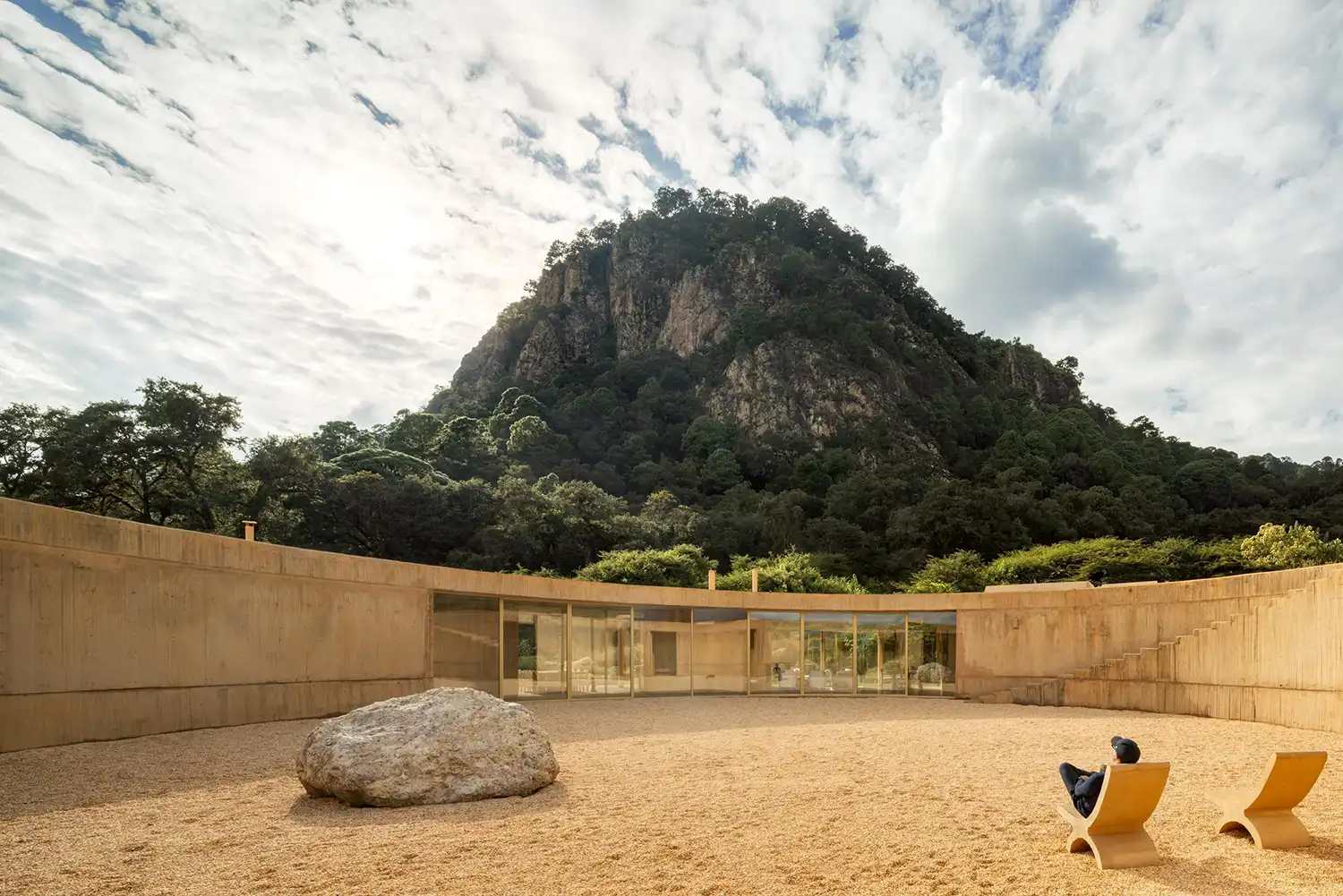
A choreography of space and vision defines the conceptual heart of the project. The circular floor plan is not merely a formal gesture but a strategic response to the dual nature of the site. During the daylight hours, the house directs the eye outward, framing the jagged silhouettes of a nearby mountain and volcano through its radial perimeter. As night falls, the emotional center of gravity shifts inward. The expansive glass walls and flexible screens draw the focus back to the central courtyard, transforming the home into a protected sanctuary. This “720-degree” approach allows the inhabitants to experience two distinct worlds: the wild, untamed exterior and the curated, intimate interior.
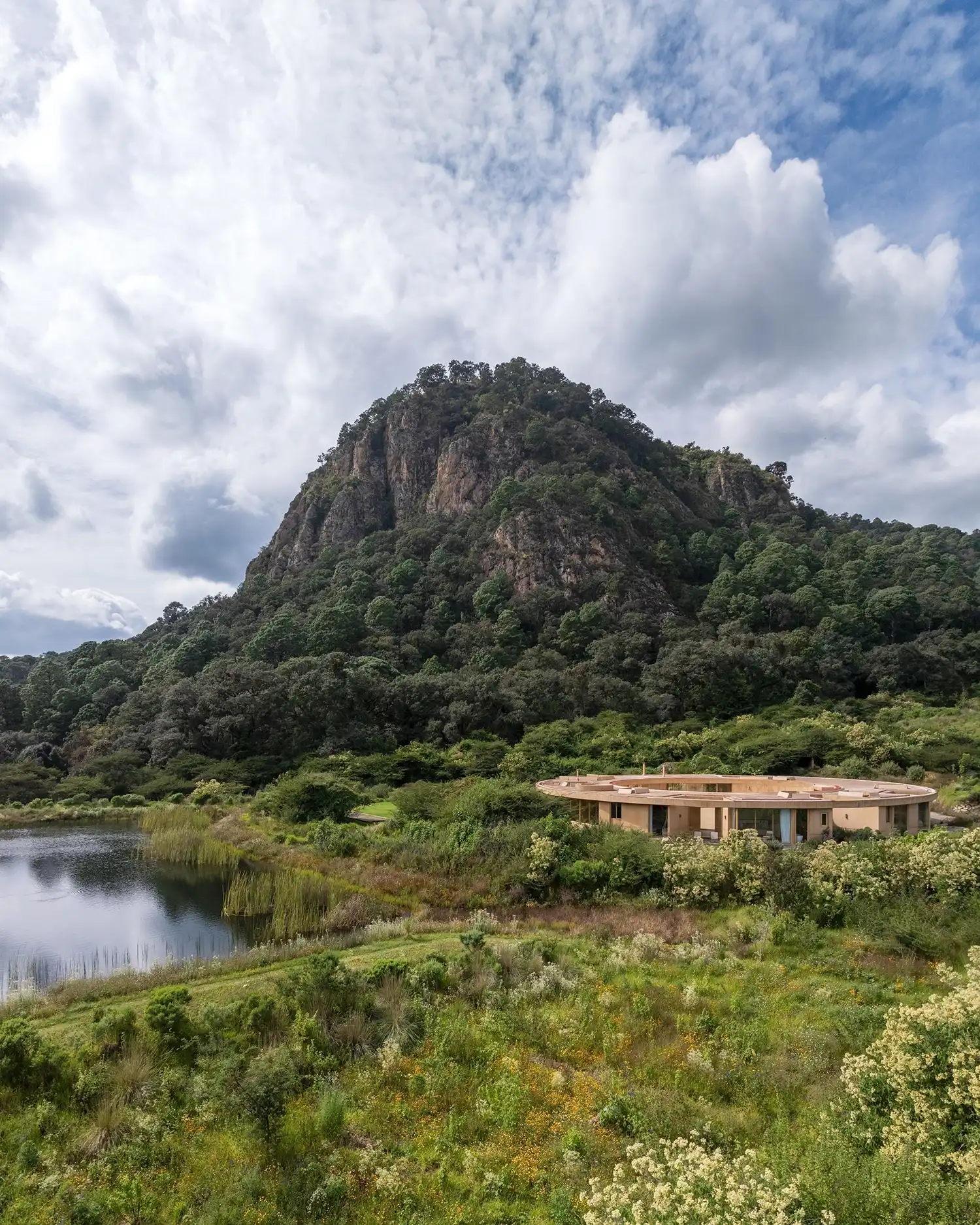
The architectural composition is a tripartite dialogue between form and the undulating terrain. To preserve the existing vegetation and negotiate the site’s natural contours, the program is fragmented into three distinct volumes. The primary circular residence is complemented by a detached studio and a rectangular wing housing guest quarters and service areas. This separation ensures that the scale of the construction remains humble against the horizon. Inside the main ring, the logic is equally precise; rectangular modules containing bedrooms, bathrooms, and a kitchen are inserted into the curve, leaving the interstitial arched spaces to serve as fluid circulation paths that bleed into terraces and gardens.
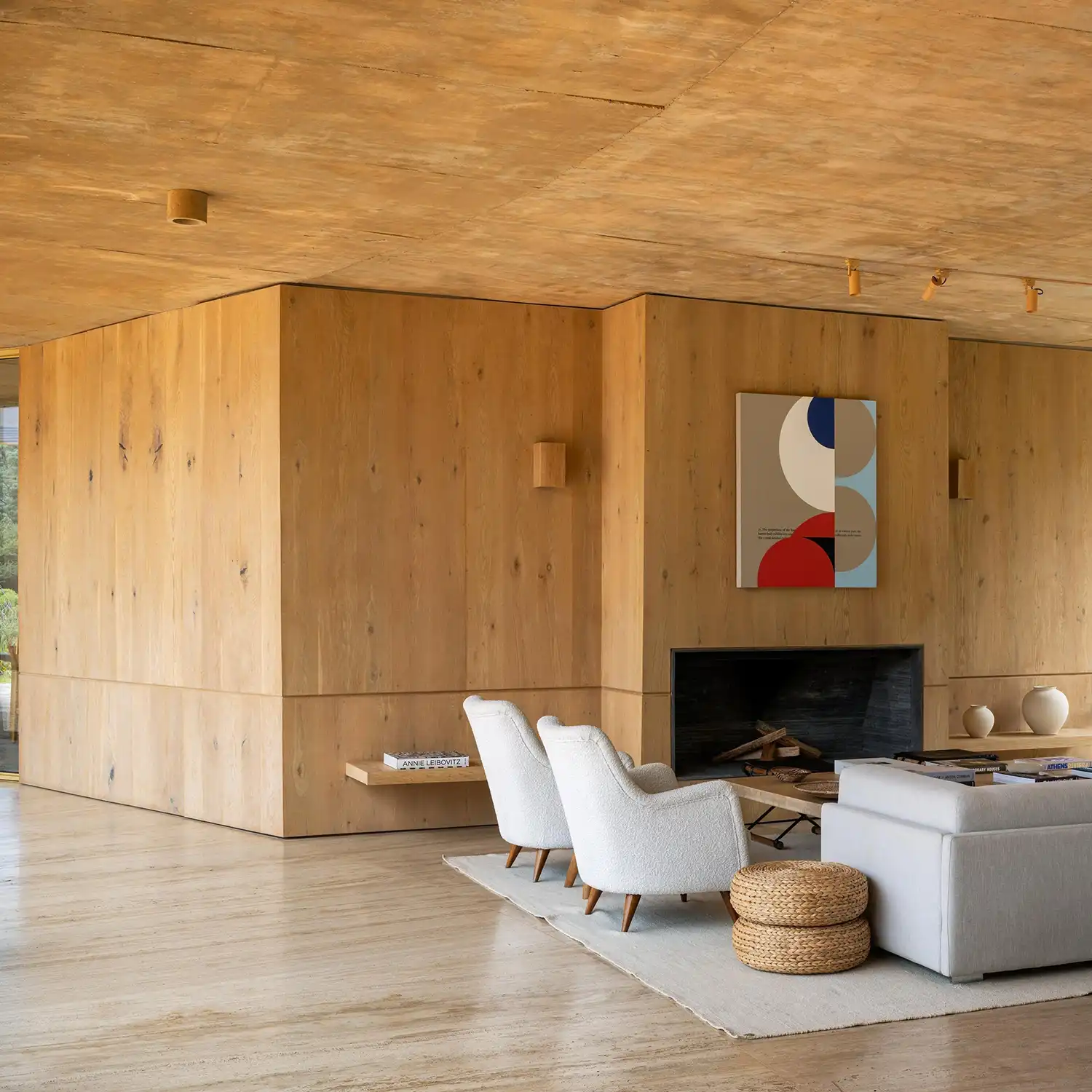
Sensory resonance and materiality ground the house in its specific geographic context. The walls are composed of concrete mixed with local soil, resulting in a monochromatic, textured finish that mirrors the earthen tones of the wooded landscape. This choice is both aesthetic and atmospheric; the building feels as though it has been unearthed rather than placed. Much like the subterranean weight and monolithic purity found in HW Studio’s Casa Tao in Puerto Vallarta, there is a profound commitment here to architectural silence and the raw power of the void. Both projects reject superficial ornament in favor of a “monumental minimalism” that respects the spiritual weight of the Mexican environment.
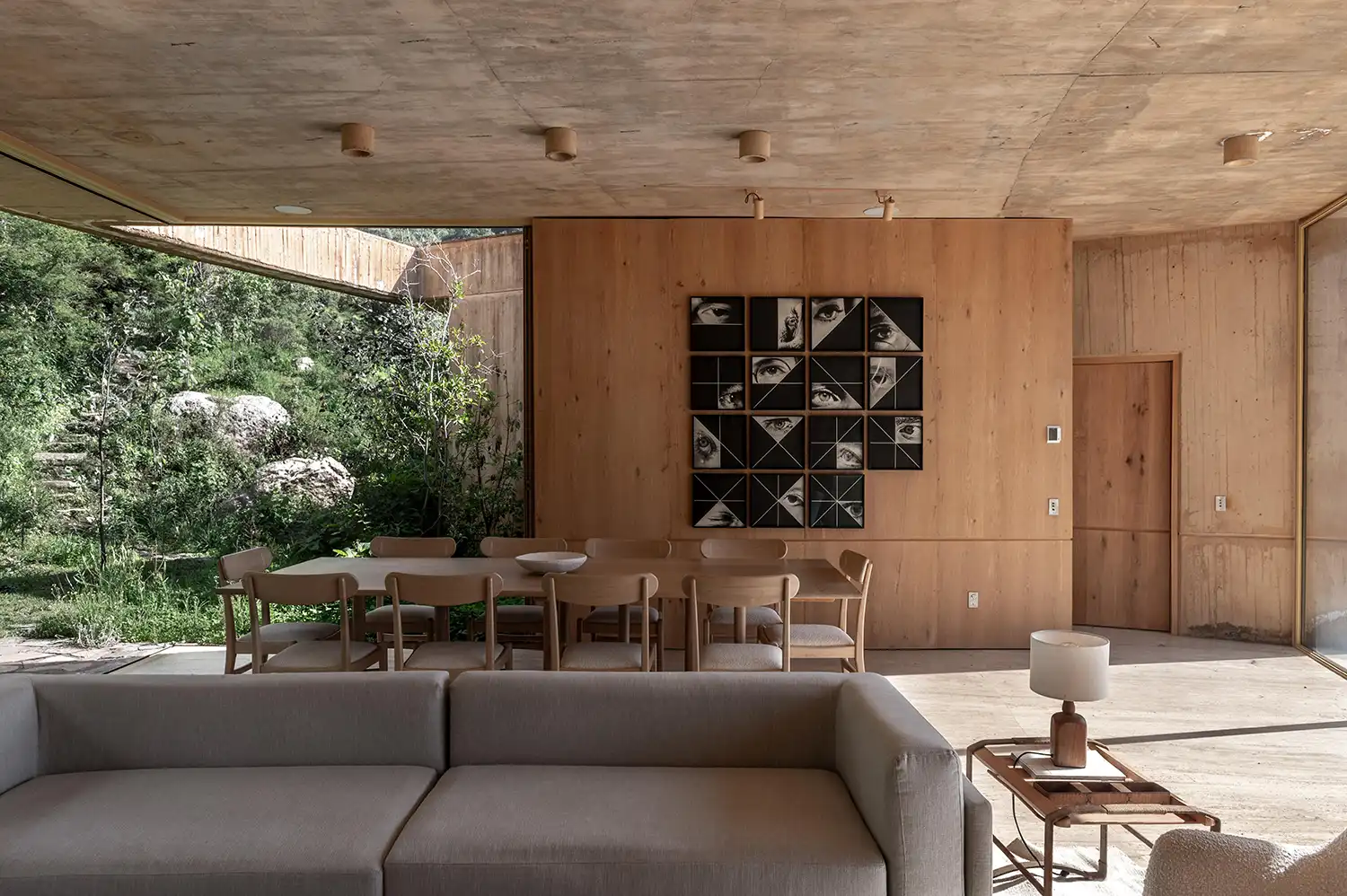
Resilience in a climate of extremes was a primary driver for the technical execution. In a region where temperatures can fluctuate by 30°C in a single day and heavy rains dominate the calendar, the house acts as a thermal membrane between the forest and the prairie. The design integrates off-the-grid systems including solar panels for electricity and water heating, complemented by hydronic radiant flooring to combat the high-altitude chill. Every room is afforded the luxury of cross-ventilation and multi-orientational views, ensuring that the interior climate remains temperate and breathable without the need for high-energy mechanical intervention.
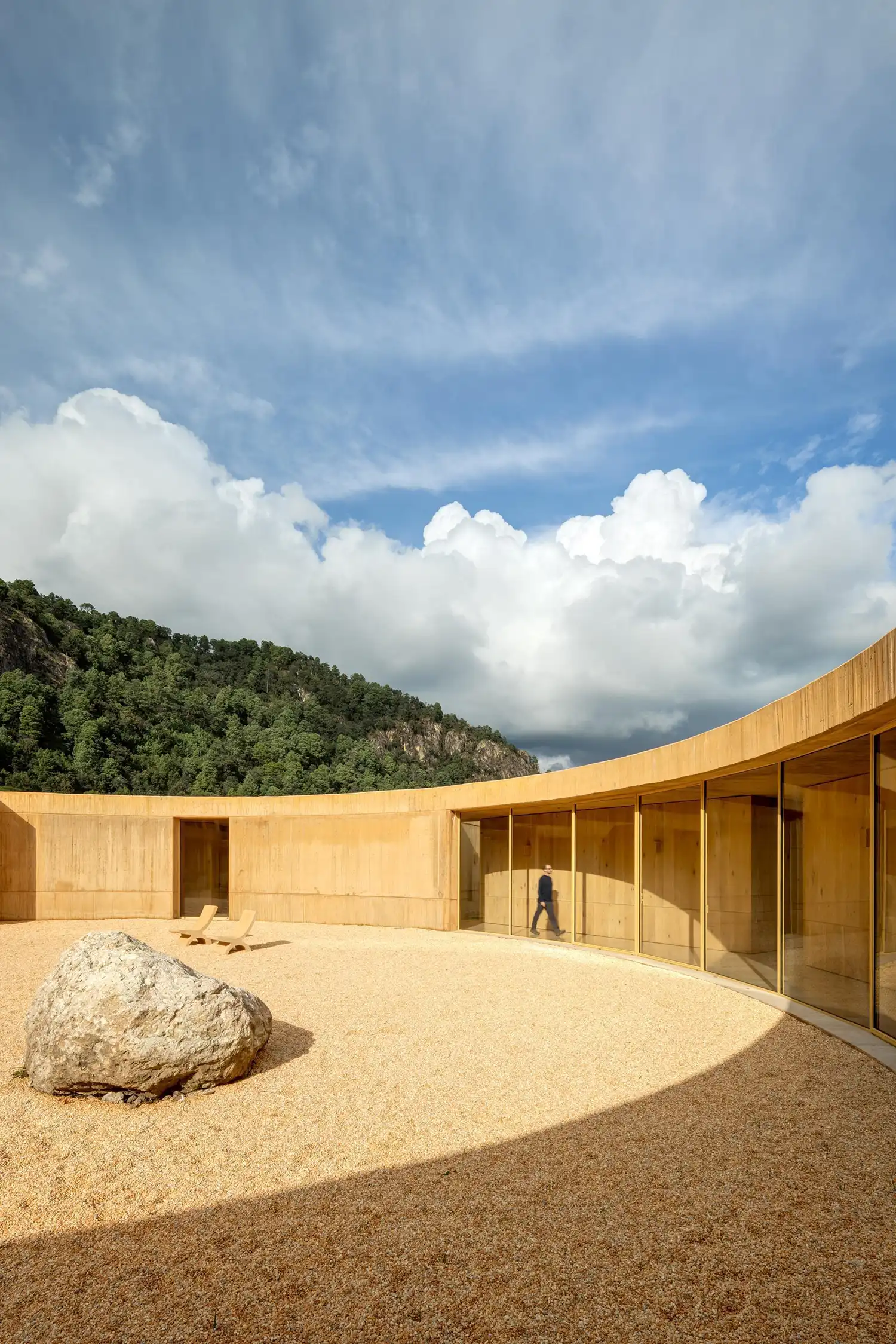
A legacy of ecological integration concludes the narrative of House 720 Degrees. By utilizing materials that require no cladding or paint, Canales ensures that the house will age gracefully, eventually becoming indistinguishable from the native scenery it inhabits. It is a living structure that breathes with the seasons, harvesting its own rainwater and utilizing furniture crafted on-site by local artisans. It stands as a sophisticated rebuttal to the idea that a luxury residence must be a fortress against nature; instead, it is a transparent, circular lens that invites the environment to become the protagonist of the domestic experience.