


The weight of history meets the fluidity of the water at the new Zero Zero restaurant in Lisbon, Portugal. Nestled within the historic district of Belém, the project occupies a 1,400-square-metre modernist landmark originally conceived for the Portuguese World Exhibition of 1940. Positioned with surgical precision between the Padrão dos Descobrimentos and the Museu de Arte Popular, the building is a testament to Portuguese modernism, encircled by a reflecting pool that creates a poetic, shimmering dialogue with the Tagus River. For LADO Arquitectura e Design, the challenge was not merely to insert a third outpost for the acclaimed Italian eatery, but to breathe contemporary life into a structure that belongs to the city’s collective memory.
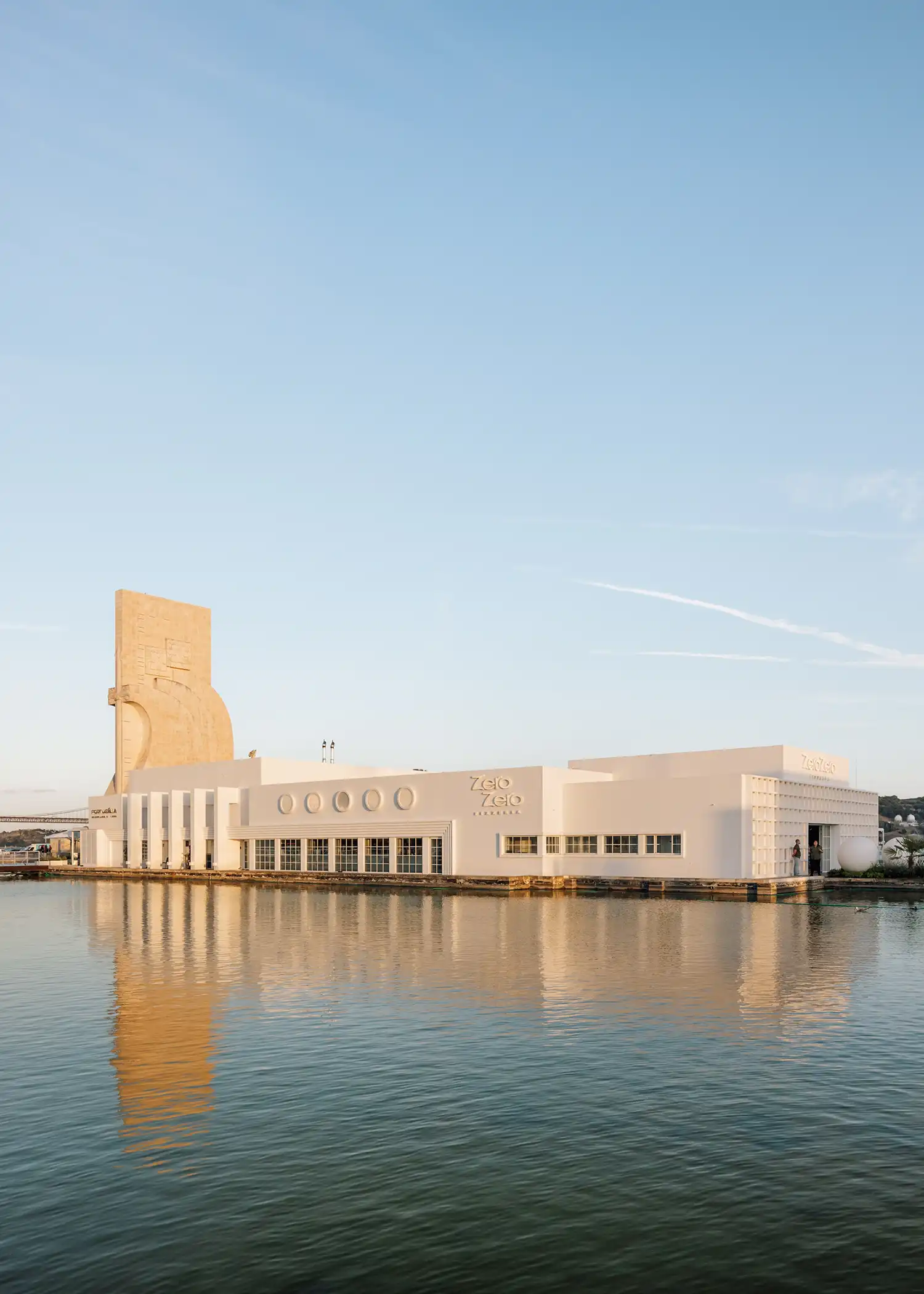
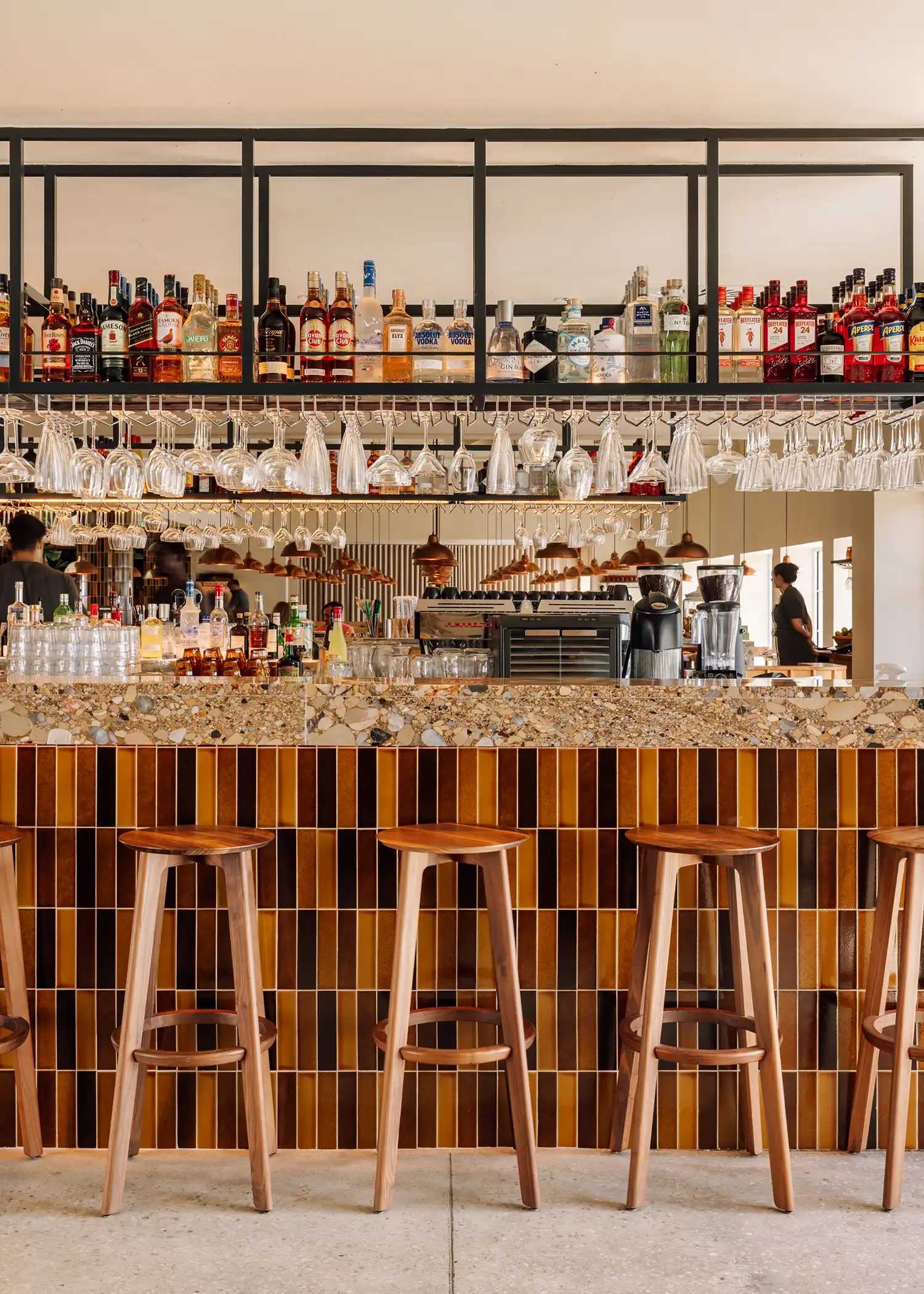
A sensitive architectural intervention guided the transformation, where the studio opted for a philosophy of restoration over Reinvention. By maintaining the original façades and window configurations, the design team ensured a seamless continuity with the district’s monumental context. Inside, however, the narrative shifts toward a refined, tactile minimalism. The layout draws patrons through a reception area that balances the industrial scale of the building with the intimacy of an Italian salumeria. Here, a curated charcuterie display and a generous bar area invite the ritual of the aperitivo, while the far end of the hall is anchored by two massive wood-fired ovens—the functional heart and soul of the Zero Zero brand.
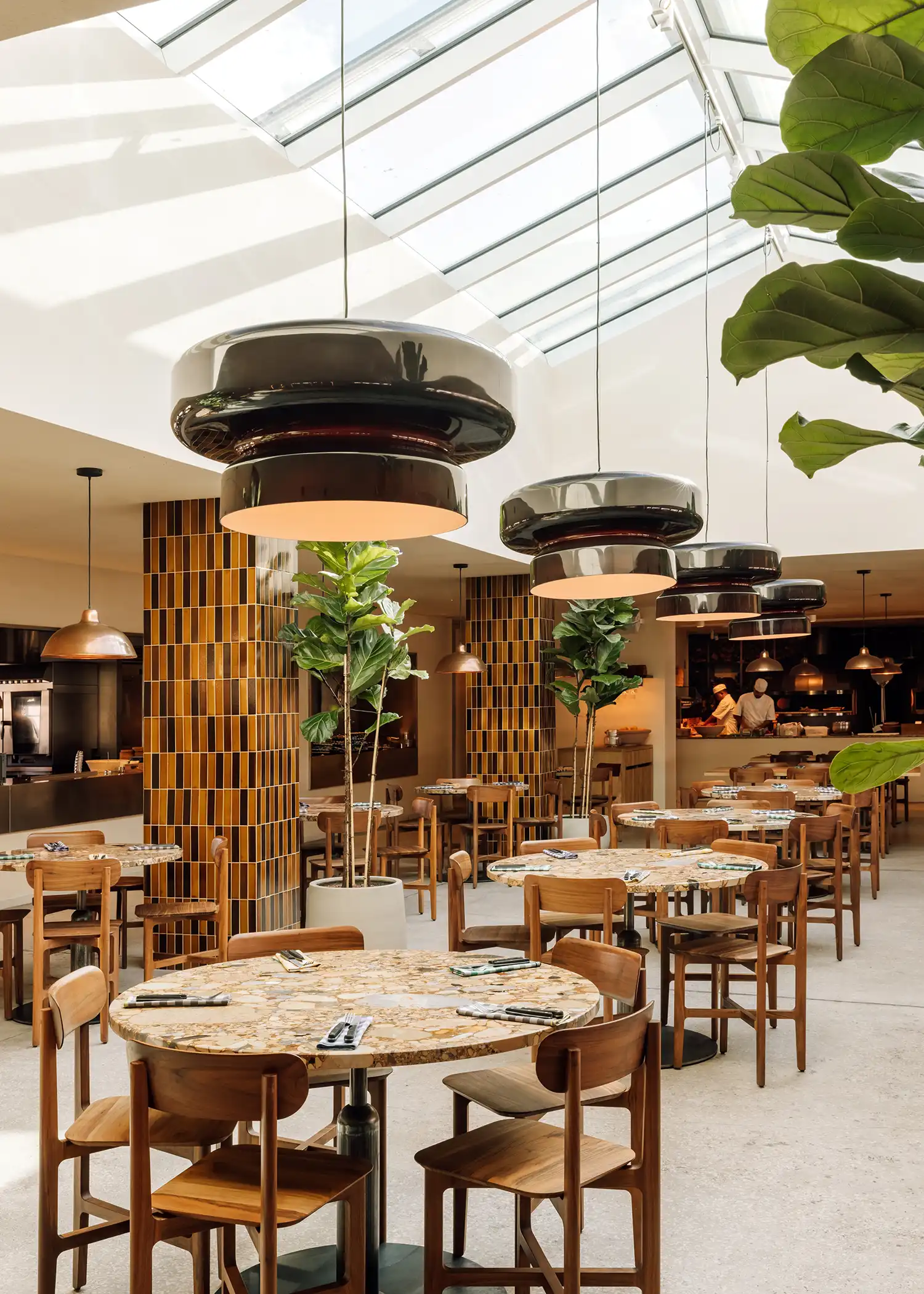
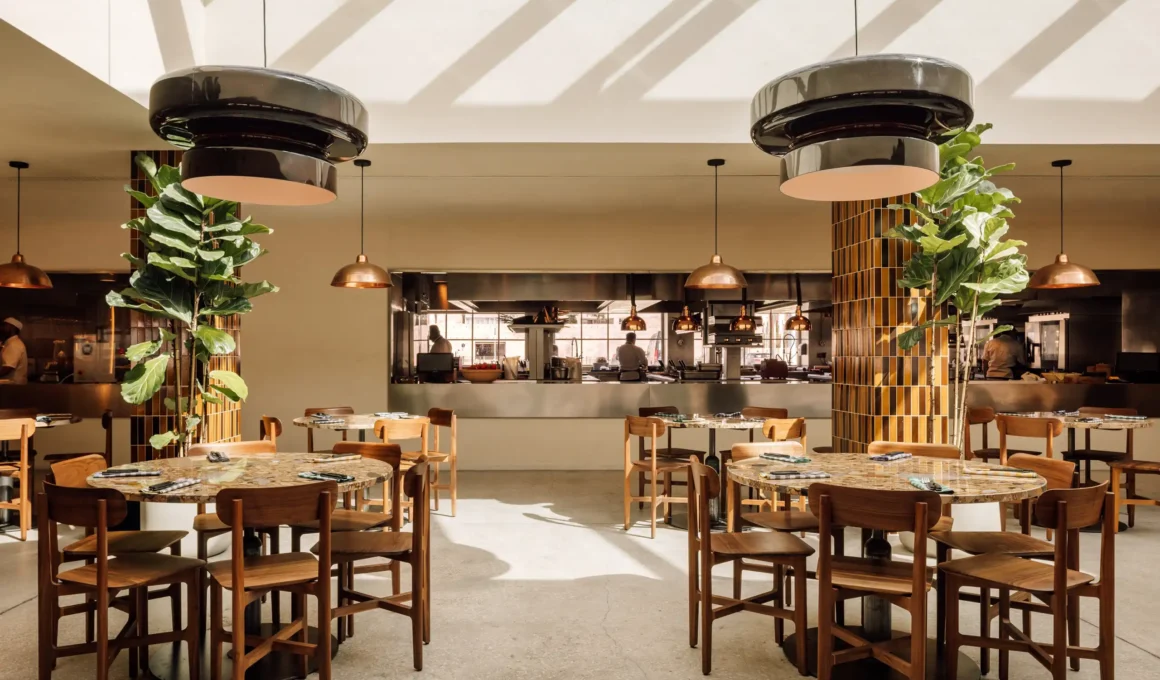
Materiality and light serve as the primary tools for defining the interior’s sensory experience. To soften the vastness of the floorplate, LADO enlarged the original central skylight, allowing Mediterranean sun to pour into the core of the dining room. The palette is a sophisticated exercise in restraint: ivory-toned Venetian plaster and polished concrete floors provide a luminous backdrop, while acoustic wood-fibre panels manage the soundscape of the 600-guest capacity space. In a nod to both Italian craft and geological power, the bar counter and central columns are clad in vitrified tiles made from volcanic ash, creating a dark, textured contrast to the warmth of the solid American walnut and French oak furniture.
The rediscovery of a long-lost heritage provides the project with its most compelling narrative layer. During the renovation of the private dining room, a mural by the iconic American artist Sol LeWitt—hidden for decades behind a partition—was meticulously restored. This accidental gallery now serves as a focal point for the 80-seat event space, which can be partitioned by heavy acoustic curtains. This integration of fine art mirrors a growing trend in the Portuguese capital for maritime-inspired hospitality venues that seek to bridge the gap between historic preservation and contemporary leisure, much like the recent transformation of El Mar Cateto.
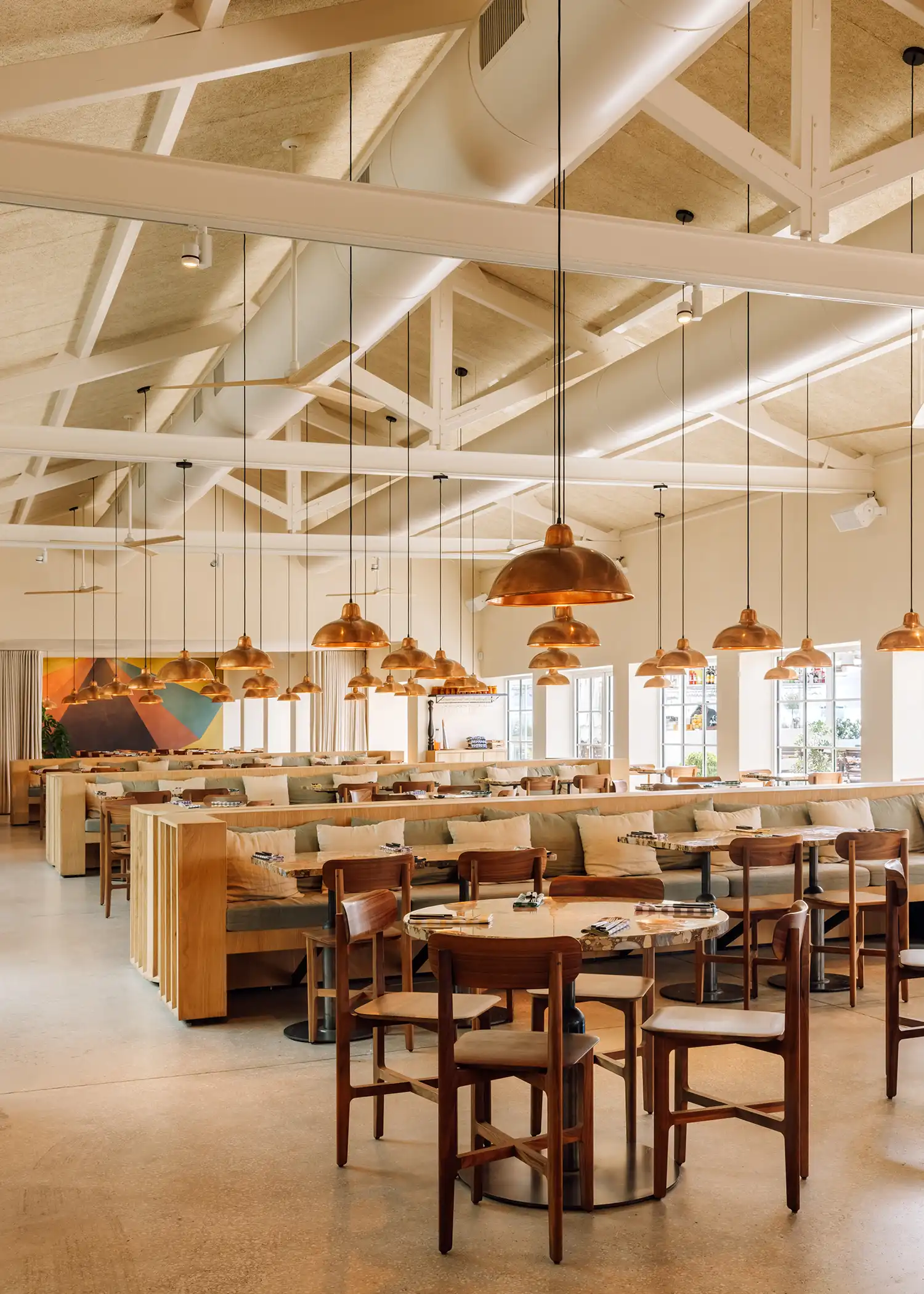
Elevating the utilitarian to the experiential, the upper-floor powder rooms offer a surprising moment of architectural pause. The space features an oval-shaped lounge anchored by circular stone sinks, with walls clad in green glazed tiles arranged in rhythmic, geometric patterns. Ten individual cubicles are oriented southward, offering guests quiet, framed views of the river through the original modernist fenestration. This attention to detail extends to the bespoke lighting scheme, where custom copper pendants and Marset’s “Bohemia” lamps create a layered, amber glow that transforms the monumental scale of the hall into a series of intimate dining “islands” as dusk falls.
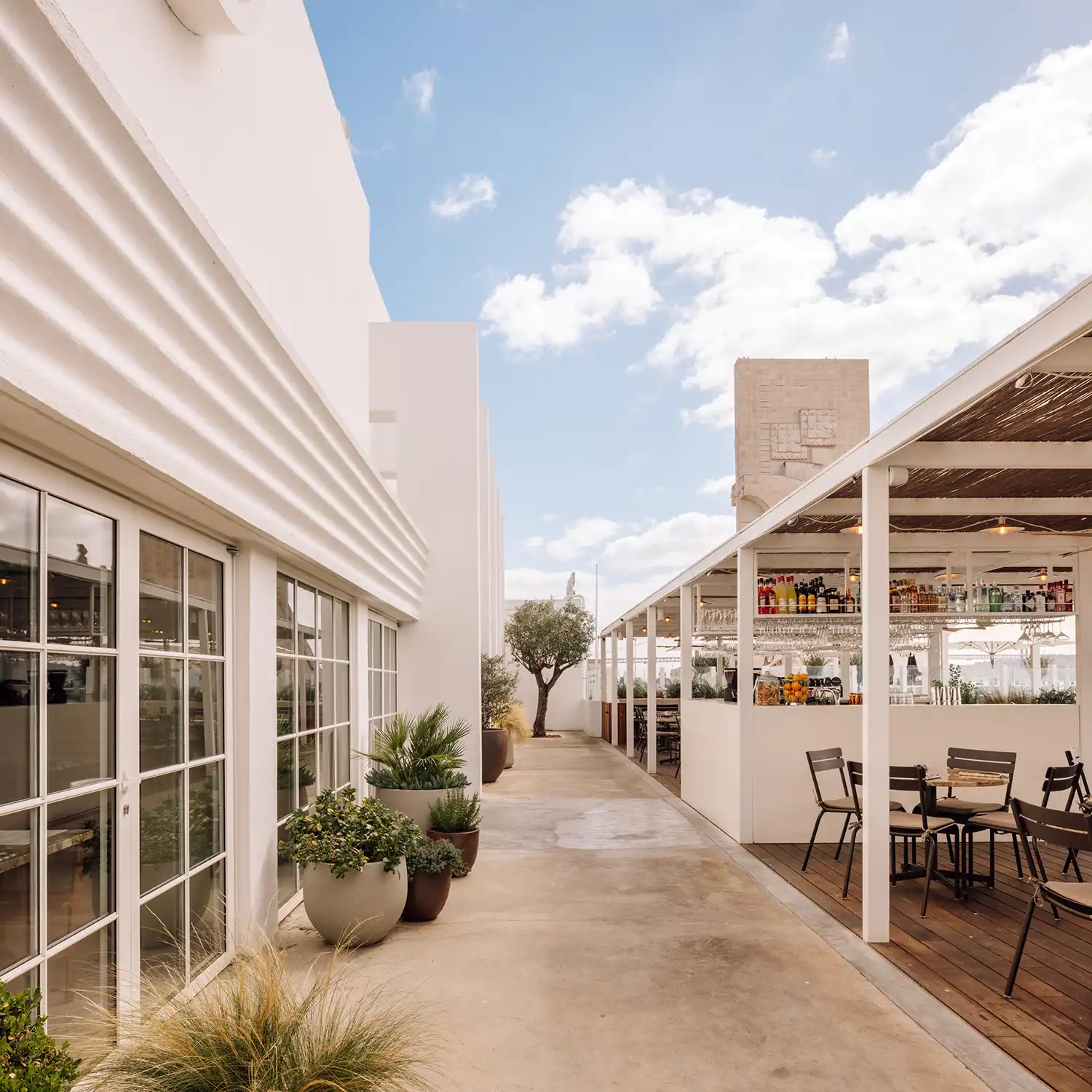
The connection to the landscape is solidified on the southern façade, where a sprawling timber deck extends toward the water. Sheltered by a steel pergola interwoven with organic wicker elements, the terrace is framed by lush planters filled with native vegetation. By day, the structure casts dappled shadows across the tables, mimicking the movement of the river; by night, the atmosphere shifts into a warm, glowing extension of the interior. This intervention by LADO Arquitectura e Design succeeds because it does not attempt to overshadow its surroundings; instead, it provides a sophisticated lens through which to rediscover one of Lisbon’s most iconic waterfront settings.