

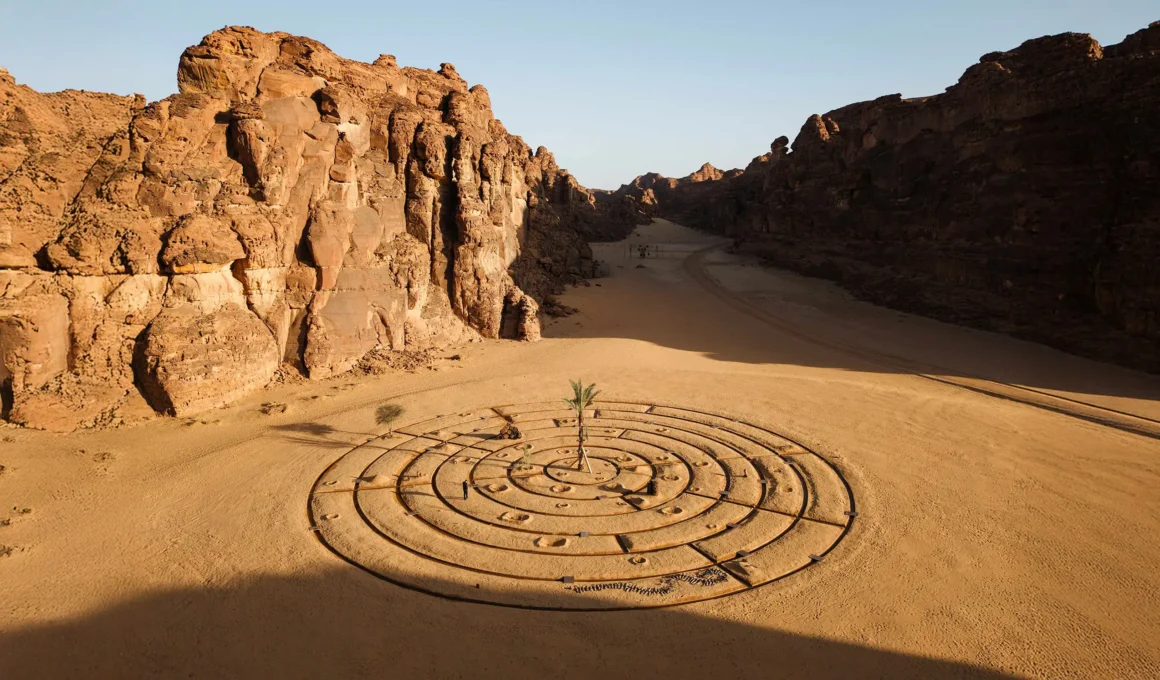
A silent revolution in the desert. The silence of the AlUla desert is no longer static; it has become a canvas for “Space Without Measure.” Now in its fourth edition, Desert X AlUla 2026 has officially opened in Northwest Saudi Arabia, transforming the ancient canyons and lush oases into a sprawling, open-air dialogue between the geological past and the contemporary imagination. This year’s exhibition moves beyond mere sculpture, inviting a visceral attunement to a landscape where distance is felt rather than measured, and where the desert serves as an active participant in the creative process.
A philosophical inquiry into the vastness. Curated by Wejdan Reda and Zoé Whitley alongside artistic directors Neville Wakefield and Raneem Farsi, the curatorial framework challenges visitors to navigate the immense scale of the region through the lens of human perception. Drawing inspiration from Kahlil Gibran, the theme “Space Without Measure” encourages a departure from the digital pace of modern life. It favors the rhythmic, slow movement required to truly “read” the desert, where the shifting light across a limestone cliff becomes as significant as the artworks themselves.
The landscape as an active participant. Unlike traditional galleries, the site-responsive works scattered across Wadi AlFann and the surrounding valleys are designed to be discovered as part of the topography. The experience is one of atmospheric shifts—the way the golden hour stretches a shadow or how the desert wind carries the low hum of a distant installation. The curators have positioned these works to ensure that the environment is never a backdrop, but a medium that alters the viewer’s physical and psychological state as they move between the desert floor and the canyon heights.
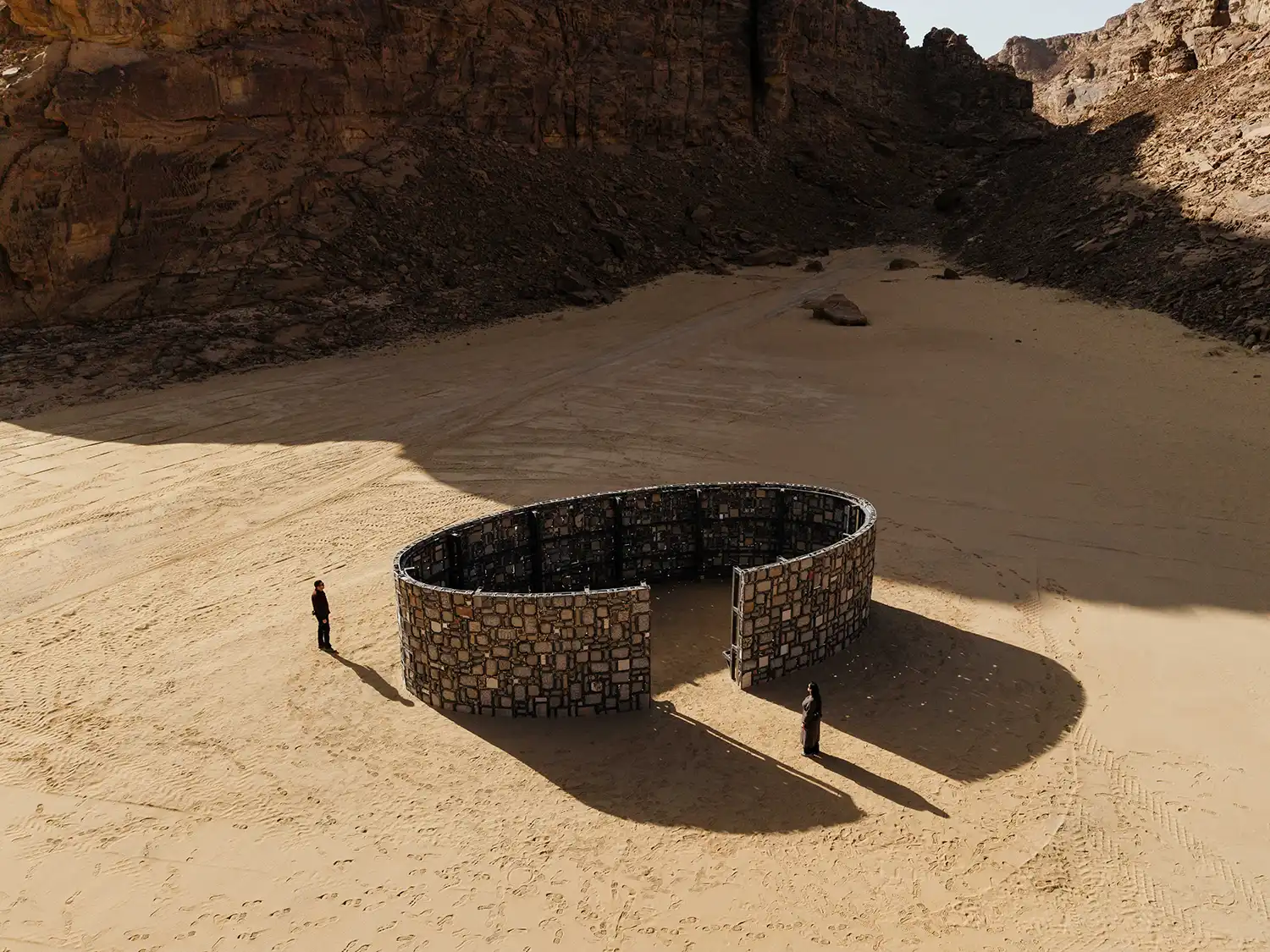
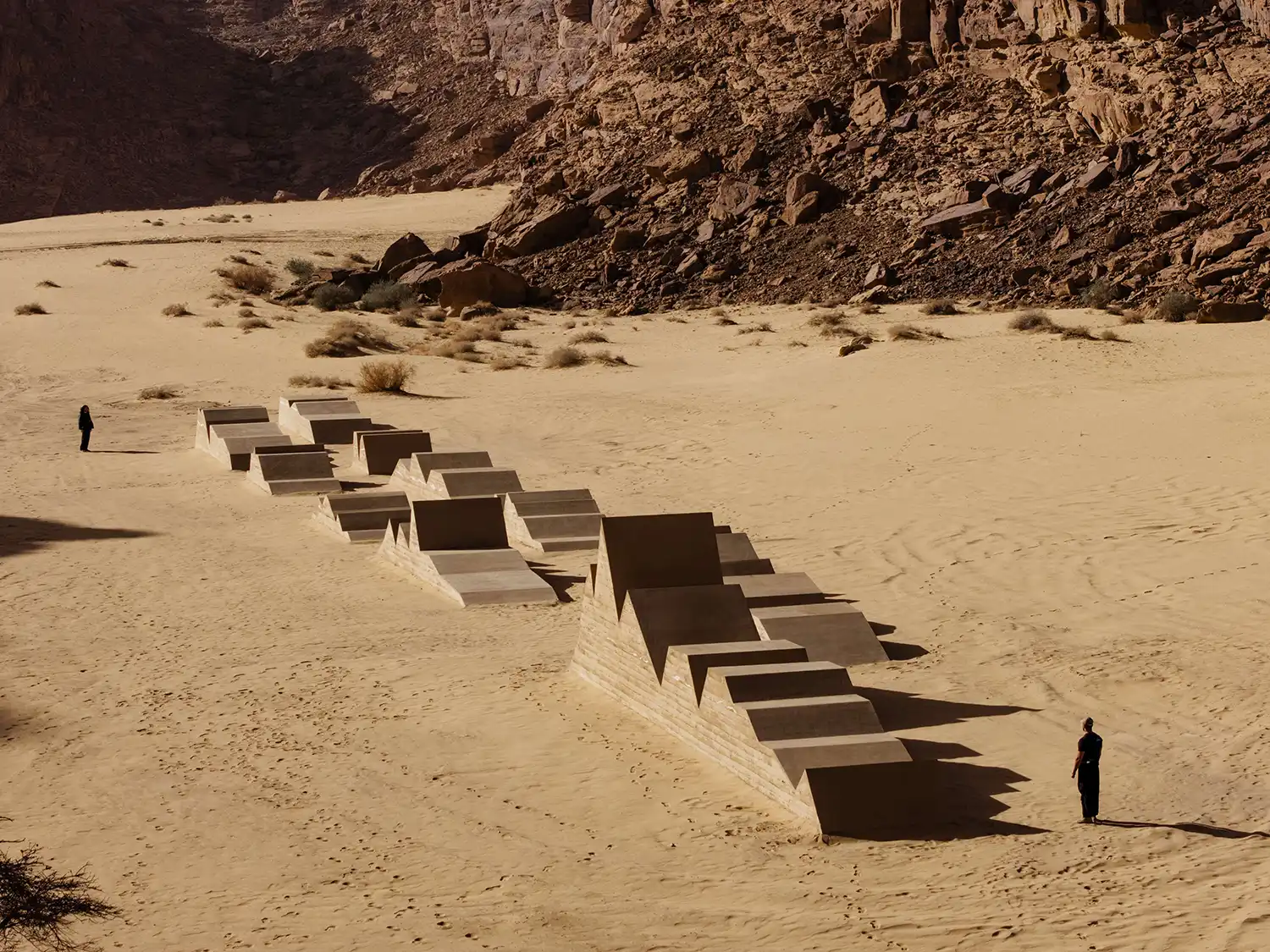
Materiality born from the red earth. The technical soul of this edition lies in its profound commitment to materiality and local craftsmanship. Rather than imposing foreign objects onto the sand, many artists have utilized rammed earth, carved limestone, and salvaged wood to build their visions. Sara Abdu’s A Kingdom Where No One Dies: Contours of Resonance exemplifies this grounded approach, using layered earth walls that feel like extensions of the canyon floor. These structures, developed with local artisans, ensure the physical labor of the exhibition remains tethered to Saudi Arabia’s heritage.
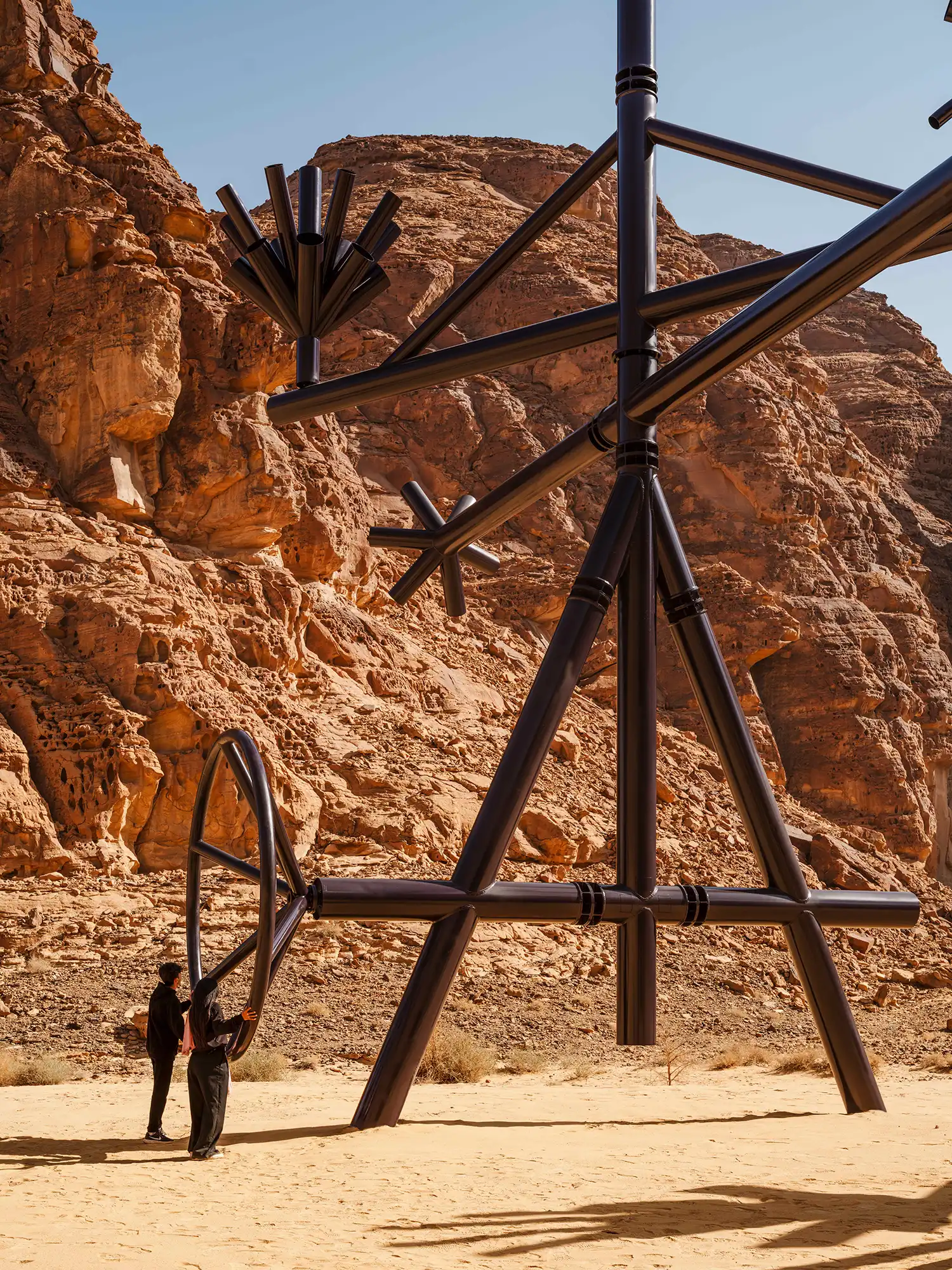
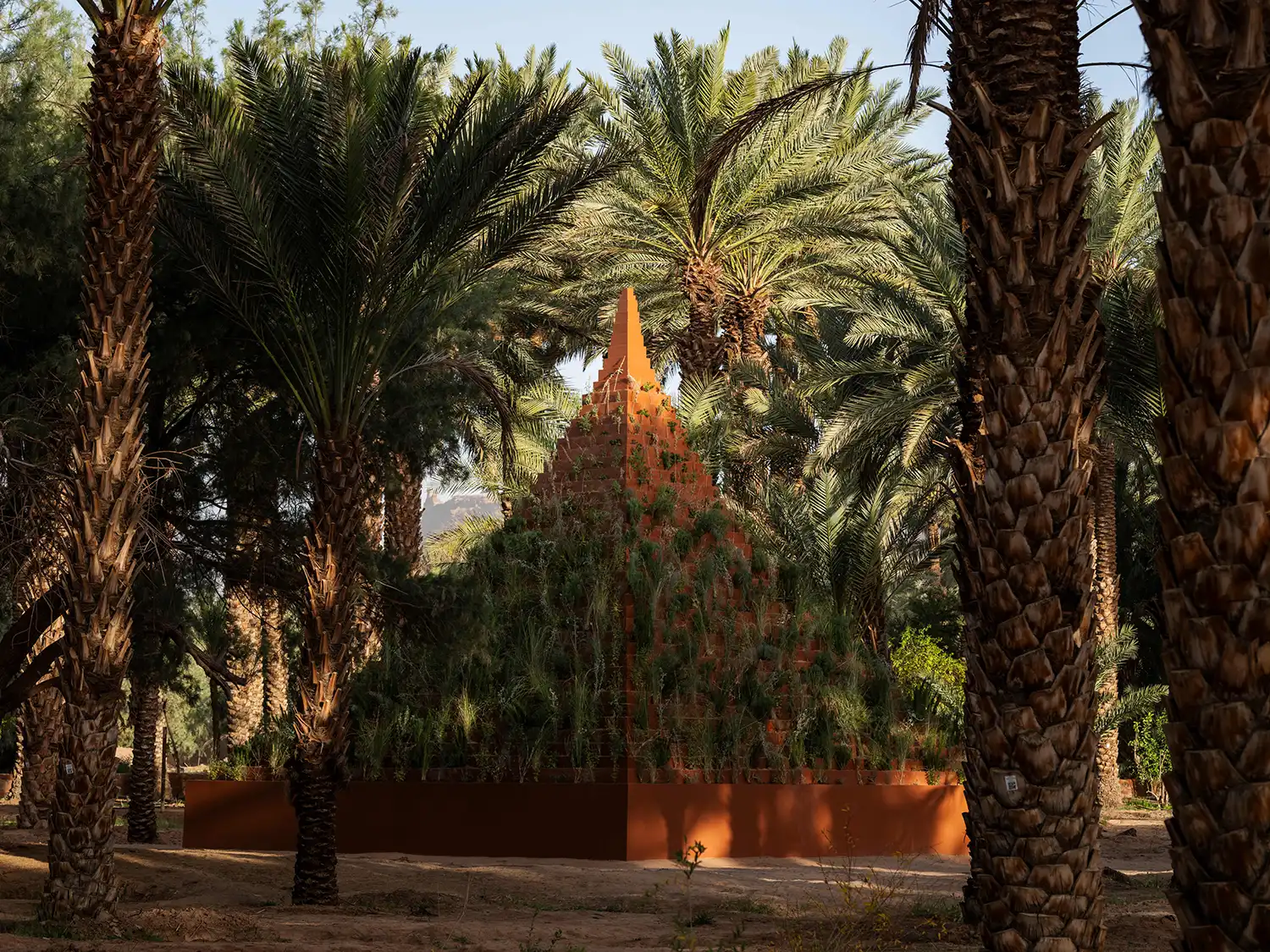
The living architecture of growth. Agnes Denes, a pioneer of the land art movement, contributes The Living Pyramid, a monumental planted structure situated within the oasis. This work emphasizes cycles of regeneration through its changing surface, contrasting the permanence of the surrounding rock with the fleeting nature of biological life. As the plants mature throughout the exhibition’s run until February 28, 2026, the pyramid becomes a breathing monument to ecological resilience, shifting in color and texture in response to the AlUla climate.
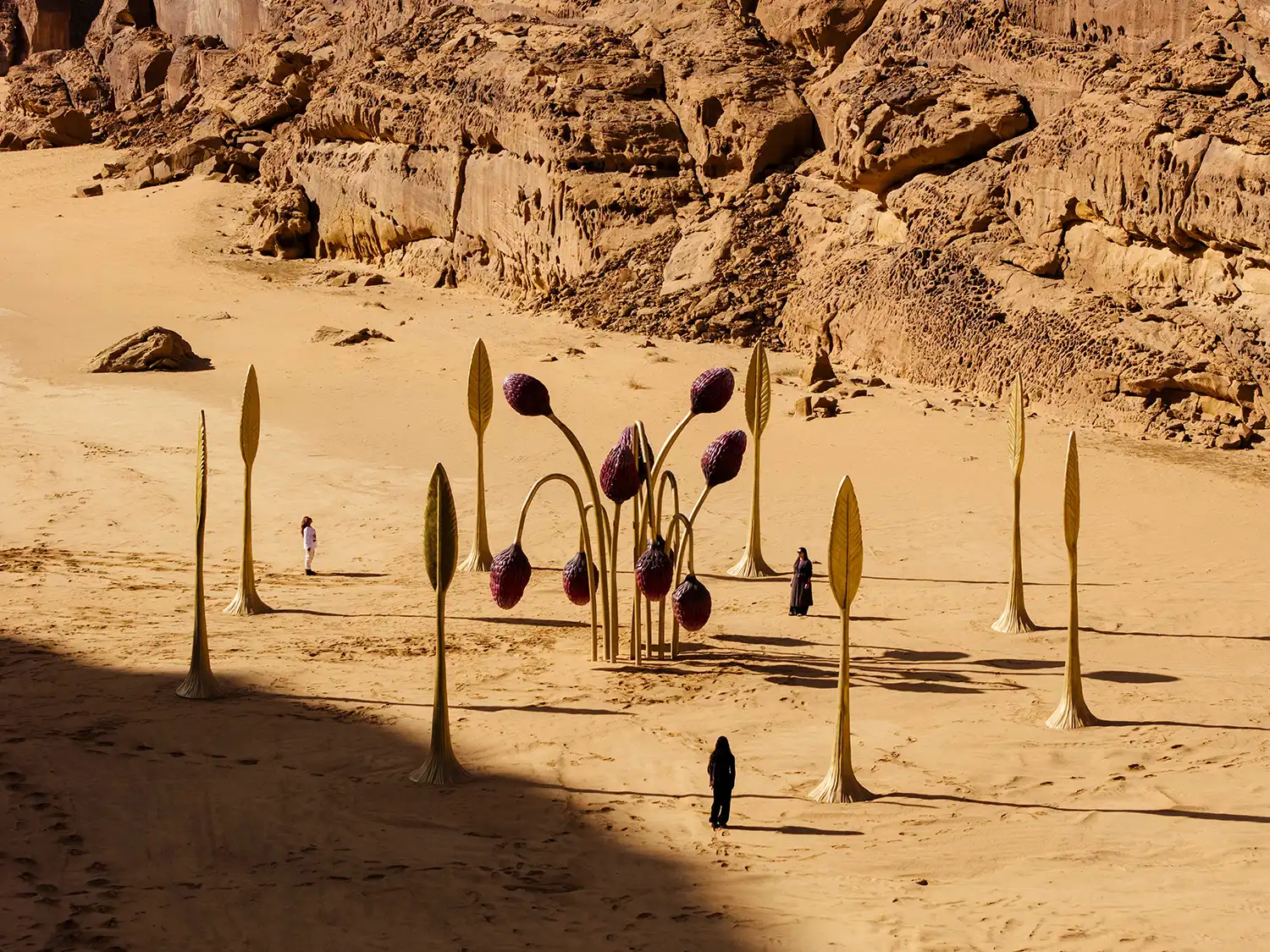
Acoustic fields and subterranean vibrations. Sound plays a central role in several commissions, moving the experience from the visual to the auditory. Lebanese artist and composer Tarek Atoui presents The Water Song, an installation where instruments emerge partially from the ground. Visitors are encouraged to attune to subtle vibrations carried through the soil and air, turning the landscape into a resonant chamber. It is a work that demands silence from the viewer, rewarding those who linger with a deeper connection to the hidden frequencies of the earth.
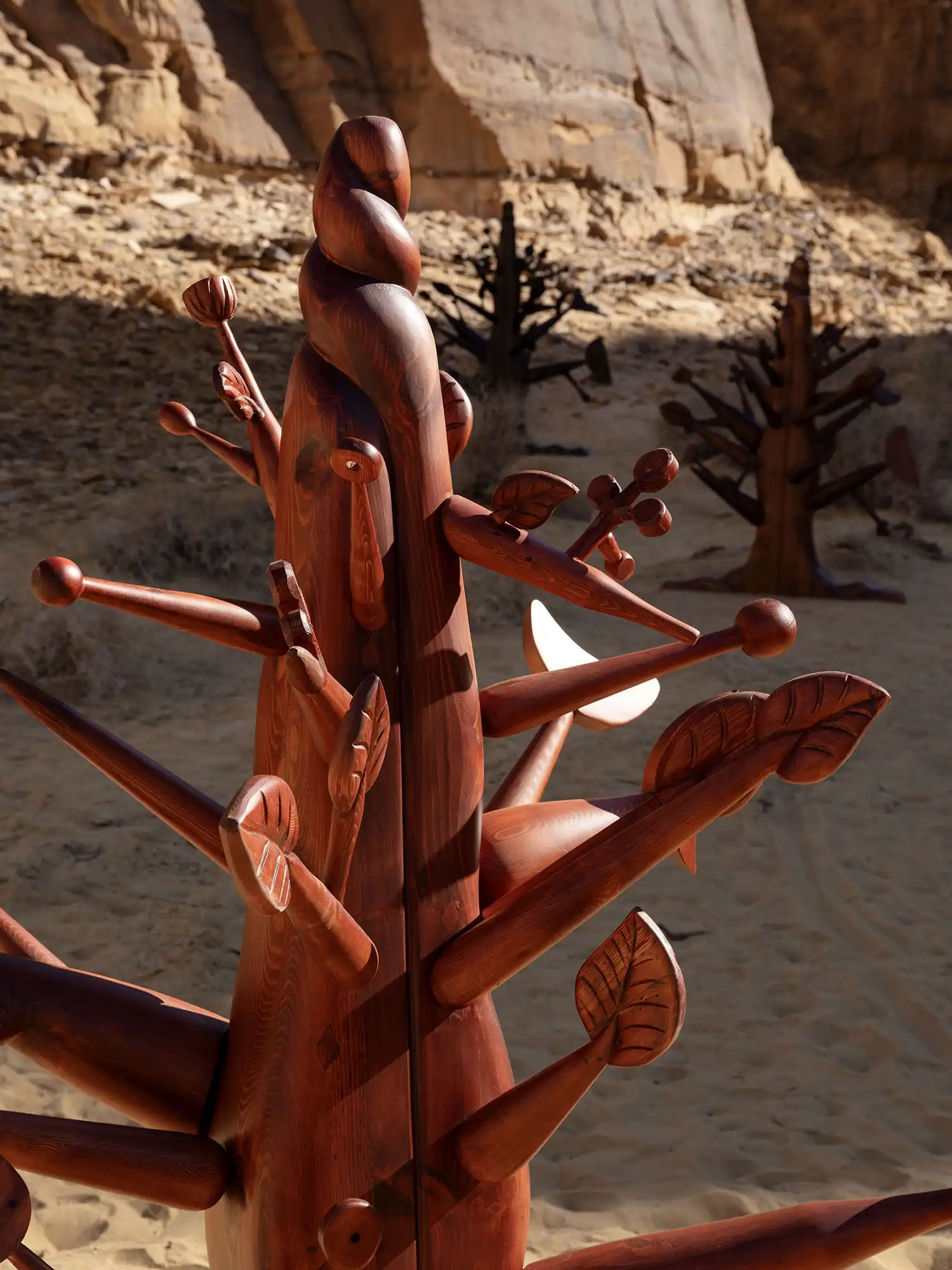
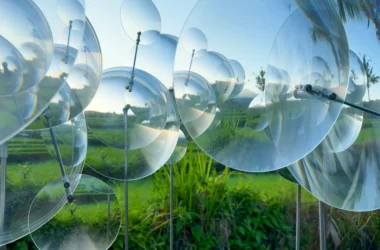
The choreography of sunlight and time. The collective practice Bahraini-Danish introduces Bloom, a kinetic sculpture that breathes with the sun. Its rotating elements register the passage of time across the day, producing a shifting visual rhythm that aligns with the desert’s natural cycles. The work is intentionally gentle and open-ended, inviting viewers to linger rather than perform. It serves as a mechanical sundial, capturing the ephemeral quality of light as it dances across the engineered surfaces and the rugged valley walls.
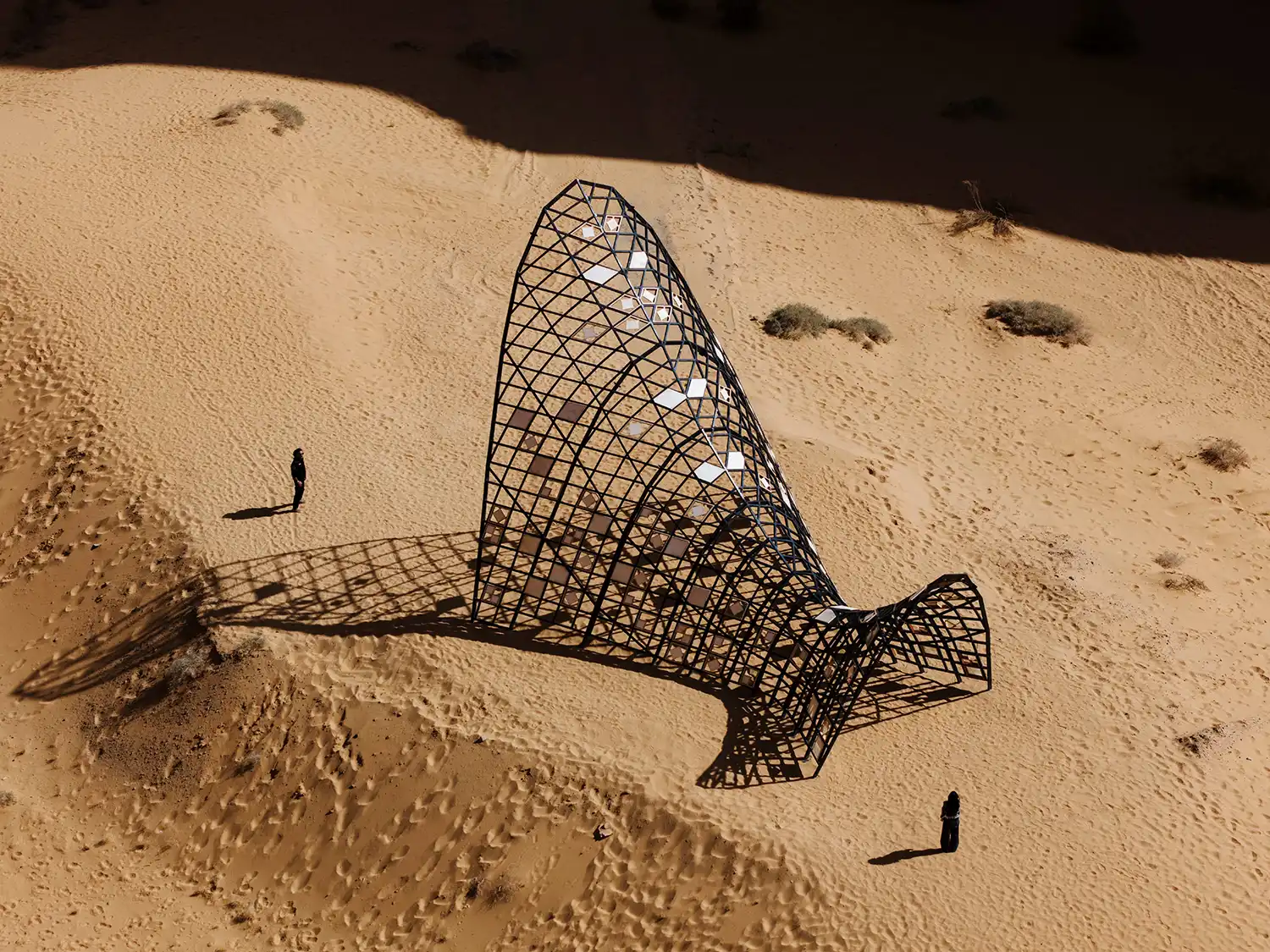
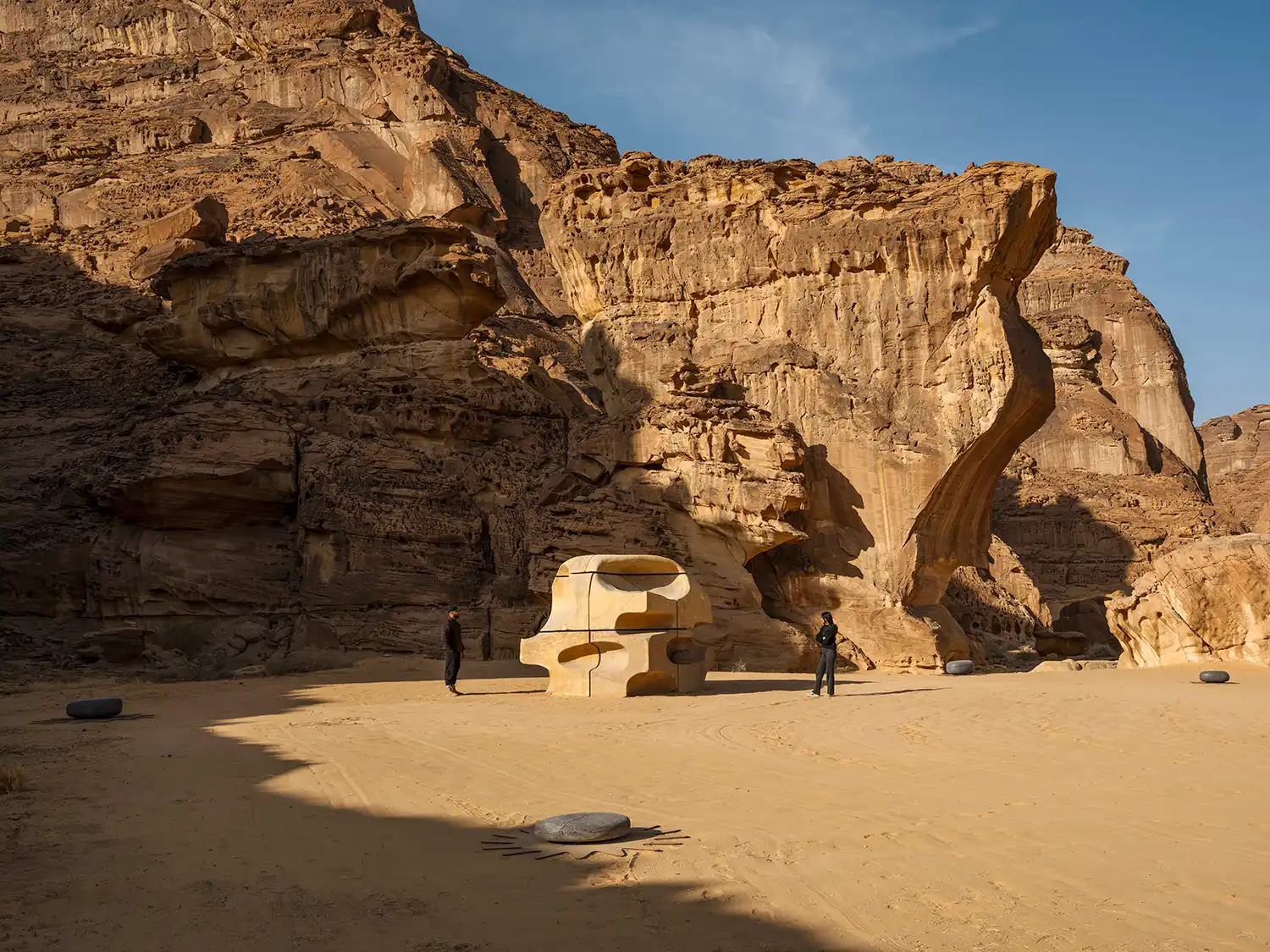
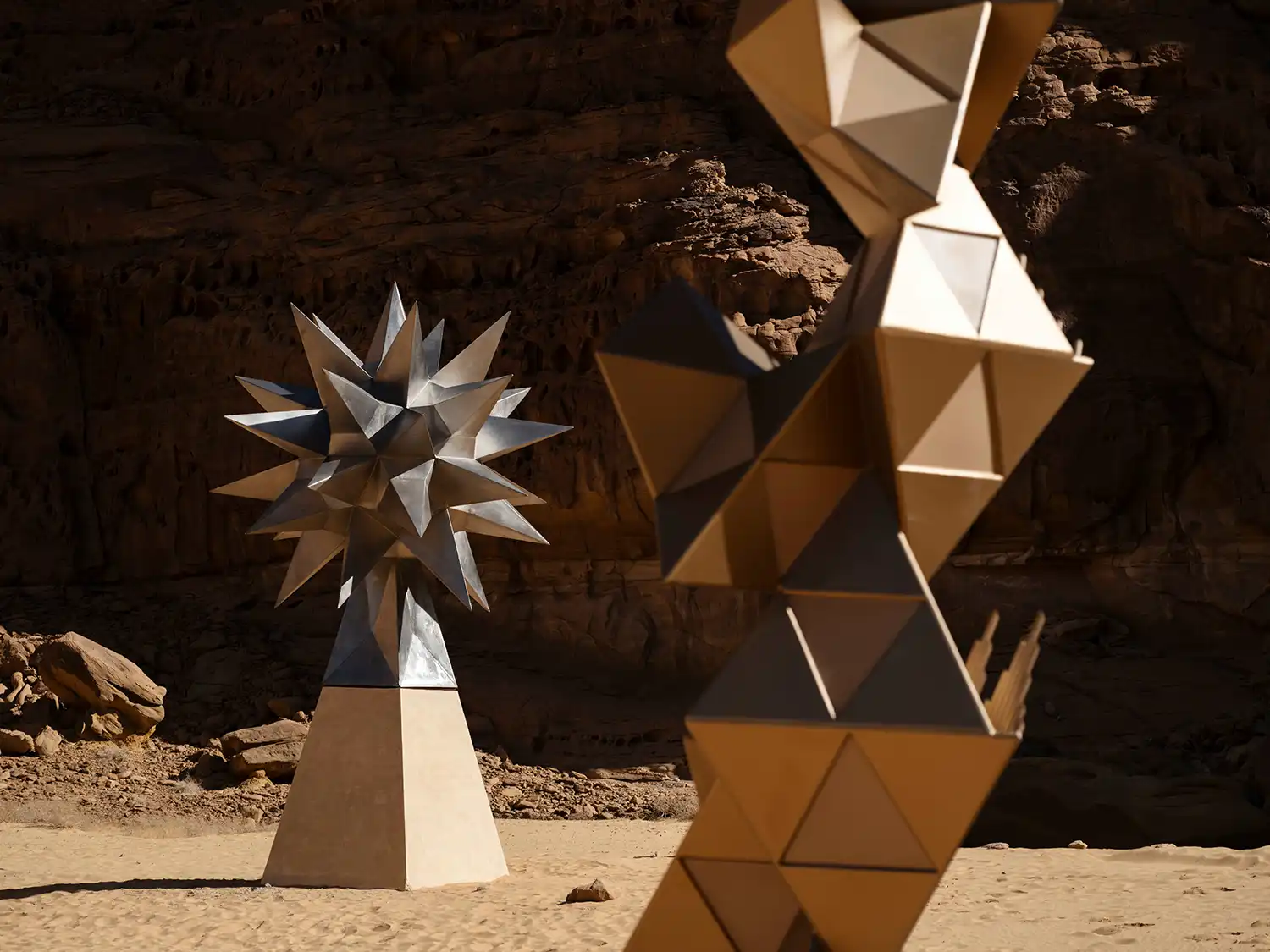
Geological fragments and historical echoes. Basmah Felemban’s Murmur of Pebbles enlarges geological fragments into carved limestone forms, positioned along pathways shaped by ancient rivers. The work draws attention to the slow processes of sediment and erosion embedded within stone, making the invisible history of the land visible. This dialogue with history is further enriched by the inclusion of rare geometric works by the late Mohammed AlSaleem. Created in the 1980s, his sculptures like The Thorn extend upward with a measured sense of aspiration, shaped by desert horizons and celestial reference points.
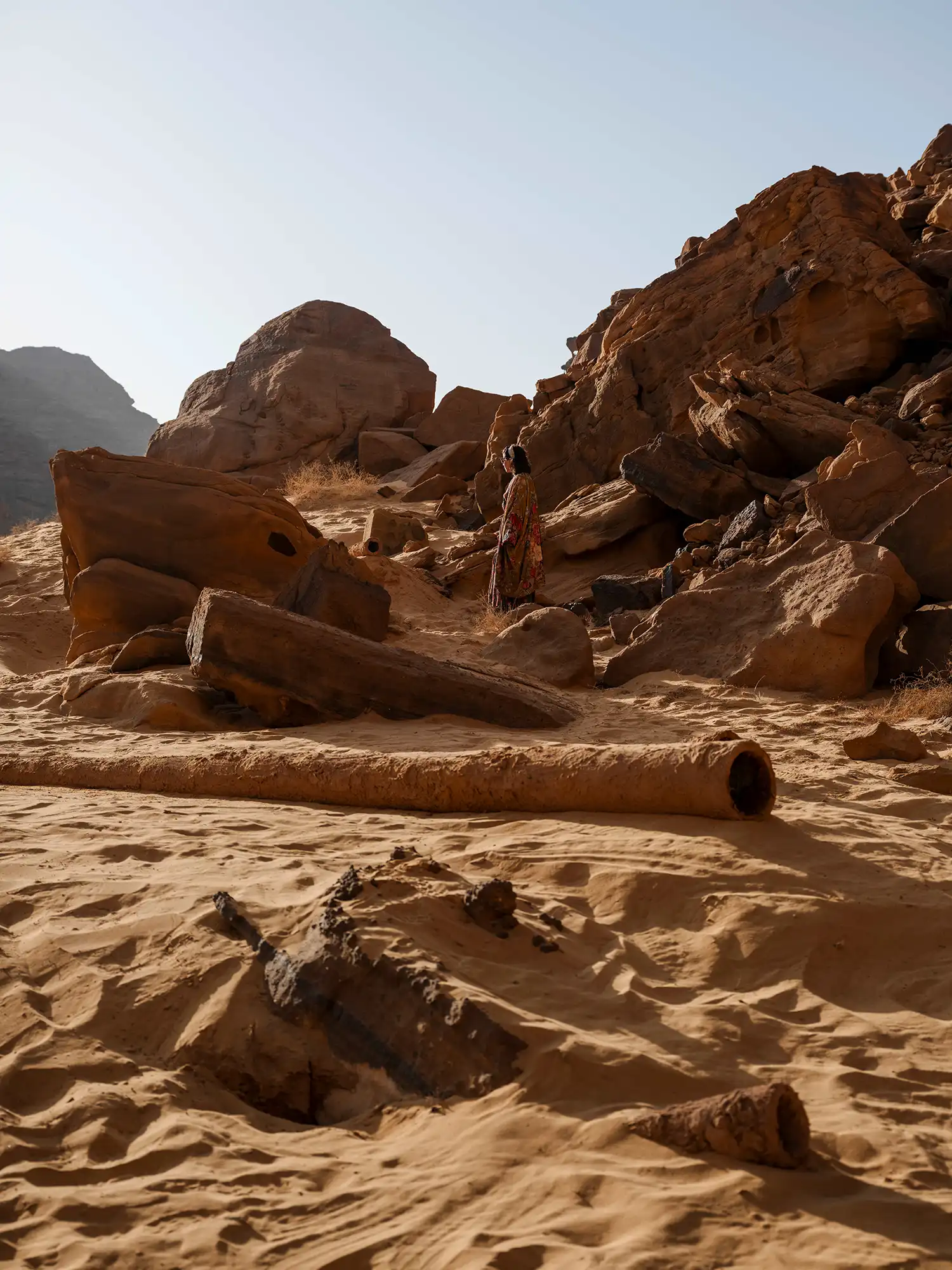
Collective movement and resonant energy. In a nearby valley, Héctor Zamora’s Tar HyPar introduces percussion-inspired forms that respond to collective movement. Visitors activate the installation through sound and proximity, producing a low, resonant energy that travels across the open ground. This interactive element breaks the traditional “look but don’t touch” rule of high art, turning the exhibition into a shared social experience where the audience contributes to the artwork’s presence within the vast canyon.
Sustainability through local collaboration. The exhibition’s integration into the local ecosystem is supported by partnerships with Madrasat Addeera and the AlUla Native Plant Nursery. These collaborations ensure that the art is not only site-responsive but ecologically responsible. From the use of sustainable production methods to the integration of native plant life into Maria Magdalena Campos-Pons’ Imole Red, the exhibition demonstrates a sophisticated model for how international art biennials can foster genuine local knowledge and environmental stewardship.
A precursor to a permanent legacy. The fourth edition of Desert X AlUla serves as a vital bridge toward the future of the region’s cultural landscape. As a pre-opening programme for Wadi AlFann, the exhibition offers a glimpse into the ambitious plans for a permanent “Valley of the Arts.” By merging the monumental scale of land art with a sensitive, human-centric approach to curation, the event solidifies Saudi Arabia’s position in the global dialogue of contemporary art. It creates an enduring connection between the global creative community and the primordial beauty of the AlUla landscape, ensuring its impact resonates long after the desert wind has reclaimed the sand.