


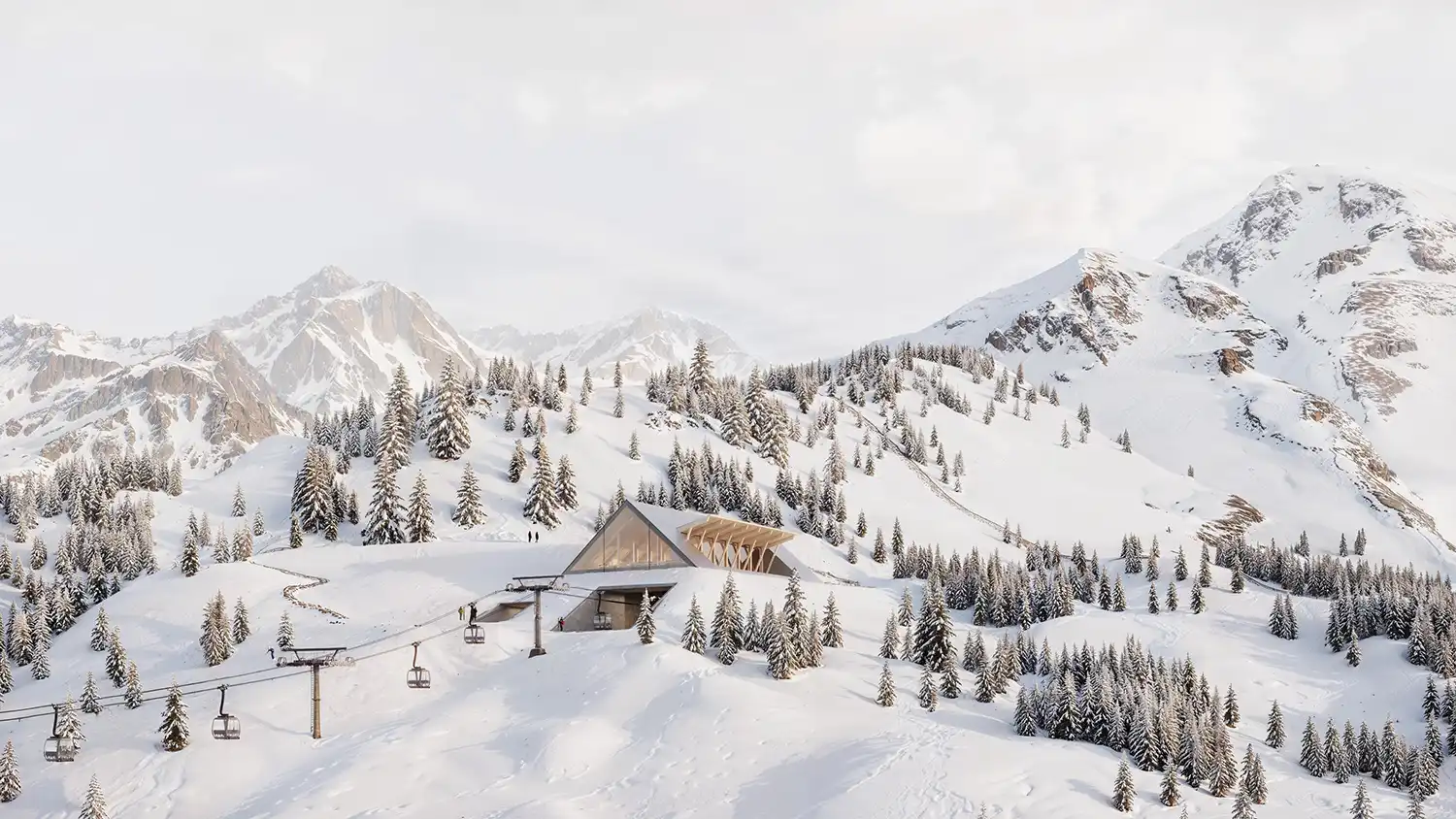
The architectural dialogue between human movement and the rugged stillness of the Alps has found a sophisticated new expression in Ponte di Legno, Northern Italy. Tasked with reimagining the infrastructure of the Valbione–Corno d’Aola–Angelo axis, Milan-based Peter Pichler Architecture has moved beyond the purely utilitarian. By replacing dated ski lifts with a continuous gondola system, the firm has transformed a technical necessity into a curated sensory journey. Reaching an elevation of 2,200 meters, the project acts as a vertical bridge, connecting the valley floor to the majestic Lombardy peaks through a series of structures that feel less like additions and more like organic outgrowths of the terrain.
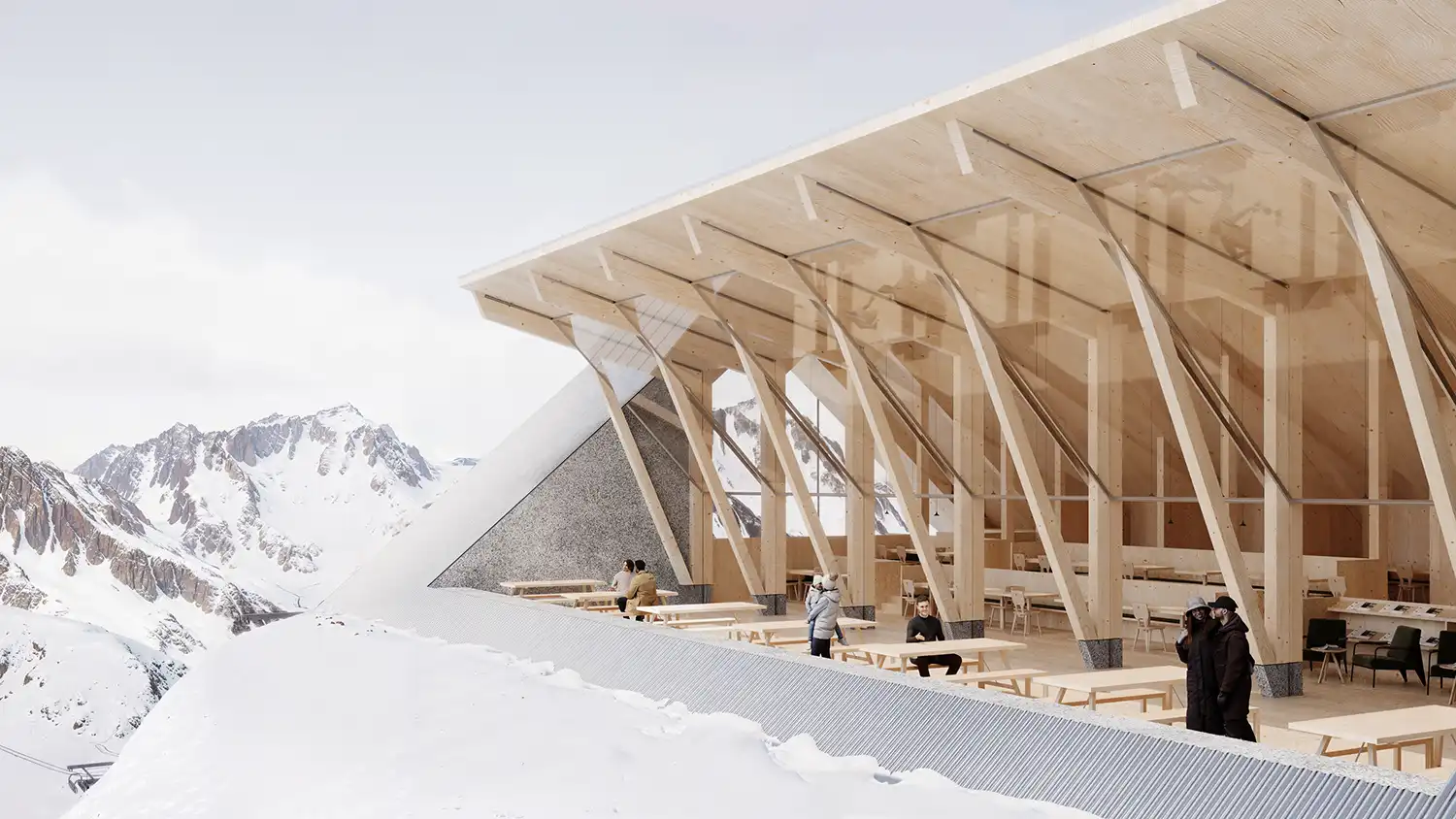
Drawing inspiration from traditional alpine settlement patterns, the design intervention pays homage to the historical evolution of mountain mobility. The architects have eschewed the heavy, industrial aesthetics often associated with ski infrastructure in favor of a lightweight, timber-centric vernacular. This choice isn’t merely aesthetic; it is a respectful nod to the regional typology of the Italian Alps. The stations are characterized by sharp, geometric rooflines and a visible material honesty that mirrors the stratification of the surrounding rock faces. As the gondola ascends, the architecture functions as a “reading lens,” framing specific vistas and inviting passengers to perceive the landscape as a living, evolving entity.
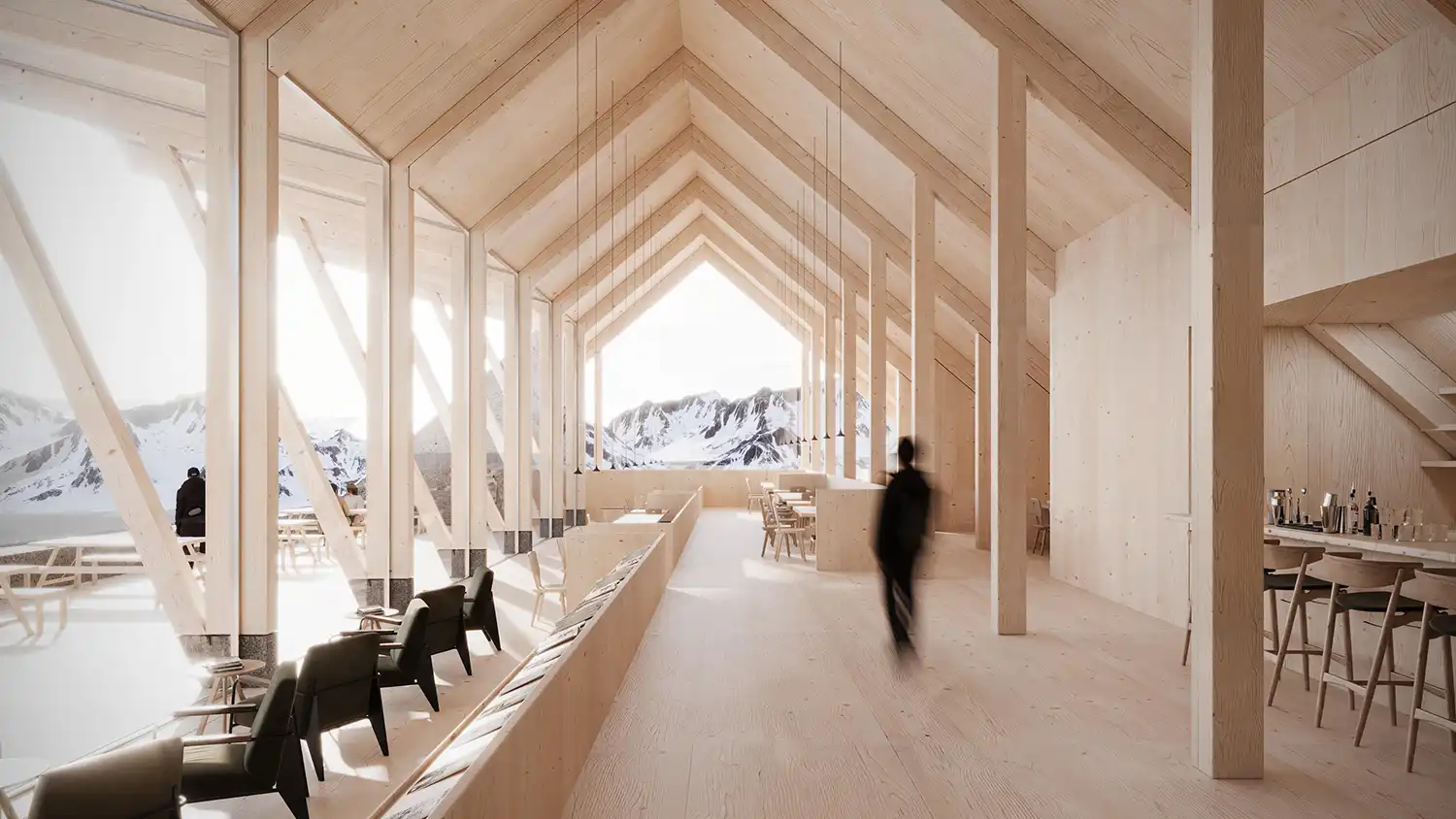
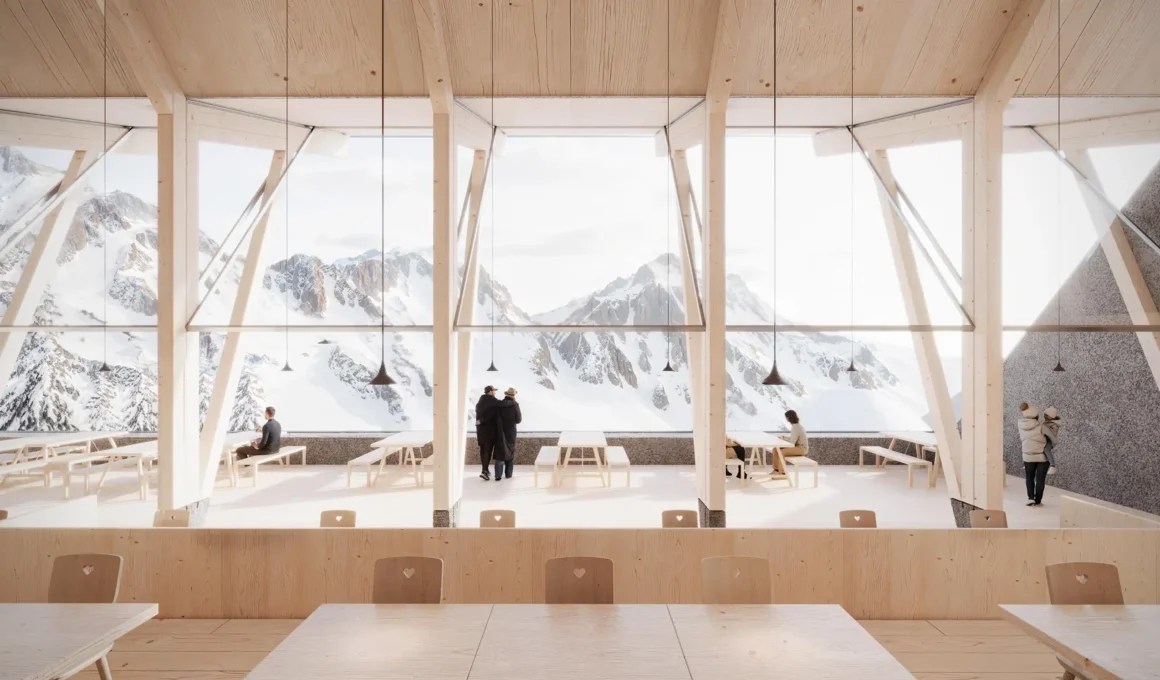
The sensory experience of the ascent is defined by a transition from the sheltered, wooded lower slopes to the raw, ethereal atmosphere of the summit. Upon reaching the highest point, visitors are greeted by the new alpine hut, a structure that serves as a sanctuary against the elements. Inside, the scent of seasoned wood and the play of light across expansive glass surfaces create an environment of warmth and contemplation. This approach to high-altitude hospitality reflects a broader trend in the region: a shift toward sustainable mountain infrastructure that anticipates future athletic and cultural events, ensuring that the built environment remains resilient and adaptive. Much like the modular bivouacs designed for the upcoming Winter Olympics, Pichler’s hut reinforces the idea that shelter at 2,200 meters should be both a refuge and a vantage point.
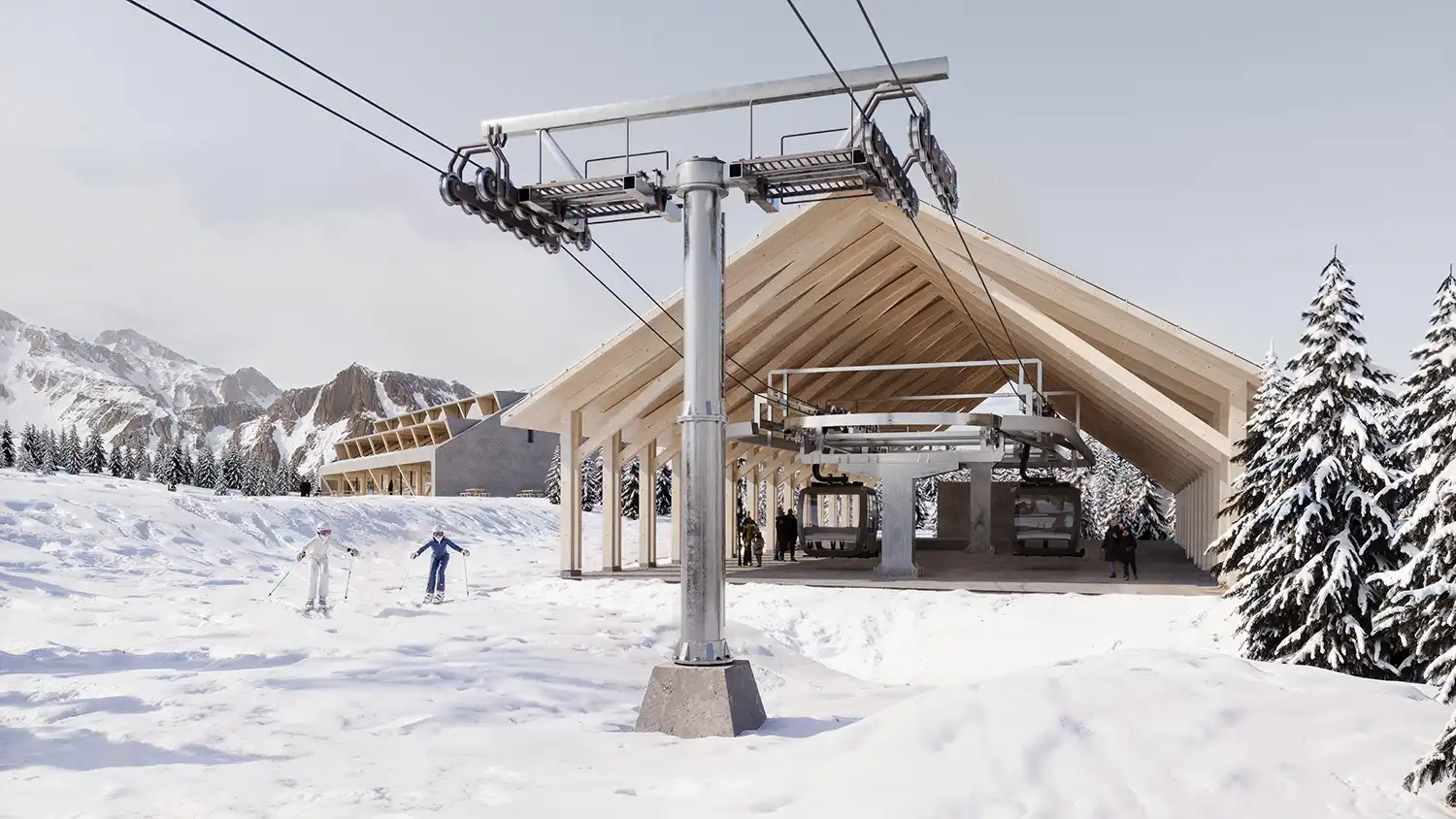
Technical precision meets contextual sensitivity in the way each station aligns with the existing topography. Rather than imposing a uniform template, Peter Pichler Architecture has tailored each node to its specific site, ensuring a seamless integration with the local environment in Lombardy. The structural clarity of the wooden frames allows the buildings to “breathe” within the landscape, minimizing their visual and physical footprint. This methodology treats infrastructure as an integral part of the territorial heritage, acknowledging that the way we move through the mountains is as significant as the mountains themselves.
The integration of the alpine hut at the Angelo summit provides a vital social anchor for the project. It is here that the relationship between altitude and human presence is most palpable. The space is designed to foster gathering, encouraging hikers and skiers to pause and absorb the silence of the Ponte di Legno mountain area. Large windows act as permeable boundaries, blurring the line between the cozy, timber-lined interior and the vast, snow-dusted horizon. The result is a hospitality experience that is deeply rooted in its place, offering a contemporary interpretation of the “stube” that feels both timeless and avant-garde.
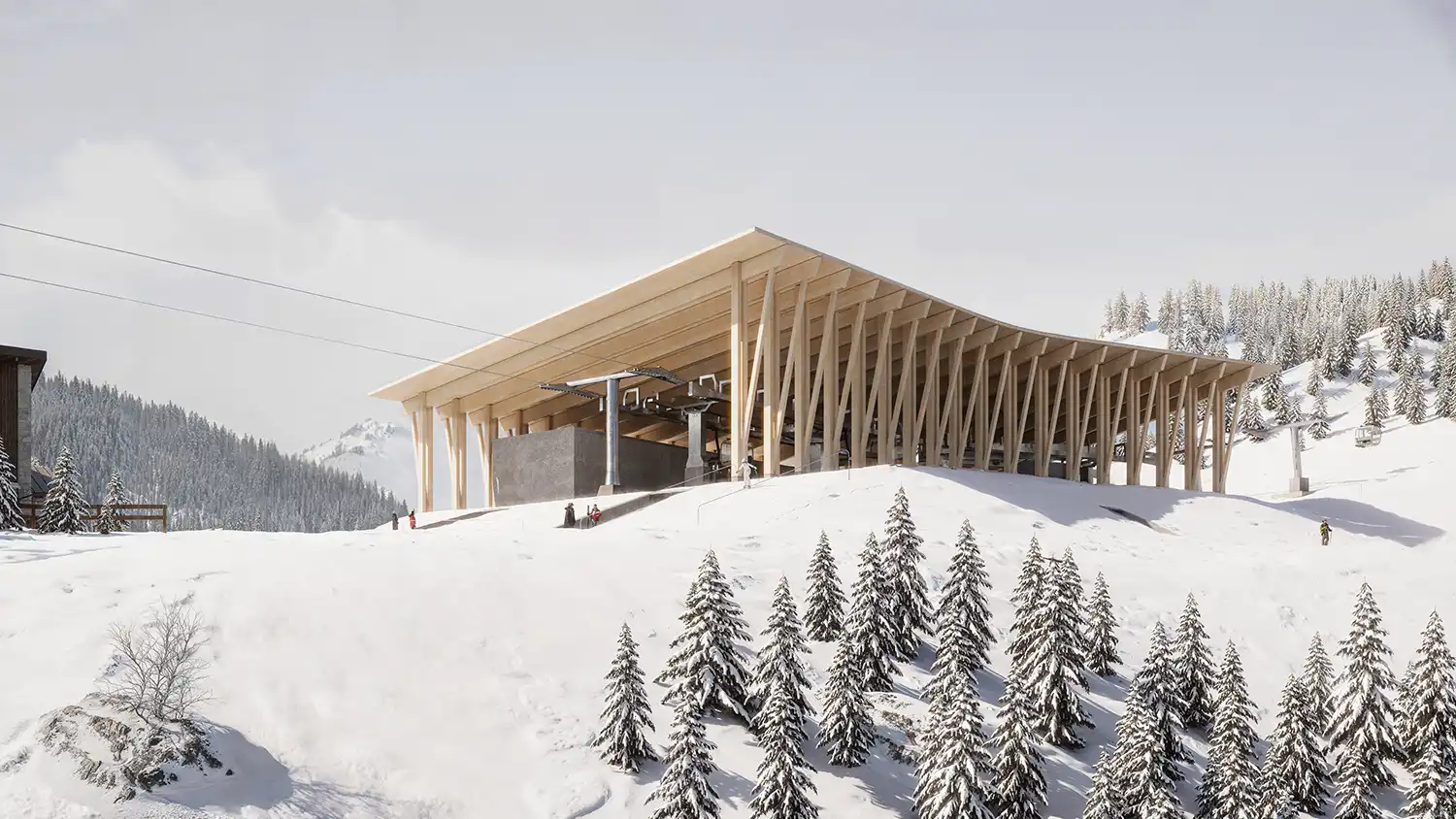
This intervention signals a shift in mountain architecture, where the focus moves from the speed of transport to the quality of the experience. By treating the gondola stations as a sequence of architectural moments, Peter Pichler Architecture has elevated a piece of transport infrastructure into a cultural landmark. The project serves as a reminder that even at the highest altitudes, the built environment has the power to enhance our connection to nature. By prioritizing material honesty and contextual awareness, the Valbione project ensures that the spirit of the Alps is preserved even as the way we interact with them continues to evolve.