

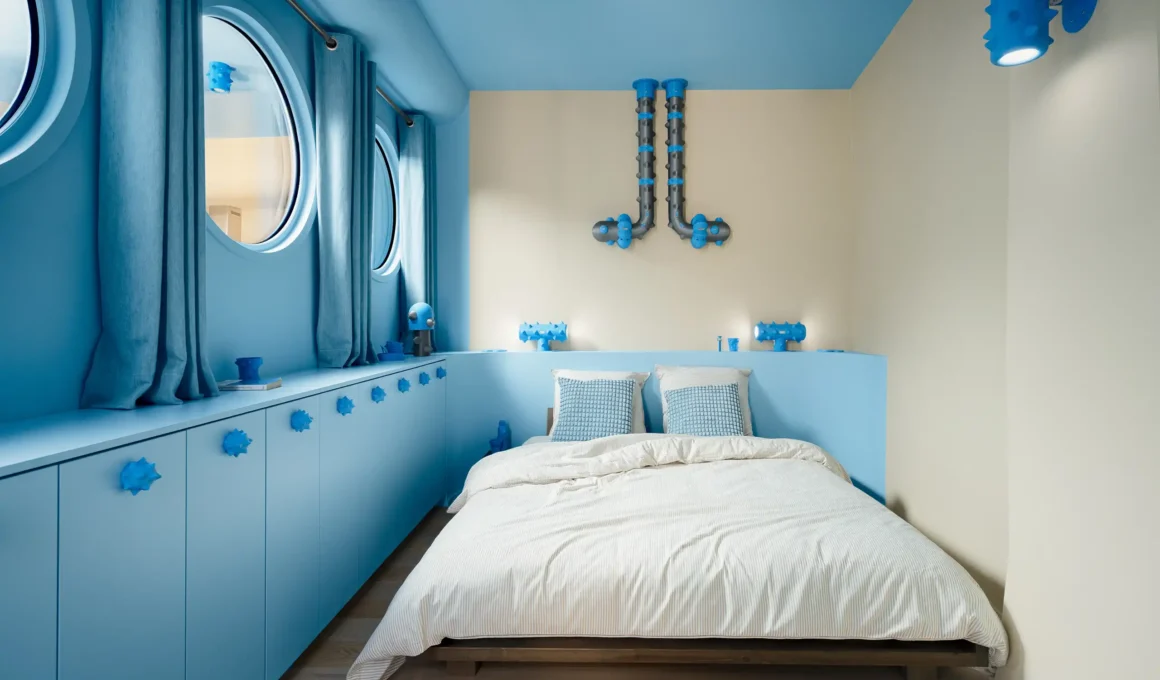
In the sun-drenched port of Marseille, France, the boundaries between literary fiction and interior architecture have blurred within a 40-square-meter residence. Designed by Anthony Authié of ZYVA Studio, the project, titled Le Nautilus du capitaine Nemo, serves as a contemporary vessel for domestic life, deeply anchored in the maritime soul of the Mediterranean. It is a space that rejects the clinical minimalism often found in small-scale urban dwellings, opting instead for a narrative-driven immersion that feels both playful and profoundly sophisticated.
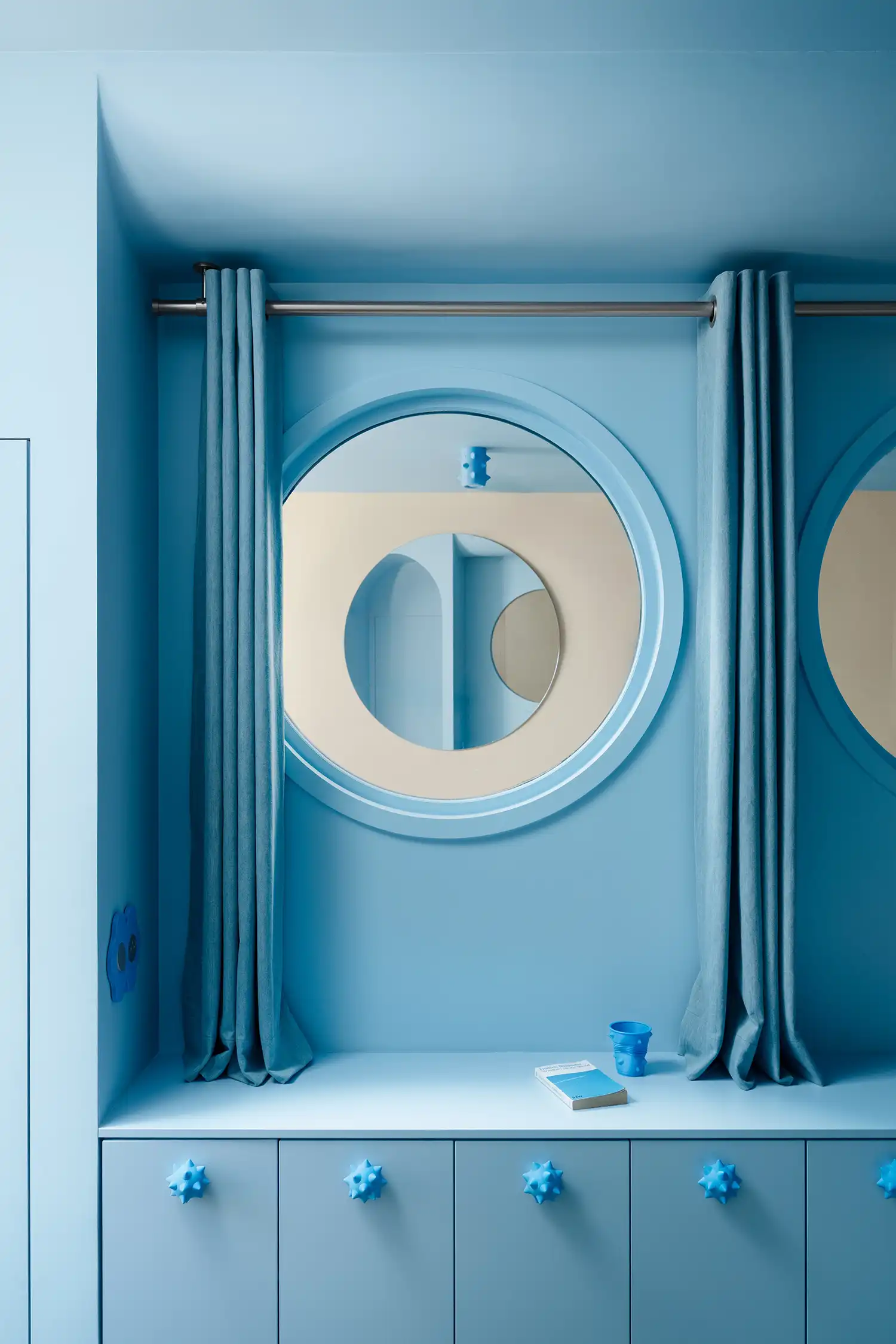
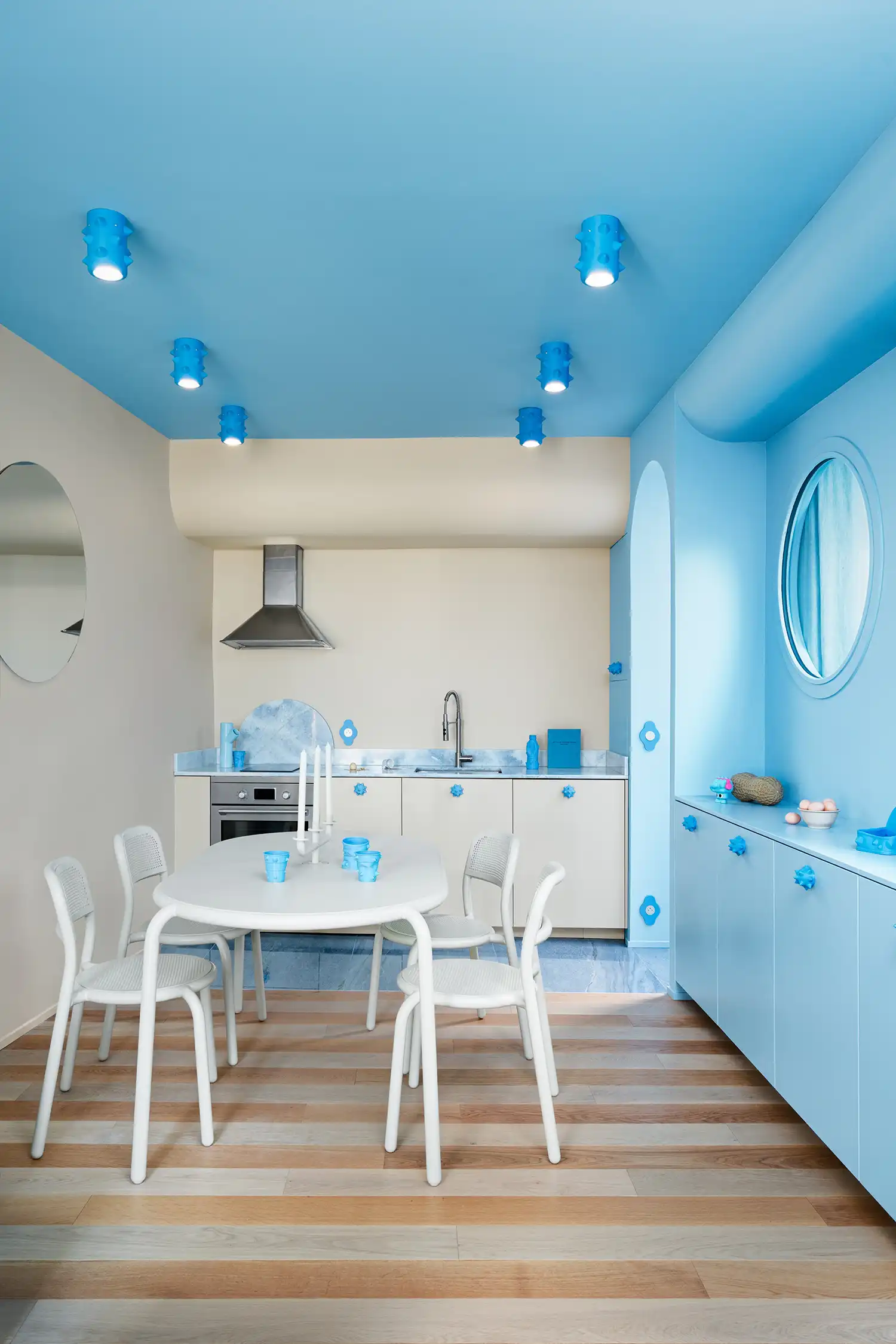
A conceptual immersion into the depths of Marseille begins at the threshold, where the apartment sheds its terrestrial identity to become a submarine sanctuary. Inspired by Jules Verne’s Twenty Thousand Leagues Under the Sea, Authié has not merely decorated a room but choreographed a “sensory dive.” The palette is a deliberate dialogue between the parched beige of sun-warmed limestone and a pervasive, hypnotic blue. This chromatic choice reflects the city’s unique light—where the rugged textures of the Calanques meet the infinite horizon of the sea. It is a strategy of color-blocking that recalls how Midori Arquitectura used vibrant satellites of color to organize a similarly compact Madrid attic, proving that bold hues can expand the perceived boundaries of small interiors.
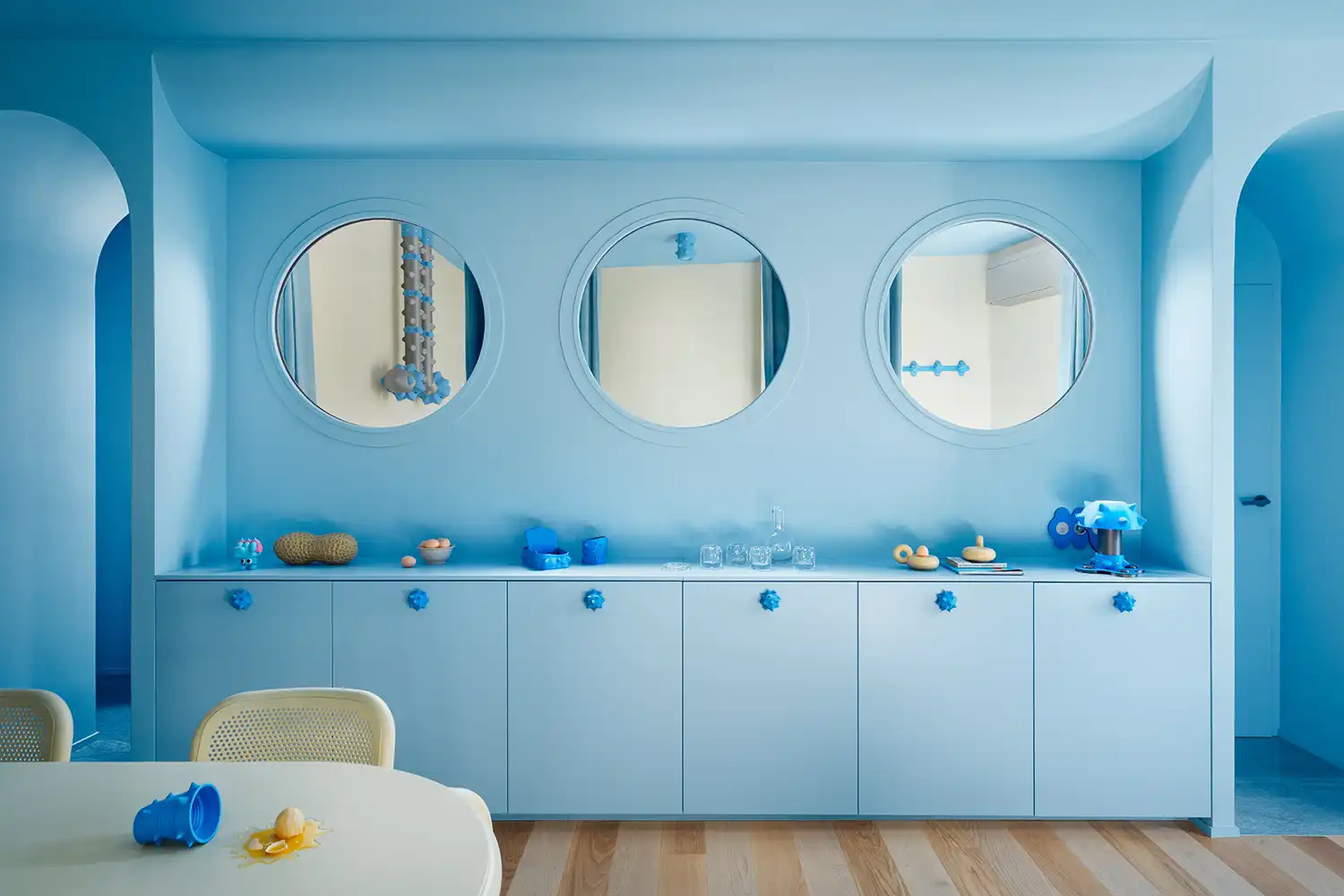
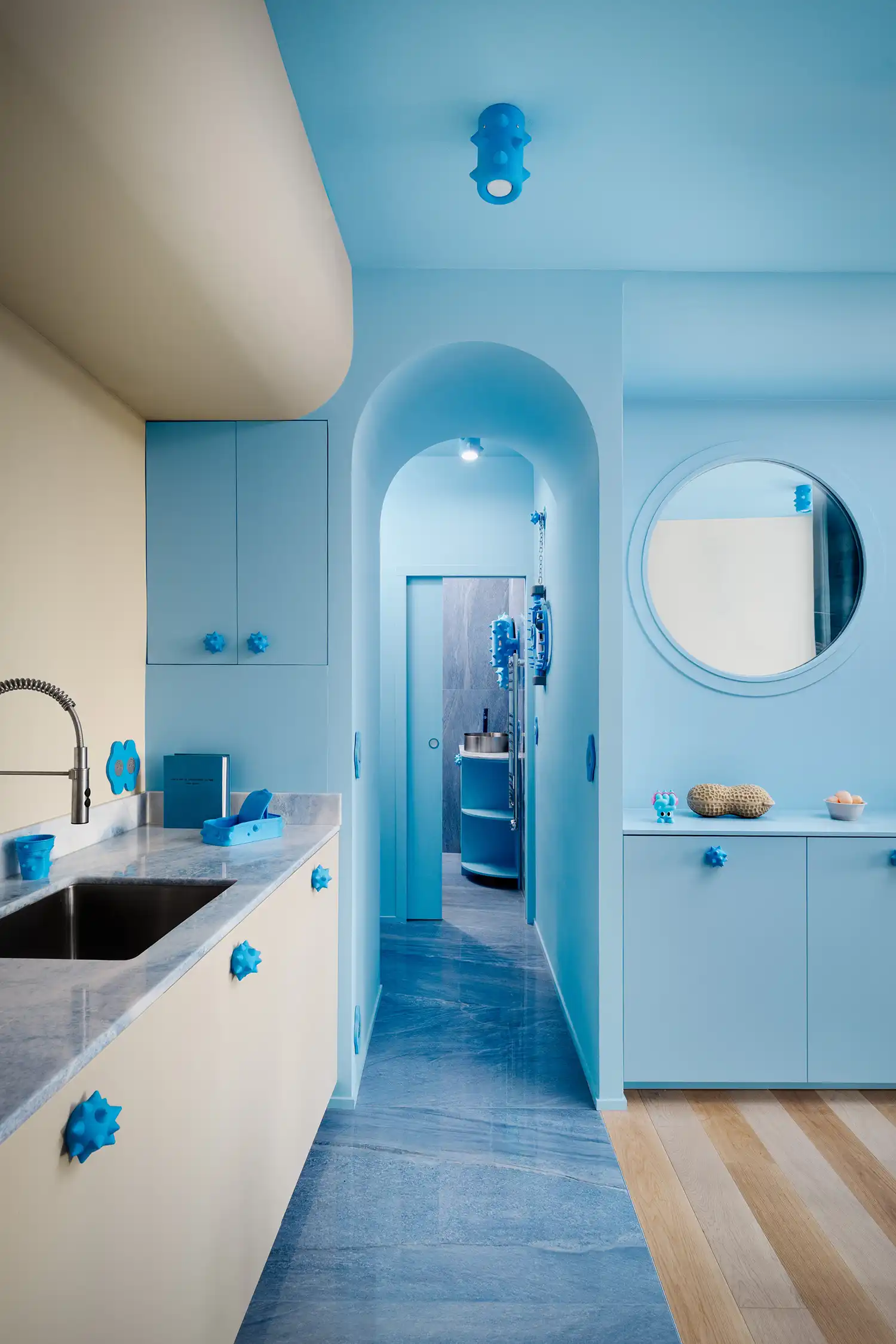
The architectural layout is defined by a central partition that functions as the hull of the home. Punctuated by circular openings, these “portholes” disrupt the traditional separation between the living quarters and the bedroom. They facilitate a voyeuristic flow of light and sightlines, ensuring the 40-square-meter footprint never feels static. These curves are echoed in arched doorways and mirrors, creating a liquid geometry where every sharp edge seems to have been eroded by a phantom tide. This whimsical yet disciplined approach to storytelling through form is reminiscent of the Wes Anderson-style apartment in Krakow, where scenography and domesticity merge into a singular, cinematic experience.
Materiality provides the rhythmic heartbeat of the Nautilus, particularly beneath one’s feet. The flooring features an alternating pattern of pale wood and honey oak strips, mimicking a horizontal marinière. This nod to the classic sailor’s uniform also serves as a sophisticated architectural link to the striped façade of the nearby Cathédrale de la Major. By weaving local heritage into the very grain of the apartment, Authié ensures the project is not just a fantasy, but a site-specific tribute to the Marseille landscape. The bathroom, by contrast, offers a moment of mineral silence; clad in blue marble, it feels like a hidden sea cave, offering a space for introspection that balances the playfulness of the social areas.
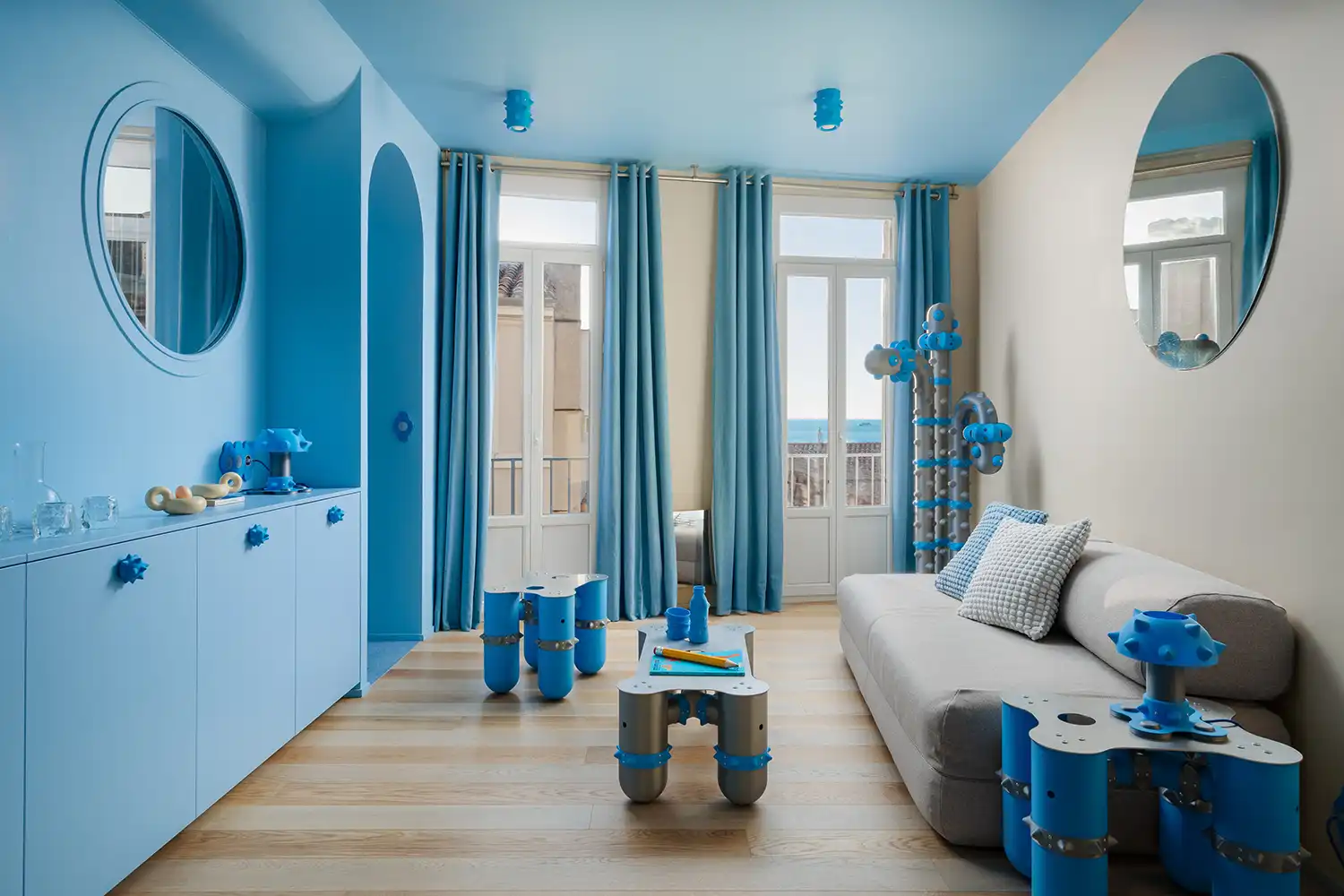
Custom-designed “creatures from the deep” inhabit the space, elevating the furniture from mere utility to functional sculpture. ZYVA Studio has populated the interior with sea urchin-inspired handles, spiky luminaires, and jellyfish-shaped sockets. These bespoke details create a hybrid fauna that bridges the gap between science fiction and coastal nostalgia. This level of curated eccentricity and attention to decorative detail aligns the project with high-end European renovations, such as the Dimitri Townhouse in Brussels, where historical shells are reinvigorated through bold, contemporary character.
Ultimately, Authié’s intervention is a study in narrative architecture, where the designer becomes the protagonist of his own creation. By staging himself as a modern-day Captain Nemo within the project, Authié highlights the emotional resonance of the home as a “logbook” of personal dreams and collective memories. The result is a residence that breathes with the rhythm of the Mediterranean, offering a sanctuary that is as much a movie set as it is a place of rest—a rare feat of design that captures the elusive, shimmering spirit of the sea.