



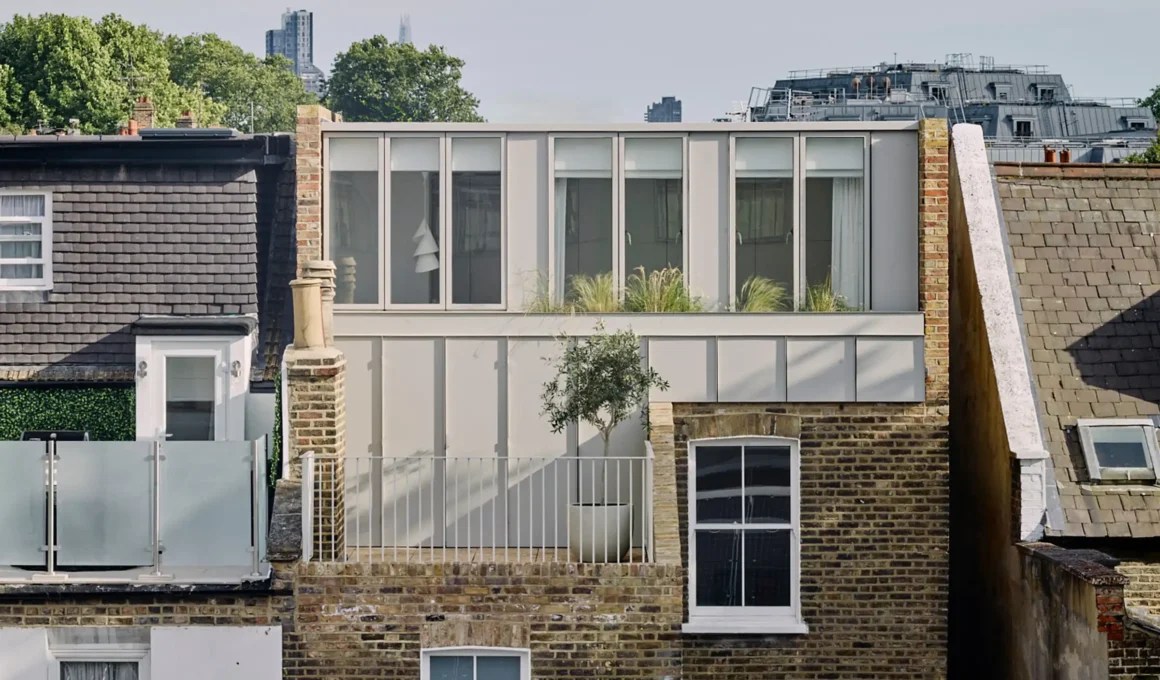
In the dense Victorian fabric of Highbury, North London, space is often a finite resource defined by heritage constraints and narrow footprints. For a young family—a fashion designer and a medical researcher—DGN Studio has navigated these limitations not by stretching outward, but by looking upward. The resulting Steel & Stone House is a sophisticated exercise in vertical expansion, where the heavy, grounded permanence of masonry gradually yields to the ethereal qualities of light and metal. It is a home that honors the “earthy” London-brick vernacular while providing a soaring, gallery-like sanctuary that feels entirely detached from the urban grit.
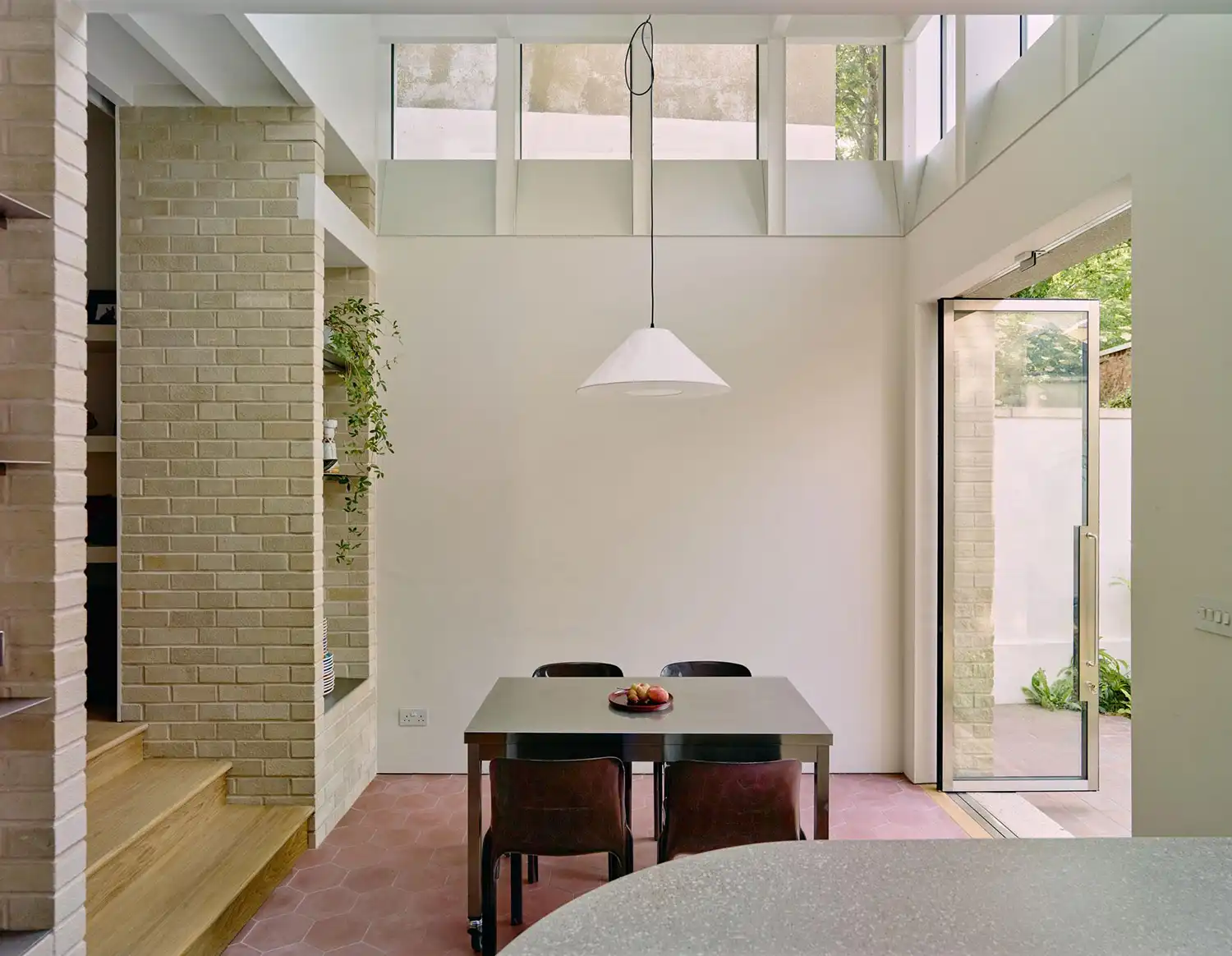
A tactile transition from earth to sky defines the project’s conceptual core, developed in collaboration with experiential creative director Sarah Izod. The material palette is choreographed as a sensory ascent: the ground floor is anchored by thick stone, clay, and lime plaster, creating a grainy, protective atmosphere. As one moves through the house, these textures evolve into refined metalwork and lightweight glass. This intentional shift in materiality reflects a move from the “daily rituals” of the hearth to the “retreat” of the upper levels. Splashes of Yves Klein blue furnishings puncture the neutral tones, acting as deep pools of color that draw the eye through the sequence of rooms.
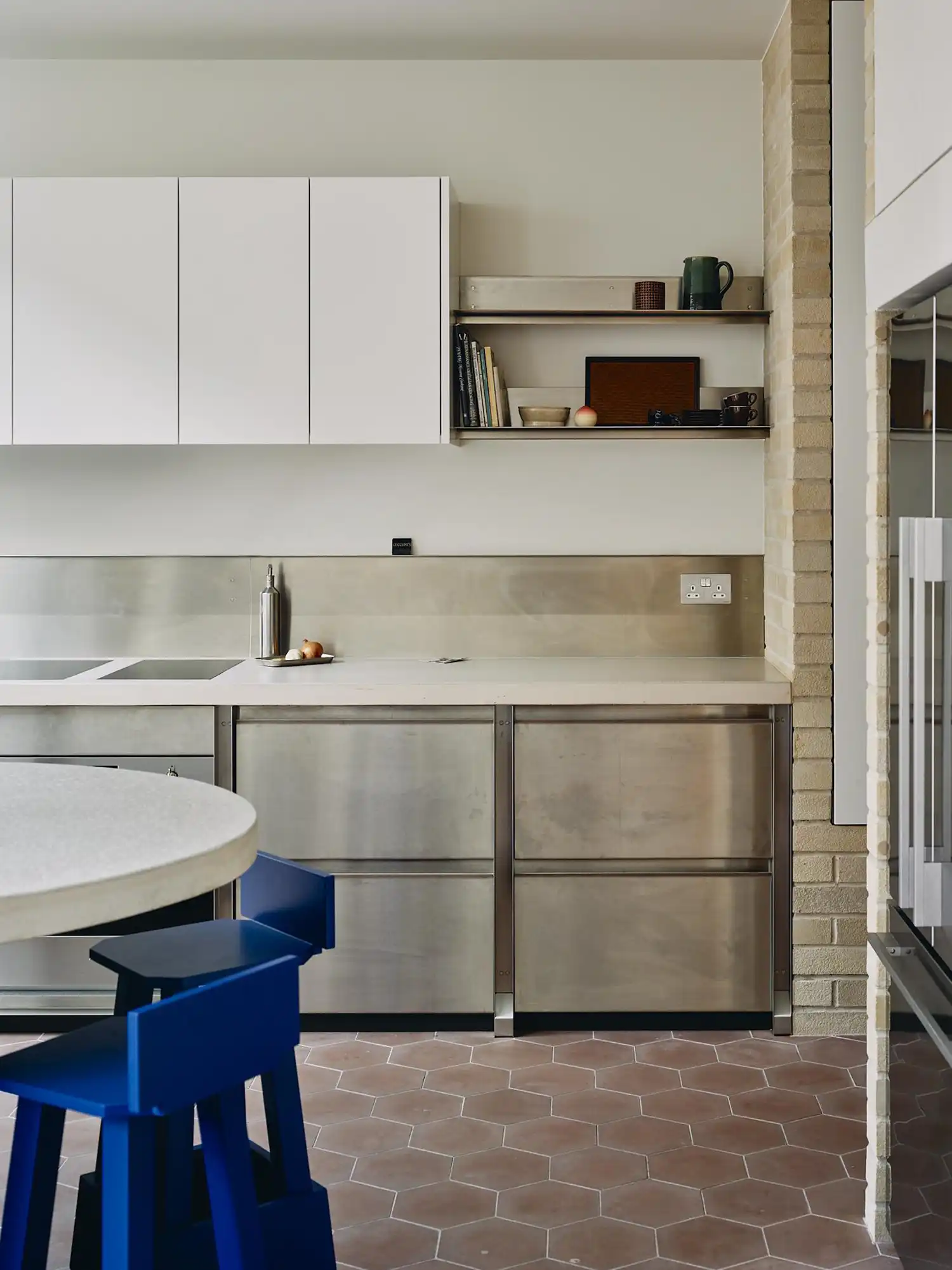
The architectural intervention centers on a strategic footprint that maximizes a tight, north-facing site without sacrificing the precious garden. Rather than a traditional deep extension, DGN Studio opted for a minimal-depth rear addition combined with a double-height side infill. This move transforms a formerly cramped kitchen into a “grand hall” on the footprint of a “picnic blanket.” The use of a stainless-steel glazed roof and high-level clerestory windows allows the interior to bypass the surrounding shadows, capturing the shifting UK sky and lending an unexpected sense of majesty to the communal heart of the home. This clever play with volume and light mirrors the ingenuity seen in other contemporary British renovations, such as the oxidized-steel transformation in Peckham, where industrial materials are used to redefine historical contexts.

Sustainable innovation informs the structural language through the use of sandstone bricks, which were selected to significantly reduce the carbon footprint compared to traditional clay alternatives. These stone bricks are sandblasted to create a rusticated, “split-face” base that anchors the extension to the Highbury soil. Inside, the walls utilize a fully breathable construction featuring hemp insulation and wood-wool boards. This commitment to “responsible construction” does not come at the cost of aesthetics; rather, the thick stone thresholds become functional elements, carved with niches and fitted with bespoke steel shelving to display the family’s collection of ceramics and glassware.
Functional sculpture defines the kitchen and dining areas, where the interplay of raw and refined surfaces is most evident. A floor of hexagonal clay tiles provides a warm, relaxed foundation for a kitchen island that is both a social hub and a work of art. The island features high-gloss cabinetry encased in a metal frame, topped with a curved, exposed-aggregate concrete surface. In contrast, the secondary preparation area utilizes a trowelled concrete finish and bespoke stainless-steel cabinetry with folded details that echo the chamfered geometry of the windows. Every element is designed to elevate the mundane, turning food preparation into a choreographed performance under the glow of the north light.
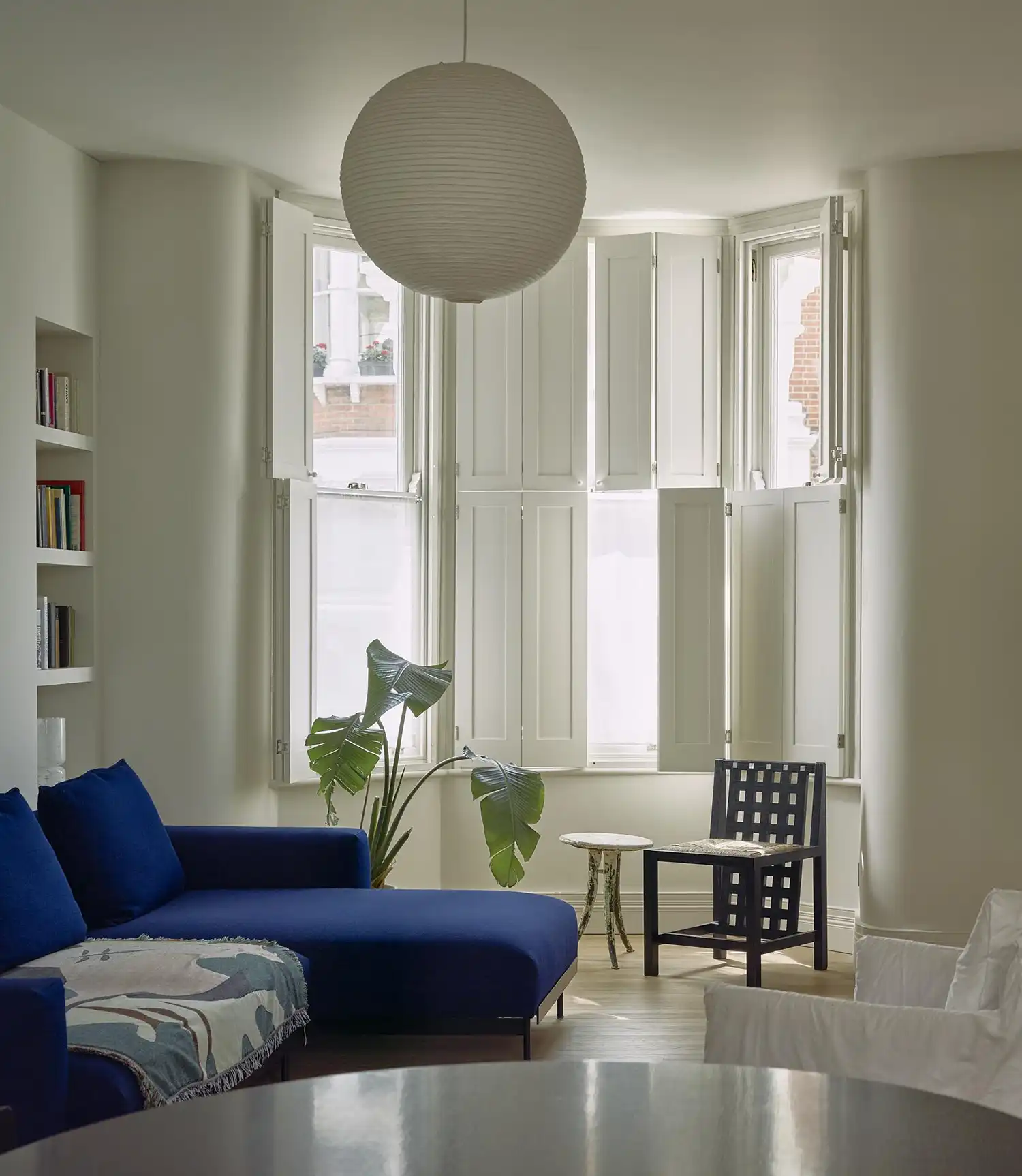
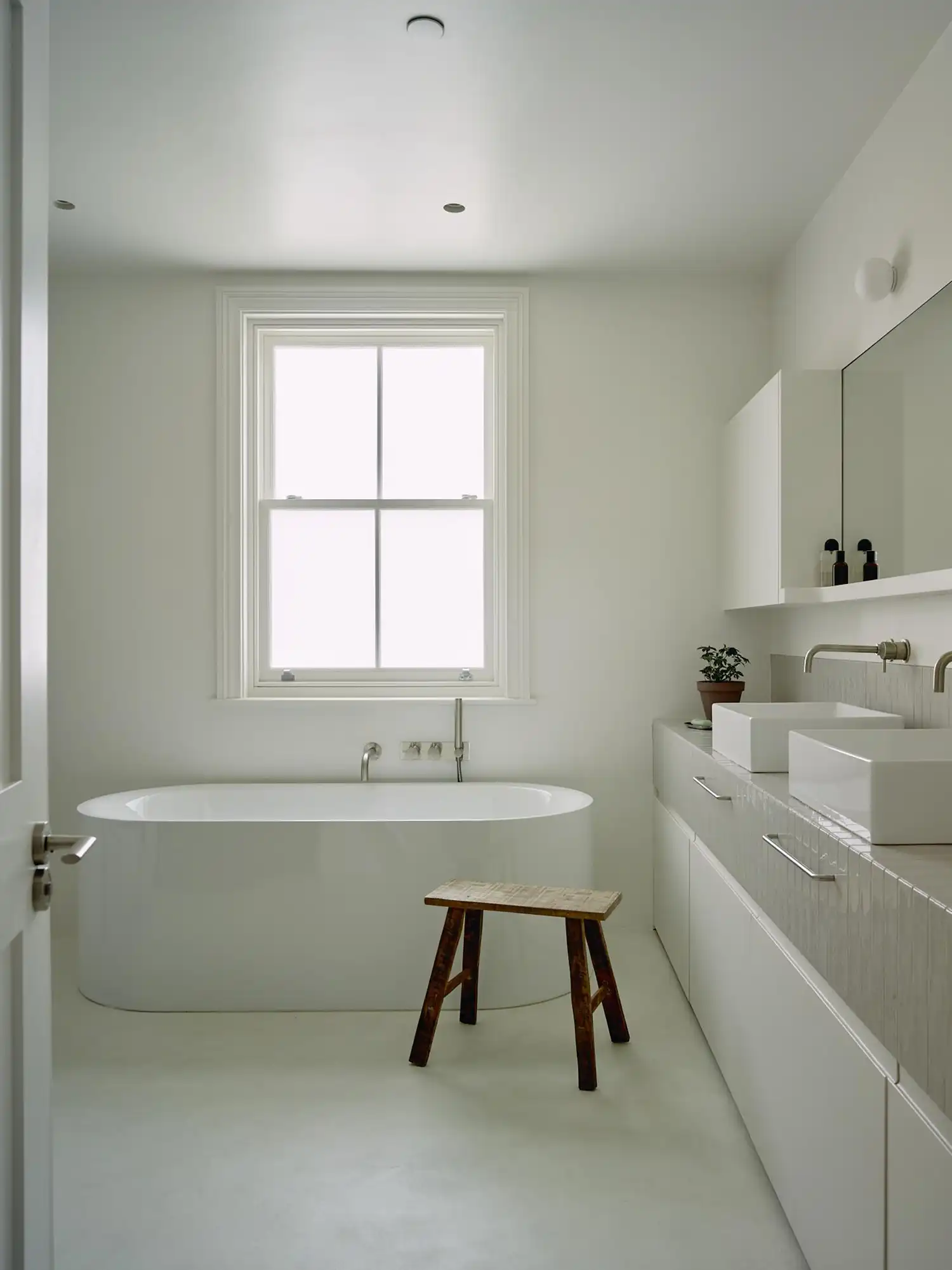
The upper levels serve as a serene retreat, where the chaos of family life is filtered through a lens of minimalist precision. The middle floors underwent a meticulous restoration, leveling “wonky” historical floors to accommodate sleek oak planking. The crowning achievement is the loft—a gallery-like space with white-timber floorboards and a powdery blue microcement ensuite. A new staircase, offset from the walls to emphasize its lightness, leads to a roof terrace that offers panoramic views over the London rooftops. By balancing the “robust presence” of stone with the “reflective grace” of steel, DGN Studio has created a residence that is not just a house, but a vertical journey toward the light.