



The conceptual vision behind the UR-100V LS Ceramic by URWERK marks a significant departure from terrestrial horology, moving toward a visualization of universal movement. While traditional watchmaking measures repeated cycles, this timepiece acts as a cosmic marker, focusing on the propagation of light—a fundamental constant of the universe. By translating the staggering speed of 299,792 kilometers per second into a readable interface, the brand transforms the wrist into a miniature observatory. Here, the signature wandering hour satellite traces the journey of a photon leaving the Sun, ensuring that time is no longer merely counted, but traversed across the solar system.
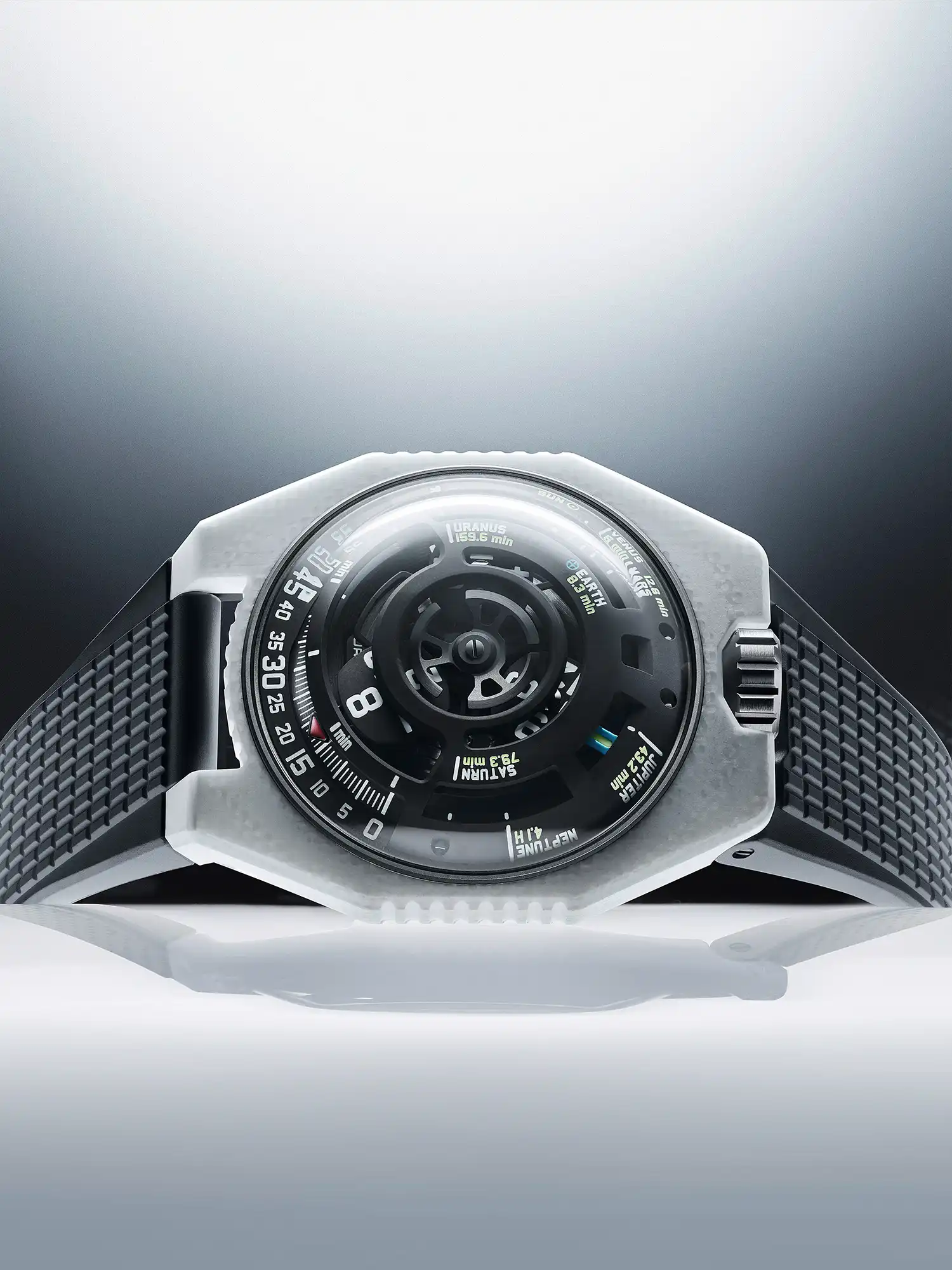
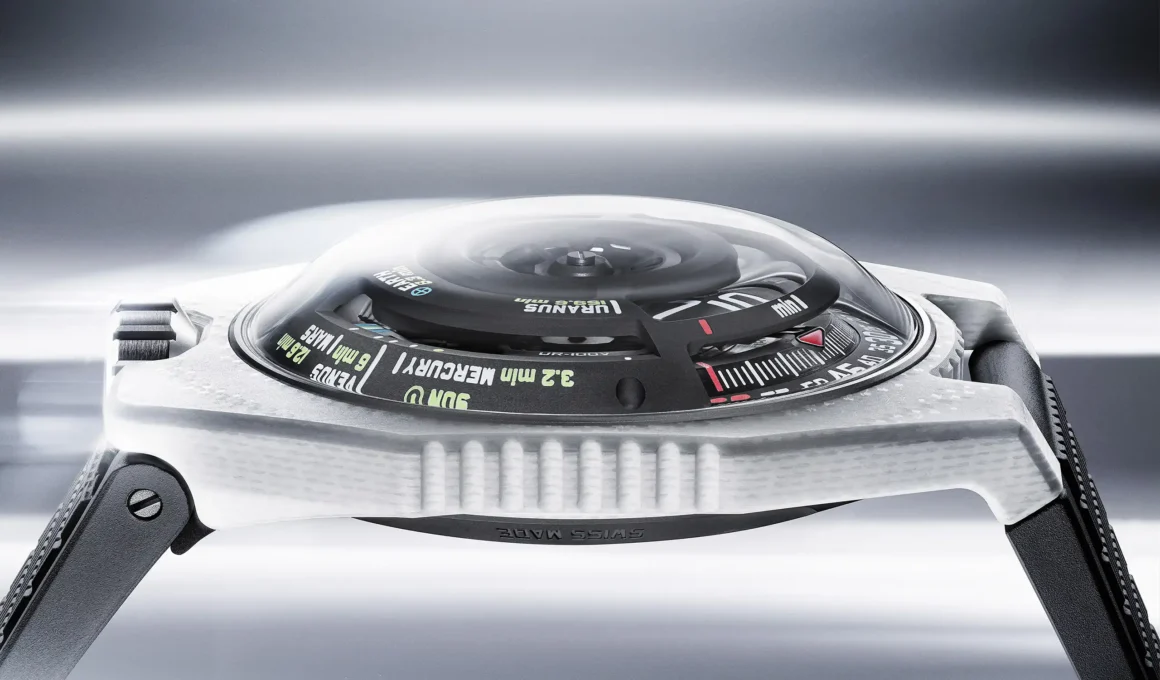
A mechanical translation of astronomy allows the wearer to perceive the vastness of space through scientific data points. The UR-100V LS Ceramic uses its complication to calculate the exact time sunlight requires to reach neighboring planets, from the 3.2 minutes for Mercury to the 8.3 minutes for Earth. As Artistic Director Martin Frei notes, this reduction of scale makes the velocity of light feel tangible, reminding us that what we perceive as the “present” is often a memory of light that has already traveled millions of miles. This approach follows the lineage of the UR-100 Spacemeter, which shifted the focus from minutes to the Earth’s orbital distance.
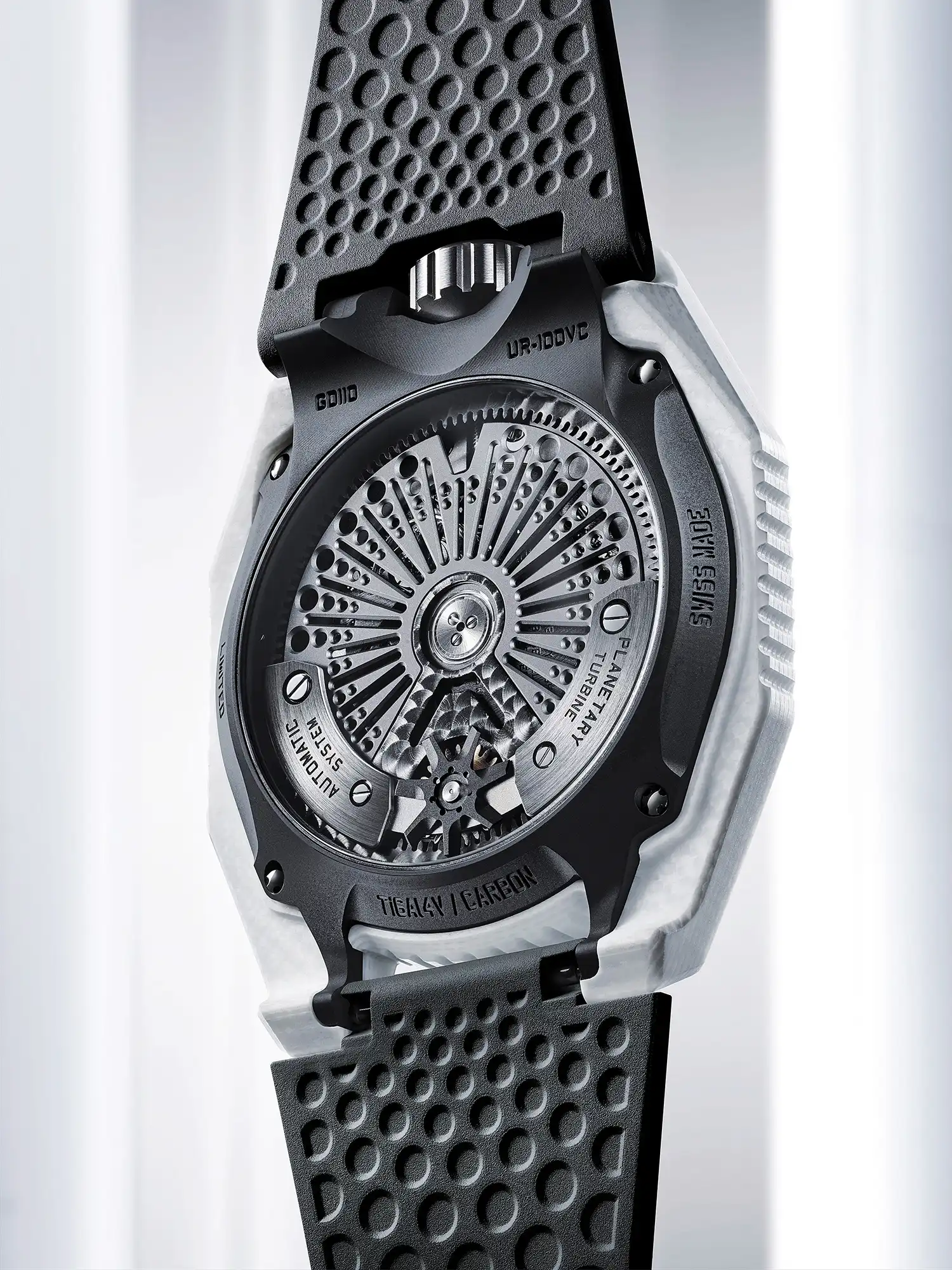
Material innovation as structural narrative defines the watch’s physical presence, utilizing an advanced white ceramic composite engineered for extreme resilience. Moving beyond the brittle nature of traditional ceramics, URWERKdeveloped a polymer matrix integrated with finely woven ceramic fibers, glass fiber, and carbon. This specialized material, rooted in aeronautical technology, offers a stratified visual depth that echoes the vibrant darkness of the UR-230 Black Star. The resulting aesthetic is not merely a color choice but an optical state, designed to reflect and scatter light in a way that mirrors the very photons the watch tracks across the dial.
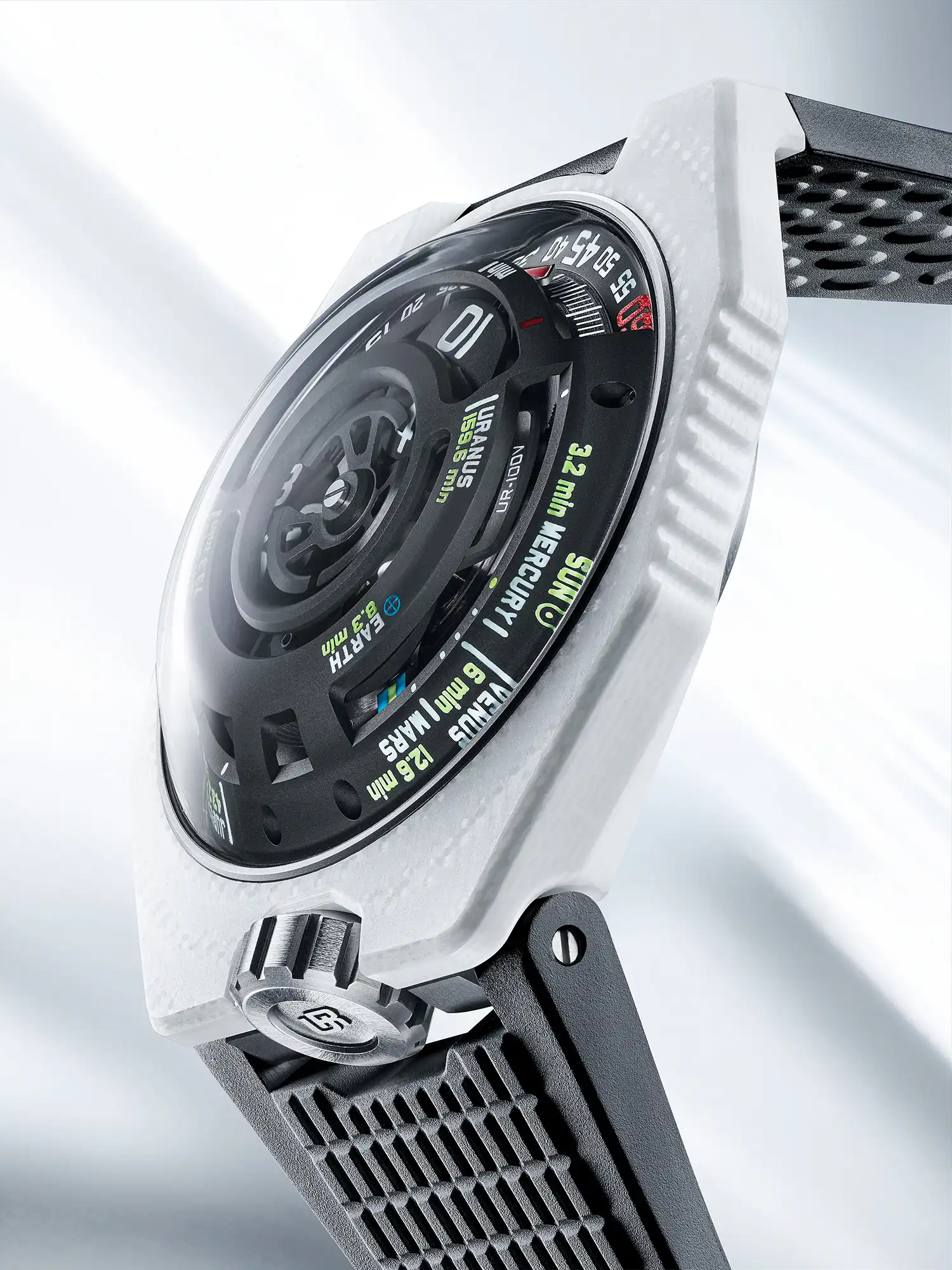
Technical precision meets kinetic architecture through the UR 12.02 automatic calibre, regulated by the Windfänger air-resistance turbine. The 43mm case, crafted from micro-blasted DLC-treated grade 5 titanium, houses a complex internal system where aluminum satellites and ARCAP alloy plates ensure maximum stability. This “technical brutalism” rejects unnecessary ornamentation, favoring a sensory experience where every chamfered screw and shot-blasted surface serves a structural purpose. The UR-100V LS Ceramic remains anchored in the vastness of space, providing a mechanical vessel that bridges the gap between high-watchmaking in Geneva and the infinite reaches of the cosmos.